
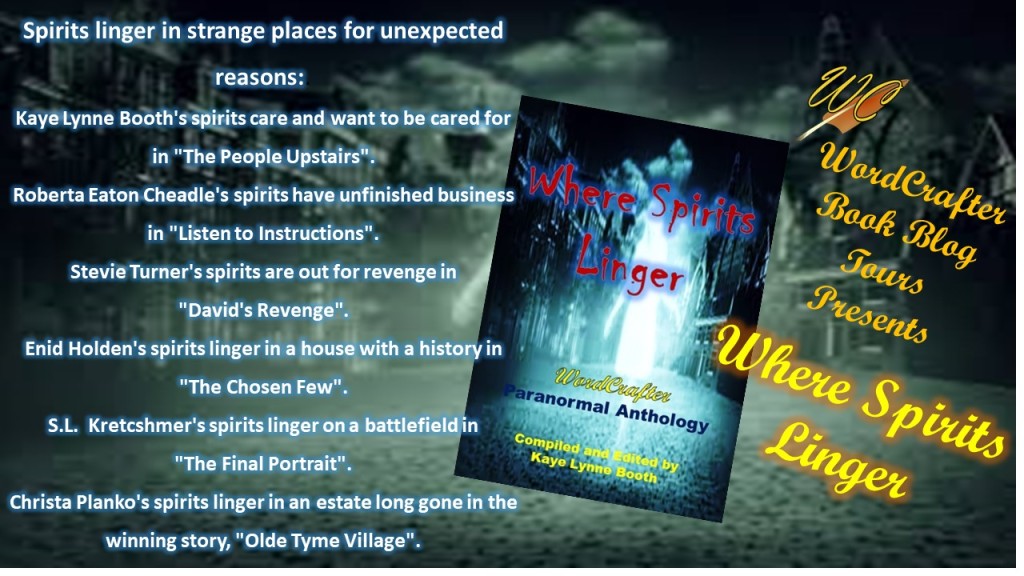
Welcome to my stop on the WordCrafter Where Spirits Linger Book Blog tour. You can find the other posts to date here:
Day 1: https://writingtoberead.com/2021/09/20/welcome-to-the-wordcrafter-where-spirits-linger-book-blog-tour/ hosted by Kaye Lynne Booth
Day 2: https://theshowersofblessings.com/2021/09/20/where-spirits-linger-book-blog-tour/ hosted by Miriam Hurdle
Day 3: https://pattysworlds.com/day-3-of-the-wordcrafter-where-spirits-linger-book-blog-tour-blogtour-wordpresswednesday/ Hosted by Patty Fletcher
Today I am delighted to feature Christa Planko, a co-contributor to the WordCrafter Where Spirits Linger Book Blog tour and the winning contributor with her short story, Olde Tyme Village.
Who is Christa Planko, tell us a bit about yourself?
I’m a person who has always loved to write and edit. If you had asked me in grade school what I wanted to be when I grow up, I would have told you then that I wanted to become a writer. I was fortunate to fulfill that dream by becoming a professional copywriter. In my spare time, I also dabble in creative writing.
You seem to be drawn to flash fiction – what attracts you to this form of writing?
My career is in medical communications where the audience consists of busy healthcare professionals. For them, time is of the essence, so writing must be brief, concise, and to the point. Keeping up my practice of word economy and having a busy schedule myself, I naturally gravitate toward shorter forms of writing. Flash fiction stories and short forms of poetry, like haiku and tanka, have become my favorite creative outlets. It’s fun to challenge yourself to tell a story or create a mood within a limited word count.
Your book, CatchUp is written under the name Christa Plunkett. Is that a pen name? Do you find it beneficial to use to different names for your writing?
Yes, Christa Plunkett was a pen name I created when I first started publishing stories. I thought it was what every author was supposed to do and wanted to choose a pen name that sounded close to my actual surname. I visited Ireland several years ago and fell in love with the country and its culture. Not having a strand of Irish DNA to boast of, I found the name “Plunkett,” which has Irish roots and also sounds similar to my own last name. It gave me an opportunity to become Irish in my creative world!
When first seeking to have my creative work published, I wasn’t sure what genre my writing would fall under. So, it was convenient to use a pen name to start. I think I’m still figuring out my voice and what genre I enjoy most.
Tell us about your book, Catch Up. What inspired you to write it? Who is your target market with this book?
Catch Up is a middle-grade novella inspired by the type of character I wished existed when I was thirteen years old. I remember reading middle-grade romance novels from the school library that made me feel bad about myself. The heroines were always beautiful and popular. Their biggest dilemmas were: “Which offer should I accept for my prom date?” Or, “Will I become the next Prom Queen?” What about the ordinary girl next door who was awkward and had issues with body image? That type of girl still has teenage crushes and desires to go to the school dance, but may also have to contend with bullies and taking school work seriously. I think many 13-year-old girls could relate more to a character like that—like Cassie in Catch Up. With her, I didn’t want to go down the dramatic route and show how the repercussions could lead to emotional pain and suicide. I also didn’t want her to overcome the bullies by reporting them at school and dealing with revenge while never learning the biggest lesson: self-love and respect. So, instead, I kept the story light-hearted and humorous. There are moments when you can feel the painful awkwardness Cassie is experiencing, yet she is smart. She understands the psychology that makes the bullies tick, but she is still affected. With a little help from a stylish friend who shows her how to bring out her own natural beauty, Cassie eventually comes to stand on her own two feet and find her confidence. That’s what girls need to see. If they’re being bullied, the problem isn’t them—it’s what’s going on inside the bully’s own psyche. It’s still tough to overcome, but once you get on top of it, you can achieve anything.
Catch Up was intended to be part of a trilogy with two more books I outlined to follow: Break Up and Make Up. Who knows…I may pick that back up again some day.
What is next for Christa Planko? What are you working on now?
I’m currently working on a romance novel geared toward an adult audience. It takes place in an advertising agency where the dynamic has traditionally been male dominated—think Mad Men. A successful copywriter meets his match who is a promising young female writer. He must work with her while up against office politics, gender politics, and his own career pursuits conflicting with love interest. I’m pretty far along with it and am excited to finish and get it published.
How do you market your writing? Do you use social media?
Oddly enough, I’ve never put much effort into really marketing my writing. Catch Up was the first book I’d ever written for which I established an author page and blog. I didn’t really push sales too much or use social media. This is something I’m looking to get more adept at and leverage more in the days ahead. I’ve created a new site listing all of my published work and it’s a work in progress—as am I as a commercial writer.
About Christa Planko
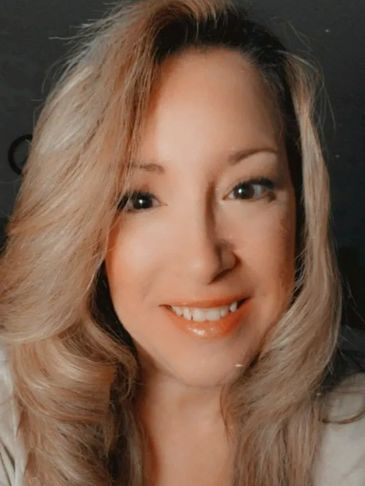
Christa is a professional writer with a passion for creative expression. She has had her poetry and short stories featured in several publications, including River Poets Journal, Wingless Dreamer, Tanka and Haiku Journals, Rune Bear, Jitter Press, and Every Day Fiction. When she’s not writing, she is likely bicycling, kayaking, or dancing. She currently resides in South Jersey with her 4 feline muses.
https://christascorner.godaddysites.com/about-us
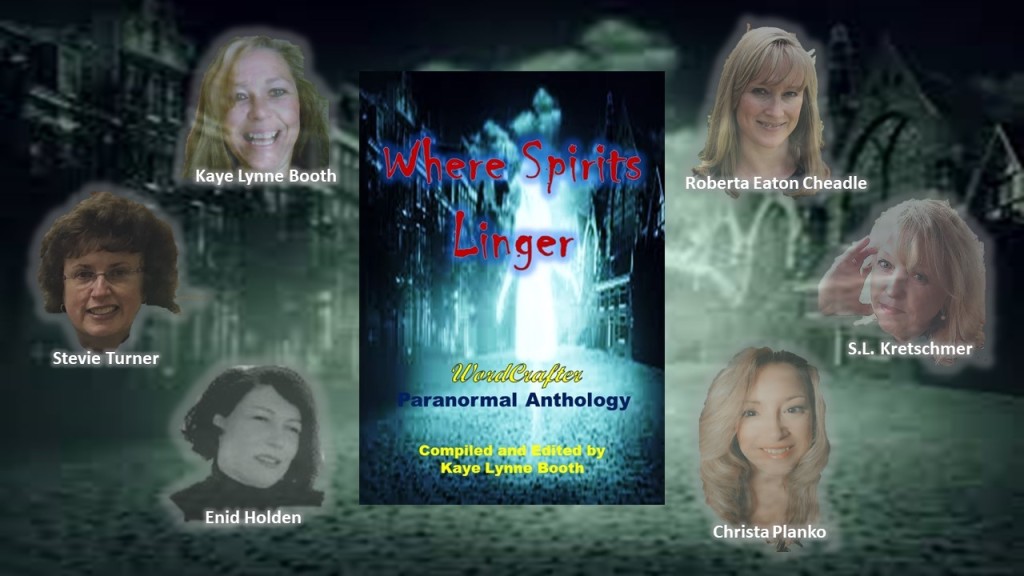
The contributors to Where Spirits Linger anthology

Purchase Where Spirits Linger
Print: https://www.amazon.com/Where-Spirits-Linger-Lynne-Booth/dp/B09DFDDB1Q
Ebook: https://www.amazon.com/dp/B09GNZJVJ5
Book your WordCrafter Blog Tour here: https://writingtoberead.com/wc-book-blog-tours-2/









![The Ferryman and the Sea Witch by [D. Wallace Peach]](https://m.media-amazon.com/images/I/416I1Q87TdS.jpg)




 roberta-writes.com
