This week’s poetry challenge is to write a senryū as per Colleen Chesebro’s commentary below:
Senryū is a Japanese form similar to haiku: three lines with a s-l-s syllable count up to 17 syllables.
Senryū are written about human foibles, while haiku are more nature related. Senryū can be cynical or humorous. This poem makes the human, not the world around them, the subject of the poem.
Senryū are easier to write than haiku. Think about the human condition: sex, family relations, love, religion, politics, and any emotions that touch on the pain we experience through sorrow, prejudice, oppression, anger, and frustration
Thanks to the inspiration provided by my good blogging friend, Harmony Kent, I have written three haiku’s for Vocal’s Quadru-Haiku Challenge. Vocal’s criteria for this Haiku challenge is simply a 5-7-5 syllable format without any of the usual rigid requirements of nature, etc. The poet can use one, any, or all of these elements.
As my poems were all inspired my my husband’s recent, unexpected illness and his admission into intensive care in hospital last week Wednesday, 4 January, where he still remains, I have also included some pictures for CFFC. The topic is eyes and I hope these pictures lighten the mood.
I am very handsome with beautiful eyes …… I am also rather shy!I’ve got my eye on you!My eyes are orange and rather bulbous.
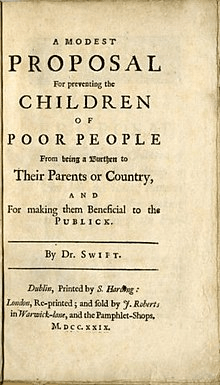
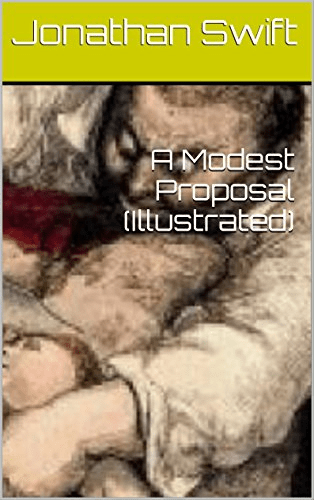
The full name of Jonathan Swift’s pamphlet is A Modest Proposal For preventing the Children of Poor People From being a Burthen to Their Parents or Country, and For making them Beneficial to the Publick. This work is a Juvenalian satire which is a type of satirical writing that uses extreme hyperbole to mock or criticize some aspect of human behaviour, society, or government. A Modest Proposal mocks heartless attitudes towards the poor, as well as British policy towards the Irish in general.
The title is itself ironic because Swift’s proposal is not at all modest but is disgusting and absurd.
The essay starts by lamenting the sad fate of the children of the poverty-stricken Irish who live in squalor because their parents are too poor to keep them fed and clothed. Swift argues that the problem of too many children could be turned into a boon if the children of the poor were fattened up and sold into a meat market at the age of one year old.
He uses hard-edged economic reasoning to support his proposal and lists six advantages to selling Irish babies as food, namely, reducing the number of Catholics, allowing the poor to pay rent, improving the menus at eating establishments, relieving poor parents of the financial burden of raising children, improving marriage and family life for the Irish by making the children assets of value and the mothers’ contributors to the financial wealth of the family, and enriching the Irish nation.
Swift goes on to cite statistics in support of his argument in the form of specific data about the number of children to be sold, their weight and price, and the projected consumption patterns of the purchasers. He also suggests recipes for the preparation and cooking of the children.
His essay concludes that his proposal would solve Ireland’s complex social, political, and economic problems.
The purpose of A Modest Proposal is to comment on England’s legal and economic exploitation of Ireland. While the essay sometimes argues that the Irish themselves are partially to blame for their country’s problems, his main viewpoint is that the English were responsible for destroying Ireland’s economy and culture.
A Modest Proposal is a shocking but excellent piece of writing that highlights political and social injustices by using logical extremes to make a ridiculous argument for solving the problem of poverty in Ireland in 1729 when the piece was published. A Modest Proposal is still relevant because extreme poverty still plagues many countries in the world.
Quotes from A Modest Proposal
“I have been assured by a very knowing American of my acquaintance in London, that a young healthy child well nursed, is, at a year old, a most delicious nourishing and wholesome food, whether stewed, roasted, baked, or boiled; and I make no doubt that it will equally serve in a fricasie, or a ragoust.”
“I have already computed the charge of nursing a beggar’s child … to be about two shillings per annum, rags included; and I believe no gentleman would repine to give ten shillings for the carcass of a good fat child, which, as I have said, will make four dishes of excellent nutritive meat.
Those who are more thrifty (as I must confess the times require) may flay the carcass; the skin of which artificially dressed will make admirable gloves for ladies, and summer boots for fine gentlemen.”
“whoever could find out a fair, cheap and easy method of making these children sound and useful members of the common-wealth, would deserve so well of the public, as to have his statue set up for a preserver of the nation.”
Happy New Year! Wishing all my blogging friends all the very best for 2023.
I have done a bit of reading during my blogging break and I’m kicking off this year with reviews for Journeys 12,13 & 14 of Teagan Riordain Geneviene’s fantastic Dead of Winter epic fantasy series.
Journey 12, Goddesses
What Amazon says
So far in previous Journeys of “Dead of Winter,” we’ve encountered villagers and city folk, religions, armies, and societies. We learned of terrifying beasts, nightwalkers, and the enigmatic Listeners. The final battle is at hand. Journey 12, brings us yet another type of extraordinary being – goddesses. Yet are they salvation? Or another complication… or even a threat.
My review
Journey 12 opens with a bang with the entrance of two goddesses who are in a conflict situation. The pair are situated above Pergesca so there is not doubt that they will influence the future of the town. Their power is also clear with descriptions such as “Strangely, the sunlight leapt from one puddle to the next, each one sparkling as the lights connected.”
Emlyn’s town is under siege by nightwalkers which continue to be revealed in all their malicious horror. The grey shadow of the ghostly realm creeps ever closer to Pergesca and the massive army of the dead continues to assemble. Winter has come.
All is not lost though as Deas Matres, the goddess who founded the movement, appears to offer help of some sort. What her help will translate into is unknown, but something is better than nothing. Boabhan’s strength is returned to her unexpectedly and that gives Emlyn courage.
I really loved the reintroduction into the story of Blodwedd as a girl. She is accompanied by her grandmother, Bronwyn, which I thought was a delightful touch.
Another imaginative and engaging episode in this enthralling tale.
Journey 13, The Harbor
What Amazon says
“Journey 13, The Harbor” is the penultimate installment of the epic fantasy series “Dead of Winter.” Action abounds as many threads are drawn together. Arawn has amassed overwhelming legions of the dead. Another unexpected but powerful foe comes into the battle. All of Emlyn’s companions and friends are in grave danger as they face insurmountable odds. Two goddesses, Coventina and Deae Matres herself, could even the odds, but gods and goddesses are known to be unreliable. Yes, Coventina is back — she was first mentioned in Journey 1, and we’ve had occasional glimpses of her throughout the Journeys. Yet her temper makes her a wildcard. Will the goddesses help? . Meanwhile the goal of the Society of Deae Matres is to re-create the Binding to again trap Arawn and any other nightwalkers in the Realm of the Dead. Yet, what about Boabhan and Lucetius? Boabhan is at least half nightwalker. Lucetius, her son, was conceived when Arawn violated her while attempting to turn her. Will they be trapped in a new Binding along with their worst enemy? This is revealed in Journey 13.
My review
The tension really ramps up in this penultimate journey in the Dead of Winter series. Arawn has amassed an enormous army of dead loyal to him, and they are marching on the city of Pergesca and the Great Library. The goddess Deae Matres also has tricks up her sleeve, but Emlyn is concerned about the numerous lives that will be lost in the battle. She is also aware that goddesses are notoriously unreliable with their assistance to mankind. The Deae Matres are also not as united as they initially appeared and not all of the sisters think that another Binding should be enacted as it is expected to have an unpleasant consequence. Perhaps this time, Arawn should be destroyed.
The advent of another goddess, Coventina, is unexpected and Emlyn is not sure whether her arrival is a good or bad thing. Even more than the goddess Deae Matres, Coventina has her own agenda and a vendetta against Arawn. Things are not always as they appear, however, and Emlyn may be surprised at how these interventions pan out.
I enjoyed the introduction of Coventina very much. She is feisty and quick tempered, but despite these character flaws, Coventina is more genuine and trustworthy than her fellow goddess. The description of Coventina as a tiny firecracker of a woman with long white hair streaked with pastel green and blue also caught my fancy.
Thyrus, the Listener, is also back in this Journey, but he is hamstrung by the rules that govern mystical creatures and is unable to provide the help he desperately wants too. He does manage to find a way around the restrictions and make an important move in the ultimate game plan.
As always, the writing is beautiful and vivid. This is a delightful example:
“As the Listener sat nonchalantly, Emlyn thought it was no wonder he usually chose to take the form of a dragon. He was splendid! She gazed at the sunlight playing upon his amazing skin. It had varied colors and halos, which merged in random spots. At one moment his hide was golden with red and green halos, then bronze and blue, and then silver rippled with purple and orange.”
Journey 14, The Veil
What Amazon says
From the very beginning, a prophecy from a creepy voice threaded throughout this story. “Winter is coming!” it warned. As the Journeys progressed, we became aware of additional related prophesies like one of the “lost white brother” and “the frozen sands.” Both of those are touched on in this concluding novella. . Other threads from the previous thirteen Journeys also come together in this volume, which concludes Dead of Winter. . As many readers said they don’t want these Journeys to end, in the final chapter, I added hints about potential future adventures for many of the characters. These are food for the imagination of readers, so that the story can continue in the mind. . This has been as much of a “journey” for me as it was for Emlyn. I’ve seen truths about myself along the way. Perhaps the same applies to you. . “Who can say? What is true for us? That with which we are born? Or that which is the manifestation of our heart and soul? I like who and what I am, as well as the way I see the world I see around me, when I am a dragon.” . Thank you for being an important part of the Journeys of Dead of Winter. Teagan Ríordáin Geneviene
My review
This last journey was an excellent conclusion to the Dead of Winter fantasy epic. Emlyn comes into her own and exhibits great strength of mind and character, however, she makes a few minor judgement errors and demonstrates doubts and anxieties which made her role and character realistic and relatable.
I enjoyed seeing Gethin, the horse whisperer, stepping out of his supporting role and taking a bigger piece of the action, along with long-time favourite characters Lucetius, Hallgeir, and Tajin. It felt fitting that they took centre stage for a part of this final chapter.
I don’t want to say too much about the final plot twisters other than they are exciting, unexpected, and momentous, a truly fitting Grande finale to an incredible story. I am left feeling quite saddened that I have reach the end of the series despite the conclusion being perfect and satisfying which is rare in my experience of fantasy books which often seem to disappoint with their endings.
I cannot resist ending my reviews of this series with a final example of the authors incredibly descriptive writing:
“The rancid odor was heavy in the air. It was a stench similar to rendered port fat that had gone bad. The odor emanated from a dozen puddles of fatty goo that dotted the ground. Nothing else was left of the nest of nightwalkers that attacked the men. Gethin was thankful for the light breeze that carried some of the vile small away.”
Purchase links for the Dead of Winter series of books
Universal Purchase Links for Dead of Winter:Journey 14, The Veil
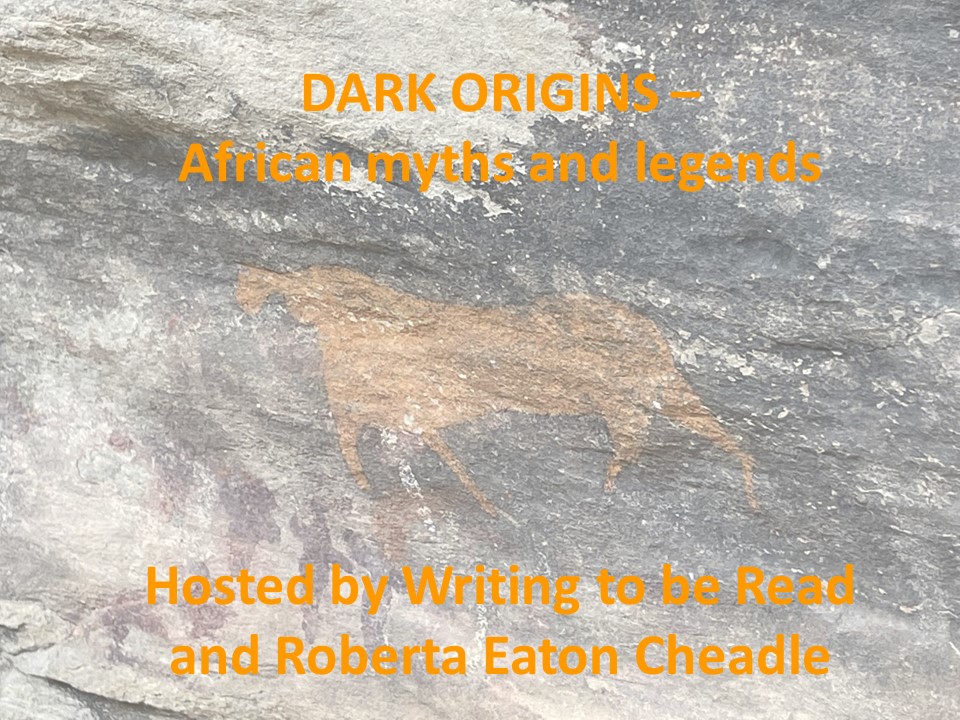
This is my last post for 2022 and it shares some of the myths and legends of the Shona people of southern Africa. Thank you to Kaye Lynne Booth for hosting. Wishing everyone a happy holiday period and a Merry Christmas.
The Shona people are part of the Bantu ethnic group native to Southern Africa. The primary home of the Shona is Zimbabwe, where they are the majority ethnic group, as well as Mozambique and South Africa.
There are five major Shona language groupings/dialects as follows: Karanga, Zezuru, Korekore, Manyika, and Ndau.
Creation story
The Shona creation story goes as follows:
“God (Mwari) created the first man, Mwedzi (the moon) in a great depth of water. Mwedzi became lonely and yearned to live on land. Despite Mwari’s warnings, he insisted on being released to the earth. Once there, he found that the earth was indeed a lonely and desolate placeand begged Mwari for a partner. Mwarisent him morning star (Hweva / Massassi) and the couple gave birth to all the vegetation on earth. After a period of two years, the lovers were separated, leaving Mwedzi desolate once again. He petitioned…
Welcome to Thursday Doors, a weekly feature allowing door lovers to come together to admire and share their favorite door photos from around the world. Feel free to join in on the fun by creating your own Thursday Doors post each week and then sharing your link in the comments below, anytime between 12:01 am Thursday morning and Saturday noon (North American eastern time). You can join in Thursday Doors here: https://nofacilities.com/2022/12/08/doors-of-christmas-past/
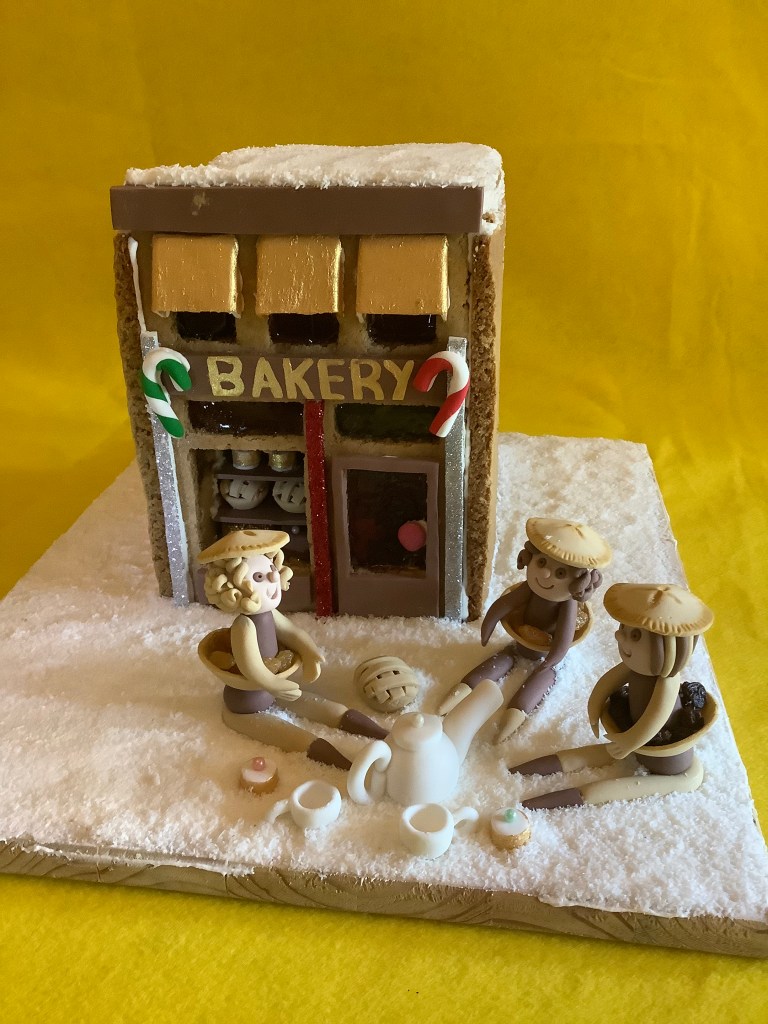
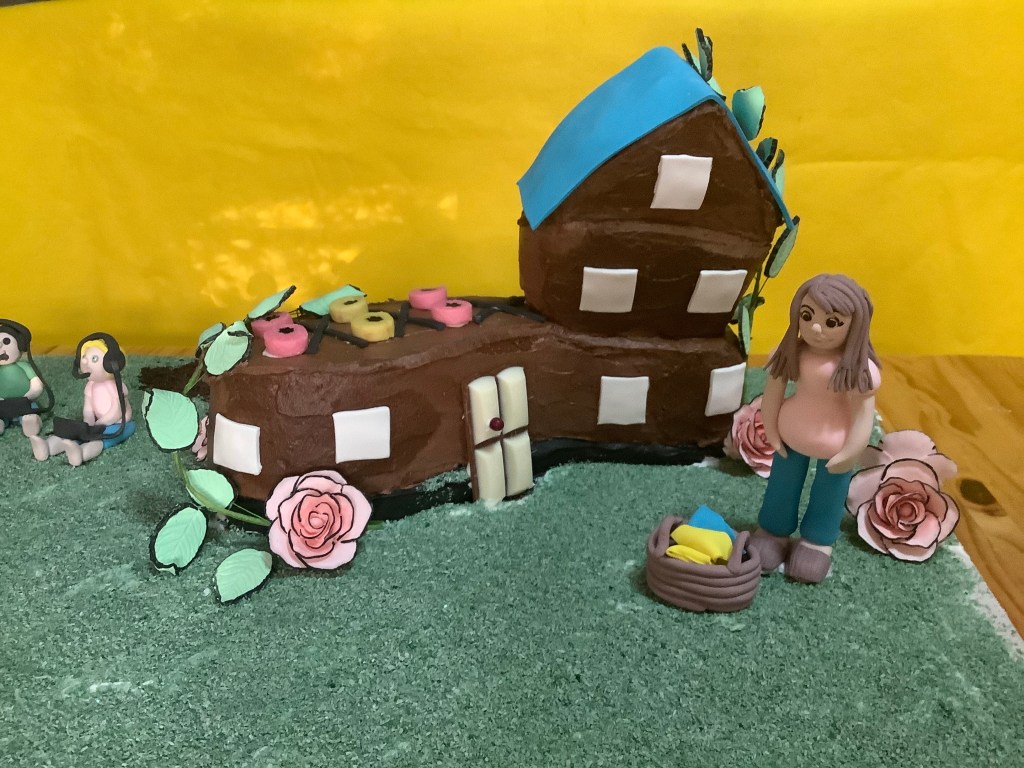
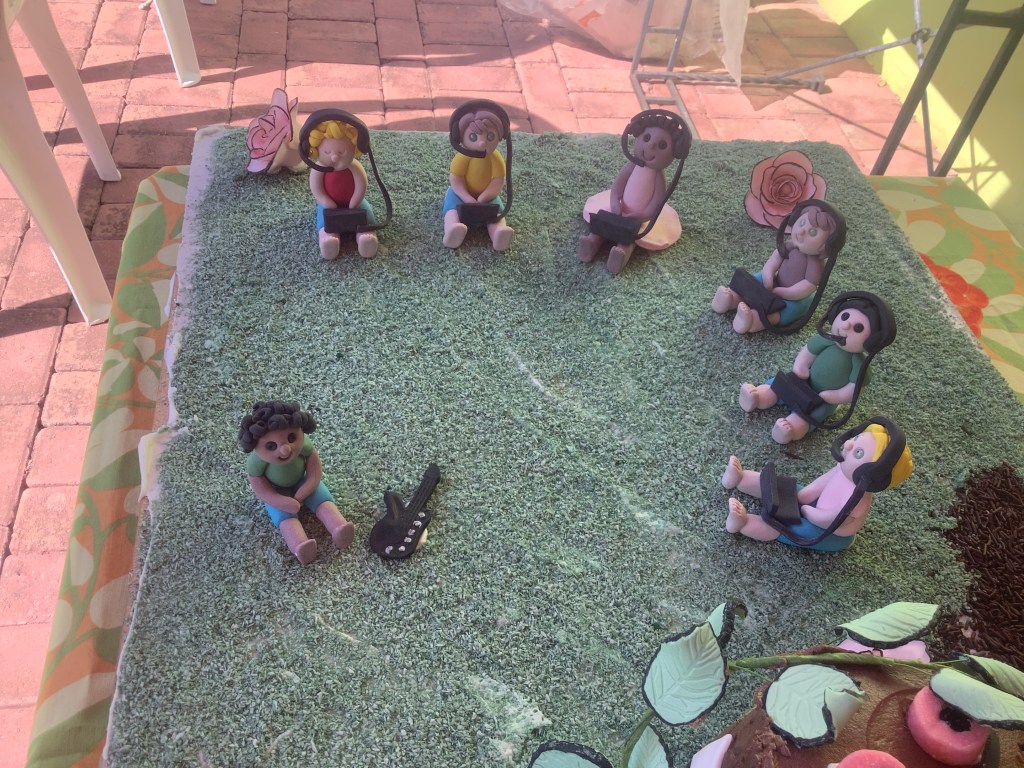
Other than my scheduled Dark Origins post, this is my last post for 2022. I have shared my gingerbread bakery project called The Great Mince Pie Escape and one of my Covid projects: Young Mother Hubbard survives lockdown and home schooling.
Wishing you all a Merry Christmas and the very best for 2023.
Gingerbread Bakery – The Great Mince Pie EscapeYoung Mother Hubbard during CovidChildren home schooling
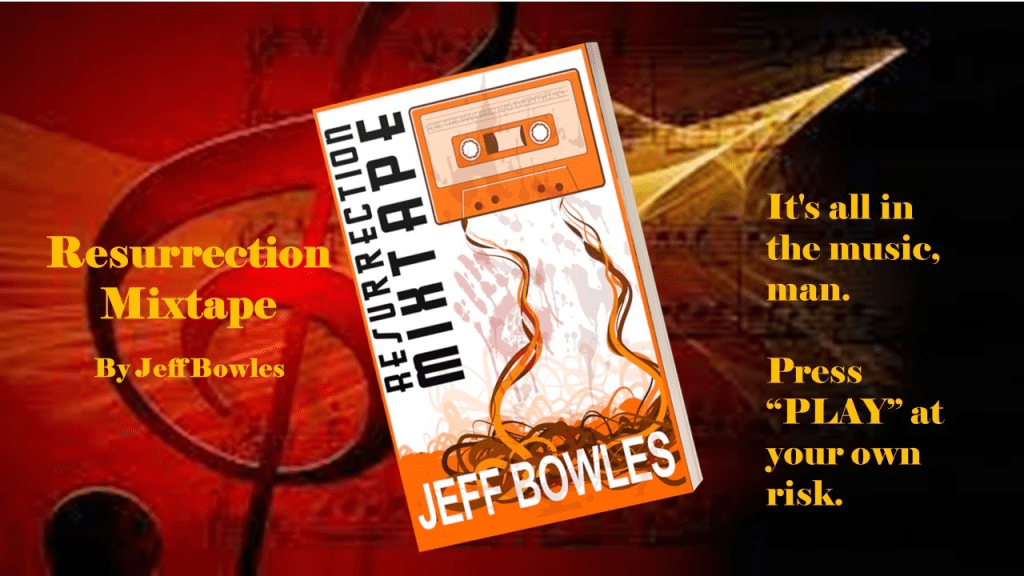
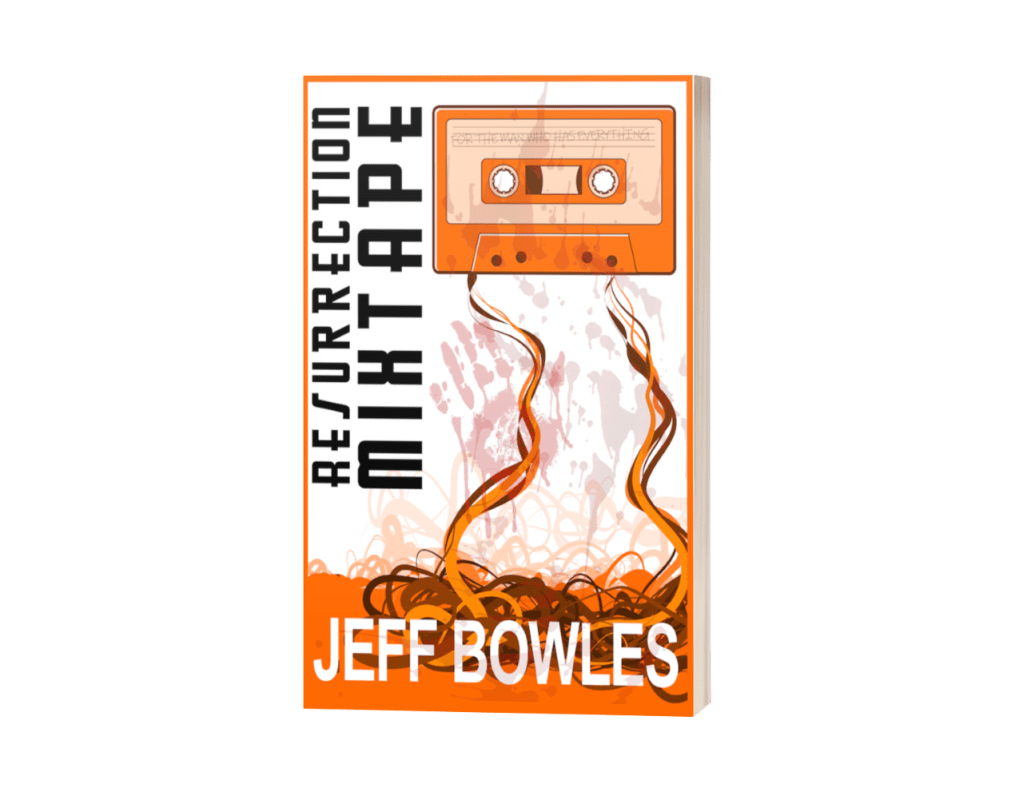
Today, I am delighted to host Day 4 of the WordCrafter Book Blog Tour featuring Resurrection Mixtape by Jeff Bowles.
Giveaway
For this tour we’re giving away 3 signed print copies of Resurrection mixtape and a $25 Amazon gift card. To enter, just tell
us the top three songs on your mixtape in the comments. Come on now. We really want to know.
Winners will be chosen in a random drawing.
Unrequited Love: The Music of Resurrection Mixtape
I’ve been a musician since I was ten years old. To my mind, I’ve been a writer just as long, though it wasn’t until I was in my early twenties that I found the dedication to pursue adult storytelling with everything I had. It’s funny that the eagerness to do one superseded the eagerness to do the other, but as a creative writing professor once told me, novel-length work is often not a game for the young.
That’s because, as we all know, writing takes discipline and patience, the measure of which even the joy of making music pales in comparison. Long nights staring at a computer screen, typing away, as I’m doing now. Months of revisions and edits and making everything just so.
I gave up music once the writing bug bit me. That’s no joke. One day, round about the age of twenty-two, I was out playing bars and coffee houses and open-mic nights, and the next I was composing my very first stab at a novel, my first few short stories, and let me tell you, they were nothing special.
When the opportunity came to write a book about pop music I didn’t hesitate. In recent years, I’ve picked up my guitar again, started singing and writing songs again, performing them on YouTube for the whole world to see. Music has become a major part of my life, just as it once was, only this time, I find I have the discipline to balance it with my love of and dedication to storytelling.
Resurrection Mixtape is a dark and humorous adventure. I wrote the initial draft by the seat of my pants, in a whirlwind of good songs and fun, twisted ideas, and yes, during a time in which the global atmosphere had become serious and sometimes frightening. To keep it entertaining was always my first goal, and for me, there’s nothing more entertaining than listening to some favorite hits from bygone years. A few notable selections from the Resurrection Mixtape itself include:
Billy Joel, Only The Good Die Young—this was a fun choice for the first song in the novel. Our main character, Jason Halifax, opens the door one evening to find his eternal crush and former best friend standing at his doorstep, despite the fact she died in a terrible house fire a year prior. Only the good die young indeed, as we shall soon see. I love this song because it’s so bouncy and light, a juxtaposition I couldn’t ignore.
The Temptations, Just My Imagination (Running Away With Me)—track two off the Resurrection Mixtape, and one of the loveliest songs I’ve ever heard. I remember my Mom singing it softly whenever it was on the radio. My mother is quite a vocalist herself, though I don’t think she’d ever admit it. Just My Imagination is, to my mind, the greatest unrequited love song ever recorded. So many of us can relate, I think, wanting someone or something we can’t have. That’s the position Jason has been in for many years, and now Emily (that’d be our formerly dead heroine) has come back to him, giving Jason another opportunity for his ultimate love.
The Weeknd, Blinding Lights—a much newer pop tune that took the charts by storm just a couple years ago. It’s a highly romantic song, in my opinion. I don’t discriminate between old and new. Some of my all time favorite music was recorded many decades ago, but The Weeknd (A.K.A. Abel Tesfaye) is one of those recording artists who makes modern sounds feel timeless. Desire and longing, I can’t sleep until I feel your touch. Sounds like the kind of prolonged separation only a resurrection mixtape can fix.
The Cars, Drive—Years ago, when Emily was still alive, she drove Jason home when he was blind drunk. She told him everything she ever wanted to say, about her love and admiration for him, but he didn’t hear any of it. His loss, right? In the present, he glances at the spent liquor bottles on his end table. “Nothing ever changes for you, Jason,” she says. Only things have changed, and perhaps not for the better. Emily is alive again, but soon enough, it becomes clear to Jason she’s brought something dark and sinister back from the netherworld.
Those are just a few of the songs appearing in Resurrection Mixtape, and there are plenty more where they came from. Music is the primary driver of the narrative, but it’s not the entire point. I’ve produced for you a story about desire and revenge, great humor, life and death, superpowers, the supernatural, and incredible physical transformation.
I wish I could say I knew what I was doing when I first picked up the guitar at the age of ten, but you know I’d be lying if I did. I’m not sure I’m any less of a novice when it comes to writing, though I’ve been doing it now for fifteen years or so. Truth is, I love to entertain, to enlighten, to make people feel something, anything.
Or maybe not. Maybe all I want to do with Resurrection Mixtape is remind you of the love you’ve found, and the music that’s shaped you, made you more human, more vulnerable. And in such vulnerability, who knows what strength you might find?
Blurb
Emily has been dead a year, but that doesn’t stop her from crashing in on her former best friend’s life in a whirlwind of mayhem, dark magic, and music. She’s been resurrected by a supernatural mixtape full of excellent but probably evil pop tunes. Amazing powers of transformation flow through her, piece-by-piece endowing her with abilities beyond anyone’s understanding. Within and without, a dark presence dwells, ready to express itself in all sorts of colorful and destructive ways. It’s all in the music, man. Press “PLAY” at your own risk.
Jeff Bowles is a science fiction and horror writer from the mountains of Colorado. The best of his outrageous and imaginative work can be found in God’s Body: Book One – The Fall, Love/Madness/Demon, Godling and Other Paint Stories, Fear and Loathing in Las Cruces, and Brave New Multiverse. He has published work in magazines and anthologies like PodCastle, Tales from the Canyons of the Damned, the Threepenny Review, and Dark Moon Digest. Jeff earned his Master of Fine Arts degree in creative writing at Western State Colorado University. He currently lives in the high-altitude Pikes Peak region, where he dreams strange dreams and spends far too much time under the stars.
Stops on the tour
Monday – December 5 – Interview – Writing to be Read
Tuesday – December 6 – Guest Post – Robbie’s Inspiration
Wednesday – December 7 – Review – Writing to be Read
Thursday – December 8 – Guest Post – Roberta Writes
Friday – December 9 – Guest Post & Review – Carla Loves to Read
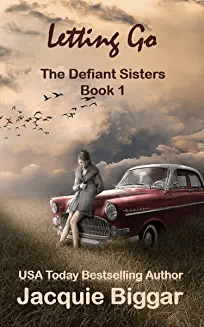
A coming-of-age novel about the pain of misconceptions and learning from them.
When life gives you lemons…
Izzy
Mom is barely in the grave and the prodigal child is here to pick the bones clean.
I don’t want her here. My sister’s defection is a wound that won’t heal, and her return simply rubs at the scabs covering my heart.
I’ve managed just fine without her. She can go back to her fancy college and forget about us- that’s what she does best anyway.
If only I didn’t need her help. Or miss her so much.
Renee
The day my dad committed suicide I ran. I’ve been running ever since.
Going home is supposed to be the answer. Instead, it makes me question every thoughtless decision I’ve made.
My sister hates me. My little brother barely knows me. And Simon… is engaged.
None of it matters- or so I tell myself. I’m here to make amends and face a past haunted by regret.
As long as I can convince myself to stay.
Letting Go is a young adult romance dealing with tragedy, restitution, and love in all its aspects. The story relates to sensitive topics that may be triggering for some readers.
My review
I reviewed this book in my capacity as a member of Rosie’s Book Review Team. If you would like your book reviewed, you can contact Rosie Amber here: http://rosieamber.wordpress.com/.
Renee Thomas escaped her dysfunctional family after the suicide of her father on the same evening as the betrayal of her long time boyfriend, Simon. Unable to cope, she just upped and left, with no regard for the effect on younger sister, Izzy, who bore the brunt of the subsequent collapse of the Thomas family. Renee has done well and earned herself a Master of science in Physical Therapy with a minor in physiotherapy. She has made peace with her past and has plans to open her own physiotherapy clinic when she learns of the death of her mother. Renee is compelled to return home and try and help her younger sister and brother overcome their loss and move forward.
Life has a way of surprising us, and Renee comes across her ex-boyfriend, the minute she enters town. He has moved on, training as a paramedic and getting engaged. In her distraction over seeing Simon, she doesn’t notice an elderly lady jay-walking across the street and accidentally knocks her down. The elderly lady turns out to be Simon’s grandmother.
Renee soon finds herself the object of Izzy’s anger and condemnation and the caregiver of Simon’s grandmother while she recovers. Worst of all, Renee discovers she still has feelings for Simon.
Izzy’s job is under threat, and her younger brother might be taken from her by the state, and this brings out the worst in Izzy. For me, Izzy was a most interesting character. She stepped up after the death of her father and disappearance of her sister, and cared for her mother, who became seriously ill, and her younger brother. Renee’s disappearing act was a bitter pill for Izzy who has subsequently built up walls of indifference to protect her damaged heart. Underneath her anger and resentment, Izzy is a caring and loving woman who has made the best of the cards she was dealt in life. I liked Izzy very much and kept hoping she would get an opportunity to uplift herself and have a bit of freedom from the responsibility and drudgery she’d assumed prior and subsequent to her mother’s death.
Renee needs to manage her feelings and interactions with Simon, help his grandmother, and deal with Izzy’s rejection. Renee was a little immature at the start of the book and didn’t seem to really understand the impact her impetuous flight had on her brother and sister. She did have some guilt and a need to make good on the situation, but she wasn’t able to prevent conflict with Izzy through understanding. As the story progresses, Renee acknowledges the errors of her past, although I didn’t think she should have stayed as she had really achieved in her personal capacity in the intervening period, she could have offered her siblings some support, even from a distance. Renee’s character experiences a lot of growth over the course of the story.
This book is exciting and compelling as Renee sets about trying to take her share of the responsibility of raising her brother and helping her sister, as well as and unravelling her feelings about Simon. Renee must also confront the demons from her past that initiated her flight on that fateful night.
Welcome to Thursday Doors, a weekly feature allowing door lovers to come together to admire and share their favorite door photos from around the world. Feel free to join in on the fun by creating your own Thursday Doors post each week and then sharing your link in the comments below, anytime between 12:01 am Thursday morning and Saturday noon (North American eastern time). You can join in Thursday Doors here: https://nofacilities.com/2022/12/01/barns-and-news/
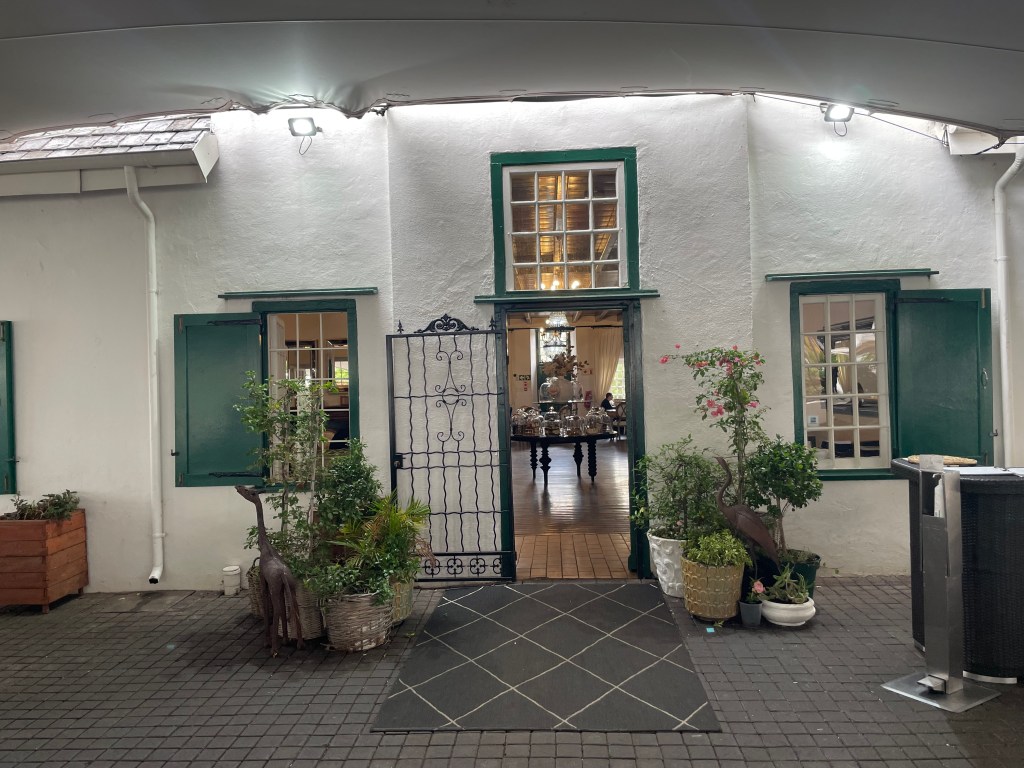
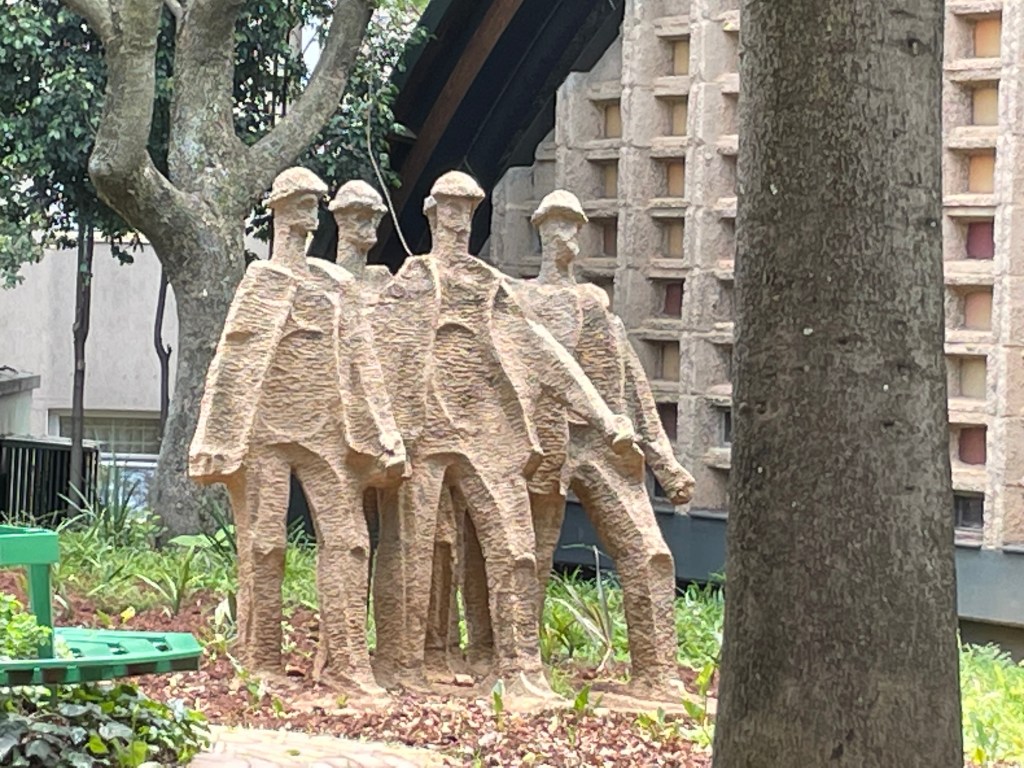
Last week I went to Olives and Plates Wits Cub and Conference Centre to celebrate the promotions of a few colleagues. Wits (University of the Witwatersrand) is the university my son attends and is also where my husband studied.
The restaurant and campus are beautiful and these are a few pictures.
Back of the Wits ClubClose up of the door – not in useSide door to the Wits ClubEntrance to Olives and Plates
I don’t know what this building is but it had a curious wall design
Dave Astor has a great post this week about books that feature poverty or abuse of others called This Gap Is Not a Clothing Chain. You can read it here: https://daveastoronliterature.com/2022/11/27/this-gap-is-not-a-clothing-chain/. Dave challenged his readers to mention some books that feature this theme and these are mine.
I have been a little tricky with my post though, because all the quotes come from a specific scene or set of related scenes in each of the books below as poverty and abuse are not necessary the primary theme of the novel. Can you guess which books the quotes are from?
Book 1 – English writer – gothic, Bildungsroman, romance novel
“The punishment seemed to me in a high degree ignominious, especially for so great a girl—she looked thirteen or upward…to my surprise, she neither wept nor blushed. Composed, though grave, she stood, the central mark of all eyes…her sight seems turned in, gone down into her heart. She is looking at what she can remember, I believe; not at what is really present. I wonder what sort of girl she is—whether good or naughty.”
“Life appears to me too short to be spent in nursing animosity or registering wrongs. We are, and must be, one and all, burdened by faults in this world; but the time will soon come when, I trust, we shall put them off in putting off our corruptible bodies…I hold another creed, which no one ever taught me, and which I seldom mention, but in which I delight, and to which I cling; for it extends hope to all; it makes Eternity a rest—a mighty home, not a terror and an abyss.”
“What my sensations were, no language can describe; but just as they all rose, stifling my breath and constricting my throat, a girl came up and passed me; in passing, she lifted her eyes. What a strange light inspired them!…It was as if a martyr, a hero, had passed a slave or victim, and imparted strength in the transit. I mastered the rising hysteria, lifted up my head, and took a firm stand on the stool.”
Book 2: English writer – dystopian social science fiction novel
“But simultaneously, true to the Principles of doublethink, the Party taught that the proles were natural inferiors who must be kept in subjection, like animals, by the application of a few simple rules.”
“There was a vast amount of criminality in London, a whole world-within-a-world of thieves, bandits, prostitutes, drug-peddlers, and racketeers of every description; but since it all happened among the proles themselves, it was of no importance.”
” ‘The proles are not human beings,’ he said carelessly.”
Book 3: English writer – dystopian novel
“She liked even less what awaited her at the entrance to the pueblo, where their guide had left them while he went inside for instructions. The dirt, to start with, the piles of rubbish, the dust, the dogs, the flies. Her face wrinkled up into a grimace of disgust. She held her handkerchief to her nose.
“But how can they live like this?” she broke out in a voice of indignant incredulity. (It wasn’t possible.)”
“In the Beta-Minus geography room John learnt that “a savage reservation is a place which, owing to unfavorable climatic or geological conditions, or poverty of natural resources, has not been worth the expense of civilizing.””
“. . . upwards of five thousand kilometres of fencing at sixty thousand volts.”. . .
“”To touch the fence is instant death,” pronounced the Warden solemnly. “There is no escape from a Savage Reservation.”. . .
“Those, I repeat, who are born in the Reservation are destined to die there.”. . .
Leaning forward, the Warden tapped the table with his forefinger. “You ask me how many people live in the Reservation. And I reply”—triumphantly—“I reply that we do not know. We can only guess.””
Book 4: Australian author – family saga
“It’s not worth getting upset about, Mrs. Dominic. Down in the city they don’t know how the other half lives, and they can afford the luxury of doting on their animals as if they were children. Out here it’s different. You’ll never see man, woman or child in need of help go ignored out here, yet in the city those same people who dote on their pets will completely ignore a cry of help from a human being. ”
“We’re working-class people, which means we don’t get rich or have maids. Be content with what you are and what you have.”
“We all have contempt for whatever there’s too many of. Out here it’s sheep, but in the city it’s people.”















 roberta-writes.com