#Open Book Blog Hop – Marketing your books

29861-52

This week on the Open Book Blog Hop the topic is all about the best way to market our books.

Marketing the books we write seems to be the biggest concern of most writers, whether they are self-published or traditionally published. Unless you are a well known name, even traditionally published authors seem to have to spend a fair bit of their time marketing their books on-line and physically.

My first children’s book, Sir Chocolate and the strawberry cream berries story and cookbook was published into a social media vacuum in August 2016. As it was my first book, it gained a fair amount of interest from family and friends but I knew when I published the second book, that I had to look further for a market.

I started looking into social media. Firstly, I created a Facebook account and that was hilarious. I called it Sir Chocolate and I got a lot of requests for friendship by some rather interesting characters including a platoon of USA military personnel, according to their profiles in any event. I quickly changed it to Robbie Cheadle and my sister showed me how to create a page called Sir Chocolate Books which worked much better.

I created a twitter account and spent a bit of time learning how to use twitter and finding other authors and reading their tweets. I soon realised that all the authors had blogs. What was a blog? I followed a number of the links and saw that WP was a popular choice for these “blogs”. I spend the whole of one Sunday finding WP and setting up my blog step-by-painful-step.

I was very lucky with my blog. I used the search tool to look for other authors and quickly came across Smorgasbord, run by the amazing Sally Cronin. I started following her posts and reading and commenting as I saw other people doing. Sally came over and had a look at my blog and kindly shared one of my posts. It was a Christmas post about how to make a red robin out of fondant. I went over to her blog and thanked her and followed all the links to the bloggers who had commented on her post. I read and commented on a few of their posts and followed them all. That is how I became involved in the amazing writing and blogging community that is my mainstay in this strange social media world. Blogging is different to other social media, it is interactive and you learn a whole lot of fascinating and useful things. You find book reviews that lead you to fantastic new writers and their books and discover historical, scientific and natural wonders shared by bloggers all over the world.

My blog is the marketing tool I use the most. I try not to use it to post to many specially book promotional posts. I like to participate in writing prompts and meet other participants. My books are along the sidebar of my blogs so people who like my writing can find them if they want to.

Another thing I do quite often is write guest posts. These are usually about some historical event or circumstance that I have found interesting or which has prompted a piece of writing. The bit about my books is usually at the end and people can continue to read it if they are interested in it or just read the actual article.

I am not a great marketer, but I do let people know I have books and I try to support my fellow authors as much as possible because I like to and because I think that you need to offer visitors to your social media variety and insights into other peoples books and writing. It is a bit like the marketing psychology that is used in shopping malls when stores that sell similar products are grouped together. You go to a certain section of the mall to buy shoes and another to buy books. In that one place you get to look around and make a selection from all the different products that are on offer.

How to other authors market their books? You can find out here:

Rules:

  1. Link your blog to this hop.
  2. Notify your following that you are participating in this blog hop.
  3. Promise to visit/leave a comment on all participants’ blogs.
  4. Tweet/or share each person’s blog post. Use #OpenBook when tweeting.
  5. Put a banner on your blog that you are participating.
You are invited to the Inlinkz link party!

#Poetrychallenge – Picture prompt

Disillusionment,

in shades of evenings warning

tells of rains to come

***

Trying to trap a

reluctant and resistant

soul, colours life red

Written for Colleen Chesebro’s poetry challenge. You can join in here: https://colleenchesebro.com/2019/11/19/colleens-2019-weekly-tanka-tuesday-poetry-challenge-no-154-photoprompt/

#Writephoto – Light

I decided to introduce a poltergeist into my currently nameless Boer War supernatural historical novel. This is an unedited extract:

“You may let loose some sort of bad spirit or phantom into your home,” Michelle repeats dumbly. She stares at the scene with a sort of incredulous avidity and her fingers twitch slightly.

The mouse moves suddenly underneath her hand. The curser moves to the top of a fresh pages and stops, waiting … blinking brightly on the blank screen.

Oh my God. What’s happening? The words scream in her head.

Hello Bitch

Michelle stares in shock at the words that have appeared on her screen.

You are a traitor to your sex marrying a man like Tom. I’m going to get that lying, cheating husband of yours and then I’m going to get you. I’m going to teach you both a lesson you won’t ever forget.

“Nooooo,” the moan rasped from her dry throat. “I don’t believe this.”

You’d better believe it, Bitch.

The face of a girl of about sixteen years old appeared on the screen. She has long dark blonde hair tied neatly into two plaits which peep out from beneath a bonnet that covers her head and makes her face shadowy. Michelle can see her eyes; dark and hate-filled they glare at her from beneath its wide brim. Only see the top of her old-fashioned dress shows; it has buttons running down the front and a lace collar.

The girl’s mouth moves and Michelle can hear her voice through the speakers. “Don’t think that Pieter van Zyl or that pompous Englishman, Robert, can save you. If they interfere with me, I’ll take care of them too.”

Michelle hangs her head and clasps her forehead in both of her hands. Her temples have exploded into a migraine. She sits here, holding her head for what seems like hours, but it’s actually only twenty minutes, before the pain recedes sufficiently for her to look up. The late afternoon sun is streaming through the window and the bright light obscures her computer’s screen. Pulling it roughly across the desk, she sees that the screen has reverted to her screen saver. She reaches out and moves the mouse. The screen is perfectly normal, her internet home page is still open at the article about the risks of using an Ouija board. She shuts her computer down and gets to her feet. It’s a bit early, but she thinks a drink is in order.

Thank you for the inspiration, Sue Vincent. You can get inspired here: https://scvincent.com/2019/11/21/thursday-photo-prompt-light-writephoto/

Guest author: Robbie Cheadle – Charlotte Brontë

Sue Vincent has hosted me with another post about the Brontë family, this time I have focused on Charlotte Brontë.

I found a lovely post about the tiny books that I also wrote about in my post, over at Annika Perry’s blog. You might like to visit it and read a bit more about the Brontë Museum: https://annikaperry.com/2019/11/21/the-little-books/

I also read and reviewed a lovely book called The Brontë Cabinet which includes some fascinating information about the Brontë’s. You can read it here: https://robertawrites235681907.wordpress.com/2019/03/27/bookreview-the-bronte-cabine-three-lives-in-nine-objects-by-deborah-lutz/

Guest author: Robbie Cheadle – Charlotte Brontë

Background

Charlotte was the third and middle daughter born to Patrick and Maria Branwell Brontë. She had two older sisters, Maria and Elizabeth, who both died as children from tuberculosis, and two younger sisters, Emily and Anne. She also had a younger brother, Branwell. Subsequent to their mother’s death from uterine cancer, Charlotte and her young siblings were brought up in Haworth, Yorkshire, by their father, Patrick, and their aunt, Elizabeth Branwell.

Maria, Elizabeth, Charlotte and Emily all attended Clergy Daughters’ School at Cowan Bridge in Lancashire during 1824. The fees were low, the food of a poor quality and the discipline harsh and often unfair. It was reported that the food provided by the school was generally poorly cooked and unhealthy, and the cook was “careless, dirty, and wasteful”.

Lowood Institution, the school which features in Charlotte’s famous novel, Jane Eyre, is said to have been based on Charlotte’s recollections of Cowan Bridge School.

Maria and Elizabeth both sickened during their time spent at this school and were effectively sent home to die in June 1825.  They died within six weeks of each other at the ages of eleven and ten years old, respectively. After the deaths of his two oldest children, Patrick removed Charlotte and Emily from the school and the remaining four siblings were all home schooled for five years.

Continue reading here: https://scvincent.com/2019/11/21/guest-author-robbie-cheadle-charlotte-bronte/

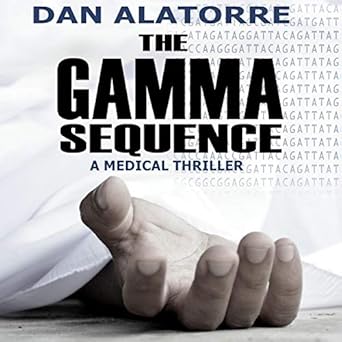
#Bookreview – The Gamma Sequence by Dan Alatorre

Book reviews

What Amazon says

Geneticist Lanaya Kim must do what authorities haven’t – tie together the “accidental” deaths of several prominent scientists around the country to show they were actually murdered. Over the past two years, geneticists have died in what appear to be accidents, but Lanaya knows otherwise. If she tells her secrets to the authorities, she risks becoming a suspect or revealing herself to the killer and becoming an open target. Hiring private investigator Hamilton DeShear may help her expose the truth, but time is running out. The murders are happening faster, and Lanaya’s name may be next on the killer’s list. But when Lanaya and DeShear start probing, what they discover is far more horrifying than anyone could ever have imagined.

My review

Hamilton “Hank” Deshear is just a regular guy who, due to some unexpected life curveballs, has ended up losing his job in the police force and also his home. Hank is struggling to re-establish himself financially in his new occupation as a self-employed private investigator.   When Lanaya, a genetic scientist, contacts him and claims that the recent high-profile death of the well-known and wealthy head master of a local private school is not an accident, but rather a murder, Hank starts being drawn into the shadowy world of a serial killer. The deceased head master is the latest in a series of accidental deaths of fellow current and former genetic scientists. The link between all of these people and Lanaya is that they all worked together approximately ten years previously for a progressive genetic engineering research laboratory.  Lanaya believes all the deaths are murders and that she is next on the list. She is seeking to employ Hank to track down the responsible party and stay alive. The murderer, however, is not an ordinary man. He is the product of genetic engineering aimed at producing a superior human specimen called the “Gammas”.

Soon Hank is on the run, together with Lanaya, hoping they can escape the warped justice of the murderer and unravel the greater mystery that underlies his vengeful murder spree.

Deshear is a likeable and easy going man, who exhibits ingenuity, determination and resourcefulness which quickly gets the reader on his side and routing for his success in tracking down the murderer. His background in the police force and his heroic past actions make his role in the book believable and realistic.

Lanaya grows on the reader. Initially, she comes across as being quite snotty and superior, but it soon becomes obvious that her attitude is due to fear and distrust of other people. She is the epitome of an innocent person who has ended up in trouble due to being in the wrong place at the wrong time and possibly not giving enough thought or consideration to the strange and unorthodox behaviours and work methodologies she saw around her. Lanaya proves herself to be brave and agile minded when both she and Deshear end up in an unexpected situation.

This book is fast paced and exciting, with a unique and well thought out plot which will intrigue readers who enjoy medical thrillers, or any other kind of thriller. The medical references are not unnecessarily complex or detailed and it is not necessary for the reader to have any sort of medical background to enjoy this book. The author managers to pull all the complex threads of the story neatly together at the end, leaving the reading with a satisfying conclusion but interested in coming back for more.

Purchase The Gamma Sequence by Dan Alatorre

Amazon US


#Openbook : Open book blog hop – 18 November

IMG_3117

How many hours a day do you write? How long on average does it take you to write a book?

I work full time during the week, maintain my blogs and also look after my family, in particular, I assist Michael with his homework. As a result the word hours in “How many hours a day do you write?” is not even a remote possibility for me during the working week. I snatch time to write by making 30 minutes here, and on a very good day, an hour there. I write when I get the chance and I am not fussy about the where of it either.

I can  write anywhere including in my car while waiting for children to finish school, on an aeroplane while travelling, during my lunch hour if my work load isn’t unduly heavy and any other conceivable place you can think of. I am also not overly concerned about the tool I use for my writing and, although I prefer to write using my laptop, I sometimes use my cell phone to write poems and little passages that come to mind or write them down on bits of paper, or, if I am particularly organised that day, in a writing book.

On Saturdays and Sundays I usually write from 6 am to 8 am and then again later in the day, if possible. I usually manage to write between 3 000 and 4 000 words on a weekend, depending on how much research is required. I aim for about an additional 500 words at least three days a week. That amounts to approximately 4 500 to 5 500 words per week.

As a result, a book takes me between five and six months to write and then another five to six months to edit and finalise for publishing. My aim is to publish one novel per year. I have also, to date, published one children’s picture book per years. These picture books comprise my Sir Chocolate picture and recipe books and are fairly short. The time saved with the writing, however, is used up through the making and photographing of the cake and fondant art  illustrations.

Writing is not my source of income, it is something I currently do for pleasure so I can’t devote any more time and effort to it than the stated 5 000 words per week. My work job sometimes extends to a nine or ten hour day and also weekend work and that has to take precedence over writing, as do my children’s needs.

What do other writers have to say about this topic? Find out by following the link below.

Rules:

  1. Link your blog to this hop.
  2. Notify your following that you are participating in this blog hop.
  3. Promise to visit/leave a comment on all participants’ blogs.
  4. Tweet/or share each person’s blog post. Use #OpenBook when tweeting.
  5. Put a banner on your blog that you are participating.
You are invited to the Inlinkz link party!

Guest author: Robbie Cheadle – The Brontë Family – Patrick Brontë

I am over at Sue Vincent’s lovely blog with the first in a series of posts about the Brontë family. Thank you, Sue, for hosting me.

Patrick Brontë – the patriarch

In the beginning

Patrick Brontë, born Brunty, was the oldest of ten children born to Hugh Brunty, a farm labourer, and Alice McClory. He grew up in the small village of Drumballyroney in Country Down, Northern Ireland. At the age of twelve, Patrick was apprenticed to a blacksmith, and the to a linen draper and a weaver until he became a teacher in 1798. In 1802, he was given an opportunity to study theology at St John’s College, Cambridge, from where he received his degree in 1806. He was appointed curate at Wethersfield in Essex, where he was ordained a deacon of the Church of England in 1806 and into the priesthood in 1807.

Patrick Brontë met his wife, Maria Branwell, during his time as a school examiner at Wesleyan Academy, Woodhouse Grove School near Guiseley. The couple married on 29 December 1812 following which they moved into a house on Halifax Road, Liversedge where their first two daughters, Maria and Elizabeth, were born. In 1815, he moved on to become the perpetual curate of Thornton and his four other children, Charlotte, Patrick Branwell, Emily and Anne were all born there. The Brontë family moved to Haworth in April 1820 after Patrick was offered the perpetual curacy of St Michael and All Angels’ Church in Haworth.

Continue reading here: https://scvincent.com/2019/11/16/guest-author-robbie-cheadle-the-bronte-family-patrick-bronte/

#Bookreview – The Playground by C.S. Boyack

Book reviews

What Amazon says

The hottest new toys of the Christmas season are the Playground Network dolls. They contain a worldwide social network for children. Except the network is controlled by a ruthless businessman with dreams of power.

To reach his goals he turns to the occult. Will our children make up his personal army? Could we have an enemy soldier in every home?

Gina Greybill is a cancer survivor who stumbles into her own brush with the paranormal. She wants nothing to do with it, but may be the only one who can bring down the Playground Network. To do it she’ll have to embrace her new situation, and recover the next generation of Playground software.

There is competition for the software in the form of a brutal thug named Clovis. He’s bigger, more ruthless, and more experienced. To top it all off, he has a head start.

The Playground is suitable for mature readers, due to violence and mature themes.

My review

All over the USA, young kids are begging for their parents to by them Playground Network dolls. They are available for different age groups and for boys and girls. The huge attraction with these dolls is that they connect to a network which allows each doll to recognize other dolls and know their names. Through the dolls, the children can make friends and talk to each other on the network. It sounds great, a way for lonely children to make new friends and for kids to help each other out with things like their homework.

The creator of the network, however, does not have such innocent plans for it. He intends to use it to control the children and make them abide by his commands. He must be stopped.
Clovis is a small-time criminal who does occasional jobs for a hood called Tommy. Clovis is semi-retired but he agrees to take on a last job for Tommy and track down a programmer who has gone missing with the specific software he was developing for Tommy.

Dr Gina Greybill is a qualified doctor who is in remission from cancer. She has given up working in a hospital and taken on work as a caregiver for elderly people who are no longer able to look after themselves adequately. After the death of her latest patient, Gina obtains a new job as the healthcare specialist for an elderly man who lives in a rather creepy mansion with only his part-time housekeeper to company. Gina quickly discovers that she has been identified as the one person who can track down an evil demon who is attacking children throughout the country.

Gina is an interesting character who soon demonstrates her abilities to adapt to difficult and unusual circumstances and to reason on a high level. She is a strong female character with great determination and bravery. I really enjoyed watching her character develop as this story unfolded.

Clovis is a bit of an enigma as he isn’t truly evil, but he also isn’t a good person. He is an individual who does what he must in order to survive. He does, however, have a strong sense of ethics and morals.

The threads in this story are cleverly woven together to create an interesting and clever story tapestry which is guaranteed the reader on the edge of his/her seat. I enjoyed the technological innovation in this story and would recommend it to lovers of sci-fi, fantasy and the supernatural.

Purchase The Playground

#Writephoto – Glow

The beams of the torches bounce off the metal sides of the subterranean bunker, creating an unearthly glow.

The sight that meets their startled eyes is incredible. The contained unit has been entirely sealed off from the outside world for over fifty years with no access to food, sunlight or heat.

The reflected light illuminates the numerous shinning bodies going about their daily business in the dark below, exactly as they have been for many preceding years.

“How did they get in here?” A torch sweeps the slippery walls, looking for the hidden entrance, and stops on a ventilation pipe. “They must have fallen through there. There is no other way they could have accessed this desolate place.”

“My God, how have they been surviving down here?”

“It looks like cannibalism.” The bright light stops on a heap of corpses, bringing them into sharp relief. The dead bodies are riddled with holes and bite marks, all of which are located in their abdomens.

“Cannibalism,” the white face of the woman wrinkles in disgust.

“Yes, this type of cannibalism is not that surprising considering the communal attitude prevalent in this society. They share resources more effectively than other beings and have communal stomachs. Scientists have found that they consider the contents of their stomachs to be common property.”

“Really, I didn’t know that. Cannibalistic ants, who would have believed it.”

This piece of fiction is written for Sue Vincent’s weekly write photo challenge. You can join in here: https://scvincent.com/2019/11/07/thursday-photo-prompt-glow-writephoto/


#Bookreview – The Desolate Garden by Daniel Kemp and a short author interview

Book reviews

The Desolate Garden (Heirs And Descendants Book 1) Kindle Edition

What Amazon says about The Desolate Garden

After Harry Paterson is summoned to London following his father’s murder, he finds out that the late Lord Elliot Paterson had discovered hidden information dated all the way back to 1936… and a vast quantity of money erased from the accounts.

Mysterious initials and an address in Leningrad – a major port in former Soviet Union – are his only clues.

Together with the attractive Judith Meadows, Harry must unravel his father’s mysterious death – and figure out the mystery hidden in the files of the Royal Government Bank.

Praise from readers:

★★★★★ – “I never saw what was coming… Highly recommend this book.”

★★★★★ – “Several surprise twists, a budding romance, and a feel of having visited England are just some of the gifts of this story. For any history buff, this is delicious buffet of entertainment. Mr. Kemp has done his research well.”

★★★★★ – “Lots of twists and turns in this political thriller. If you are a fan of the genre, you will find this a fun and nicely paced read.”

★★★★★ – “Well-written and intriguing, with characters that are deep and likable. Fiction and history are mixed together in a very interesting way. I very much enjoyed this book.”

My review

Harry Paterson’s father, Lord Elliot Paterson, has been murdered and the British Secret Service are investigating the mysterious circumstances of his death. Under the guise of keeping him safe during the investigation, Harry is coerced into teaming up with a younger woman named Judith Meadows who is tasked with delving into his past and relationships with his father in order to uncover any potential leads or clues to his death. Harry reluctantly enters into this arrangement, but does not initially reveal to Judith his knowledge of certain unorthodox payments that are recorded in the ledgers of the family business, a bank that finances unusual projects by the royal family and members of government and other aristocratic families.

As the two start working together, initially working at cross-purposes, but gradually become more tolerant, and finally fond, of each other, they become steeped in a world of deception and lies by Harry’s grandfather, Lord Maudlin Paterson, whose sexual indiscretions have resulted in links between his unsuspecting English descendants and descendants living behind the “iron curtain” in Russia during the period of the cold war.

For me there were four very noteworthy aspects of this book, as follows:
1. This book is beautifully written in the most descriptive and vivid language, but is not laborious or long-winded. The entire story is subtlety compared to the life cycle of a garden and each chapter heading links up with this underlying theme. As your read this book, the cleverness and applicability of this metaphor to the story becomes more and more apparent;
2. The amount of research that has gone into this story, and the authors amazing knowledge of historical events concerning the period of history spanning the Spanish Civil War, the events leading up to the rise of communism in the USSR and the Cold War, is inspiring and I definitely finished this book with a far more comprehensive understanding of politics and social tensions during this time than when I started;
3. The authors characterisation of the main characters, Harry and Judith, as well as all of the lessor characters is very well done leaving the reader not only feeling deeply for their internal conflicts and emotional confusion, but also really getting into their heads and starting to think just like they do. I think this is an excellent writing skill that I don’t come across that often, particularly in modern books; and
4. A fast paced and action packed story that keeps the reader flipping pages and results in a real sense of sadness when the plot finally unravels and the book ends.

I listened to the audio book of The Desolate Garden, narrated by William Merryn Hill and was impressed by how well matched the reading style and voice of the narrator was with this particular book. That is not always the case with audio books and I find that a mismatched narrator can ruin a good story for me. In this case, listening to the audio book was a bonus and increased my enjoyment of this great story.

Meet Daniel Kemp
Daniel Kemp

Daniel Kemp’s introduction to the world of espionage and mystery happened at an early age when his father was employed by the War Office in Whitehall, London, at the end of WWII. However, it wasn’t until after his father died that he showed any interest in anything other than himself!

On leaving academia he took on many roles in his working life: a London police officer, mini-cab business owner, pub tenant and licensed London taxi driver, but never did he plan to become a writer. Nevertheless, after a road traffic accident left him suffering from PTSD and effectively–out of paid work for four years, he wrote and self-published his first novel –The Desolate Garden. Within three months of publication, that book was under a paid option to become a $30 million film. The option lasted for five years until distribution became an insurmountable problem for the production company.

All seven of his novels are now published by Creativia with the seventh–The Widow’s Son, completing a three book series alongside: What Happened In Vienna, Jack? and Once I Was A Soldier. Under the Creativia publishing banner, The Desolate Garden went on to become a bestselling novel in World and Russian Literature in 2017. The following year, in May 2018, his book What Happened In Vienna, Jack? was a number one bestseller on four separate Amazon sites: America, UK, Canada, and Australia.

Although it’s true to say that he mainly concentrates on what he knows most about; murders laced by the mystery involving spies, his diverse experience of life shows in the short stories he writes, namely: Why? A Complicated Love, and the intriguing story titled The Story That Had No Beginning.

He is the recipient of rave reviews from a prestigious Manhattan publication and described as–the new Graham Green–by a highly placed employee of Waterstones Books, for whom he did a countrywide tour of book signing events. He has also appeared on ‘live’ television in the UK publicising that first novel of his.

He continues to write novels, poetry and the occasional quote; this one is taken from the beginning of Once I Was A Soldier
There is no morality to be found in evil. But to recognise that which is truly evil one must forget the rules of morality.

You can contact Mr. Kemp via twitter..https://twitter.com/danielkemp6
Via FaceBook… https://www.facebook.com/dannyandpatkemp
You can also see all of his books here on Creativia… https://www.creativia.org/daniel-kemp-mystery-thriller-author.html

What inspired you to write The Desolate Garden?

One evening, having dined and wined at Berry Bros and Rudd, the oldest wine merchants in London, tasting the finest Barolo wines and sampling the chef’s menu, prudence dictated I should stay overnight at Duke’s Hotel, St James’s, a mere stagger across the road. Sometime after that occasion I dreamed about the opening sequence to the book; an attractive woman seated in the martini bar of that hotel asking Harry Paterson to tell her a joke. The rest of the story is, of course, based on vivid imagination.

I must try this wine and see if I can have such a great dream, although I would prefer an attractive man in mine and not Judith, interesting as she is.

The detail in this book about the lifestyles of the gentility in England is amazing. Did you research this aspect or is it modeled on personal experience?

A bit of both really. In order to get the chronological order of events correct then that took a great deal of research and a lot of hand written notes. Family relationships down through the generations were often a puzzle and had me pulling my hair out almost as many times as I screwed up those notes. But for the majority of time The Desolate Garden was an absolute joy to write and a period of my life I never thought possible.

It really does sound like you had fun writing this. I am sure I enjoyed listening to it just as much [smile].

Judith is a strong female character with an interesting background. Does her character reflect the characteristics of any female in your life or is she completely fictional?

Oh yes, she’s real. Intriguing, isn’t she? I don’t think I used any imagination with Judith. I know at least one person who would love me to base a book completely around her, but I won’t tell you who that is.

I think I’ll take Judith in that dream after all. Maybe she can teach me some things about life and dealing with it.

There are a number of intriguing characters in The Desolate Garden, how did you keep track of them all while you were writing this book?

The storyline to this book was, as I said, confined to paper which in itself is confusing, but being my first attempt at writing I had no idea how to go about it differently. That lacking part of my education did present logistical problems but thankfully all has now been improved upon. From what I understand everybody loves developing their imaginary characters and I’m not different in that regard, but perhaps the complexity of my past life has meant crossing the paths of a diverse collection of people both home-grown and foreign from which a vast accumulation of information has been stored away.

They do say write what you know and you seem to have done that. What an interesting life you have led.

What’s next for author, Danny Kemp?

Danny Kemp died. He was told to die before being resurrected as Daniel Kemp when approached by his current publishers. The name of Daniel sounded more intellectual than—common as muck Danny! There are three surviving stories under the deceased common name, one of them being—Falling Greenhouses and Digestive Biscuits, a fifteen-minute bestselling read on Amazon (it wasn’t but it deserved to be) was just one and typifies Danny K’s sense of the ridiculous.

Daniel Kemp, on the other hand, is a boring writer of spy trivia. Having completed a fourth book in the Lies and Consequences series, A Covenant Of Spies he is engaged to be married to the third novel following on from Percy Crow and The Desolate Garden. At present this follow-up is simply called Number Three which shows beyond any reasonable doubt how boring Daniel K is. The marriage is in its blossoming days, but to those who are aware of his wandering eye, it is scheduled to last no longer than the spring of next year.

Daniel K’s kind and understand publishers have released seven full novels and two novella’s; one based loosely on facts. The Desolate Garden is available as an audiobook and is translated into Spanish.

Amazon Author’s Page to Daniel Kemp—  http://Author.to/Daniel

Danny also has a great blog which you will find here: https://theauthordannykemp.com/

Thank you, Danny, for visiting me today at Roberta Writes with these terrific answers to my questions.

Purchase The Desolate Garden