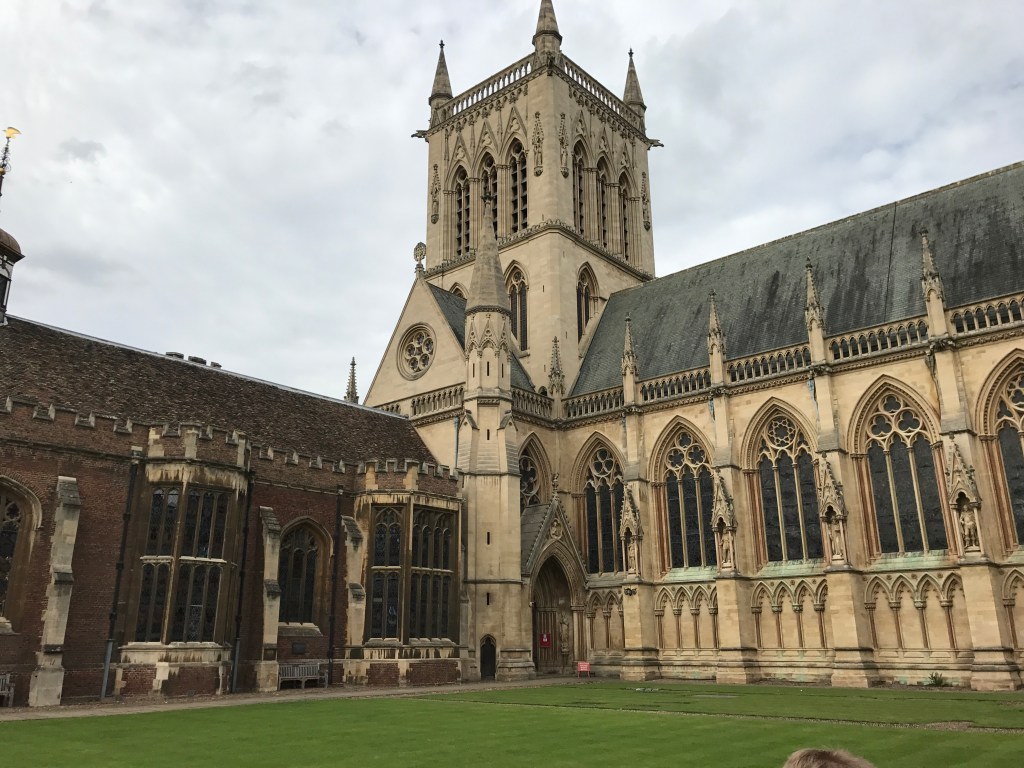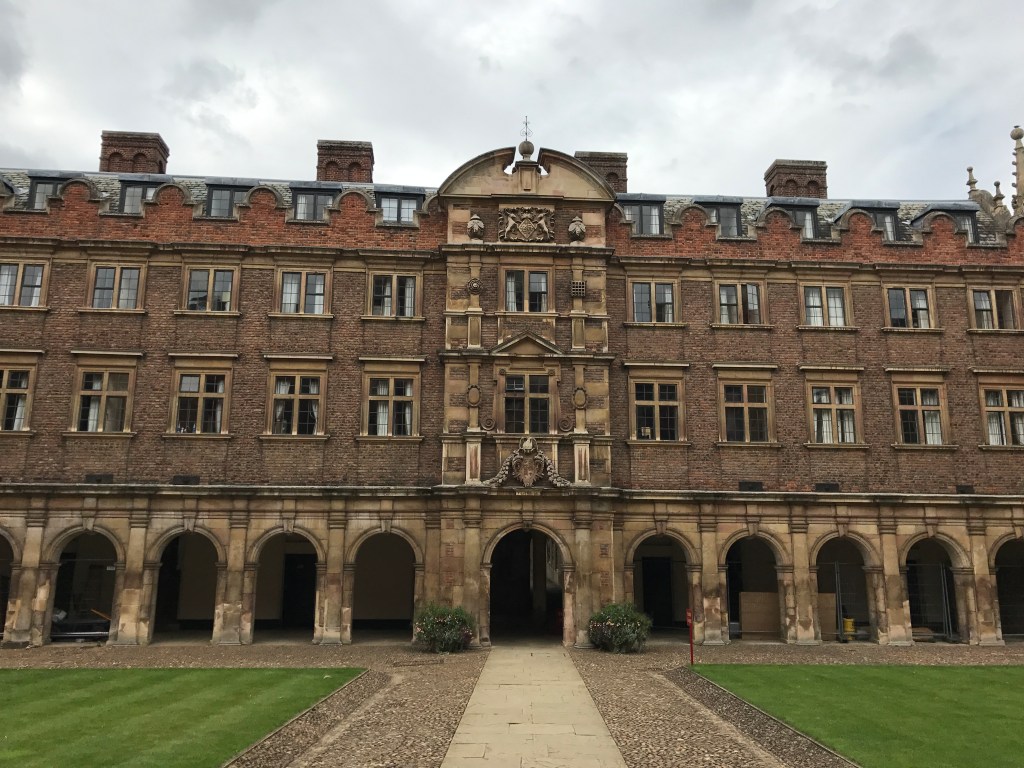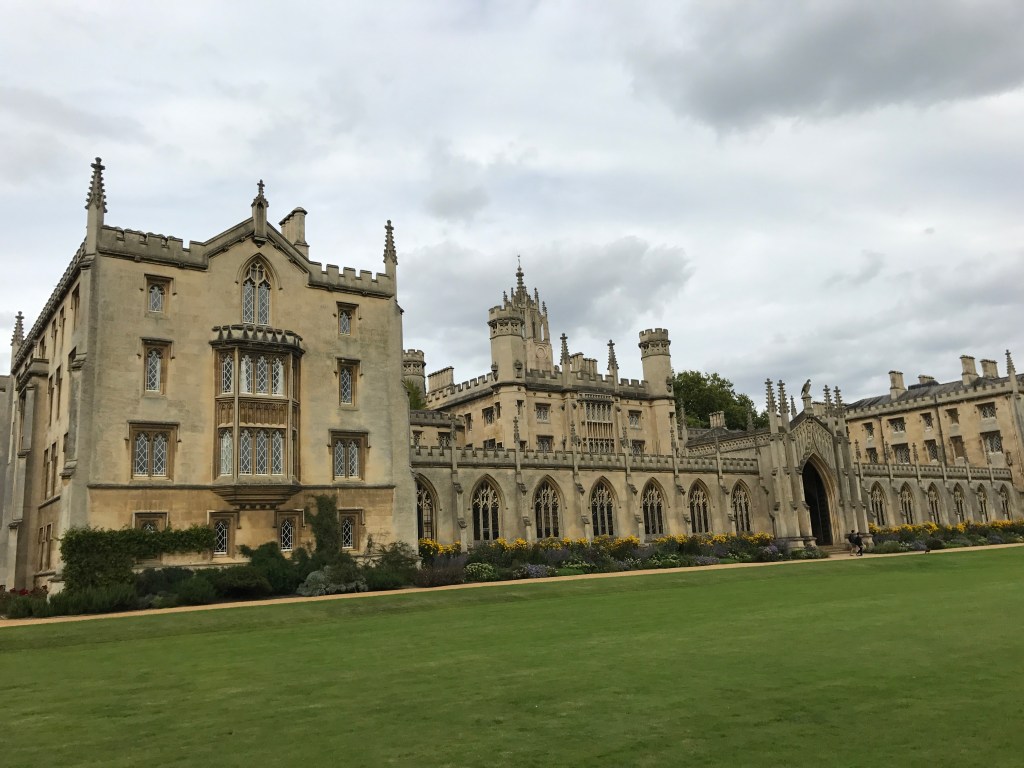
St John’s College is a constituent college of the University of Cambridge and was established by a charter dated 9 April 1511. The aims of the college, as specified by its statutes, are the promotion of education, religion, learning and research.
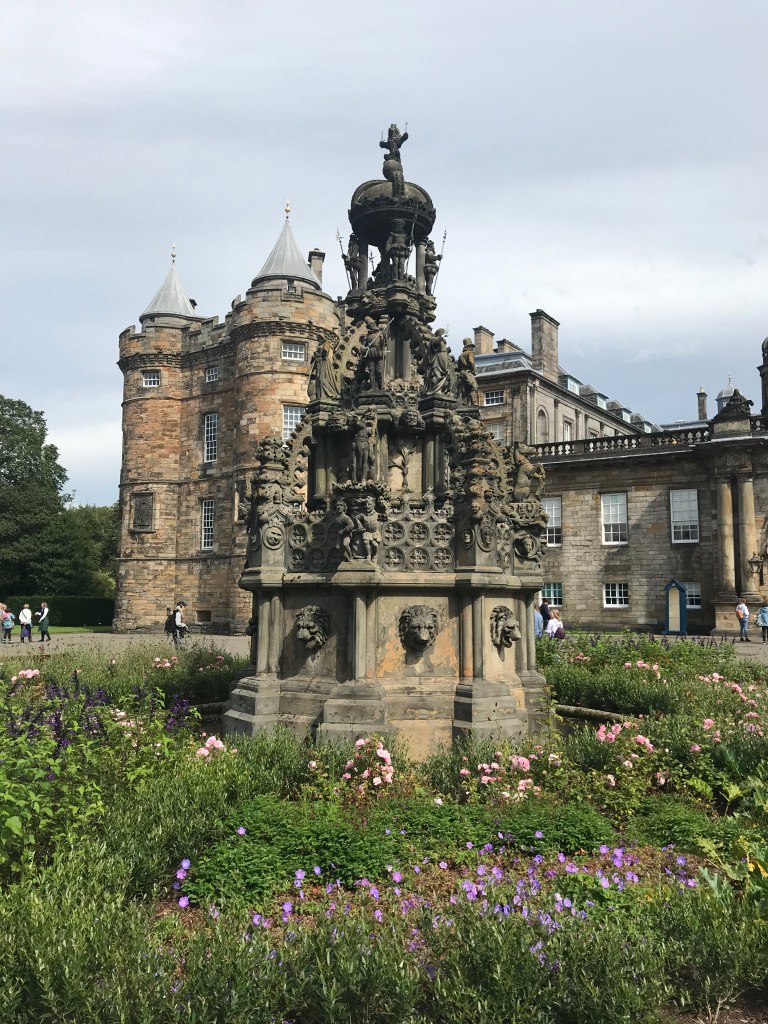
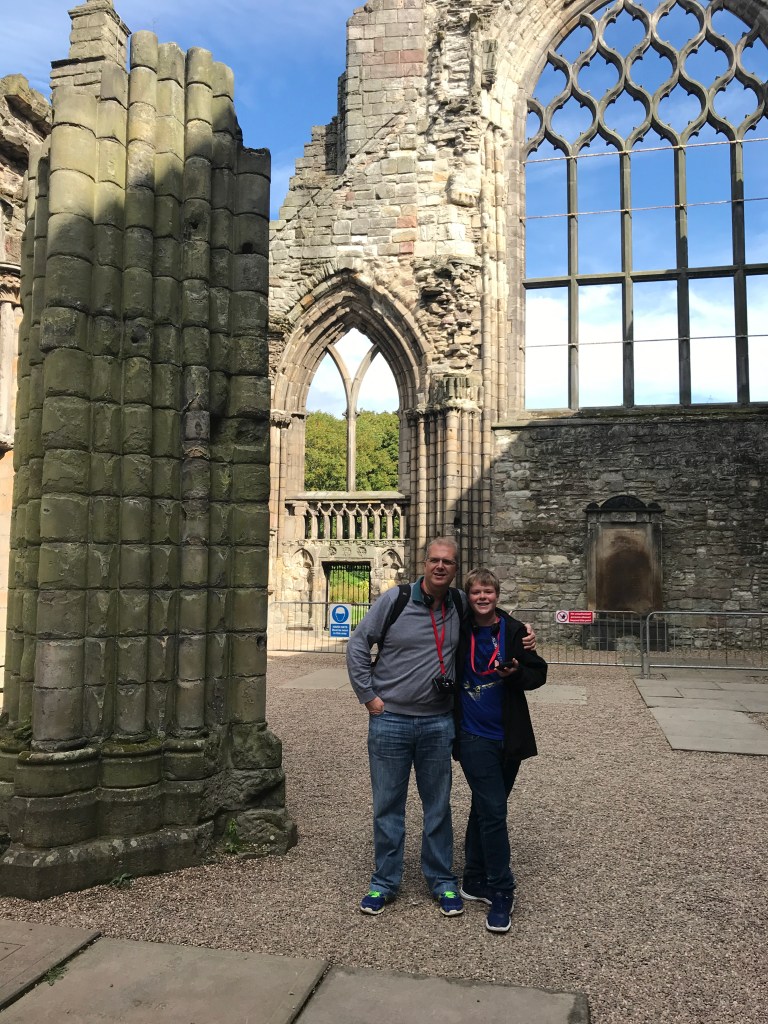
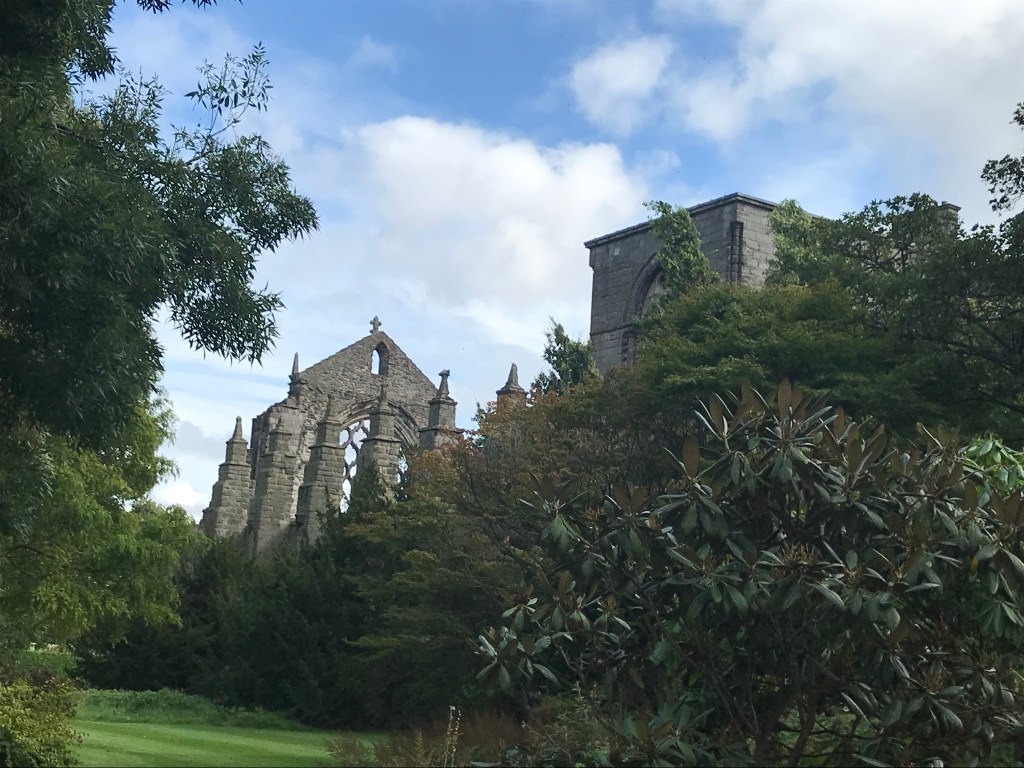
My family visited St John’s College in April 2018 and these are some of the pictures I took of its beautiful buildings, including the doors.
Thursday Doors is a weekly feature allowing door lovers to come together to admire and share their favorite door photos from around the world. Feel free to join in on the fun by creating your own Thursday Doors post each week and then sharing your link in the comments below, anytime between Thursday morning and Saturday noon (North American eastern time).
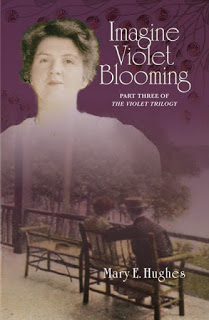
Today, I am review the third and final book in The Violet Trilogy by Mary E. Hughes.
Mary has shared the following words about why she wrote this trilogy about her paternal grandmother:
“In 1891, at the age of 16, my paternal grandmother, Violet Courtenaye, went to Germany to study violin. An intrepid young woman, I thought, and decided it would be an interesting challenge to imagine her life in Leipzig. She had left some notes about that period on the inside cover of her Bible, so I had a few facts to start with.
I have had a wonderful time over the past eight years doing the research and writing the letters. On one trip to the UK, I found Violet’s actual home in Balham. In 2016 I visited the Leipzig Conservatory, met with the archivist and explored the old city, imagining Violet walking those streets. In 2013, as I was writing about her time at the Conservatory, I realized I had to know more, so as a 70th birthday present to myself, I began violin lessons. A year later I was privileged to acquire Violet’s actual violin from a cousin, and I have been playing it ever since.”
What Goodreads says
Imagine Violet Blooming is the final volume of The Violet Trilogy.
It’s 1906, and Violet is now in her thirties. In letters to family and friends, she writes of the challenges presented by her busy household and five children, the grief of losing loved ones and the pleasures of summer in ever-changing Muskoka. And she is blooming in her role as the wife of Frank Welsman, the celebrated conductor of the newly established Toronto Symphony Orchestra.
Imagine Violet Blooming paints a vivid picture of the musical life of Toronto but there is also a generous helping of social history in this tale of middle-class life.
My review
This is the third, and final, book in the Imagine Violet series and equally as enjoyable as the previous two.
Violet and Frank’s lives continue with Frank growing and expanding the orchestra in Toronto under the guidance of Mr Cox. As the conductor of the orchestra and an “in demand” music tutor, he is always busy and rarely at home. Violet also continues in her traditional role as the mother of five lively children and the wife of a well-known conductor. The family have their annual holiday in Muskoka and their cottage on the island is improved with a boat house and a new boat. The descriptions of the encroachment of civilization on this rural and peaceful place are interesting and quite poignant.
Violet grows as a person and experiences the death of her father. Dealing with grief is difficult and she must also keep her mother and sister’s spirits buoyed up, which she does quite successfully. Learning to manage her household staff continues to be a challenge for Violet, but she becomes better and identifying what she needs and a domestic helper who will suit her family as the series progresses. The family moves into a lovely new home which is big enough for their growing family and the older boys, particularly Teddy, excel at school and are great helpers at home.
The series has an unexpected ending, but it is appropriate and well handled; a good finish to a relaxed and peaceful read. These books make me think of taking a boat ride on a calm lake on a warm summer’s day. Each book is a slow-moving and pleasant meander through the life of Violet and each book leads on successfully from the next.
I am rather sad that the series is finished with this book and their will be no more escapades about Violet.
Purchase Imagine Violet Blooming by Mary E. Hughes
Our weather has gone from cool temperatures with heavy rain last week to high temperatures of 34 degrees Celsius this week. The welcome rain combined with this week’s heat, has resulted in our garden literally bursting into bloom.
Teri Polen of Books and Such blog hosts #BadMoonRising, a terrific series of posts about horror, supernatural and dark fantasy books, that runs for the whole of October every year. Whew! What an undertaking. Hats off to Teri.
Teri Polen reads and watches horror, sci-fi, and fantasy. The Walking Dead, Harry Potter, and anything Marvel-related are likely to cause fangirl delirium. She lives in Bowling Green, KY with her husband, sons, and black cat. Sarah, her debut novel, was named a horror finalist in the 2017 Next Generation Indie Book Awards.
Sarah by Teri Polen
“The writing style and general creepiness reminded me of Diary of a Haunting, which I would recommend to anyone who enjoyed this book.” –Barnes and Noble
Seventeen-year-old horror fan Cain Shannon thought helping a ghost find her killers would be the supernatural adventure of a lifetime. Now, he just hopes to survive long enough to protect his family and friends from her.
A bet between friends goes horribly wrong, resulting in Sarah’s death. When she returns to seek justice against those responsible, Cain agrees to help her. But when he discovers Sarah has been hijacking his body, he realizes she wants retribution instead of justice.
Terrified of what could have happened when he wasn’t in control, Cain commands Sarah to leave his house – but exorcising her isn’t that easy. She retaliates against her murderers in bloody, horrific ways, each death making her stronger, then sets her sights on Cain. With the help of friends, Cain fights to save himself and his loved ones and searches for a way to stop Sarah before she kills again.
My review of Sarah
I listened to the audio book of Sarah by Teri Polen. I thought the reader did a good job and narrated the story at a good pace and with sufficient expression and interest factor to keep the listener engaged.
I thought this book was really creepy. It is a YA book and the characters are all older teenagers which I think worked well for this plot as teenagers, particularly males, do not see risk and are likely to react to situations with a lot more bravado than an adult would in the same circumstances. The almost underhanded and devious way the ghost of Sarah, a murdered school girl, introduces herself to Cain, a jock with a kind heart, lets you know in a subtle way right up front that this is not a particularly friendly ghost and that there is more to her than initially meets the eye.
Cain has assumed the role of man of the house after the death of his father and is protective of his Mother and much younger sister. His compassion, youth and naivety does not stand him good stead in identifying the potential threat posed by Sarah although, as he finds out more about her death, he gradually realises that she is after retribution against her killers and is not looking for help to move on from her current status.
The author’s descriptions of Sarah as she becomes more and more evil and travels further down the path of revenge are very vivid and disturbing. Sarah’s evil thoughts and deeds are reflected in her ghostly face and form.
Fortunately for Cain, he has good friends on his side in the form of Finn, an intelligent and clear minded childhood friend, and Lindsey, a lovely young lady with an aunt who deals in the occult and is able to provide talismans and assistance in fighting Sarah as she becomes more deranged and angry. The clairvoyant aunt was a bit convenient but I did not detract from the story for me.
Thursday Doors is a weekly feature allowing door lovers to come together to admire and share their favorite door photos from around the world. Feel free to join in on the fun by creating your own Thursday Doors post each week and then sharing your link in the comments below, anytime between Thursday morning and Saturday noon (North American eastern time).
The Imperial War Museum Duxford is near Duxford in Cambridgeshire, England. It is Britain’s largest aviation museum housing nearly 200aircraft, military vehicles, artillery and minor naval vessels in seven main exhibition buildings.
These photographs of various aircraft are from our visit in 2016. They all have interesting doors.
It’s the height of Queen Victoria’s rule. Fog swirls in the gas-lit streets, while in the parlor, hands are linked. Pale and expectant faces gaze upon a woman, her eyes closed and shoulders slumped. The medium speaks, her tone hollow and inhuman. The s�ance has begun. Join us as we explore fourteen frightening tales of Victorian horror, each centered around a method of divination. Can the reading of tea leaves influence the future? Can dreams keep a soldier from death in the Crimea? Can a pocket watch foretell a deadly family curse? From entrail reading and fortune-telling machines to prophetic spiders and voodoo spells, sometimes the future is better left unknown. Choose your fate.Choose your DARK DIVINATION.With stories by: Hannah Hulbert, Ash Hartwell, Joe L. Murr, Emerian Rich, Naching T. Kassa, Michael Fassbender, Jon O’Bergh, Stephanie Ellis, H.R.R. Gorman, R.L. Merrill, Rie Sheridan Rose, Daphne Strasert, Alan Fisher, and Jeremy Megargee.
My review
I am a fan of anthologies as they are a great way to find new writing talent, but I usually find there are one or two stories I don’t enjoy. That was not the case for this anthology which included fourteen short stories that were all of a very good quality and all of which had a unique and interesting storyline.
The common theme for this anthology is the inclusion of a method of divinations and there were some fairly different ones such as fortune-telling machines and a pocket watch. Every story was dark and creepy and kept me on the edge of my seat.
My three favourite stories in this anthology are as follows:
The Pocket Watch by Emerian Rich – Gretchen, a beautiful red-head and the daughter of a wealthy family from Manhatten, has married the young and handsome, Lord Windemere and relocated to his family estate in England to start her married life. Soon after their arrival, her new husband gives her the gift of a pocket watch from his deceased mother. Gretchen soon discovers that the pocket watch contains a dark secret and the key to her survival;
Miss Mae’s Prayers by H.R.R. Gorman – A young preacher and his heavily pregnant wife are woken up in the early hours of the morning by a member of his rural congregation who desperately wants the preacher to read him a couple of verses from the Bible. The anxious man is even more disturbed when the reading is over and vows to go back to the elderly woman who gave him the Bible references with an indication that they related to his future. The preacher, who has heard other stories about the old woman, known as Miss Mae, decides to seek her out and speak to her about her witchery. His mission has most unintended consequences;
Broken Crystal by Rie Sheridan Rose – Young Molly has a gift, she has The Sight, and her mother is determined to use it to make their fortune. Molly changes her name to Madame Rose and starts to give consultations for which she charges. Molly is a kindly girl and feels conflicted about taking money from very poor and needy people. One day a rough and angry man comes to her from a consultation following the elopement of his son. The consultation follows a different path with a unique outcome for both the father and Madame Rose.
What is your favorite fruit dish? Can you share a recipe for it? Do you include food in your stories? While we’re talking about food, pumpkin, yea or nay?
My favourite fruit dish is apple pie. I particularly like the recipe given to me by my husband’s grandmother which has a very unusual and tasty sweet pastry.
I do have a tendency to include food quite often in my stories. Why wouldn’t I? People do most of their socialising over meals – well, they do in my family and among my friends group.
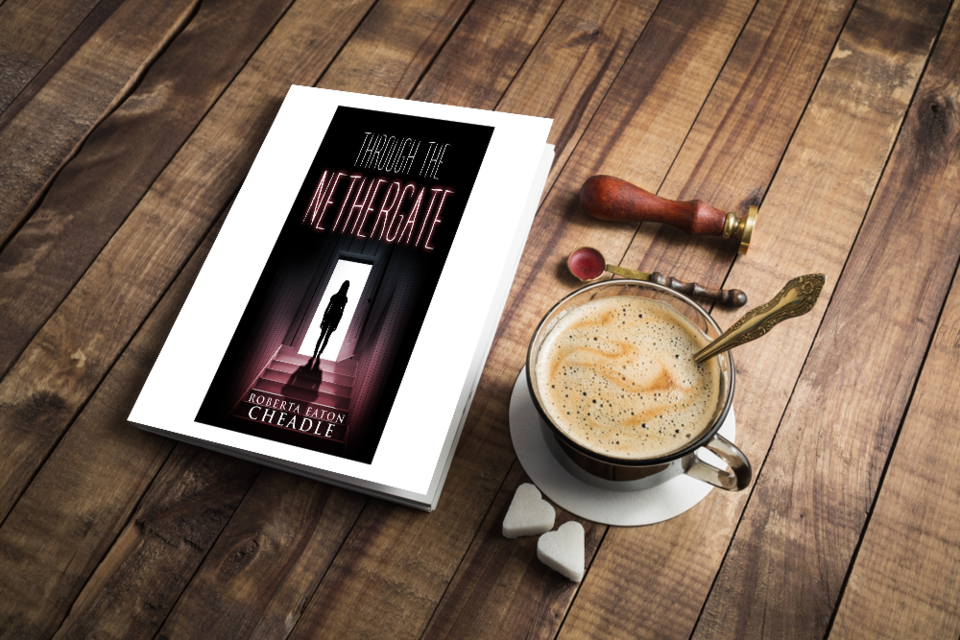
I included apple pie in Through the Nethergate when Henry Scarle, a ghost who has recently reincarnated as a result of Margaret’s unique abilities, tries food for the first time in 400 years.
This is the extract:
““Why don’t you try something,” Margaret said suddenly. “You have a physical body now, you may well be able to enjoy food even if you don’t need to eat to sustain yourselves.”
Henry looked delighted at the thought and decided to order apple pie and cream. The pie looked delicious and he wanted this experiment to be worthwhile in case it made him ill afterwards. Lizzie didn’t order anything. She would see how the food agreed with Henry first.
“At least one of us has to be in guaranteed working order,” she said.
Food comes up quite often in my forthcoming novel, A Ghost and His Gold.”
This is an extract from the war experience of Pieter, a Boer [a Boer is an Afrikaans farmer in South Africa], just before he leaves with his brother, Willem to fight in the war against Britain:
“Sannie was famous for her potjiekos, a rich stew comprising of beef, potatoes and plenty of vegetables which she cooked slowly, in a three-legged cast-iron pot, over hot coals until the meat was tender and the vegetables soft.
Pieter’s meals for the past few days had comprised of rusks, dried bread and biltong with water from their water-skins, and his mouth watered as the rich fumes from the stew wafted through the house.
When the meal was ready, Pieter and Willem tucked into the food with gusto, knowing that they were unlikely to enjoy such a good meal again for a while. The main course was followed by Sannie’s home-made melktert, a traditional dessert consisting of a sweet pastry crust containing a custard filling made from milk, flour, sugar and eggs, and sprinkled with cinnamon.”
I like pumpkin but only as a savoury dish. I enjoy it with a rich gravy or in a potjie or stew.
Do I cook, I hear you asking. Well, yes, maybe a little and I bake a great deal. I love to make exotic cakes. You can find out more about my baking on Robbie’s Inspiration.
What do other bloggers think about this week’s prompt. You can find out by clicking on the link below.
Rules:
Link your blog to this hop.
Notify your following that you are participating in this blog hop.
Promise to visit/leave a comment on all participants’ blogs.
Tweet/or share each person’s blog post. Use #OpenBook when tweeting.
Put a banner on your blog that you are participating.
GIVEAWAY: (3 winners) (1) e-book copy of “NIGHTMARELAND”, (1) e-book copy of “THROUGH THE NETHERGATE”, and (1) $25 Amazon gift card. (leave a comment to enter on Charles’ blog)
About Charles W. Jones
I grew up in a small town of five hundred people in Wyoming that everyone always pronounces wrong or spells incorrectly, Shoshoni (show show knee); I swear it’s a real place. My first novel, Dreamwalker: The Second Plain, is LGBTQ+ as are HOME and Daughter of Illusion. My other books include the Circus Tarot Trilogy (it’s Clowns and Tarot, what’s not to love), Hunger, Hydrangeas on the Lanai and Darkness is Coming. And last, but not least, I have two anthology collections, An Unnamed Acquaintance and Liaisons Macabre. Oh, yeah, I currently live with my husband of twenty-one years in Colorado with our three cats, ten crested geckos, and one saltwater fish tank.
The world had already begun to change, in ways Carl had no idea were possible, when the voices began speaking to him on the night of his sixth birthday. When Carl’s mom contacted Dr. Emerson Sharod at the Freedom Institute, she had no idea that the time she cherished with her son would end.
Twenty-two years later, the voices urge Carl to leave the Freedom Institute after a man is slain under suspicious circumstances. He doesn’t question them and naively crosses the threshold into the city of Montford, where he knows no one. A few help him, risking their safety, so he can escape the walled city and begin his trek to find his mom in Saratin.
The world outside the walls is stranger than the city with unknown dangers at every step, though not everyone is a foe. Along the way, he meets many who help him and share stories about what caused the changes in the world. When he reaches Base 40, he comes face to face with Astrid, who rescued him from freaks on the first day of his travels. He is worried that she will tell the baser leader, Corporal Phelps, that he’s the escapee from the Freedom Institute, but she does not.
After an uncomfortable meal with Corporal Phelps, Carl shares his story with Astrid. She agrees to take him to Saratin. Reaching the tent city outside the walls of Saratin, they search for refuge and are taken in by Kenneth who is partially responsible for the chaos in the world. The safe place is quickly infiltrated by Corporal Phelps, and they are taken back to Base 40 where Carl witnesses the Corporal torturing Astrid. In a moment of anguish, Carl remembers something he was told and puts together a plan to save Astrid and himself, and, unknowingly, the world.
A 5-star Amazon review of The Road to Saratin
Dystopian fiction is not my normal genre, but this book made a refreshing read as it was so different.
The story follows Carl, a man haunted by myriad voices in his head since the age of six. We join him twenty-two years later in the Freedom Institute. He knows little of the devastation that overtook the world not long after his incarceration, or of the freaks and mutants that roam outside the three remaining cities. His world has become limited to the doctor who “treats” him and the daily tasks he performs, but everything changes when a colleague dies and suspicion falls on Carl.
In an intricate storyline, the voices urge him to leave his institutionalised life. They guide him along a path of twists and turns, away from the city of Montford. He aims to find his long-lost mom in another of the surviving cities, Saratin. His many encounters and adventures make for an intriguing, if sometimes disturbing, read. The ending is surreal but satisfying.
This book is a real page-turner and stretched my imagination. It surprised me what can be achieved within this post-apocalyptic style of writing.
Thursday Doors is a weekly feature allowing door lovers to come together to admire and share their favorite door photos from around the world. Feel free to join in on the fun by creating your own Thursday Doors post each week and then sharing your link in the comments below, anytime between Thursday morning and Saturday noon (North American eastern time). You can join in here: https://miscellaneousmusingsofamiddleagedmind.wordpress.com/2020/10/08/thursday-doors-october-8-2020/
My aunt and cousin both lived in Faversham in Kent, UK, until about two years ago. Whenever we went to the UK, we based ourselves in Faversham so we got to know this quaint English town quite well. These are pictures from April 2016 taken at Standard Quay.
PS I know its Friday and not Thursday but I ran out of time to post yesterday.
Entrance to the pub where we had ciderEntrance to a shop on the QuayDoor to one of the house boatsMy mother, the boys and Terence in front of a house boat
Nonnie and her team at 4 Wills Publications have created an amazing Youtube video for this book which you can see here:
About Nonnie Jules
Hi, I’m Nonnie Jules – President & Founder of RAVE REVIEWS BOOK CLUB {RRBC} and RAVE WRITERS – INT’L SOCIETY OF AUTHORS {RWISA}. As a writer who values the (polished) written word, it is my mission to help my fellow authors understand that their reputation as a writer should be treated as a rare treasure and that the only way to be taken seriously in this business, is to ensure that your writing (no matter the forum) is impeccably written and well-edited. If not, you’re just another “Joe” with a pen who was the first to raise his hand when Amazon asked: “Hey, any old Joe out there wanna publish a book? Don’t worry, it doesn’t have to be good and there’s absolutely no hard work involved.”
FYI: If you don’t care what you put out into the world, you’re just a laughing stock in the literary community … and your name is “Joe.”
It is an irony that I read this book the week after I finished reading The Great Gatsby by F. Scott Fitzgerald with its two central themes of the wealthy in American not being accountable for their actions and how the America dream of equality for all and an ability for people who have ability and who work hard to attain social status regardless of their backgrounds.
This short story, No Pedigree, explores these same two themes but in a modern setting rather than Fitzgerald’s setting of the 1920’s. I could help thinking, as I read this book, how tragic it is that 100 years later these same themes of prejudice, abuse and unfairness are still prevalent in some parts our society.
Baylee Pierre is a young girl of extraordinary beauty and sound intellectual ability who ends up attending a high school in a wealthy area populated by privileged youngsters and their families. Baylee is different from her peer group in that she is the child of a black native American mother and a white father and also, her mother is the housekeeper of a one of the wealthy residents of the school’s feeder area who allows Baylee’s mother to use her home address to register her daughter at the local school. Baylee’s mother thinks she is doing the best for her daughter by giving her this educational opportunity, but her spoiled rich school school associates don’t give her an opportunity to become part of their world and Baylee is ostracised in the most cruel way right from the start.
There is one girl, Carson Beckett, who is different and who becomes best friends with Baylee. Carson puts herself out on a limb to support Baylee against the majority. I enjoyed this touch in the book because it made it even more real and possible, as there is good out there and it was nice to have it recognised and this bit of positiveness gives the story some good balance.
Baylee is subjected to the most horrific treatment any person could suffer and due to her mother’s limited finances, she is not initially able to seek the justice the situation clearly warrants.
To bring my thoughts back around to my initial comments about The Great Gatsby, this book ends on a positive note with a clear indication, through the change in Baylee’s circumstances depicted in the book, that there has been some progress and movement towards the American dream being more attainable for all. There are good people out there who aren’t filled with prejudice and who embrace difference and enable progression for all.