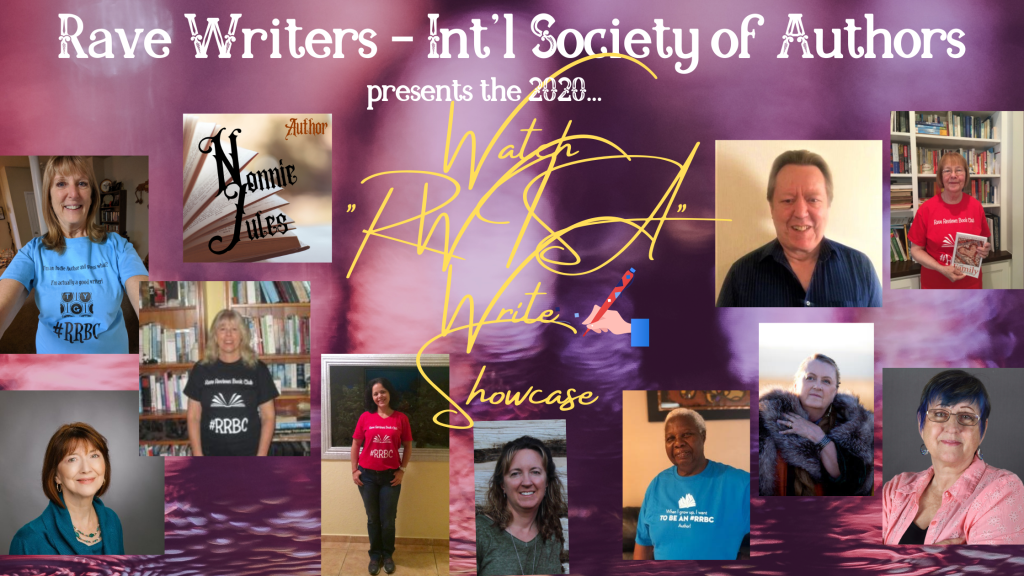
Welcome to Day 2 of the WATCH “RWISA” WRITE Showcase Tour! @JanSikes3@RRBC_Org #RRBC #RWISA #RWISAWRW

Image preview

Walk to your own beat by Jan Sikes

2020 has been a year.

And that is a gross understatement. No one could have predicted the diverse levels of craziness we’d experience as the year unfolded.

Not only are we dealing with a worldwide pandemic that has us wearing masks and hiding in our homes, but here in the United States, we’ve witnessed hatred and divisiveness to a degree I could never have imagined. While we watched and perhaps joined people taking to the streets to protest injustices, we also saw organized groups invade our beautiful cities and set them ablaze. Everyone is in a hypersensitive mode. History is being erased with the dismantling and destruction of national monuments, while sports teams are changing their names because someone is offended. 

The culmination of it all has left us reeling.

I do not watch the news, and that is a personal choice. I can name lots of reasons why I stopped, but the main one is, I do not believe even half of what they report. The media uses its power to incite and ignite more hatred and division amongst us.

Folks take to social media to try and coerce others to bend to their ideals and beliefs. And they do it in the most aggressive ways imaginable. It seems no one wants to allow their fellow man to have his or her own opinions. People are not willing to tolerate differences. Families are split by these differences, leaving children confused. We are allowing those in power to turn us into a society focused on isolation and fear.

So, what can we do?

I heard a song the other day that says it better than I ever could. The music artist is Brent Cobb, and he gave me permission to quote some of his lyrics.

He sings about how people want to tell each other how to live and how to die. You don’t get too low, don’t get too high, which is precisely what the pharmaceutical companies exhort.

The best thing you can do is don’t listen too close. Walk on to your own beat. Keep ‘em on their toes.

What does that even mean? To me, it means staying true to your authentic self. Don’t be a part of the herd that follows blindly. Make decisions for your life based on your truth, not someone else’s. Go where your heart tells you to go. I genuinely believe your heart will never lead you wrong.

Then, rather than to try and convince others to follow your truth, tuck it deep inside where you can nurture it and make it grow. You will never persuade another person to change their way of thinking because of the words you speak, but you can lead by example. And you can keep them on their toes. Keep them guessing about you. In other words, don’t be so utterly transparent.

Maybe this says it better. Keep ‘em on their toes, your business outta sight. Make ‘em look left, if you’re gonna hang a right. If the pot’s hot, don’t let ‘em see your hand. Make ‘em gotta know what they wouldn’t understand. The best thing you can do when the ignorance shows, is walk on to your own beat, keep ‘em on their toes.

I love that! We live in an electronic age where privacy is a thing of the past. The only way to have real privacy is to be completely disconnected, including no cellphone.

I have had many experiences that prove to me we are always under observation. It’s easy to understand how an ad will randomly pop up after browsing for an Amazon item. But I have had things pop up about something relating to a simple conversation with a friend. Big Brother is listening. No, I’m not paranoid. Just honest and see reality.

I do not know where we are headed as a society. The rose-colored glasses part of me wants to believe this hatred, division, hypersensitivity, and deadly pandemic we are experiencing will all come to an end, and we will go back to living our lives peacefully. But reality tells me we will never go back to the way we were before all of this chaos hit.

We are forever changed by it all.

So, the big question remains, “Where do we go from here?”

I can only answer that question from my point of view, from my truth. I will continue to be kind. I will continue to share and celebrate others’ accomplishments. And I will continue to love my family and do my best to impart any hard-earned wisdom to my grandchildren.

I can’t visualize what this world will be like ten years from now. I can’t even picture it a year from now. So, I must live for today in the best and most honest way I know.

I will walk on to my own beat―do my best to keep ‘em on their toes, and my business out of sight. That does not mean I can stop caring or go numb. In fact, just the opposite. I will celebrate every positive moment life brings, and I hope you will join me. Together we are stronger. Together we can make a difference.

Together, we can keep ‘em on their toes!

***

Thank you for supporting this member along the WATCH “RWISA” WRITE Showcase Tour today!  We ask that if you have enjoyed this member’s writing, please visit their Author Profile on the RWISA site, where you can find more of their writing, along with their contact and social media links, if they’ve turned you into a fan.

We ask that you also check out their books in the RWISAcatalog.  Thanks, again, for your support and we hope that you will follow along each day of this amazing tour of talent by visiting the tour home page!  Don’t forget to click the link below to learn more about today’s profiled author:

Jan Sike‘s RWISA Author Profile

Fiction in A Flash Challenge Week #24

people-3120717_1920

I awoke feeling languid and tired and rushed around to get ready to leave so that I could arrive for my appointment in good time. I hate being late.

Dr Staples called me into his office as soon as I arrived. It was a most unusual appointment as he didn’t examine me at all. He used his large and expensive looking desktop computer to connect to the microchip in my brain.

“I will know immediately if there is anything unusual taking place in your body,” he explained. “The microchip maps the condition of every cell on an on-going basis. If you are suffering any kind of illness, I will be able to adjust the setting of the microchip to cure the problem.”

I felt a bit overwhelmed so I merely nodded my head and waited for him to speak again.

Ten minutes later, he looked at me with his piercing eyes and smiled. “There is nothing wrong with you, Jen. You are pregnant. Isn’t that exciting news?”

I drew in my breath sharply. Pregnant! I’m not ready to be pregnant. Not ready to have a baby.

Dr Staples continued to smile delightedly. “You are fortunate, Jen. John and you will be having a baby that is genetically modified to ensure he or she is a strong biological specimen with no physical disabilities, no predisposition to any genetic diseases or illnesses and an exceptionally high intelligence. The baby will also have the benefit of an exceptionally long life, the same as John and you, but his or her aging genes have already been edited to slow down the aging process, while John and your genes have had to be edited to slow down the process and reverse some of the effects of aging that have already taken place in your bodies.”

“Wow,” was all I could manage to say initially. “That is incredible, Dr Staples. I can’t believe I am pregnant and to be told that our baby will be genetically enhanced like you have described is amazing.”

A wave of excitement surged through me and I felt ever so much better, full of life and cheerfulness.

Dr Staples notices the change, I think my cheeks went all rosy, and he smiled again.

“You will see a gynaecologist and obstetrician here at this hospital and you will also deliver your baby here. You are one of the privileged and all your needs will be attended to by the World Government team of medical practitioners. I will ask my receptionist, Mrs Carter, to make you an appointment with Dr Chambers, your new gynaecologist, for next month. In the meantime, I see you have been feeling nauseous and I have programmed some slight adjustments so that you will feel better. You will also see me once a month, for the next six months, and two weekly thereafter, so that I can monitor your progress and the cells belonging to your baby.”

It was a relief to have everything organised for me like this, especially since I was still adjusting to the idea of motherhood. Fortunately, this hospital was close to Canary Wharf and my office.

Before I left, Dr Staples told me not to discuss the genetic enhancements that were being made for my child with anyone other than John.

“The World Government does not want public protests erupting about the new social system of genetic haves and have-nots. These genetic enhancements will only be provided to exceptional couples who are being hand selected for the programme. You are giving your child the best possible start in life and that is what you must focus on. Mrs Carter will ask you to sign an undertaking in this regard before you leave. John will also be required to sign it.”

“Okay, Dr Staples, that is fine, I won’t discuss that aspect of my pregnancy with anyone else. Thank you for your time and all your advice.”

I signed the undertaking and set off for the office in a sort of dream-state. I can’t wait to speak to John later that evening and tell him the news.

This was written for Suzanne Burke’s weekly writing challenge. You can join in here: https://sooozburkeauthor.wordpress.com/2020/11/06/fiction-in-a-flash-challenge-new-image-prompt-week-24-join-in-the-fun-iartg-flashfiction-writingcommunity-writingprompts/

#Thursdaydoors – Holyrood Palace

Thursday Doors is a weekly feature allowing door lovers to come together to admire and share their favorite door photos from around the world. Feel free to join in on the fun by creating your own Thursday Doors post each week and then sharing your link in the comments below, anytime between Thursday morning and Saturday noon (North American eastern time). 

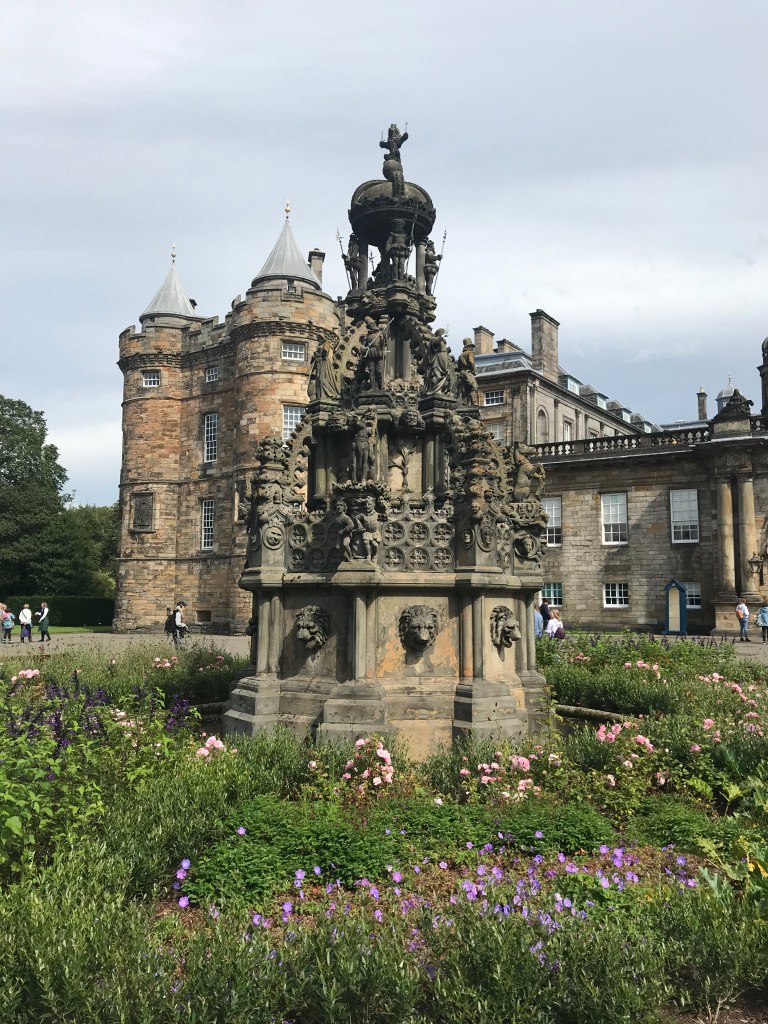
Holyrood Palace is the official residence of Queen Elizabeth II in Scotland and is located at the bottom of the Royal Mile in Edinburgh. Visitors are not allowed to take photographs inside the palace but I took a few of the outside and of Holyrood Abbey which is alongside the palace.

Okay, I admit the door is tiny but its still there.
In the courtyard
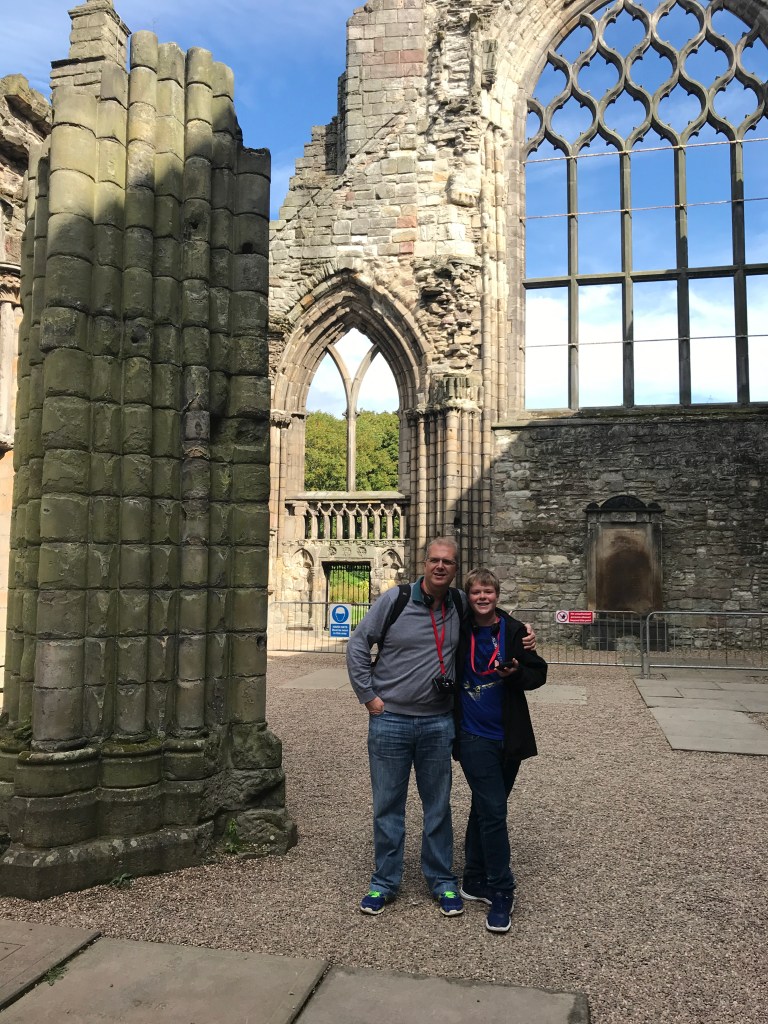
Holyrood Abbey
Terence and Michael in the ruin of Holyrood Abbey
The ruins from the gardens – no doors but quite a pretty picture

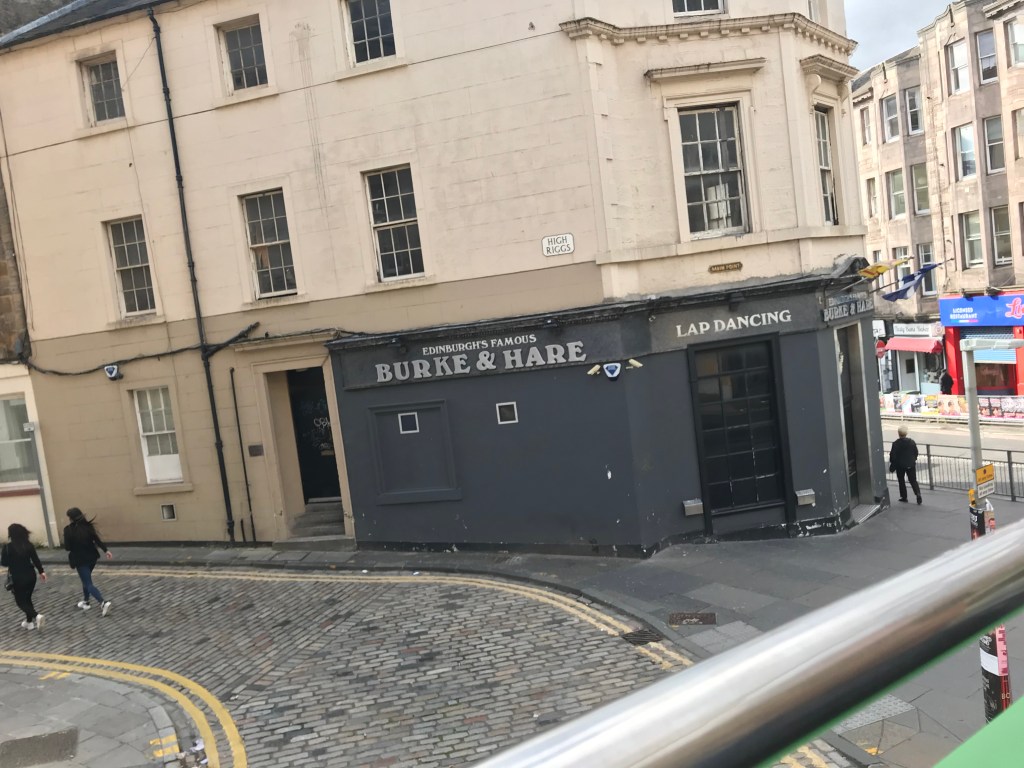
I included this last door picture because it amused me so much. It was quite funny to see the names of these two infamous murderers relegated to a lap dancing club. If you don’t know the story of Burke and Hare, you can read it here: https://www.historic-uk.com/HistoryUK/HistoryofScotland/Burke-Hare-infamous-murderers-graverobbers/

We visited the Edinburgh Dungeon which was incredibly creepy but that is a story for another day.

You can join in Thursday Doors here: https://miscellaneousmusingsofamiddleagedmind.wordpress.com/2020/11/05/thursday-doors-november-5-2020/

Open Book Blog Hop – Humour

‘Is humour an important element is your stories? Do you ever laugh at something you’ve written?’

I am a very serious person. I have always been like that. My mother says I was a serious and self controlled baby. I rarely cried or gave her any trouble. I was what people call an “easy” baby. My mother says it was almost as if I knew how difficult things were for her following my biological father’s death and I made her life as easy as possible. Who knows, maybe babies can sense such things.

I was also an easy toddler. I went to nursery school because my mother had to work full time and mother says I never complained or even spoke about school. This characteristic of quiet tolerance has followed me throughout my life. In retrospect, it has not been a good thing for me. I should have realised you have to enter the fray in a corporate and fight to succeed. I was rather delusional and believed that among professional people, hard work and a bright mind would be given recognition as a natural progression. I didn’t know that quiet and tolerant people are used and abused and that if you don’t demand, or even threaten, you don’t get anything. That realisation only came to me much later in my working life. By the time my colleagues realised how much they needed my skills, I had lost interest and found a whole new writing life to consume a lot of my intellectual energy and abilities.

I often don’t enjoy, or find humour in, movies, books and other media that most people find funny. There are certain types of humour I enjoy, mainly dark humour and some British humour. Slapstick never does it for me and I don’t watch the movies my husband enjoys. My taste in books runs to the serious too. I read a lot of classics, my current favourites being Tess of the D’Urbervilles by Thomas Hardy and The Red Badge of Courage, as well as my all time favourite book, Bram Stoker’s Dracula. No humour there.

This line of thought takes me to my own writing. It is generally not humorous. I write fantasy for children which is not funny but rather mystical [I hope] and imaginative. Silly Willy Goes to Cape Town has some humour as I modelled it along the lines of My Naughty Little Sister and it is about the antics of a naughty and irrepressible little boy and his serious older brother. This book has been my only attempt at any sort of humorous writing. I realised after I published it that most people don’t understand my subtle and tongue-in-cheek humour.

My poetry is also serious and is always inspired by an event or situation which has upset me. I tend to write a lot of poetry about the poverty and corruption in Africa and the lack of personability or caring in the corporate world.

My adult writing is supernatural history or horror and is never funny. I enjoy reading about history and I like to share interesting historical situations with other people in the form of an entertaining [but dark] story. My writing always has the purpose of highlighting a specific theme within the historical event. For example, my new novel, A Ghost and His Gold, is aimed at unveiling some of the psychology of the Second Anglo Boer War and examining how the circumstances of this war set the stage for the next phase of South African history. I don’t believe this is obvious to a reader, they would need to almost look for it. People who know the history well will recognise these themes.

So this, in a nutshell, is my experience of humour in life and writing. I shall end this post with a quote from Matilda by Roald Dahl:

“There aren’t many funny bits in Mr Tolkien either,’ Matilda said.
‘Do you think that all children’s books ought to have funny bits in them?’ Miss Honey asked.
‘I do,’ Matilda said. ‘Children are not so serious as grown-ups and love to laugh.”

I have dark [and serious] stories included in the following two anthologies:

If you click on the link below, you’ll see what other blog-hoppers think about humour. Of course you can even add your own comment to this blog if you prefer.

Rules:

  1. Link your blog to this hop.
  2. Notify your following that you are participating in this blog hop.
  3. Promise to visit/leave a comment on all participants’ blogs.
  4. Tweet/or share each person’s blog post. Use #OpenBook when tweeting.
  5. Put a banner on your blog that you are participating.

You are invited to the Inlinkz link party!

https://fresh.inlinkz.com/party/859752d20f38436c9eafb00a4e0a4926

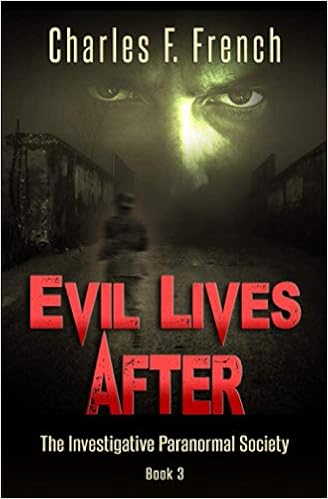
Book launch – Evil Lives After: The Investigative Paranormal Society, Book 3 by Charles F. French

Professor Charles F. French has recently launched book three in his The Investigative Paranormal Society series. This third book is a bit different from the other two as it brings in some real historical elements relating to the rise of fascism and World War II. I really loved it! There is nothing more frightening than real life.

What Amazon says

In Evil Lives After, The Investigative Paranormal Society confronts an enemy that is both human and supernatural, one that the world faced down in World War Two and is confronted by as a growing menace today, that of Fascism. Jeremy leads the battle against the ghost of an American Nazi who lived during W.W.II and his grandson, who are both attempting to change the course of history and establish an American Reich. Freedom rests on their actions.

My review

Evil Lives After is the third book in The Investigative Paranormal Society (“IPS”) series. Jeremy takes the lead in this thrilling paranormal adventure against the most appalling personification of evil the society has encountered to date. The book is written using two timelines and the IPS must enter into battle in both the present and the past, as well as the realm inhabited by ghosts and other spiritual creatures, in order to overcome this new threat to both Bethberg and the world.

John Kemmler is a fascist living in Bethberg in 1937. He is a firm follower of Hitler and Mussolini and has established his own Nazi party called The Bethberg Believers. He plans to grow his party with the eventual aim of overthrowing the existing American government and leading the USA into the war on the side of the Axis powers. Over time, John Kemmler becomes more and more obsessed with his beliefs and he starts writing a Mein Kampf styled journal which he infuses with his growing evil thoughts and ideas and into which he inserts a piece of his soul so that he can continue to influence others through his journal after his death.

Jacob is John Kemmler’s grandson, the child of left-wing parents who believe strongly in equality for all. He obtains the guidance and help he is seeking in support of his own strong fascist beliefs when his grandfather’s journal comes into his possession. Aided by his close friends, Jacob sets out to fulfil his grandfather’s dream.

Having read and enjoyed the first two books in the series, it was great to see the quiet Jeremy coming into this own in this book. Having been compelled by recent events in his own country and the greater world, Jeremy has undertaken to learn more about his Jewish faith and to give stronger and more open support to the causes he believes in. Although this book is the third in a series, it is not necessary to have read the first two books in order to enjoy this one. It is helpful from a character development perspective, however, if you read the books in order.

The major theme in this book of intolerance towards people of different ethnic, sexual and religious beliefs and backgrounds are on-going and current and I enjoyed the author’s view on selected historical events from WWII and his linking of these to modern events. I am a believer that knowing and understanding the circumstances that led to historical calamities can help in identifying similar red flags in our current world and the implementation of preventative steps.

This book has a satisfying and exciting ending and the author successfully tied all the threads of the story together. I would recommend this book to lovers of paranormal books with a solid and interesting storyline. Readers of historical fiction will also appreciate this book.

Purchase Evil Lives After

About Charles F. French

Charles F. French

I am a writer, novelist, and a professor of English Literature. I live in Pennsylvania. I am a devoted lover of nature, including hiking and fishing. I love reading, movies, cooking, and eating. I enjoy comic books and superheros as well as horror novels and movies.

Find Charles F. French

Blog: https://charlesfrenchonwordsreadingandwriting.com/

Twitter: https://twitter.com/French_C1955

Amazon author page: https://www.amazon.com/Charles-F-French/e/B01M5BZZ6B

#Bookreview – Crazy Little Thing Called Love by Jacquie Biggar

What Amazon says

Take two stubborn fools, mix a touch of fate, stir in some desire, and you have the recipe for a Crazy Little Thing Called Love.

Sophia Shaughnessy left her beloved home in order to prove once and for all she was more than a pretty face to her family and ex-boyfriend, Tony. But, it backfired. When her grandmother needed her most, she wasn’t there.

Tony Morrison had been in love with the youngest Shaughnessy for almost as long as he’d been employed at her family’s ranch. Trouble was, he had secrets. Things he couldn’t tell anyone, especially the beautiful Sophia. So, he’d let her go.

But now she’d returned, bringing the winds of change to the Texas ranch, and Tony wasn’t sure he could protect her from the fallout.

My review

This is a delightful romance between a young woman, Sophia, the daughter of a ranching family, and the ranch foreman, Tony. Sophia is ten years younger than Tony and has been in love with him since she was sixteen years old. Five years earlier she’d left the ranch and Tony, to strike out on her own and build a career in New York City. Deep at heart, Sophia is still a country girl so when Tony calls her, soon after the death of her grandmother, and asks her to come hope and help her brothers with some decisions about the ranch, she goes.

She soon realises that her passion for Tony is still there, stronger than ever, but her pride and the reasons she left in the first place are still standing in the way of their happiness. During her absence, life on the ranch has changed and Sophia discovers her brothers at loggerheads over the best way forward with the ranch which is floundering financially. Each of the siblings, including Sophia, have their own ideas about what’s best for the family and the ranch and none of them are prepared to listen to the others. This causes friction between the siblings.

Tony can see the problem but can he put aside his turbulent feelings for Sophia and make his opinion and thoughts heard? Will this help or hinder any potential chance he has to rekindle the romance with Sophia?

Jacquie Biggar is a master romance writer who makes you feel all the heightened emotions and angst of her characters. I really liked Sophia who just wanted to feel valued by her family and have her ideas heard and considered and who also felt rejected by Tony due to misunderstandings and incorrect assumptions.

This is a delightful romance and readers of this genre will love this well written book.

Purchase Crazy Little Thing Called Love

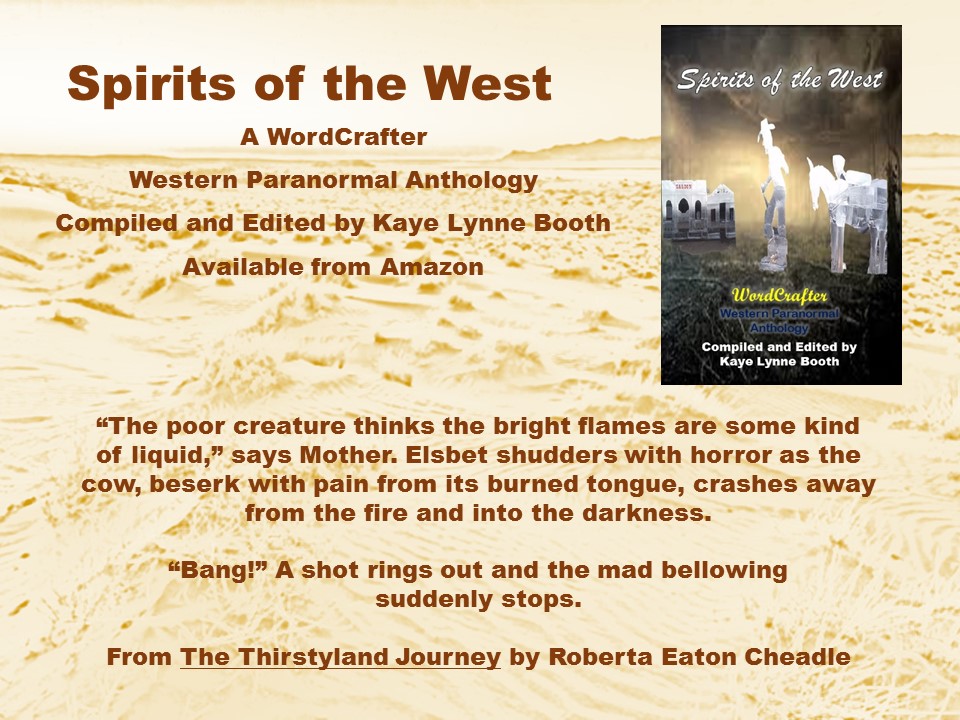
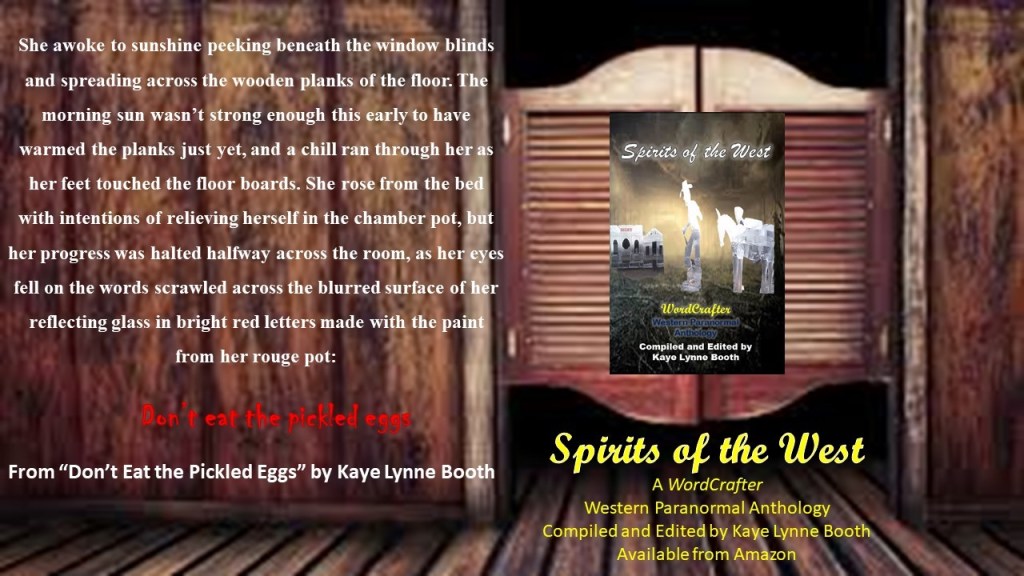
Another new anthology – Spirits of the West

I am delighted to have two short stories in Spirits of the West paranormal anthology with a Western flavour. My short stories are about the South African frontier rather than the American frontier but they are based on true historical events which I have fictionalised with a paranormal twist.

This is the second WordCrafter paranormal anthology compiled and edited by Kaye Lynne Booth.

Spirits of the West by [Kaye Lynne Booth, Enid Holden, Arthur Rosch, Roberta Eaton Cheadle, Jeff Bowles, Tom Johnson]

Blurb

Spirits of the west are often found in unexpected places. They can be found on a in a saloon in Colorado territory, on a wagon train in the plains of South Africa, or on a distant planet in another galaxy They can be the bringers of revenge or the protectors of the weak. Indulge yourself in eight unique paranormal stories with western spirit in Spirits of the West.

A few quotes

Purchase Spirits of the West

Amazon US

Amazon UK

Welcome to the #RRBC ROCKIN’ 2020 AWAY Book, Blog & Trailer Block Party! #Giveaways #DoorPrizes @RobertaEaton17

Hi and “WELCOME” to Rave Reviews Book Club’s BOOK, BLOG & TRAILER BLOCK PARTY at Watch Nonnie Write!

Giveaway

Here’s what I’m giving away today:

One (1) $25 Amazon gift card

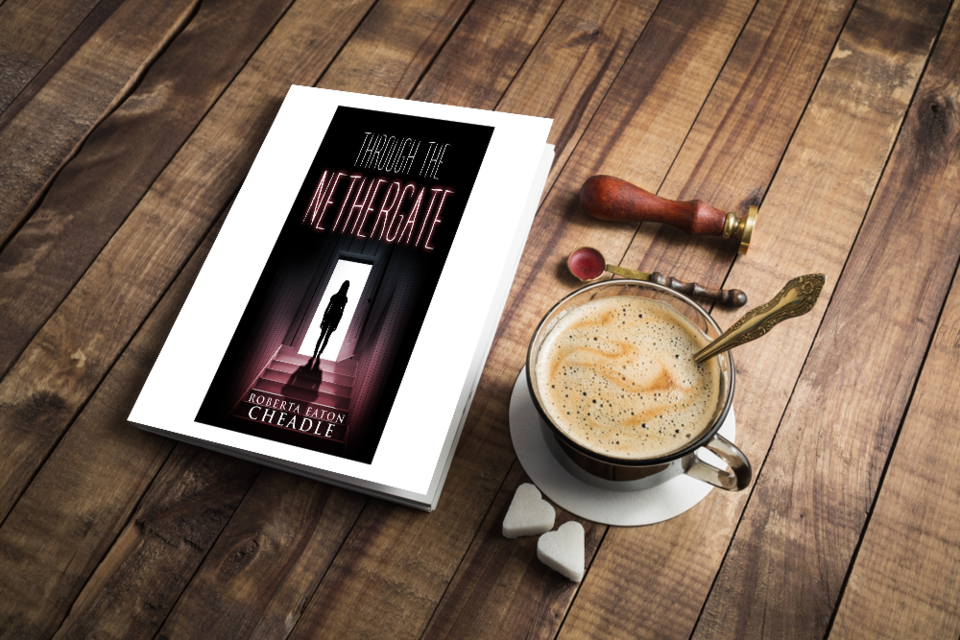
One (1) ebook copy of Through the Nethergate

Number of winners for this stop: 2

About Roberta Writes

I started this blog, Roberta Writes, in 2018 when I changed from writing mainly for children and poetry to writing horror, historical and supernatural short stories and novels. Since launching this blog I have published my first supernatural fantasy novel, Through the Nethergate, with a second supernatural historical novel, A Ghost and His Gold, due for publication in Jan/Feb 2021.

This blog is where I promote my adult and young adult writing and also where I share posts written from prompts, book reviews of adult and classic books, darker poetry and other thoughts about historical events that interest me, writing and life in general.

In keeping with the spirit of this blog, today I am sharing some information about Pandemics, then and now.

Epidemics in the form of malaria, tuberculosis, leprosy, influenza, smallpox and other first started appearing 10 000 years ago when humanity shifted from a hunter-gatherer to an agrarian lifestyle.

The creation of cities and forging of trade routes as well as wars have facilitated the spread of these epidemics to become pandemics.

The earliest recorded pandemic happened during the Peloponnesian War after a disease passed through Libya, Ethiopian and Egypt and spread to Athens. This was in 430 B.C. In 165 A.D. the Antonine Plague spread from the Huns throughout the Roman Empire and lasted for fifteen years.

Plagues and pandemics remained with humankind and some of the most well-known examples are the Black Death of 1350 A.D., The Great Plague of London of 1665 A.D., The Spanish Flu of 1918 and the HIV/AIDS pandemic of 1981. On 11 March 2020, the World Health Organisation announced that COVID-19 was officially a pandemic after infecting people in 114 countries in three months.

Mankind is resilient and adaptable and survival strategies were developed to help contain pandemics and allow people to continue with an adapted from of life during disease outbreaks.

The five most important of these strategies are as follows:

  1. Quarantine – The first legal quarantine occurred in the port city of Ragusa (today’s Dubrovnik) on the 27th of July 1377 during an outbreak of the Black Death. Doctors at this time observed that the spread of the Black Death could be slowed by isolating infected individuals. During the outbreak of the Spanish Flu in 1918, American cities such as San Francisco quarantined naval arrivals before they could enter the city. In both San Francisco and St. Louis, social gatherings were banned, and theatres and schools were closed.
  2. Socially distant food and drink pickup – During the Italian Plague of 1629 to 1631 A.D. wealthy citizens of Tuscany introduced wine windows whereby narrow windows were cut into homes, to enable wine sellers to sell their wine to waiting customers without the customers entering the homes or the sellers going out into the streets. New York implemented “to-go” cocktail windows during COVID-19 which is based on the same principle.
  3. Wearing masks – Doctors treating plague patients wore long, bird-like beaks. These beaks created social distance between the patient and the doctor and partially covered their mouth and nose. At that time, doctors believed in miasma theory that diseases spread through bad smells in the air. In 1918, masks played an important role in stopping the spread of infection to the public. San Francisco made wearing masks mandatory in September 1918 and those who didn’t comply faced fines, imprisonment and social shaming. Newspaper printed instructions on how to make masks at home. Does any of this ring a bell with you?
  4. Washing hands and surfaces – In the early 20th century, hand washing, which was unusual at the time, started to be encouraged. Powder rooms or ground-floor bathrooms were installed for use by guests and delivery people to stop the spread of germs throughout homes.
  5. Fresh air and adaptive schooling – Universities and schools have been closed in the past to help contain pandemics. In 1665, Isaac Newton was sent home from Cambridge University to him family’s home following an outbreak of bubonic plague. In 1918, American cities adopted the concept of open-air schools to help contain the Spanish Flu pandemic. The movement towards fresh air at this time also encouraged the creation of green spaces in cities.

We can see that pandemics have been a feature of human existence for thousands of years and the current COVID-19 prevention techniques are based on previous experiences in containing the spread of diseases. I thought this was interesting and it also amazes me how little infection prevention has changed over hundreds of years.

About Through the Nethergate

Blurb

Margaret, a girl born with second sight, has the unique ability to bring ghosts trapped between Heaven and Hell back to life. When her parents die suddenly, she goes to live with her beloved grandfather, but the cellar of her grandfather’s ancient inn is haunted by an evil spirit of its own.
In the town of Bungay, a black dog wanders the streets, enslaving the ghosts of those who have died unnatural deaths. When Margaret arrives, these phantoms congregate at the inn, hoping she can free them from the clutches of Hugh Bigod, the 12th century ghost who has drawn them away from Heaven’s White Light in his canine guise.

With the help of her grandfather and the spirits she has befriended, Margaret sets out to defeat Hugh Bigod, only to discover he wants to use her for his own ends – to take over Hell itself.

Roberta Eaton Cheadle

Website

https://www.robbiecheadle.co.za/

Blog

https://wordpress.com/view/robertawrites235681907.wordpress.com

Goodreads

https://www.goodreads.com/author/show/19631306.Roberta_Eaton_Cheadle

Twitter

Facebook

https://www.facebook.com/robertawrites/?modal=admin_todo_tour

AMAZON OR OTHER PURCHASE LINKS:

TSL Publications:

Lulu.com:

https://www.lulu.com/en/us/shop/roberta-eaton-cheadle/through-the-nethergate/ebook/product-1qkz92jq.html

Amazon: https://www.amazon.com/Robbie-Cheadle/e/B01N9J62GQ

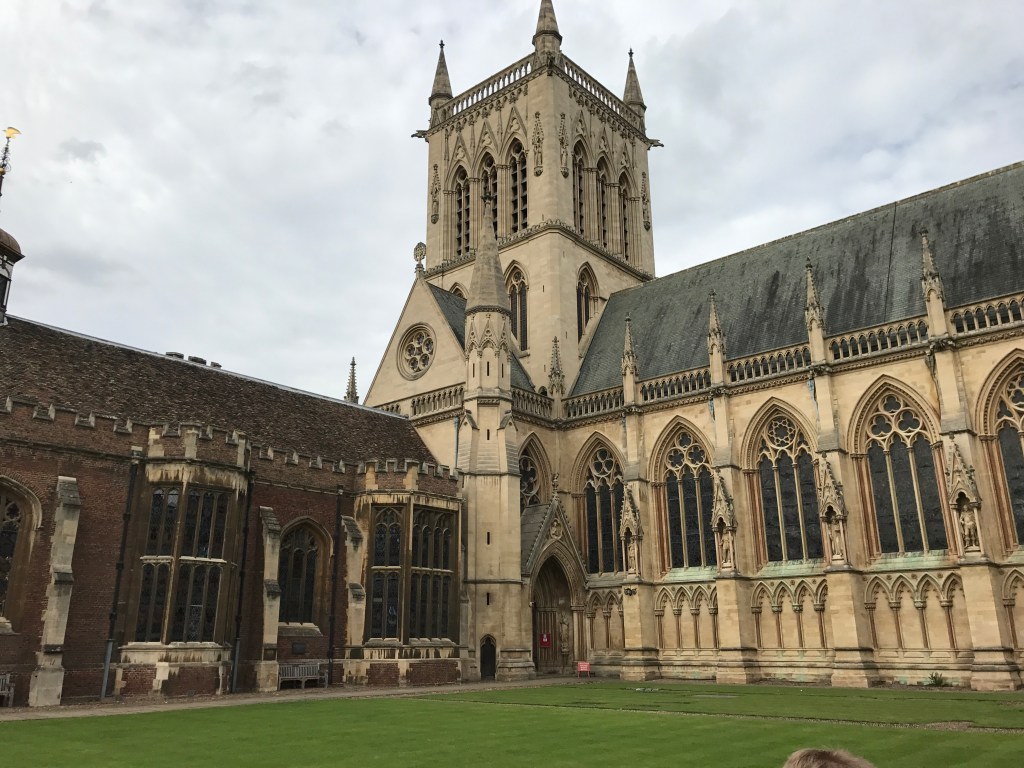
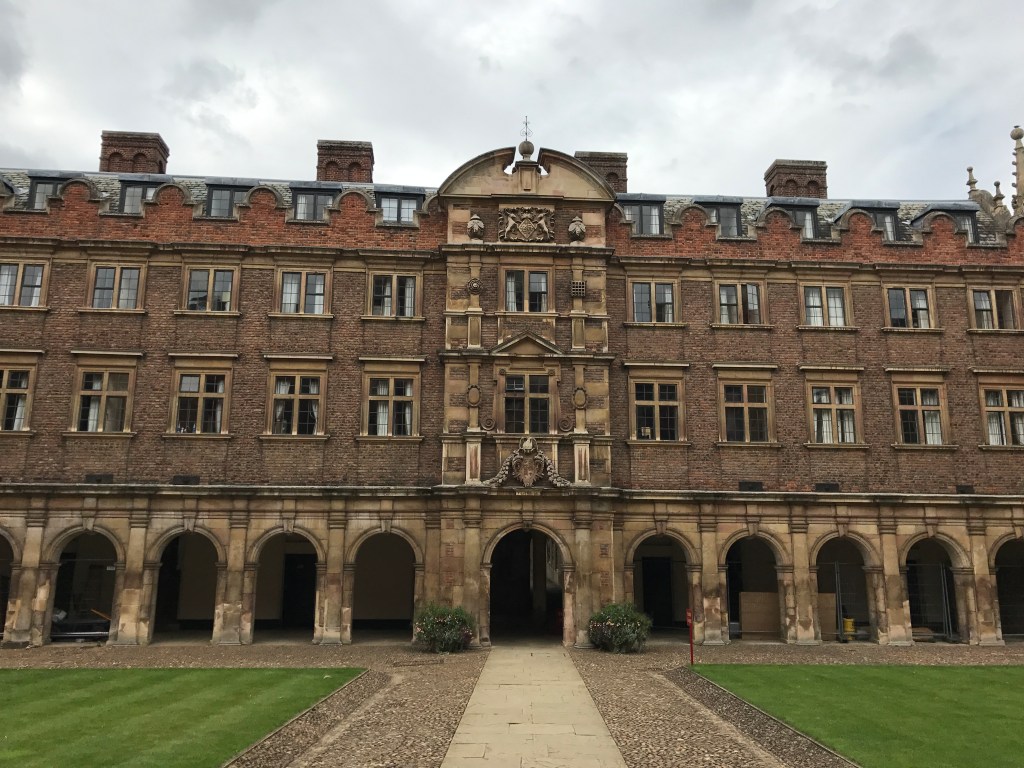
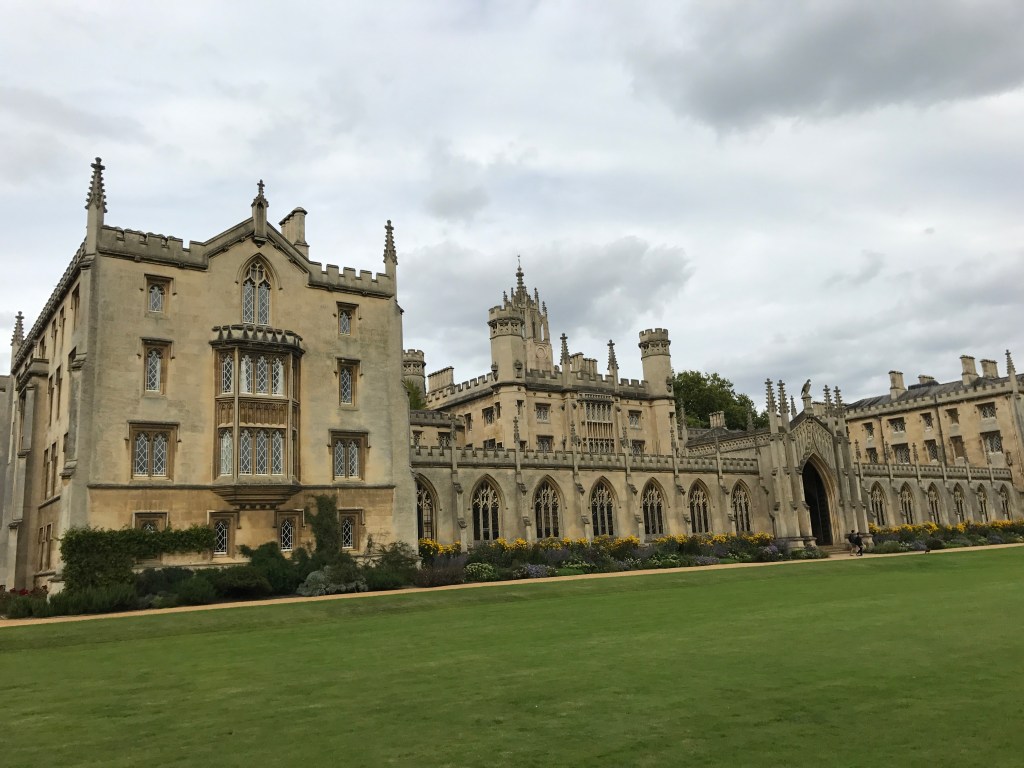
#ThursdayDoors – St John’s College, Cambridge

St John’s College is a constituent college of the University of Cambridge and was established by a charter dated 9 April 1511. The aims of the college, as specified by its statutes, are the promotion of education, religion, learning and research.

My family visited St John’s College in April 2018 and these are some of the pictures I took of its beautiful buildings, including the doors.

Thursday Doors is a weekly feature allowing door lovers to come together to admire and share their favorite door photos from around the world. Feel free to join in on the fun by creating your own Thursday Doors post each week and then sharing your link in the comments below, anytime between Thursday morning and Saturday noon (North American eastern time). 

You can join in here: https://miscellaneousmusingsofamiddleagedmind.wordpress.com/2020/10/22/thursday-doors-october-22-2020/

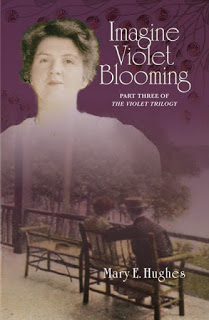
#Bookreview – Imagine Violet Blooming by Mary E. Hughes

Today, I am review the third and final book in The Violet Trilogy by Mary E. Hughes.

Mary has shared the following words about why she wrote this trilogy about her paternal grandmother:

“In 1891, at the age of 16, my paternal grandmother, Violet Courtenaye, went to Germany to study violin. An intrepid young woman, I thought, and decided it would be an interesting challenge to imagine her life in Leipzig. She had left some notes about that period on the inside cover of her Bible, so I had a few facts to start with.

I have had a wonderful time over the past eight years doing the research and writing the letters. On one trip to the UK, I found Violet’s actual home in Balham. In 2016 I visited the Leipzig Conservatory, met with the archivist and explored the old city, imagining Violet walking those streets. In 2013, as I was writing about her time at the Conservatory, I realized I had to know more, so as a 70th birthday present to myself, I began violin lessons. A year later I was privileged to acquire Violet’s actual violin from a cousin, and I have been playing it ever since.”

What Goodreads says

Imagine Violet Blooming is the final volume of The Violet Trilogy.

It’s 1906, and Violet is now in her thirties. In letters to family and friends, she writes of the challenges presented by her busy household and five children, the grief of losing loved ones and the pleasures of summer in ever-changing Muskoka. And she is blooming in her role as the wife of Frank Welsman, the celebrated conductor of the newly established Toronto Symphony Orchestra.

Imagine Violet Blooming paints a vivid picture of the musical life of Toronto but there is also a generous helping of social history in this tale of middle-class life.

My review

This is the third, and final, book in the Imagine Violet series and equally as enjoyable as the previous two.

Violet and Frank’s lives continue with Frank growing and expanding the orchestra in Toronto under the guidance of Mr Cox. As the conductor of the orchestra and an “in demand” music tutor, he is always busy and rarely at home. Violet also continues in her traditional role as the mother of five lively children and the wife of a well-known conductor. The family have their annual holiday in Muskoka and their cottage on the island is improved with a boat house and a new boat. The descriptions of the encroachment of civilization on this rural and peaceful place are interesting and quite poignant.

Violet grows as a person and experiences the death of her father. Dealing with grief is difficult and she must also keep her mother and sister’s spirits buoyed up, which she does quite successfully. Learning to manage her household staff continues to be a challenge for Violet, but she becomes better and identifying what she needs and a domestic helper who will suit her family as the series progresses. The family moves into a lovely new home which is big enough for their growing family and the older boys, particularly Teddy, excel at school and are great helpers at home.

The series has an unexpected ending, but it is appropriate and well handled; a good finish to a relaxed and peaceful read. These books make me think of taking a boat ride on a calm lake on a warm summer’s day. Each book is a slow-moving and pleasant meander through the life of Violet and each book leads on successfully from the next.

I am rather sad that the series is finished with this book and their will be no more escapades about Violet.

Purchase Imagine Violet Blooming by Mary E. Hughes

Directly form Mary E. Hughes here: http://imaginingviolet.blogspot.com/2020/10/imagine-violet-blooming-now-for-sale-20.html