History always makes an impact on the present. Retired homicide detective Sam Sadlowski faces his personal history and fears as well as living and dead enemies.
My review
Gallows Hill is the second book in The Investigative Paranormal Society series. I have read the first book, Maledicus, so I was engaged with the characters in this book before I started it. In Maledicus, I quickly became very attached to the main character, Roosevelt or Rosy to his friends, and also to Helena, the little girl who becomes the focus of Maledicus’ evil intentions.
In this second book, a different member of the society is central to the story and we get an opportunity to learn the backstory of Sam which, intriguingly, ties in with the central themes and story of Gallows Hill.
Sam is a retired detective who lost his only son, Josh, to suicide ten years earlier. His son’s death destroyed his marriage and Sam lives alone. He has never recovered from Josh’s suicide and carries a burden of guilt that is threatening to destroy him.
The author is exceptionally good at character building and his depiction of Sam and his emotions and motivations are captivating. I quickly grew to love Sam and was thoroughly invested in his life.
The story has a dual theme, the first being the chronic illness of his friend and colleague’s daughter, Maria, and the ultimate revelation of the circumstances surrounding Josh’s death and the second, is the investigation by the society of rumours of a ghostly presence at an abandoned steel mill on the outskirts of town. The two themes are cleverly woven together to create a satisfying and clever story.
The ghostly presence, Ebeneezer Schwarznacht, is horribly depraved and his portrayal was reminiscent for me of the men behind the Salem witch trials. I find the evil embodied in this type of personality, pious and self righteous, is far more frightening than the concept of a demon as it represents real people and real happens rather than fantasy. It is chilling to think of killers who are totally entrenched in their belief that they have a divine right to judge others and take away their lives.
The author does a great job of running the two themes in parallel with clever overlaps and then tying them both together with some great twists at the end.
This is an excellent and chilling story and I would recommend this book to lovers of horror and supernatural stories.
I haven’t written any poetry for months. The spirit just has not moved me so I was pleased when the idea for this poem popped into my head in response to this photo.
Today, I am delighted to introduce you to author G J Griffiths. I have read all three of Graham’s Quarry Bank Mill books and enjoyed them thoroughly. I invited him over today, to tell you about how he came to write his historical series.
Over to G J Griffiths
I am a retired science teacher and I have spent many of my retirement days at Quarry Bank Mill Museum, in the UK, as a volunteer in various guises. I started as a volunteer ranger on the estate; I’ve been an exhibition guide; I’ve enjoyed leading groups of school children and adults on tours around the mill, and QB House. It can be good fun entertaining them with a few family or workers anecdotes, and even, occasionally, some upsetting facts. Often they are particularly interested in the information we share with visitors about the child apprentices. They were indentured from distant workhouses during the first fifty or sixty years of the mill’s existence, and well into the 19th century; these were children who lived in the Apprentice House at Quarry Bank.
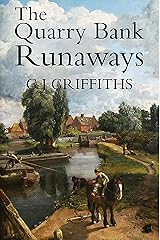
When I’m not at QBM I write books under the pen name G J Griffiths and I’ve recently completed on my third historical fiction involving two particular apprentices who ran away in 1806. It’s quite a departure for me as a science teacher who hated history lessons at school back in the 1960s. But many of the true stories at QBM as well as the fantastic site have given me new inspiration for writing, as well as a surprising love of history! My historical fiction novels are entitled The Quarry Bank Runaways, Mules; Masters & Mud and The Mule Spinners’ Daughters. All of the stories are very much focussed around the lives of Thomas Priestley and Joseph Sefton; the runaways who were aged 13 and 16 in 1806. To add a sense of authenticity to the tales I attempted to write much of the dialogue in a kind if old English dialect. Then I subsequently added a “NUTS alert” in the book’s blurb to warn future prospective readers about what to expect. This was because some reviews mentioned difficulty in understanding one or two characters’ speech. It reads thus:
WARNING! This book may contain NUTS! (Non-Uniform Text Speech) In other words, conversations in what some have called “Olde English Vernacular”. It is spoken by characters in the book from the North, the Midlands and the South of England. There is a glossary at the end of the book to help if you can rise to the challenge. It adds shades of colour to this 19th century story that you may not be expecting.
The specific inspiration for writing each book in the series came about, briefly, as follows:
The Quarry Bank Runaways
When I learned that the two boys sneaked out from the mill and made their way on foot to London, 200 miles south of Cheshire, I wanted to know what happened on their journey. There were no obvious answers to my many questions so I planned out their probable route, most likely along the various drovers’ roads between the numerous market towns. It is known that Thomas Priestley and Joseph Sefton appeared in court in Middlesex from archive evidence held at Quarry Bank, and that they wished to find their mothers who were in Hackney Workhouse. It was from that same workhouse that the very young boys were originally taken in order to be indentured to Samuel Greg, the owner of QBM. So with that destination as the finale to my story I commenced researching and writing.
Mules; Masters & Mud
While gathering information for the runaways book I came across the real story of Robert Blincoe, also a child apprentice in various northern mills, and the appalling treatment that he had to endure. He eventually became a relatively successful business man in the same region of Cheshire, but not at Quarry Bank. At the same time I discovered stories of the ‘mud larks’ along the River Thames, and I always had an intention to include something about chimney sweep masters and their ill-treated apprentices. With all this buzzing around in my head I decided to make Thomas and Joseph achieve some satisfaction in their adult lives with a loving family and a different occupation. And how could I cover this period of British history without including one of the young men being present at the horrendous Peterloo Massacre?
The Mule Spinners’ Daughters
When Thomas and Joseph each became loving fathers to a family, in book 2, they had daughters who inherited their parents’ determined spirits. The young women were literate and thoughtful about life, sensitive to the social changes during the first half of Queen Victoria’s reign but not without romantic inclinations. I had been encouraged by a staff colleague at QBM to include something in the next book about a robbery there around the 1840s, as well as a preacher, John Wroe, who formed the religious sect known as the Christian Israelites in nearby Ashton-Under-Lyne. How could I resist ‘flinging’ the two young women, Sally and Catherine, into this melange and discover, for myself, what they would make of it all? Writing this book was quite a challenge, but for his ‘reward’ I named my police inspector Walter, after the man with his two bright ideas at Quarry Bank Mill!
Thank you, Graham, for visiting me with this terrific post.
About G J Griffiths
G J Griffiths is a retired science teacher with some early working experience of the photographic industry. Born in the UK he enjoys reading most genres of fiction such as sci-fi, crime/detective thrillers, historical and wildlife stories. Non-fiction reading mainly includes scientific or historical books. Walking in the English, Scottish or Welsh countryside with binoculars ready for bird-watching or other wildlife is a particular pleasure. Seeing badgers and otters in the wild recently was an exciting first.
His first novel was Fallen Hero and the So What! series of three books followed and which are all focussed around the fictitious Birch Green High School. More recent works include poetry: Dizzyrambic Imaginings, two illustrated children’s sci-fi stories about ant-size aliens and historical novels based upon real characters from the Industrial Revolution period: The Quarry Bank Tales. If you enjoy reading any of G J Griffiths’ books please share your enjoyment with other readers and post a review. This is very helpful for new writers. G.J. would be pleased to hear from you on a Comments page at his website: www.gjgriffithswriter.com
I was introduced to the writing of G.J. Griffith through the second book in this series, Mules, Masters & Mud, which I thoroughly enjoyed. I found this first book to be equally entertaining and interesting and I found myself even fonder of the main characters, Joseph and Thomas, as teenagers in The Quarry Bank Runaways.
Joseph and Thomas are both indentured apprentices to Quarry Bank Mill in the early 19th century, having spent the later part of their short childhoods in a workhouse in London after their mothers fell on hard times. The boys vividly recall the journey from London to the mill near Manchester in the bank of an enclosed wagon with a lot of other children. The paupers were bumped around and arrived battered and bruised and, although their master, Mr Greg, is one of the better mill owners as far as treatment of his workers was concerned, life does not improve for the apprentices after their arrival.
Following an accident in which Thomas loses a finger, he is desperate to travel to London to visit his mother. Joseph decides to accompany him and take advantage and visit his own mother. The two boys make a plan and manage to escape the mill and set off on the long and arduous journey by foot to London. Their determination to visit their mothers during a time of physical challenge seemed very natural to me and the mill owner was unkind to disallow the journey. Mr Greg’s refusal of Thomas’ request to have leave of absence from the mill highlighted the fact that workers were treated as commodities at that time in history and had no rights whatsoever.
The story tells of the boys journey and the various people they meet along the way. Many are kindly and do their best to assist the runaways, but others attempt to exploit them for their own personal gain.
The detailed depictions of life during the early years of the industrial revolution and the awful work conditions and related health issues in various walks of life from mill workers to bargemen to potters to charcoal burners is well researched and fascinating. The reader is also given a brief glimpse into the lives of a retired night watchman, a magistrate and a scullery maid as well as the harsh laws impacting the lives of people forced to enter the workhouses.
The dialogue is written in various dialects which some readers may find a bit challenging, but I quickly got used to it and thought it added to the authentic feel of the time and the story. I would recommend this book to readers who enjoy delving into history and how people lived in the past.
Thursday Doors is a weekly feature allowing door lovers to come together to admire and share their favorite door photos from around the world. Feel free to join in on the fun by creating your own Thursday Doors post each week and then sharing your link in the comments below, anytime between Thursday morning and Saturday noon (North American eastern time).
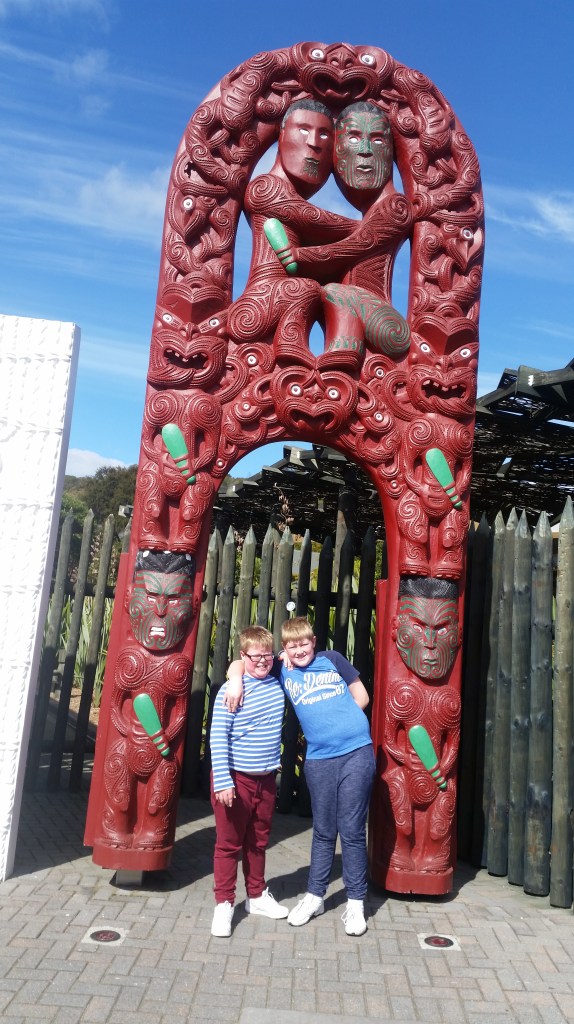
These are some doors from my trip to Auckland and Rotorua in New Zealand in 2016. The depict some of the amazing Maori artwork you will find in both these interesting places.
Maori house at RotoruaA larger Maori house at Rotorua – the artwork is amazingMy boys in front of a decorative door frame at RotoruaThis is the door onto the ferry at the harbour in AucklandHere is Michael in front of an ornate Maori house with a tiny door at the museum in Auckland
I am a chartered accountant and it took me six years to qualify which is one year less than the normal time frame for this qualification in South Africa. I did my degree part time through a correspondence university and managed to do my full course credits each year as well as work as an assistant in a video shop. I used to work the afternoon/evening shift from 3 p.m. until 9.30 p.m. and study from 8 a.m. until 2 p.m. every morning/early afternoon.
I was fortunate as I won a scholarship for the university after my first year and didn’t have to pay a cent for my second to fourth years at university. This was a great boon as I didn’t need to take a student loan. I was also selected for a part-time bursary at a local college and was able to attend lectures for selected courses I was taking. I really enjoyed being able to attend classes for the more complex subjects like statistics and economics. I also enjoyed being able socialise with other students.
After I finished my degree, I started my articles at a “Big Four” auditing and accounting firm in Johannesburg. I worked full time doing my first year of articles while I did my honours degree through the correspondence university. I successfully completed my honours at the end of that year and went on to take my board examinations during my second year of articles.
I met my husband during my first year of my articles, but I was very diligent and our relationship never impacted on my results or academic performance. I finished all my academics after five years and had all my core work hours by the end of my second year of articles. I was very lucky as the firm let me move to corporate finance at the beginning of my third year instead of completing another year in audit. I was not a big audit fan although my husband is an auditor.
I loved corporate finance and I have been involved in that world ever since. I love deals and transactions. It’s like doing a giant puzzle, you get the picture of what the client wants to do and once you know the end point, you work backwards to get all the pieces in place to build the financial history and the deal “story”. I am fortunate as I have an innate ability to work out what the end result needs to be and to work out how to achieve that result using the existing accounting and legal rules and regulations. Everything I do is strictly above board but I am good at working backwards and juggling the pieces into position.
During my time in corporate finance, I wrote a series of publications about investing in Africa, the African debt market and investing in Africa. These were well received and I learned a lot about writing and publishing. They were fat publications of over 400 pages and covered all the main financial markets and stock exchanges in Africa. I also did comparisons of the African stock exchanges to others around the world and gained a good working knowledge of the exchanges in London, Beijing, Toronto, Australia and New York. I have also worked with a lot of the Euronext exchanges (EU) and the rules and regulations of the SEC (U.S. Securities and Exchange Commission).
I still do a lot of work for various stock exchanges and work predominantly with London and the USA. I am currently also working with Australia which makes for some interesting working hours for me.
So that is a little bit of information about my work life and what I do for all the hours in between my blogging and writing and home schooling.
What about you? What do you do when you’re not blogging or writing? Let me know in the comments.
Charli from Carrot Ranch’s 99-word flash fiction challenge this week is: August 6, 2020, prompt: In 99 words (no more, no less), write a story about molten lava. It can be real-time, such as a volcanic event or the result of one in the geologic timeline. Or, think about making the prompt into a metaphor of heat. What is so hot? Go where the prompt leads!
Firestorm
The dust storm distracted the authorities from the wildfire. No one realised, until it was to late, that it had developed into a firestorm, creating its own fire-induced winds which spread the blaze faster. Smaller fires started on the outskirts of the town as a result of firestorm induced spotting and lightning strikes. The winds spread the blaze and the change in the wind caused by the reduction in temperature from the dust storm, activated the sides of the main fire and the smaller ones, making them broader and bigger. It swept through the town, destroying everything and everyone.
Thursday Doors is a weekly feature allowing door lovers to come together to admire and share their favorite door photos from around the world. Feel free to join in on the fun by creating your own Thursday Doors post each week and then sharing your link in the comments below, anytime between Thursday morning and Saturday noon (North American eastern time).
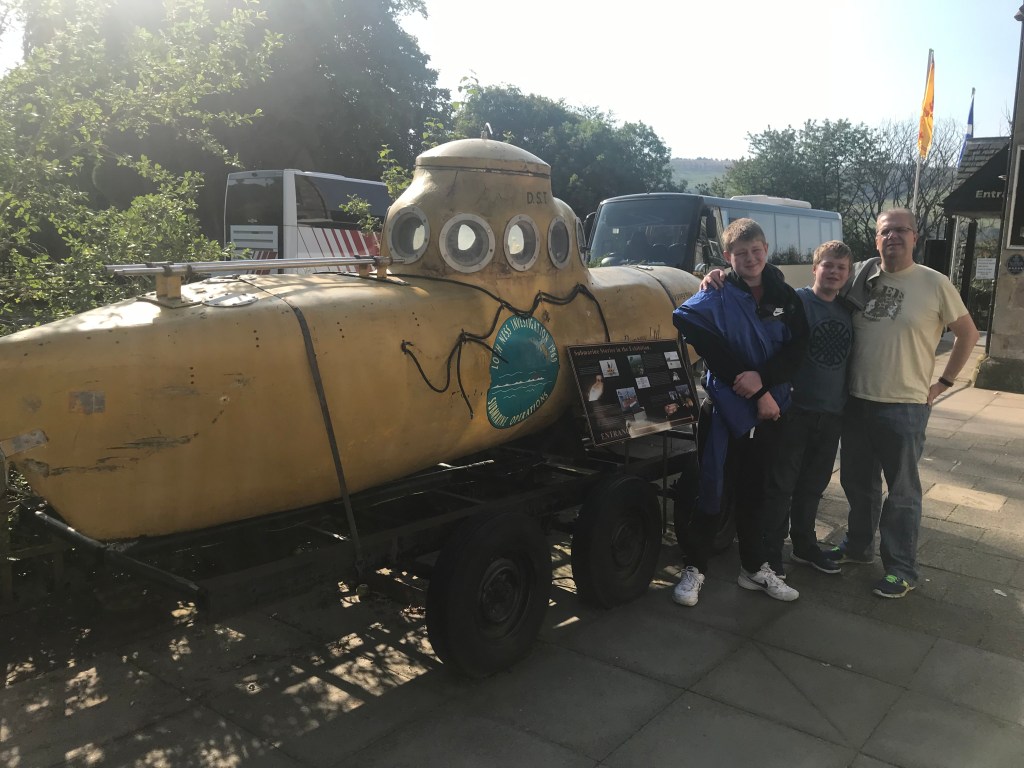
When we visited Scotland last year, we went to Inverness and toured Loch Ness and the surrounding tourist sites.
These are some of the doors I photographed during this small part of our Scottish tour.
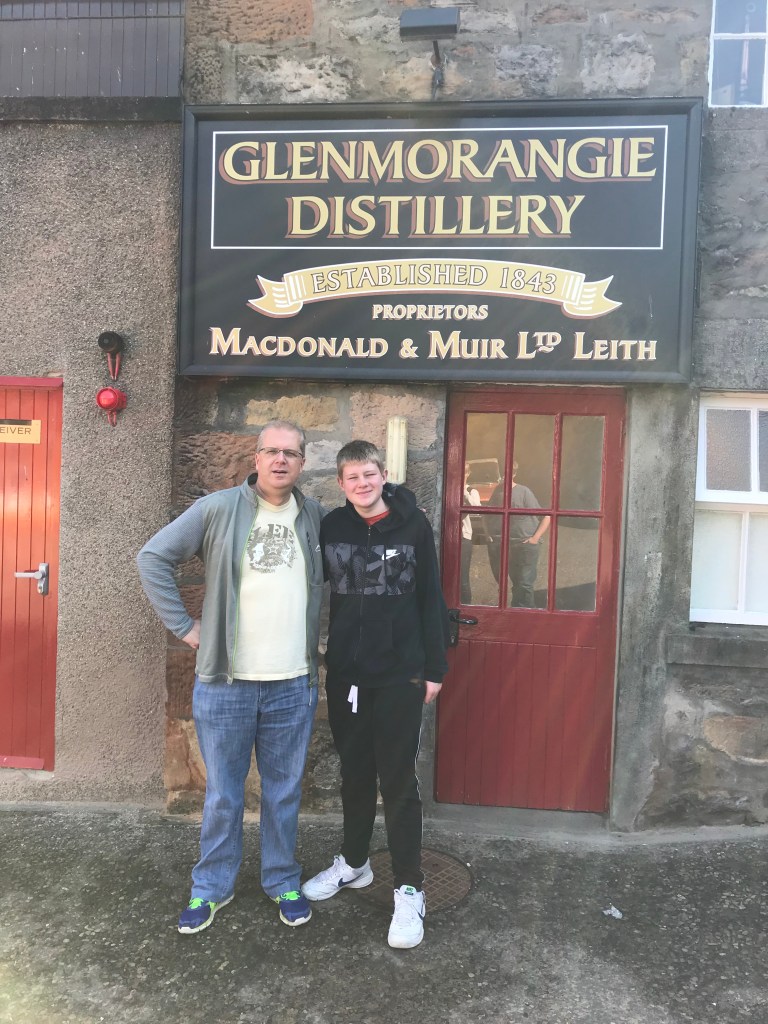
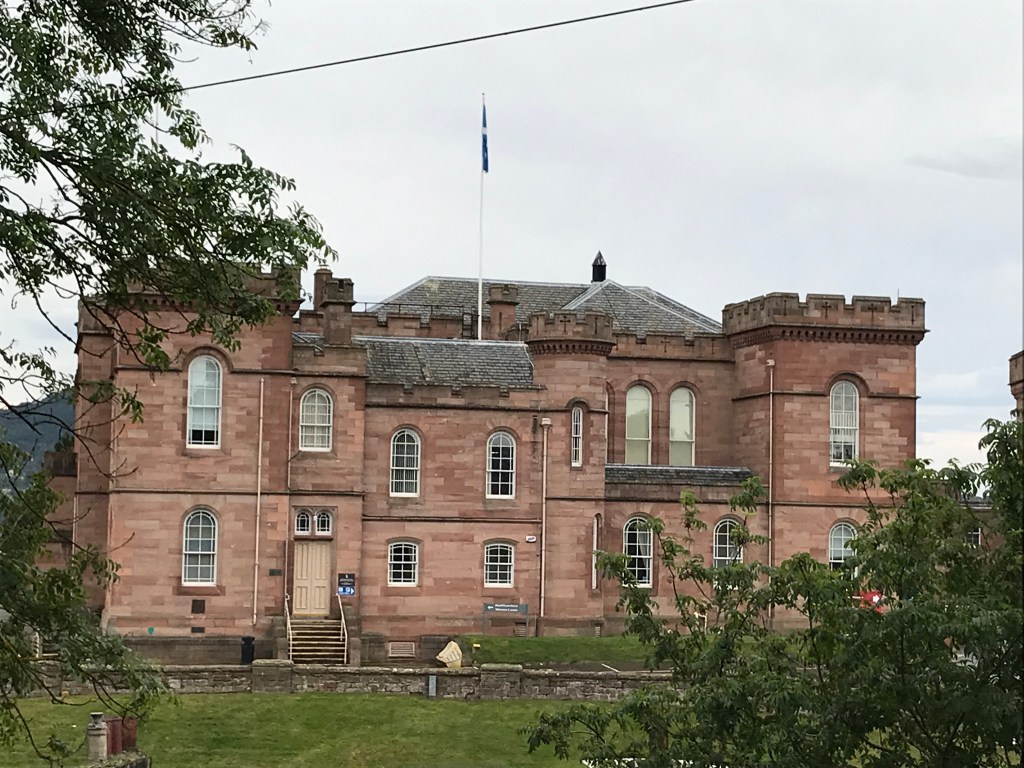
The door to a cottage at the Culloden Battle GroundSubmarine outside the Loch Ness Museum – it has a round door at the top.Terence and Greg outside the door to the reception at Glenmorangie DistillerySide door into Inverness Castle
When a married man’s overseas business deal goes wrong, the one person who can help him has ideas of her own. A madcap comedy where true love finally prevails and everyone lives happily ever after—but only after a lot of screwups.
Family man Mike Torino lands an important business project in Italy, home of naked art, Valentino, and taxi-crashing yoga pants, so he brings along his wife, hoping to rekindle their marriage while securing a promotion. But romance gets derailed by head colds, constant bickering, and assaults from ankle-breaking cobblestone streets. Their daughter develops a gelato addiction. Mike’s Italian partner has a coronary. And as for amore . . . Mattie tells Mike to handle things himself—and storms back to America.
Mike is trapped. Leaving Italy will blow a promotion; staying might cost him his wife and family.
While reeling from Mattie’s frantic departure, a replacement liaison is assigned—a top-notch, beautiful young Italian woman who is instantly smitten with Mike and determined to reveal the passions of her homeland—whether he wants to see them or not! Normally immune, Mike is tempted—but is headstrong, voluptuous Julietta worth the risk?
My review
Poggibonsi is a light hearted and humorous read, as its title suggests. I don’t read many books in this genre as my taste runs more to supernatural and horror books, but I read the blurb for this book and it sounded like a lot of fun, so I decided to give it a try.
The story revolves around a high flying corporate financier, Mike, who works for a high profile and successful company and who has an idea to create an exclusive holiday and recreation facility in Tuscany, Italy. His “tough as nails” boss likes the idea and gives Mike the go ahead to head for Italy and convince the locals to sell their businesses and properties to his company and become participants in the project.
Right from the beginning, Mike comes across as a nice man, but a conflicted one. He desperately wants to be at the top of his game from a business perspective and to become a partner in his company, but he also wants to be a good husband and father. I identified with his internal conflict as I work in the corporate finance world and understand the cut-throat and ruthless nature of transactions and deals. It is tough on the families of the top players as they work excessively long hours, travel frequently and are continuously under a great deal of pressure.
Mike is married with a young daughter, and his marriage is suffering due to his career choice. He convinces his wife, Mattie, to come with him to Italy, together with their daughter, for a family holiday before he starts work in Tuscany. Mattie agrees and that is when all the trouble starts as everything that can go wrong does. Traveling with a young child is always a challenge and the author brings out the humorous side of everything to do with family travel, including misplaced baggage, a lost child, sickness and excessive shopping.
I didn’t particularly like the character of Mattie. Perhaps because I understand the world of deal making so well, I felt she was very unsupportive of her husband’s career and ambitions. She is angry when Mike’s Italian partner has a heart attack and ends up in hospital and didn’t want him to visit the sick man which felt very selfish and inconsiderate. Her poor attitude eventually results in her leaving Italy with their daughter in a huff and on bad terms with Mike. This, of course, leaves Mike wide open to the overtures of the beautiful Italian assistant who replaces his sick contact. His unsolicited and wild romance with Julietta is fraught with all sorts of unexpected problems, some of which are accidental and some of with are created by either Mike or Juliette. Their ill advised exploits are hilarious and, while there are some sex scenes, they are not explicit and are aimed at being amusing rather than heavily erotic.
While this book is funny and will give you a good laugh, it also touches on a lot of sensitive and difficult situations modern families face in our fast paced world where the expectation is that business people should be available 24/7 and you are only as good as your last deal.
I enjoyed Poggibonsi a great deal and would recommend it to people who enjoy a humorous look at the trials and tribulations of life and romance.
Thank you to Prof Charles French for reading and reviewing Through the Nethergate. There is nothing as encouraging as a good review.
I am very happy to write this review of an excellent novel I have just finished reading!
Through The Nethergate by Roberta Eaton Cheadle is a wonderful YA novel that will be appreciated by readers of all ages! Cheadle does an excellent job of weaving true historical characters into her tale that pits a teenaged girl, along with her Grandfather, and a few other helpers, against the very forces of Hell itself.
I deeply appreciated the way Cheadle was able to tell the historical tales and intertwine them into the main plot. Cheadle makes this book about history and its connection to our times.
I’m late this week for the SoCS post. The reason behind my lateness is that I spent the entire day yesterday assembling my Covid-19 memories twisted nursery rhymes cake. It took a lot longer than I expected which left very little time for blogging. Today, two of my sisters visited for the first time in four and a half months. Their children came and everyone had a wonderful time. All three families have been sheltering in place so the risk of virus contamination and cross-spread is limited and I felt it was worth the calculated risk. The kids were so happy to see each other and had a marvelous time.
Anyhow, back to this post. More … Of course, more songs.
First up today is my favourite song from Fiddler on the Roof. When I first listened to this record of my mother’s I didn’t know anything about antisemitism. Even now, it is not something I’ve ever encountered in my daily life although I am obviously now horribly familiar with the tragedy of the Second World War and the Russian pogroms. Matchmaker has always been my favourite song from this wonderful theatre production.
My mother never had a record of Phantom of the Opera. I knew the story before I saw the theatre production … a few times. Okay, ten times, but I really love Phantom. I adored the book, there was something so wonderfully creepy about the disfigured man in the mask haunting an opera theatre. I remember reading it first when I was about twelve years old. I re-read it every now and again when I feel like being enchanted. Of course, everyone has their favourite song and for most people it seems to be The Phantom of the Opera theme song. For me, however, it is Think of Me.
Terence is not here tonight to help me with one of his pop up music songs, so I’m going to share my current favourite song with you. I will listen to this on replay for a few weeks until I get sick of it and then I’ll never listen to it again.








 roberta-writes.com