Open Book Blog Hop – 3rd February

IMG_3207

Welcome to another edition of the ‘Open Book Blog Hop’.  This week’s subject is:

‘How do you keep track of all the books you read?’

I read a lot of books. I read a reviewed 150 books last year in a wide variety of genre’s including children’s, poetry, horror, supernatural, cosy mystery, family drama and the odd memoir and thriller.

My preference is to select the books I read and review by which I mean that I rarely read and review books on request by an author or publisher. The reason for this is that I quickly learned that I frequently didn’t enjoy books that I read at the request of someone and this caused a conundrum for me when it came to the review. I don’t post reviews that are less than 3 stars. That is a personal decision I have made as I firmly believe that despite all attempts, I make to read and review books with a fair and unbiased eye, there are some topics or styles of writing I just don’t like and that would reflect negatively in my review. Another reader could have a very different experience of the same book. I know this is true because I have read reviews of books by other readers who have assigned a low rating to a book. I have read and loved the same book and it has been a 5-star read for me. A good example of this is Fahrenheit 451 by Ray Bradbury. 13% of the reviews for this amazing book on Amazon are 1 star reviews. I gave it 5 stars.

I digress, however, from the question of how I keep track of the books I have read.

I have entered the Goodreads reading challenge again this year. Goodreads then keeps track of all the books I read and review on my Robbie Cheadle profile. I have, however, recently created a second profile on Goodreads under the name of Roberta Eaton Cheadle. This is the publishing name I am using for my supernatural, science fiction and adult writing and books. The result of this is that I am now reading and reviewing thrillers, science fiction, romance, adult classics, supernatural, dystopian and horror books on my Roberta Eaton Cheadle profile. I am reading and reviewing children’s and poetry books as well as books I read as part of Rosie Amber’s book club on my Robbie Cheadle profile. I am aiming to read 120 books this year, with at least 60 books under each profile. I have not entered the Goodreads challenge under this new profile, but Goodreads still records all the books I enter as read and reviewed and I can access the list if I want to. I provides the date I entered the book as read.

I post reviews for every single book I rate on Goodreads and Amazon, whether the author died two hundred years ago or not. With regards to my comment about not posting 1 or 2 star reviews, due to my selection techniques, these sorts of reads are very few and far between and it is most unusual for me not to post a review of a book.

Prior to my recording my reads on Goodreads, I never kept a record of books that I read.

Let’s see how other blog hoppers keep track of their reading matter.  Click on the blue button below to find out, or just leave a comment:

Rules:

1. Link your blog to this hop.
2. Notify your following that you are participating in this blog hop.
3. Promise to visit/leave a comment on all participants’ blogs.
4. Tweet/or share each person’s blog post. Use #OpenBook when tweeting.
5. Put a banner on your blog that you are participating.

You are invited to the Inlinkz link party!

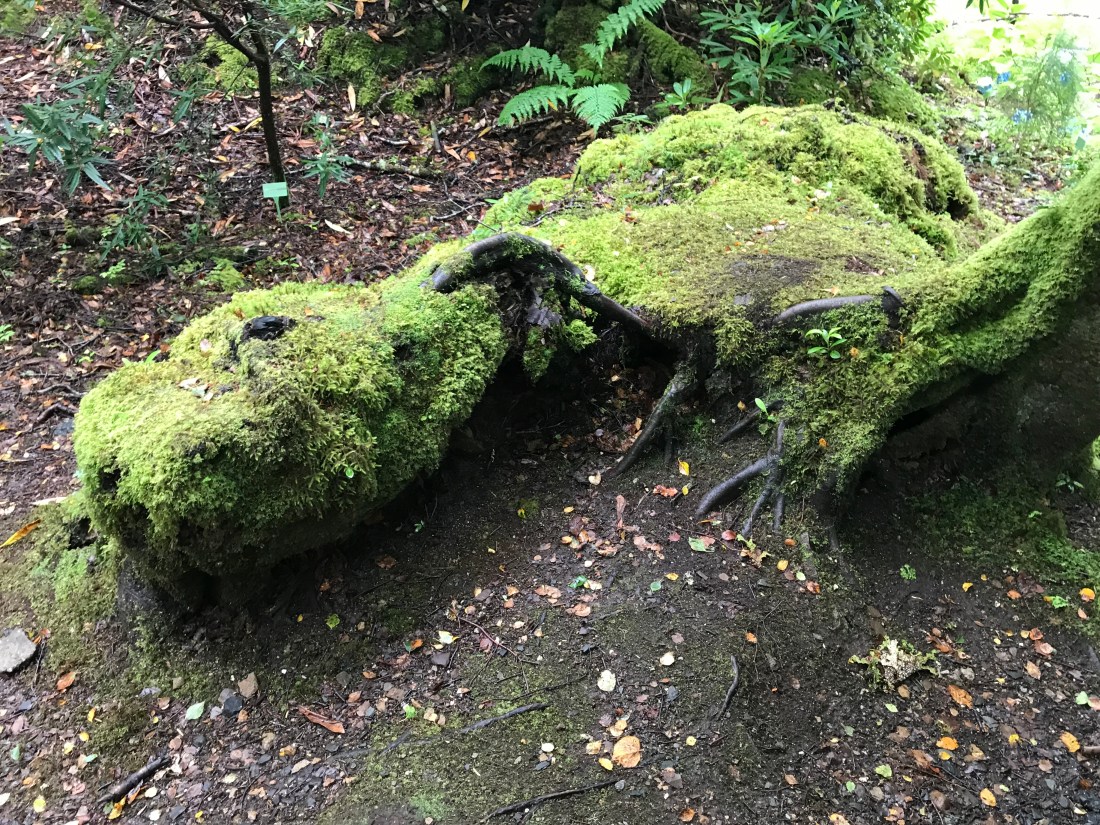
#Writephoto – Daybreak

Here is another unedited extract from A ghost and his gold:

“The following day, Robert volunteered to accompany the wagons which were going out to retrieve the bodies of the British troops who had fallen during the skirmish.

At daybreak, the Boers had declared a truce to enable this expedition of recovery and Robert had leaped at the opportunity of escaping the town, albeit for a short time and for such a miserable purpose. Viewed from his hard seat in the back of the wagon, the glorious early morning sky with its fluffy white clouds tinged with varying shades of pink did not bring him the happiness he sought or expected. The journey seemed endless and his trepidation at what he must find at the end of it grew with each jolting rotation of the wooden wheels over the rutted ground. His chin gradually dipped until it rested on his chest as he grappled with his desolate thoughts, ignoring the fresh beauty of the unspoiled countryside.

He was vaguely surprised when a small contingent of Boers met them at the site of the altercation and helped the small party of men seek out the bodies of their comrades.

Once again, the enigma that was the Boers struck him. Their faces were sorrowful and their eyes downcast when they came across the body of a dead soldier, smashed by a bullet and crumpled into a grotesque and twisted shape on the hard ground. Their expressions and words gave no hint of elation or pride at their triumph during the previous day’s warfare.

Robert’s mind grappled with the unpleasantness of having the faces of these men, his opponents, imprinted in his thoughts. These pictures would overlay his preferred depiction of a faceless and devilish enemy, upon whom he could fire without remorse, a scowl of rage upon his face and his heart wrapped in a protective blanket of British righteousness.”

Published for Sue Vincent’s Thursday write photo prompt. You can join in here: https://scvincent.com/2020/01/30/thursday-photo-prompt-daybreak-writephoto/  

Guest Author: Robbie Cheadle – Old Man of the Sea

I am visiting the lovely Sue Vincent‘s blog with a post about the Old Man of the Sea and how I wove this myth into a short paranormal story I wrote. Thank you, Sue, for hosting me.

Background

In Greek Mythology, the Old Man of the Sea is the term used for several water-gods, purported to have existed since the beginning of time. The water-gods most often referred to in terms of this expression are Nereus, the eldest son of Gaia and her son, Pontus, and Proteus, a prophetic water-god whom was referred to as “Old Man of the Sea” by Homer. Triton, a Greek god of the sea and the son of Poseidon and Amphitrite; Pontus, an ancient, pre-Olympian sea-god and the fatherless son of Gaia; Phorcys or Phorcus, a primedial sea god and the son of Pontus and Gaia, and Glaucus, a Greek prophetic sea-god born mortal and turned immortal as a result of eating a magical herb, are also referred to using this expression.

The Old Man of the Sea is the father of Thetis, a figure from Greek mythology who appears mainly as a sea nymph, a goddess of water or one of the fifty Nereids, daughters of the ancient sea god, Nereus.

Sinbad the Sailor

I learned about the Old Man of the Sea as a child when reading the book, The seven voyages of Sinbad the sailor. This book describes the seven voyages undertaken by a fictional mariner called Sinbad throughout the seas east of Africa and the south of Asia. During his voyages, Sinbad encounters magical lands, mythical creatures and sees many supernatural phenomena. The stories of Sinbad are Middle Eastern in origin.

Sinbad encounters the Old Man of the Sea in his fifth voyage when he is shipwrecked on an island inhabited by this evil old man. The Old Man of the Sea climbs onto Sinbad’s shoulders and twists his legs around his neck, riding him like a horse, day and night until Sinbad is ready to fall down dead.

Carry on reading here: https://scvincent.com/2020/01/31/guestauthor-robbie-cheadle-old-man-of-the-sea/

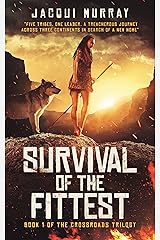
#Bookreview – Survival of the Fittest by Jacqui Murray

Book reviews

What Amazon Says

Five tribes. One leader. A treacherous journey across three continents in search of a new home. Written in the spirit of Jean Auel, Survival of the Fittest is an unforgettable saga of hardship and determination, conflict and passion.

Chased by a ruthless enemy, Xhosa leads her People on a grueling journey through unknown and dangerous lands following a path laid out decades before by her father, to be followed only as a last resort. She is joined by other fleeing tribes from Indonesia, China, South Africa, East Africa, and the Levant, all similarly forced by timeless events to find new lives. As they struggle to overcome treachery, lies, tragedy, secrets, and Nature itself, Xhosa is forced to face the reality that her enemy doesn’t want to ruin her People. It wants to ruin her.

The story is set 850,000 years ago, a time in prehistory when man populated most of Eurasia, where ‘survival of the fittest’ was not a slogan. It was a destiny. Xhosa’s People were from a violent species, one fully capable of addressing the many hardships that threatened their lives except for one: future man, a smarter version of themselves, one destined to obliterate all those who came before.

My review

Survival of the Fittest is the second of Jacqui Murray’s prehistoric man books that I have read. The first, Born in a Treacherous time, is the story of a prehistoric woman, Lucy, and her struggle for survival in the harsh conditions of a continuously changing landscape and set of increasing adverse circumstances. Lucy journeys to find a safer home for her loved ones.

Survival of the Fittest is set at a slightly later date and features Xhosa, the unusually adaptable and innovative daughter of the leader of a large group called “the People”. Xhosa has been allowed to learn to use weapons and hunt with the warriors of the group and has a strong relationship with Nightshade, a giant of young warrior, who is her father’s Lead Warrior at the commencement of the story. Early in the story, a hunting group including Xhosa’s father, Xhosa herself and Nightshade are attacked by a savage group of a different people called “the Others” and Xhosa’s father is killed during the resulting skirmish. These leads to a battle for leadership between Xhosa and Nightshade which results in a lot of unresolved issues and conflicts between the pair.

The Others are more advanced that the People and have sharp stone tipped spears which fly much further than the People’s heavier and less innovative weapons. It soon becomes apparent that the People are in grave danger from the threat posed by the Others who covet their land, which is rich and desirable. Xhosa wants to leave and search for a new home for the People, following the cairns left by her father when he made a journey years before. Nightshare wants to stay and fight. Before a decision is made, the dynamics of the People change due to the arrival of another group, led by Pan-do and his young and unusual daughter, Lyta.

This book is well researched and every sentence demonstrates the author’s excellent knowledge of her subject and this time period. The story is similar in some respects to the Earth Children series but I find it more realistic and I don’t have to suspend my belief nearly as much while reading this book.

The characters in this new story are engaging and interesting. Xhosa is an unusual woman of high intellect and great physical strength. Her father has encouraged her to follow a different path from the other women of the tribe and learn to fight and lead like a man. Xhosa is driven by her need to do the best she can for her people and ensure the survival of the tribe. She realises that this goal means she has to be prepared to uproot the group from their current home and strike out in search of a new home. She also knows that the journey will not be easy and that many will be sacrificed along the way. Xhosa is a good leader and is prepared to take the necessary steps to do this.

Nightshade is a conflicted personality. He comes across as loyal, in many ways, to Xhosa but also jealous of her position within the tribe and irritated by her leadership methods and decisions. I never felt comfortable that Nightshade was truly behind Xhosa and felt she should be wary of him which, of course, she isn’t.

Pan-do was my favourite character in the book. He is the perfect leader, binding the group together and providing for distraction and light relief when needed to prevent the group from becoming overwhelmed and despairing. He is also cunning and clever and saves Xhosa, Nightshade and the People from certain death on more than one occasion. Pan-do is open minded and is devoted to his daughter who is a bit of a psychic and has visions. This quality of Pan-do’s extends to other people within the tribe who have unusual insight.

This book will appeal to readers who enjoy a well-researched and believable historical novel with a solid plot and well developed and interesting characters.

Purchase Survival of the Fittest

Amazon US

Amazon UK

Survival of the Fittest (the Crossroads Trilogy Book 1) Kindle Edition


#Writephoto – Entrance

The field was difficult to traverse. Great rocky outcrops reared up, creating blockages that she had to go around. Every now and then, the earth tore open and great gushes of scalding steam boiled up in thick clouds, forcing her to leap backwards. She persisted, despite the numerous obstacles that were thrown up in her path.

Now, the entrance was in her line of vision. Only a few more metres to go and she would be there and able to enter.

As she stumbled forwards, an enormous scaly creature appeared in the stone doorway. A torrent of fire and smoke spewed from its mouth and rolled in blazing tendrils across the ground towards her. A cry of despair wrenched itself from her mouth, which had fallen open in dismay.

This was the end. She accepted defeat. The entrance to this man’s heart was to well-guarded for her to ever enter. Turning, she walked away, head held high. From the dark cave behind her a shrill wail ushered forth. The sound went on and on.

This piece was written for Sue Vincent’s Thursday Photo Prompt. You can join in here: https://scvincent.com/2020/01/23/thursday-photo-prompt-entrance-writephoto-2/

IMG_3058

#Booktour – Characterisation of Henry Scarle

Thank you to Diane Reviews Books for hosting me with this post about my ghostly character, Henry Scarle, as part of my Through the Nethergate book tour. There is also a Giveaway you can enter from Diane’s blog. Thank you to Great Escapes Book Tours for organising this tour.
Through the Nethergate Author Guest Post and Giveaway

Through the Nethergate
by Roberta Eaton Cheadle

Author Guest Post

About Henry Scarle

Henry Scarle is the leader of the group of ghosts that haunt the inn in Bungay where Margaret goes to live with her grandfather following the deaths of her parents. Margaret’s powers cause the ghosts to reincarnate and regain their human bodies. This group of incarnates is innately good and when they reincarnate the signs of their unnatural deaths reverse and they become young and good looking again. There are also wicked ghosts haunting the inn, who become more grotesque and nastier when they reincarnate. All the incarnates are beholden to their master, Hugh Bigod, having followed him at the time of their unnatural deaths. They are trapped in the Overworld, the shadowy dimension between human life on earth and either Heaven or Hell.

Henry is an intelligent and kindly young man, usually clear headed except for the anger and resentment he felt at the time of his unnatural death which led to his making the poor choice of turning away from Heaven’s White Light and following Hugh Bigod, in the form of a black dog, into eternal servitude.  Henry is naïve in his handling of a difficult situation he encounters while performing his duties of looking after the ships transporting corn and other goods via the Bungay Staithe Navigation. A mistake costs him his life when he is beaten to death by thieves.

Henry is the incarnate selected by the others to try and win Margaret support after the ruthless attack on her by one of Hugh Bigod’s henchman, Tom Hardy. Henry wants Margaret’s to help the good incarnates to escape from Hugh Bigod and the Overworld, but he is also sensitive to her plight and does not want to put her in danger. He proves himself to be a loyal friend and quite a romantic.

Henry and Margaret develop feelings for each other, and this results in Henry pushing himself to confront situations and do things to try and save her from the malevolent plan hatched by Hugh Bigod to use Margaret’s powers to overthrow Lucifer and gain control of Hell.

Henry develops a brotherly fondness for two of the other young incarnates, Lizzie and Katharine, and plays a protective role towards them as well as Margaret. He is open minded and is happy to consider suggestions made by Lizzie to help resolve a sticky situation they find themselves in.

Continue reading here: http://dianereviewsbooks.com/through-the-nethergate-author-guest-post-and-giveaway

WIP Writing Challenge – Fight or flight

IMG_3312

At 11p.m. that evening, Robert’s squadron received orders from Lord Edward Cecil. B.P. was planning an attack on Game Tree Fort, a Boer stronghold to the north of Mafeking. The reasons for the proposed attack were two-fold. Firstly, B.P. aimed to capture Creeky [a giant cannon] and stop it wreaking further devastation on the town and, secondly, he wanted to open up the line to the north in order to join forces with the British troops who were reported to be approaching from Gaborone.  In addition, B.P. hoped to gain some additional grazing ground for the town’s cattle as the exiting ground had been devastated by a plague of locusts.

At 3a.m. Robert’s platoon rendezvoused at Dummie Fort to learn the details of the plan. Robert’s fingers tingled with anticipation at the planned offensive attack. It made a difference from the defensive position B.P. had followed to date, and exhilaration at being able to fight upright and out in the open, surged through him. He was tired of firing surreptitiously from a trench like a rat protecting its hole, showing vicious yellow teeth but never getting close enough to bite his tormentor.

C Squadron would lead the attack from their position near the railway line to the west of Game Tree Fort, and Robert’s D Squadron would support them. The armoured train was planned to offer additional support with its small breech loading cannon called a Hotchkiss, and a Maxim. The right flank of the attacking parties would be protected by the Bechuanaland Rifles under Captain Cowan. One troop of A Squadron men, with three seven-pounder guns and one cavalry Maxim, would attack from the left, supported by another two troops from the same squadron.

The stench of sweat and tension hung in the air as the camp waited silently and watchfully in the cold. Robert’s taut nerves made him certain that vengeful eyes were watching them from the cover of the surrounding vegetation. He twisted his head this way and that, looking for any signs of movement in the heavy darkness. He saw nothing. The only sounds were the heavy breathing of his comrades and the crunch of hard ground as they shuffled their feet.

At 4.30a.m. the bark of the first gun rent the cold early morning air. It was still dark and the flash shone brightly, momentarily dazzling them all. Shells from the seven-pounders followed, soaring through the air and exploding around the target in brilliant flaming balls. “The railway line’s been pulled up about half a mile from here,” the message traveled along the lines, just as the men prepared to charge forward. “The armoured train isn’t coming.”

The attackers surged forward as a mass, each focusing on his steps, knowing that if he fell, he would be trampled by those coming afterwards. This is it, thought Robert. There is no flight option left. Now we must fight to win or be slaughtered like pigs.

As Robert ran, legs pumping and his bayonet held at the ready, the guns of the supporting artillery and the Maxim roared to life, intensifying the din which swirled around him like mist. He was conscious of the men of D Squadron around him, as well as those of the C Squadron about three hundred yards ahead of him. A great surge of comradery surged through him as these men, his brotherhood, charged forward through the smoke, directly into a hail of bullets from the Boer musketry.  Death seemed certain, but, at this precise moment, this did not matter to Robert, over whose mind a cloud of red anger and lust for blood had descended. The anger prevented fear and grew in its intensity as the occasional figure, including that of Captain Fitzclarence, dropped around him in small explosions of red.

C Squadron reached the fort, which was hidden by bushes, and the guns roared; the sound growing and swelling into a terrific and discordant orchestra. Robert and his men slowed their forward momentum as they watched more ghostly forms falling, to lie in ghastly bleeding piles on the ground. The few men still standing started to fall back, shouting at D Squadron to follow suit. “The walls are too high… Impossible to mount without scaling ladders,” the shouts filled the air, mingling with the gunfire and moans, groans and cries of the wounded.

Robert and another man, William, picked up their captain as they slowly and deliberately retraced their steps. The blood lust had faded from their eyes and their moods had turned sullen. Expressions of dejection had settled on some faces. The Boers stopped their fire as soon as the retreat commenced, and the resultant silence felt heavy on Robert, like a shroud. These Boers are decent men. They could pick a lot more of us off now if they kept shooting.

Moving backwards, lugging the heavy body, was immeasurably hard. His overtaxed leg and back muscles trembled, and his sweat slicked hands slipped and slid under the captain’s arms.  Robert expelled a sigh of relief when he and William were finally able to lay their burden down at a designated spot near to the stranded armoured train. His legs refused to hold him up any longer and he sank to his knees. That was when he noticed  the blood. A bullet had grazed his chest and he hadn’t even noticed. Blood had stained his shirt and run down into his pants. He pulled his lips back into a grimace as pain seared his side. It was like being slammed with a club.

This extract from my WIP is shared for Didi Oviatt’s monthly challenge as follows:

So, for January 2020, the first month of this year, not only do I challenge you to write your characters in a dire FIGHT OR FLIGHT scene, but I dare you to. This isn’t an easy challenge, so naturally I expect only those who are truly ready for a challenge to step up to the task!

You can join in here: https://didioviatt.wordpress.com/2020/01/04/jan-wip-writing-challenge-fight-or-flight/

#Booktour – Author Interview

Thank you to https://readeropolis.blogspot.com/ for hosting me today for my Through the Nethergate book tour. This post includes an author interview about my intended audience for this book and why that audience should read it. There is also a Giveaway you can enter from Brooke Blogs. Thank you to Great Escapes Book Tours for organising this tour.

THROUGH-THE-NETHERGATE-BANNER-640

Author Interview

Who is your intended audience and why should they read your book?

This novel is aimed at young adults and adults who enjoy supernatural fantasy. It is essentially a story of good versus evil and includes a modern take on hell and Lucifer. Technology is used by the villains in the book as a vehicle for evil and I thought this would resonate with younger readers. One reviewer stated that “Cheadle ties in current events including the war in Syria, mass shootings, xenophobia, economic disenfranchisement and “fake news” – all the work of the devil.” I feel this quote aptly recognizes what I was aiming to achieve with this book. A manipulation of current events to demonstrate how they can lead to conflict and evil. The main theme of this book is that good always overcomes evil in the end.

How did you come up with the title of your book or series?

The idea for this book came to me while I was writing my book, While the Bombs Fell, which is a fictionalized autobiography about my mother’s life growing up as a young girl during World War II in the town of Bungay, Suffolk in England. 

While I was doing research for this book, I discovered legend of the black dog of Bungay and this led to my undertaking further research. I learned that black dog was thought to be the spirit of Hugh Bigod, the second son of Roger Bigod who built Bungay Castle in 1100, and who was a most evil man during his lifetime. 

Hugh is traditionally believed to haunt the town in his canine guise. This interesting legend was linked to a number of other stories about famous and less famous ghosts that are believed to haunt various places in the town, and this gave me the idea of writing a book of short stories about these ghosts and how they died. 

Nethergate is the street in Bungay where my mother lived as a young girl. Nethergate also means the gate to the netherworld or hell. A discussion with my mother about the meaning of Nethergate gave rise to the name of this book, Through the Nethergate. It seemed very appropriate given the subject matter of the book and its links to Bungay and my mother’s childhood.

Tell us a little bit about your cover art. Who designed it? Why did you go with that particular image?

The talented Tim Barber from Dissect Designs designed the cover for me. We came up with this idea together. I wanted a cover that depicted a young girl going down into a cellar. My original idea was for the flames of hell to be rising from the cellar. Tim plucked this idea almost out of my head and created the current cover which I loved straight away. 

The reason I wanted the girl going into a cellar is because the cellar of the inn in Bungay is where this story starts. It shares a wall with Bungay Castle and, in the book, it is haunted by Hugh Bigod and a number of his ghostly slaves. Quite a bit of the action in the book is set in the cellar.

The main character, Margaret, is a sixteen year old girl and I though the silhouette of a girl was the perfect image to portray her and to send the message that this is predominantly a YA novel, although adults can read and enjoy it too.

Give us an interesting fun fact or a few about your book or series:
What other books are similar to your own?  What makes them alike?

I am a big fan of Stephen King’s earlier works and dystopian novels. I have also read and loved classic fiction like Bram Stoker’s Dracula and Mary Shelley’s Frankenstein. I think that these authors and genre’s have had an influence on my choice of genre and style of writing.

Through the Nethergate is a story about good versus evil in much the same manner as The Stand and Salem’s Lot by Stephen King and Dracula by Bram Stoker although my villains are ghosts and the devil rather than vampires. My description of my villains is different to these books, however, as I have created an incredibly attractive and desirable villain rather than an elderly and/or frightening looking one.

The idea of ghosts coming to life and doing harm to humans is not knew but I think the idea of the ghosts reincarnating and regaining human attributes is unique. The modern setting and concept of hell as a stock broker dealing in human souls is also unique, as far as I am aware. There is a strong focus on faith in this book which is probably a result of my Catholic upbringing and years spent attending a convent. I have no negative thoughts about this period of my life and find the mysticism and superstitious nature of the Catholic Church fascinating.

Do you have any unique talents or hobbies?

I collect antique and vintage dolls which my family finds very creepy. They do not like my doll collection, which is in the region of about sixty dolls. My family finds the eyes particularly unsettling.

I do a lot of baking and create figurines, flowers and animals out of sugar dough or fondant. I have seven children’s book about a little man called Sir Chocolate who lives in a world where you can eat everything, including the houses, flowers and trees. Sir Chocolate goes around helping his friends put wrong things right. I wrote the Sir Chocolate series of books with my son, Michael, who was aged six to ten years old at the time.

Continue reading here: https://readeropolis.blogspot.com/2020/01/through-nethergate-by-robertaeaton17.html

TTNG 3

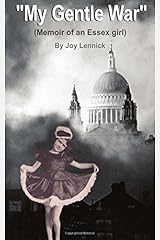
#Bookreview – My Gentle War (Memoir of an Essex girl) by Joy Lennick

Book reviews

What Amazon says

My Gentle War is the story of a young girl and her family. Ripped away from the home she loved, from her friends, and familiar surroundings, she spends her formative years in the comparative safety of the Welsh Valleys. With the World at War, and her father sent to the battlefields of Europe, her war is fought holding back tears whilst waiting for news of her father, never knowing whether she will see him again. This is the story of a young girl learning to live a new life, holding her family together in unfamiliar surroundings, all the while dreaming of the father that was forced to leave her. My Gentle War is Joy’s story.

My review

My Gentle War is a delightful memoir about the life on a little girl, aged seven years old when war was declared in 1939, and her family as they navigated the changing landscape of everyday life in war time Britain. Joyce’s family lived a middle class life in Dagenham, London when the war started and her father and his brother, Bernard, signed up with the Royal Air Force to go and fight. Joyce’s parents decide that it will be safer for her mother, two younger brothers and herself to go and live with her family in Merthyr Tydfil in Wales. The book describes in great detail the difference between her father’s beautifully cultivated garden filled with gorgeous flowers in Dagenham and the wild and lonely beauty of life in the Welsh mountains. Her father’s sadness at having to ruin his garden by building a bomb shelter in the middle of it is the first insight the reader has of the changes that are going to come.

The second insight comes when the author describes the chaos of Paddington Station when her father leaves to go and fight in France and the rest of the family depart for Wales. It is not that easy for an evacuee to fit into life in a rural village, but Joyce and her brothers are young enough to do so without to many problems and, other than one incident when Joyce has a broken glass bottle thrown at her, they all settle into their new life and school. The hard life in Wales is detailed through the memories of the little girl who sees the poverty and learns about the hardship inflicted by the depression prior to the war, on this mining town. The risks of mining are also described through the chronic lung disease suffered by her uncle and the death of a young cousin in the coal mine. The joys of life for children are also expressed with the town arranging concerts staring the children, a picnic and other forms of entertainment. During the early part of the, the bombs do not reach Wales and the food shortages have not as yet bitten.

Throughout the war, Joyce’s family go between places of refuge, initially Wales, and their London home which they return to when her father is home on leave and intermittently while her mother is doing war work in London.

For the last part of the war, Joyce and her brothers become real evacuees are are sent to live with strangers away from London and the buzz bombs. This particular part of this memoir made me realise how fortunate my own mother was during her days growing up in the war. Her family never had to leave their home town of Bungay and were able to stay on their farm throughout the war.

I really enjoyed this memoir which reads like a conversation and tells of life for Joyce and her mother and siblings in Britain and also tells of some of her father’s experiences of the war in France, including the lead up to the evacuation of Dunkirk, through extracts of his diary and letters home. For people who are interested in World War II and particularly every day life for people during this terrible time, this is a wonderful and eye opening book.

Purchase My Gentle War (Memoir of an Essex Girl)

Amazon US

My Gentle War by Joy Lennick (2015-02-05) Paperback


#Openbook – My top three distractions while writing

IMG_1636

This week the topic is:

What are your top three distractions and how do you deal with them?

I saw the blog hop topic this morning and I have spent the day thinking about it on and off. I have come to the conclusion that I am not easily distracted from what I want to do and I get frustrated when I have to spend time doing things that I consider unimportant and trivial in the pursuit of my goals, both personal and for work.

There are things that must be done before I can write such as working at my day job [and full weekend end job in respect of this one just past], seeing to my sons and making sure they have food, drink and get their homework done [to my standards], spending time with my parents, especially my mom, my aunt and my husband’s family and listening to my husband’s work tales. These are not distractions, these are my life.

Social media could be a distraction, but I consider it to be an important part of my brand building and book marketing. I limit the social media I participate in to Twitter, Instagram and Facebook. I don’t consider WordPress and blogging to be a social media. I consider it to be a discussion group where authors and writers share ideas, thoughts, experiences, extracts of their books, book reviews and other interesting things. All of these things help me grow and I feel a sense of belonging with other writers, readers and blogging as we all share common interests. I do limit my time on all social media and WP so that it doesn’t take over my time.

I have some other hobbies such as baking and fondant art, but these also feed into my writing and blogging life so are an important part of who I am and my author and blogging persona.

I love writing because it is a solo hobby. My blogging and other friends are part of my writing life but not part of the actual writing experience which I do alone. I love that my writing is all mine and I can work to my own timelines, write when it suits me and change my mind and direction without consulting others and relying on inputs from them. It is the most wonderful thing to be totally independent of others.

What are your distractions from writing? Let me know in the comments or join in with your own post here:

What distractions affect other blog-hoppers? Click on the blue button below to find out, or just add a comment.

Rules:

1. Link your blog to this hop.
2. Notify your following that you are participating in this blog hop.
3. Promise to visit/leave a comment on all participants’ blogs.
4. Tweet/or share each person’s blog post. Use #OpenBook when tweeting.
5. Put a banner on your blog that you are participating.

https://fresh.inlinkz.com/party/9dba77df2aaa46b083eb6705bfbecb48

You are invited to the Inlinkz link party!