Open Book Blog Hop – Standalone book or series?

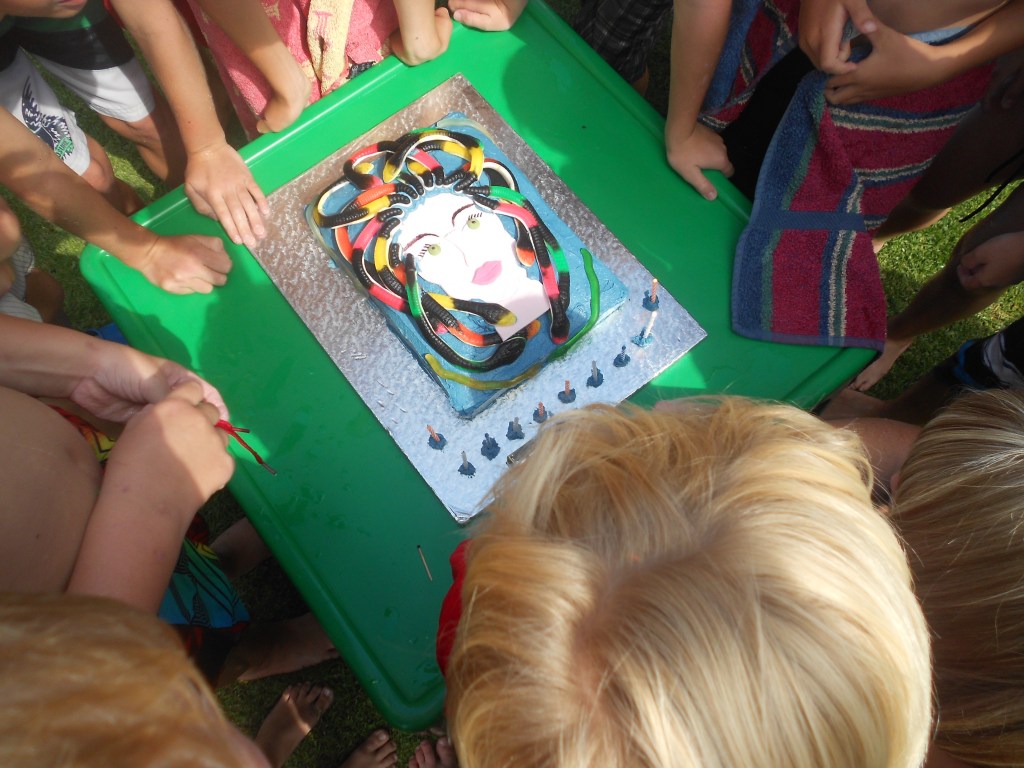
I never thought I would bake my children’s birthday cakes and I never thought I would write a book, let alone twelve

Do you want each book to stand on its own, or are you trying to build a body of work with connections between each book?

This is an interesting question. I would answer immediately that I don’t believe I will ever write a series, but my Sir Chocolate books are a series, so I have written one. I don’t really consider a children’s picture book series to be what this question is all about, and on that basis, I will revert back to my initial response that I don’t think I will ever write a series.

Why? Well, I have two reasons:

  1. I don’t really read book series. I have read the Harry Potter books and The Lord of the Rings (I’m not sure if LOTR’s counts as a series as it is really one book broken into three parts for publishing and printing convenience) and I have read three Indie author series, Hode’s Hill by Mae Clair, some of the Braxton Campus cozy mystery series by James J. Cudney and the Zelda Richardson series by Jennifer S. Alderson. That is the sum of the adult book series I have read. Most of my reading consists of standalone books and I love classics which are usually standalone. As a result, I believe my aspirations are to write a really good standalone book; and
  2. By the end of my books, I have had enough of the characters and the premise they are involved in and I don’t want to revisit it. I need to write part II of my mom’s story, After the Bombs Fell, and I am finding it hard to set my mind to it. When a book finishes for me, that is it, the end of the journey.

On the other hand, me being I, maybe I shouldn’t say never. Who would have thought I would ever write a book in the first place. I trained for seven years to become a chartered accountant and another three years to become a specialist in financial reporting for the Johannesburg Stock Exchange. I have written a number of books about investing in Africa, African stock exchanges and the African debt markets. I have also written articles about corporate governance. I also became accredited as an approved executive for the Johannesburg Stock Exchange and a trainer for the financial reporting requirements of the exchange. I never planned or expected to do any of these things either.

I jumped from this non-fiction writing to writing my rhyming verse Sir Chocolate books with my son, Michael. I then wrote a children’s book for young readers about a male equivalent of My Naughty Little Sister and his trip to Cape Town with his family. I have a poetry book, a fictionalised biography of my mom’s life growing up during world war II, a supernatural fantasy book and I am nearly finished a supernatural historical novel of 110 000 words. I also have horror short stories included in two anthologies, paranormal stories included in one anthology and murder mystery stories included in another.

I can’t guarantee that the urge to write a series won’t descend upon me at some point and then maybe I will write one.

What do other blog-hoppers think about this question?  Click on the link below to find out, or just add a comment:

Rules:

  1. Link your blog to this hop.
  2. Notify your following that you are participating in this blog hop.
  3. Promise to visit/leave a comment on all participants’ blogs.
  4. Tweet/or share each person’s blog post. Use #OpenBook when tweeting.
  5. Put a banner on your blog that you are participating.

You are invited to the Inlinkz link party!Click here to enter

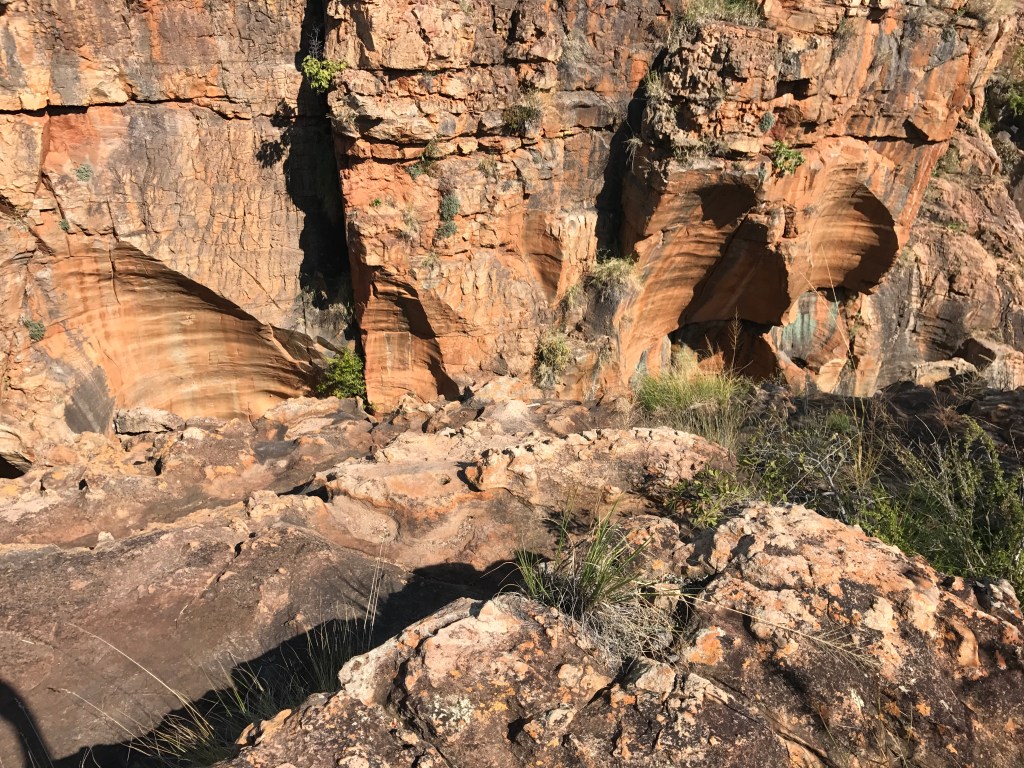
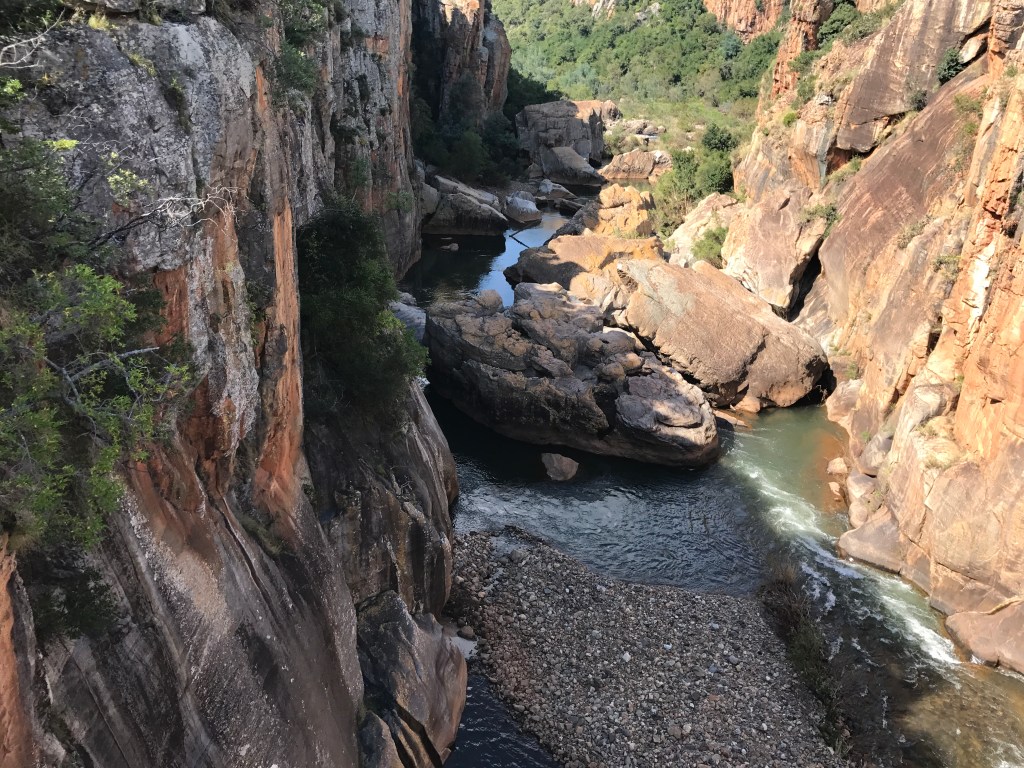
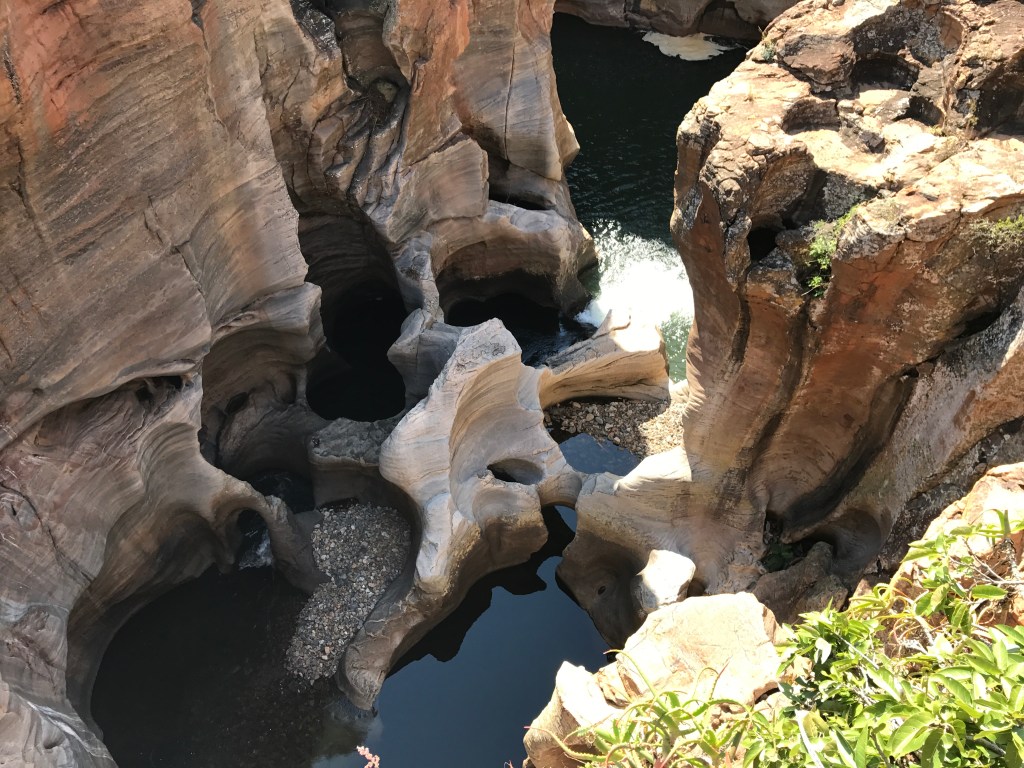
Bourke’s Luck Potholes in Mpumalanga, South Africa

Bourke’s Luck Potholes in Mpumalanga, South Africa, is a natural water features that indicates the beginning of the Blyde River Canyon. These swirling whirlpools have formed over centuries as the Treur River plunges into the Blyde River causing waterborne sand and rock to grind large and cylindrical potholes into the bedrock of the river.

Bourke’s Luck Potholes are named after a gold digger, Tom Burke, who staked a claim nearby.  Although his claim did not produce a single ounce of gold, he correctly predicted that large gold deposits would be found in the area.

The photographs below are in the order they were taken during our exploration of this famous natural tourist attraction.

Have a great weekend.

#Bookreview – Mr Fox: The Legend by Sue Vincent and Stuart France

What Goodreads says

Where do they come from?
They come out of the night…
Where do they go to?
Back to the night they return…
They dance in the dark to pipe and drum and fiddle
They dance in the dark with fire and brandished flame…

No-one knows who they are…

But why do they dance?

What is the story behind this magical spectacle…

There are rumours, legends…

Don and Wen set out to investigate.

In a darkened corner of the Waggon and Horses, Langsett, a hooded and enigmatic figure whispers secrets…

My review

I purchased the hard copy of this graphic novel and I was very pleased that I did. The artwork is very visually appealing and really adds to the enjoyment of this intriguing and mysterious story.

I was not familiar with the legend of Mister Fox or the dance which tells his story until I read this book. I was intrigued by the story of the crow that hatched a devious plan to steal the sun from old man fox who cared for it. The way in which the crow tricks old man fox and his vixen daughter reminded me of other myths and legends I have read, in particular, Brer Rabbit, which was a great favourite of mine when I was a girl.

Of course, as with all good tales, the crow gets caught and punished and is doomed to spend his life trapped in time, where he is cast by old man fox and his fox troupe, and surrounded by “seven leaping tongues of flame.”

The next part of the book tells the tale of how the story of Mr Fox came to in Yorkshire and associated with certain sports and revelries which have survived over the years.

According to this book, the fox dance is still performed on the night of the Hunter’s Moon in a secretive and mysterious way. The identities of the dancers are also a secret and only known within the dance troupe.

An informative, entertaining and beautifully illustrated graphic novel.

Purchase Mr Fox: The Legend

Open book blog – Ethics in writing

This week’s open book blog topic is What are the ethics of writing about historical figures?

Most of my blogger friends will know that I like to write about historical figures which means that my stories and books include a lot of “real” people. The pinnacle of my historical writing to date is my new novel, A Ghost and His Gold, a supernatural historical novel told on two timelines and involving three ghosts. All of these ghosts died during or soon after the Second Anglo Boer War or South African War and the book delves into the details of their lives living through this war.

As the book is set in a historical time zone, it involves real locations and battles including the sieges of Mafeking, Ladysmith and Kimberley and the Mafeking Concentration Camp. My initial inspiration for this story was a real ghost story when Ouma [Granny] Smuts [the wife of South African General and President Jan Smuts] saw a ghost in their home in Irene, Pretoria. The two paragraphs I read about this reported ghost sighting sparked my 110 000 word story.

Initially, I was going to base the story around the real ghost, but I quickly realised that using a real person who died only 100 years ago was going to be restrictive. As the ghosts was likely to have surviving relatives living in South Africa, I would need to meticulously stick to the true facts of his life and experiences and research his real personality and nature. It would be insulting to his family not to do so and to misrepresent his life in a book. It could also have legal implications for me as the writer.

I decided to rather make my three ghosts fictional which gave me the liberty to let them follow the path I chose for them. I did masses of research before I started to ensure that the facts of my fictional characters lives did all stack up with real historical events. Pieter, the Boer [farmer] in my story, needed to belong to a military commando near Mafeking as I was setting a large section of my story in that town and the concentration camp that later developed. I had to chose a town and a commando and follow the real facts of that commando throughout the war.

As the circumstances and events in this book are all real, many real historical figures make an appearance as supporting characters. For example, Robert, my British soldier in Mafeking during the siege knows Lord Baden-Powell, commander of the Garrison in Mafeking and also Lady Sarah Wilson, Winson Churchill’s aunt, who was in Mafeking during the siege. All of the British military leaders featured in the book were real people, including Lord Roberts, Lord Kitchener and Sir Buller, amongst others.

The same is true of the Boer side of the war. Pieter and his daughter, Estelle, are both fictional, but all the Boer leaders mentioned in the book were real people including General Piet Cronje, General Snyman, General Christiaan de Wet and many others.

I spend many hours researching these real characters and ensuring I describe them and their roles in the South African story correctly and appropriately. I discovered that it is easier to assign personality characteristics to real historical figures through the dialogue and thoughts of my fictional characters. In this way, I can voice their opinions of these men and their actions.

I have realised from reading book reviews and various articles that a large cast of characters can confuse readers. I have included a character list of the real historical figures in the front of my book as well as a timeline of the real life battles and other war milestones that feature in my novel to make it easier for readers. I have also included a few original Boer war maps so that readers can visualise the places and layout of battles and defenses.

These are a few of my thoughts about writing using historical figures. Have you ever used real historical figures in your fiction?

You are invited to the Inlinkz link party!

Click here to enter

Rules:

1. Link your blog to this hop.

2. Notify your following that you are participating in this blog hop.

3. Promise to visit/leave a comment on all participants’ blogs.

4. Tweet/or share each person’s blog post. Use #OpenBook when tweeting.

5. Put a banner on your blog that you are participating.

#Poetrychallenge – The crocodile

Watching her carefully

With his calculating eyes

He thought she’d fallen

into his well-designed trap

How little he knew

by Roberta Eaton Cheadle

Written for Colleen Chesebro’s poetry challenge. You can participate here: https://colleenchesebro.com/2020/05/19/colleens-2020-weekly-tanka-tuesday-poetry-challenge-no-178-photoprompt/

Have you ever touched an elephant?

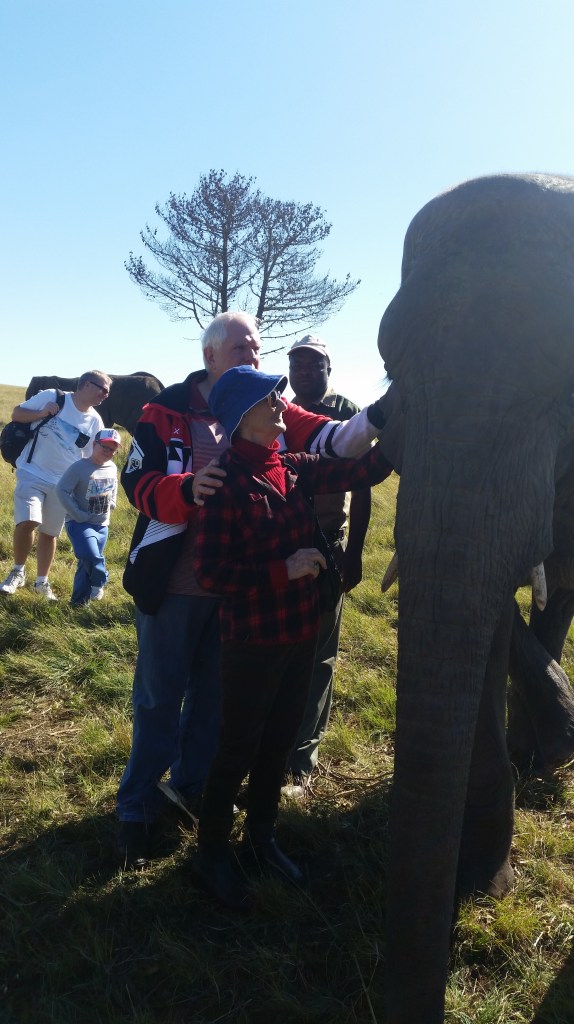
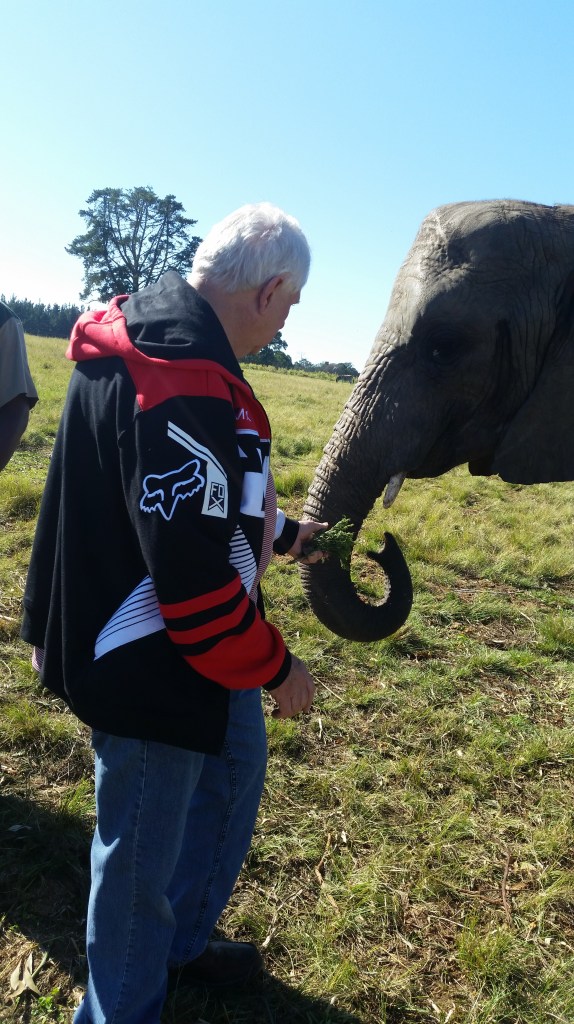
During our last trip to Knysna in the Western Cape, we visited the Knysna Elephant Park (est. 1994) which is the first facility in South Africa to house and care for orphaned African elephants.

It was a wonderful experience and we learned that over the last twenty years, the park has cared for and raised more than forty elephants. These animals cared for by the park include relocated animals, orphaned calves, elephants rescued from culls and ex-circus animals. Some remain long term and become part of the resident herd, while others are eventually moved to other reserves and facilities in the Western and Eastern Cape. The decision as to whether to keep an animal at the park permanently or find another good home for it depends on the animal’s personality, bonds with other animals and welfare needs.

You can find out more about the Knysna Elephant Park here: https://knysnaelephantpark.co.za/

My dad and my older son, Gregory, petting one of the elephants
My dad showing my mom how to pet one of the elephants. Mom was a bit nervous of his large size.


My dad had a go at feeding an elephant
My dad, my younger son, Michael, and I enjoyed petting the elephant while the keeper looked on
An elephant in front of one of the shelters

#Bookreview #ClassicChallenge – The Great Divorce by C.S. Lewis

I have signed up for the Back to the Classics Challenge 2020, hosted by Karen from Books and Chocolate blog.

If you are interested in reading classics, you can join in this challenge here:

https://karensbooksandchocolate.blogspot.com/2020/01/back-to-classics-challenge-2020.html.

BacktotheClassics2020Blue

The Great Divorce is my sixth book in this challenge.

What Amazon says

A stunning new edition of this timeless allegory of heaven and hell, repackaged and rebranded as part of the C.S. Lewis Signature Classics range. C.S. Lewis’s dazzling allegory about heaven and hell and the chasm fixed between them, is one of his most brilliantly imaginative tales which will appeal to readers of all ages. Lewis communicates deep spiritual truths through the sheer power of the fantastic. In The Great Divorce the writer in a dream boards a bus on a drizzly afternoon and embarks on an incredible voyage through Heaven and Hell. He meets a host of supernatural beings far removed from his expectations and comes to significant realisations about the ultimate consequences of everyday behaviour. This is the starting point for a profound meditation upon good and evil. “If we insist on keeping Hell (or even Earth) we shall not see Heaven: if we accept Heaven we shall not be able to retain even the smallest and most intimate souvenirs of Hell.”

My review

I really enjoyed this classic book by C.S. Lewis. This shortish novel is about a man, the narrator, who finds himself in a rainy grey town. After looking around this miserable town, he eventually finds himself at a bus stop where he joins a long queue of people waiting for a bus. He has no idea of the destination of the bus he is waiting for, but he is pleased that the line grows progressively shorter as many of his potential fellow passengers get tried of waiting and leave the line.

The bus finally arrives and the narrator, together with the remaining passengers, board and start their strange journey. The bus leaves the ground and travels up and up, eventually rising above the rain clouds and arriving in a beautiful country just before dawn. On arrival, the passengers discover that they have lost their solid form during the trip and become pale and wispy shadows of themselves. They are ghosts.

When they disembark from the bus they quickly discover that everything in this new land, from each blade of grass, to the water and the trees, is solid while they are shadowy and ghostlike. The ghosts cannot walk on the grass without hurting their feet and are not able to lift even a fallen apple as everything is immeasurably heavy.

A group of shining and lovely people meet the travelers and it soon becomes apparent that the ghosts are on the outskirts of Heaven having traveled from Hell where they have been since their deaths. The people are there to encourage them to repent their sins and guide them to Heaven.

The narrator meets up with the spirit of a fellow writer, George MacDonald, who announces that he is the narrator’s mentor and will help guide him to Heaven. Together they witness a few of the other ghosts encounters with their mentors.

I thought C.S. Lewis’ depiction of Heaven and Hell were hugely imaginative and embraced the idea that sin is essentially the preoccupation with one’s self and the refusal to forfeit your ego in order to find love and happiness. It made me think of how I have discovered that if you want to enjoy real happiness on this earth, you need to look outside of yourself and your own needs and embrace others, giving them support both emotionally and physically. This act of looking outwards is the essence of caring and loving others.

This book also highlights the fact that the things that are admired and sort after by men during their earthly lives, such as money, power and fame, are not the things that really matter and grow us as spiritual beings. Love, kindness and caring are the things that really count in this life.

If you would like to read a book that makes you think and delve deeply into your own thoughts about spirituality and the man-made concepts of Heaven and Hell, I highly recommend this book.

Purchase The Great Divorce

Open Book Blog Hop – What writing mistakes do I hate?

IMG_3594

What are your top five writing mistakes? Either mistakes you make or mistakes that make you cringe when you see them in print?

The author’s views

The one thing I have picked up about my own writing is that my characters often share my own strong opinions on a topic. I do believe many writers use their books to express opinions on certain events or political views, 1984 by George Orwell and Anthem by Ayn Rand, are two such books that come immediately to my mind.

Authors also use their writing to share ideas about things and suggest a mass psychological outcome for humanity of certain events. H.G. Wells was good at this and share a lot of his own beliefs about human psychology in his books, in particular, The Time Machine.

I definitely write with a specific agenda to share certain of my own thoughts and ideas on a subject. I don’t see this as a mistake, but I know that some readers do believe your characters should be distinct from the author’s belief system. I will leave it to my followers to make their own decision about the merits of expressing your views in your writing.

Long and confusing descriptions

I do not care for long and confusing passages of writing that are jolly hard work to read. Some books make me feel as if the author has taken a whole lot of descriptive phrases and unusual words and strung them together to describe a scene. I tend to lose concentration and interest when reading these books. I am not talking about Dickens or the Bronte sisters. They were all long winded and excessively descriptive in their books, but their writing still allowed for smooth reading and the description added to the story. I am talking about descriptive passages that seem to serve no purpose other than to illustrate the extent of the author’s vocabulary.

Blood and gore

Although I love supernatural horror stories, I do not like unnecessary blood and gore. I like books that are creepy and make me feel like I must check under the bed or look over my shoulder. I am not a fan of reading a lot of detail about ax murderers chopping people into pieces. I do enjoy dark psychology so I don’t mind reading about serial killers provided the focus is on the mental state and motivation of the murderer and not the body parts.

Books that are long to achieve word count

I can’t say I won’t read a long book because I have read many of Stephen King’s door stoppers as well as some ultra long classic reads like War and Peace. The length doesn’t put me off if it is necessary and adds value to the story. Books that ramble on and have a lot of words that don’t add to the story, don’t rank high on my reading list.

Books that are poorly written

I don’t mind a few spelling errors or even the odd missing word or similar typing and editing errors, but I cannot bear a book that is written in poor English and is full of grammatical errors. I will put such books aside and not finish them. When my boys were younger, I bought them the Disney series of books which were published in China. The language was so poor I had to correct it continuously as I read and, eventually, I gave these books away.

Which 5 writing mistakes make other blog-hoppers cringe?  Click on the link below to find out, or add your own blog or comment.

Rules:

  1. Link your blog to this hop.
  2. Notify your following that you are participating in this blog hop.
  3. Promise to visit/leave a comment on all participants’ blogs.
  4. Tweet/or share each person’s blog post. Use #OpenBook when tweeting.
  5. Put a banner on your blog that you are participating.
You are invited to the Inlinkz link party!


#RRBC #RWISA #RWISARiseUp – What is a Mother? by Peggy Hattendorf

2020 RWISA RISE UP TOUR BANNER

What is a Mother? by Peggy Hattendorf

“Mother is the most beautiful word on the lips of mankind.” Kahlil Gibran

We define, mother or mom, as the female parent, whose responsibilities center around the physical and emotional care of a child, who may or may not be her own biological offspring. In certain circumstances, childcare commitments may be handled by the grandmother, stepmother, foster mother, godmother, or mother-in-law.  All categories of “mothers” who have a hand in nurturing, teaching, and fostering the development of a child, deserve respect and admiration.

The American terms, mother, or mom, adopted from the British English names, mummy or mum, sound remarkably similar or are spelled the same, in many languages around the world.

Whether we say,

  • Mother or Mom – American English
  • Mummy or Mum – British English
  • Mother or Mom – Canadian English or Maman – French-speaking province of Quebec
  • Madre – Spanish
  • La Mere – French
  • Moeder – Afrikaans
  • Ma – Hindi (India)
  • Moeder – Dutch
  • Madre or Mamma – Italian
  • Mama – Romanian
  • Matka – Polish
  • Mor or Mamma – Norwegian
  • Mum – Australian English
  • Mum – New Zealand English
  • Mueter – Swiss German
  • Mamma – Swedish
  • Mutter – German
  • Me – Vietnamese

the meaning and the identity of the person referenced is the same – the female parent of a child.

The initial love and affection, devotion, and care, given by our mothers, cultivated our early introduction to life and the universe around us. It provided the initial foundation and perceptions of the world as a happy, gentle, and kind place or a world to be viewed as hostile, brutal and unkind.

Without the support, training, guidance, and discipline set by our mothers, we would not have grown into social beings, in the image of God. Mothers help prepare us with knowledge, skills, and abilities to mature and become independent. In so doing, our mothers sacrificed many of their desires and needs for our necessities and demands.

If the virtuous governing principles of life are learned by teaching and examples bestowed by our mothers, then a “world without mothers” would be:

  • A world with significantly less women
  • A world devoid of selflessness and unconditional love
  • A world less disciplined and restrained
  • A world less organized and efficient
  • A world less righteous, decent, and understanding
  • A world less emotional, demonstrative, and affectionate
  • A world with less compassion and empathy
  • A world less patient, kind, and gentle
  • A world with less encouragement and motivation
  • A world less balanced and controlled
  • A world less polite and respectful
  • A world less thoughtful, tender, and considerate
  • A world less merciful and forgiving

Mothers play an indispensable role which is hard to duplicate.  As infants nearly all of our physical needs are attended by our mothers. That physical care prevailed as we started to crawl and then walk, babble, and then talk, and shed our diapers when toilet trained. Our safety, protection and physical well-being remained paramount to our mothers even as we matured and entered adulthood.

For many of us, the emotional care given by our biological mothers originated before we were born. After birth, we were embraced with love and affection. That unconditional love stands as the cornerstone of the mother and child relationship. As our mothers motivated and inspired, encouraged, and supported, they provided the strength necessary for us to grow and mature. As our first instructors, they taught us about love, and hope, faith and spirituality, acceptance and tolerance, courage, and bravery, confidence, and determination, giving, and charity.

And they raised us to let us go and assume independence; all-the-while, we remain in our mothers’ hearts and souls forever. Mothers change the world with every child they raise.

Women are not handed an “instruction kit” as they assume the role of motherhood. No guidebooks, training manuals, or college courses prepare them for the most challenging, yet most fulfilling experience of their lives.

It is hard to envision a world without our best supporter, best listener, and best friend forever. Mothers are the ones who are always happy to hear from us, no matter what we are calling about, or when we are calling. They are the ones that will drive us crazy – but we know will always be there.  And no matter our age, we always need our mothers.  My mother has been gone for twenty-one years, but there is not a day, I do not wish I could pick up the telephone and speak with her.

Below, my grandchildren and daughter have shared their perspectives on what life would be like without mothers.

From my 16-year old granddaughter Anabella:

“I can’t imagine a world without moms, as my mom is my biggest supporter and sometimes my biggest critic. My mom has always been there to laugh at me when I fall, but to also pick me up and wipe my tears. I love my mom; she is always there to help me. She is my best friend. I can come to her with all my problems and she is always there with a witty comment and some friendship knowledge.”

From my 15-year old granddaughter Skylar:

“A world without moms would be dark and unforgiving. There would be no one to love you unconditionally, no one to bring you back up when you are sad and feeling down. You would not have your biggest cheerleader and fiercest defender by your side. You would not have that unconditional love that a mother gives to her child. And you wouldn’t have anyone who utterly understands you like your mother.”

 From my 10-year old grandson Erik:

“What a world without moms? No, that cannot be, because it means everything in the world to me to have a mom. She takes care of me when I am sick.”

From my daughter Rebecca, the mother of Anabella and Erik:

“Strong women raise strong girls and you are the strongest woman I know. I can’t imagine the world without you and all the other strong wonderful moms.”

It would be a decisively different and fragmented world without the love, hugs, and the comforting touches of mothers.

In a world without moms, we would lose our navigational compass, our emotional barometer, and our positioning in the world-order. We would be set adrift in an ocean of ever-changing conditions and unknown dangers. Thankfully, we have mothers and live on a planet fondly called “Mother Nature” or “Mother Earth” from the Greco-Roman personification of nature that focuses on the life-giving and nurturing aspects of nature by embodying it, in the form of a mother.

Giveaway

Thank you for supporting today’s RWISA author along the RWISA “RISE-UP” Blog Tour!  To follow along with the rest of the tour, please visit the main RWISA “RISE-UP” Blog Tour page on the RWISA site.  For a chance to win a bundle of 15 e-books along with a $5 Amazon gift card, please leave a comment on the main RWISA “RISE-UP”Blog Tour page!  Once you’re there, it would be nice to also leave the author a personal note on their dedicated tour page, as well.  Thank you, and good luck!

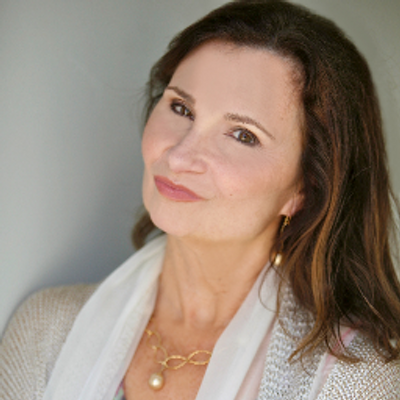
Contact Peggy Hattendorf
peggy-hattendorf

#RRBC #RWISA #RWISARiseUp – Losing Mom by Heather Kindt

2020 RWISA RISE UP TOUR BANNERLosing Mom

By: Heather Kindt

Have you ever lost someone? The pain is unimaginable, ripping through you like an express train. But what if you lost that person again and again? The agony of the loss knocks you off your feet until you’re numb. That’s what it’s like when you lose someone to dementia.

My mom was my best friend.

She was my shoulder to cry on, and I told her everything. On summer mornings, she’d lie in bed thinking, so I’d hop in next to her and we’d talk about everything or nothing at all. She was there to hold me when I lost my first love and to celebrate with me when I found my last. We spent an entire summer planning my wedding and finding ways to keep the costs within my measly teacher salary. Rummaging through bargain bins at the Christmas Tree Shop, we found the perfect, gold-trimmed ribbon to don the pews at the church.

After I was married, I moved to Colorado and being two thousand miles apart put a dent in both of our souls. But, she was there when my babies were born, helping me figure out the tasks of new mother for the few weeks she was able to be away from home. She was always there, even if it had to be over the telephone wires.

Until she wasn’t.

It started off slowly—spoiled milk in the refrigerator, aluminum foil in the microwave, and accusing my uncle of leaving tiny, recording devices under her couch. She’s getting forgetful with age…paranoid. That’s what I told myself.

But then things weren’t so small. When my mom and dad finally moved to Colorado, she and my brother took separate cars to church one night. Matt followed my mom back to their house but instead of turning down their road, my mom went straight. I received the phone call from Matt frantic, explaining the situation.

“Why didn’t you follow her?” I thought it was a reasonable question.

“I don’t know?”

I lived an hour and a half away, and it was eight o’clock at night. Pulling on my coat, I waited by the phone. There was no way I’d be able to find my mom in a city at night, though I’d search all night if I had to. Before leaving out the door, I called Matt one last time. Why wasn’t he searching?

A pair of headlights turned up our driveway. Impossible. We lived in a housing development in the country littered with dirt roads and deer. I rushed down the stairs to greet my mother. Tears streamed down her cheeks, and her whole body shook as she melted into my arms.

“He left me,” she sobbed. “I found a road that I recognized that went to your house, and I kept going.”

I wrapped her in a blanket and lay next to her on the bed in the spare room, her body heaving as she fell asleep.

As time went on, the incidents became more frequent. My parents moved back to New Hampshire because Dad couldn’t handle the altitude. My sister insisted they live in a retirement community. My mom didn’t like the price tag, so six months later she found an apartment in the town I grew up in. I was their telephone caregiver, calling every day on my way to work.

That summer when we visited, it was becoming more and more apparent that Mom couldn’t care for Dad, who was eighteen years her senior. He fell a couple of times, and she called the ambulance because she couldn’t lift him. Being there, I learned it was because he was malnourished and dehydrated. A local independent living facility provided them with at least two meals a day, and they could make friends. It worked for a while. Mom accused the maids of stealing her things, but it was her paranoia setting in again.

But then Dad got sick.

My mom insisted on coming to live with us. It was always how I imagined things would be. When Dad passed away, Mom would come live with us and help me with my children. But Dad wasn’t gone yet.

She insisted.

We moved her out to Colorado, and she lived with us. Frequent plane trips to New Hampshire drained my bank account. She missed him and in less than a year she wanted to move back. Things were different now. We hid her car keys, we arranged for her to go to a local senior center while we were at work, and she became severely combative.

For three years, my mother lived with us as I lost her day after day. At times, it felt like she ripped my heart out and stomped on it. I lashed out at her in my own frustration one day when she helped me clean out a closet. I missed our conversations, our comradeship and the love we’d always shared. It was as if someone reached down to Earth, snatched my mother and replaced her with a stranger. After three years, my husband and I made the decision to place her in a nursing home on a memory care unit.

I lost her again.

It was the most difficult thing I’ve done in my entire life, but I had to do it for her safety. Mom would get angry with me for no reason at all and storm out of the house. My husband followed her in the car until he could coax her inside. Her leaving also saved our marriage. The strain and stress it put on us those three years isn’t something I would want anyone to go through.

Have you ever lost someone? I lose my mom everyday, but it’s not as painful now. When you lose someone to dementia, at least for me, it’s like you’re going through the pain of losing someone suddenly again and again over many years. At some point, the pain numbs because it has to, or the stress will eat you alive. I love my mother, but the disease has stolen precious years of her life. It’s in the small glimmers of her spirit—a smile, an mischievous eye aimed at my husband, a hug from recognition—that I find hope that someday we can be together fully again.

Giveaway

Thank you for supporting today’s RWISA author along the RWISA “RISE-UP” Blog Tour!  To follow along with the rest of the tour, please visit the main RWISA “RISE-UP” Blog Tour page on the RWISA site.  For a chance to win a bundle of 15 e-books along with a $5 Amazon gift card, please leave a comment on the main RWISA “RISE-UP”Blog Tour page!  Once you’re there, it would be nice to also leave the author a personal note on their dedicated tour page, as well.  Thank you, and good luck!

Contact Heather Kindt

Heather Kindt