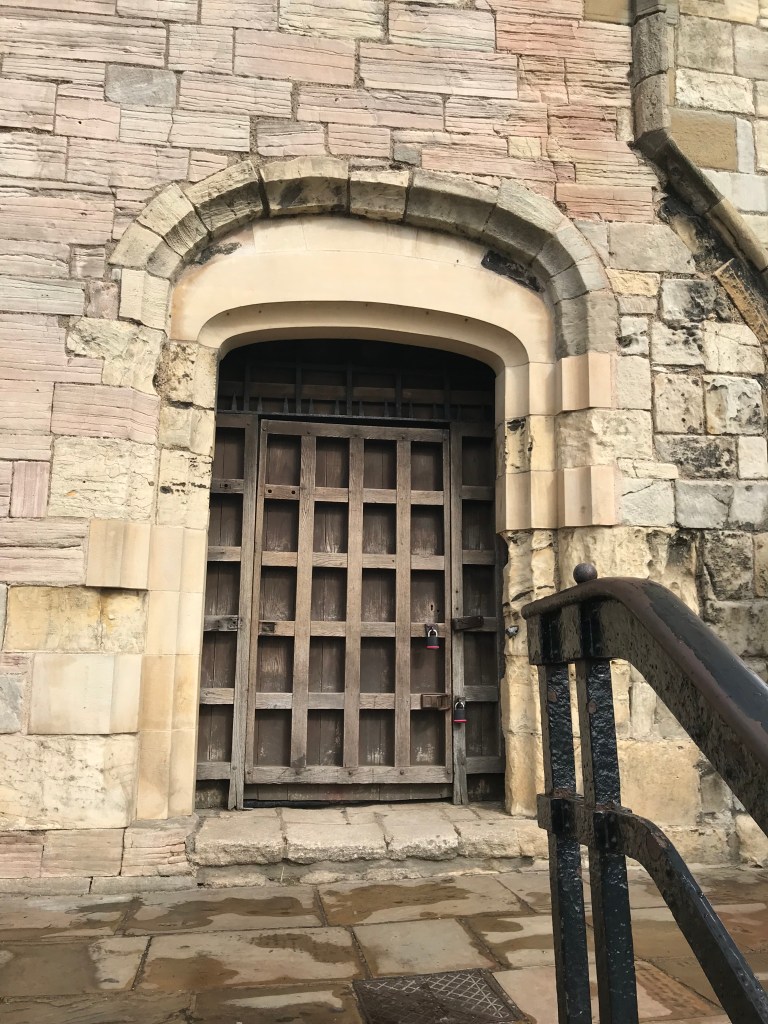
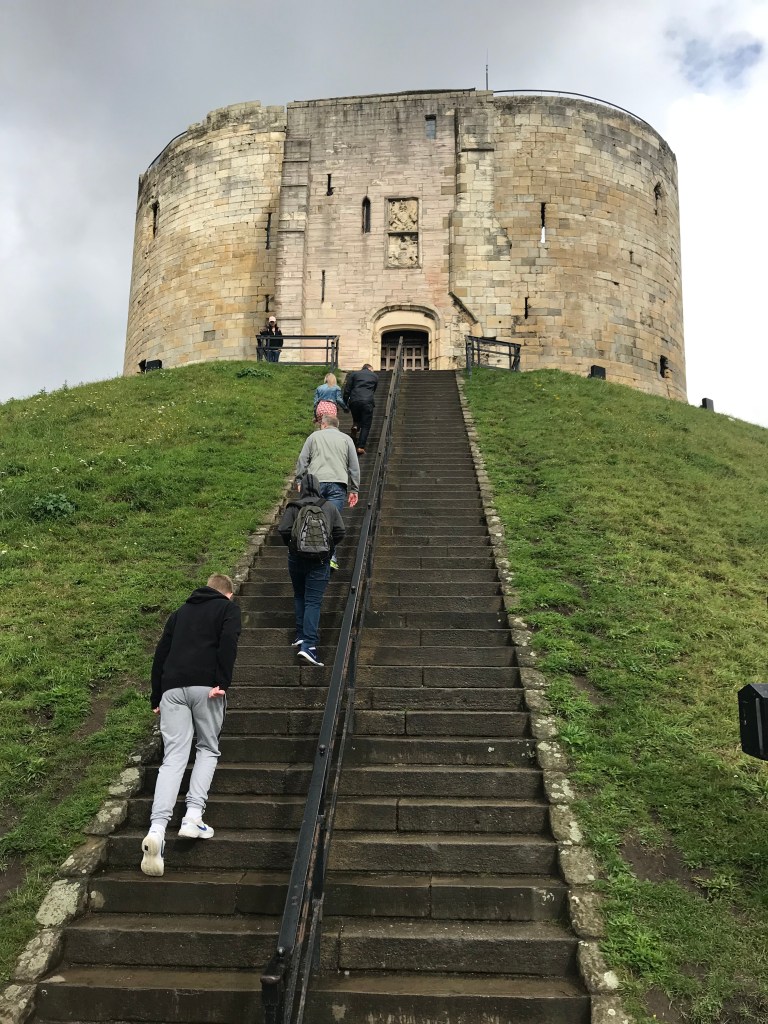
I thought I would share a few pictures of its heavy wooden door and narrow windows for this Thursday Doors post which I have been itching to participate in for months but have never gotten around to before.
Thursday Doors is a weekly feature allowing door lovers to come together to admire and share their favorite door photos from around the world. Feel free to join in on the fun by creating your own Thursday Doors post each week and then sharing your link in the comments below, anytime between Thursday morning and Saturday noon (North American eastern time). You can join in here: https://miscellaneousmusingsofamiddleagedmind.wordpress.com/2020/07/16/thursday-doors-july-16-2020/
I am desperately trying to get the edits for my new book, A Ghost and His Gold completed by the end of this week. As a result, I haven’t been on-line as much this week and expect that to continue over the next few days. I should be back to normal blogging sometime next week.
What Amazon says
Imagining Violet Married continues Violet’s story as she and her new husband, Frank Welsman, embark on married life at the turn of the 20th century. Like Part One, the story begins with a journey, their voyage from Liverpool to Canada. Then Violet writes to friends and family about the challenges of living with her in-laws, her first pregnancy and the growth of Frank’s career as a concert pianist. During these years, the family spends summers on an island in Muskoka. It’s gentle domestic drama with elements of social and musical history within the context of Toronto’s development as a musical centre in North America
My review
This is the second book in the Imagining Violet series I have read and enjoyed. Imagining Violet Married picks up with Violet marrying her sweetheart, musician Frank Welsman, and moving from England to Toronto where he plans to build his music career. The author describes Violet’s journey across the ocean by ship and the newly married couples arrival in Toronto where they move in with Frank’s parents and his sister, Alice. His older sister, Olive is married and expecting her first child.
Learning to live with Frank’s parents and adapting to the more conservative social life of the wealthy in Toronto at the end of the 19th century takes a bit of time for Violet, but she does start to become involved in the music world and meet a few people. She realises she is pregnant quite soon after their arrival in Canada and I found it interesting to read about the rather strange life of an expectant mother from the privileged class at that time. Violet gives birth to a healthy son, Teddy, and she and Frank soon decide to move into their own home.
This series is reminiscent for me of the Little House series of books for children by Laura Ingalls Wilder. It tells the story of the life of Violet during the late Victorian era and vividly depicts life at the time when the conventions of society ruled and a married woman had to comply with them in all aspects of her life from entertaining on behalf of her husband to not appearing in public during her pregnancy. The book touches on the involvement of England and Canada in the Second Anglo Boer War and I was surprised at how supportive the wealthy class was of the English monarchy in Canada. The tribulations of life are also detailed included two of Violet’s four children contracting diphtheria and becoming very ill. Ill health was common at the time and there were few medical aids for illness and poor health.
I enjoyed the character of Violet and her growth as she evolves from a young newly married woman to a mother of four children and the wife of a prominent musician in the city. I also enjoyed meeting her in-laws, including Frank’s sister, Alice, who is a lovely young lady and quite supportive of Violet during the early days of arrival in Canada.
This is a slow and languid read that shares lots of intriguing detail about life during this period and I would recommend it to people who enjoy historical fiction along the lines of a fictionalised memoir.
“Your Friday prompt for Stream of Consciousness Saturday is “song.” First, find a picture–the closest one to you. Your prompt is the title and/or the lyrics of the first song that comes to mind when you look at the picture. Have fun!”
This week, Linda’s stream of consciousness challenge played right into my hands because I wanted to write a post about songs that make me laugh by tickling my wicked sense of humour in some way or another. I also wanted to share my husband’s favourite song which he asked me to do. I didn’t want to – I told him to create his own blog but he looked so sad I capitulated.
I am going to cheat and not look at a picture, I’m just going to share my favourite lines for these songs that make me giggle.
Anyone who knows me will be aware that I am highly competitive, especially with my husband who is a very clever man [he keeps me on my toes]. I found this song, Anything you can do I can do better – Annie Get Your Gun – Betty Hutton and Howard Keel, a few weeks ago and thought the lyrics were hilarious and captured how I am amazingly well. Even some of my expressions when I’m on a competitive streak are very similar to Betty’s in this video.
“Anything you can be I can be greater Sooner or later I’m greater than you”
This song “Why Can’t a Woman Be More Like a Man” also makes me laugh and laugh. It so beautifully demonstrates exactly why I can never ask my husband to do anything to help me [It will always be wrong – haha]. I always tell people that when I married Terence I got all his hair and all his words. When my three sisters and I get together, we talk so much and so loudly [especially as the bottles of wine start to empty] that our menfolk all slink away after about 30 minutes to sit in the lounge and quietly recover while watching rugby or cricket. They are quite unable to take the noise and raucous laughter. PS If you are a fanatical women’s libber, you may not find this as amusing as I do.
“Would you be slighted if I didn’t speak for hours?
COLONEL PICKERING: Of course not.
PROFESSOR HIGGINS: Would you be livid if I had a drink or two?
COLONEL PICKERING: Nonsense.
PROFESSOR HIGGINS: Would you be wounded if I never sent you flowers?
COLONEL PICKERING: Never.
PROFESSOR HIGGINS: Well, why can’t a woman be like you?”
Maybe my hubby and I get on so well because I often don’t speak to him for hours. Writing and blogging takes up a lot of my time and attention. Hubby doesn’t drink, but I’ve been know to dibble – every day! But only one [wink!] and I know I’ve given him very strict instructions to NEVER, EVER give me flowers. Such a bother having to look after them. I don’t like chocolates either. Actually, I just told him not to buy me anything, I prefer to get my own gifts [giggle!]
Because my husband is such a saint to put up with me and all my projects and obsessions, I’m going to share his favourite song with you. It’s called Baba Yetu and its sung by the Stellenbosch University Choir in South Africa.
Our Father, ours Baba yetu, yetu uliye
Our heaven, ours, amen Mbinguni yetu, yetu, amina
Our Father, ours, who is Baba yetu, yetu, uliye
Let your name be exalted Jina lako litukuzwe Our Father, our Father Baba yetu, yetu uliye
Our Heaven, our, amen Mbinguni yetu, yetu, amina
Our Father, ours, who is Baba yetu, yetu, uliye
Glory to your name Jina lako litukuzwe give us today our food Utupe leo chakula chetu
What we need you to forgive Tunachohitaji utusamehe
Our fault, hey Makosa yetu, hey
As we forgive them Kama nasi tunavyowasamehe
Those who have wronged us, do not condemn us Waliotukosea, usitutie
In temptation, however Katika majaribu, lakini
Save us, and him, forever and ever Utuokoe, na yule, milele na milele
Our Father, our Father Baba yetu, yetu uliye
Our Heaven, our, amen Mbinguni yetu, yetu, amina
Our Father, ours, who is Baba yetu, yetu, uliye
Glory to your name Jina lako litukuzwe Our Father, ours Baba yetu, yetu uliye
Our heaven, ours, amen Mbinguni yetu, yetu, amina
Our Father, ours, who is Baba yetu, yetu, uliye
Let your name be exalted Jina lako litukuzwe Let your kingdom come what you will Ufalme wako ufike utakalo
Let it be done on earth as it is in heaven, amen Lifanyike duniani kama mbinguni, amina Our Father, ours Baba yetu, yetu uliye
Our heaven, ours, amen Mbinguni yetu, yetu, amina
Our Father, ours, who is Baba yetu, yetu, uliye
Let your name be exalted Jina lako litukuzwe Our Father, our Father Baba yetu, yetu uliye
Our Heaven, our, amen Mbinguni yetu, yetu, amina
Our Father, ours, who is Baba yetu, yetu, uliye
Glory to your name Jina lako litukuzwe give us today our food Utupe leo chakula chetu
What we need you to forgive Tunachohitaji utusamehe
Our fault, hey Makosa yetu, hey
As we forgive them Kama nasi tunavyowasamehe
Those who have wronged us, do not condemn us Waliotukosea, usitutie
In temptation, however Katika majaribu, lakini
Save us from the calamity forever Utuokoe na yule msiba milele Our Father, ours, who is Baba yetu, yetu, uliye
Let your name be exalted Jina lako litukuzwe Our Father, ours, who is Baba yetu, yetu, uliye
When my father died in 2005, I assumed my mother would need more support and someone to help with decisions she previously shared with her husband. What I didn’t realise was the role she had in mind for me: a sort of Desmond 2.0. Over the five years until her death, I played the role of apprentice, learning more about her and her relationship with my father than I had gleaned in my previous 50 years. We laughed, we cried and, occasionally we disagreed, and throughout she manipulated me as, I learnt, she had my father. Neither of us minded much; we were both her so willing fools, for she was an extraordinary woman and we both knew we were in the presence of someone very special.
My review
Apprenticed to My Mother is a delightful memoir written by a devoted son and depicts his younger years, growing up under the guidance of his parents, and his later years when the tables turn and his parents rely on him for certain things.
There are lots of things I loved about this book. I enjoyed the author’s description of his mother who is everything I admire: hard working, strong willed, devoted to her family and an excellent cook and baker. I love baking and am always pleased to read about other women who enjoy it too. A lot of family life revolves around food and eating, so a mother that cooks is always nice for children.
I enjoyed the anecdotes to the author’s younger years and some of the mischief he got up to with his brother. They both were very bright boys and quite typical, getting themselves into messes and injuring themselves. I liked that the boys had to help around the family home as I believe that instills good habits in children and the knowledge that you have to work if you want to achieve in life, whether it is planting a garden, building a career or moving house.
The author’s father sounds like a great chap. He was clearly devoted to his wife and sons and there are some delightful poems which he wrote for her and for various family events included in the book. Mr Le Pard senior was a gifted poet and most romantic too.
This book takes the reader on an entertaining journey of life growing up in an English town and a family enjoying, and making the most of, the ordinary things that comprise everyday life. It was interesting to see how the lives of both the parents and the sons changed over the years and how their roles also changed, with the parents becoming more reliant on guidance from the author as they aged. It felt, to me, that this book described the best things about being English and life in England.
I hope that one day when I am elderly, my sons will treat me with as much love and respect as the author demonstrated for his parents and, in particular, his mother to whom he becomes “apprenticed” after the death of his father.
My favourite poem in the book is called A Paratrooper’s Prayer, and these are the last three stanzas: “And if it be Thy Will, God Part of Thine Own Great Plan That my life should stop, then on that last long drop Oh God, let me die a man!
While I’m waiting to emplane, God And I’m checking my jumping kit Thugh I laugh and jeer I’m full of fear But, God don’t let me quit.
When the kite begins to move, God And take off time is near Then my heart grows cold – God, make me bold And drive away my fear.”
This poem reminds me of my favourite poem, IF by Rudyard Kipling.
I recommend this book to people who enjoy reading memoirs and books about families and their lives as well as delightful poetry.
Purchase Apprenticed to My Mother by Geoff Le Pard
What generic ‘rules’ did you abide by when you started writing that have gone out the window?
This week’s prompt couldn’t have been better timed for me as I received my developmental editing comments last week Monday. I was thrilled that there were far fewer writing style comments that for my previous book and I now feel it has been confirmed that I have improved a great deal at showing instead of telling, fleshing out ideas properly and writing dialogue that flows well.
My editor had a few great suggestions that I am busy writing into my story and also picked up one idea in the book that I hadn’t rounded out as well as I could have. As I read through my book again, after a three week break from it, I have also found a few areas that I felt could be improved on for better flow and understanding by a reader. There is definitely something to be said for leaving your book for a few weeks before you start editing [again for me]. I am now on round 5 of my editing and expect one more round of final grammar, spelling and punctuation checks before I send it to my publisher who will also find some things that need addressing. I’m still on track to publish in October so it’s all good.
I’ll tell you a secret, I was so stoked by some of my editor’s brilliant suggestions that I spent nearly the entire weekend working on my book. I didn’t bake or do fondant art or listen to audio books. I just edited and edited. It takes a long time, even if the changes are not huge, as I re-read the whole book slowly.
There are a few things that I know I do when I write and which I am finding very hard habits to break . When I was at school at the convent, we were taught to write very formally. We were not allowed to use contractions in our writing and starting a sentence with a conjunction was a serious error. One of the things my editor commented on was that I don’t use contractions in my dialogue and that this makes the conversation a bit stilted. She is right, people don’t say I am or I will or you have, they use the contraction I’m, I’ll or You’ve. This does not come naturally to me because of my twelve years of being taught to NEVER, EVER use contractions. I have to sit and literally read though the entire book, consciously changing all of these words. It took a long time so I hope I can remember and do this better going forward.
Another issue for me is starting a sentence with a conjunction like but or because. People do this when they speak, especially when they are children or when they are emotional. I have had to “get over myself” about this point to make my dialogue more natural.
I am sure there are other writing rules I’ve had to unlearn but these are the ones that have cost me the most time, other than having to remove words like very, was and had from my writing in many places. Happily, I seem to have managed to stop overusing these words quite easily.
Do you have any writing rules you regularly break in your novels?
Click on the link below to see what other writers think about this.
Rules:
Link your blog to this hop.
Notify your following that you are participating in this blog hop.
Promise to visit/leave a comment on all participants’ blogs.
Tweet/or share each person’s blog post. Use #OpenBook when tweeting.
Put a banner on your blog that you are participating.
Michelle jumps and whips her head in the direction of the noise. She makes out a second shape dimly outlined against the door’s stark white paint. The figure’s khaki uniform, knee-high boots and helmet are clearly visible, as well as the rifle he holds in place over his left shoulder. The front of his tunic is stained an inky black.
It’s a soldier. A dead one. Holy Crap! Her scalp prickles as the hair on her head tries to stand up and fails due to its length and weight.
A movement from the bed briefly attracts her attention. Tom moves restlessly, but, strangely, the slamming of the door has not woken him. She opens her mouth to call out, but no sound issues from her strained throat.
Her eyes dart back to the first shadow. The man in the hat has closed the gap between them; his back is rigid and his posture aggressive. Unlike the soldier, he appears to be unarmed. He stands in front of the dressing table, and she can see her own reflection right through him. It is distorted, like looking through the bottom of a coke bottle. He has no reflection. She closes her eyes and takes a deep and steadying breath. I’m dreaming. The weird events of last night disturbed me and have manifested as a nightmare. What’s happening is not real. There is no such thing as ghosts.
Opening her eyes, she glances quickly towards the bed. Tom sleeps on, his breathing soft and restful. There’s no help coming from him. Irritation at his complacent slumber briefly displaces her fear, crowding it out like the incoming tide.
A soft rustling gives the soldier’s movements away. He has stepped forward and is standing at the edge of the king-sized bed. His weapon is raised and its wooden stock shimmers in the faint light. Michelle can see his face now, its handsome lines marred by bitterness and anger.
A shudder wrenches its way through her body, as her eyes skitter from one apparition to the next, trying to see which one will move next. A strong wind rushes past her as the soldier streaks across the room and collides with his adversary. On impact, both shapes disappear.
Delighted to welcome back regular contributor Roberta Eaton Cheadle with some important elements to consider when designing your book cover. It is also a chance to find out more about her forthcoming book A Ghost and his Gold.
The importance of a book cover by Roberta Eaton Cheadle
The cover of a book needs to convey certain information, namely, the title of the book, name of the author, name and logo of the publisher and the blurb. It also needs to let a potential reader know precisely what the book is about. That aspect of designing a book cover is very important as you don’t want to mislead a potential reader by using an inappropriate cover. Certain colours and designs traditionally indicate a certain genre, for example, romances often use pink and purple in the cover designs and self-help books use blue which is intended to convey a feeling of calmness.
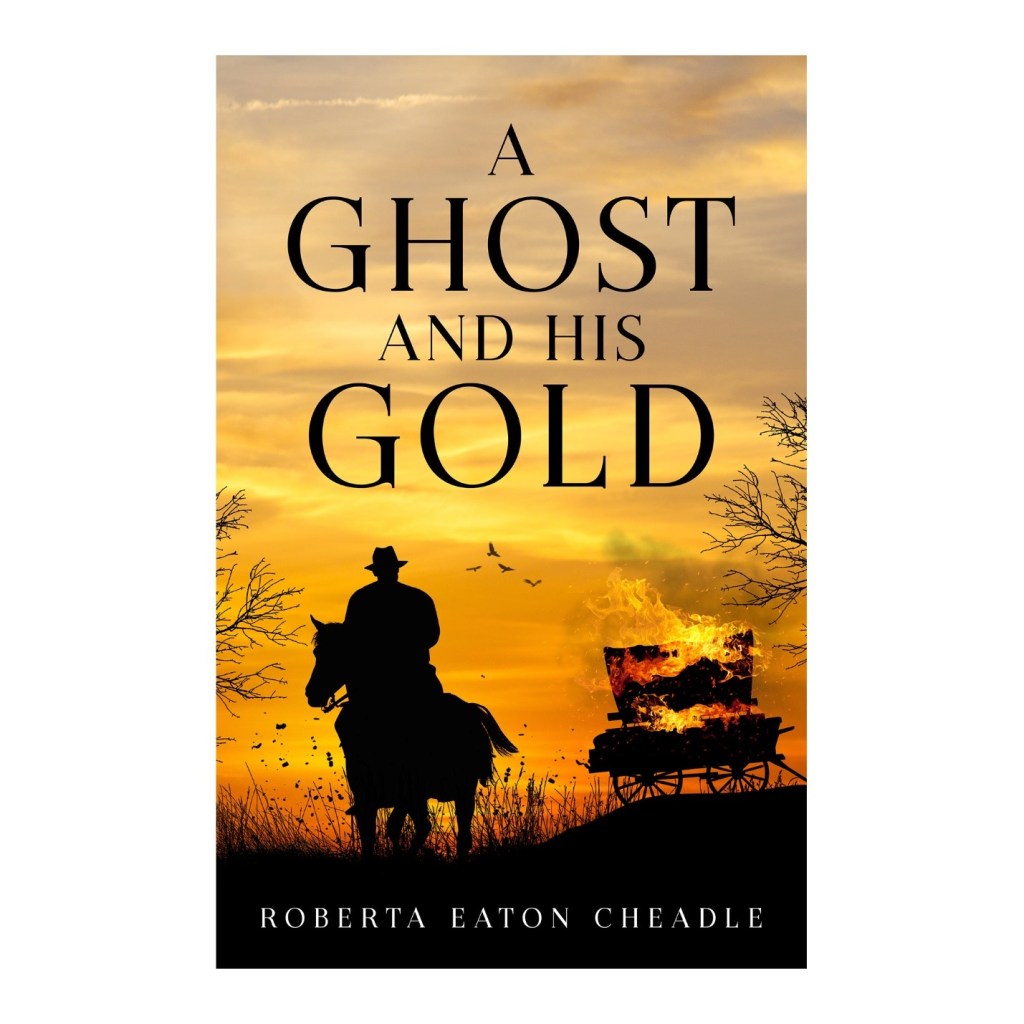
My forthcoming novel, A Ghost and His Gold, is a supernatural historical novel. A couple, Tom and Michelle Cleveland, move into a recently built townhouse on the site of one of the original farms in Irene, near Pretoria, in Gauteng (previously the Transvaal). A one-hundred-year-old jacaranda tree grows in their garden and Michelle discovers that it was planted by the first owner of the farm, a Burgher who died in action during the Second Anglo Boer War. It quickly becomes apparent that their new townhouse is haunted by three phantoms, one of which is a poltergeist intent on murdering Tom.
Michelle must unwind the history of the three ghosts, Piet van Zyl, a Burgher, Robert, a British soldier, and Estelle, Piet’s daughter, all of whose lives were deeply impacted by the war and all of whom need to resolve their personal conflicts and resentments in order to find redemption and move on to the next phase of their existence.
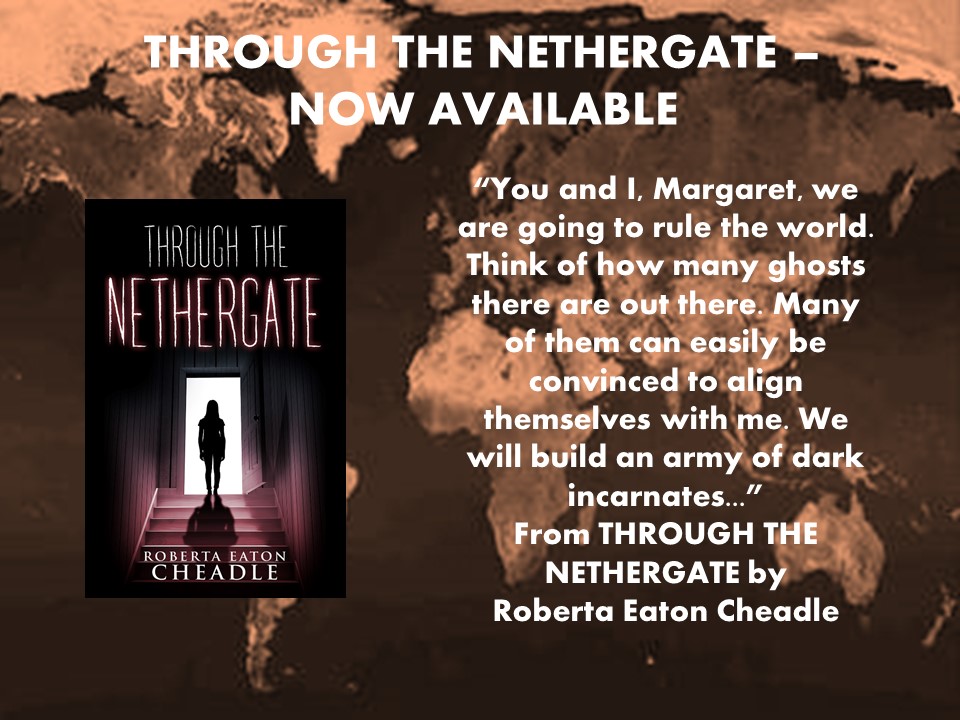
When I spoke to the cover designer, Tim Barbar from Dissect Designs, I had a couple to definite ideas about the concepts I wanted the cover to convey. Firstly, I like to use silhouette designs for my covers. I also used silhouettes for the covers of my previous books, While the Bombs Fell and Through the Nethergate. I think silhouettes convey a strong message without needing to be overly detailed. They are also clean and neat.
I wanted to feature a Burgher on his horse riding away from a scene of destruction in the form of a burning wagon. The design of the figure on the horse, and particularly the shape of his hat, was important in order to differentiate a South African Burgher from an American cowboy.
Thank you to Charles F. French for hosting me with a post about King Solomon’s Mines by H. Rider Haggard for his Underground Library Society. Charles has some wonderful books, fiction and non-fiction self help books for writers, so do take a look around while you are there.
I want to welcome Robbie Cheadle to the U. L. S., The Underground Library Society! This group is an unofficial collection of people who deeply value books. It is based on the idea of The Book People from Fahrenheit 451 by Ray Bradbury. Robbie is the newest member of this group of book lovers!
I decided to read King Solomon’s Mines as it is set in South Africa in the late 19th century. I am currently finalizing my first adult novel, A Ghost and His Gold, which is set during the Second Anglo Boer War. I hoped that King Solomon’s Mines would give me insight into life in southern Africa during this period.
Rider Haggard spent time in South Africa after he took a position as the assistant to the secretary to Sir Henry Bulwer, Lieutenant-Governor of the Colony of Natal in 1875. In 1876, he was transferred to the staff of Sir Theophilus Shepstone, Special Commissioner for the Transvaal. It was in this role that Sir Haggard was present in Pretoria, capital of the then Boer Republic of the Transvaal, in April 1877 when it was officially annexed by Britain. Sir Haggard was tasked with the duty of raising the Union flag and reading out much of the proclamation at the annexation event after the official originally entrusted with this duty lost his voice.
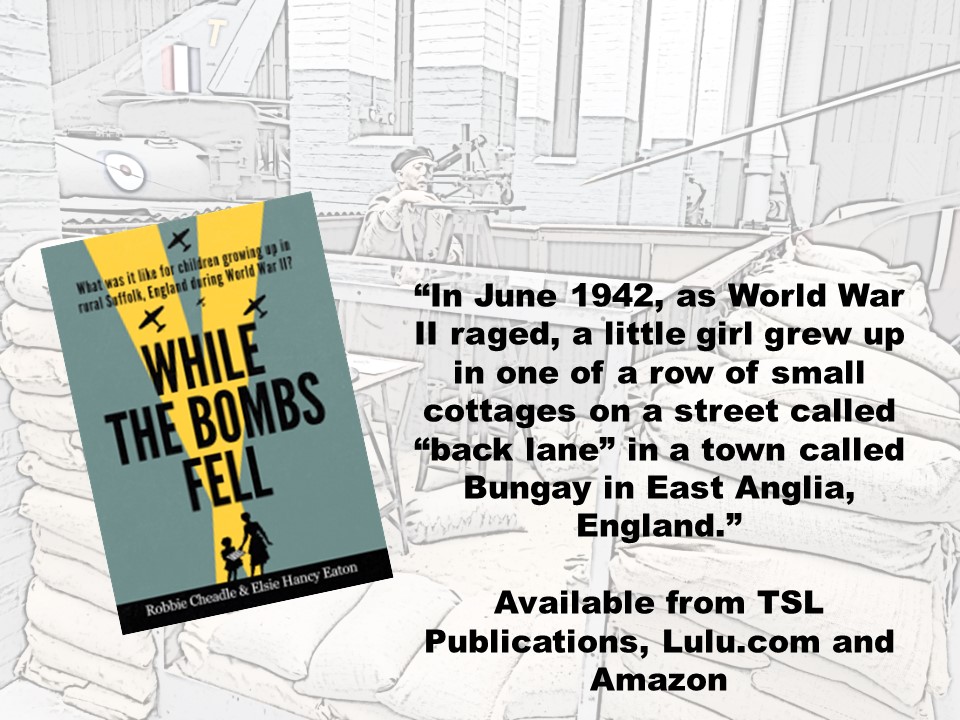
I had an interest in Sir Rider Haggard and his books because he lived in Ditchingham, a town close to my mother’s hometown of Bungay in Suffolk, England. When her brother was a young man he was employed by Sir Haggard and Sir Haggard daughter, Lilias Haggard, edited a book entitled The Rabbit Skin Cap which told the story of an old man who was well known to my mother. My mother’s memories of Sir Rider Haggard’s house and his daughter, Lilias, are included in the fictionalized memoir of her life, While the Bombs Fell, which we wrote together.
King Solomon’s Mines literary importance
King Solomon’s Mines is a book that is worth preserving because it is a rollicking good story with lots of action, written along similar lines to the famous Treasure Island by Robert Louis Stephenson. The author has a wonderful gift of descriptive writing and shares the beauty and mystery of Africa in a most appealing and interesting way. The author demonstrates a thorough knowledge of southern Africa and the way of life among the hunters of the time. An example of this glorious language is as follows:
Do you write under a pseudonym? If so, why? If not, would you ever consider it?
When Michael and my Sir Chocolate books were first accepted for publication by TSL Publications, I considered using my maiden name instead of my married name. I had published a number of non-fiction books and articles as Robbie Cheadle and thought it might be better to separate my work writing and my private writing by publishing as Roberta Eaton.
When I broached this idea with my husband, he wasn’t keen on my publishing under my maiden name. He preferred that I use Robbie Cheadle and so I did. I then proceeded to publish Silly Willy goes to Cape Town, While the Bombs Fell, co-authored with my mother, Elsie Patricia Eaton, and my poetry book, Open a new door, co-authored with South African poet, Kim Blades under that name.
When I started writing horror, supernatural and historical fiction for young adults and adults in 2018, I reconsidered using an alternative name in order to clearly separate my adult writing from my children’s writing. Once again I revisited my maiden name, Roberta Eaton, and once again hubby encouraged me to add the Cheadle. In retrospect, I am glad I went with Roberta Eaton Cheadle for Through the Nethergate and Whispers of the Past as I have been able to link my children and adult writer profiles on Amazon which makes finding my books easier for readers.
I did not realise when I published under an alternative name for Though the Nethergate that it would be like publishing my first book and I would have to put a lot of work into marketing it under that different name which people didn’t automatically link to Robbie Cheadle. In hindsight, it would have been easier to stay with Robbie Cheadle but I have done the work now and I think / hope it will be easier to market A Ghost and His Gold which I hope to release in October this year. I am also writing a book of short stories with a focus on South African history. I have one story started about the 1820 settlers from England and another about based on the van Rensburg massacre in 1836.
Do you write under a pseudonym? Would you consider doing so?
Rules: 1. Link your blog to this hop. 2. Notify your following that you are participating in this blog hop. 3. Promise to visit/leave a comment on all participants’ blogs. 4. Tweet/or share each person’s blog post. Use #OpenBook when tweeting. 5. Put a banner on your blog that you are participating.
At sunset, the children lay down to sleep. The aardvark [note 1] hole in the mound was large enough for Clara and Kobus to lie down to sleep. Susanna and Sara wrapped themselves in a blanket and slept on the hard ground near the entrance. Lying in the dark, listening to the soft sighs and snores of her siblings, Sara’s calm and controlled façade collapsed. Tears ran silently down her cheeks and she shivered uncontrollably as the pain of loss, coupled with devastated horror at her parent’s gruesome deaths, overwhelmed her.
The moon was full when Sara awoke to the soft tones of Mama’s lullaby. Standing up, she looked out over the beautiful expanse of rippling veld [note 2] grass, shimmering like a calm lake in the silvery moonlight. A flickering shadow caught her eye and she turned towards the mound. In the soft light it looked slightly furtive, as if concealing secrets in the soft folds of velvety darkness that rippled across its rough exterior. She was not alone. One of the shadows separated from the others and came towards her. “Mama,” Sara whispered, “Is it you, Mama?” The ethereal shape moved closer until Sara could see her mother’s features clearly in the pale light. Her yellow hair hung down her back in a thick mass and her white skin shone like polished bone. She was beautiful. The careworn look that had
characterised her face in life was gone, replaced with an almost holy loveliness. She’s an angel, thought Sara. Mama’s come back as an angel to guide us.
“Sara, my dear girl,” Mama-angel said, moving closer and enfolding Sara in a protective layer of love and comfort, “Papa and I are just beyond the veil. We can’t move on to our eternal rest until Kobus, your sisters and you are all safe. It is up to you, Sara, to lead them back to Fran’s Malherbe’s party and safety. His group is not far away and is moving slowly because of the many cattle and sheep they have with them. You must walk with the sun, due West, and you will find them.”
Mama-angel released her and looked into her eyes. “I love you, Sara. Do not dwell on Papa and my untimely deaths. You must focus on the future and ensuring your survival. As you travel, look out for clusters of trees and shrubbery. They grow near water and you will need to replenish your supplies. Goodbye, Sara.”
Mama-angel faded into mist and blew away in the light early morning breeze.
Note 1: The aardvark is a medium-sized, burrowing, nocturnal mammal native to Africa. The staple food of the aardvark is termites.
Note 2: Open, uncultivated country or grassland in southern Africa.







 roberta-writes.com