Thank you to Kaye Lynne Booth for featuring me for her Ask the Authors 2022 Book & Blog Series: Plot/Storyline.
Ask the Authors 2022
Welcome back to the “Ask the Authors 2022” Saturday blog series.
If you missed them, you can catch the first two segments here:
Segment 1 – Introductions for Kaye Lynne Booth & Kevin Killany/Writing Life Q & A
Segment 2: Introduction for Bobby Nash/Pre-Writing Rituals Q & A
This is the third segment for this series and today I’m going to introduce you to contributing author, Roberta Eaton Cheadle, who shares her essay about her own publishing journey in the book, and bring you a Q & A on plot, or storyline, from the WordCrafter writing reference anthology, Ask the Authors 2022.
Meet Roberta Eaton Cheadle
Roberta Eaton Cheadle is a writer of young adult and adult fiction in the supernatural fantasy, historical horror, and historical supernatural genres. Under the name Robbie Cheadle, she is a South African children’s author, publishing the Sir Chocolate series with her son, Michael, and a poet with 2 published poetry books.
To date, Roberta has published two novels, Through the Nethergate, and A Ghost and His Gold, along with several short stories in various anthologies including Whispers of the Past, Spirits of the West, and Where Spirits Linger, all edited and compiled by Kaye Lynne Booth, and Dark Visions, Nightmareland, Spellbound, Wings & Fire, and Shadowland, all compiled by Dan Alatorre.
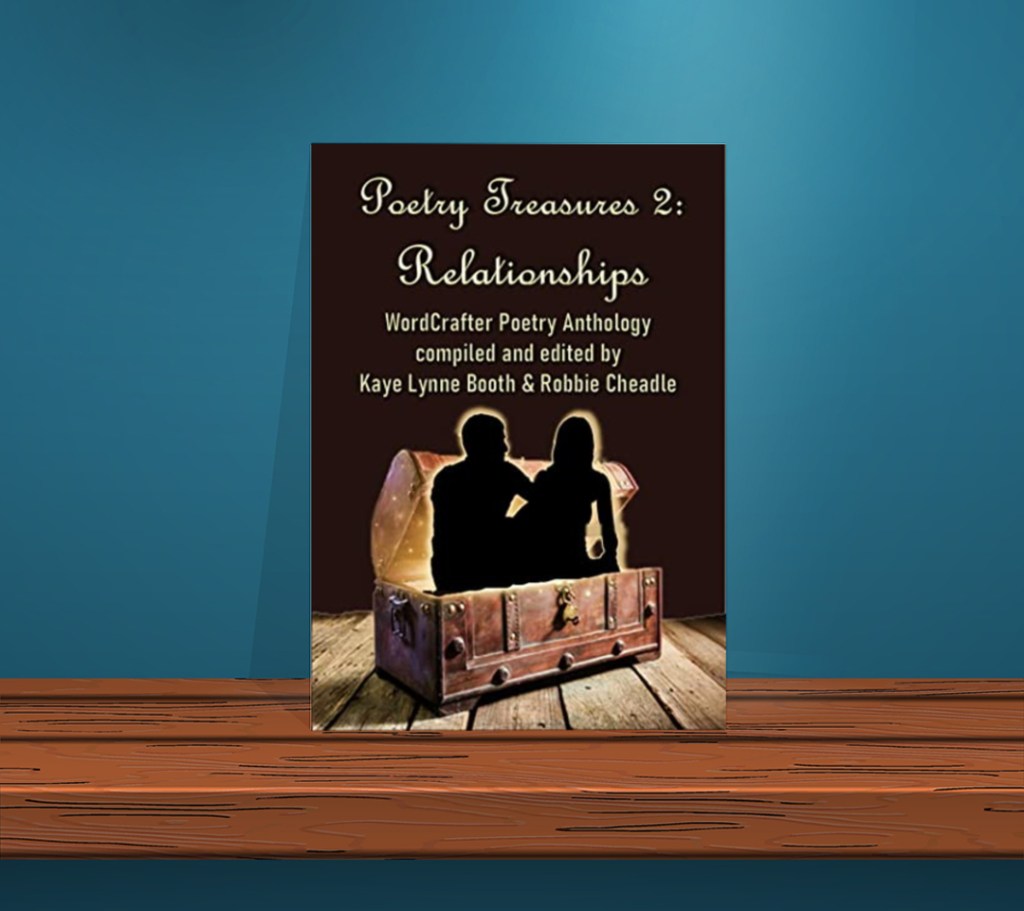
Robbie is also a member of the Writing to be Read blogging team and co-editor of Poetry Treasures (2021) and Poetry Treasures 2: Relationships (2022), two poetry anthologies with contributing authors who were guests from her “Treasuring Poetry” blog series. When she is not writing, Robbie enjoys working in the garden and creating fondant and cake artworks to be featured in her children’s books.
And now for the Q & A.
Plot/Storyline
How do you feel about prologues? Love them or hate them? Why?
Mario Acevedo: I’m not a fan of prologues and as I see them as superfluous to the story. If you must include a prologue, then call it Chapter One to make sure readers like me won’t flip past it.
Paul Kane: I have no strong feelings about them either way. Sometimes I’ve used them, other times I’ve gone straight into Chapter One. I know some writers who say if you can avoid Prologues then do it and just start with the first chapter, but I think if it serves a purpose then there’s a place for one. I tend to include them in the thrillers, because it’s always an event that kicks things off – so for example in Her Last Secret, it’s the death of Jordan Radcliffe, in Her Husband’s Grave it’s the discovery of a body on Golden Sands beach, and in The Family Lie it’s a couple of campers who see a man on fire in the woods. I then split the narrative into parts, and in Chapter One I tend to introduce the main protagonist, so it might be the person who’ll be doing the investigating; someone whose eyes we’ll be seeing most of the events in the book through.
Welcome to Thursday Doors, a weekly feature allowing door lovers to come together to admire and share their favorite door photos from around the world. Feel free to join in on the fun by creating your own Thursday Doors post each week and then sharing your link in the comments below, anytime between 12:01 am Thursday morning and Saturday noon (North American eastern time).
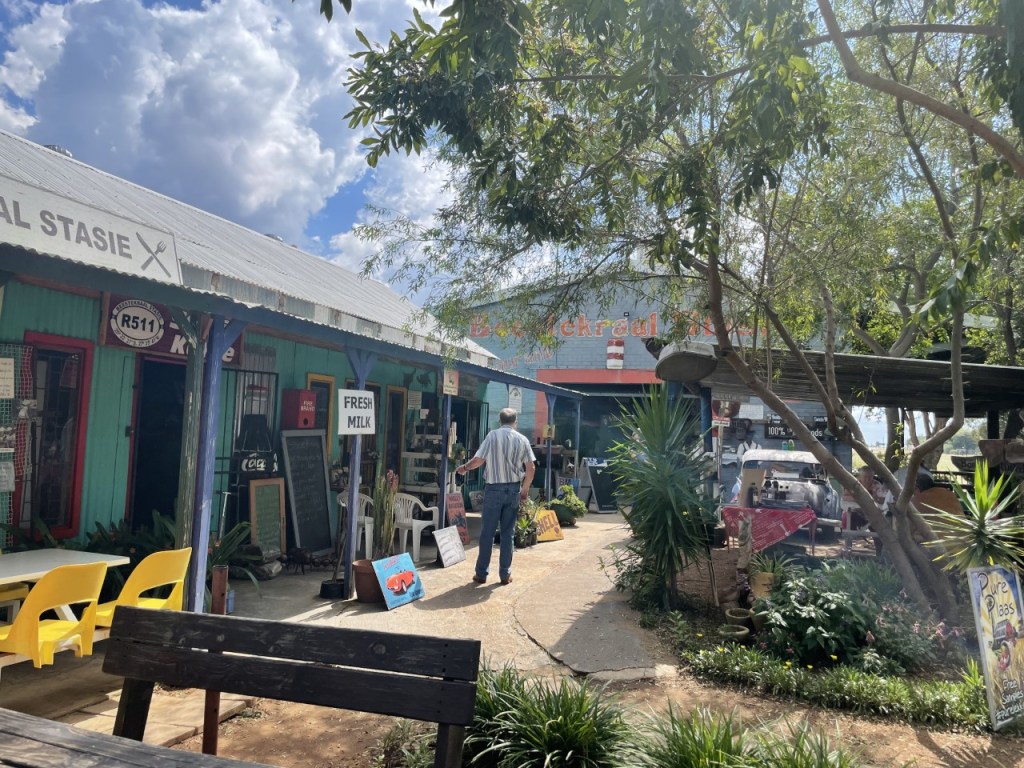
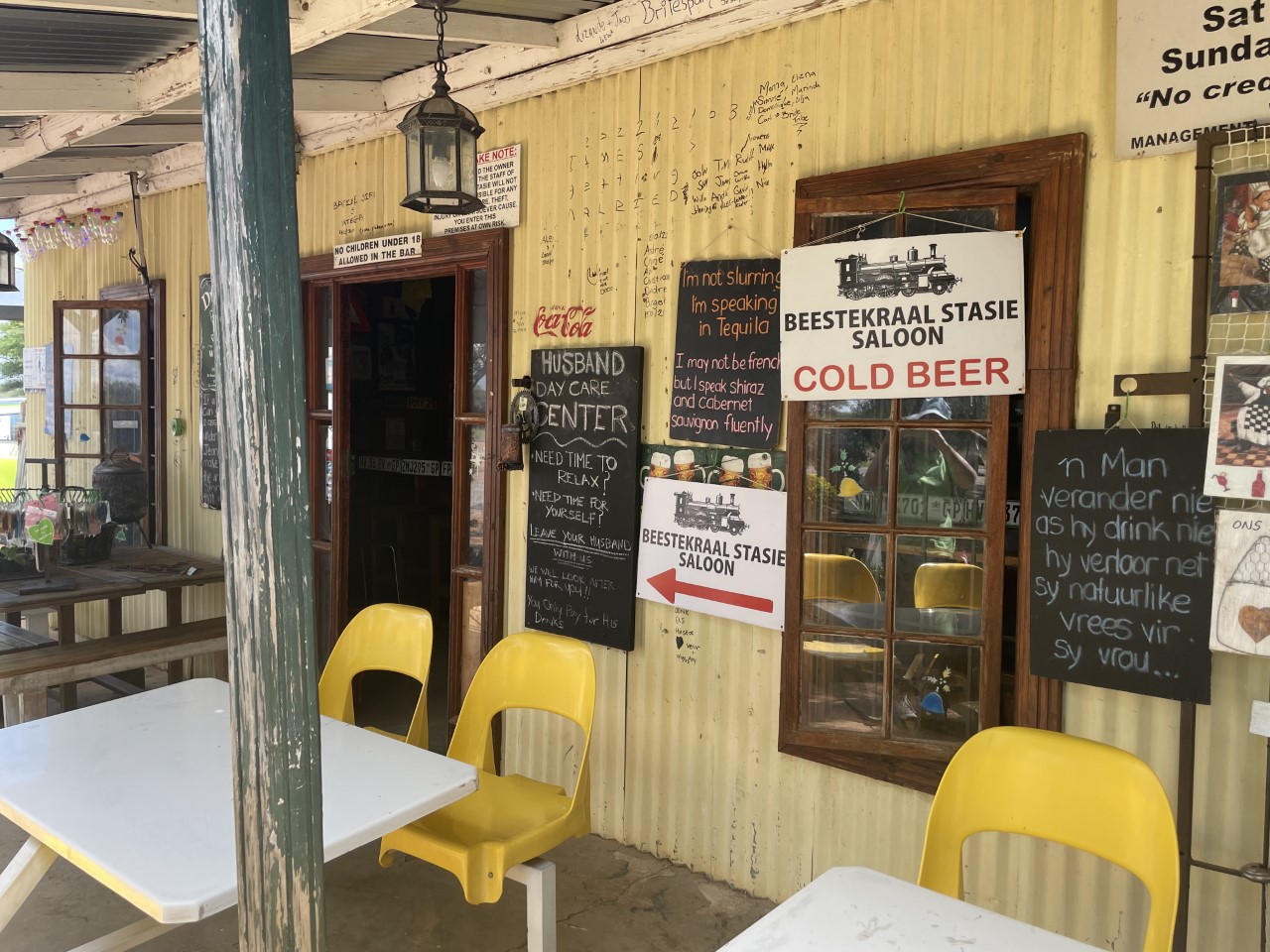
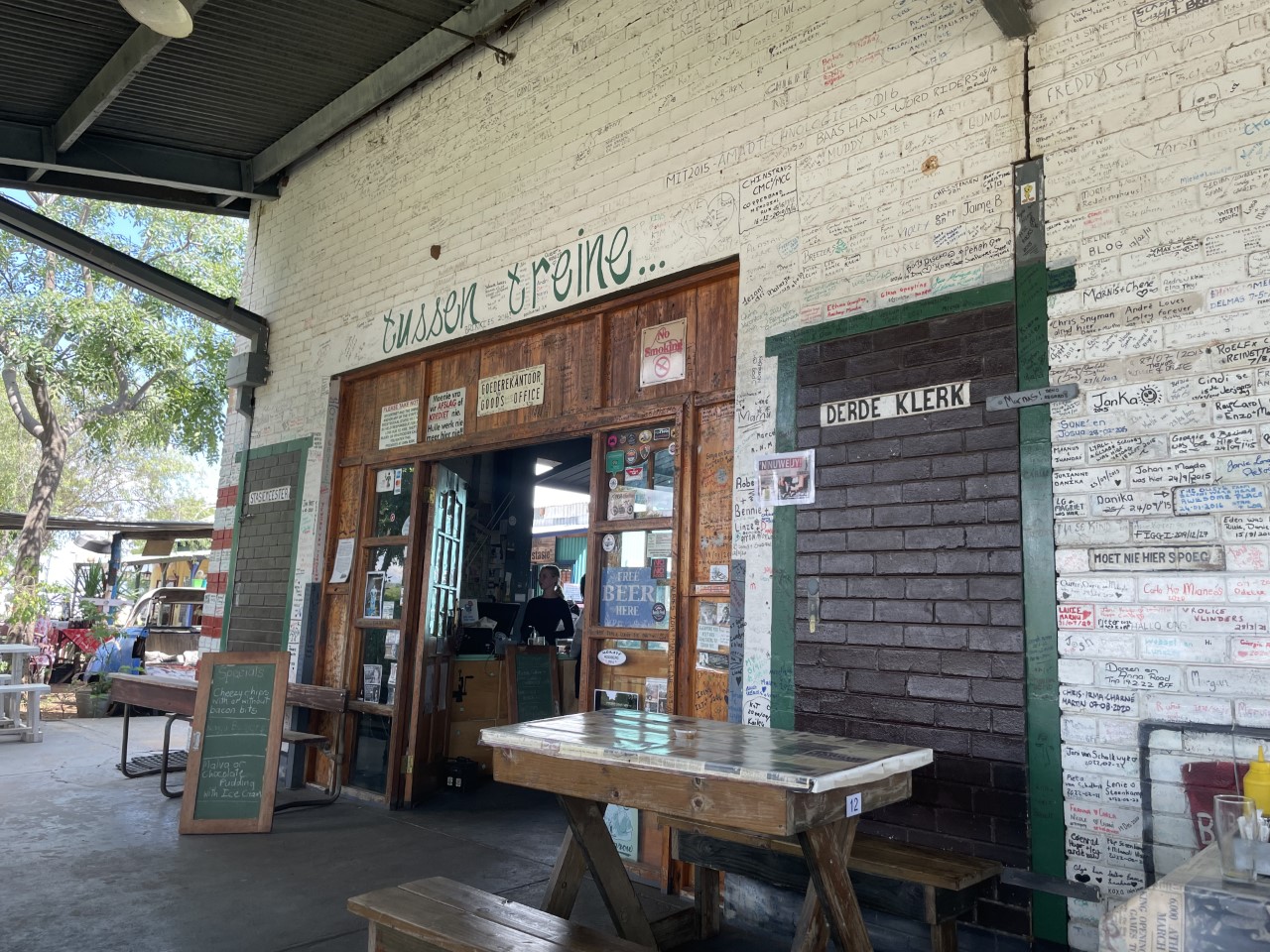
In 2005, the old Goods Shed at the defunct Beestekraal Stasie (the old railway station near the town of Beestekraal near Brits) was converted into a restaurant. A number of little businesses sprang up around the restaurant comprising of arts and crafts shops and a small market. Terence and I visited this unique restaurant for lunch while we were in the area a few weeks ago. The boys had elected to stay behind at the lodge.
The décor is simple and yet effective and we both had an excellent peri-peri steak roll and chips meal.
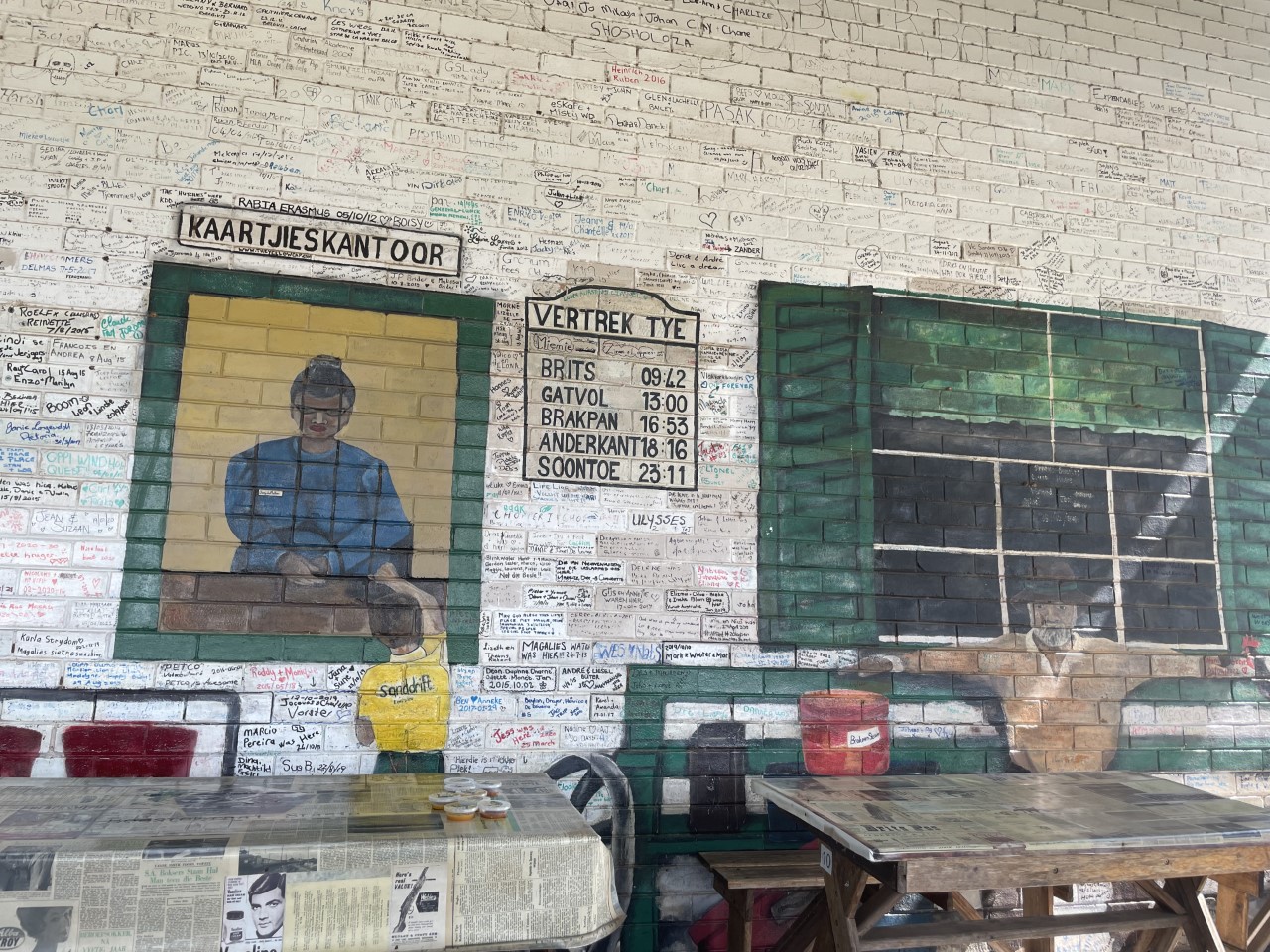
Entrance with lots of little shopsFront entrance to the restaurantEntrance to outside seated areaView from our table of the wall which was quite interesting.
The times board in the picture above has some jokes: Gatvol means Fed up, Anderkant means Other side, and Soontoe means That way (all in Afrikaans).
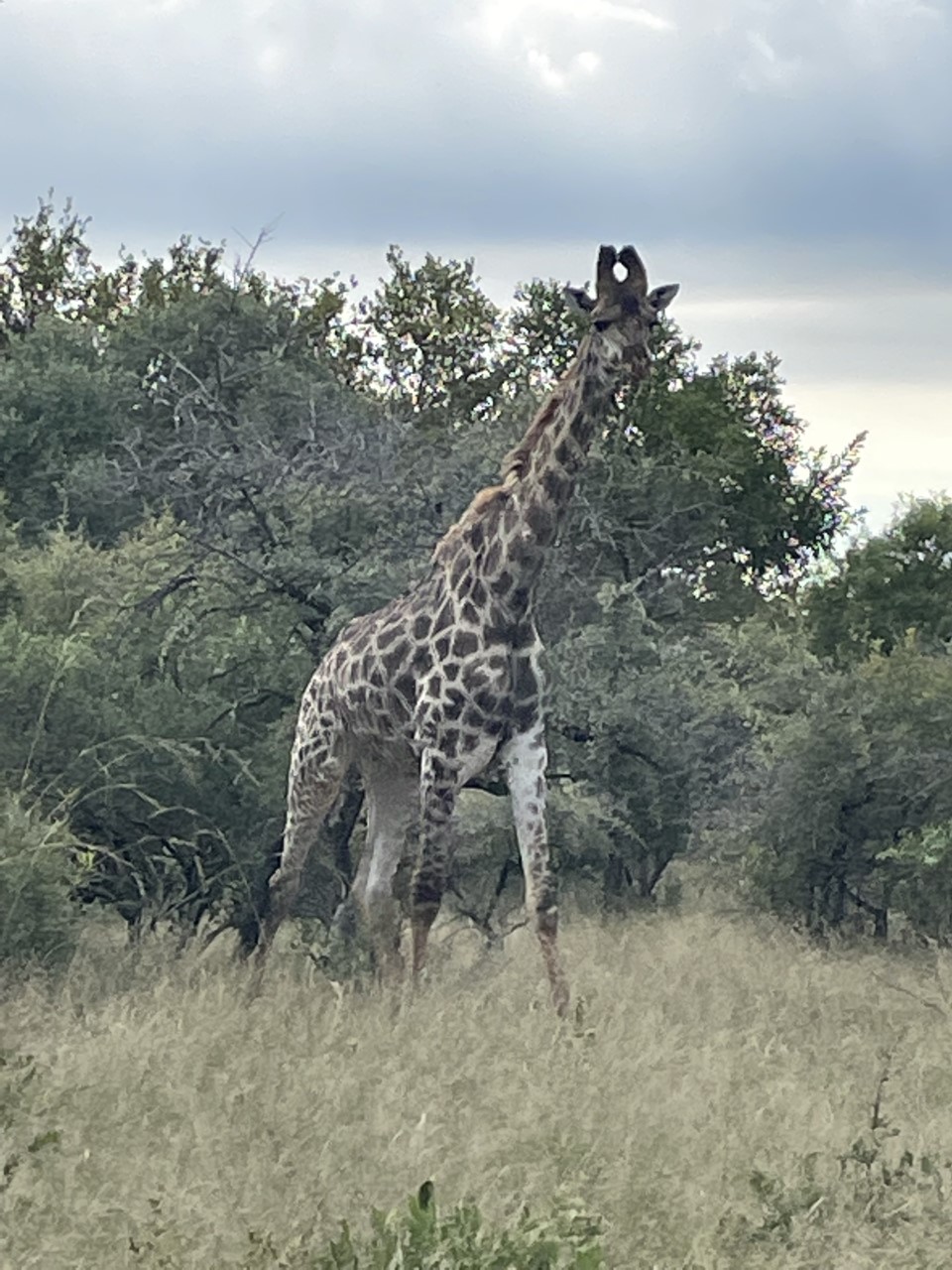
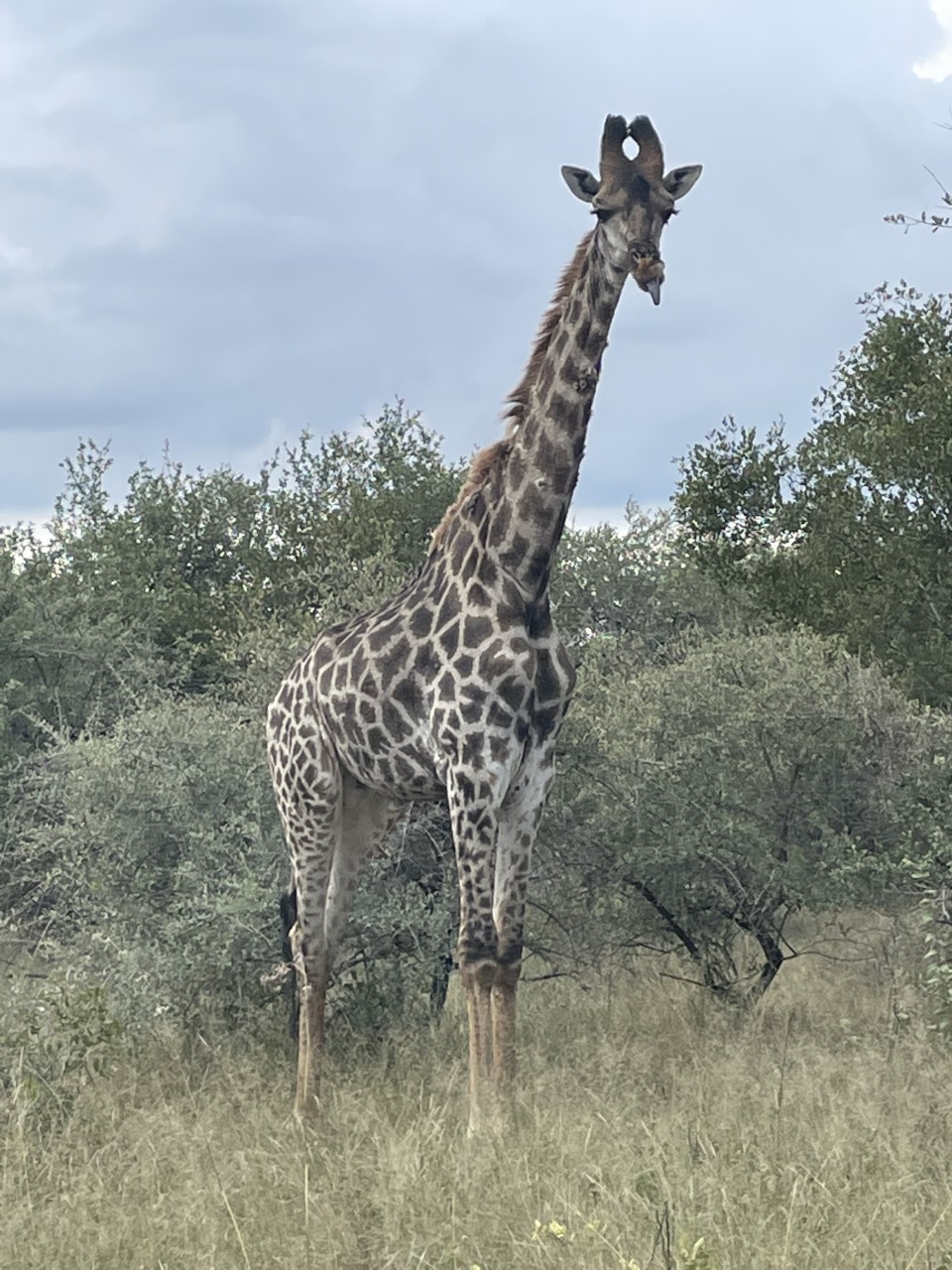
On our way out of the game reserve, we saw a giraffe right on the edge of the road. I got a few excellent pictures:
A collection of the author’s previously published pulp horror novellas, gathered for the first time in a single volume, Undead features three macabre tales of blood, terror and the living dead. In the first story, Exuma, a convicted seventeenth century heretic is shipwrecked along with his galley slave companions on a mysterious Caribbean island, where worse things than the surviving guards haunt the shadows. The second, The Worm at the Feast, is a darkly comedic, Gothic account of the life and misdeeds of an eighteenth century alchemist, who is also by turns a murderer, grave robber, bandit and necromancer. The final tale of historical horror, Temple of the Hyena, follows the exploits of a crew of deserters from Napoleon Bonaparte’s army in Egypt, lured into the deep desert by an ancient treasure map that promises riches beyond their dreams of avarice.
My review
I reviewed this book in my capacity as a member of Rosie’s Book Review Team. If you would like your book reviewed, you can contact Rosie Amber here: http://rosieamber.wordpress.com/.
This book comprises of three unique and interesting horror novellas. I must emphasis that these stories are horror and there is violence and some dramatically gruesome and bloody scenes but they were not out of context and suited the content and historical timing of the stories. Often real life historical events included in a story are far more frightening than the paranormal or supernatural elements.
The first story is set in 1666 in the harbour city of Cartagena under Spanish rule. The Spanish inquisition is in full swing and the hero of the story, De Castro, and his brother, fall victim to the Inquisitor and suffer terrible horrors in the dungeons before and after their trial. De Castro is sentenced to work as a galley slave for an indefinite period. He manages to form some strong friendships amongst his contemporaries and when they are ship wrecked, they assist each to the safety of an island. This is where the story moves away from being a historical novella to a supernatural horror story. The events that unfold are interesting and unique and I really enjoyed this tale.
The second story reminded me a little of The Invisible Man by H.G. Wells as it also has a young main character with a medical background. In both stories the protagonist becomes obsessed with researching a specific scientific possibility and becomes dehumanized and wicked as a result. This story also has a strong historical basis and features an interesting 18th century medical student setting with a thread about robbing graves for cadavers for experimentation purposes. It also has an alternating Dracula’s castle type setting which makes for an interesting contrast. Again, this story took an unexpected twist when it moved into the realm of the supernatural. I found this story engaging and different.
The last story is set during Napoleon’s siege of the Ottoman city of Acre which was a turning point in the French invasion of Egypt and Syria. The main character is an army doctor, Jean-Francois, who is engaged in saving the lives of men who are being slaughtered as a result of Napoleon’s foolish military decisions. He has become disillusioned as a result. When the army retreats back to Cairo after their defeat at Acre, he discovers that his fiancé in France is terminally ill. He makes a decision to desert the army and return to his homeland. A few of his colleagues decide to accompany him and they make plans for their escape. They are distracted by a rumor of treasure in a tomb some days journey from Cairo and decide to investigate. This sets them on a path of bizarre and frightening events as they uncover the supernatural elements that underpin the rumor.
All three of these stories were well written, interesting, and unusual. I would have given this book 5 stars if it didn’t have a number of spelling and other grammatical and punctuation errors. These did not, however, overly distract me from the enthralling stories.
I recently had a podcast discussion with Dan Alatorre. Dan is a USA Today bestselling author who has published more than 50 titles and is read in over a dozen languages around the world.
I have contributed short stories to a number of anthologies compiled and edited by Dan Alatorre including Dark Visions, Nightmareland, Spellbound, Shadowland, and Wings & Fire and I have learned a huge amount through working with him.
If you would like to listen to our discussion on a variety of topics including travel, interests, baking, and writing, you can do so here:
Extract from my short story Death Is About Choices which features in Spellbound
The drought was devastating the land.
“It’s terribly dry. The maize kernels are shrivelling on the stalks and the ground is cracked and parched.” The messenger shook with fear as he imparted this information to the Sapa Inca. The emperor was known to lash out in rage at the bearers of bad news.
The emperor’s main advisor, the High Priest of the capital city of Cusco, addressed the deity. “The mountain gods are angry and need to be appeased before they will send rain and restore life to our crops. A Capacocha ceremony is necessary. You must advise the chiefs to bring their sacrificial offerings to the city at once and I will arrange their distribution throughout the empire. I will lead the ceremony at which the purest and most beautiful children will be offered.”
The feathers on the Sapa Inca’s golden headdress swayed as he nodded agreement. A single ray of sunlight shot through the room, reflecting off the golden threads of his heavily embroidered clothing and surrounding him with a golden haze.
“The gods approve.” The High Priest’s face broke into a huge smile.
***
Juanita was not the first child, nor would she be the last, to have made this great journey from Cusco to the base of the high mountain selected by the High Priest, as the most appropriate shrine for his Capacocha ceremony.
The arrival of the ceremonial procession at the site, where the base camp would be established, was met with relief. The location at the foot of the mountain had everything the participants and the builders needed, including water, food, and access to a stone quarry.
Exhaustion was evident in the stiff and pain-filled movements of the older members of the party after travelling for many days. The High Priest had set a moderate pace to accommodate the slower moving among the accompanying priests and worshipers, but it had still fatigued them.
The journey from Cusco to the selected shrine was long and arduous. Tradition dictated that the travellers not follow the easier royal road, but rather take a direct overland route, following a straight ‘as the crow flies’ path from Cusco to their targeted camp site. The group had forged rivers inhabited by shocking electric eels and flesh-eating piranhas. Low, wet swamps greeted them, infested with the highly toxic poison dart frogs, mosquitoes, and powerful green anacondas. They struggled to pass over high mountainous terrain.
Juanita had enjoyed the monotony of the travelling routine after all the pomp and ceremony of her time in Cusco. As each day blended into the next with dreary regularity, she focused on controlling her fear.
What happens to you after you die? Will I really continue to exist as a deity, achieving divine status as a direct link between my people and the gods? Or will I just stop? Will the universe simply carry on without me as if I never existed at all? If only I knew the answers.
Dying along the journey did not frighten her. Such a death might be better than what lay in store for her and the two other children selected for sacrifice, Anku and Palla, at the end of their journey.
At least the end would be quick. Instead, I am one of the living dead with the stamp of sacrifice upon me.
The glimpses of brightly-coloured birds she caught among the palm trees and her sightings of herds of gentle Alpacas on the highland plateaus soothed her agitated soul.
The birds and animals live such peaceful lives. They don’t have to wrestle with the meaning of life and the prospect of an early death. It would be so much easier to be a bird. They can fly away from danger. It must be wonderful to have wings and be so free.
A few weeks before their arrival at the camp, the procession had passed through Juanita’s home village where, in accordance with tradition, her family had joined them. The families of Anku and Palla were already among the travellers, the procession having passed through their villages earlier in the journey.
Her father was the chief of her home village. He and her mother were incredibly proud that Juanita had been chosen for sacrifice by the Sapa Inca.
“Your sacrifice to the mountain gods will ensure a tie between your father, as chief of our village, and the Emperor. It will also bestow an elevated status on our family and our descendants. We are greatly honoured by your selection and you will be forever immortalised through your sacrifice.” Her mother’s expression of exalted wonder didn’t have the desired effect on her twelve-year old daughter.
“Your perfect beauty has been recognized.” Her mother tried another avenue of persuasion. “You are entirely unblemished and beautiful to look at or you would not have been a viable subject for selection.”
Juanita would not be coaxed into expressing gratitude or joy at her situation. She, along with two other children of equal purity, had been chosen to die.
It’s easy for her, she’s not the one whose been chosen to die. She will continue to enjoy the warmth of the sun on her face and the wind in her hair. I’m the one who is expected to be joyous about giving up everything I love.
Two of her brothers were among the worshipers, and she was comforted by their presence—although, being younger than her, she was not as close to them as she had been to her older brothers, Tupaq and Mallku.
Brushing tears from her eyes, she thought of their tragic deaths. Just a few short months before, she’d left the village to travel to Cusco to meet the Sapa Inca and attend the feast held in her honour. The victims of a hunting accident, her brothers’ mummified bodies now lay side-by-side in an underground tomb.
I wish they were here to support me through this awful time. Sometimes I think I see their faces among the people in the procession, but when I try to approach them, they disappear.
Three years ago, before she had been selected for child sacrifice, she had overheard Tupaq and Mallku discussing the practice. It was late one evening, when their parents were away attending a ritual where several animals would be sacrificed. Her brothers thought she was asleep.
“I am worried about Juanita. She is too perfect, too beautiful. She is the perfect subject for selection by the bloodthirsty priests,” Tupaq said.
“I agree and I am also worried, Tupaq,” Mallku’s, deep voice rumbled, “but there is nothing we can do to help her if she is chosen.”
A few months later, their predication had come true and Juanita had been chosen. During the months between her selection and her journey to Cusco, she had been fed an elite diet of maize and meat.
Fattening me up for the kill, she’d thought miserably. They wouldn’t want to insult the gods by sacrificing an inferior product.
Nothing could stand between her and her destiny. Following the deaths of her beloved brothers, she grew unable to eat. She became thin and pale. Her frailty had attracted the attention of the local priest who had told her to start eating again or he would order the arrest of her family and younger brothers. Juanita had obeyed.
I am a contributor to Ask the Authors 2022, a writing reference anthology published by WordCrafter Press. Kaye Lynne Booth has shared a few extracts of discussions on selected topical questions about writing and publishing from the book, including some of my comments.
Welcome to Writing to be Read, where we’re celebrating the release of Ask the Authors 2022, the writing reference anthology that features essays by ten wonderful authors who have agreed to share their writing wisdom with us, along with an extensive Q & A, divided by topics. Contributing authors are myself – Kaye Lynne Booth, Bobby Nash, Roberta Eaton Cheadle, Chris Barili, L. Jagi Lamplighter Wright, Nancy Oswald, Mario Acevedo, Jeff Bowles, Mark Leslie Lefebvre, Paul Kane, and Kevin Killiany.
“Ask the Authors is an up-to-date and broad-based compendium of advice from today’s working writers, to help you with understanding your own writing career. Great information!”
—Kevin J. Anderson, New York Times bestselling author of Spine of the Dragon
Every Saturday, this blog series will introduce you to one contributing author and share a portion of the Q & A session. Today you will…
Welcome to Thursday Doors, a weekly feature allowing door lovers to come together to admire and share their favorite door photos from around the world. Feel free to join in on the fun by creating your own Thursday Doors post each week and then sharing your link in the comments below, anytime between 12:01 am Thursday morning and Saturday noon (North American eastern time). You can join in here: https://nofacilities.com/2022/05/05/cheney-brothers-houses/
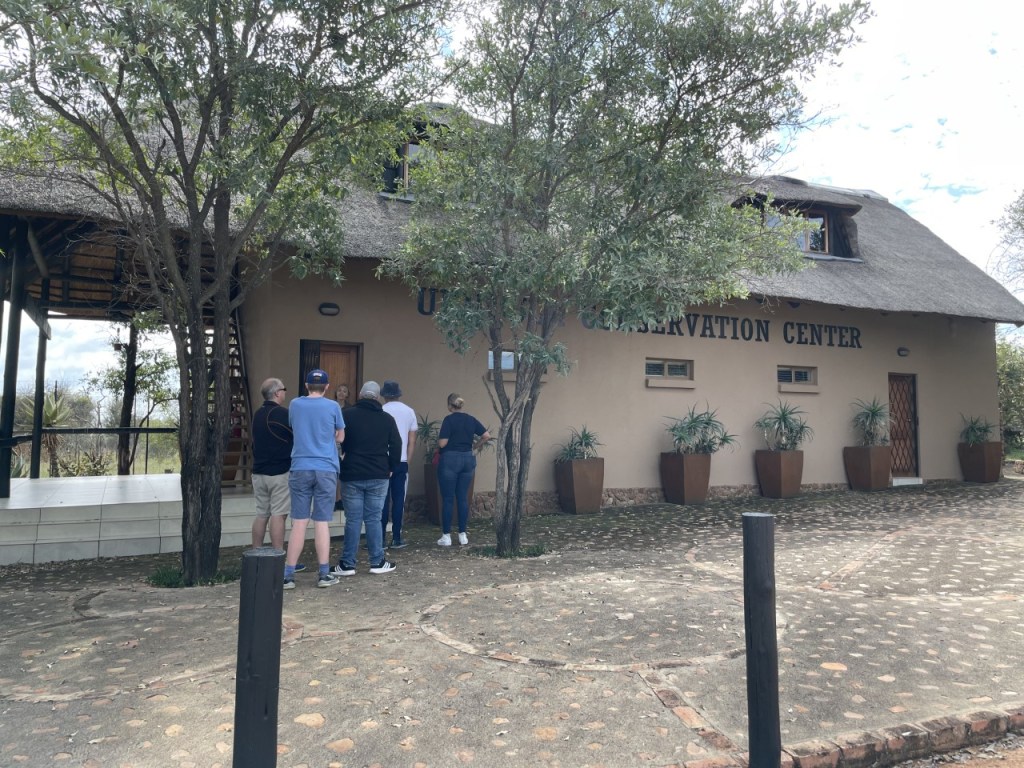
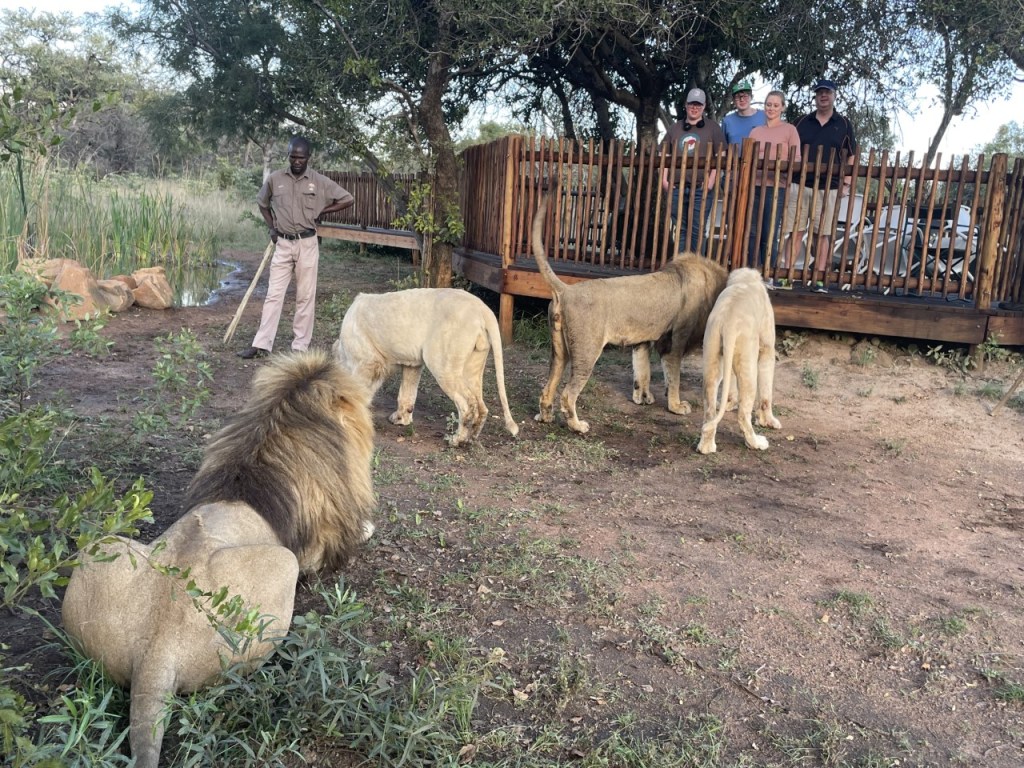
Last week, I told you about our visit to the Ukutula Conservation Centre and I shared some pictures from the lodge and a few of the rescue animals. Today, I am sharing pictures of our visit to the research centre and watching lions from a small deck in the middle of the veld.
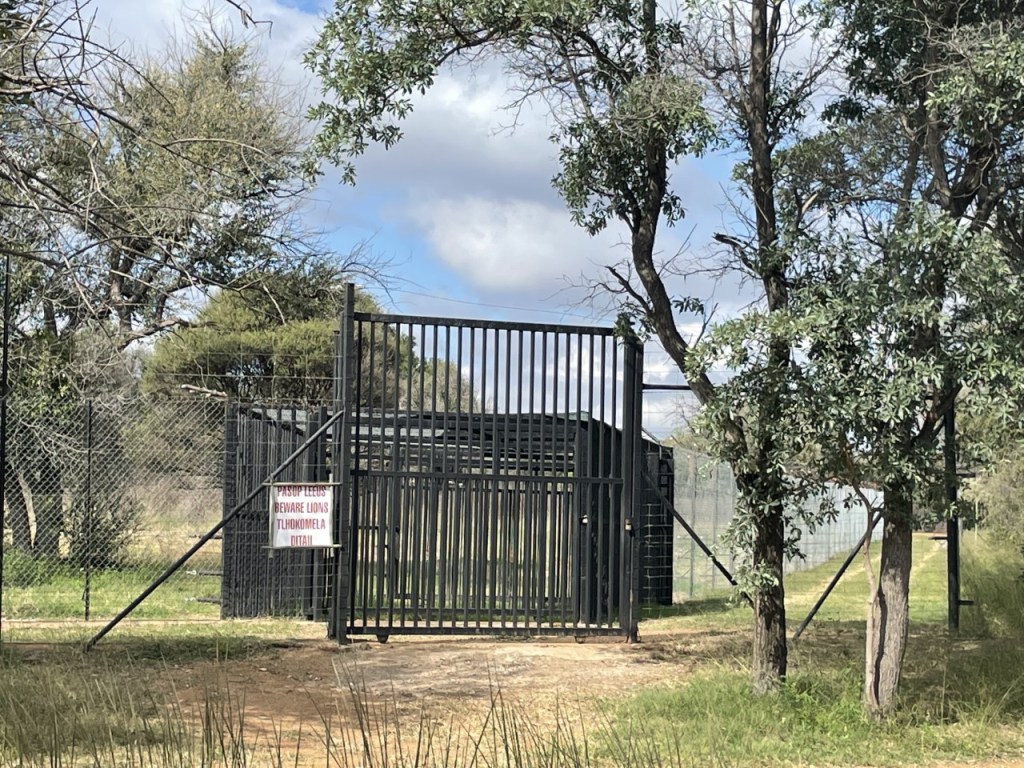
Research centre where they do small procedures, artificial insemination, freezing of sperm, and vaccine and disease prevention researchDoorway into the lion encampment – I forgot to take any doors pictures after this one.
We passed through this protective gate and entered Lion World.
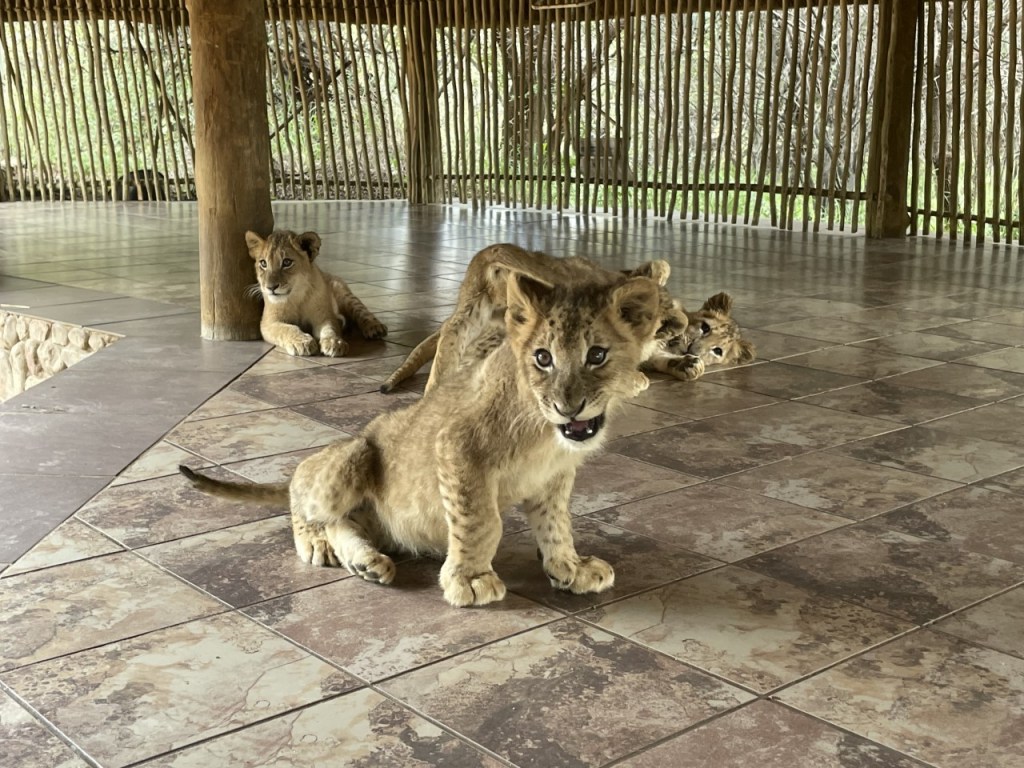
First, we visited the cubs:
“No, I’m not Simba, I’m Rusty”
Meet the lion cubs here:
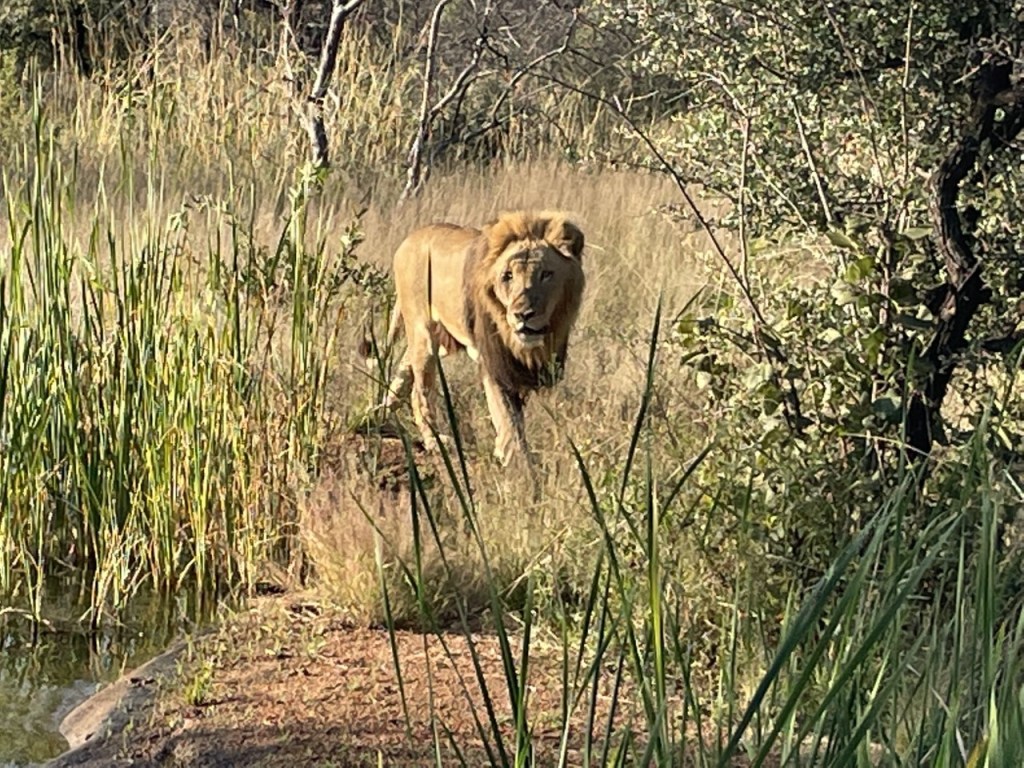
Meet the dads. You don’t want to be up close to the moms – they are the hunters.
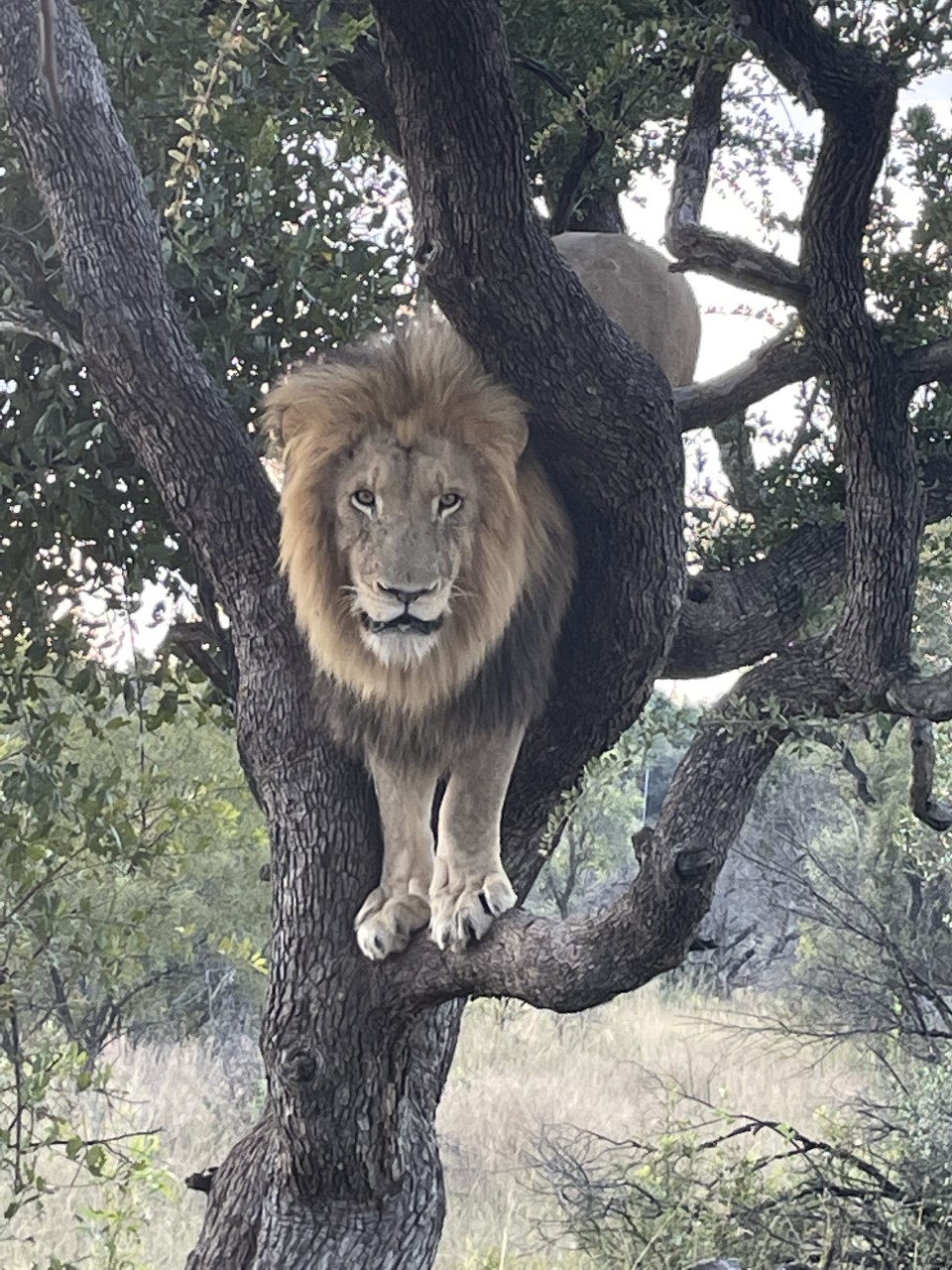
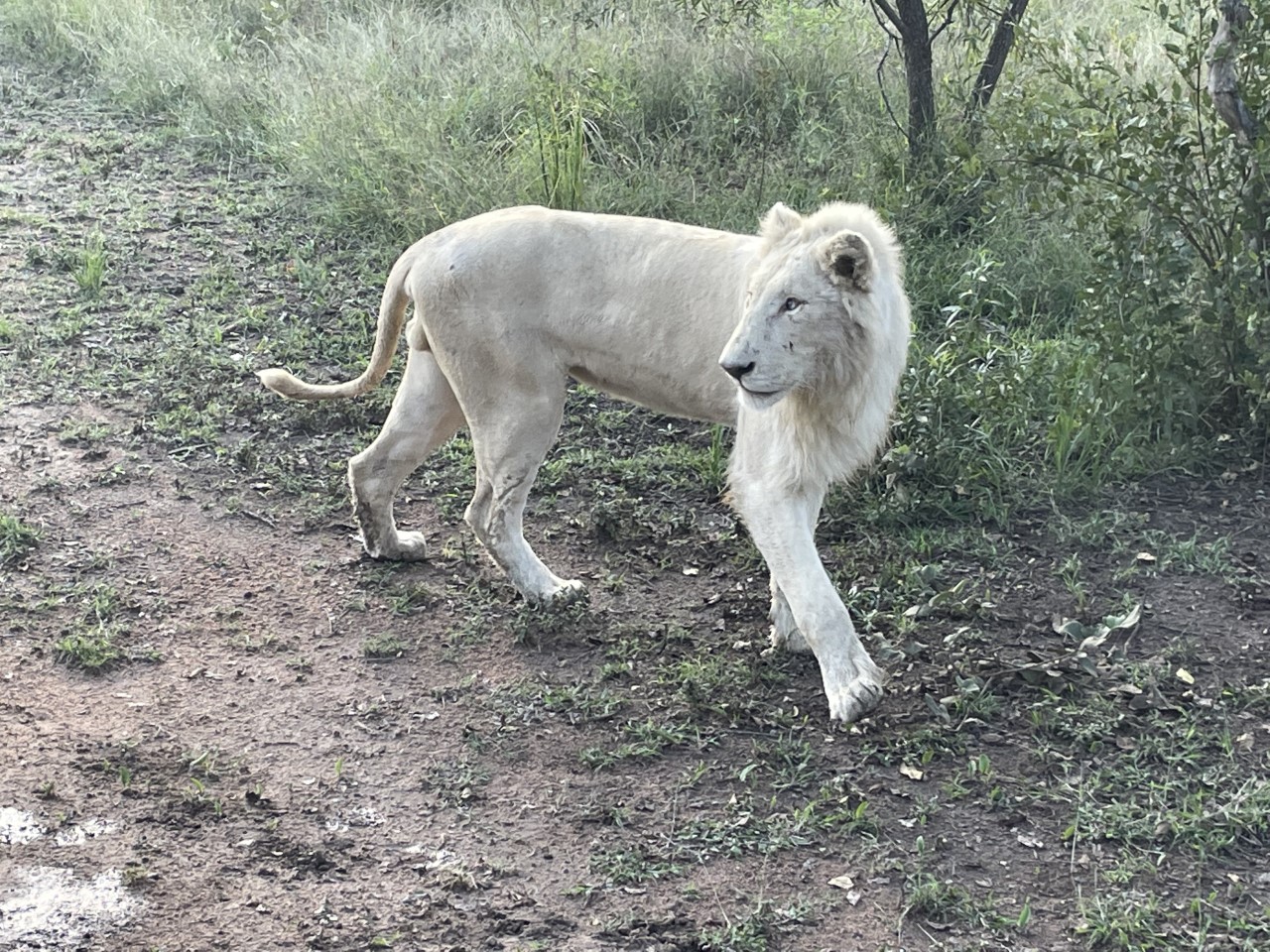
The ground rumbles – here they comeHe makes sure the pond is safeWho’s watching who?Lion in a treeWhite lion – they are natural
Have you ever seen a lion swimming?
You can watch one here:
Have you ever seen a lion in a tree?
You can watch one here:
I wrote another 99-syllable animal poem. It has absolutely nothing to do with lions.
Handbags and shoes
Stagnant, muddy water Obscures it’s presence Are those rocks? Look closer; see the baleful eyes Unmoving it wallows Waiting patiently
Thirst overwhelming sense Monkey bounds forward A single snapping crunch; the crocodile sinks Its prize will slowly rot beneath the surface
An unnatural hunter Squeezes the trigger Deadly gun terminates the cycle of life The man smiles toothily He sees bags and shoes
I have poems in a new WordCrafter anthology which also features poetry by Arthur Rosch, Elizabeth Merry, D Avery, Harmony Kent, Lauren Scott, Julespaige, Leon Stevens, Colleen M. Chesebro, Miriam Hurdle, Marjorie Mallon, and Lynda McKinney Lambert.
Welcome to Thursday Doors, a weekly feature allowing door lovers to come together to admire and share their favorite door photos from around the world. Feel free to join in on the fun by creating your own Thursday Doors post each week and then sharing your link in the comments below, anytime between 12:01 am Thursday morning and Saturday noon (North American eastern time). You can join in here: https://nofacilities.com/2022/04/28/cheney-brothers-silk-mill-1/
Last weekend, my family took a short mini-break to Ukutula Conservation Centre in Brits, North West Province. At this centre they do research relating mainly lions and cheetahs in order to ensure the preservation of these wonderful animals going forward. The centre is doing artificial insemination of lionesses using sperm from African lions all over the world. This is to ensure a diversified gene pool and prevent genetic physical defects resulting from inbreeding. There is also a facility at the centre to store eggs and sperm from lions and other wild cats.
There are only 20,000 lions left in the wild in Africa and 50,000 is considered to be the minimum number to ensure the survival of a species. To add to the threats posed to lions in the wild from loss of habitat and poaching, the lion population in South Africa’s Kruger National Park is being further impacted by rising cases of tuberculosis. There is currently no cure and no preventative vaccination and Ukutula is one of the research centres working hard to change this position and protect our lion populations. You can read more about tuberculosis among lions here: https://www.awf.org/news/tuberculosis-imperils-lions-kruger-park
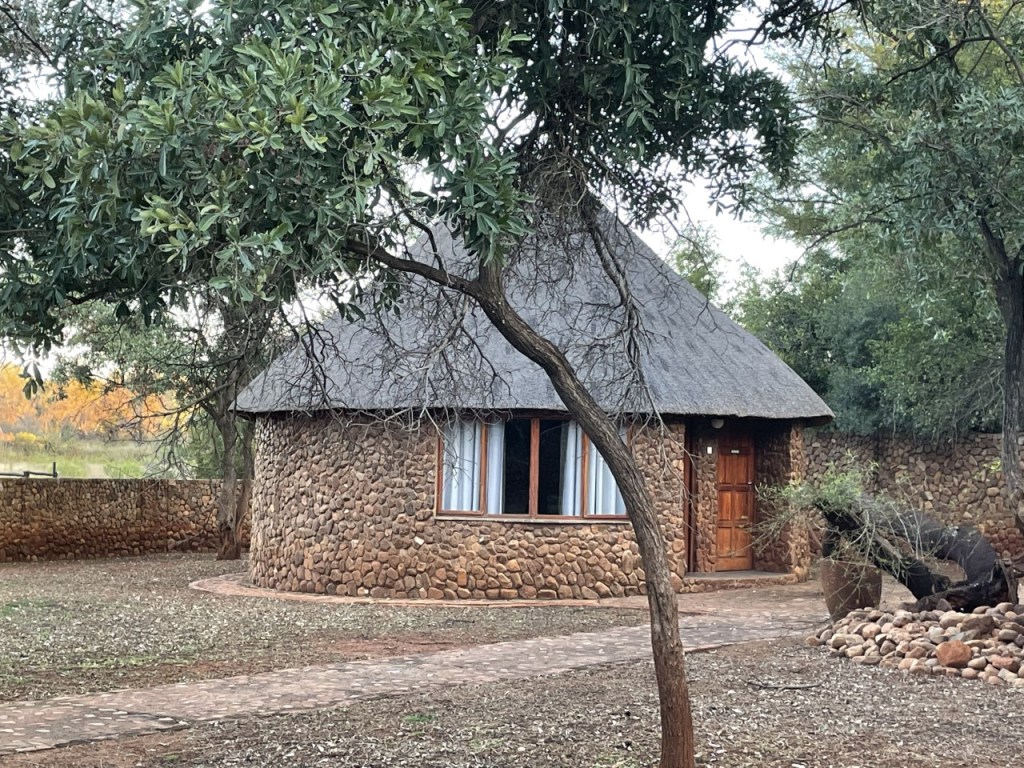
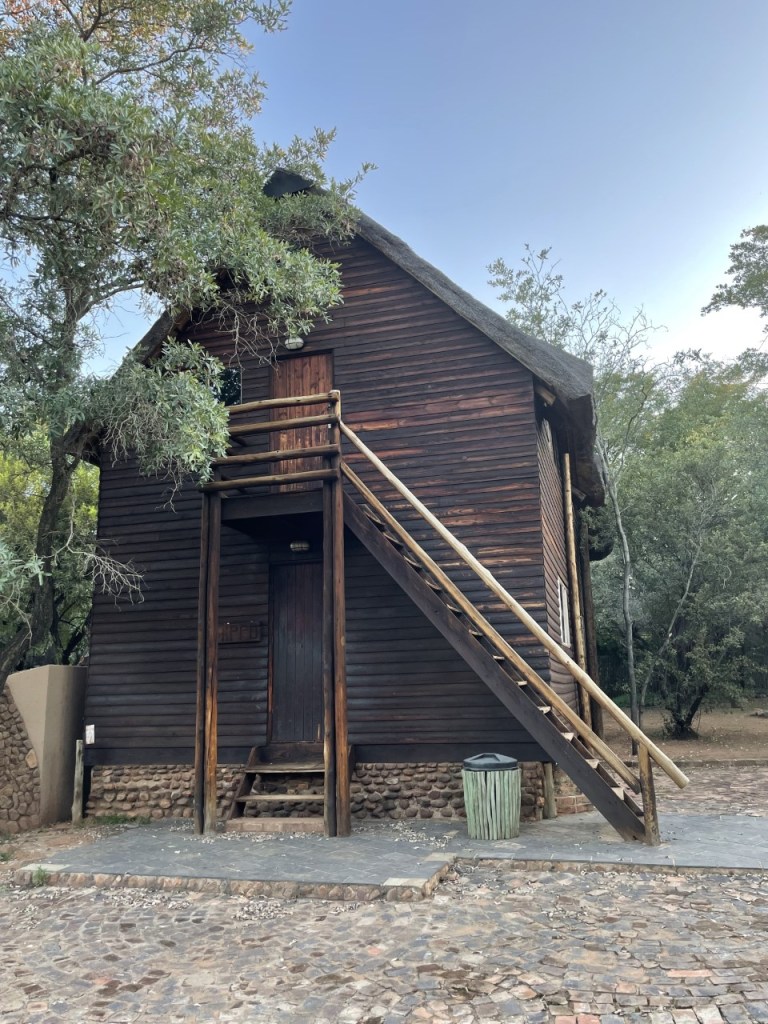
Here are a few pictures of some of the doors at the lodge.
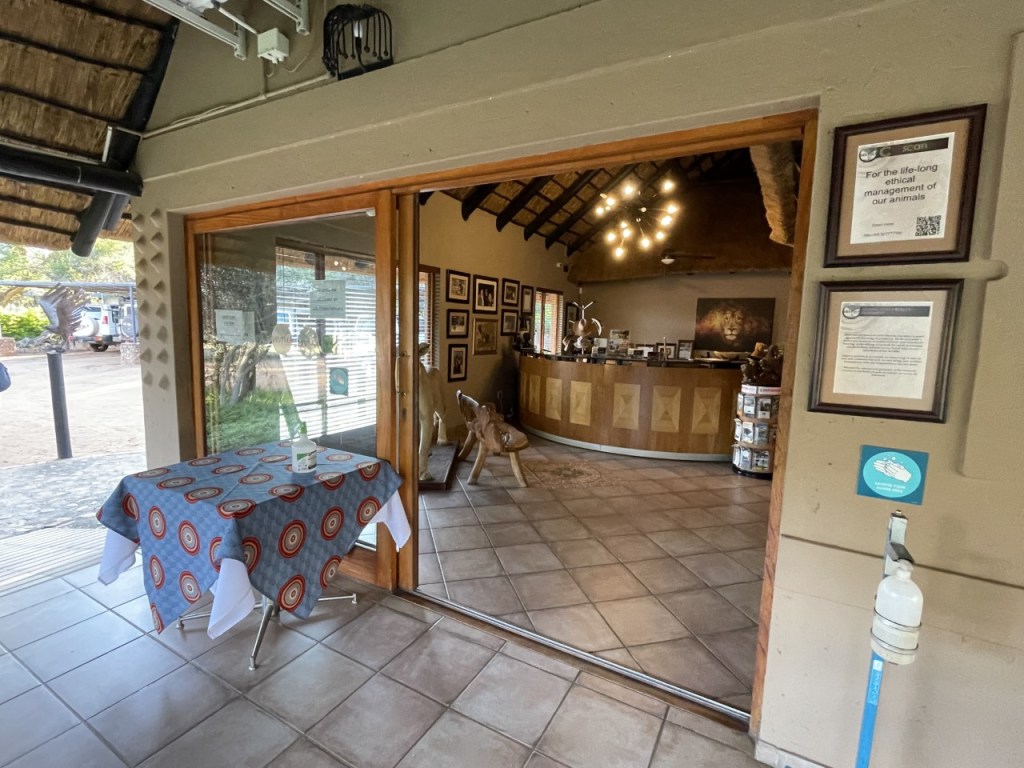
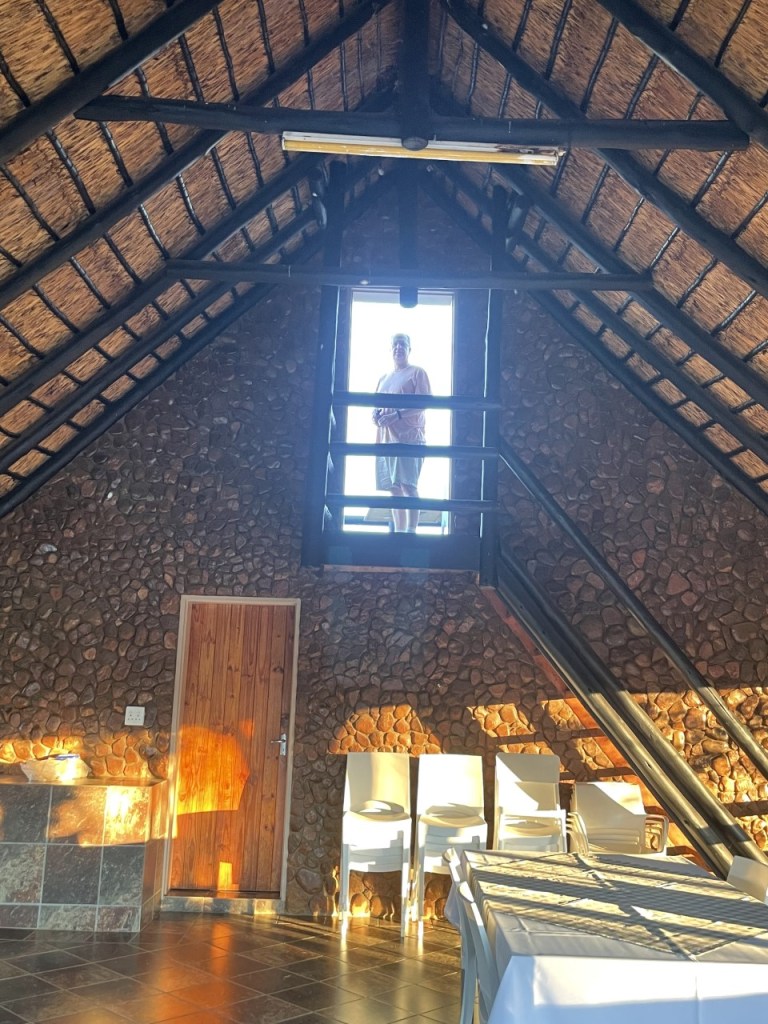
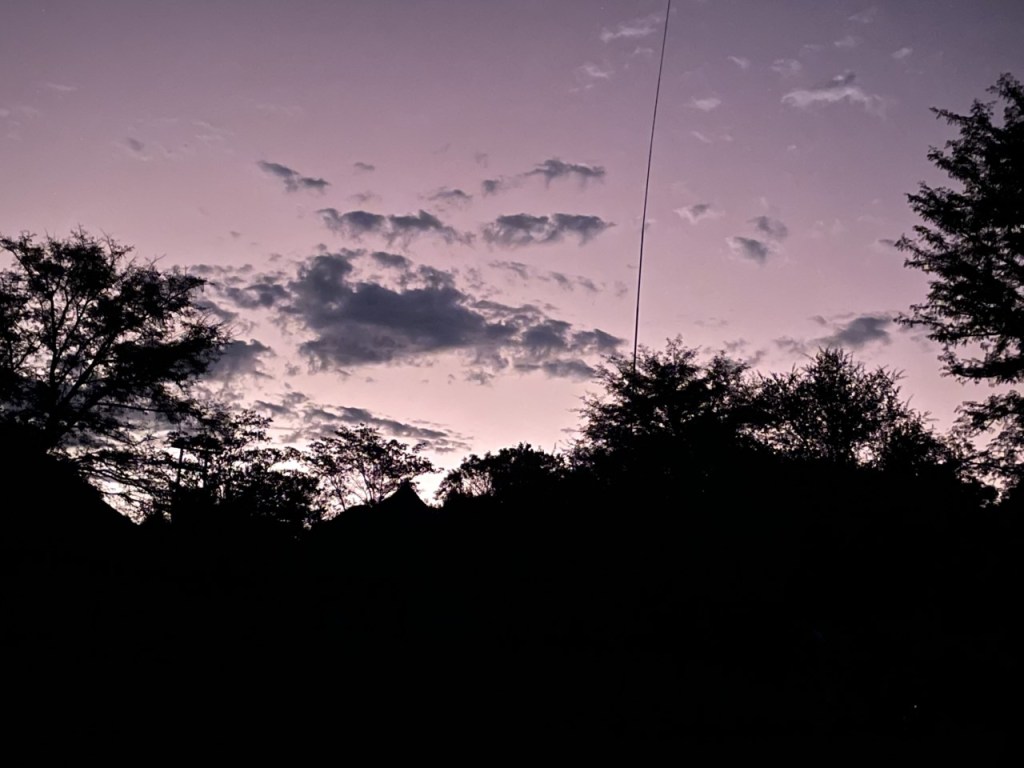
Entrance to receptionEntrance to self catering rooms – the also offer dinners and breakfastsOne of the entertainment areas – I was trying to be creativeRondavel where employees liveWooden double story building where employees liveSunset in the bush
It looks peaceful, but it isn’t.
You can hear the sounds of the bush here – Lion melody
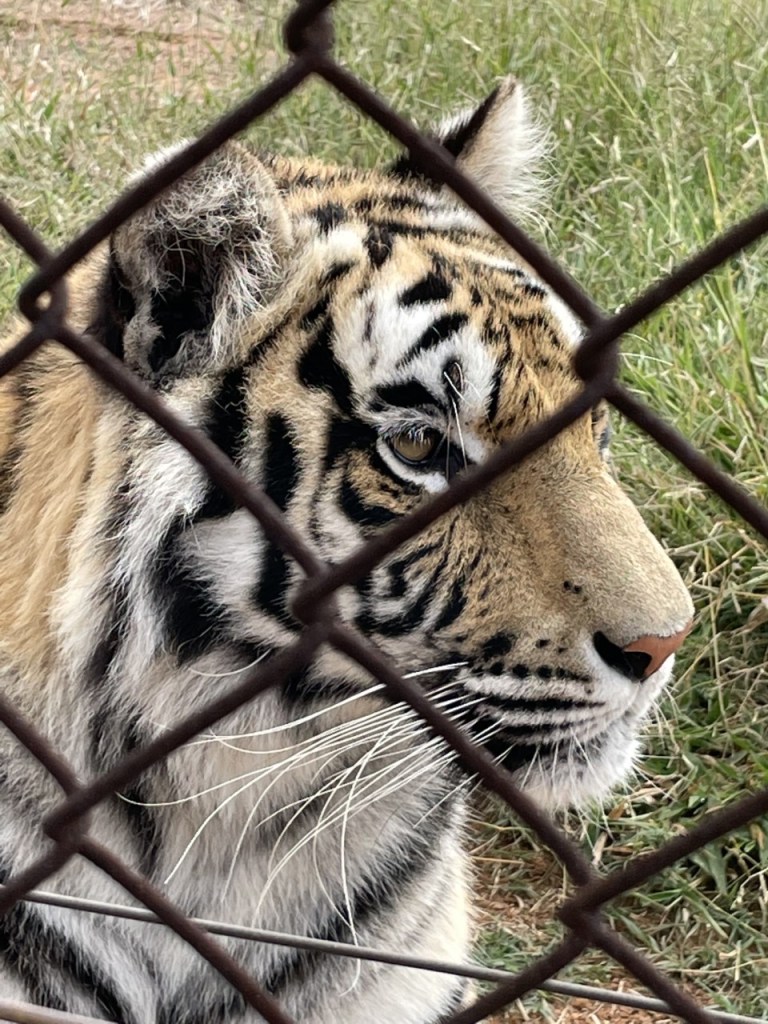
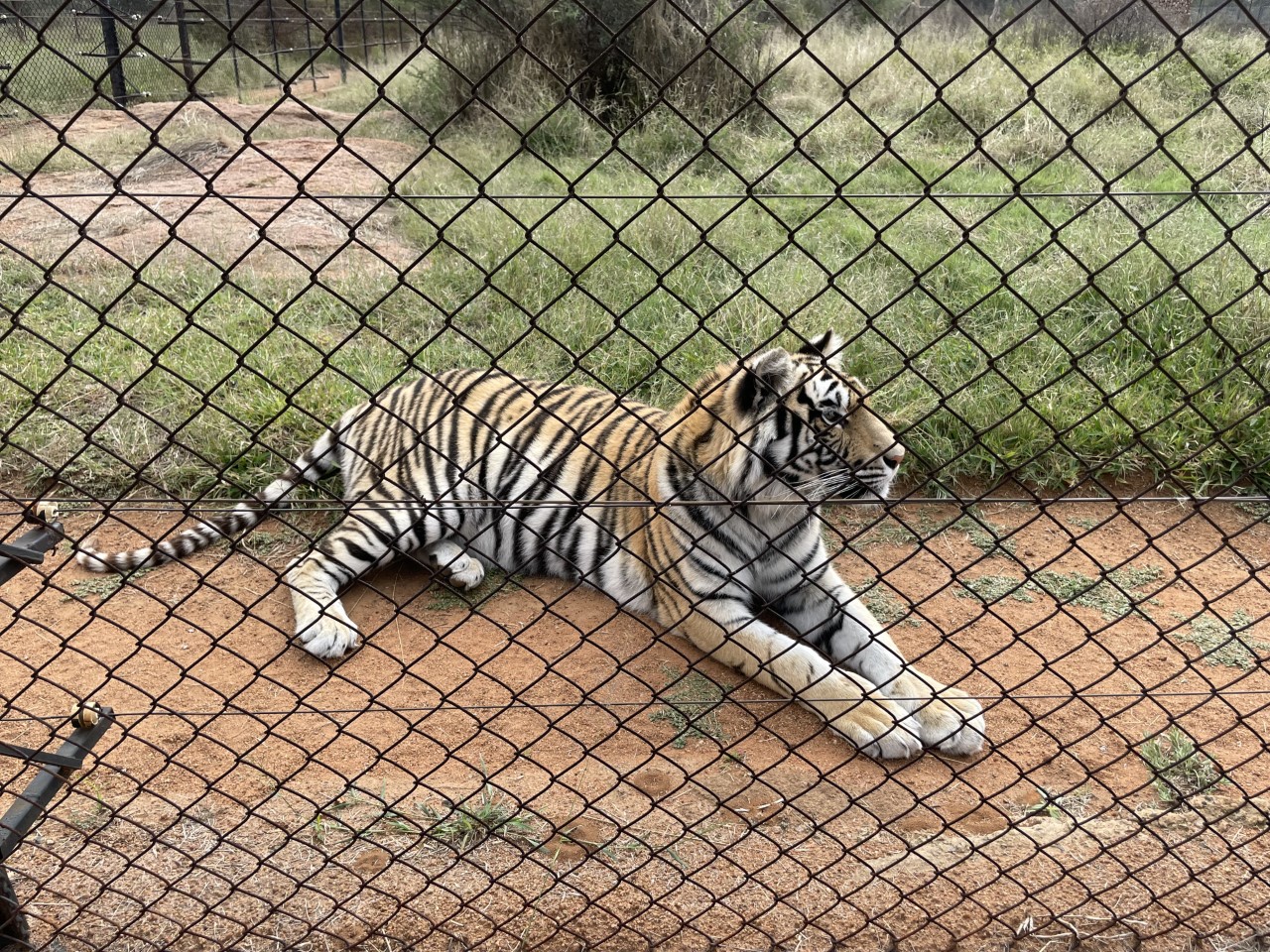
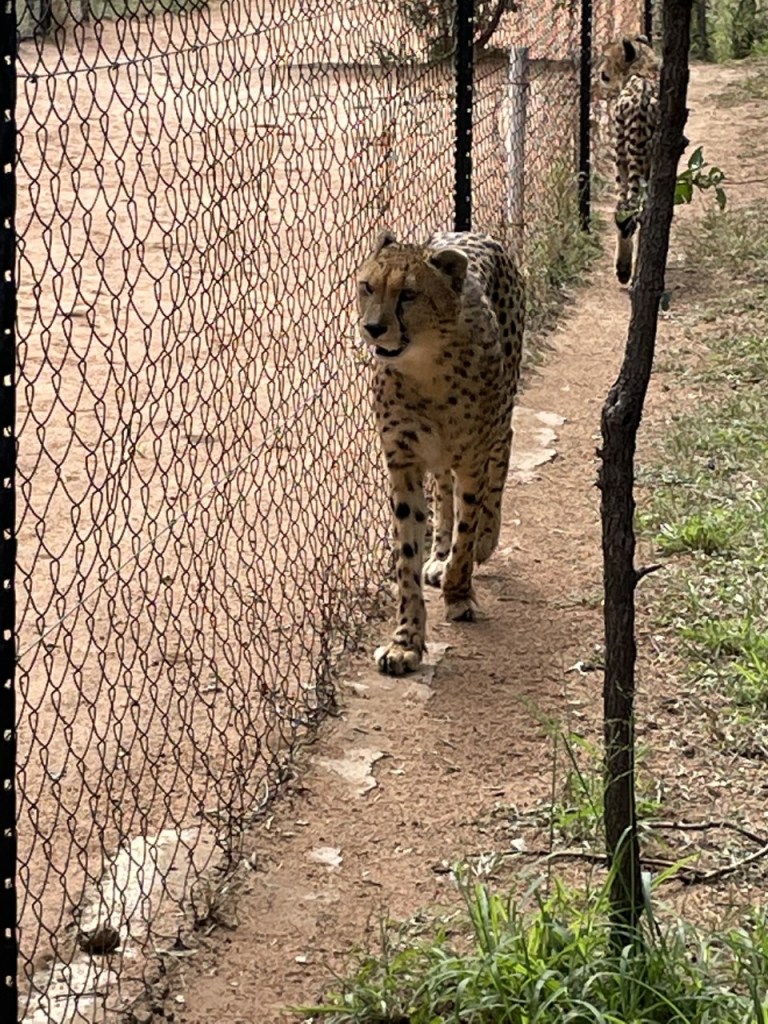
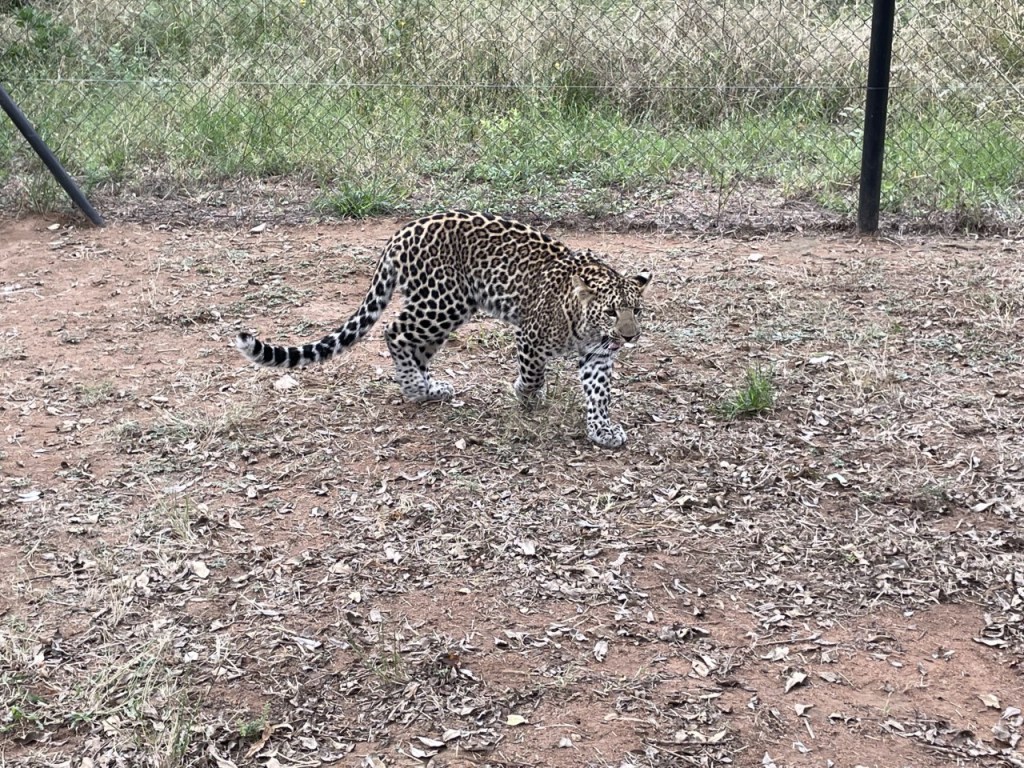
As I mentioned, the centre is mainly for lions and cheetahs, but it also has a lot of rescue animals. These tigers are an example of rescues. Unfortunately, the tigers have limited space, but they are not natural to Africa and they are very unpredictable and aggressive. I wrote a poem about the tigers in my favourite 99-syllable form. It was one of 7 I wrote over the weekend.
A beautiful faceI took this through the links and I thought I was quite clever (hehe)Through the fence
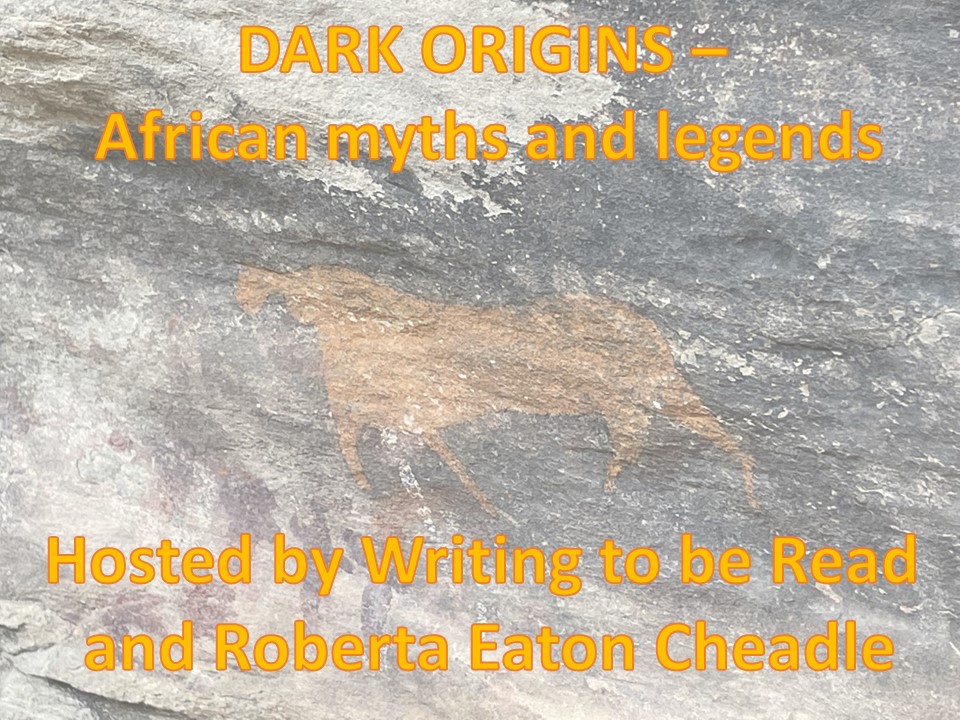
I am over at Writing to be Read with April’s Dark Origins – African myths and legends post. This month, I am featuring the Zulu people and the famous Zulu king, Shaka. Thanks for hosting, Kaye Lynne Booth.
The Zulu are the largest ethnic group in South Africa, with a population of between 10 and 12 million people living mainly in the province of KwaZulu-Natal. The Zulu tribe originated from the Ngunis who inhabited central and eastern Africa. They migrated to Southern Africa as part of the ‘Bantu Migration’ which occurred centuries ago.
One of the most famous Zulu chief was Shaka (1816 to 1828) who founded the Zulu empire. He is credited with uniting more than one hundred independent Nguni chiefdoms into a formidable fighting force. Shaka armed his warriors with short-handled stabbing spears for close-contact fighting and trained them to move up to their opponents in close formation with the body-length cowhide shields forming an almost impenetrable barrier to long-handled assegai thrown by enemy forces.
This is the theme song from the Shaka Zulu TV show called We are Growing:
Welcome to Thursday Doors, a weekly feature allowing door lovers to come together to admire and share their favorite door photos from around the world. Feel free to join in on the fun by creating your own Thursday Doors post each week and then sharing your link in the comments below, anytime between 12:01 am Thursday morning and Saturday noon (North American eastern time). You can join in Thursday Doors here: https://nofacilities.com/2022/04/21/two-mills-then-now/
During our recent road trip, we visited the Tsitsikamma National Park.
This is how Trip Advisor describes this wonderful national treasure:
Trails, waterfalls, and wildlife draw visitors to lush Tsitsikamma National Park. Set along South Africa’s scenic Garden Route and spanning 50 miles (80 kilometers) of coastline, the park stretches from the mouth of the Storms River to Nature’s Valley. Embark on various adventures here, from a multi-day hike along the Otter Trail to one of the world’s highest bungee jumps.
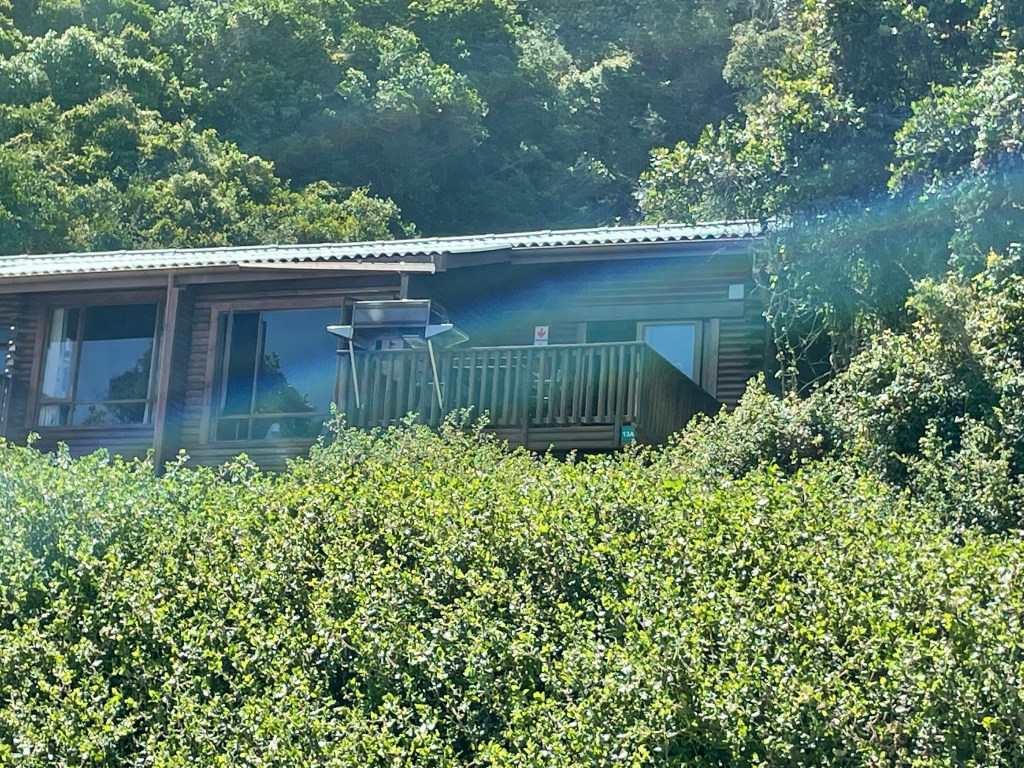
Gate to the Tsitsikamma National ParkThere are chalets available for rental in the park. This is a picture of the balcony and front door to one of them.
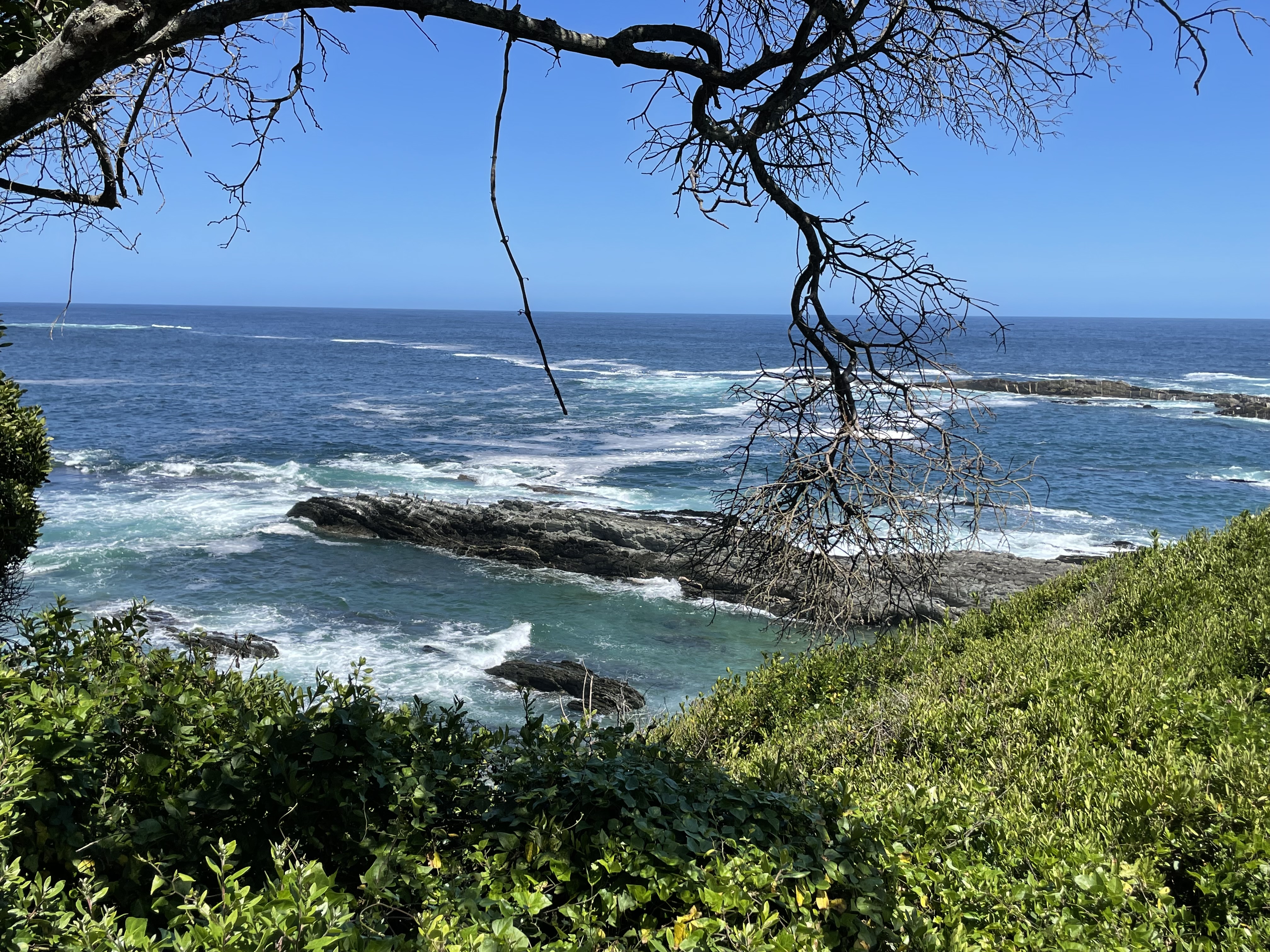
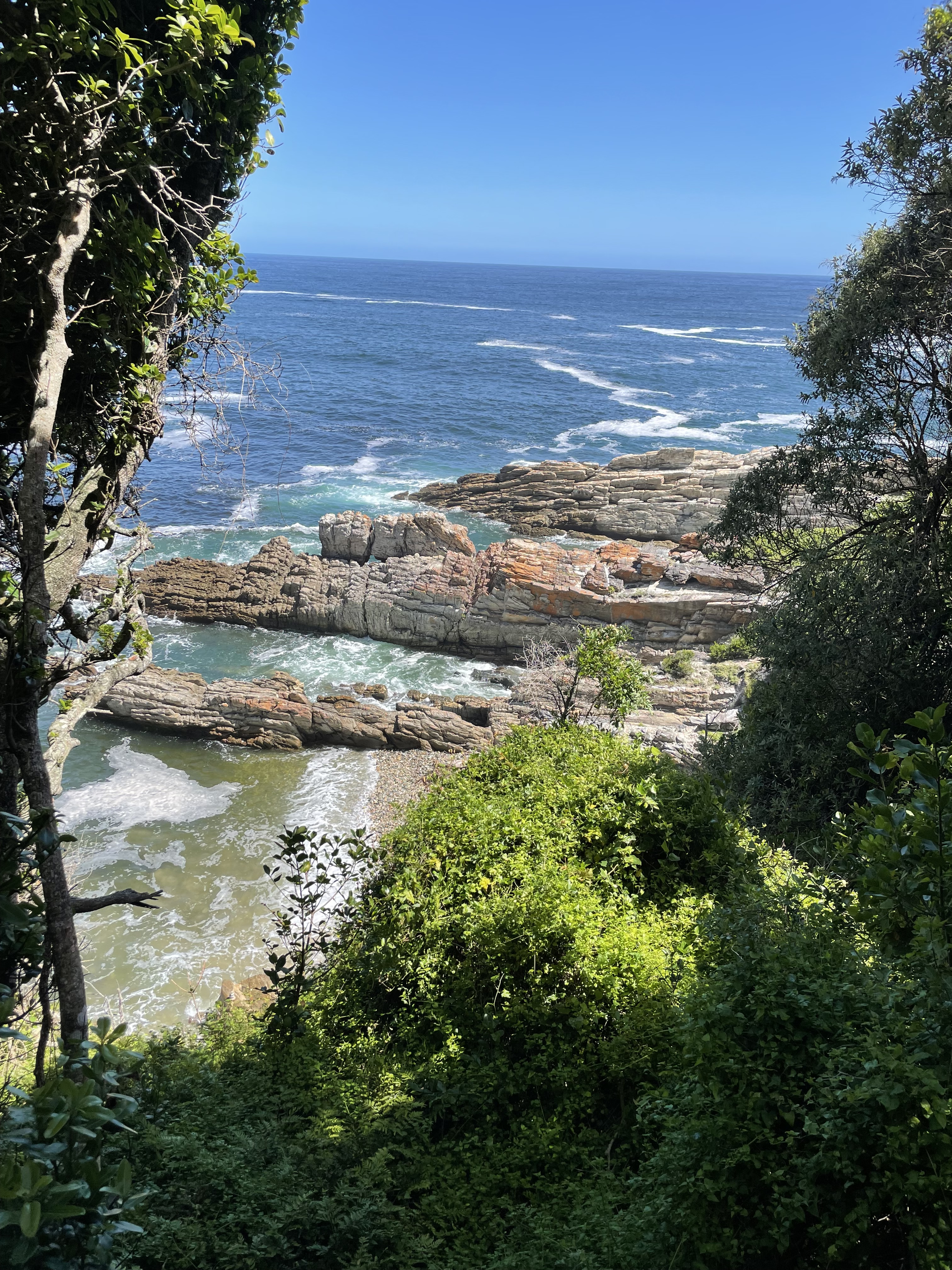
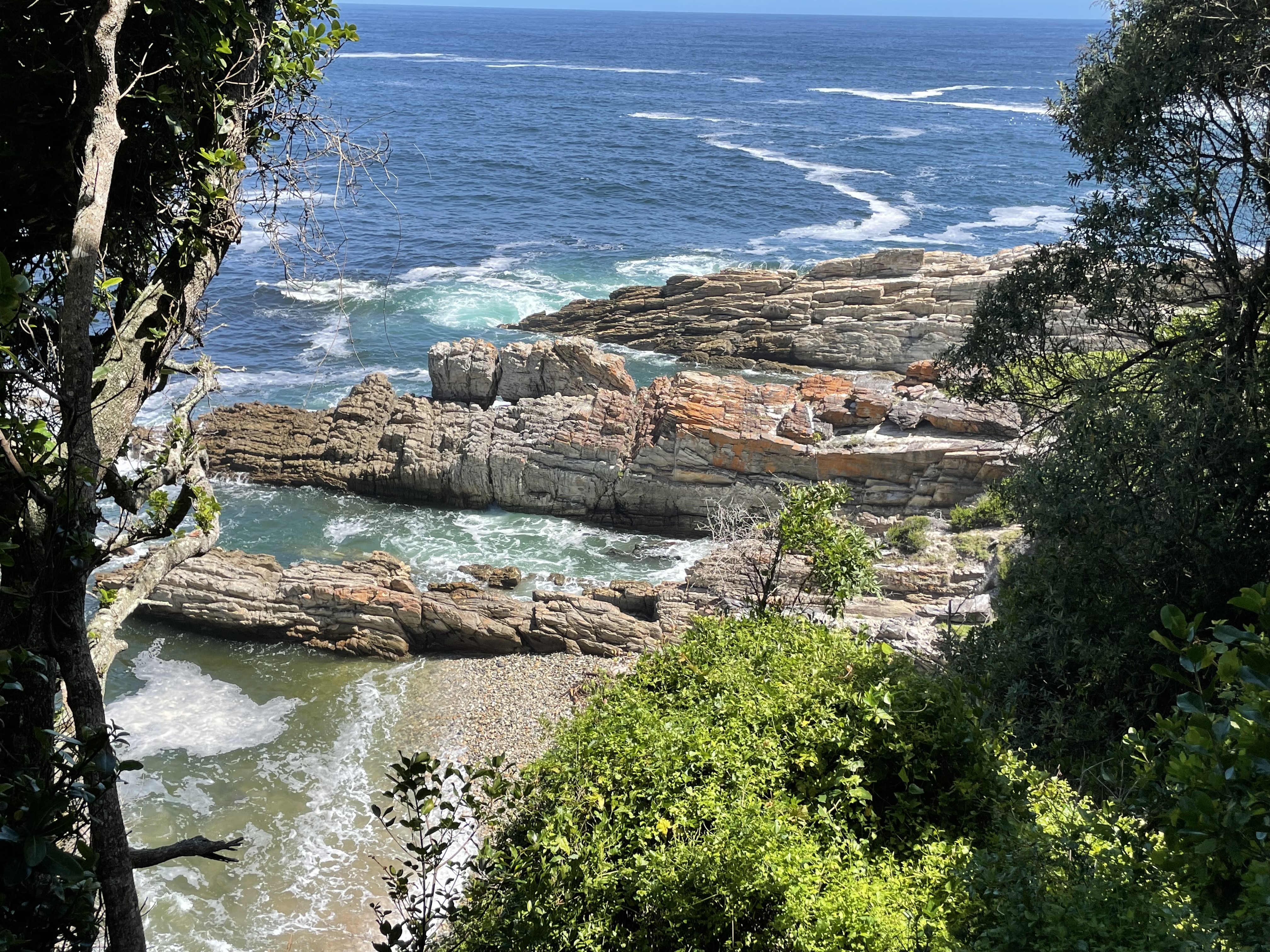
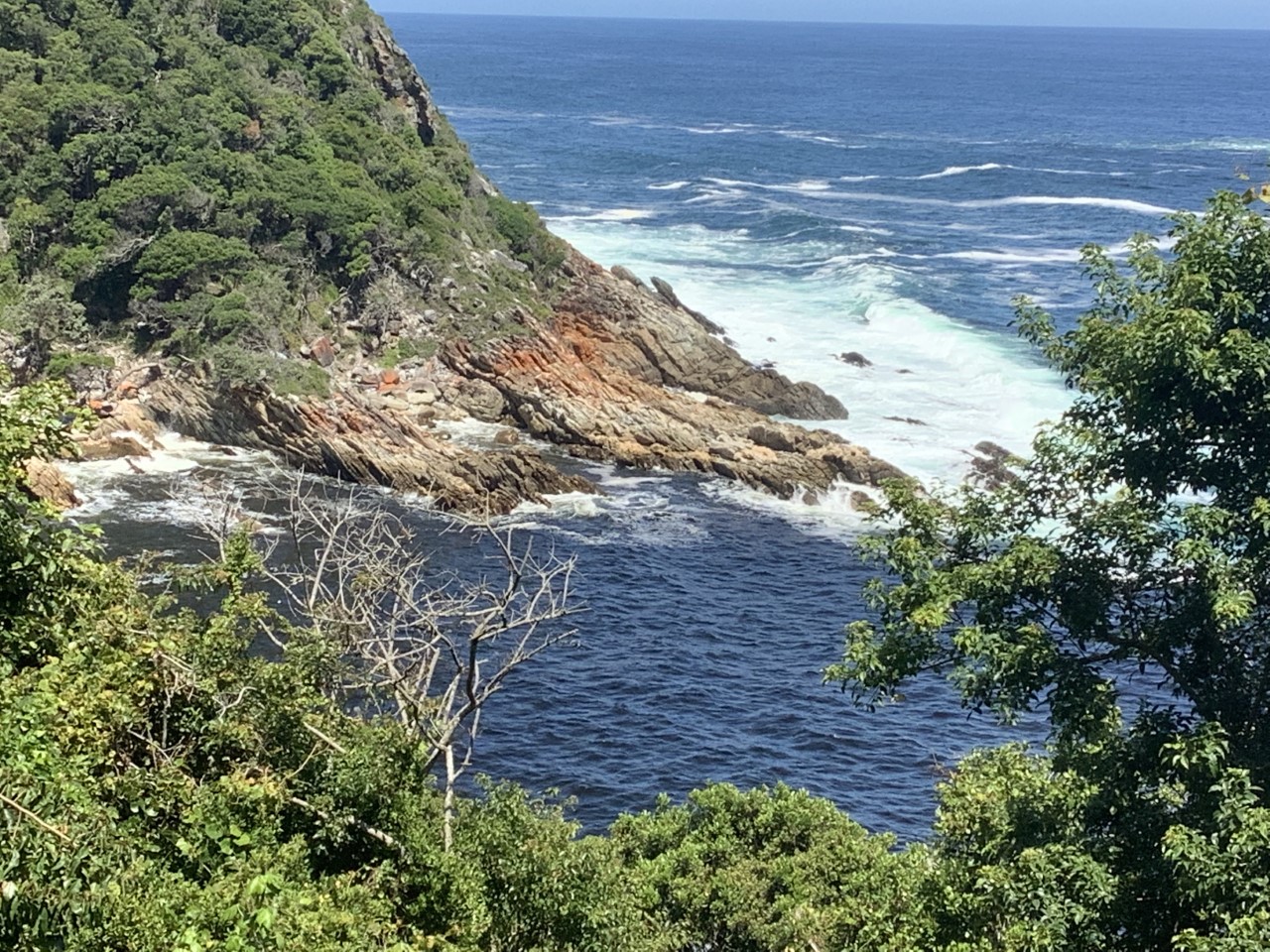
The pictures below are of the scenery on our walk to the suspension bridge across Storms River Mouth.
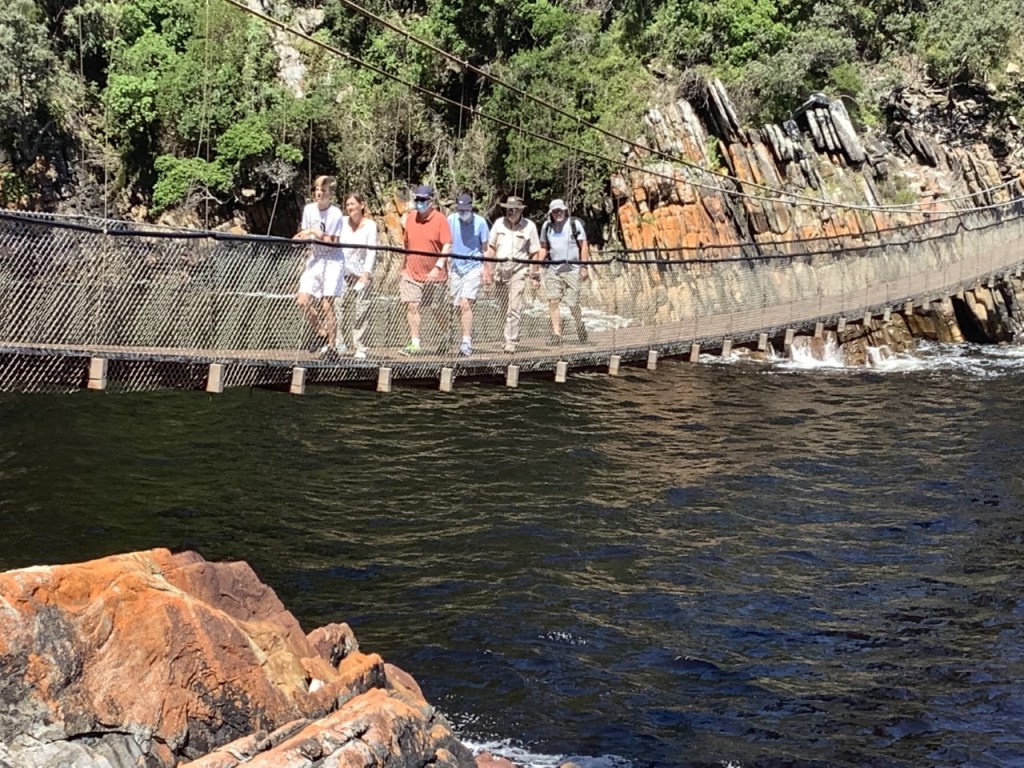
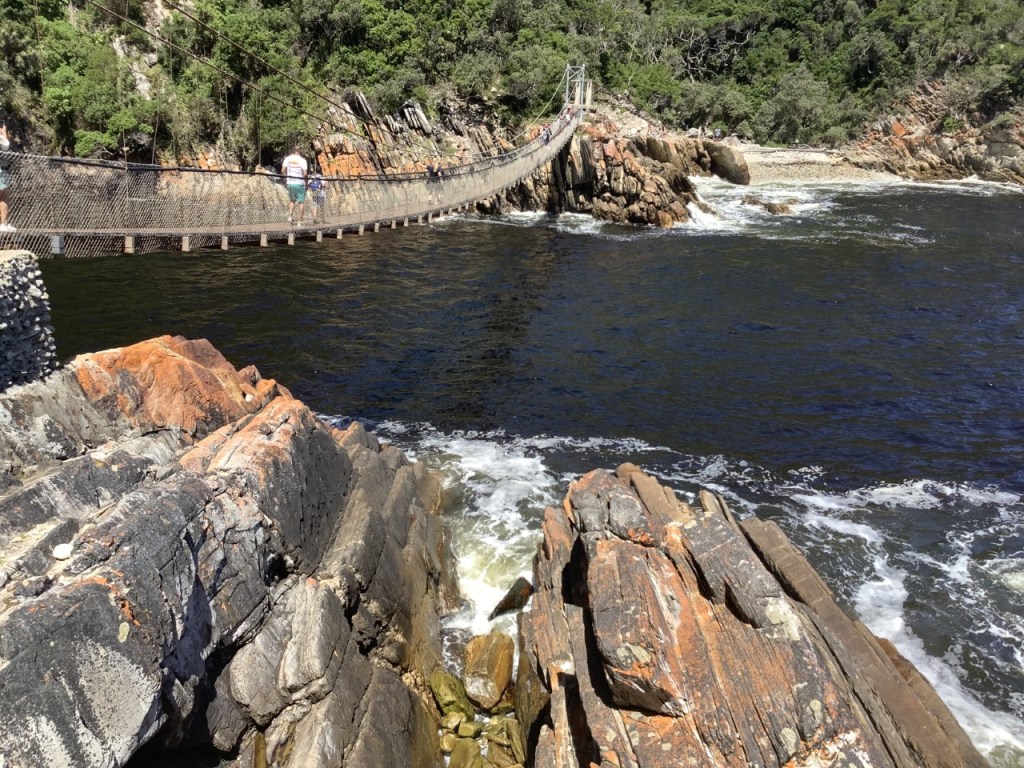
Here are a few pictures of the suspension bridge across Storms River Mouth.
You can see Terence in the orange shirt and Greg in the blue T-shirt











 roberta-writes.com