Welcome to Thursday Doors, a weekly feature allowing door lovers to come together to admire and share their favorite door photos from around the world. Feel free to join in on the fun by creating your own Thursday Doors post each week and then sharing your link in the comments below, anytime between 12:01 am Thursday morning and Saturday noon (North American eastern time).
It is quite cold in June in South Africa. Colder than most people think it gets in this country because it has been labelled Sunny South Africa. It is true that it can be hot in the day time during our winters and the sun usually shines, but the nights are very cold and we get sub-zero temperatures and frost. Our houses are not designed for cold weather so it can be quite a miserable three months for many people. I am always thankful that we have a lovely fireplace and I know how to build excellent fires. This supplements our electric heaters.
Anyhow, the cold weather this week reminded me of my family’s trip to the UK in December 2009/Jan 2010. It snowed heavily that year and the Eurostar got stuck in the tunnel. We were on the train before the one that got stuck and I am so grateful we got through okay. My boys are three and six then and it wouldn’t have been fun at all stuck on a cold train in the dark.
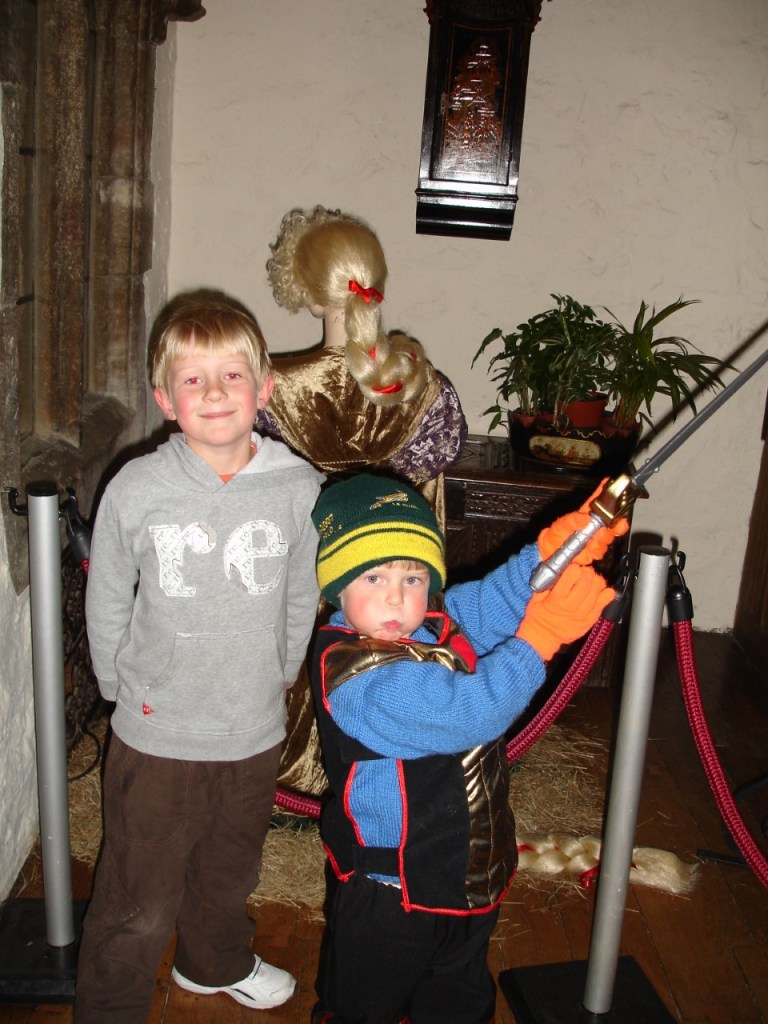
During this trip, we went to Leeds Castle. That was the day it started to snow and we had a lot of fun as it was the first time my boys ever saw snow.
This is what Historic UK has to say about Leeds Castle:
Leeds Castle in Kent, England, has been called the “loveliest castle in the world”. Listed in the Domesday Book, this castle has been a Norman stronghold, a royal residence and a royal palace. It’s situation is stunning, set on two islands in a magnificent lake.
The Royal Manor was originally built in 857AD and owned by a Saxon royal family. After the Norman Conquest, work began on building the first stone castle on the site.
In 1278 the Castle became a royal palace for Edward I and his Queen, Eleanor of Castile. Major improvements were made to the castle during the reign of Edward I. The Barbican, constructed during this time, is unique in that it is made up of three parts, each having its own entrance, drawbridge, gateway and portcullis. The medieval Keep, incorporating the Great Hall, is called the Gloriette, in honour of Queen Eleanor.
Leeds CastleFront door to Leeds CastleInterior of one of the rooms – I thought there was a door at the back but I’m not sure if it is a door or not. Interior of one of the bedrooms with a lovely blue door and blue paneling. Greg standing in the passage with the archway in the backgroundNo doors here – just two cute boys
Today, I am delighted to welcome poet, Ann Chiappetta, as part of her WordCrafter Hope for the Tarnished Book Blog Tour, with a guest post.
Here’s the tour schedule so you don’t have to miss any of the stops:
Day 1:Writing to be Read – Introduction and Review
Day 2: Patty’s World – Guest Post by Ann Chiappetta
Day 3:Writing to be Read – Interview with Ann Chiappetta
Day 4:Roberta Writes – Guest Post by Ann Chiappetta
Day 5:Zigler’s News – Guest Post by Ann Chiappetta and Review
Welcome Ann Chiappetta
Wow, this has been great. I am getting to know so many more people in the blogosphere, thanks to Kaye and the WordCrafter “Hope for the Tarnished” Book Blog Tour.
I am drawn to stories that include a great supporting character, and like it even more when that character is a dog, horse, or cat. I don’t mean anthropomorphizing them. Just allowing them to be what they are, an additional layer of meaning. Abbie’s love for and grief over the deaths of her beloved dog and cat were part of her emotional growth, and Angel healed Abbie’s heart of some of the pain, along with those little devils in Pomeranian suits. It was a less graphic way for Abbie to experience death without it being the loss of her human family.
About Hope for the Tarnished
Young Abbie struggles to cope with the traumatic experiences in her life. Ripped from everything familiar after her parents’ divorce, she is dropped into a strange neighborhood and is emotionally abandoned by her unstable mother. Abbie is caught up in the cruel nature of one sister’s addictions and often rescued by her other sister’s sense of familial responsibility and love.
The story takes place in the 1970s, revealing family secrets and the shift of cultural norms as Abbie leaves her doubts in the past, embracing a bright future.
Ann is an artist and often refers to her love of words as a natural compensation after losing her vision in 1993. Once a designer of acrylic displays and furniture, Ann trained her creative senses to flow over from the visual to the literary arts. Years later, she has become a poet and author, honing her talent in various mediums, including web content for nonprofits, regular bylines for online literary publications, poetry, anthologies and guest editing in online literary journals, just to name a few projects of which she has contributed.
The author of five independently published books, Ann possesses a Master of Science in Marriage and family therapy from Iona College and an undergraduate degree from the College of New Rochelle, both located in Westchester County, New York. A consultant and guest presenter, Ann visits schools promoting awareness and equality for people with disabilities. She is the 2015 recipient of the WDOM Spirit of Independence award and the 2019 recipient of the GDUI Leiberg-Metz award for writing.
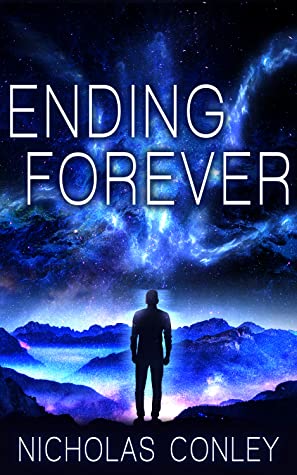
Axel Rivers can’t get his head above water. Throughout his life, he’s worn many hats — orphan, musician, veteran, husband, father—but a year ago, a horrific event he now calls The Bad Day tore down everything he’d built. Grief-stricken, unemployed, and drowning in debt, Axel needs cash, however he can find it.
Enter Kindred Eternal Solutions. Founded by the world’s six wealthiest trillionaires and billionaires, Kindred promises to create eternal life through mastering the science of human resurrection. With the technology still being developed, Kindred seeks paid volunteers to undergo tests that will kill and resurrect their body—again and again—in exchange for a check.
Axel signs up willingly, but when he undergoes the procedure—and comes back, over and over—what will he find on the other side of death?
My review
I reviewed this book in my capacity as a member of Rosie’s Book Review Team. If you would like your book reviewed, you can contact Rosie Amber here: http://rosieamber.wordpress.com/.
I read a review of this book and I was sufficiently interested to pick it up myself. I was not disappointed. This plotline is unique and interesting; a whole new take on corporate exploitation, this time in the temporary state between death and moving on into a permanent afterlife.
Axel Rivers drew a poor set of cards when his parents were killed when he was a youngster. He spent his life going from pillar to post without having a proper family or home until he met his deceased wife, Shoshana, and they had a son, creating their own small family. During his younger years, his friend and fellow orphan, Malik, is the closest relationship Alex has to family, but since the death of his wife and son, Malik’s friendship has not been enough to stop Axel from sinking into a state of chronic depression.
Axel is alone, without a job or money, and with an enormous burden of guilt due to the deaths of his family. He decides to volunteer as a test subject for a programme run by some of the wealthiest individuals in the world. A programme that requires the volunteers to die by artificial means and be resuscitated every day for a week. Axel is fearful of dying, but he wants the money and also has his own agenda so he agrees to participate on the terms stated.
It quickly becomes apparent that all is not as it should be in this twilight zone between dying and moving on to the afterlife and Axel finds himself embroiled in one of the most ambitious planned corporate takeovers ever. With the help of a new friend, Brooklyn and her young daughter, Axel finds new meaning in life and the will to overcome obstacles in his attempted path to resolve this corrupt and power-driven situation.
The story is told in the present with flashbacks to Axel’s earlier life before and after his parents died, as well as the time with his wife and child. I thought this worked well and I found it easy to follow.
A thoroughly enjoyable science fiction novel with a page turning storyline.
Welcome to Thursday Doors, a weekly feature allowing door lovers to come together to admire and share their favorite door photos from around the world. Feel free to join in on the fun by creating your own Thursday Doors post each week and then sharing your link in the comments below, anytime between 12:01 am Thursday morning and Saturday noon (North American eastern time).
The Scream is the popular name given to a composition created by Norwegian artist Edvard Munch in 1893. The agonized face in the painting has become one of the most iconic images of art, seen as symbolizing the anxiety of the human condition. Munch’s work, including The Scream, would go on to have a formative influence on the Expressionist movement.
Munch recalled that he had been out for a walk at sunset when suddenly the setting sun’s light turned the clouds “a blood red”. He sensed an “infinite scream passing through nature”. Scholars have located the spot to a fjord overlooking Oslo and have suggested other explanations for the unnaturally orange sky, ranging from the effects of a volcanic eruption to a psychological reaction by Munch to his sister’s commitment at a nearby lunatic asylum.
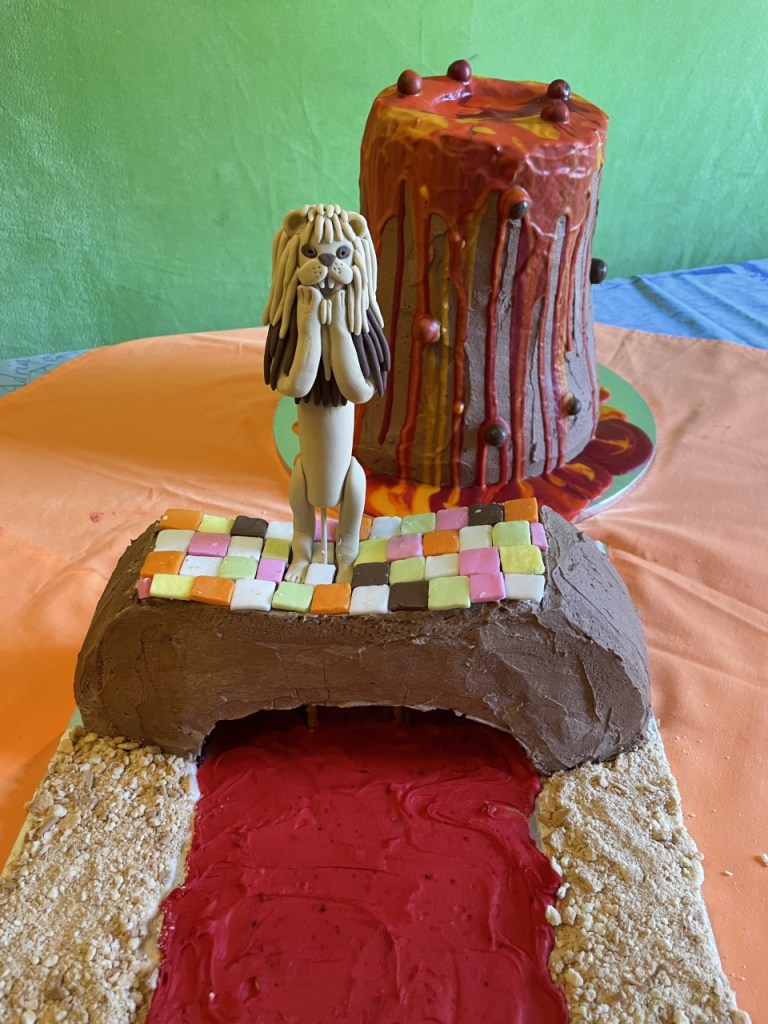
The idea of this painting and nature screaming, gave me the inspiration for Lion Scream.
I modelled the lion’s expression and paw positions as closely as possible from the original painting.
You can see the river of blood from all the murdered elephants, lions, rhinos and other creatures. Behind the lion is an erupting volcano as nature protests against global warming.
What do you think? Does this cake represent what I aimed for?
As if this is not enough creativity for one post, I must share my younger son, Michael’s, latest poem. I thought it was very vivid. It’s called Downward Spiral by Michael Cheadle:
Today, I am delighted to welcome author Teri Polen to Roberta Writes as part of her book tour for The Insurgent.
Welcome to the book tour for the exciting sequel in The Colony series, The Insurgent by Teri Polen!
About The Insurgent
If a megalomaniac threatened your family, would you give up your freedom for them? Would you give up your soul?
Asher Solomon is faced with that choice. And makes the ultimate sacrifice.
Exactly as Director Silas Reeves expected him to.
Unable to live as the Colony’s premier assassin, Ash retreats to a corner of his mind, ceding control of his body to the alter-ego he was engineered to be—Subject A36. As he’s unleashed to battle the Insurgents, the only family he ever knew, the tide of war shifts in Silas’s favor.
Combined with his expansion into new territories, the director is poised to take over the world.
But the Insurgents don’t give up easily. Not on their cause, and not on their people. With the help of a few double agents deep in the Colony, they stand a fighting chance at ending Silas’s reign.
In order to shut down the program, they face almost insurmountable odds. And their most dangerous foe—their former champion turned killing machine, A36.
My legs collapsed, and I fell to my knees. The throbbing in my head hammered against my skull. Like my brain was trying to force its way out somehow. It was agonizing, and my stomach twisted with nausea. My lungs heaved, still short of oxygen. I crawled over to what was left of the mattress and rolled onto it.
I’m here.
Clutching my head, I searched the room for the source of the voice. I still couldn’t see. Someone could have easily slipped in while I destroyed the room.
Give me control.
So close. It was so close. But where?
End your pain.
In my head. The voice echoed in my head.
It was him. A36.
Through the crushing agony I gritted my teeth and struggled to force the word through my lips.
“No.”
But I felt him clawing his way out, inch by inch from the deep abyss inside me where I’d kept him imprisoned for my own sanity and the safety of others.
You have nothing left.
I squeezed my eyes shut and shook my head. But he spoke the truth. All that held me together were the scars of everything I’d lost. Everyone I’d ever loved.
And scars could be easily ripped open.
My review
This is book two in The Colony series and it is even better than book one. Initially, I was a little cautious about reading this second book, firstly because a second book in a series can be a disappointment, and secondly, because I had fallen in love with Ash and Brynn as a couple and didn’t want any disruption of my ideas about their future together. I was most delighted with how the author handled this book and some of the difficult and complex emotional situations, and I was very satisfied with how everything came together by the end.
When faced with the potential murder of his girlfriend, Brynn, and his surrogate mother, Anna, and complete rejection by his surviving sister, Asher agrees to act as a killer for Silas Reeves, the director of The Colony. In order to undertake this murderous role, Asher retreats into a corner of his mind and allows A36, a genetically enhanced facet of his brain, to take over his body.
The Colony comprises a society of elitist people who are prepared to take genes from other people and children to enhance their own genetic defects and faults. The are also prepared to overlook the methods used to harvest these genes which result in the deaths of the ‘donors’.
The Insurgents have been successfully rescuing people and children from harvest centers but the defection of A36 to the side of The Colony, tips the scales against them. The outlook is bleak until help arrives in a few unexpected forms. The tide starts turning in the direction of the Insurgents again.
The book is written from the point of view of several characters and this technique enables the author to get into the minds of various people in different roles in this complex story and gain an understanding of their psyche and thought processes. It makes for a more compelling rendition of the story as the reader is often aware to planned events through the thoughts and conversations of one character, before other characters know about them or experience them. This keeps the tension high and the reader continuously engaged in the plot.
There is good character development with some of the characters from book one, and the careful unravelling of certain historical relationships adds a lot of intrigue to the story.
Ms Polen is a talented writer and has written two excellent novels in this series to date.
About Teri Polen
Teri Polen reads and watches horror, sci-fi, and fantasy. The Walking Dead, Harry Potter, and anything Marvel-related are likely to cause fangirl delirium. She lives in Bowling Green, KY with her husband, sons, and black cat. Her first novel, Sarah, was a horror finalist in the 2017 Next Generation Indie Book Awards. Subject A36 was voted one of the 50 Best Indie Books of 2020 at ReadFree.ly. Visit her online at www.teripolen.com
The acclaimed story of a timeless place that one day wakes up to find itself in the jaws of history:“An exuberant mixture of history and romance, written with a wit that is incandescent” (Los Angeles Times Book Review).
The place is the Greek island of Cephallonia, where gods once dabbled in the affairs of men and the local saint periodically rises from his sarcophagus to cure the mad. Then the tide of World War II rolls onto the island’s shores in the form of the conquering Italian army.
Caught in the occupation are Pelagia, a willful, beautiful young woman, and the two suitors vying for her love: Mandras, a gentle fisherman turned ruthless guerilla, and the charming, mandolin-playing Captain Corelli, a reluctant officer of the Italian garrison on the island. Rich with loyalties and betrayals, and set against a landscape where the factual blends seamlessly with the fantastic, Corelli’s Mandolin is a passionate novel as rich in ideas as it is genuinely moving.
My review
Background
The story, about Mussolini’s invasion of Greece in 1940 and the aftermath of WWII, is set primarily on the Greek Island of Cephalonia. Dr Iannis and his beautiful daughter, Pelagia, live a peaceful island existence where Dr Iannis, who gained his medical experience while working on ships and not from attending college, tends to the sick. Pelagia looks after the house, and it soon becomes evident she’s had rather an unusual upbringing for a Greek woman at that time. It is soon disclosed that Pelagia’s mother died when she was a baby, and she has been raised by her father who has educated her.
Pelagia is being wooed by Mandras, a young local fisherman, who is full of fun and has a beautiful body from swimming in the ocean with his three dolphin friends. Pelagia mistakes sexual attraction for love and becomes engaged to Mandras in August on the feast day of St. Gerasimos. She is unsure about this commitment and receives little support from her father, who thinks Mandras is too uneducated to make his daughter happy. He refuses to give the pair a dowry which makes Mandras feel inferior and angry.
Dr Iannis is an interesting character who spends a lot of time at the local kapheneia with his local friends Stamatis, the royalist, and Kololios, the communist, in between tending the sick and writing a history of Cephalonia. Dr Iannis also adopts a pine marten, an animal that is disliked by local farmers, to appease a child named Lemoni and because he is natural healer.
Mussolini plots to provoke a war with Greece by blowing up a watch tower in an attempt to frame the Greeks as hostile towards Italy. The two Italian soldiers, Carlos and Francisco, who undertake this task know about the deception of their leaders but there is nothing they can do about it. Carlos is a huge man with a secret. He is gay. He has joined the army to escape having to live a life of pretence that he is straight. Carlos falls in love with Francisco and this love sustains him when the pair march against Greece at the beginning of winter. Conditions are shocking and the Italian troops are in a terrible state of starvation and illness when Francisco goes mad and commits suicide. Carlos is completely devastated, but he returns to the army after taking sick leave and continues to fight against Greece although he does not believe in Mussolini’s cause.
Back on Cephalonia, Mandras decides to join the Greece army and fight the Italians as a way of proving his worth to Dr Iannis. While he is away, Pelagia writes to him frequently, but she never receives any letters back and gradually she becomes bitter and believes he no longer loves her. She discloses her feelings and thoughts in her letters to Mandras.
The Italians eventually invade Cephalonia and take up residence on the island. Carlos is stationed near Pelagia’s village, along with a young Italian captain named Corelli. Corelli is housed in the home of Dr Iannis and takes her bed. He proves to be a nice young man with a strong musical talent and a considerate and kind manner. Over time, he and Pelagia fall in love, a most complicated situation when Pelagia is engaged to a Greek man engaged in fighting the enemy and Captain Corelli is part of an occupying force.
Themes
War
This book is set during WWII and war is a major theme including fear, hostility, starvation, exhaustion, honour, lack of honour, and other related topics.
A few quotes that demonstrate this theme are as follows:
“Since I encountered death, met death on every mountain path, conversed with death in my sleep, wrestled with death in the snow, gambled at dice with death, I have come to the conclusion that death is not an enemy but a brother. Death is a beautiful naked man who looks like Apollo, and he is notsatisfied with those who wither away in old age. Death is a perfectionist, he likes the young and beautiful, he wants to stroke our hair and caress the sinew that binds our muscle to the bone. He does all he can to meet us, our faces gladden his heart, and he stands in our path to challenge us because he likes a clean fair fight, and after the fight he likes to befriend us, clap us on the shoulder, and make us laugh at all the pettiness and folly of the living. At the conclusion of a battle he wanders amongst the dead, raising them up, placing laurels upon the brows of those most comely, and he gathers them together as his own children and takes them away to drink wine that tastes of honey and gives them the sense of proportion that they never had in life.”
“In those days Great Britain was less wealthy than it is now, but it was also less complacent, and considerably less useless. It had a sense of humanitarian responsibility and a myth of its own importance that was quixotically true and universally accepted merely because it believed in it, and said so in a voice loud enough for foreigners to understand. It had not yet acquired the schoolboy habit of waiting for months for permission from Washington before it clambered out of its post-imperial bed, put on its boots, made a sugary cup of tea, and ventured through the door.”
“What’s the news of the war?’ The doctor twisted the ends of his moustache and said, ‘Germany is taking everything, the Italians are playing the fool, the French have run away, the Belgians have been overrun whilst they were looking the other way, the Poles have been charging tanks with cavalry, the Americans have been playing baseball, the British have been drinking tea and adjusting their monocles, the Russians have been sitting on their hands except when voting unanimously to do whatever they are told. Thank God we are out of it. Why don’t we turn on the radio?”
Love
Three different aspects of love are addressed in Captain Corelli’s Mandolin: romantic love, family love, and love towards friends. The following quotes are indicative of these themes:
“Families embraced more than had been the habit; fathers who expected to be beaten to death stroked the hair of pretty daughters who expected to be raped.”
“Love is a temporary madness. It erupts like an earthquake and then subsides. And when it subsides you have to make a decision. You have to work out whether your roots have become so entwined together that it is inconceivable that you should ever part. Because this is what love is. Love is not breathlessness, it is not excitement, it is not the promulgation of promises of eternal passion. That is just being “in love” which any of us can convince ourselves we are. Love itself is what is left over when being in love has burned away, and this is both an art and a fortunate accident. Your mother and I had it, we had roots that grew towards each other underground, and when all the pretty blossom had fallen from our branches we found that we were one tree and not two.”
“[She] knew that it was not precisely a body that one loved. One loved the man who shone out through the eyes and used its mouth to smile and speak.”
“Men are sometimes driven by things that to a women make no sense, but she did know that Corelli had to be with his boys. Honour and common sense; in the light of the other, both of them are ridiculous.”
Conclusion
I really enjoyed this book. The style of writing from numerous points of view, allowed the author to share a far greater wealth of knowledge, perspective, and emotion. I did love this aspect, but it did take me a while to get into this style and mentally make the jumps from character to character. I am also of the view that a reasonable knowledge of the history of WWII is required for a reader to appreciate the sections written from either Mussolini’s or Metaxas’s points of view. Fortunately, I did know enough about the Italian and Greek politics of the time to work it out fairly quickly.
I am not a big reader of romance, but there was more than enough war and action in this novel to keep me interested and entertained. There are some very amusing paragraphs and conversations, and I found myself laughing aloud at times while reading, especially some of the descriptions about Greek men and their relationships with their wives and families. I also found myself crying at points due to the absolute brutality and inhuman behaviour described in some scenes. These are very emotional and compelling, but this book is not for the faint of heart.
This was a 5-star plus read for me and I think I will be reading it again in the future.
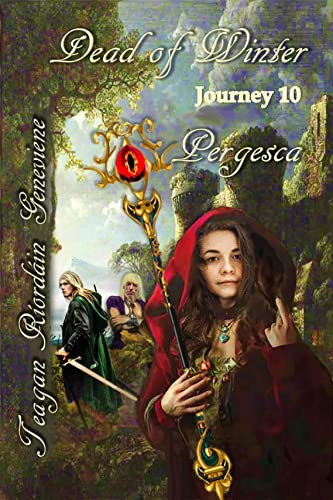
I am really enjoying Dead of Winter, a fascinating novel by Teagan Riordain Geneviene, told as a series of journeys. Thirteen journeys are currently available with the final one due for publication soon.
“Dead of Winter: Journey 10, Pergesca” resumes outside the Lost Library, where Hallgeir was faced with a decision that could impact the entire world.
Lucetius is gravely wounded when he attempts to deliver a message. Emlyn, Zasha, and Osabide are again separated from all their friends. The Three must continue their journey without assistance or protection from the other travelers. They must reach the faraway city of Pergesca. That is also the seat of power of the ancient Society of Deae Matres. Will the companions eventually be reunited?
A vicious enemy returns, displaying unexpected strength.
An important character dies in this novelette. The death of a character is a rare thing in stories written by Teagan Ríordáin Geneviene.
My review
This journey is full of surprises and moves the story along at a terrific pace. Siblings, Hallr and Haldis both show different sides to their characters, leading to unexpected changes to the storyline. This particular part of the story was intriguing and well handled by the author, leaving the reader gasping in astonishment and unsure whether to feel relieved or suspicious.
Emlyn’s powers continue to develop and she is getting a better handle on controlling them but interventions still happen. A most unexpected set of circumstances brings Emlyn, Sasha, and Osabide directly into the path of confrontation with a terrible enemy. Another intervention, brings unexpected relief and leaves the reader feeling pleased and encouraged.
The trio travel to Pergesca, Zasha’s city and the head quarters of the Deas Matras. Zasha introduces her companions to a new and fascinating character, HaDritak Baki, who is the proprietress of an inn with enjoyable name of the Golden Book. The name of the inn is a bit of a play on the character of Mistress Baki who is an enterprising and educated woman.
Luce’s role in the story becomes more apparent as well as his involvement with his mother and Emlyn.
This is one of the most descriptive and vivid journeys I have read in this series to date and I am looking forward to Journey 11.
Meet a new character in this Journey of Dead of Winter. She is a Deae Matres whose encounter with Gethin Gwilym has an unexpected result. Next in Pergesca, we get better acquainted with a noblewoman or “HaDritak,” who is an old friend of Zasha. She has a few tricks up her sleeves.
Emlyn sees and experiences places, customs, and foods that are foreign to her. One of her gifts is growing.
As the conclusion of Emlyn’s “Journeys” draws near, we see that our heroes are underdogs. They are out-manned, “out-spirited,” and under-powered — physically, magically, and politically. With no other recourse, they make use of deception and manipulation. Although, how can that possibly be enough?
My review
Journey 11 starts off in the Lost Library and we find out what has happened to Gethin, Hallgier, and Tajin. It is a relief to know that Blossom and the other horses are safe and protected. We also discover that a small number of the Deae Matres are men. This interesting detail comes up a few times over the course of this journey, and some other surprising characteristics of the society are unveiled. It seems that the Deae Matres, despite their education and lofty societal and individual goals, is not immune from politics which slows the wheels and results in a cumbersome internal infrastructure.
A most interesting ancestor of Gethin comes to the fore and through this link, he obtains a most unusual weapon. I wonder when it will be used in the series?
Back in Pergesca, Zasha, Osabide, and Emlyn continue to plan their strategy and Emlyn receives a most beautiful white silk gown which makes her look just like her ancestor, Eriu.
Despite a less than satisfactory meeting with the Council of the Deae Matres, the trio find support and help in a most unexpected place. Luce brings news of a threat from the direction of the Sumelazon Escarpment, while Emlyn discovers that her powers are considerably stronger than she thought.
An exciting new chapter in this excellent fantasy tale.
My big take away from writing this particular post is that if you are to focused on a particular life plan, you can miss out on opportunities that you don’t appreciate for what they are due to being single minded. Sally is a person who has grabbed opportunities and her life has been a great adventure of ups and downs. It provides for very interesting reading and my favourite of Sally’s wonderful books is Just an Odd Job Girl which depicts a woman who was adventurous and had a lot of great jobs prior to marrying and having a family. After her husband divorces her, she rediscovers the job of living.
My review of Just an Odd Job Girl
Imogen has been rejected by her husband of 20 years. She discovers that he has been having an affair, that the woman has become pregnant and that he wants a divorce all in one go. It is devastating to Imogen who has devoted her life to building her home, raising her children and being a good wife and mother. Somehow, along the way, Imogen seems to have lost all her vitality and spunk and changed into another, less vivid, version of herself. Although she knows this, Imogen struggles to overcome her depression and feelings of inadequacy until she makes a impulsive decision to go for an interview with a placement agency for older women and find herself a job.
The man who interviews Imogen is interested in her and her past jobs and life. He spends time talking to her and draws her out of the shell she has crawled into. As Imogen starts to remember her previous challenges and triumphs in her jobs as a younger person, her resilient character and determination start to resurface. Imogen embarks on a wonderful make-over and shares her numerous entertaining jobs with the reader. They range from a young girl selling trinkets on the beach, to the resourceful manageress of a steakhouse and lastly, to the manageress of a hotel in Cornwall [which I have not been to but which sounded quite rural and remote to me and the thought of arriving on my own at such a place, by train and late in the evening, gave me the shivers], with many other interesting experiences in between. Things in Imogen’s varied roles don’t always go smoothly and her mishaps and slightly reckless decisions will have you howling with laughter.
I really enjoyed this book and reading all about the various odd jobs Imogen had in her youth. The ending is very satisfying and leaves you with a very happy and uplifted feeling.
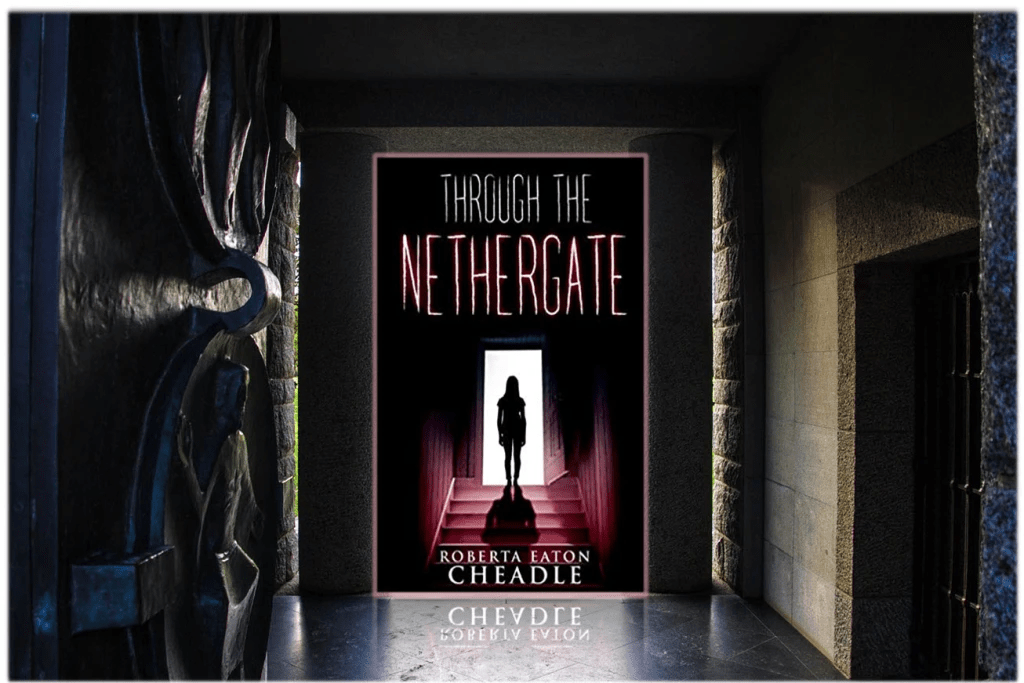
I have enjoyed reading the poems and stories contributed for Dan’s Thursday Doors Writing Challenge. It occurred to me during the course of this week, that there are a lot of passages in my book, Through the Nethergate, that lend themselves to certain pictures. I decided to share some of these passages with a door I think is a good fit. This is just a bit of fun for me as I didn’t write these pieces specifically for the challenge, obviously. I have spent the last two weeks working on a short story about the Battle of Isandlwana that was the inaugural battle of the Anglo-Zulu war of 1879.
They entered the hall together, just in time to see the elevator doors hiss shut behind the last of Hugh Bigod’s henchmen. Henry could see that the button for the penthouse was lit up.
Henry guided Lizzie towards a door with a picture of a flight of stairs above it. He opened the door and a wave of hot air hit them. The narrow stairwell was like an oven. It was also unlit. “I’ll go first,” said Henry, “you follow right behind me, Lizzie. Stay close.”
The door swung shut behind them as they started up the steep stairs. The light was instantly cut off and they moved in complete darkness. Terrible sounds filled the blackness, sobbing and howling, as the pair forged their way upwards.
They climbed and climbed, passing doors opening onto different levels. Henry opened one and they peered into another vast hall. It looked exactly the same as the one on the bottom floor, except for a half a dozen glass-walled meeting rooms.
A group of people were seated in the closest room. A man who Henry recognised as Josef Mangele, nicknamed the Angel of Death, was writing on a whiteboard.
Henry had been fascinated by World War Two and had listened to numerous conversations among visitors to the Inn about this topic during and after the actual event. During the war, he had also avidly read any newspapers he could get his hands on about how it was progressing for Britain. The Nuremberg Trials, held for the purpose of bringing Nazi war criminals to justice after the war ended, had provided him with a lot of information about the ex-Nazi souls he could see in the glass-walled room.
Josef Mangele was a physician at the German concentration camp, Auschwitz, during World War Two. A wicked man who was part of the team of doctors responsible for deciding which arriving inmates would be sent to the gas chambers. He also performed deadly experiments on prisoners. In the room with Josef Mangele was another well-known Nazi, Reinhard Heydrich.
Reinhard Heydrich was responsible for the Holocaust involving the deportation and genocide of millions of Jewish people in German-occupied Europe during the war. It was not a surprise to find him here.
Henry shuddered. The number of ghosts in Europe had increased during World War Two. A violent and early death often led people to turn away from the White Light at the time of their deaths and end up trapped in the Overworld. Once a dying person made their initial decision to turn away from the White Light it was very difficult to escape the Overworld. These souls, like his own, ended up trapped in this no-man’s land, unable to be allocated to either Heaven or the Underworld and tied to a specific site for all of eternity. There was only one way to escape the Overworld and that was for a ghost to perform a service of such significance to either God or Lucifer that the guardians of the Overworld could motivate a reallocation of the ghost to either the White Light or to the Underworld.
It was summer and the garden of the cottage was green and lush. Her parents were looking for a new house for their family. Margaret was an active child and a garden would be lovely for her to run about and play in.
But Margaret refused to go inside the cottage. No amount of coaxing and begging by either parent made any difference; she would not set foot in that house.
“This is the fourth house we’ve looked at today and Margaret must be tired and bored. Look, the garden is fenced and quite safe and there’s no pond, pool or other running water. Let’s leave her outside for the short period of time it’ll take for us to have a quick look around the cottage,” her father said.
Left to her own devices, Margaret wandered across the manicured lawn towards a flower bed in the furthest corner of the garden. The dense, thick green foliage overflowing the flowerbed attracted her. The red berries on the largest bush and white, mauve and dark purple flowers of the Yesterday, Today and Tomorrow bush interested her. She saw the other little girl just to the side of the red-berries bush. She was pretty with carefully combed blonde ringlets hanging down her back, held in place with a pale pink ribbon. She wore a knee-length dress with a lace collar, white socks and polished ankle boots. A white cotton apron that went over her shoulders, covered her dress and she had a bonnet on her head.
“Hello,” said Margaret.
The other girl smiled, showing perfect, pearly teeth and greeted Margaret in return.
“I’m Helen,” the pretty girl said. “I am pleased to meet you. I have been terribly lonely here in the garden by myself. I haven’t had any company since 1918.”
“Why not?” asked Margaret.
A troubled look crossed Helen’s face.
“That is when I died of the new Spanish influenza,” Helen said. “My mom died too, but she didn’t stay in the garden.”
“What is influenza?” Margaret asked, the conversation puzzled her.
“It is a terrible illness. Mom and I woke up in the morning feeling fine. We got sick with headaches, fever and fatigue very quickly and I was dead by tea time. I went blue.” Helen seemed proud of her accelerated and unusual death.
Helen and Margaret walked around the garden. Helen pointed out her favourite flowers to Margaret.
A short while later, Margaret’s parents emerged from the cottage. Margaret rushed over to them, planning to introduce them to her friend. When she turned back, Helen was gone. Despite Margaret’s calls, she did not reappear.
A few days later, Margaret started singing a most strange rhyme: I had a little bird, Its name was Enza, I opened the window, And in-flu-enza.
Margaret’s mother questioned her about the song and Margaret explained that Helen had taught her the words; they had sung it together as they wandered around the garden of the “looked at” cottage.
Margaret understood that her mother was upset about her friend, Helen. Her parents didn’t buy that cottage; they looked for another house on the other side of the town. Her mother asked her not to sing the rhyme again and the subject was closed.
I accidently reblogged this post on my other blog, Robbie’s Inspiration. It is supposed to be under my Roberta Writes adult writing banner so I am posting it here too. There are some interesting videos featuring traditional Zulu music and dancing and my rendition of a traditional Zulu story. Apologies to readers who follow me on both blogs.
This month, I will be sharing information about Zulu beadwork and the messages contained therein as well as a traditional story.
Zulu beadwork
The Zulu people of South Africa have a rich tradition of beadwork. Originally, bone, small horns, shells and small pieces of polished wood and stone were pierced to make beads that were strung together as necklaces and belts.
When the Zulus started trading with the Europeans at the end of the 18th century, glass and ceramic beads were introduced into their beadwork.
Traditionally, both men and women wore beaded belts called umutsha to which a piece of cloth was attached to cover the pubic area. The belts have conical brass buttons that fasten the belt at both ends.
The colours and designs incorporated into Zulu beadwork hold specific meanings. Red beads, for example, signifies intense and jealous passion or eyes that are red from watching for a loved one to return. Yellow signifies contentment, pink or green for poverty or coolness, white for faithfulness and purity and black to indicate a desire to be married.





















 roberta-writes.com