#Bookreviews #Shortstories – No Pedigree, A Perilous Thirst and The Shirt

Book reviews

March is short story month. These are three that I have read to date.

No Pedigree by Nonnie Jules

My review

It is an irony that I read this book the week after I finished reading The Great Gatsby by F. Scott Fitzgerald with its two central themes of the wealthy in American not being accountable for their actions and how the America dream of equality for all and an ability for people who have ability and who work hard to attain social status regardless of their backgrounds.

This short story, No Pedigree, explores these same two themes but in a modern setting rather than Fizgerald’s setting of the 1920’s. I could help thinking, as I read this book, how tragic it is that 100 years later these same themes of prejudice, abuse and unfairness are still prevalent in some parts our society.

Baylee Pierre is a young girl of extraordinary beauty and sound intellectual ability who ends up attending a high school in a wealthy area populated by privileged youngsters and their families. Baylee is different from her peer group in that she is the child of a black native American mother and a white father and also, her mother is the housekeeper of a one of the wealthy residents of the school’s feeder area who allows Baylee’s mother to use her home address to register her daughter at the local school. Baylee’s mother thinks she is doing the best for her daughter by giving her this educational opportunity, but her spoiled rich school school associates don’t give her an opportunity to become part of their world and Baylee is ostracised in the most cruel way right from the start.

There is one girl, Carson Beckett, who is different and who becomes best friends with Baylee. Carson puts herself out on a limb to support Baylee against the majority. I enjoyed this touch in the book because it made it even more real and possible, as there is good out there and it was nice to have the bit of positiveness which gives the story some good balance.

Baylee is subjected to the most horrific treatment any person could suffer and due to her mother’s limited finances, she is not initially able to seek the justice the situation clearly warrants.

To bring my thoughts back around to my initial comments about The Great Gatsby, this book ends on a positive note with a clear indication, through the change in Baylee’s circumstances depicted in the book, that there has been some progress and movement towards the American dream being more attainable for all. There are good people out there who aren’t filled with prejudice and who embrace difference and enable progression for all.

An excellent read.

Purchase link:

A Perilous Thirst by Rhani D’Chai

My review

This unusual short story is about a vampire who is struggling to find food due to his preference for the blood of good looking males. This tale is set at the beginning of the HIV/Aids epidemic and envisages that vampires are affected by the virus in an even more potent and unpleasant way.

The writing is very vivid and gripping, for example, the first sentence is “Acute hunger – that white-hot blaze which starts as a small cinder and then, over time, becomes a raging forest fire of agony – is especially horrific for one of the undead.” I thought this was brilliant as it set the stage in those few words and I knew the story was about a starving vampire. The question was, why is he starving? By the end of the first page, that particular question is answered and the reader knows that the vampire is scared of the promiscuous behaviour of many young gay men at that time and also that they don’t tell each other about their indiscretions. This puts the vampire at risk of contracting HIV/Aids in the same way as for any other person. Unlike people, however, using a condom can’t help the vampire as he must ingest blood in order to live.

How does the vampire solve his problem? You will have to read this fascinating story to find out.

I enjoyed the way in which this story was told, in the style of a conversation. I thought this fitted the era and the personality of the vampire.

This story is not a horror story and does not provide any graphic details about death, rather it is an intriguing peep into the psyche of someone who is faced with the possibility of contracting a life threatening disease through fulfilling his natural and essential needs. A terrible conundrum for anyone.

Purchase link:

The Shirt by Richard Dee

My review

Do you purchase second hand clothes? Have you ever wondered who owned them before you? I must be honest that I don’t buy second hand clothes or shoes but I do buy lots of second hand books. This story could apply to any pre-owned article and work equally well.

The story is told in the first person from the point of view of a married man who finds a shirt has has admired elsewhere in a local charity shop. The shirt, a long-sleeved blue and white checked one with no collar, is missing a button, but his wife assures him she will mend it for him and encourages him to buy the shirt.

When he wears the shirt for the first time, it gives him a strange feeling of wanting to stay on him and the next time he seems a similar shirt it is being worn by a local man who has gone missing. That night he has a bad dream which feels like a vision or a memory. This dream, together with some other co-incidents relating to the shirt, are the beginning of a journey of discovery as to who the shirt belonged to previously and what happened to that person? Could it have been the missing man? To find out you’ll have to read the book.

This is an interesting and face paced short story which keeps the reader entertained from start to finish.
Purchase link:

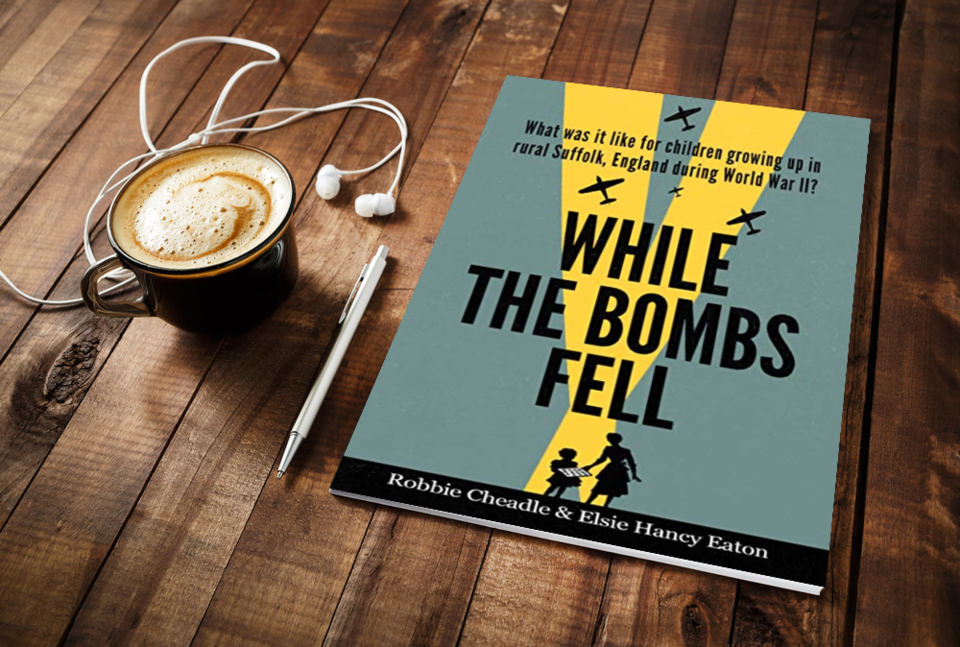
Welcome to Day 6 of the “WHILE THE BOMBS FELL” Blog Tour! @bakeandwrite @4WillsPub #RRBC

Award winning writer of fantasy and children’s stories, Wendy Scott, hosted me for Day 6 of my While the Bombs Fell book tour. She has a lovely site and a wonderful selection of books. This post is about the difference between life in a small English town during WWII and life now.

29853-142

While the Bombs Fell ​

Life in a small English town during WWII compared to 2020
While the Bombs Fell focuses on my mother’s life during WWII from 1941, the year she turned three, until 1945, the year she turned seven.
Life for a small girl growing up in the small English town of Bungay during WWII was markedly different from life today. For the purposes of this article, I have focused on the home, food and school to highlight the many differences.

Home
My mother was born in a small, double storied cottage, in a row of similar cottages on Nethergate Street in Bungay, Suffolk. She was the sixth’s child of Alfred and Hilda Hancy and had a baby brother. Her parents had lived in Bungay all their lives, as had their parents.
There was no television and the children occasionally went to the cinema for entertainment. The show always ended with everyone standing to sing the national anthem as a show of patriotism for Britain. Her father had a wireless, but he only used it to listen to the news in order to save electricity for the war effort.
The family did not have an indoor toilet and had to go outside to an “outhouse”. They did have a flushing toilet, but a lot of other families used a bucket system. The children used a chamber pot that was kept under the bed, if they needed the toilet during the night. The boys all slept in one bedroom and the girls in another. Her parents had their own bedroom with a cot for the baby.
There was no central heating. Everyday, her mother lit a coal fire to warm the main living area. Coal was rationed and had to be eked out in order to light the copper for the washing once a week and the oven on a Sunday to cook the tiny roast.

Food
Food was rationed and sugar, butter, flour, meat and many other foodstuffs were in short supply. My mother’s family was better off than many because her father was a dairy farmer, so they had plenty of milk. Eggs were in short supply and smelled like the fish meal the chickens were fed. My mother’s father shot rabbits and other game that strayed onto the farm, to supplement their food supply.
The children often had bread, milk and a sprinkling of sugar for their evening meal and they were often hungry.
Every member of the family had their own ration book which contained coupons. When their mother went shopping for food or other rationed items, including clothes, the shopkeepers would cut out or sign the coupons. Many people grew vegetables in their gardens as part of Britain’s “Dig for Victory” campaign. Carrots and potatoes were used as a replacement from any other rationed products including sugar and flour. The British government distributed pamphlets containing recipes for “war-time” recipes to help people prepare healthy meals using the available ingredients.
There were no supermarkets and various shopkeepers supplied specialised products, such as the town baker, butcher and fishmonger.

Open Book Blog Hop – 16 March Book covers

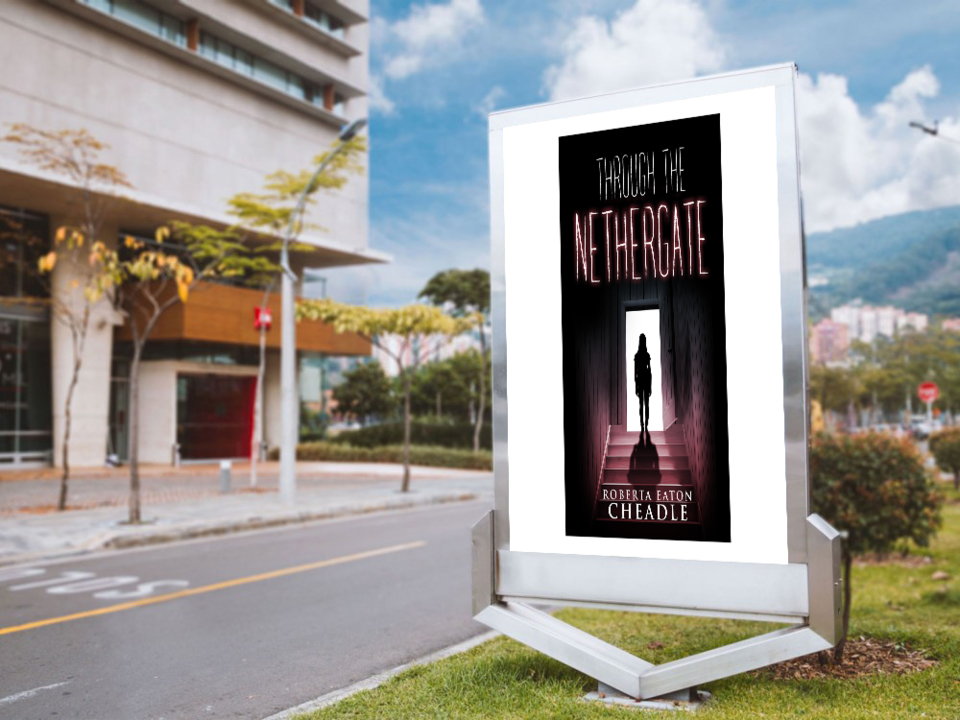
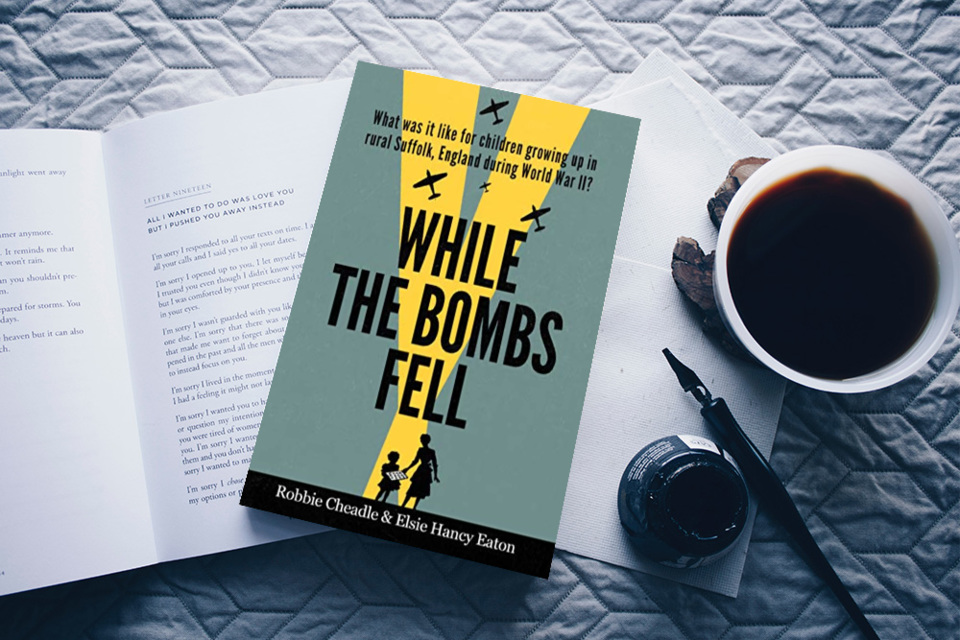
This week, the Open Book Blog Hop bloggers are interviewing their book cover designers. I am not able to interview Tim Barber from Dissect Designs in the time frame required for this post, but I am able to tell you that he designed my covers for both While the Bombs Fell and Through the Nethergate.

I had ideas in my mind for both covers and Tim did a fantastic job of plucking my thoughts out of my head and turning them into the perfect book cover. Pretty amazing in my opinion.

WTBF

34923-191

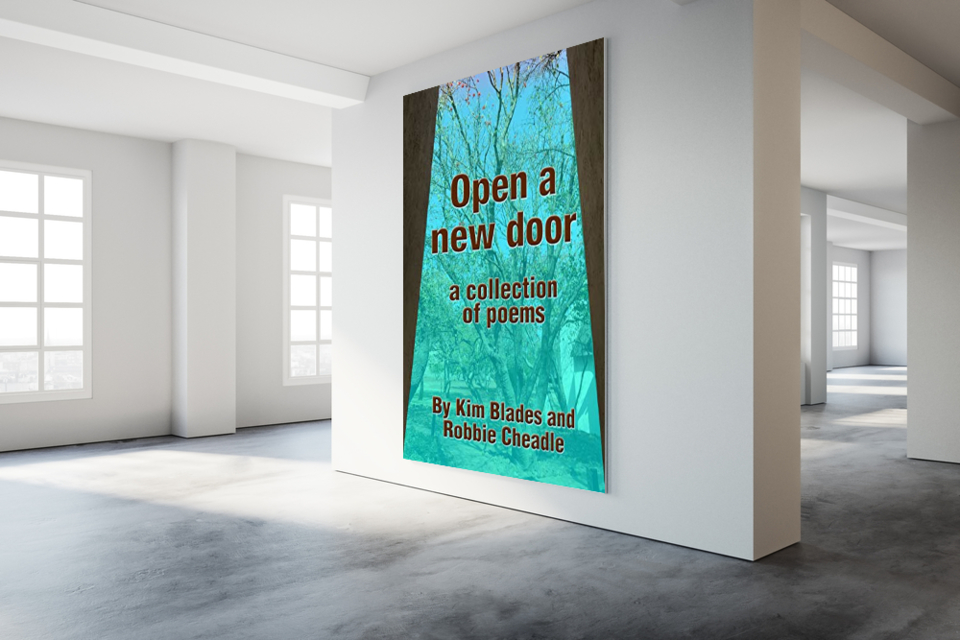
The cover for Open a new door, the poetry book I co-wrote with poet, Kim Blades, was designed by David Cronin from Moyhill Publishing. I think he did a splendid job of working with my idea and creating an appropriate cover for this book.

OAND 7

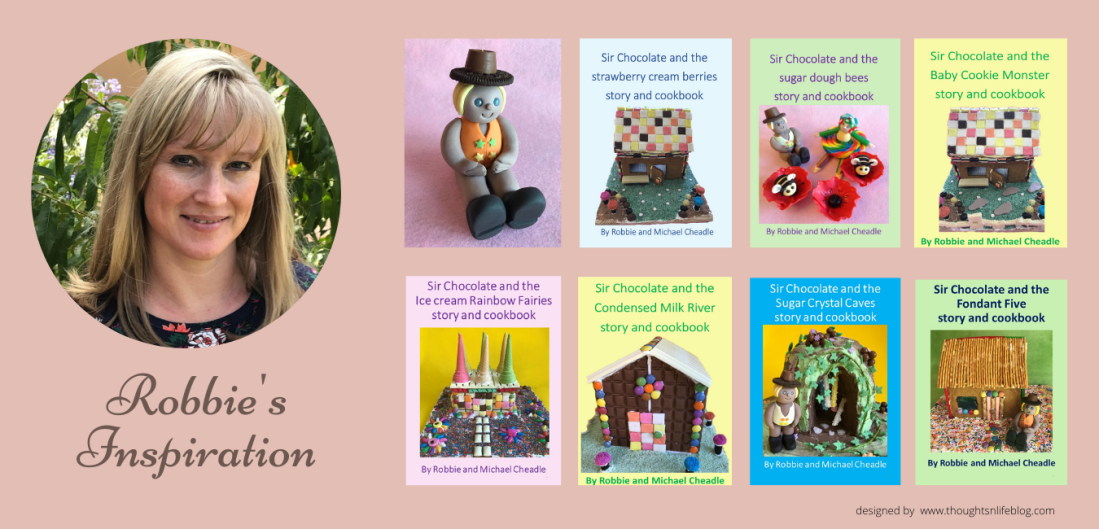
The covers for my children’s books I design myself. They are simple and feature one of my own cake and fondant people designs. This is my new banner featuring all my Sir Chocolate book covers designed by Bella from Thoughtsnlife blog:

Robbie's inspiration website banner

Bella also designed my new banner for this blog, Roberta Writes:


_Roberta Writes - independent pub 2 theme.

To read the interviews by other participating bloggers about their cover designers, you can click here:

You are invited to the Inlinkz link party!

Click here to enter

If you wish to join in, here are the rules:

  1. Link your blog to this hop.
  2. Notify your following that you are participating in this blog hop.
  3. Promise to visit/leave a comment on all participants’ blogs.
  4. Tweet/or share each person’s blog post. Use #OpenBook when tweeting.
  5. Put a banner on your blog that you are participating.

Day 4 of the “WHILE THE BOMBS FELL” Blog Tour w/author @bakeandwrite #RRBC @4WillsPub

I am over at Watch Nonnie Write’s blog with day 4 of my While the Bombs Fell blog tour. This post is about the myth that carrots help you see in the dark which started during WW2 in Britain. Thank you, Nonnie, for hosting me with this post.

Today I’d like to introduce you to one of my fellow member-authors of the RAVE REVIEWS BOOK CLUB, Roberta Eaton Cheadle, also known as Robbie.  Robbie has dropped in today to talk to us about the myths about eating carrots so let’s listen in.

Take it away, Robbie…

Carrots help you see in the dark

While the bombs fell is a collaboration between my mother, Elsie Hancy Eaton, and me and tells a fictionalized account of her life as a small girl growing up in the small English town of Bungay, Suffolk during World War II.

I can remember when I was a young girl, growing up with my three younger sisters in Cape Town, South Africa, being frequently told by our mother that eating carrots make you see in the dark. I always believed that this was true and that if I ate my carrots, it would help improve my eyesight especially at nighttime.

When I was doing research for While the Bombs Fell I came across an article about a World War II propaganda campaign which popularized the myth that carrots help you see in the dark.

During the 1940 Blitz, a German bombing campaign against the United Kingdom, the German bomber planes often attacked under cover of darkness. Country wide “blackouts” were enforced by the British government to make it more difficult for the attacking planes to hit their targets. The Royal Air Force (RAF) was also able to repel the German fighter planes by using their new and secret radar technology. The on-board Airborne Interception Radar (AI), which was first used by the RAF in 1939, had the ability to pinpoint German bombers before they reached the English Channel.

One RAF night fighter ace, John Cunningham, nicknamed “Cat’s Eyes” was the first English pilot to shoot down an enemy plane using AI. He racked up an impressive 20 kills of which 19 were at night. In order to keep the AI technology under wraps, the Ministry of Information apparently told newspapers that the reason for pilots like John Cunningham’s success was that they ate an excess of carrots which gave them better night vision.

Whether or not the Germans believed this tall tale is unknown, but the British public, including my mother, believed that eating carrots would give them better nighttime vision.

Continue reading here: https://nonniewrites.wordpress.com/2020/03/12/day-4-of-the-while-the-bombs-fell-blog-tour-w-author-bakeandwrite-rrbc-4willspub/

29853-181

#Bookreview – The Screwtape letters by C.S. Lewis

I have signed up for the Back to the Classics Challenge 2020, hosted by Karen from Books and Chocolate blog.

If you are interested in reading classics, you can join in this challenge here:

https://karensbooksandchocolate.blogspot.com/2020/01/back-to-classics-challenge-2020.html.

BacktotheClassics2020Blue

The Screwtape Letters by C.S. Lewis is my third book for this challenge.

What Amazon says

In this humorous and perceptive exchange between two devils, C. S. Lewis delves into moral questions about good vs. evil, temptation, repentance, and grace. Through this wonderful tale, the reader emerges with a better understanding of what it means to live a faithful life.

Quotes from the book:

“She’s the sort of woman who lives for others – you can tell the others by their hunted expression.”

“Indeed the safest road to Hell is the gradual one–the gentle slope, soft underfoot, without sudden turnings, without milestones, without signposts,…”

“Courage is not simply one of the virtues but the form of every virtue at the testing point, which means at the point of highest reality.”

My review

This is an extraordinary book by a clever writer and takes a deep look at the psychology of man and his relationship with God, referred to as the Enemy and his fellows, through a series of letters from a master devil, Screwtape, to his nephew, Wormwood. Screwtape has spent years as a tempter of humans and is mentoring the young and immature Wormwood, who has recently finished at the tempter college in Hell, on the art of removing a human man, referred to as the patient, from the path of virtue and Heaven, and capturing his soul for their Master.

The letters start with the patient converting to Christianity and Screwtape giving Wormwood a good telling off for allowing this to happen. The letters delve into many of the human vices such as gluttony, sexuality, superiority and others and investigates how these can be exploited by the young devil to undermine his patient’s belief in his religion. The letters are a fascinating read because they lay bare the human heart and soul and bisect how every though, no matter how seemingly virtuous, can be undermined and twisted to a negative purpose.

The letters highlight the more mature and thoughtful ideas promoted by Screwtape to capture the patient’s soul by gradually leading him astray and using relationships with other people to cement his newly developed attitudes and viewpoints as opposed to Wormwood who wants to dash in and lure the patient into a big and exciting sin which will, he thinks, guarantee his soul as theirs. Wormwood learns, but not quickly enough, that it is not easy to keep a person submerged in disbelieving and questioning behaviour towards the church and also that men are easily swayed by the females that come into their lives.

The relationship between Screwtape and Wormwood is somewhat pitted as Wormwood reports his uncle to the Infernal authorities for making a perceived positive statement about God. Screwtape depends his position, but expresses his displeasure at his nephew’s treacherous behaviour.

The last part of the book, entitled Screwtape proposes a toast, was my favourite part of the book. It takes a darkly humerous look at the failure of modern schooling and the modern lifestyle and criticizes it for producing insipid and wishywashy sinners. He explains that in the post WWII world there are no dark and exciting evil people and neither are there any great heroes. He sees this last point as a great win over the Enemy as he sees it as a great failure in God’s creation which was intended to be in his image.

This is a remarkable book and I highly recommend it for people who are interested in thinking about the nature of people and their relationships, both with higher deities and with their fellows and also who will enjoy a cynical analysis of the failure of democracy and the modern systems.

Purchase The Screwtape Letters

Open Book Blog Hop – Are audiobooks considered reading?

IMG_1743

Welcome to the weekly blog hop.  Today’s topic is:

‘Are audiobooks considered reading?’

Of course audiobooks are considered to be reading.

What is the purpose of reading? To learn new ideas and expand your horizons; experience different cultures, religions and beliefs; improve your vocabulary and enjoy a good story.

Which of these can’t you do through listening to the story rather than reading it yourself? There are two benefits to reading you don’t get through audio books and those are improved spelling and improved silent reading speed, but there are benefits to audio books that you don’t get from silent reading such as developing good listening skills, not skipping over pieces of the story and, for me, a slower speed which means more time to appreciate the language and the message in the story.

I listen to two to three audio books a month, depending on their length, and I tend to chose books that I find more complicated to read myself like classics, poetry and intricate tales of espionage with lots of characters. So far this year I have listed to The Thorn Birds, The Red Badge of Courage, Anthem by Ayn Rand, The Great Gatsby, The Screwtape Letters, Evil under the sun and Letting go into perfect love, all of which are great books. I am currently half way through What Happened in Vienna, Jack? by Danny Kemp and have Haunted House Ghost and Poggibonsi: An Italian Misadventure lined up for March and April.

I also have Far from the Madding Crowd and The Tenant of Wildfell Hall, both classics, on my list for the first half of this year.

I promote audiobooks for children, especially children who have a learning barrier and struggle to read quickly and fluently on their own. My son, Michael, has an excellent vocabulary despite his learning barrier and this is due to the numerous audio books he listened to as a young lad. We used to listen to children’s classics together such as The Coral Island and Treasure Island. It was a wonderful bonding experience.

I listened to The Great Gatsby as it was one of my older son, Gregory’s, set work books for this year and we did it as a buddy read and discussed it afterwards.

I listen to audio books when I do boring or monotonous tasks like cleaning or driving and when I am doing mechanical tasks like fondant art or baking. They are a great way of livening up an otherwise dull task and making the best use of your time.

What do other blog-hoppers think?  Click on the blue button below to find out, or link your own blog to the hop:

Rules:

  1. Link your blog to this hop.
  2. Notify your following that you are participating in this blog hop.
  3. Promise to visit/leave a comment on all participants’ blogs.
  4. Tweet/or share each person’s blog post. Use #OpenBook when tweeting.
  5. Put a banner on your blog that you are participating.
You are invited to the Inlinkz link party!

Themes, over-arching ideas and character conflicts in my new novel

IMG_1630

The Three Rondavels in Mpumalanga, South Africa [a rondavel is an African-style hut which is conical or cylinder shaped]

The esteemed Professor Charles F. French has written a fantastic post about how to world and character build in a horror novel series. I thought his points were great and certainly are not restrictive to horror novels only so I decided to apply his ideas and suggestions to my WIP, A ghost and his gold, and see how that panned out for me.

Themes

I had my general themes for A ghost and his gold in place prior to starting to write and these have expanded over the course of the book:

  • The impact of greed and corruption on countries and people;
  • Bad decision making and their effect on soldiers and civilians;
  • Evil perpetuating the development of hatred and evil;
  • The effect of war on the political and social development of a country;
  • The individual mindset versus the group mentality including pro-war propaganda;
  • Death; and
  • The reality of war.

Over-arching ideas

My main intention with this book is to describe the events and circumstances of the Second Anglo Boer War which resulted in the emotions and feelings that remained among the different cultures and populations after the war and set the stage for the future of South Africa.

Gold is a repeated theme of this book and is included in the title, together with ghost as this book is historical but has a strong supernatural thread.

Conflicts faced by my characters

The story line runs on two timelines, the present and the period 1899 to 1902.

The modern timeline characters are Michelle and her older husband, Tom, an upper middle class couple living in Irene, near Pretoria in South Africa.

Michelle’s major conflicts are dealing with Tom’s deception and lies and Tom’s are dealing with his guilt and the fact that he did not take responsibility for his actions at a point in his life and this has come back to haunt him [literally].

On the historical timeline, there are three main characters, Pieter, an Afrikaans farmer who fights for his independence and country, Robert, a British soldier who is in Mafeking during the siege and Estelle, Pieter’s oldest daughter, who is interned in a concentration camp and witnesses the deaths of her mother, aunt, sisters and cousins.

Pieter’s major conflicts are justice, guilt, fear and anger which develops into hatred; Robert’s are disillusionment and an gradual loss of patriotism and idealism, internal conflict and anger and Estelle’s are anger which turns to hatred as a result of the lack of accountability by others for their actions and their effects.

The conflicts which face each main character all revolve around the war and its aftermath and illustrate how the past impacts the present and the future.

The lives of the characters are at stake due to the war and the circumstances that Michelle and Tom find themselves in at the current date.

The characters must fact their pasts and resolve their anger and hatred issues in order to find redemption in the present.

Thank you to Charles French for this useful post which has resulted in the above which I have found a useful way of pulling my thoughts together and ensuring my story is on track to achieve and deliver on my themes. Fortunately, it is.

You can read Charles’ original post here: https://charlesfrenchonwordsreadingandwriting.wordpress.com/2020/03/08/how-to-world-and-character-build-in-a-horror-novel-series-by-charles-f-french-part-three/


#Writephoto – Torrent

Sue Vincent’s prompt this week fit perfectly with one of my poems from the poetry collection I contributed to, along with South African poet, Kim Blades. You can find Kim here: https://kimbladeswritingblog.wordpress.com

The thunderstorm

by Robbie Cheadle

A deluge of rain tumbles from the sky

like a bucket turned upside down

the beggars impervious to its ferocity

faces impassive, no fear or frown.

***

Young boys stand on the roadside

eyes smouldering with hunger’s pain

need forcing them to continue standing

despite the lightning and drenching rain.

***

One holds a bedraggled cardboard sign

the other a tattered polystyrene cup

each hoping a passerby will pause

and give something to eat or sup.

***

A young mother stands shivering

an old umbrella sheltering her child

his eyes huge and frightened

he’s never laughed or even smiled.

***

In the middle of an intersection

an old man stands bent and alone

his head bowed in supplication to the torrent

he doesn’t complain, sigh or moan.

***

It’s rare to see the elderly on the street

poverty means many don’t live that long

my heart fills with a wrenching pain

for this anguished society to which I belong.

***

You can join in Sue’s challenge here: https://scvincent.com/2020/03/05/thursday-photo-prompt-torrent-writephoto/

OAND 8-12

You can purchase Open a new door here: https://www.amazon.com/Open-new-door-collection-poems-ebook/dp/B07K4RRC4W

#RRBC #BookReviews – Mountain Justice and Metal Caste: Short Story

Book reviews

Mountain Justice by Karen Black

My review

Mountain Justice is an intense and short read about a woman who is the victim of horrific physical and mental abuse by her husband. Anne is six months pregnant when her savage and mentally unstable husband beats her nearly to death because he thought she looked at another man with interest. Annie is discovered, beaten and bleeding, by her old school friend, veterinarian, Rob, who also helps her care for her horse, Czar. Due to his early intervention, Annie lives, although she loses her baby, and returns to live on the farm, which is actually hers. Her husband, George, is sent to prison for five years.

During this five year period, Annie continues her life on the farm while George nurses his hatred for her from afar. He blames her for his imprisonment and vows to punish her. At the end of the five years, George is released from prison and at the same time, Annie’s horse starts behaving in a strange and unsettled way.

This story is short so there isn’t a lot of character development, but Annie did come across as a strong woman with an inherent survival streak and quick reactions. Rob is sensitive and his attachment to both Annie and her horse allow him to tune in to out of place events and circumstance, thereby, saving Annie’s life early in the story and working out his help is needed later in the story.

George only features as a sullen and savage personality and it is distressing and awful to read about him, knowing that there are men out there like him who treat their womenfolk so badly.

An insightful short story which will keep you turning the pages.

Purchase Mountain Justice

Caste Metal: Short Story by Fiza Pathan

My review

This is an incredibly moving novella and I am astonished at how long I reflected on this story.
“He wore a clay cup the size of an English teacup with a thread under his mouth and a broom tied to his waist with a rag from his nineteen-year-old mother’s saree.” When I read this description, I thought it sounded rather odd. Why would an eight year old child where a cup tied under his chin? What could the broom be for? As this story unfolded and I grew to understood the meaning of these physical signs of the lowest caste in India, I was infused with a huge horror. It seems incomprehensible that an entire grouping of people could be so badly mistreated. Of course, I know that such awful systems existed in the past, in India and in many other countries in the world, but it is still difficult to get your mind around such an unfair and impossibly selfish system with my modern mindset.

The little boy in this story is a gifted child and it does seem rather amazing that such giftedness would be overlook and vilified in any society, but this was the law of the land at this time. Untouchables could not learn to read, in particular, they could not read the scriptures.

For me one of the best things about this short book is that it taught me so much about life in India at this time, but it still managed to end on an uplifting note and demonstrate that in every situation and circumstance there have always been those people who believe in love of their fellows and go to great lengths to demonstrate it, often at extreme personal risk.

Well done to the author on this intensely moving book.

Purchase Caste Metal by Fiza Pathan

Open Book Blog Hop – Organising your writing

IMG_3517

Welcome to the weekly blog hop.  Today the topic is:

Share how you keep your characters, storylines, etc., organised. Do you use an outline? Notecards? Post-its all over your walls?

Am I organised with my writing, well, the answer to that is yes and no. I do work to a general outline of my story and idea, but I don’t do a lot of detailed planning. I have a general skeleton which I follow, and I have the ending in place when I begin my writing. From this starting point, I set about adding all the flesh, making sure it all heads in the general direction of the ending I have already determined.

I have discovered, over the past year, that the psychology of my characters is very important in explaining how they behave and why they do the things they do. As a result of this, I do a character outline and develop the personality traits and hints at intellectual prowess and abilities upfront as these need to unfold in line with the plot. The psychological revelations about my characters are entwined into the story line as I develop it. As the ending is already know, I know what kind of person is required to achieve the planned outcome.

I do research and editing as I go along and try to ensure that the historical principles I am using to support my story line are woven in along the correct historical timeline and path. For example, in my latest WIP, Robert, my British soldier, belongs to the Protectorate Regiment which played a major role in the siege of Mafeking, a small but strategically important town bordering on the Transvaal, Rhodesia (Zimbabwe) and Bechuanaland (Botswana) at the time. When I progressed my story to the point of the scorched earth policy that was implemented by Lord Roberts and Field Marshal Kitchener, I had to follow the path of that regiment when it relocated to the Elands River camp. My telling of the scorched earth policy is thus told from the perspective of the old Eastern Transvaal.

My research is thorough and is all stored on my computer under various files. I need these to do the bibliography at the end of the book.

On the face of it, from the above, I would say I am organised. So why did I say yes and no. The answer to that is all my organisation is in my head. I don’t write anything down or keep any spreadsheets. Other than the research documents, I don’t have a single thing in a hard copy. I don’t write it down, for the same reason I never take a notebook to a work meeting. I just don’t need to. I never forget what I need to remember. Even years later, I can remember the detail of every work assignment I have ever done, what the issues were and I can find the documentation if I want/need to.

I do use a calendar for work, or else I get to involved in my work and forget to attend meetings, but that is the only electronic reminder I use for anything in my life.

What do other blog-hoppers think about organising characters and storylines?  Click on the blue button to find out:

Rules:

  1. Link your blog to this hop.
  2. Notify your following that you are participating in this blog hop.
  3. Promise to visit/leave a comment on all participants’ blogs.
  4. Tweet/or share each person’s blog post. Use #OpenBook when tweeting.
  5. Put a banner on your blog that you are participating.
You are invited to the Inlinkz link party!