#RRBC #Bookreview – Letting Go into Perfect Love: Discovering the Extraordinary After Abuse by Gwendolyn M. Plano

Book reviews

What Amazon says

Inspiring and unforgettable, Letting Go into Perfect Love is a riveting account of a journey through the terror of domestic violence to a faith that transforms all. As a college administrator, Gwendolyn M. Plano lived her professional life in a highly visible and accountable space–but as a wife and mother, behind closed doors, she and her family experienced unpredictable threat. The statistics are staggering–every 9 seconds in the United States, a woman is assaulted or beaten–but to Gwen, this was her secret; it was her shame. When her husband eventually turned his brutality on her son, she knew she could no longer remain silent.

Alternately heart-wrenching and joyful, this is a story of triumph over adversity–one woman’s uplifting account of learning how to forgive the unforgiveable, recover her sense of self, bring healing into her family, and honor the journey home. Accompanied by glimpses of celestial beings, Gwen charts a path through sorrow to joy–and ultimately, writes of the one perfect love we all seek.

The story that unfolds is not a blow-by-blow account of savagery hidden within a twenty-five-year marriage; rather, it is a walk through innocent dreams betrayed–to courage found. “Tragedy spares no one;” Gwen points out, “it just courts each of us differently. One way or another, it finds a path into our hearts, and there we do battle with the intruder.” As a survivor who came out of her unhealthy relationship determined to start over, Gwen artfully depicts the challenges of balancing the obligations of motherhood and career with her family’s healing process, while offering hope to anyone facing monumental challenges.

Integral to Gwen’s journey is her faith. Because of her Catholic upbringing, she struggles with the scandal of divorce, but finally makes her peace. When her daughter reveals her molestation by clergyhowever, her fragile sense of serenity dissolves. We walk with Gwen as she tries to make sense of this horror. The agony experienced by the entire family is devastatingly palpable. Against all odds, Gwen emerges confident of her faith and begins to see the threads of meaning in even the darkest moments.

This is a book for all. But, for those who have been in a destructive relationship, Gwen’s story will be heartbreakingly familiar. For those who have been spared such diminishment, it will provide insight into the often misunderstood phenomenon of domestic violence. Since one in every four women will experience such threat in her lifetime, understanding that murky world may provide the reader with the skills needed to help his or her sister or friend or neighbor. Whether victim or friend, though, readers will be inspired by the author’s courage and ultimate resolution of her predicament. And, you may see your own challenges a little differently.

My review

Initially, I found this book quite difficult to read. I am a very determined person who has always been focused on equality for women, so when I first started reading this book it seemed incredible that an educated and attractive woman like the author could become trapped in an abusive relationship, especially for twenty-five years. How could anyone accept such bad treatment? I asked myself. Why didn’t she leave Ron and turn to her family for help? Despite my emotional agitation during the first part of this story, I continued reading because it is completely compelling and beautifully written. As I progressed through the book, I found myself undergoing a metamorphosis as I gained insight into the heart and soul of Gwen, as an abused woman, and how the abuse completely broke her spirit and destroyed her confidence. She didn’t really have a choice about her life. Her ability to make decisions was stolen from her by her circumstances. Not even her protective instinct for her children could overcome the destruction wreaked by her husband.

Gwen was fortunate enough to have people in her life who cared enough about her to work hard on guiding her along the journey of healing and self redemption. She also clearly has a strong character and was able to finally take the necessary steps to free herself and her family from the destructive situation they were all in. Her own abuse was not the only cross Gwen has had to bear in her life and your heart bleeds for her when you discover how some unscrupulous and frankly evil people nearly ruined both her daughter and her own lives.

For me, there were two really pivotal moments in this book. The first was when the author describes herself as living in a box of fears and her unhealthy marriage as being a safe place within this box. By safe place, what she meant is that her marriage, although it was dysfunctional, was at least predictable and there is a strong element of security in predictability. This particular description had a strong impact on me as I realised that most people, myself included, have our own box of fears. It may not be fear of being alone, or being able to support your family alone, it can be many other things, but we all have fears and we all have our crutches that we cling to in an attempt to avoid dealing with our issues.

The other defining revelation for me was when the author explained that our fear and personal anguish is carried in our physical bodies and expresses itself ultimately in pain. If we do not learn to control and cope with our fears, we will never be free of pain and will eventually do ourselves great bodily harm.

This book is a description of the author’s life journey through an initial failed marriage and then into another long-term abusive relationship. It describes the downward spiral in the victim’s mental health and psychological well being. The tone of the story turns when the author starts to recognise the dysfunctional nature of her relationship, not just know, but really understand its destructiveness, and starts taking small steps towards turning her life around.

This is a story of determination and courage, which I came to realise are attained in many different ways and in varied circumstances. I believe that every person in any kind of relationship with their parents, children and partner, can benefit from reading this incredible story.

Purchase Letting Go into Perfect Love: Discovering the Extraordinary After Abuse

Welcome to Day 2 of the “WHISPERS OF THE PAST” Blog Tour! @RobertaEaton17 @StevieTurner6 @4WillsPub

John Fioravanti of Fiora books by John Fioravanti has shared a lovely post by author, Stevie Turner, for the Whispers of the Past blog tour. Thanks you, John.

Whispers Of The Past Blog Tour Banner

Today, it is my pleasure to welcome a group of talented authors who have collaborated in the publication of an anthology of short stories about the paranormal. I’m still learning about this genre, so I’m looking forward to today’s post by my friend, Stevie Turner, who is one of the collaborating authors. Take it away, Stevie!

Author pictures who collaborated on the Whispers of the Past Anthology

About Partners in Time, a short story by Stevie Turner

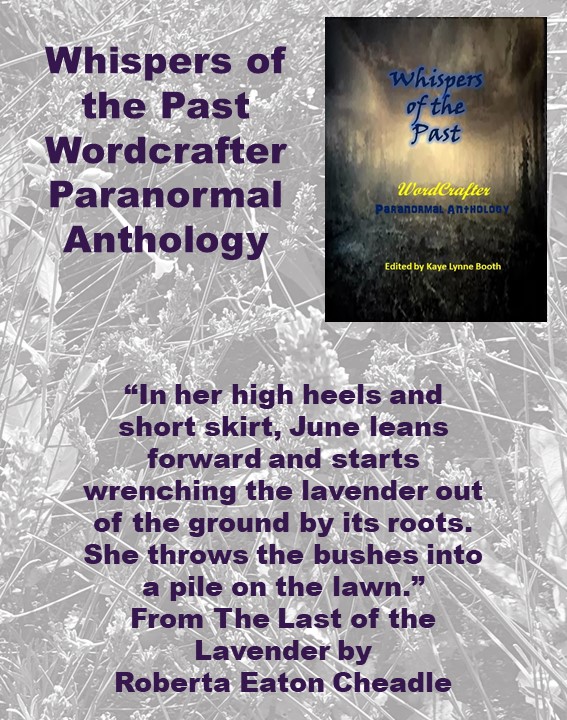
I am pleased to be part of the Whispers of the Past blog tour, which runs for 10 days from 23rd March. Whispers of the Past is an anthology of paranormal stories from several authors compiled by Kaye Lynne Booth, which also includes Jeff Bowles’ winning entry in the 2019 WordCrafter Paranormal Short Fiction Contest, A Peaceful Life I’ve Never Known.

Book Cover for Whispers of the Past Anthology

My story Partners in Time is included in the anthology. I had already written and published the full novel but had got so used to my characters that I didn’t want to let them go. I decided to write an abridged version of the book, but with a different ending.

Partners in Time is a story for fans of time travel. John Finbow, a successful writer, and his wife Kay move into Southcombe Rectory, a large Victorian house that has been empty since the 1960s. It had previously been owned by the Cuthbertson family who had lived there for generations. Their marriage is under strain, as John, 39 would like children before he gets too old, but Kay, 34, does not.

Continue reading here: https://fiorabooksbyjohnfioravanti.home.blog/2020/03/24/welcome-to-day-2-of-the-whispers-of-the-past-blog-tour-robertaeaton17-stevieturner6-4willspub/

Welcome to Day 1 of the “Whispers Of The Past” Blog Tour! @GodsAngel1 @RobertaEaton17 @4WillsPub

36901-223

{NOTE:  This is not an RRBC member-tour}

GIVEAWAYS:  (5) e-book copies of WHISPERS OF THE PAST. For a chance to win, simply leave a comment on the authors’ tour page as well as any other stop along the tour. 

I’m pleased to serve as the opening host to this 10-Day multi-author blog tour and the anthology sounds like an intriguing read!  Please help me welcome Kaye Lynne Booth to Watch Nonnie Write! and be sure to snag your copy of WHISPERS OF THE PAST before leaving today!

Kaye, the floor is all yours!

whispers-of-the-past-tour-1

BOOK BLURB:

A paranormal anthology with nine stories from six authors, including the winning story in the 2019 WordCrafter Paranormal Short Fiction Contest, A Peaceful Life I’ve Never Known, by Jeff Bowles.

***

The Paranormal by Kaye Lynne Booth

The paranormal. It is fascinating to us. Most of us can relate at least one experience that seemingly can only be explained by paranormal causes. Anyone who has had someone close to them pass may have several which they could tell about. I know I do. I’m a believer because I’ve had encounters that I know came from beyond. I can feel it. Maybe you have, too? I’d love to hear about your experiences in the comments, if you have one you’re willing to share.

Believers or not, there’s nothing like a good ghost story. Or maybe a tale of the weird and eerie, that raises goosebumps on the skin? It is fun to be scared when we’re in a safe environment where we aren’t in any real danger. That’s the beauty of literature and film. We can live vicariously through the characters without risking any harm to ourselves. I can remember as a kid, going to the theater, and I always chose the scary movies even though I might cover my eyes during the scenes where the bad stuff happened. We are drawn to this genre because the paranormal makes us question reality as we know it.

Continue reading here: https://nonniewrites.wordpress.com/2020/03/23/welcome-to-day-1-of-the-whispers-of-the-past-blog-tour-robertaeaton17-4willspub/

Showing and not telling

IMG_1745

I wrote this little piece this morning. I am trying to show and not tell. What do you think?

“Let’s get started,” the pastor says, gently placing a roll of soft material into Tom’s mouth. “It won’t take long and Tom will feel no pain.”

Ruth attaches several probes to Tom’s temples. The probes are linked to a black box with a dial control on the front of it.

“Prepare to hold his shoulders down, Ruth,” he says. “This is electroconvulsive therapy and he will react.” He twists the dial.

The lights explode with a series of popping sounds and the temperature drops.

Michelle exhales sharply and her breath makes a puffy cloud in the sudden chill.

The box creaks as its sides bow outwards. Crack! It split into two parts. A crackle of blue electricity runs along the cords and the patient on the gurney jerks. Ruth, who was still holding his shoulders, is thrown backwards and crashes into the wall.

Tom’s legs and arms shoot out stiffly, relax, and then shoot out stiffly again.

“Oh my God, Pastor John shouts. “Oh my dear God, what is happening.”

The man on the bed is dancing an electric jig, his eyes are open, but there are no eyes, only a bulging whiteness. His teeth bite down hard on the rolled-up cloth.

“Gaaaaah.” A series of choking sounds escape his mouth and spittle rolls down his jaw.

Snap! Snap! Snap! The electrodes pop off his straining face and fly across the room, hitting the walls and making small craters in the plaster.

Michelle sees smoking black rings where the electrodes had been attached.

“I WIN! YOU CAN’T UNDO MY WORK. CAN’T MAKE HIM WALK AGAIN!” The words echo around the room, bouncing off the stark white walls.

An indistinct shape races around the room and vanishes through the closed window. The room temperature returns to normal and the figure on the bed opens his eyes. Normal blue eyes.

“What happened?” Tom says. “My feet are tingling, ooooooh, it’s driving me mad.” He wriggles in his brace. “I can’t move. Someone rub them for me. Please!”


#Flashfiction – Carrot ranch challenge – The Rabbit

Isn’t it nice when inspiration hits immediately and you can write your 99-word piece in 2 minutes flat.

How did the rabbit get on the roof? Did it have wings? Had the whole world gone completely mad and animals suddenly attained previously unknown attributes?

The poor little creature pattered across the hot metal roof, confused and agitated.

A bit like me, thought Laura. Being isolated at home is making me feel peculiar, as if I am the only person in the world or the whole world has stopped except me. Business as usual, but not.

“At least I can do something positive to help the rabbit,” she mutters, heading for the garage to get the tall ladder.

This little piece of inspiration was written for Charli Mills’ Carrot Ranch flash fiction challenge which you can join in here: https://carrotranch.com/2020/03/19/march-19-flash-fiction-challenge-3/

#Bookreviews #Shortstories – No Pedigree, A Perilous Thirst and The Shirt

Book reviews

March is short story month. These are three that I have read to date.

No Pedigree by Nonnie Jules

My review

It is an irony that I read this book the week after I finished reading The Great Gatsby by F. Scott Fitzgerald with its two central themes of the wealthy in American not being accountable for their actions and how the America dream of equality for all and an ability for people who have ability and who work hard to attain social status regardless of their backgrounds.

This short story, No Pedigree, explores these same two themes but in a modern setting rather than Fizgerald’s setting of the 1920’s. I could help thinking, as I read this book, how tragic it is that 100 years later these same themes of prejudice, abuse and unfairness are still prevalent in some parts our society.

Baylee Pierre is a young girl of extraordinary beauty and sound intellectual ability who ends up attending a high school in a wealthy area populated by privileged youngsters and their families. Baylee is different from her peer group in that she is the child of a black native American mother and a white father and also, her mother is the housekeeper of a one of the wealthy residents of the school’s feeder area who allows Baylee’s mother to use her home address to register her daughter at the local school. Baylee’s mother thinks she is doing the best for her daughter by giving her this educational opportunity, but her spoiled rich school school associates don’t give her an opportunity to become part of their world and Baylee is ostracised in the most cruel way right from the start.

There is one girl, Carson Beckett, who is different and who becomes best friends with Baylee. Carson puts herself out on a limb to support Baylee against the majority. I enjoyed this touch in the book because it made it even more real and possible, as there is good out there and it was nice to have the bit of positiveness which gives the story some good balance.

Baylee is subjected to the most horrific treatment any person could suffer and due to her mother’s limited finances, she is not initially able to seek the justice the situation clearly warrants.

To bring my thoughts back around to my initial comments about The Great Gatsby, this book ends on a positive note with a clear indication, through the change in Baylee’s circumstances depicted in the book, that there has been some progress and movement towards the American dream being more attainable for all. There are good people out there who aren’t filled with prejudice and who embrace difference and enable progression for all.

An excellent read.

Purchase link:

A Perilous Thirst by Rhani D’Chai

My review

This unusual short story is about a vampire who is struggling to find food due to his preference for the blood of good looking males. This tale is set at the beginning of the HIV/Aids epidemic and envisages that vampires are affected by the virus in an even more potent and unpleasant way.

The writing is very vivid and gripping, for example, the first sentence is “Acute hunger – that white-hot blaze which starts as a small cinder and then, over time, becomes a raging forest fire of agony – is especially horrific for one of the undead.” I thought this was brilliant as it set the stage in those few words and I knew the story was about a starving vampire. The question was, why is he starving? By the end of the first page, that particular question is answered and the reader knows that the vampire is scared of the promiscuous behaviour of many young gay men at that time and also that they don’t tell each other about their indiscretions. This puts the vampire at risk of contracting HIV/Aids in the same way as for any other person. Unlike people, however, using a condom can’t help the vampire as he must ingest blood in order to live.

How does the vampire solve his problem? You will have to read this fascinating story to find out.

I enjoyed the way in which this story was told, in the style of a conversation. I thought this fitted the era and the personality of the vampire.

This story is not a horror story and does not provide any graphic details about death, rather it is an intriguing peep into the psyche of someone who is faced with the possibility of contracting a life threatening disease through fulfilling his natural and essential needs. A terrible conundrum for anyone.

Purchase link:

The Shirt by Richard Dee

My review

Do you purchase second hand clothes? Have you ever wondered who owned them before you? I must be honest that I don’t buy second hand clothes or shoes but I do buy lots of second hand books. This story could apply to any pre-owned article and work equally well.

The story is told in the first person from the point of view of a married man who finds a shirt has has admired elsewhere in a local charity shop. The shirt, a long-sleeved blue and white checked one with no collar, is missing a button, but his wife assures him she will mend it for him and encourages him to buy the shirt.

When he wears the shirt for the first time, it gives him a strange feeling of wanting to stay on him and the next time he seems a similar shirt it is being worn by a local man who has gone missing. That night he has a bad dream which feels like a vision or a memory. This dream, together with some other co-incidents relating to the shirt, are the beginning of a journey of discovery as to who the shirt belonged to previously and what happened to that person? Could it have been the missing man? To find out you’ll have to read the book.

This is an interesting and face paced short story which keeps the reader entertained from start to finish.

Purchase link:

Welcome to Day 6 of the “WHILE THE BOMBS FELL” Blog Tour! @bakeandwrite @4WillsPub #RRBC

Award winning writer of fantasy and children’s stories, Wendy Scott, hosted me for Day 6 of my While the Bombs Fell book tour. She has a lovely site and a wonderful selection of books. This post is about the difference between life in a small English town during WWII and life now.

29853-142

While the Bombs Fell ​

Life in a small English town during WWII compared to 2020
While the Bombs Fell focuses on my mother’s life during WWII from 1941, the year she turned three, until 1945, the year she turned seven.
Life for a small girl growing up in the small English town of Bungay during WWII was markedly different from life today. For the purposes of this article, I have focused on the home, food and school to highlight the many differences.

Home
My mother was born in a small, double storied cottage, in a row of similar cottages on Nethergate Street in Bungay, Suffolk. She was the sixth’s child of Alfred and Hilda Hancy and had a baby brother. Her parents had lived in Bungay all their lives, as had their parents.
There was no television and the children occasionally went to the cinema for entertainment. The show always ended with everyone standing to sing the national anthem as a show of patriotism for Britain. Her father had a wireless, but he only used it to listen to the news in order to save electricity for the war effort.
The family did not have an indoor toilet and had to go outside to an “outhouse”. They did have a flushing toilet, but a lot of other families used a bucket system. The children used a chamber pot that was kept under the bed, if they needed the toilet during the night. The boys all slept in one bedroom and the girls in another. Her parents had their own bedroom with a cot for the baby.
There was no central heating. Everyday, her mother lit a coal fire to warm the main living area. Coal was rationed and had to be eked out in order to light the copper for the washing once a week and the oven on a Sunday to cook the tiny roast.

Food
Food was rationed and sugar, butter, flour, meat and many other foodstuffs were in short supply. My mother’s family was better off than many because her father was a dairy farmer, so they had plenty of milk. Eggs were in short supply and smelled like the fish meal the chickens were fed. My mother’s father shot rabbits and other game that strayed onto the farm, to supplement their food supply.
The children often had bread, milk and a sprinkling of sugar for their evening meal and they were often hungry.
Every member of the family had their own ration book which contained coupons. When their mother went shopping for food or other rationed items, including clothes, the shopkeepers would cut out or sign the coupons. Many people grew vegetables in their gardens as part of Britain’s “Dig for Victory” campaign. Carrots and potatoes were used as a replacement from any other rationed products including sugar and flour. The British government distributed pamphlets containing recipes for “war-time” recipes to help people prepare healthy meals using the available ingredients.
There were no supermarkets and various shopkeepers supplied specialised products, such as the town baker, butcher and fishmonger.

Open Book Blog Hop – 16 March Book covers

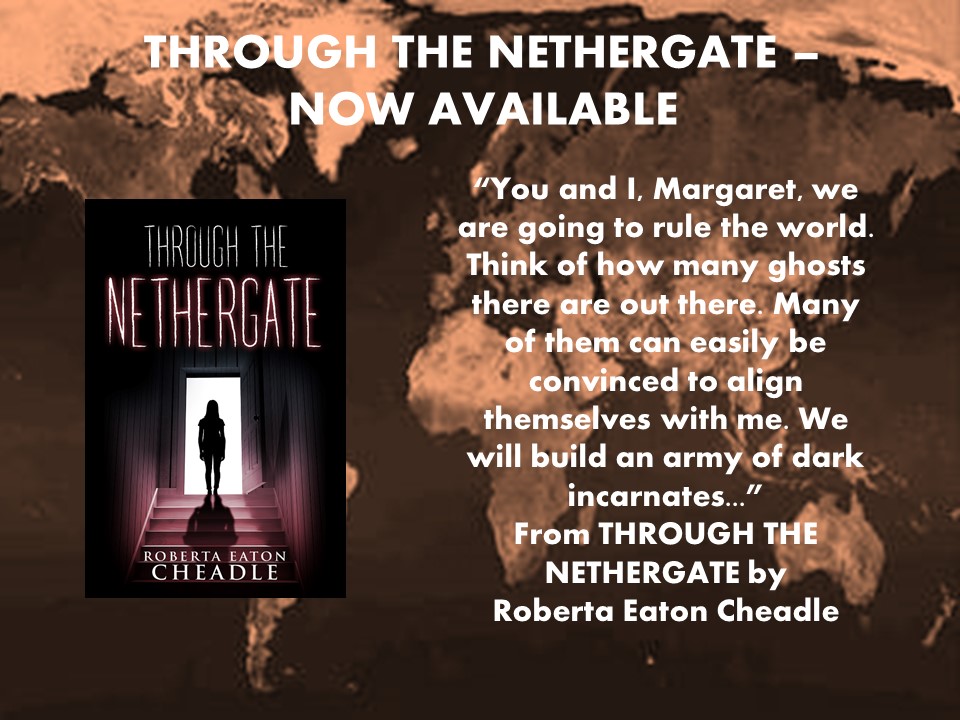
This week, the Open Book Blog Hop bloggers are interviewing their book cover designers. I am not able to interview Tim Barber from Dissect Designs in the time frame required for this post, but I am able to tell you that he designed my covers for both While the Bombs Fell and Through the Nethergate.

I had ideas in my mind for both covers and Tim did a fantastic job of plucking my thoughts out of my head and turning them into the perfect book cover. Pretty amazing in my opinion.

WTBF

34923-191

The cover for Open a new door, the poetry book I co-wrote with poet, Kim Blades, was designed by David Cronin from Moyhill Publishing. I think he did a splendid job of working with my idea and creating an appropriate cover for this book.

OAND 7

The covers for my children’s books I design myself. They are simple and feature one of my own cake and fondant people designs. This is my new banner featuring all my Sir Chocolate book covers designed by Bella from Thoughtsnlife blog:

Robbie's inspiration website banner

Bella also designed my new banner for this blog, Roberta Writes:


_Roberta Writes - independent pub 2 theme.

To read the interviews by other participating bloggers about their cover designers, you can click here:

You are invited to the Inlinkz link party!

Click here to enter

If you wish to join in, here are the rules:

  1. Link your blog to this hop.
  2. Notify your following that you are participating in this blog hop.
  3. Promise to visit/leave a comment on all participants’ blogs.
  4. Tweet/or share each person’s blog post. Use #OpenBook when tweeting.
  5. Put a banner on your blog that you are participating.

Day 4 of the “WHILE THE BOMBS FELL” Blog Tour w/author @bakeandwrite #RRBC @4WillsPub

I am over at Watch Nonnie Write’s blog with day 4 of my While the Bombs Fell blog tour. This post is about the myth that carrots help you see in the dark which started during WW2 in Britain. Thank you, Nonnie, for hosting me with this post.

Today I’d like to introduce you to one of my fellow member-authors of the RAVE REVIEWS BOOK CLUB, Roberta Eaton Cheadle, also known as Robbie.  Robbie has dropped in today to talk to us about the myths about eating carrots so let’s listen in.

Take it away, Robbie…

Carrots help you see in the dark

While the bombs fell is a collaboration between my mother, Elsie Hancy Eaton, and me and tells a fictionalized account of her life as a small girl growing up in the small English town of Bungay, Suffolk during World War II.

I can remember when I was a young girl, growing up with my three younger sisters in Cape Town, South Africa, being frequently told by our mother that eating carrots make you see in the dark. I always believed that this was true and that if I ate my carrots, it would help improve my eyesight especially at nighttime.

When I was doing research for While the Bombs Fell I came across an article about a World War II propaganda campaign which popularized the myth that carrots help you see in the dark.

During the 1940 Blitz, a German bombing campaign against the United Kingdom, the German bomber planes often attacked under cover of darkness. Country wide “blackouts” were enforced by the British government to make it more difficult for the attacking planes to hit their targets. The Royal Air Force (RAF) was also able to repel the German fighter planes by using their new and secret radar technology. The on-board Airborne Interception Radar (AI), which was first used by the RAF in 1939, had the ability to pinpoint German bombers before they reached the English Channel.

One RAF night fighter ace, John Cunningham, nicknamed “Cat’s Eyes” was the first English pilot to shoot down an enemy plane using AI. He racked up an impressive 20 kills of which 19 were at night. In order to keep the AI technology under wraps, the Ministry of Information apparently told newspapers that the reason for pilots like John Cunningham’s success was that they ate an excess of carrots which gave them better night vision.

Whether or not the Germans believed this tall tale is unknown, but the British public, including my mother, believed that eating carrots would give them better nighttime vision.

Continue reading here: https://nonniewrites.wordpress.com/2020/03/12/day-4-of-the-while-the-bombs-fell-blog-tour-w-author-bakeandwrite-rrbc-4willspub/

29853-181

#Bookreview – The Screwtape letters by C.S. Lewis

I have signed up for the Back to the Classics Challenge 2020, hosted by Karen from Books and Chocolate blog.

If you are interested in reading classics, you can join in this challenge here:

https://karensbooksandchocolate.blogspot.com/2020/01/back-to-classics-challenge-2020.html.

BacktotheClassics2020Blue

The Screwtape Letters by C.S. Lewis is my third book for this challenge.

What Amazon says

In this humorous and perceptive exchange between two devils, C. S. Lewis delves into moral questions about good vs. evil, temptation, repentance, and grace. Through this wonderful tale, the reader emerges with a better understanding of what it means to live a faithful life.

Quotes from the book:

“She’s the sort of woman who lives for others – you can tell the others by their hunted expression.”

“Indeed the safest road to Hell is the gradual one–the gentle slope, soft underfoot, without sudden turnings, without milestones, without signposts,…”

“Courage is not simply one of the virtues but the form of every virtue at the testing point, which means at the point of highest reality.”

My review

This is an extraordinary book by a clever writer and takes a deep look at the psychology of man and his relationship with God, referred to as the Enemy and his fellows, through a series of letters from a master devil, Screwtape, to his nephew, Wormwood. Screwtape has spent years as a tempter of humans and is mentoring the young and immature Wormwood, who has recently finished at the tempter college in Hell, on the art of removing a human man, referred to as the patient, from the path of virtue and Heaven, and capturing his soul for their Master.

The letters start with the patient converting to Christianity and Screwtape giving Wormwood a good telling off for allowing this to happen. The letters delve into many of the human vices such as gluttony, sexuality, superiority and others and investigates how these can be exploited by the young devil to undermine his patient’s belief in his religion. The letters are a fascinating read because they lay bare the human heart and soul and bisect how every though, no matter how seemingly virtuous, can be undermined and twisted to a negative purpose.

The letters highlight the more mature and thoughtful ideas promoted by Screwtape to capture the patient’s soul by gradually leading him astray and using relationships with other people to cement his newly developed attitudes and viewpoints as opposed to Wormwood who wants to dash in and lure the patient into a big and exciting sin which will, he thinks, guarantee his soul as theirs. Wormwood learns, but not quickly enough, that it is not easy to keep a person submerged in disbelieving and questioning behaviour towards the church and also that men are easily swayed by the females that come into their lives.

The relationship between Screwtape and Wormwood is somewhat pitted as Wormwood reports his uncle to the Infernal authorities for making a perceived positive statement about God. Screwtape depends his position, but expresses his displeasure at his nephew’s treacherous behaviour.

The last part of the book, entitled Screwtape proposes a toast, was my favourite part of the book. It takes a darkly humerous look at the failure of modern schooling and the modern lifestyle and criticizes it for producing insipid and wishywashy sinners. He explains that in the post WWII world there are no dark and exciting evil people and neither are there any great heroes. He sees this last point as a great win over the Enemy as he sees it as a great failure in God’s creation which was intended to be in his image.

This is a remarkable book and I highly recommend it for people who are interested in thinking about the nature of people and their relationships, both with higher deities and with their fellows and also who will enjoy a cynical analysis of the failure of democracy and the modern systems.

Purchase The Screwtape Letters