Thursday Doors is a weekly feature allowing door lovers to come together to admire and share their favorite door photos from around the world. Feel free to join in on the fun by creating your own Thursday Doors post each week and then sharing your link in the comments below, anytime between Thursday morning and Saturday noon (North American eastern time).
In September 2018, Terence went to Finland and Birmingham for work. I decided to tag along as I hadn’t been to either place and we decided to spend a few days in London before travelling to Finland.
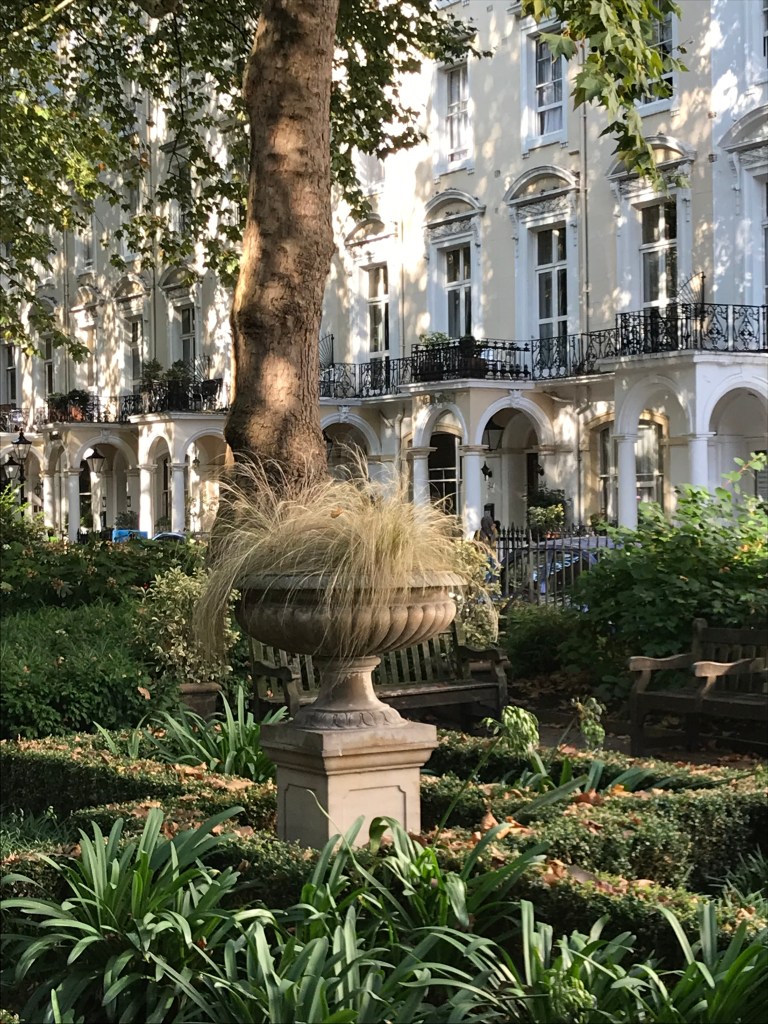
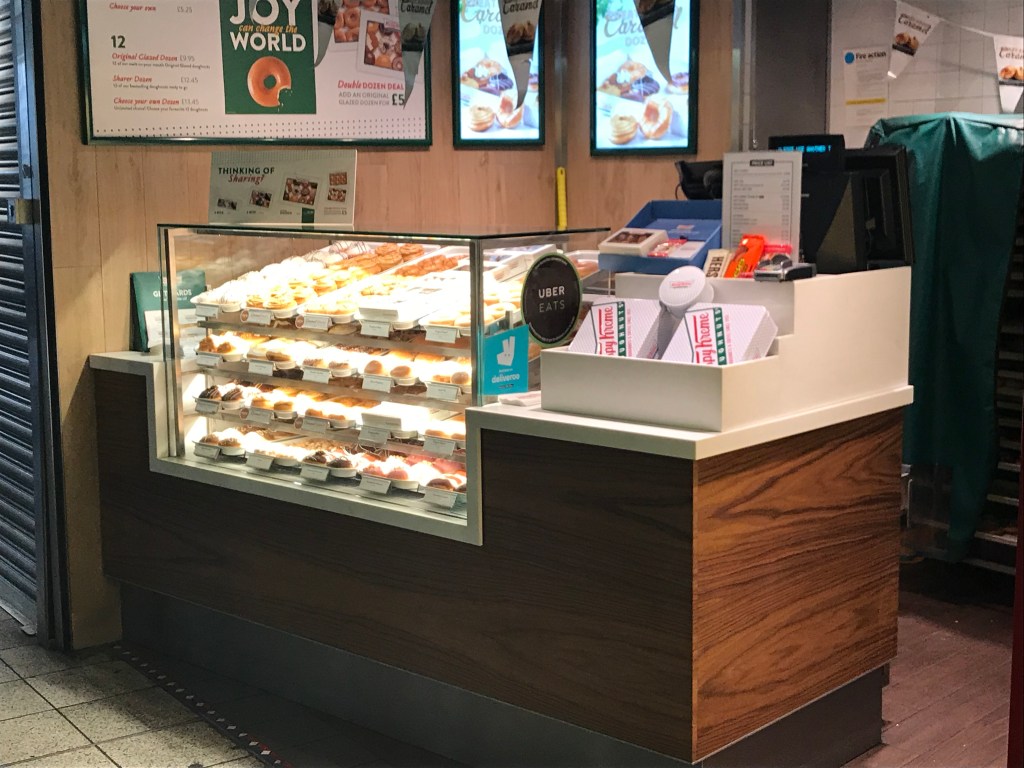
We chose a hotel close to Paddington Station so that we could get around easily. I love UK trains, they are so orderly and nearly always on time. I took some pictures in the station and in a small park a few blocks form the station, across the road from our hotel.
In the park near Paddington StationPictures of the doors to a hotel across the road from the park. This is not where we stayed.Entrance to Paddington StationDonut store in Paddington Station with sliding glass doors.
How do you choose when both options have dire consequences?
Sofia is a 17 year old who is quite content with her life. She has a caring boyfriend who also just happens to be her best friend since birth. She has a loving mother. She is successfully completing her last year of high school and enjoys her part-time job. She can’t imagine wanting more from her life…until Ar’ch (pronounced Ar-rick) enters her dreams, sparking a burning flame inside of her that she can’t seem to extinguish nor does she want to.
Ar’ch is a Diasodz (Die-ah-sodz), a species created by the Goddess back when God created humans. Diasodz were made to heal and protect humans, but when the Diasodz turned their backs on helping humans and left Earth to live in their own world, the Goddess abandoned them. Since then, their powers and their very lives have been fading. A prophecy foretold that a young girl born on Earth would be the Diasodz’s savior. Ar’ch and his brother, Angel, travel to Earth to retrieve her and bring her back to their world before her death day in order to save their kind. Ar’ch knows the drill: find the target, capture her, and safely bring her home. But what happens when the target captures his dormant heart?
Choices create action. Actions have consequences. When faced with the truth, what choice will Sofia make? Will she be able to accept the consequences that follow?
My review
I listened to the audio book of The One Discovered, narrated by Cammy Maughan. I enjoyed Cammy’s style of reading and particularly loved the way she inserted laughs by the characters into her narration. That made this story feel very real and alive for me.
This is an interesting sci-fi YA novel with the unusual premise of a superior race of human-looking people called Diasodz, who have a variety of different powers such as an ability to heal, and who live in a different dimension to humans. I liked the idea of a different dimension rather than a different planet and I also enjoyed the parallels between life in their dimension and life in the human dimension such as their serving of a goddess.
Sophia is an ordinary, if pretty, teenage girl who is growing up in a single parent family. Her mother works very hard to support them both and give Sophia a good life. Sophia is an excellent student and is working hard towards gaining acceptance into a college of her choice. Sophia has a boyfriend, Rafe, who has been her best friend since birth and who is the son of her mother’s good friend, Damiana.
The story starts with Sophia have a very life-like dream which features a gorgeous man. Before she can find out who he is she wakes up. A short while later, Sophia meets this same man at the café where she works as a waitress. At the same time, Angel, a new-comer to her high school, comes into her life and befriends both Rafe and herself.
It soon turns out that Angel is the younger brother of the gorgeous man named Ar’ch. As Sophia gets to know them both better, all sorts of unusual and strange events start to happen in Sophia’s previously peaceful life. In addition, Sophia develops a strong attraction for Ar’ch which puts her in a complicated situation with Rafe, who is theoretically her boyfriend but with whom she has a platonic relationship.
Sophia was a lovely character and very typical of an overly sheltered teenage girl. Her reactions to Ar’ch and the attraction she feels for him were perfect for a YA novel. I enjoyed Sophia’s loyalty to both her mother and Rafe and also her hard working tendencies which send a good message about the path to achievement to young readers.
Ar’ch was an interesting character. A play boy who has always had lots of female attention, he falls hard for Sophia. He tries to resist his attraction to her as she is part of his “mission” to earth and he is trying to be professional. Some of his behaviour seemed a bit unlikely for a man of his experience and age, but he was still enjoyable and I enjoyed hearing about him.
The ending as it related to Rafe was unexpected to me as I expected more to come in respect of this particular character. His reactions and behaviours were a bit unusual for a young man of his age and I thought this might lead to a bigger role for his in the future books. I have yet to see if that will be the case or not.
The story moved quite slowly for the first half of the book and there was a strong focus on the potential romance between Sophia and Ar’ch but the pace picked up hugely during the second half of the book and there was a lot of excitement and the introduction of new evil characters which made it highly entertaining.
This book will appeal to readers who enjoy sci-fi with a strong romantic element.
In the past, nobody would have taken notice of Iroko, the biggest and tallest tree in the forest. But then, cities started to grow and to eat into the forests. Trees were cut to make way for the growing cities. But the Iroko tree resisted being cut down. Any time an axe cut the tree, the axe either broke or the cut bled, real blood., and cries, ear piercing cries, like human cries were heard coming from the tree.
In the forest, next to Iroko, lived an old woman in a tiny mud hut. Bent by age, she diligently cared for the tree. She was known as the eyes and the mouth of the tree. She listened to the tree, when the leaves rustled and interpreted the language of the tree to outsiders. She was called Nne Oji. Oji is the Igbo name for Iroko, and Nne Oji means Iroko’s mother. Iroko was as tall as a skyscraper, about one hundred and seventy feet high, and the width was as wide as fifty men surrounding the tree with outstretched hands, fingertips touching. Iroko was huge, towering and intimidating!
The stories surrounding Iroko were such that settlers decided to let it stand and the town grew all around and away from it. Things went on peacefully for a while, but soon it became clear that Iroko did not like the exposure it was getting from the people surrounding it. After all, this tree was the king of the forest, where both trees and animals revered it. Now, standing in the midst of humans,with no one paying it any heed, all of this would change very rapidly.
People, especially those living close to where Iroko stood, started reporting strange happenings around Iroko in the dead of night. Those who were bold enough to come out and watch these happenings, reported seeing dancing and merrymaking around Iroko by people they believed were spirit people. These spirit people went in and out of Iroko as if they were walking in and out of their homes. They sang and danced in merriment from twelve midnight until two in the morning, after which they packed up and walked back into the tree. Those who observed these goings-on, did so from afar and in hiding.
The story was told of a young boy who had the misfortune of being seen by these spirit people. He was taken and was never seen again. He had heard the stories of the happenings around Iroko, so that night he snuck out of his house and walked toward Iroko to take a closer look. Voices were heard warning him not to come closer, but he continued walking toward Iroko until he entered the sphere of the tree where everything turned grey. At that point, the boy lost control of himself and was pulled along until he disappeared in the mist and was seen no more.
The mother watched everything in hiding in paralyzed shock. The other people who watched in hiding were also mystified. They couldn’t believe their eyes, but they dared not allow themselves to be seen.
The next morning, the mother saw a huge striped cow tied to an orange tree in front of her house. The cow was chewing cud. The woman walked around the cow trying to understand how it came to be there. The town people also took notice and started gathering and questioning the presence of the cow. Out of nowhere, a young boy with only a loin cloth around his waist appeared and spoke to the onlookers.
“Mama, Iroko says you should take the cow in exchange for your son. Iroko says you should not kill the cow. You should sell it and use the money to take care of yourself.” With that, the boy turned and walked through the crowd and disappeared.
Everyone there was seized with shock and they quickly dispersed. The woman cut the cow loose and started shooing it off from the front of her house, but the cow would not budge.
The woman started to weep and pleaded with Iroko to return her son and take back the cow.
“Iroko give me back my son and take your cow!” she implored. “I don’t want your cow!”
The next day, the woman saw the cow at the back of her house, peacefully lying down near her hearth and chewing cud. She ran out toward Iroko.
“If you won’t give me back my son, Iroko, take me too!” she screamed at the top of her voice. Iroko’s leaves started to rustle. Suddenly, the old woman in the hut materialized and stood between the woman and Iroko.
“Go back, Mama!” the old woman said. “What you seek cannot be done. Your son is gone, dead and Iroko has paid you in exchange for him. Go back or you will meet the same fate!”
The woman refused to be stopped. She pushed the old woman down, walked over her and continued to approach Iroko. By this time, people had started to gatherand were watching. The woman threw herself at Iroko and just like magic, the onlookers saw sparks of light, like fireworks, all around the woman. They heard her screaming and shouting like someone roasting on a stake. When everything died down and the sparks were no more, the people saw that the woman had metamorphosed. The woman had changed into an animal, something that looked like a dog, or a goat. No one could really tell. The people dispersed but this time they all had one thought in their minds – that Iroko must go.
Iroko’s fame continued to grow even beyond the immediate town. The townspeople also became bolder. They consulted with diviner after divinerto find out how to get rid of Iroko. They tried everything, without any success … one attempt took the lives of twelve men. They tried to burn Iroko down, but the fire turned against them and burned them to death. One diviner suggested that the spirit of Iroko resided in the old woman who tended it, and that if the old woman was killed, Iroko would quietly and slowly die.
The townspeople burned the old woman’s hut down with the old woman in it. The next day, Iroko started taking souls. People started disappearing from their homes, both in broad daylight and at night while they slept.
Finally, an Iroko priest from a distant land told the people how to destroy Iroko.
“Humans should not fight Iroko,” he said. “They should appease Iroko. Iroko trees do not live amongst humans. Before you people started building your town, you should have appeased and pleaded with Iroko to leave your town. As you can see, Iroko was simply minding its own business, when you people decided to invade its privacy. Now you have to sacrifice to Iroko to appease it.”
The townspeople had to pay this priest to come to their town to perform all that was needed to appease Iroko. There is no need to list here all that Iroko demanded, which included the blood of virgins, before it was appeased. The morning after the ceremony by this priest was concluded, the people came out and watched as the inhabitants of Iroko exited one after the other and disappeared; the birds of various families, the giant ants, red and black, dark dangerous black snakes – all came out of Iroko hissing, grumbling, and then poof, like smoke disappeared. But the king of all the animals, a giant Eke python, refused to be dislodged. The people had to pump inflammatory liquid into Iroko and set the python on fire, to dislodge it. It came out rumbling, twisting,and floundering, until it, too, disappeared.
Finally, Iroko was cut down. Mystery upon mystery, not one single hole existed in the cut tree. It was intact with rings showing how many hundreds of years it had stood there.
***
Thank you for supporting this member along the WATCH “RWISA” WRITE Showcase Tour today! We ask that if you have enjoyed this member’s writing, please visit their Author Profile on the RWISA site, where you can find more of their writing, along with their contact and social media links, if they’ve turned you into a fan.
We ask that you also check out their books in the RWISAcatalog. Thanks, again, for your support and we hope that you will follow along each day of this amazing tour of talent by visiting the tour home page! Don’t forget to click the link below to learn more about today’s profiled author:
Has the pandemic affected your writing? If so, how? Have your writing habits changed in reaction to the ‘different’ world we are faced with?
I first heard about the new coronavirus at the beginning of February this year. At the time, I was doing some work with colleagues in Beijing and it was mentioned on a group call that certain of the Chinese New Year celebrations were being cancelled because of this illness. I had no idea then, that within two months my whole life would change.
On the day after Milan went into lockdown, I had a work meeting at a client’s premises with a large group of advisors. One advisor had arrived in South Africa that morning from Milan. He mentioned how difficult it had been attending meetings in this city the previous day with everyone sheltering at home. He said that the city was empty.
About two weeks later, both my sons and I became very ill with a strange illness. Michael and I felt as if our throats were blocked and we couldn’t breath. We were both very tired. Gregory had bad headaches and a slight fever. We all needed antibiotics and both Greg and Michael had to have two as the first antibiotic didn’t cure them. Did we have C-19? I don’t know. At that time, there were no C-19 tests in South Africa and the doctor diagnosed us as having throat and chest infections.
South Africa went into a strict lockdown on 26 March. All non-essential businesses were closed and my world went mad. I have never been as busy as I was between April and September this year. Many businesses were taking steps to raise additional debt or capital funding and the disclosure requirements were significant due to the extra business risks posed by Coronavirus and the lockdown.
In answer to the question Has the pandemic affected your writing? the answer is yes because my work hours lengthened from an average of 8 hours a day to about 10 hours a day and I was also working during weekends. This did impact my writing as I had very little time to write which caused me some stress. I like writing and I was finishing off my forthcoming book A Ghost and His Gold which I had hoped to publish in October this year. That did not happen due to the demands of my work and I only sent the book to my publisher in October. I am currently working on the final edit of the printers proof and am aiming to be finished next week with a publication date in January 2021. The editing is also taking longer as I am still busy, although I’m no longer working during weekends. My boys have also been writing exams for the past two weeks and I’ve spent a lot of time helping them prepare.
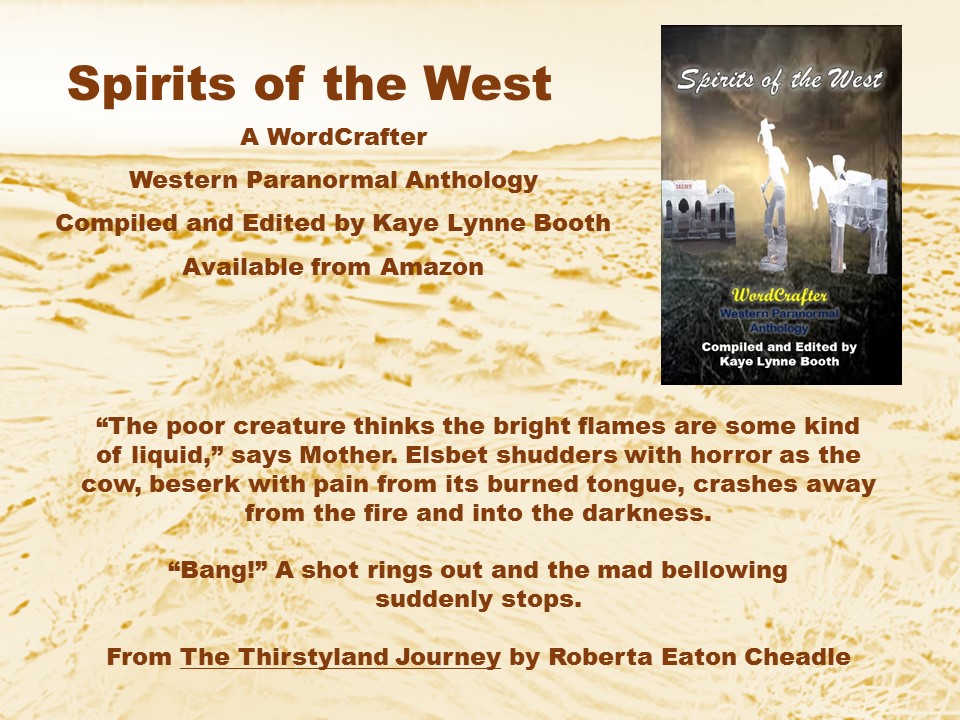
I have had short stories published in two anthologies during October and I was very pleased about that. The two South African pioneering short stories included in Spirits of the West, edited by Kaye Lynne Booth, were written before lockdown. The two short stories included in Spellbound, compiled by Dan Alatorre, were written during lockdown. I did manage to squeeze these in by getting up early in the morning during weekends and writing for a couple of hours before my house started waking up.
Have your writing habits changed in reaction to the ‘different’ world we are faced with? No, my writing habits haven’t changed. I still blog from 5 a.m. to 6 a.m. and from 7 p.m. to 8 p.m. most days and I still write for three hours every Saturday and Sunday morning and on a Friday afternoon from 2 p.m. to 5 p.m. This is assuming I have a normal 35 – 40 hour work week as have a reduced hours employment contract (30 hours a week). The reduced hours rarely works, but under non-pandemic circumstances, I get away with a 40 hour week as opposed to the 50 hour week I’d be working if I was employed on a full time basis. I believe my reduced hours gives me some flexibility with my work hours which I need to manage my boys and some of their school and other requirements.
The pandemic has impacted me from a time perspective as I have been even busier than normal. It has not, however, impacted my story ideas or ability to sit down and write. I am very determined and strong willed so I don’t allow anxiety or intrusive thoughts to impact on my productivity generally.
Has the pandemic affected other blog-hoppers’ writing? Click on the link below to find out:
Rules:
Link your blog to this hop.
Notify your following that you are participating in this blog hop.
Promise to visit/leave a comment on all participants’ blogs.
Tweet/or share each person’s blog post. Use #OpenBook when tweeting.
Put a banner on your blog that you are participating.
Eden backed her Boston Whaler, Eden’s End, away from the dock, swung her nose into the current and gave the outboard a little gas. Still in the no-wake zone, her granddaughter hung over the side near the stern and trailed her hand in the water.
“Leigh, a shark’s gonna bite that thing right off.”
“No, it won’t. See the dolphins alongside?” She pointed her dripping finger at a pair of breeching dolphins. “Everyone knows they protect folks from sharks.”
Eden shook her head, grinned, and watched the sleek bodies leap through gray water until the pod outdistanced them. She’d never heard of a shark this far up the intracoastal, but she enjoyed teasing Leigh, even if the girl didn’t like it much. Besides, she wouldn’t have to put up with it after tonight. Her heart dropped at the thought.
Right now, they needed to get into the channel where she could open the throttle and let her fly. They’d need a bit of speed to get through the chop at the inlet’s mouth.
“Where’d you stash the drinks, baby girl? I’m thirsty.”
“Coke or ginger ale?” Leigh reached into the cooler behind the captain’s bench and waited for Eden’s answer.
“We have any bottled water?”
“Yuck.” Leigh wrinkled her nose and stuck her tongue out. At thirteen, she didn’t care for plain water. She grabbed a coke for herself and tossed the water toward the captain’s bench, where her grandma easily caught it.
“Come up here with me.” Eden scooted over, but Leigh grabbed the canopy support bar and stood next to her to wave to passing vessels.
They entered the main channel and accelerated. “Look at them all!” Leigh held tight to the support with one hand and with the other, pointed out small boats like theirs, yachts and excursion ships heading out to sea. “I’ve never seen so many in the channel all at once. Is all this for the sunset?”
Eden didn’t answer. She glanced at her granddaughter and wished she could keep this moment forever. Evening light bathed Leigh’s face in a gentle glow, the pink in her cheeks showing through the Florida tan she wore summer and winter. Her luminous eyes, the same amber as the natural streaks in her sun-bleached hair, crinkled at the corners as she squinted at the water. She’d be a beauty in a couple years and Eden had looked forward to scaring the sin out of any boys with the wrong idea. Just another thing she’d never get to do.
The chop demanded her attention, so she drove while Leigh held on and whooped every time their bow hit another wave. The sea calmed when they reached the Gulf of Mexico, and they found a spot to drift about a hundred yards out, away from other vessels. The current turned the stern toward the northwest, where they had a perfect view of the horizon to the west and the inlet to the east.
Eden moved to the cushioned top of the cooler in the aft cockpit. Leigh joined her, pretended to push her off with her hip, and settled close. She sipped her coke while her grandma threw an arm around her in a hug.
The ocean breeze played with Eden’s short hair and blew tendrils of Leigh’s long hair across her chest. Eden reached into her jeans pocket and pulled out a hair tie.
“Turn around, baby girl. You don’t want hair in your eyes just as the sun sinks, do you?” Leigh leaned forward while her grandma caught her hair back in a tail. She reached for a blanket bunched on a corner seat.
“Here, Grandma. The breeze is a little cool.” Leigh pulled it over their laps.
A bank of cumulous clouds towered to the east, each layer a living painting, shifting through pink, purple, orange, and salmon in majestic slow motion. A low swell slapped against the hull, a rhythmic percussion to the visual symphony.
Eden took several deep breaths, enjoying the tang of salt air with a hint of seaweed. The scent of grilling fish tickled her nose. Her mouth watered and her stomach rumbled. They’d eat with Leigh’s parents later, at one of the seafood places on the main dock. A special treat.
Leigh snuggled close to Eden, who pulled the lightweight blanket up to cover her girl’s shoulders.
“Are all endings sad?”
Eden swallowed hard before she could answer. “Not all.”
“Like what? Name some happy endings.”
Eden dug past the lump in her heart to find one or two. “When the prince kisses the princess and they live happily ever after. When the hero escapes from the dungeon.”
Leigh slapped her arm. “I mean for real.” She turned her gaze toward the setting sun, now barely touching the horizon’s edge. “I can think of lots of sad endings. Like when we had to leave our friends in Minnesota. And when Scruffy ran away. And when…”
Eden interrupted. “Farmers are happy when a drought ends. And what about the end of an icy cold winter? You had those in Minnesota, remember.”
“Oh, yeah. But the end of snow wasn’t so happy.”
Eden grabbed her granddaughter’s hand and pointed toward the sun, now a half-circle sitting on a dark line.
“Every ending starts a new beginning.” Just saying it lifted her own spirits a tiny bit.
Leigh picked up on it. “School starts at the end of summer. I like school.”
“And cooler weather,” Eden reminded her.
“Morning comes when night ends. I’ll be fourteen when thirteen ends.”
“And we’ll meet in heaven when life ends.” Eden wanted to take back the words as soon as they left her mouth. She sucked air in thick gulps to keep from bursting into tears. She felt her granddaughter tremble.
Eden turned Leigh’s face toward her and kissed her forehead. She kissed each precious cheek and wiped her tears away with her thumbs. “You know I’ll always love you, don’t you? Everything I have is yours, and no matter what, we’ll see each other again.”
“Death is a sad ending, Grandma. I don’t care what the next beginning is. I don’t want you to go.” Leigh covered her face with her hands, bent over her grandma’s lap and sobbed, shudders racking her body and tearing the heart out of Eden.
“Watch, Leigh. Sunset isn’t over yet.”
Leigh sat up, wiped her eyes, and took a shuddering breath. Eden’s heart swelled with love and pride at her granddaughter’s courage as the ocean swallowed the last sliver of sun, leaving the eastern clouds a gray canvas. There should have been more drama.
Eden returned to the console and started the engine.
“Wait, Grandma. Can’t we wait for the stars to come out? I need more time.”
Eden turned the key off and wrapped her arms around Leigh’s slender body. They sank to the deck, neither trying to control the eruption of grief tearing at their cores.
When their sobs turned to hiccups and they let each other go, Eden lifted Leigh’s chin and pointed to the sky. “Look at that magnificence, baby girl. God’s story written in the stars. You’re there, and so am I.”
“What do you mean, Grandma?”
“Our last sunset is an ending, but tomorrow’s a new day for both of us. I’m going home very soon, and you have a long life ahead with happy endings and beautiful beginnings.
Leigh sighed and snuggled close. “And we’ll meet again. In heaven, right?”
“That’s right.” Eden returned to her bench and turned on the engine. “I’m hungry and your parents must be starving. How about you?”
Leigh nodded, stood, and held on to the support. “I love you, Grandma.”
*****
Leigh backed her whaler, Eden’s Dawn, from the dock and headed to the channel where she joined a smattering of fishing boats, her lights joining theirs on the way to the Gulf. Her daughter snored softly, asleep beside her on the bench. Leigh tapped her shoulder to wake her.
“Faith, we’re getting to the chop.”
The child stretched and yawned, jumped to the deck, held on to the support, and whooped at every wave they hit until they reached calm water.
“Now, Mommy?” Faith pointed at the pretty box on the console that held Grandma’s ashes.
“Soon.” Leigh headed out until land was a smudge to the east and cut the engine. “Now, Sweetie.”
Leigh and Faith held the box over the stern together. Leigh kissed it, and they dropped it into the ocean while the sun rose behind a cloud bank, its golden rays streaming out to paint the morning sky pink and orange.
Leigh hugged her daughter as the box sank beneath the waves. “Goodbye, Grandma. We love you.”
Faith reached up and held her mother’s face between her small hands. “Are you sad, Mommy?”
“A little. But every ending starts a new beginning.”
Leigh lifted Faith to the bench, kissed her, and turned Eden’s Dawn toward home.
***
Thank you for supporting this member along the WATCH “RWISA” WRITE Showcase Tour today! We ask that if you have enjoyed this member’s writing, please visit their Author Profile on the RWISA site, where you can find more of their writing, along with their contact and social media links, if they’ve turned you into a fan.
We ask that you also check out their books in the RWISAcatalog. Thanks, again, for your support and we hope that you will follow along each day of this amazing tour of talent by visiting the tour home page! Don’t forget to click the link below to learn more about today’s profiled author:
I am over at Sally Cronin’s wonderful blog, Smorgasbord, with a post about the Inca child sacrifices. This research led to the creation of one of my short stories in Spellbound, horror anthology. Thank you, Sally, for hosting me.
Unleashing the Advocacy Warrior by Harriet Hodgson
My husband and I live in a retirement community that has a continuum of care. He is paraplegic and I have been his caregiver since 2013. Several months ago, my husband was diagnosed with advanced prostate cancer. A bone scan showed the cancer had spread to many parts of his body. As my husband became weaker, I realized I needed help to care for him.
Now my husband is in a rehabilitation unit. Unfortunately, COVID-19 prevents me from seeing him. I live on the 18th floor of the high-rise and my husband lives on the third floor. We are near each other, yet so far away. Being apart from each other made us feel stressed, frustrated, and down.
Then I received a notice in my mailbox. A new program was starting. Family members could make appointments to see their loved ones. Only two family members could visit at once and they had to follow strict rules. My daughter called the contact number and was given an appointment date and time. We were super excited.
Before my daughter arrived, I talked with my husband’s physical therapist. It was difficult to understand him because of his mask. He had difficulty understanding me because of my mask. I felt like we were going to do charades at any minute. Still, meeting the therapist gave me a chance to ask questions. Every question yielded the same answer: “That’s not in my pay grade.” What the heck did that mean?
A nurse came into the room and greeted my husband with, “Hi Handsome!” She seemed proud of her greeting. In fact, she turned to my husband and asked, “Every time I walk into your room, I say that, don’t I?” My husband answered “yes” in a flat, discouraged voice. The nurse didn’t pick up on his voice inflection and seemed validated by my husband’s reply.
My daughter and I stayed for two and a half hours and my husband coughed most of the time. As we left the rehab floor, we met the director of nursing. Of course, we grabbed the opportunity to talk with her. We made sure there were six feet between us. The director was patient, attentive, sympathetic, took notes, and said she would give the matter her attention.
Did I have the power to change anything? This question rattled around in my mind for hours. That evening, I sat down at the computer and wrote a heartfelt email to the director of nursing and carbon copied the director of the retirement community. This is the letter. I modified the wording to maintain confidentiality.
Dear ______________,
Thank you for meeting with me and my daughter this afternoon. I am aware that my husband may have declined physically and mentally. I am also aware that he doesn’t feel well, hasn’t slept well since he was admitted to the rehab unit, and feels isolated and depressed.
My husband has been coughing for three weeks. He feels so badly I don’t know how he could endure physical therapy, let alone benefit from it. He feels so badly he would just as soon die. Before we make a final decision on Supportive Living, I would like him to get some sleep and for his cough to subside.
I have gotten confusing information from nurses. Yes, my husband has pneumonia. No, he doesn’t have pneumonia. Communication is my business and the communication from staff on the unit has been poor.
The physicians who founded the clinic believed the needs of the patient come first. After I talked with the physical therapist I was confused and sad. I asked him several questions and his answer was always the same: “That’s not in my pay grade.” This is not the answer I expected from a clinic employee or physical therapist. I was also upset by the attitude a couple of nurses exhibited. They treated my husband like a foolish old man in a wheelchair. Like every patient, my husband deserves to be treated with respect and dignity.
I share these thoughts with you out of concern and love. My husband and I have been married for 63 years. We went together for four years before we married. This is a difficult time of life. At a time when we are most vulnerable, life demands the most from us. I am my husband’s wife and advocate and will not fail him as his life draws to a close.
The next day I received a call from the director of nursing. Since I had been tested for COVID-19 twice and the tests were negative, administration did not think I was a health risk and could visit my husband daily. I was astonished. “I’m going to cry,” I admitted to the nurse.
My story is not unique. There is an advocacy warrior inside you—a person ready to stand for love, quality care, and human dignity. But we must assume this role thoughtfully. Note important dates, such as hospitalization, on the calendar. File important documents in a safe place. Keep a log if you think it is necessary. Follow the chain of command. Speak in a calm voice and be civil. Remember, there is a difference between being persistent and being pushy.
You and I do not know our strength until we are tested. We are stronger than we realize. Most importantly, our loved ones need us. As my husband asked, “What happens to people who don’t have an advocate?” The famous children’s author, Dr. Seuss, explained advocacy better than I. “Unless someone like you cares a whole awful lot, nothing is going to get better. It’s not.” Advocacy takes many forms—better healthcare, better transportation, better education, better architecture, better laws, a welcoming community, and more. One person can make a difference. Maybe the time has come to unleash the advocacy warrior in you.
***
Thank you for supporting this member along the WATCH “RWISA” WRITE Showcase Tour today! We ask that if you have enjoyed this member’s writing, please visit their Author Profile on the RWISA site, where you can find more of their writing, along with their contact and social media links, if they’ve turned you into a fan.
We ask that you also check out their books in the RWISAcatalog. Thanks, again, for your support and we hope that you will follow along each day of this amazing tour of talent by visiting the tour home page! Don’t forget to click the link below to learn more about today’s profiled author:
Jessica Bakkers had the great idea of writing some post about herself to share with her blogily. Bloggers share a lot about their thoughts, ideas and passions through their blog posts, but they often don’t post much about their lives outside of blogging.
I decided that as its Friday night after a taxing and long work week, I will write about what makes me happy.
My garden also makes me happy. I have been enjoying it a great deal since we have been working form home for the past 8 months. I try to go for a 5 000 step walk around the garden at least once a day and I often take pictures of the flowers in my garden. We also have a peach tree, two plum trees, strawberry plants and a fig tree. I have blackberry bush which is just coming into fruit.
My family makes me happy. I live with my husband and two sons, Gregory (17) and Michael (14). My parents live on the same property in a cottage and join us for dinner which we always eat together, as a family.
My sons have always made me happy. I never had baby blues or depression post either of their births, I was immensely happy when the doctor laid the little bundles in my arms. Terence and I have travelled a rough road with our boys as both of them have suffered chronic health problems.
They have had 32 operations between them. Despite the anxiety of all these spells in the hospital, I always adored my boys.
Terence and I have been taking turns the past three weeks with helping Michael prepare for his year end examinations. Terence does maths and mapwork and I do everything else. I also help test Greg on some of his work. I will tell you what I test him on just as soon as I’ve Googled what it is [wink].
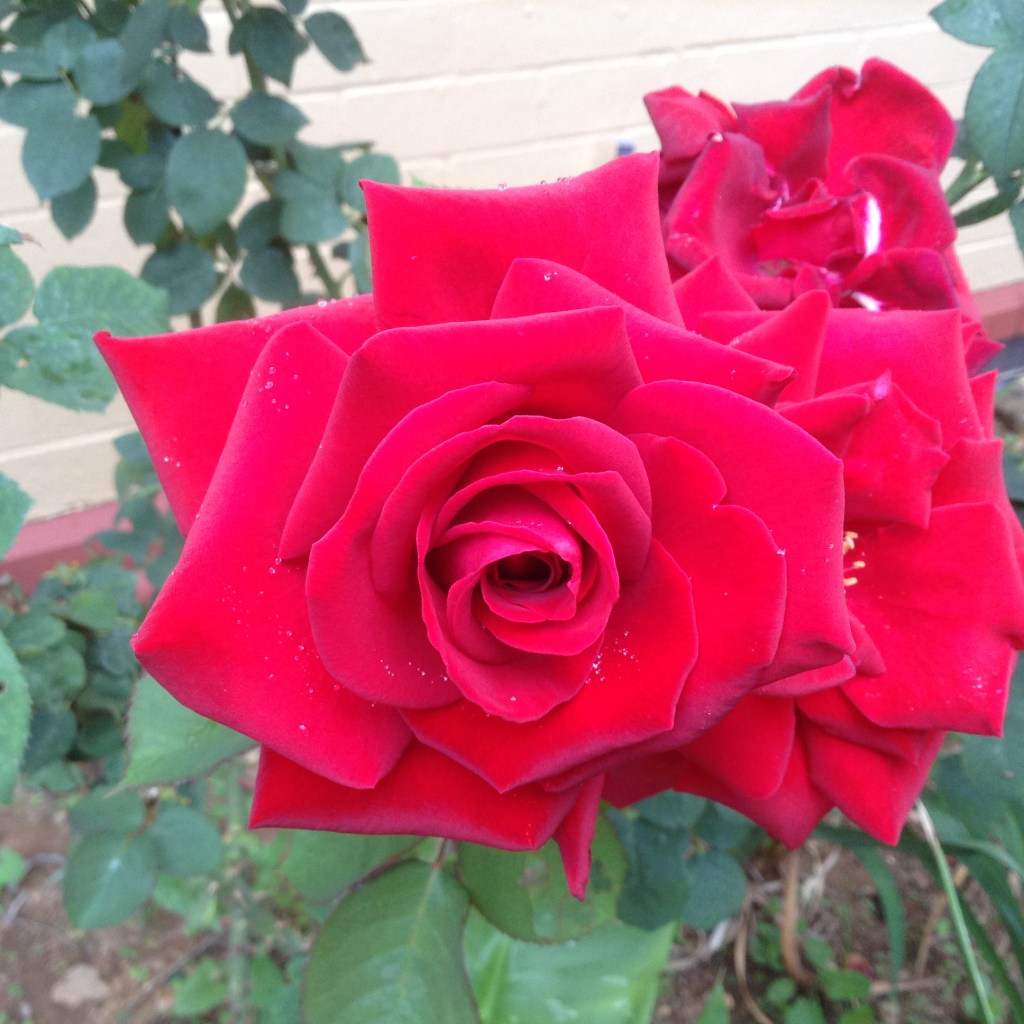
My red roses
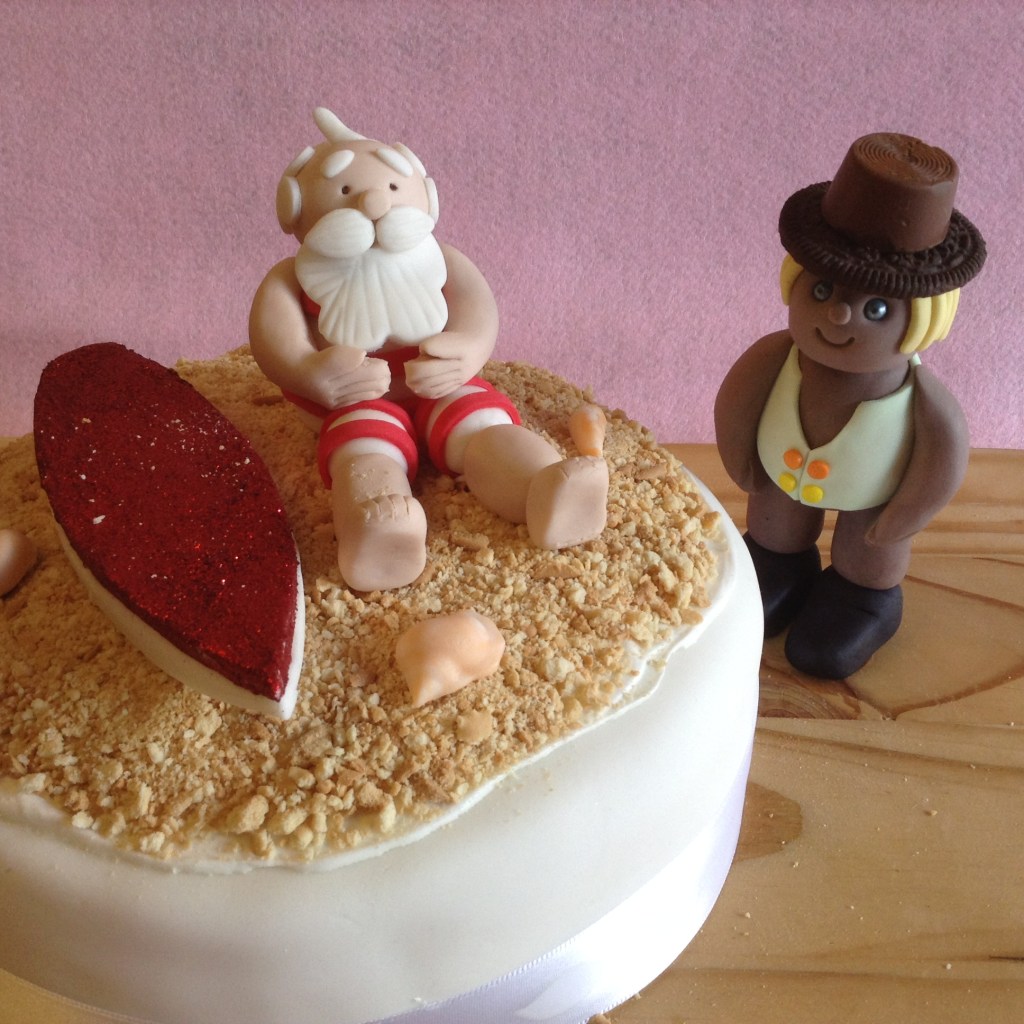
Other activities that make me happy are baking, fondant art, writing and blogging. I have a wonderful new gingerbread Christmas project on the go and am making and freezing all the pieces to assemble during the week before Christmas. I’m not going to tell you anything more, you will have to wait for the surprise closer to the day. I just love Christmas. November and December are my favourite months of the year.
A few of my Christmas creations
Another hobby of mine is reading, I just love to read. I read for 1 hour every night and, as I am a fast reader, I average about four books a month and at least one audio book.
Thinking about all the things that make me happy that I have written about here makes me realise what a lucky person I am. I have time and the ability to spend time over weekends doing the things I love doing. I also get to spend time with my favourite people every day. My sisters and their children visit regularly, as do my aunt and my husband’s family. What more could I really want from life?
What makes you happy? Let me know in the comments.
Thursday Doors is a weekly feature allowing door lovers to come together to admire and share their favorite door photos from around the world. Feel free to join in on the fun by creating your own Thursday Doors post each week and then sharing your link in the comments below, anytime between Thursday morning and Saturday noon (North American eastern time).
Picture of the door into 221B Baker Street, Sherlock Holmes’ house
221B Baker Street is the London address of the fictional detective Sherlock Holmes, created by author Sir Arthur Conan Doyle. According to Wikipedia, in the United Kingdom, postal addresses with a number followed by a letter may indicate a separate address within a larger, often residential building. In the late 19th century, Baker Street was a high-class residential district, and Holmes’ apartment would probably have been part of a Georgian terrace.
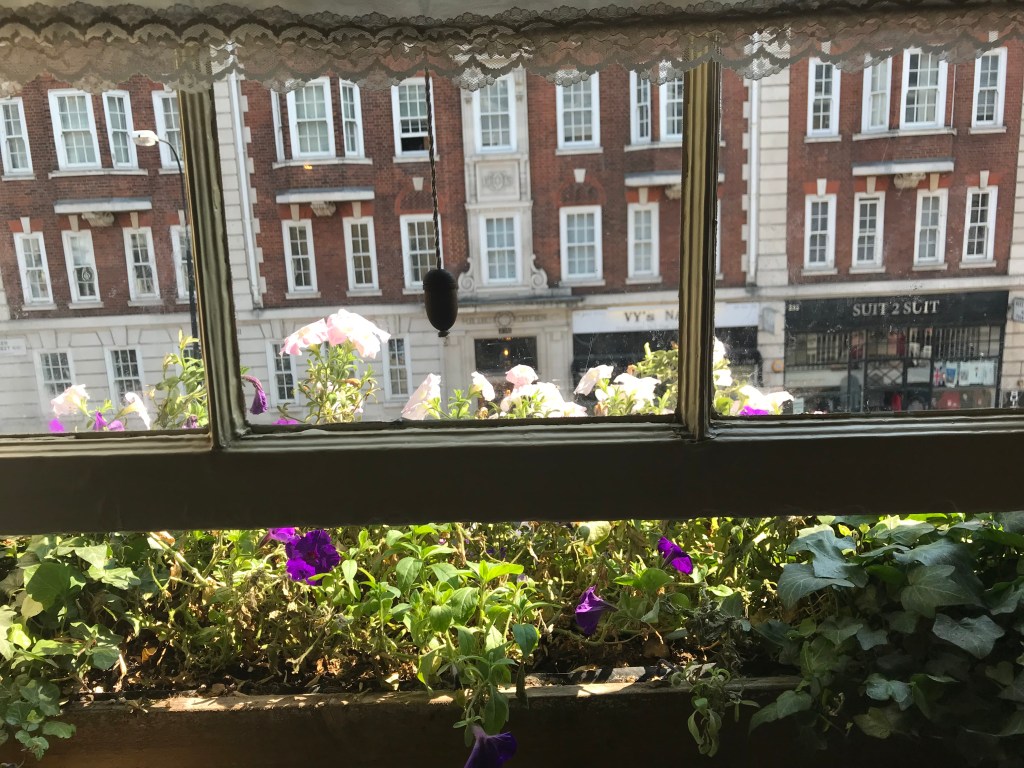
Terence and I visited 221A Baker Street during a quick work visit to London in 2018. These are pictures of a few doors inside the house.
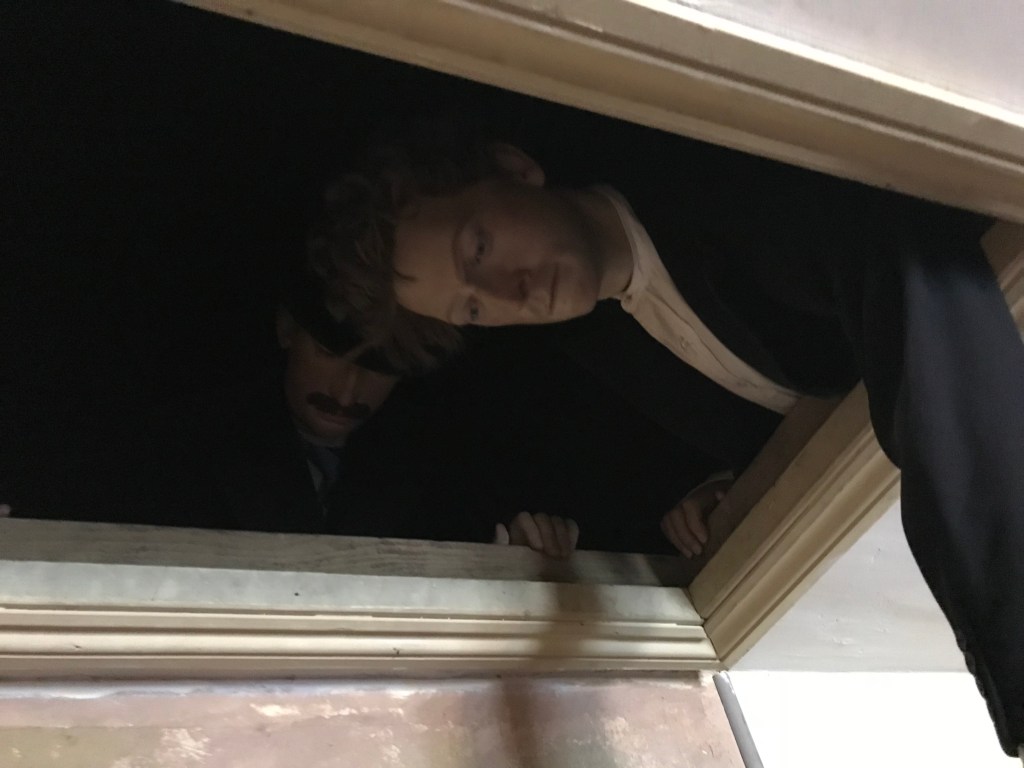
A picture of me outside the door to Dr Watson’s roomView of the shops opposite from the house with more security than I expectedDoor to a coffinDoor to a jail cellTrap door in the ceiling
At dawn tomorrow, I compete with every reputed warrior in our kingdom to become the King’s Champion. Defeating my opponents is almost an impossible feat for any man, much less a woman. Even so, I will triumph and win my father’s respect.
As the king’s eldest daughter, I vow to protect him and everyone in his kingdom. I stand ready to defend my father in mortal combat against any challenger vying for his crown. A true champion emblazons courage, loyalty, and sacred love for her king and family. But first, I must tell you my tale that seeded my desire to combat every warrior in the kingdom and stand by my father as his champion.
When I was barely five winters old, my mother and I gathered with villagers to greet my father, astride his coal-black stallion. Returning from war, he was like a god towering over his worshippers as he rode through their midst. They welcomed him with chants and cheers. Snowflakes danced around him, also celebrating his return.
Shivering, I covered my mouth with both hands, suddenly ashamed about my appearance. Boys had earlier taunted me, “You have a donkey’s jaw and bray like one, too.”
My nursemaid, a woman with ample bosoms spilling out of her low-cut dress, shooed the boys away and told me, “Don’t listen to them. You have an overbite, that is all. They’re jealous of you. You can beat anyone of those whelps.”
Her words didn’t make me feel better, though, as I studied the reflection of my face on a polished metal mirror. My upper jaw hung over my bottom lip. My upper front teeth protruded outward, making it hard for me to eat and speak clearly. Hence, I remained quiet most of the time.
When my father approached us on his horse, I drew out of my muse and swallowed hard with anticipation of speaking to him.
“What do I say to him?” I muttered to my mother.
“Only speak when he tells you to do so,” my mother instructed.
Fiddling with my plaid cloak, I recalled waving good-bye to my father in a season of blooming wildflowers before he left for war. My mother told me then, “He sails across the narrow sea to fight for a foreign army. By winter, he’ll return home.”
During the summer and fall seasons, I never gave my mother’s words consideration about my father’s return. He was out of sight and ceased to exist in my mind.
My little sister’s soft touch on my hand grabbed my attention. She looked at me with pathetic-looking eyes. The day before, she had fallen into the hearth and caught on fire. The queen’s guard—my only true adult friend—pulled her out of the flames.
After my father dismounted onto the soggy ground, he no longer appeared a giant. He didn’t look like other men in the village with a clean-shaven face and cropped wheat-golden hair. He also didn’t resemble me one bit. My hair was dark like my mother, and my acorn-brown eyes were the same color as the warrior who saved my sister.
Father embraced my mother, then pulled away and stared at her bulging belly. “Gods above, how did you get so big?”
Mother’s burning scowl made my father whither like a green sprout under a hot sun. At that moment, I didn’t like my father for his cruel comment. He must have seen the displeasure on my face because he apologized, “Forgive me, my love. Battle hardens a man’s words.”
Wiping a tear from her eye, my mother turned to me and said, “Vala, greet your father.”
I felt like a fish gulping for air as my father bent over and squeezed my chin with his fingers. “Hmm, you look as strong as an ox,” he said amiably, but the disappointment on his face shouted, You’re as ugly as a donkey!
Conflicting emotions grappled with me. I only wanted Mother in my life, not Father. I burst into tears—a sign of weakness.
Father gave my mother a contorted, baffled look. “What did I do to make her cry?”
Mother’s eyebrows arched in a warning for me to stop my bawling. I bit my lower lip and fought back sobs.
He shifted his ice-cold blue eyes to my little sister. “What happened to Morgana? She looks like she was in a dogfight and got the worse of it.”
My sister’s wails spurred mine. Neither of us could stop crying despite my mother’s glower. The nursemaid’s hefty bosoms smacked against my face as she grabbed my hand and reached for my sister’s arm. She dragged us both away from the people’s peals of laughter to the silence of the Great Hall. Halting near the central hearth, where my sister had fallen, she thumped my forehead with her fingertips. “Shame on you. Why did you make such a fuss in front of the king? I learned you better than that!”
I wanted to shout at the top of my lungs, “I didn’t do anything wrong,” but snapped my mouth shut when I saw her eyebrows rise like a storm. She would answer my protest with a swat on my rear end.
The nursemaid marched us through the high-vaulted, feasting hall into the adjoining living quarters where she corralled us like cattle in our bedchamber. “You get nothing to eat,” she bellowed and stomped out of the room, slamming the door behind her.
My sister covered her face with both hands and wept. Sitting on our straw-mattress bed we shared, I cuddled her like a baby in my arms to calm her.
“Shh … shush. No cry.”
She nestled her head against my shoulder and whimpered, “Vala, my Vala,” like a mantra until we both fell asleep in each other’s arms.
*****
Later, the bang of a closing door awoke me. I wiped the drowsiness from my eyes and found Mother sitting on our bed.
“Why did you cry when your father greeted you?” she asked.
“He … he’s so mean!”
Mother frowned. “He never said an unkind word to you.”
“He thinks I’m ugly!” I declared.
“That is how you see yourself,” she said, stroking the top of my head. “Your father only sees goodness in your heart.”
I looked down at my chest in bewilderment. “Father sees my heart? Can he also see the babies in your tummy?”
Mother sighed. “No. He knows”—she touched her belly—“they are in here. That is why he has returned. To make sure I’m safe. It’s hard bringing two babies into the world.”
“When will they come?” I asked, recalling how bloody a calf looks after being squirted out of its mother’s rear end.
“Too soon, I fear.”
I could see the angst in my mother’s eyes as her gaze drifted to the closed door.
“Is something wrong?” I asked.
“You must always obey and love your father,” her voice cracked. “I may not always be with you.”
My stomach dropped into what felt like a tidal wave. “Where are you going?”
“I want to stay here with you, my dear. But we don’t always get our wish.” She sighed as if trying to lift the worries of the world off her chest. “Your father is outside. He wants to give you something.”
“A gift,” I squealed with excitement.
Mother turned her gaze to the door and called out, “My king, you can come in now.”
When my father poked his head through, his face burst into a big grin. “Good aft, my precious daughters. Look what I’ve brought you from my travels.” He bound into the room like a frolicking fox and held out two carved, alabaster horse heads in the palm of his hand. He offered each one of them to my sister and me.
I took the horse head and fingered the attached leather strap. “An amulet?”
“Yes. Let me tie it around your neck,” my father suggested with a smile. “The horse is our family’s sigil—an animal guide that protects you.”
After he placed the amulet around my neck, I beamed with pride and clasped the carved horse head against my heart.
My father’s leathery face softened. “Vala, you must promise to watch over your little sister and the babies in Mummy’s belly once they are born. Can you do that for me? Will you protect them with your life and be the King’s Champion?”
A sense of pride swelled inside me with the honor he had bestowed upon me. “I am the King’s Champion.”
“Truly, you are,” he said, embracing me.
“I promise to protect my sisters,” I vowed, hoping the babies were girls.
And from that moment on, I aspired to be my father’s champion, embracing the strength to protect the weak and the oppressed.
***
Thank you for supporting this member along the WATCH “RWISA” WRITE Showcase Tour today! We ask that if you have enjoyed this member’s writing, please visit their Author Profile on the RWISA site, where you can find more of their writing, along with their contact and social media links, if they’ve turned you into a fan.
We ask that you also check out their books in the RWISAcatalog. Thanks, again, for your support and we hope that you will follow along each day of this amazing tour of talent by visiting the tour home page! Don’t forget to click the link below to learn more about today’s profiled author:








 roberta-writes.com