#Writephoto – Yearning

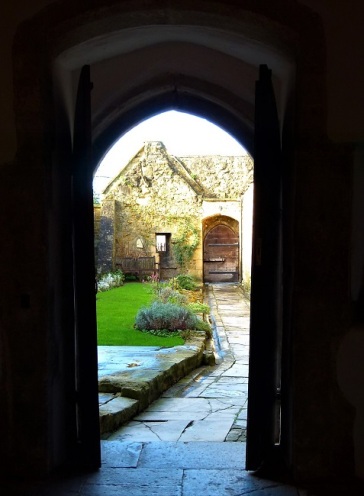
a channel of water flowing out to sea, with the sun reflecting on the water.

Our days and nights were no longer clearly defined in this strange dark world. The sky was a dark all day and this deepened into an even greater darkness at night. The cold was relentless and I did not want to waste our fuel, not knowing how long this terrible black winter would continue, or even whether it would ever end, although Tom assured me that it would. “Scientists predicted that nuclear winter would not last longer than ten years, but would go on for at least two years, depending on the number of bombs dropped.”

This was not as helpful to me as Tom seemed to think, as a difference of eight years in his prediction was a really long time when metering out food, drink and fuel. The fuel was my greater worry as it took considerable space to store wood and, as a result there was less in proportion to the stored food and drink. We settled into a routine of lighting the fire twice a day, early in the morning and again in the evening. When we had enough coals, I let it die down and then banked it to retain the heat in the coal until it was time to rekindle it.

During the time when the fire was burning brightly, we settled ourselves around it and read or wrote. Sometimes we played some board games which we found in a cupboard in the spare bedroom. When the fire died down and the cold started creeping in, we prepared and ate a meal and climbed into our beds, dozing in the warm until the time came for me to rekindle the fire.

As the days and weeks passed, I developed a yearning for some fresh intellectual stimulation. Tom too, was bored and it made him irritable and annoying. He would lie for hours singing the words of popular songs from before the winter over and over to himself. As the days wore on, and his appetite for new information and intellectual challenges remained unfulfilled, he became more inconsiderate and careless about his appearance. He did not want to wash or maintain his appearance in any way, nor did he want to talk to me and had chats or discussions. He withdrew into his own world of anxiety and fear. If I stirred from the room with the fireplace, which we were using as our primary residence, he would scream and cry hysterically until I returned. He would not venture outside at all which left me on my own to bring in all the wood and other items we needed from the outbuildings.

I have to do something. We are going to have to try to drive to the town. It’s only ten miles away. We should be fine. The thoughts went round and round in my head, banging on like a drum. I finally broached it with Tom. “Do you think we should take Glen’s 4×4 and drive to the town? There is bound to be a library there in the town’s Free Zone and we could get some books to read.”

His face lit up with enthusiasm and I felt bad for not having suggested it previously. His own yearning for respite from the boredom and routine reflected in his eyes.

“What will we do if we run into other people?” Tom’s face puckered slightly with distaste; he had never enjoyed meeting new people. His PTSD and OCD gave him a distrust of other people and their motives.

This boy can read my mind. How did he know I was worried about running into other people? We haven’t seen anyone since we arrived at the farm and it’s been a few months now.

“Don’t you think it would be nice to see some people? We have been on our own for a long time now.”

Tom’s eyes darkened and a wary expression crossed his face. “What about if they are hostile? We have food, drink and fuel; other people may want to take these things for themselves.”

My own fears were laid bare by these few words. What if there were hostile people out there? What if we ran into trouble?

“We’ll take Glen’s gun.” I had found it hidden in a safe at the back of a wardrobe in the bedroom. The safe wasn’t locked. Well done, Glen. Lucky for us, of course, but really careless not to lock the safe.

Tom nodded. “Okay, I do want to get some books. I am so bored.”

Written for Sue Vincent’s weekly write photo challenge. You can join in here: https://scvincent.com/2019/05/30/thursday-photo-prompt-yearning-writephoto/
#SoCS – Silence

Your Friday prompt for Stream of Consciousness Saturday is “silent/silence.” Use one or both in your post. Have fun!

From the diary of Jennifer Saunders

The view beyond the double glazed windows was one of complete desolation. There was no moon glowing brightly in the darkness of the night. Not a single star lit up the unwavering darkness. The thick layer of smoke and dust that had wrapped itself around the earth was impenetrable. The cocoon mankind had created for himself was complete and effective.

As I stood watching, the showering of snowflakes swirling and dancing in the air increased. They were difficult to see in the relentless dark. A splattering of slightly lighter grey in the greater darkness. Worse of all was the stillness. It is hard for me to convey the stillness. All my life there had been noise, the murmur of people moving about in the office or on the street outside, the chirps of birds welcoming the morning light, vehicles on the streets outside, televisions and other electronic devices buzzing in the background. The silence entered my head, bringing with it a horrible feeling that there was no life left on earth beyond this small cottage where Tom and I were bidding our time. A feeling of panic grew inside me, swelling and growing, threatening to overcome me.

“Mom,” said Tom, coming up next to me at the window. “Look at the sea, it looks so unchanged, doesn’t it?”

Saved by my extraordinary son from descending into a pit of despair and anguish from which there may have been no return, I looked at the ocean, watched it heaving and moving under the dark sky. I realised that I was wrong, the silence was not complete, and the gentle sound of the waves lightened my feeling of oppression and lifelessness.

I turned and drew him into a hug. I still have Tom, I’m not alone. I pushed any thoughts of John from my mind. The chance that my husband had survived the nuclear explosion in London was slight.

We had a lot to be thankful for. Glen left this cottage, his planned refuge, well stocked with long-life candles, food and fuel. His planning had been impeccable and in addition to the quantities of slow-burning oil we found in the house, the largest shed was filled with wood. There were also canisters of gas hidden in the cellar. It made me feel as if I was standing on a tinder pile that could go up in flames at any moment, but, it seemed to have been here for a long while and the house was still standing so my unease about natural heating supplies are probably unfounded.

I signed, thinking about my flick of a button heating at home. People hadn’t used wood or gas for heating since they had been banned by the World Government. How did Glen get his hands on all this wood and gas? Even prior to the ban on fossil fuels being implemented, they had been extremely expensive due to shortages. Beyond the financial reach of most people.

“Let’s make some dinner,” I said, draping my arm around Tom and walking towards the small but well-equipped kitchen.

Over our meal of reconstituted soya mince and powdered potatoes, Tom and I started talking about books. I was a great reader and I had passed this love on to my son, but both of us read on our electronic devices. These had reached the end of their useful lives due to the lack of power. Paper books had become unavailable for purchase by the public due to the ban on cutting down trees ten years ago. I miss the feel of a paper book, I signed wistfully at my memories of my youth when I had a whole bookcase filled with books. Most people read on their devices but there were still libraries which kept one copy of all books published.

“I wish we could visit a library,” Tom said. It gave me turn to realise his thinking was along such similar lines to my own.

“There is a library in the village. I did think about us driving to it and having a look around to see if there are any people about and whether anything was still functional, but I am worried that we could run into trouble. We don’t know what is happening in the world outside of this small piece of farmland.”

We haven’t seen a single person since we arrived about a month ago. Where are all the people?

You can join in Linda G. Hill’s SoCS challenge here: https://lindaghill.com/2019/05/31/the-friday-reminder-and-prompt-for-socs-june-1-19/

#Bookreview – The War of the Worlds by HG Wells

book reviews

What Amazon says

“No one would have believed in the last years of the nineteenth century that this world was being watched keenly and closely by intelligences greater than man’s and yet as mortal as his own.” Thus begins one of the most terrifying and morally prescient science fiction novels ever penned. Beginning with a series of strange flashes in the distant night sky, the Martian attack initially causes little concern on Earth. Then the destruction erupts—ten massive aliens roam England and destroy with heat rays everything in their path. Very soon humankind finds itself on the brink of extinction. H. G. Wells raises questions of mortality, man’s place in nature, and the evil lurking in the technological future—questions that remain urgently relevant in the twenty-first century.

My review

The War of the Worlds is an amazing book and through reading the book, as opposed to watching the movie, you get to appreciate HG Wells incredibly progressive understanding of philosophy and how human societies work. For me, these insights were the most outstanding feature of this intriguing science fiction story and provide food for thought about how people could evolve if our species focuses only on mathematical and scientific progress and moves away from creativity and emotion as the Martians are depicted to have done.

The narrator of this story is a journalist living an ordinary life in an ordinary English town. He happens to be good friends with an astrologer named Ogilvy and, due to this friendship, chances to witness an extraordinary sequence of explosions of gas on the planet, Mars. Ogilvy attaches not importance to this strange occurrence and reassures the narrator that there is very little chance of intelligent life on Mars.

A few days later a meteorite hits the common near to where the narrator lives on Maybury Hill. Ogilvy and the narrator investigate the pit created by the meteorite and suspect that it is unusual due to it being cylindrical in shape and made of metal. This event does not, however, attract much attention and only a small gathering of curious bystanders is present when the cylinder opens and the Martians are revealed in all their astonishing ugliness and clumsiness. Ogilvy is still convinced the Martians pose no threat to man as they are hampered so significantly by the greater gravitational forces present on Earth. He underestimates the advanced intelligence of the Martians and can’t imagine a being that is so highly evolved it has replaced its physical body with machinery making them entirely impervious to the forces of nature, or so they think.

Ogilvy becomes a victim of the Martians first demonstration of their military superiority and the narrator soon discovers that he is entirely incorrect in everything he surmised about Mars and the Martians. The war against the alien invaders begins and all of the weapons created by men are quickly and easily overcome by the Martians.

The story is told from the point of view of the narrator, who is present from when the Martians first arrive on Earth, and from that of his brother, who is living in London when the alien invaders attack the city.

Aside for the intriguing ideas about the nature and psychology of the Martian invaders, there are also some through provoking scenes featuring the narrator and a pastor which cannot come to terms with the demise of mankind at the hands of the Martians.

An excellent book for readers who are interesting in philosophy, psychology and science fiction.

Purchase The War of the Worlds

#Writephoto – Transition

transition

From the diary of Dr Thompson

I warned them about the catastrophic consequences of a nuclear war on the earth’s atmosphere and climate, but they did not listen. As with many situations in life, greed and ego overwhelmed common sense. This time, however, man’s follies have not just resulted in a war. This time, they have brought mankind to its knees.

It did not take long for the world to transition to one of perpetual darkness as the nuclear winter set in. I knew it was coming when I learned about the numerous and immense fireballs caused by the exploding nuclear warheads. The fireballs resulted in massive fires as office blocks, warehouses, houses, churches and schools all burned. Outside the cities, the woods and farmlands burst into bright, yet devastating, flames.

From the second floor window of my home I watched this great and uncontrolled burning. Thick and choking plumes of soot and smoke billowed into the blue sky, where it mixed with the copious fine dust raised by the explosion, and turned it black and grey. The widespread destruction of the transport infrastructure in the city meant that, on the assumption that there was any formalised firefighting capacity left after the explosion, no-one could travel by vehicle or train around the outer circumference of the city. The inner city, which had taken the direct hit of the blast, no longer existed. There was no-one to fight the fires.

I am watching my hypothesis on a nuclear winter becoming reality. It is already perpetually dark and the intense cold has set in. In my mind’s eye I visualised the terrific heat of the fires lifting the clouds of smoke higher and higher into the atmosphere.  I imagined them drifting on the strong west-to-east winds until they formed a uniform covering of particles encircling the Northern Hemisphere, which blocked out all but a fraction of the sun’s light. I know that the lack of sunlight will have caused large horizontal and vertical temperature gradients which would have accelerated the transport of particles and radioactivity from the Northern Hemisphere to the Southern Hemisphere. I have assumed it will have occurred this way as I did not hear of any nuclear explosions outside of the Northern Hemisphere before the communications networks went down. The temperatures on the surface of the earth have already plunged and this, together with the nuclear fallout, will destroy a great deal of the animal and plant life.

In my scientific paper on a nuclear war, I made an assumption that approximately three to four billion people would survive the initial blasts and the radioactivity. I anticipated this figure would decrease significantly due to starvation, exposure to the cold and disease resulting from the nuclear winter that would follow.

I know I am dying but rather than die from radiation poisoning, I am allowing myself to gradually die of exposure. This seems a better way to go and I don’t have any weapons in my house to hasten my death by any other means.

Thank you, Sue Vincent, for providing another great prompt that fits in perfectly with my current Nuclear Winter theme. You can join in this prompt here: https://scvincent.com/2019/05/23/thursday-photo-prompt-transition-writephoto/

#Flashfiction – Ice

Charli Mills’ prompt for the week is as follows: May 23, 2019, prompt: In 99 words (no more, no less) write a story without ice. It can be a world without ice or a summer camp that runs out of cubes for lemonade. What does the lack mean to the story? Go where the prompt leads!

Here is the 99-word version of my story:

As we stepped outside, a chilly wind embraced us, making my eyes sting and water. The cold of the air felt more intense than when we had arrived a few hours ago and more white flakes flew from the dark sky. Our feet crunched on ice encrusted grass as we trudged across a wide expanse of lawn towards the first outhouse. Dizziness and confusion gripped me and thought I might collapse, but, drawing a few reviving and slow breaths, I managed to reach the small building and open the door. I stepped into its shelter, dragging Thomas after me.

If you would like to read the longer version with more context, here that is too:

From the diary of Jennifer Saunders

The farm was everything we had hoped for and more. It was remote and Glen proved to have been a survivalist who obviously foresaw a time when the modern world shuddered to a halt for some or other reason. World Government electrical networks did not reach this isolated location and so a number of gas lights were placed at convenient intervals around each room. I was hugely grateful when I flicked the switches and they sprang to life. Tom and I were already weary of the perpetual dark of the Nuclear Winter that had settled upon the land.

In the pantry we found rows and rows of canned goods including milk and various high protein legume based foodstuffs. Vacuumed packed packages of soya products, dried milk, soups and other instant meals were stacked on the wooden shelves. There were no meat-based products but I wouldn’t have known what to do with any had we found them. It had been over twenty years since consumption of meat by humans had been banned. There was also a good supply of water. He must have used his military connections to obtain this sort of stockpile which was far in excess of the individual food and drink allocations allowed in terms of the World Government policies.

In the cupboard in the main bedroom I found a selection of thermal lined fleece jackets, gloves and hoods, with a flap that came down over your ears and another that covered your mouth, leaving only your eyes exposed. The clothing was much too big for Thomas and me, but we put them on over our own clothes anyway, before venturing outside in the subfreezing temperatures to inspect the outhouses. Fortunately, I had packed our boots into our luggage before we fled Birmingham.

As we stepped outside, a chilly wind embraced us, making my eyes sting and water. The cold of the air felt more intense than when we had arrived a few hours ago and more white flakes flew from the dark sky. Our feet crunched on ice encrusted grass as we trudged across a wide expanse of lawn towards the first outhouse. Dizziness and confusion gripped me and thought I might collapse, but, drawing a few reviving and slow breaths, I managed to reach the small building and open the door. I stepped into its shelter, dragging Thomas after me.

You can join in the challenge here: https://carrotranch.com/2019/05/23/may-23-flash-fiction-challenge/

SoCS – Rhymes with posy

From the Diary of Dr Thompson

I have often wondered what would happen if there were a world-wide catastrophe. People have entirely different ways of reacting to events and, often, their reaction is completely different from what you expected from that particular person.

I remember when a friend of mine’s company was involved in a corporate scandal. He was a corporate financier, whose job involved debt restructuring and business turnarounds. You would have thought a guy like that would have reacted with quiet calm to a difficult situation like this. He was one of a number of purportedly top innovative people who worked for this firm. None of them reacted as I expected. I was surprised to watch how they ran around in meaningless circles, trying to get things done with no real plan or purpose to their actions. They did not have the creativity to think broadly and find innovative solutions to the crisis. This cycle of disastrous chaos and confusion went on for months before the company finally started to stabilize. It was miraculous, considering that lack of proper planning and cohesion among the leaders, that it ever pulled though at all. It completely undermined my confidence in the abilities of professional people like lawyers and accountants to deliver on any of their promises to their clients.

Lack of innovation is one of the main causes of this war mankind is now embroiled in. Prior to the introduction of advanced digitization, the World Government attempted to provide guidance to less developed countries to help them become more innovative, as this was known to be a key driver of Fourth Industrial Revolution readiness. The sub-governments of individual countries and their business leaders where encouraged to promote creativity by empowering employees and challenging them to create, challenge and experiment. Programmes were developed to up-skill workers and give them the abilities thought necessary to survive in a fully digitalised society.

A lack of understanding of cultures, including patriarchal and hierarchical societies, led to failure in this area and the ultimate inability for these economies to adapt efficient to changing parameters. The inequality gap increased, plunging numerous countries into poverty and resulting in the creation of the ghetto system where the poor were given accommodation and other basics to help them survive but dooming them to a life lacking any opportunities for change and future employment. The frustration and anger of the masses was underestimate, much to the detriment of the World Government which is now collapsing in the most spectacular way.

As I watch from my window, seeing the chaos and confusion of the devastated city and witnessing the tumultuous masses trying to flee, in any way they can, I know that only the innovative will survive the post apocalyptic world that awaits them. Without the daily guidance provided by their microchip implants, the rest will all die.

***

This little meander through the diary of Dr Thompson, was written for Linda G Hill’s weekly SoCS challenge. This week it is rhymes with rosy.

I asked my husband for a word that rhymed with rosy and he said cosy and posy. I asked my son, Gregory, and he said nosy. None of theses words inspired me to I looked on Rhyming Hippo and that had a few more interesting ideas, including through me and catastrophe. I chose catastrophe.

You can join in the challenge here: https://lindaghill.com/2019/05/24/the-friday-reminder-and-prompt-for-socs-may-25-19/


#Bookreview – The Gemini Connection by Teri Polen

book reviews

What Amazon says

Teen twin brothers Evan and Simon Resnik are fiercely loyal to each other and share an unusual bond—they experience each other’s emotions as their own and can sense where the other is.

On their dying planet of Tage, scientists work tirelessly on its survival. Like the twins’ parents, Simon is a science prodigy, recruited at a young age to work with the brilliant creator of Scientific Innovations. To the bitter disappointment of their parents, Evan shows no aptitude or interest in science. As a Mindbender, he travels into the minds of scientists to locate buried memories, connect ideas and concepts, and battle recurring nightmares.

When Simon mysteriously disappears, Evan is plunged into a world of loss and unbearable guilt. For the first time, he can’t ‘feel’ Simon—it’s like he no longer exists. Evan blames himself. No one knows that he ignored his brother’s pleas for help on the night he went missing.

A year later, Simon is still gone. Evan lost his twin, but Tage might have lost its last hope of survival when it’s discovered that Simon’s unfinished project could be its salvation. Evan is determined to find him—somewhere—and bring Simon home. Their unusual connection might be more extraordinary than they know, and the key to locating Simon.

My review

The Gemini Connection is a most intriguing book which weaves the human emotions of frustration, anger, jealousy, resentment, self depreciation and love like colourful threads through the greater fabric of an exciting and unique science fiction novel.

The book features twins who live in a futuristic dystopian world where the inhabitants of the planet have exhausted many of its resources and what remains is being decimated by unknown and untreatable diseases. Scientists and other clever and inventive people, who are able to contribute towards findings solutions for the salvation of a society that is in the process of failing, are held up as heroes and are the recipients of accolades for their societal contributions as well as better food and lifestyles. The twins parents fall into this category and, at the beginning of the story, spend all their time and energy on saving their people and planet. This complete change in their focus from their family and two sons to the quest for glory in the guise of saving their planet changes life significantly for Simon and Evan. The backstory of their evolution into scientists, obsessed with their work, and the related increasing disdain for ordinary people who are not able to contribute towards saving the planet in the same way due to different talents and aspirations, is an important theme of the story and sets the scene for the unfortunate events that come to pass in the book.

Simon has a brilliant mind and is following in the footsteps of his illustrious parents. Evan is not as intellectual and demonstrates more physical and sporty gifts. This makes Simon the child of their parents dreams and Evan the disappointing child they cannot relate to or understand. This attitude by their parents results in Evan becoming a young man who lacks confidence and belief in himself and who feels inferior to his cleverer brother. Despite this unfortunate home environment, Simon and Evan are very close and share a unique bond that enables them to both “feel” the other’s presence and emotional state. When Simon disappears soon after discovering a sordid and dark secret by one of his mentors in his job, Evan feels responsible and sets off on a path of emotional self destruction. However, Evan has a talent of his own which enables him to access the minds of other people and help them sort out their chaotic thoughts. This talent gives him to tools track down and help save his brother but it also serves as the gateway to his own possible destruction. Will Evan be able to detect their joint enemies and stop their evil plans in time to save his brother and return him home? I enjoyed this book’s fresh take on a science fiction story.

Purchase The Gemini Connection

SoCS – Brilliantly creative minds

Brilliantly creative minds seem to abound in the world of literature. Some writers seem to effortlessly capture immensely complex ideas on paper in such an interesting and enlightening way that I find their words quite remarkable. When I read classics which demonstrate this superior planning of character development and plot I feel awed by the author’s mastery of his/her art and the agility of their mental processes.

One writer I have included in my category of brilliantly creative minds is H.G. Wells. He is, of course, a famous and international known writer and his books have been made into movies, but I did not appreciate his sheer brilliance as a philosopher and analysis of human behaviour until I listened to the audio books of, firstly, War of the Worlds, and secondly, The Time Machine, over the past few weeks.

The movies of both of these books do not focus on their philosophical elements  which, to me, were the most amazing and intriguing ideas in the books. H.G. Wells depiction of the Martians as beings that have evolved into such highly complex and intellectual creatures that they no longer require a body astonished me in it’s cleverness.

If you think about it, machines are always superior in strength and endurance to any physical being and if you are able to create machines to do all the tasks you require, why would you need to bother with maintaining a physical body? The Martians are merely brains with large eyes and hand-like tentacles which enable them to operate their many amazing machines. In order to focus only on intellectual pursuits, the Martians have eliminated emotions from their genetic make-up and they do not feel empathy, sadness, joy, fear or any of the other emotions that distract human beings. They are creatures of logic and their decisions are not hampered by emotion, sexual desire or even pleasure in eating and drinking. They do not eat but rather inject blood from a living being directly into their own veins. This really made me think as people with unusually high IQ’s often have low EQ’s and find it difficult relating to other people. What would our world be like if all of humanity were genetically engineered to create only geniuses?

The Time Machine also demonstrates and unusual understanding of the factors that drive human intelligence. In this book, the Time Traveler goes many thousands of years forward in time. He finally arrives at an age which, on the surface, appears to be a golden age where men have managed to achieve a purely communistic society where everyone enjoys the same benefits. There is no hunger, suffering or deprivation in this far distant time. The Time Traveler, however, soon discovers that the price man has paid for this Utopian world is his intelligence. The human-like creatures that inhabit the upper world have the mentality of children and lack any motivation to produce or create anything. H.G. Wells’ explanation is that if all your needs are met and there is no need to use intelligence to survive through means such as building shelter, storing food and fighting attackers, the intelligence will become obsolete through lack of challenge and use.

I thought these two ideas on the evolution of society were fascinating. What do you think? What brilliantly creative minds have you come across through reading fiction?

This post was written for Linda G Hill’s Stream of Consciousness Saturday challenge: https://lindaghill.com/2019/05/17/the-friday-reminder-and-prompt-for-socs-may-18-19/

#Flashfiction – Trees

The enormous tree drew her. Its branches reached up into the bright, blue sky, far above its fellows. She knew only too well that all of the trees were nourished with the flesh of humans deemed by society to be wasteful squanderers, but she still admire this particular tree’s tenacity in beating its competition and achieving such great proportions. She thought of another tree. The one she had seen on the eve of the Great War after the bombs had rained down. She recalled the tendrils of fire running up its wide trunk and licking greedily at its branches.

May 16, 2019, prompt: In 99 words (no more, no less) write a story that goes in search of trees. It can be one particular tree, a grove, woods, or forest. What makes the tree worth seeking? Go where the prompt leads!

You can join in the prompt here: https://carrotranch.com/2019/05/16/may-16-flash-fiction-challenge/

#Flashfiction – Aging

Would you really want to live for longer? It is an appealing idea to slow down the aging process and retain the good looks and vibrant good health of your 20s, but there is a down side. Imagine having to work for double the amount of years. Instead of spending 40 years of your life caught up in the turmoil and intensity of paid employment, 80 years would be required. After that amount of time, even the most interesting job could become mundane. Maybe we would have to switch careers and go through learning and training years again. Ug!

The above 99-word flash was written for Charli Mills’ weekly flash fiction challenge. You can join in here: https://carrotranch.com/2019/05/10/may-9-flash-fiction-challenge/

Charli’s prompt also inspired the following longer piece:

From the diary of Dr Thompson

It is interesting to see how people cling to life. No matter how dire their circumstances or how old and dependent they are, they don’t want to die. Maybe it is because they are familiar with their current lives and can hope that their circumstances will improve, whereas death is the great unknown. Some people, of course, do not find succumbing to death to be a great leap of faith, but to many, the lack of clarity beyond the grave is disturbing.

I warned the World Government that they could not obviously favour one grouping of people over another when it came to the extension of life. This was more controversial in my view than their plan of  genetic engineering to increase human intelligence. In my experience, not all people aspire to intellectual greatness.

The idea of the World Government was simple. Individuals who demonstrated the characteristics of higher performance and productivity were singled out and their personal identification microchips were programmed to use available biotechnology to change the genetic makeup of such individuals’ cells, slowing down their aging process and reversing the negative effects of heart disease and other stress and anxiety related health problems caused by their ambitious, rigidly organised, anxious and proactive personalities. This programme had two major effects on the selected individuals: they aged at a slower rate than their peers and their productive work lives increase from approximately 40 years to over 80 years and the genes that resulted in their high-functioning abilities were exacerbated in their children.

It did not take many years for the people living in the compounds for the unemployed to notice that their working peers were not aging at the same rate as they were. Men and women in high pressure jobs maintained the smooth skin and full bodied and richly coloured hair of their youth for many years. When the effects of time did finally start manifesting in their faces, the changes were subtle. They also maintained their robust good health and did not suffer arthritis, osteoporosis and other debilitating aging diseases. The rumblings of discontent in the ghettos and compounds increased as the inhabitants slowly came to the realisation that they were missing out on the opportunity of an extended life. The World Government denied any intervention in this area of humanity; it was not economical to have the unemployed living for longer. It only made sense for those people who would use this longer life for the benefit of society by increasing their skills and remain productive for longer.

The uprising, demonstration and unrest continued and the government resorted to using the military, a privileged group of men and women with unusually strong bodies, high endurance as well as high intelligence, to control the masses through whatever means they deemed necessary.

The other major issue that arose as a result of this genetic manipulation was that the human characteristics of anxiety and stress, which frequently went hand in hand with high performance and greater intelligence, increased in the children of the genetically engineered workers. Mental illnesses such as depression, PTSD, OCD, panic attacks and other, similar disorders became more apparent and troublesome among the working population. These negative effects had to be controlled through the use of an additional microchip implant aimed at controlling the amount of serotonin in sufferers brains but, the scientists soon realised, that the microchip and other medications only worked to a certain extent. They had a problem on their hands and it was not easily solvable as removing these negative aspects of human behaviour would also remove the personality traits government wanted desperately to retain.