#Bookreview – The Serpent and the Eagle by Edward Rickford

Book reviews

What Amazon says

Something has come from beyond the Great Mists…

Tenochtitlan, 1519. Strange, pale-skinned people have arrived on the coast of the One World. They hail from a faraway land called Spain and fight for the mysterious Hernando Cortes. To confront Cortes’ forces would be dangerous, but inaction may be even more dangerous.

The Mexica are the most powerful people in all the One World and regard the uncouth interlopers with a mixture of curiosity and distrust. Keen to discover their intentions, the Mexica send an official envoy to the coast. What they learn is most troubling. The Spanish possess weapons that have no equal and may have designs on Tenochtitlan.

The conflict that follows will tear an entire region asunder and give birth to an empire of globe-spanning proportions. Combining the political intrigue of Wolf Hall with the gripping battles of The Last Kingdom, this award-winning historical novel meticulously reconstructs a long-lost world in order to faithfully recount an event still unique to this day: the epic collision of two civilizations separated for over ten thousand years.

Editorial Reviews

“The epic encounter of Aztecs and conquistadors has attracted—and tested—many a novelist. The challenge is one of staying believably true to the historical tale and its Mexican setting, while at the same time offering the reader some surprises. Rickford rises to that challenge with considerable aplomb, balancing evidence with imagination, research with flights of fiction. Fueled by a complex narrative tension and a deft deployment of detail, The Serpent and the Eagle is unpredictable in all the right ways.”
—Matthew Restall, Professor of Colonial Latin American history, Director of Latin American studies at Penn State, author of When Montezuma Met Cortés

“Edward Rickford knows his history. The Serpent and the Eagle is a masterpiece of historical fiction. It’s filled with surprises and heart-rending characters, but it’s Rickford’s attention to cultural details, both native Mexica and Spanish, that puts this book one step above its competition. Plan a long weekend of reading. You’re going to love this book.”
—Kathleen O’Neal Gear, New York Times bestselling author of People of the Canyons

“A captivating, well-plotted, bicultural dramatization of the months prior to Motecuhzoma’s meeting with Cortés, deftly transporting the reader 500 years back into the eyes and intimate relationships of key participants—Mesoamerican and European, emperor and counselor, conqueror and slave.”
—Andrew Rowen, author of Encounters Unforeseen: 1492 Retold

“Difficult to put down. Well-written, fascinating, and full of wonderfully diverse points of view!”
—Zoe Saadia, author of the Pre-Aztec Trilogy and the Rise of the Aztec Series

“A wonderful premier novel.”
—N.D. Jones, USA Today bestselling author

“When two cultures collide, there are always multiple versions of history. A brave and expansive look into the bygone era of exploration by the Spaniards into Aztec lands. A thinking person’s novel. Fascinating!”
—Chanticleer Reviews

“The Serpent and the Eagle is another literary text that may offer the reader exits out of the colonial wound of indignity and entrances into the enunciative reclamation of silenced historical, social, and cultural spaces.”
—C.T. Mexica, Ph. D, Arizona State University

“The story weaves a rich tapestry of Spanish conquistadors and native Mexica—commonly known as the Aztecs—as well as the neighboring native tribes, that transports readers to the lush jungles and grand cities of pre-Hispanic Mexico. The writing is clear and easy to read, with just enough Spanish and Nahuatl to add deep flavors without slowing the pace.”
—Casey Robb, author of The Devil’s Grip

Grand Prize Winner in the 2018 Chaucer Book Awards.
Winner of Five-Star Review from Readers’ Favorite contest.
Discovered Diamond award.

My review

This book is my first reading encounter with the history of the arrival of the Spanish explorers/conquerors in Mexica and their encounters with the Aztec (called Mexica) people. I do not know the history of South America well, but this book came across as being exceptionally well researched and is based on real events and people, including the leader of the expedition, Cortes, the missionary and interpreter, Aguilar and the young native Mexica slave, Malintze, who becomes and interpreter for Cortes when he realises she speaks more than one of the Mexica languages.

In the early 16th century, the Aztec world, called the One World, which comprises of a large number of different native peoples, who inhabit the various cities and villages and who speak a spectrum of languages, are all united under one cruel and dominant leader, Motecuhzoma or the King. The OneWorld is described as operating as a federation with each area retaining its own language and culture and being ruled by their own leader but all falling under the central leadership of Motecuhzoma in his main city of Tenochtitlan. The Mexica are wealthy and have discovered the aesthetic pleasures of creating artworks from gold, jade and exotic feathers. The have a robust religion which requires them to make numerous human sacrifices to their many gods. They actively engage in slavery, particularly of young girls who are sold by their families if they cannot pay their tributes to the King. Motecuhzoma’s people collect tributes from all of the areas/provinces in his domain and under his dominance. Motecuhzoma is described as a typical feudal lord and he and his favoured courtiers live a life of comfort and luxury while their subjects like in poverty and fear.

The descriptions of the Mexica life makes it difficult for the reader to sympathise with Motecuhzoma and his courtiers, even though you know they are ultimately going to be crushed by the Spanish, due to their harsh and cruel behaviors. The Spanish, who are God fearing Catholics, are not much better and are also violent and determined in both taking what they want from the locals and attempting to introduce Christianity to the native people.

Cortes is described as being a great leader of men, they type who could lead his followers off a cliff, but who is driven by a determination to better himself and gain recognition by the King in Spain, and these characteristics drive him even more than his lust for gold. He wants gold mainly to further his goals of acceptance and power.

Aguilar comes across as weak and pathetic and is a poor example of a man of God. He is jealous of Cortes engagement of Malintze as an additional interpreter. Other Spanish men are also depicted as being frightened and diminished beings, including the Jewish Vitale, who is desperately anxious to reveal his heritage and New Christian status.

I love history and I really enjoyed this book from a historical perspective. It submerges the reader in the culture and atmosphere of the time and I learned a great deal about both the Spanish and the Mexica way of life at that time. My comment on the overall plot line, however, is that the plot is driven only by the history and is not really strong enough, in my opinion, to support a trilogy. I felt this first book moved rather slowly and I kept expecting Cortes to make a move on Motecuhzoma and his famous city but that didn’t happen. I was left the book ended rather abruptly and left the reader hanging and this was rather disappointing.

Purchase The Serpent and the Eagle

#RRBC #RWISA #RWISARiseUp With Hands Clasped: Thoughts of the Pandemic By Harriet Hodgson

2020 RWISA RISE UP TOUR BANNER

With Hands Clasped: Thoughts of the Pandemic

By Harriet Hodgson

Harriet Hodgson

As COVID-19 spread across the land, Americans were directed to stay home. This news led to all sorts of questions. What will we do for entertainment? How will we teach the kids? Will we run out of food? As weeks passed, many Americans felt confined, even imprisoned. Not me. A freelancer for 38+ years, I was used to working at home.

My husband and I have been married for 62 years. “I love you more today than yesterday,” I often say. Staying home with him was a blessing. Pulitzer Prize winner Mary Oliver, in one of her poems, uses the phrase “with hands clasped.” I lived her words with hands clasped in memory, in caregiving, in creativeness, in gratefulness, and in hope.

In memory . . .

When World War II started, I was four years old. COVID-19 made me anxious and scared. These feelings caused war memories to become vivid again: food rationing, gas rationing, digging potatoes in our Victory Garden, Mom working in a wartime factory, and air raid blackouts. Odd that a pandemic would cause memories to resurface, yet a world war and world virus are similar. Many experts compared fighting the virus to a war, one we would win.

In caregiving . . .

I have cared for three generations of family members. This is my 23rd year in the caregiving trenches. In 2013 my husband’s aorta dissected and he had three emergency operations. When he woke up, he was paraplegic, unable to use his lower body or legs. The night I drove him to the hospital, I became his caregiver, and believe caregiving is love in action. Retired doctors and nurses rallied to fight COVID-19. I added virus protection to my caregiving To Do list.

In creativeness . . .

I have always been a creative person. While I sheltered at home, I revised two workbooks I wrote for grieving kids, edited a children’s picture book, explored doodle art, baked up a storm, and emailed publishers. So far, I have written thousands of articles and 38 books. Two publishers accepted the children’s books. Because of the pandemic, however, production of the grief books is on hold. The children’s picture book is still in production.

In gratefulness . . .

Americans are interdependent and need each other. COVID-19 showed that truckers, store clerks, housekeepers, home sewers, lab techs and countless others are heroes too. Staying home made me realize, yet again, that little things, such as the first robin of spring, are big things. As usual, I was grateful for my wacky sense of humor. (Yes, I laugh at my own jokes.)

Since I could not be physically close to others, I reached out in different ways. I sent surprise gifts to some, was a guest on blog talk radio, signed up for another show, posted book videos on social media, increased email to family members, gave books to friends and strangers. Though I am a kind person, I tried to be kinder, a lesson many learned from the virus. I also vowed to slow down a bit.

In hope . . .

I have survived cancer surgery and open-heart surgery. Each morning, when I awaken, I ask myself, “How can I make the most of the miracle of my life?” At age 84 I am still discovering pieces of my unknown self. Thanks to experience, I know how to adapt to the changes of life. I also know some changes are easy, and others test the soul.

Poet John O’Donohue, in his book To Bless the Space Between Us, refers to changes as thresholds. Thresholds can make emotions like confusion, fear, excitement, sadness, and hope come alive. It is wise to recognize and acknowledge thresholds, O’Donohue continues, and I have tried to do this.

The pandemic pushed America to a threshold, one that will define our nation. Let us cross this threshold together with kindness, dignity, and mutual respect. Let us cross with hands clasped in love.

Contact Harriet Hodgson

RWISA PROFILE PAGE – https://ravewriters.wordpress.com/meet-the-authors/author-harriet-hodgson/

Twitter:  @Healthmn1

Facebook:  https://www.facebook.com/harriet.hodgson.7

Blog/Website:  Harriet Hodgson

Giveaway

Thank you for supporting today’s RWISA author along the RWISA “RISE-UP” Blog Tour!  To follow along with the rest of the tour, please visit the main RWISA “RISE-UP” Blog Tour page on the RWISA site.  For a chance to win a bundle of 15 e-books along with a $5 Amazon gift card, please leave a comment on the main RWISA “RISE-UP”Blog Tour page!  Thank you and good luck!

Open Book Blog Hop – Should we have more bank holidays?

IMG_4058

May 4 2020 is the unofficial Star Wars Day.  What other days should be recognised as holidays but aren’t?

South Africa has twelve public holidays which seems to be more than many other countries. The holidays fall on specified dates which means that they can occur on any day of the week including weekend days. South Africa also has a traditional holiday shut down period of about three weeks over the Christmas period. Many business close between 16 December (a public holiday) and the end of the first week in January.

It is nice to have holidays but they can result in a loss of productivity especially when more than one holiday occur in the same week or when the public holiday occurs mid-week. When this happens, many people take a whole week’s leave and that does create strain when a lot of people are all away at the same time and there is work to be done. I work with a lot of advisors, lawyers and teams from London and the US, so I rarely get to take any extra time off over these periods. I frequently work on the public holidays and sometimes over the weekends too. Easter, particularly, seems to be a busy time in my life and I nearly always need to work at least one, but more often two, of the four-day holiday period. For the past four years, I have been working on international transactions over the Christmas shutdown period too so I have also worked during this traditional holiday time.

I don’t mind working over holiday periods, as I am glad to have work and be busy. There are lots of people who don’t have work especially in our weak economic environment. I thought when Covid-19 came along recently, I might not be busy. I was wrong and I am busier than ever. My firm was closed last week but I worked every day.

Back to the question, should there be more holidays? No, not in South Africa. This is a developing country and our economy is ailing. People here need to work hard to get our businesses up and running again, especially after this unfortunate lock down period. If public holidays are necessary, then they should be on a Monday only, like they are in the UK. At least then the entire week isn’t disrupted because one of the days is a holiday.

I do believe that people need breaks from work and I think that these breaks should be in the form of a continuous break of at least two, but preferably, three weeks. This allows people to have a proper change and unwind from all the accumulated stress of their daily work and lives. I also think that people should not be disturbed by their work places at all during their holiday times. If I work for even one or two hours on a holiday day, all the benefit of the relaxation is gone and I am all stressed and tense again. I haven’t had a holiday where I haven’t had to work for at least two or three days out of a fourteen day holiday period, in over ten years. Based on my own experiences, I don’t think this is good for a person’s general health. You get stale with your job and it starts to wear you down.

This is what I think but I am a chartered accountant with a strong interest in African and other developing economies. I would like to see more job creation and a better life for people in these countries and, I believe, that takes hard work and sacrifice with specified beneficial breaks for workers to recover and recharge.

What about you?

Do you think there should be more holidays?  Click on the link below to find out, or even add a comment.

Rules:

  1. Link your blog to this hop.
  2. Notify your following that you are participating in this blog hop.
  3. Promise to visit/leave a comment on all participants’ blogs.
  4. Tweet/or share each person’s blog post. Use #OpenBook when tweeting.
  5. Put a banner on your blog that you are participating.
You are invited to the Inlinkz link party!

#SoCS – Directions

Anyone who knows me well will tell you that I am not good at following directions. Actually, I can’t get from A to B even with a map and a GPS, TomTom or whatever other instructional, direction providing device there is out there. I always get lost. I could get lost driving home from the office if I happened to get into a panic on the way. Anxiety overwhelms all landmarks and familiar roads and sights on my route.

Maybe my inability to follow directions has something to do with my obstreperous personality. I was not good at following directions at school and I am not particularly good at following directions in my job either. I like to think backwards instead of forwards and so I come up with the solution and then work backwards to determine the mechanics of a transaction. It makes perfect sense to me. I want to get here and then, how can I get there? I nearly always works I am pleased to say and I think there is quite a lot to recommend my slightly unusual approach in corporate finance. Thinking out of the box is what we are told to do.

When I bake and make fondant creations, I usually don’t follow the recipe or instructions that closely either. After all, I want my own version, don’t I? Luckily for me, 99% of the time my attempts work out. The birds get the 1% disaster.

How good are you at following directions?

This post was written for Linda G Hill’s weekly Stream of Consciousness Saturday challenge. You can join in here: https://lindaghill.com/2020/05/01/the-friday-reminder-and-prompt-for-socs-may-2-2020/

#Bookreview – What happened in Vienna, Jack? by Danny Kemp

Book reviews

What Amazon says

A robbery in London. The murder of a priest at the end of World War Two. A genocide in Namibia. The discovery of the remains of Hitler’s secretary.

Something connects all this. Former British spy Jack Price knows the answer, and he’s willing to die to keep the secret. The problem? He’s not the only one who knows.

It’s the lies that are not heard, but kept as secrets, that own us all. Deep in the world of espionage and deception, how far is Jack willing to go to fulfill his mission?

Praise:

★★★★★ – “A great spy novel with plenty of surprises and plot twists.”

★★★★★ – “Reminded me of Robert Ludlum. A very good read.”

My review

What Happened in Vienna, Jack? is a magnificent story of espionage set in Britain and true to that country, its people and reputation down to the very last detail. Daniel Kemp has certainly rivaled Ian Fleming with his brilliant portrayal of the British government’s secret service and his version of James Bond, in the split form of the older veteran, Jack Price, and the younger and debonair Irishman, Patrick West, who together must solve some deeply hidden mysteries of the past that have never been satisfactorily resolved.

Patrick is the innocent who is identified by his superiors for a specific job and is unwittingly drawn into their spiderweb of lies, confusion and cover-ups. He is an idealistic young man who is keen to stretch his wings and take on the burden of unwinding the muddled threads of the past in an effort to achieve his understanding of justice. His character is complex and interesting as the reader follows his journey from youthful naivety to a gradual realisation that their is no perfect justice or resolution in this world. Men are not perfect and their actions are never performed with any pure intent of either good or evil, but are always a mixture, in varying degrees of both purposes.

Jack Price is highly intelligent and has pulled himself up by his proverbial bootstraps, escaping a hand-to-mouth existence to becoming a leading, albeit controversial, figure in Britain’s intelligence forces. The career limitations imposed on him as a result of his background rankle and influence some of his later decisions resulting in his being manipulated, unknowingly, by others in high places. Jack is determined and dedicated to his cause and has identified Patrick as being a man with the right looks and characteristics to eventually take over from him. Before he makes his exit from his career and life, Jack is intent on solving an old crime from the beginning of world war II. It is unfortunate that some of the information he has is flawed.

The author’s command of English and clever descriptions and depictions make this book a fascinating read although it is not a book you can read without a good measure of concentration. There is a large caste of characters, all of whom add insight into the story and its eventual outcome, so you need to keep your reading wits about you to fully appreciate the intricacies of this complex story.

I thoroughly enjoyed this book and will certainly be reading more books by this author.

Purchase What happened in Vienna, Jack?

Open Book Blog Hop – Pet peeves

IMG_3980

This weeks topic is: ‘What are your pet peeves regarding grammar and spelling?’

I’ll tell you a secret, I am a forgiving reader. If a book has an engaging and interesting story line and I enjoy the characters I frequently don’t even notice small things like the odd spelling error or punctuation hiccups.

My own spelling has never been a strong point although I do try to ensure my spelling in posts is correct. I often type quickly and then I can make careless mistakes, but that is a function of my always trying to do to many things at the same time. Did I ever tell you that I read both of my blogs at the same time, one on each of my computers. I also read both of my twitter accounts at the same time. It usually works for me, but occasionally I get into a small muddle.

The most important thing about a book for me is a unique plot. There are so many books out there that are a rehash of old story-lines and, as I have been reading avidly all my life and have read thousands of books, that is a turn off for me. I was reading a book of short stories compiled by Roald Dahl the other day and I came across a story that reminded me of Stephen King’s book The Dark Half. I wondered if he’d ever read this story.

I do like a book to be well written and appreciate good English and descriptive language. Those of you who read my blog regularly know I have a passion for classic books and enjoy books with a strong dystopian and political message [even if I don’t necessarily agree with the message]. I have always found classic books to be well written even if they contain the odd typing or spelling error.

I have been most fortunate in my writing and blogging community and nearly all of the books I have read by Indie authors have been properly edited and mistakes are rare. I often pick up at least one error but that does not bother me and I certainly wouldn’t point out one or two minor errors in a book review. I will comment if the book is full of errors, obviously, as that would become annoying and I would feel obligated to do so.

What are your pet peeves with writing and reading?  Please click on the link below to find out what other writers think about this topic.

Rules:

  1. Link your blog to this hop.
  2. Notify your following that you are participating in this blog hop.
  3. Promise to visit/leave a comment on all participants’ blogs.
  4. Tweet/or share each person’s blog post. Use #OpenBook when tweeting.
  5. Put a banner on your blog that you are participating.
You are invited to the Inlinkz link party!


#Bookreview – Anthem by Ayn Rand

I have signed up for the Back to the Classics Challenge 2020, hosted by Karen from Books and Chocolate blog.

If you are interested in reading classics, you can join in this challenge here:

https://karensbooksandchocolate.blogspot.com/2020/01/back-to-classics-challenge-2020.html.

BacktotheClassics2020Blue

Anthem is my fifth book in this challenge.

What Amazon says

Ayn Rand’s classic tale of a dystopian future of the great “We”—a world that deprives individuals of a name or independence—that anticipates her later masterpieces, The Fountainhead and Atlas Shrugged.

They existed only to serve the state. They were conceived in controlled Palaces of Mating. They died in the Home of the Useless. From cradle to grave, the crowd was one—the great WE.

In all that was left of humanity there was only one man who dared to think, seek, and love. He lived in the dark ages of the future. In a loveless world, he dared to love the woman of his choice. In an age that had lost all trace of science and civilization, he had the courage to seek and find knowledge. But these were not the crimes for which he would be hunted. He was marked for death because he had committed the unpardonable sin: He had stood forth from the mindless human herd. He was a man alone. He had rediscovered the lost and holy word—I.

“I worship individuals for their highest possibilities as individuals, and I loathe humanity, for its failure to live up to these possibilities.”—Ayn Rand

My review

This book does not have the best plot I have ever read, and neither is it the best written book I have ever read, but it is controversial and makes the reader think. Prior to writing this review I read several of the reviews that had been posted about it. They range from 1-star reviews from people who totally disagree with Ayn Rand’s philosophical viewpoint, to 5-stars from people who have embraced it. For me, a book that results in so much thinking and diverse opinion must be a 5-star read as that is what a book of this nature is all about. It is intended to make the reader think about an extreme social situation.

From a personal perspective, I appreciated the author’s thoughts about a society where everything is for the collective. In many ways it is a lovely thought to have everyone committed to the group as opposed to behaving as individuals, but I firmly believe everyone is different and has different talents, desires, and abilities. Some people are a lot more driven to achieve goals, some of which are for their own financial gain, but there are many people who are driven to achieve personal goals and achieve in areas such as science and maths.  Without the academics and thinkers of this world, we would not progress. Progress requires individuality and creativity as well as single minded dedication and determination. Such people are usually obsessive about their areas of learning. If knowledge and learning were to be discouraged and those with a different way of thinking, spurned, our progressive society would soon faulter and we would start reversing as a society in the manner depicted in this book. H.G. Well’s shared similar thinking in his book, The Time Machine, where the future generation has everything it needs to live a happy life resulting in the people having a diminished intellect from lack of stimulation and behaving like young children.

In this book, the main character is a young man called Equality 7-2521 who is forward thinking and academically inclined. He understands concepts much more quickly than his counterparts and suffers for it in the hands of an intolerant schooling system where being more agile minded than others is discouraged. The MC knows he is different from his peers, but he has never known a society different from the one he lives in where there are no marriages, people do not chose partners but are coupled at the discretion of the leadership, children are raised in communes by people other than their parents and everyone is assigned a job regardless of ability. The book hints at the fact that the MC is assigned to be a street sweeper by the leadership in a deliberate move to suppress him and ensure he could not develop his intellectual abilities. It does not work, and the MC discovers a tunnel under the ground which has the remains of an electric railway line and a sophisticated lightening system.

The MC goes against his upbringing and finds a way to hide in the tunnel and study his findings. This results in him rediscovering electricity. This is a story of a return to a dark age where people are held back in the name of the collective good. It is an extreme view, as mentioned previously, but it is necessary to take that stance to demonstrate the author’s point so effectively.

The plot also includes a romance which is forbidden, and which puts a positive spin on the story and provides the possibility of a future generation of people who are free from the shackles of their narrow-minded society and progress can again take place.

Purchase Anthem by Ayn Rand

Open Book Blog Hop – The setting of my books

‘Talk about the setting of your book.  Is it entirely imaginary, or is it based on a real-life place?’

I think this is quite an interesting topic and I have enjoyed the other posts for this blog hop that I have read to date.

My older children and adult books all have real settings. This is largely a factor of the historical fiction nature of my books, the setting is real and so are the many of the events featured in my books.

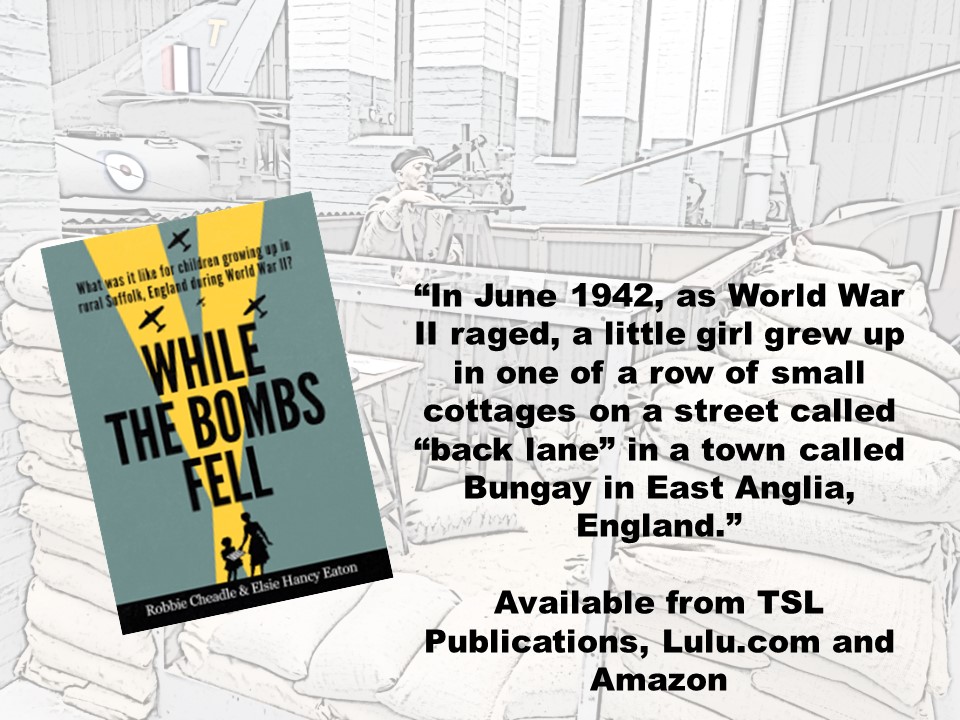
While the Bombs Fell is a fictionalised account of my mother’s life as a small girl growing up in the small town of Bungay, Suffolk during World War II. The book revolves around her experiences in her home town and its surrounds and the settings are all real. There is lots of fascinating history in Bungay and Bungay Castle is one of the amazing historical features of the town. The castle, the ruins of Bungay Priory, St Mary’s Church, the Roman well and the legendary Black Dog of Bungay all feature in this story for children aged 10 to 14 years old.

IMG_3219

The farmhouse on Nethergate Street where my mom grew up.

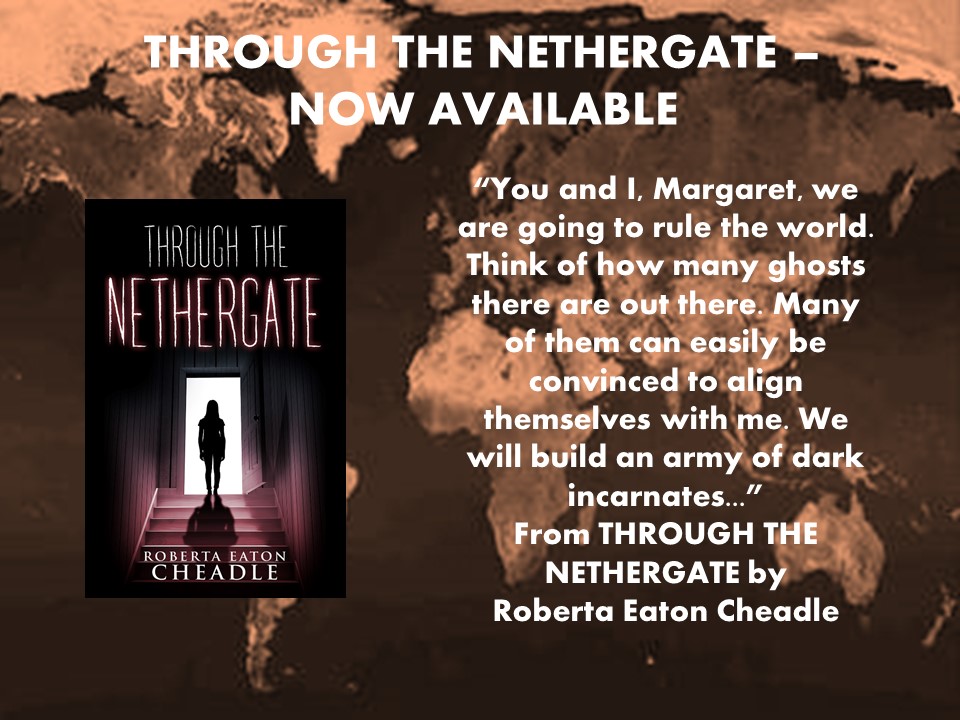
Through the Nethergate was inspired by all the ghosts that haunt the town of Bungay and especially one famous and very old inn which shares a wall in its cellar with Bungay Castle. I came across the myths about the over twenty ghosts which are said to haunt this inn while doing research for While the Bombs Fell. I decided to write a short story about the deaths of each of the ghosts and this gradually became Through the Nethergate, which features the Black Dog of Bungay and the legendary Hugh Bigod who owned Bungay Castle. The earthy settings in Through the Nethergate are mainly real places and are related to the specific ghost/s that the book features in that particular setting. The depiction of hell is obviously purely fantasy and was much easier to write than the read places which had to be thoroughly researched.

34923-111

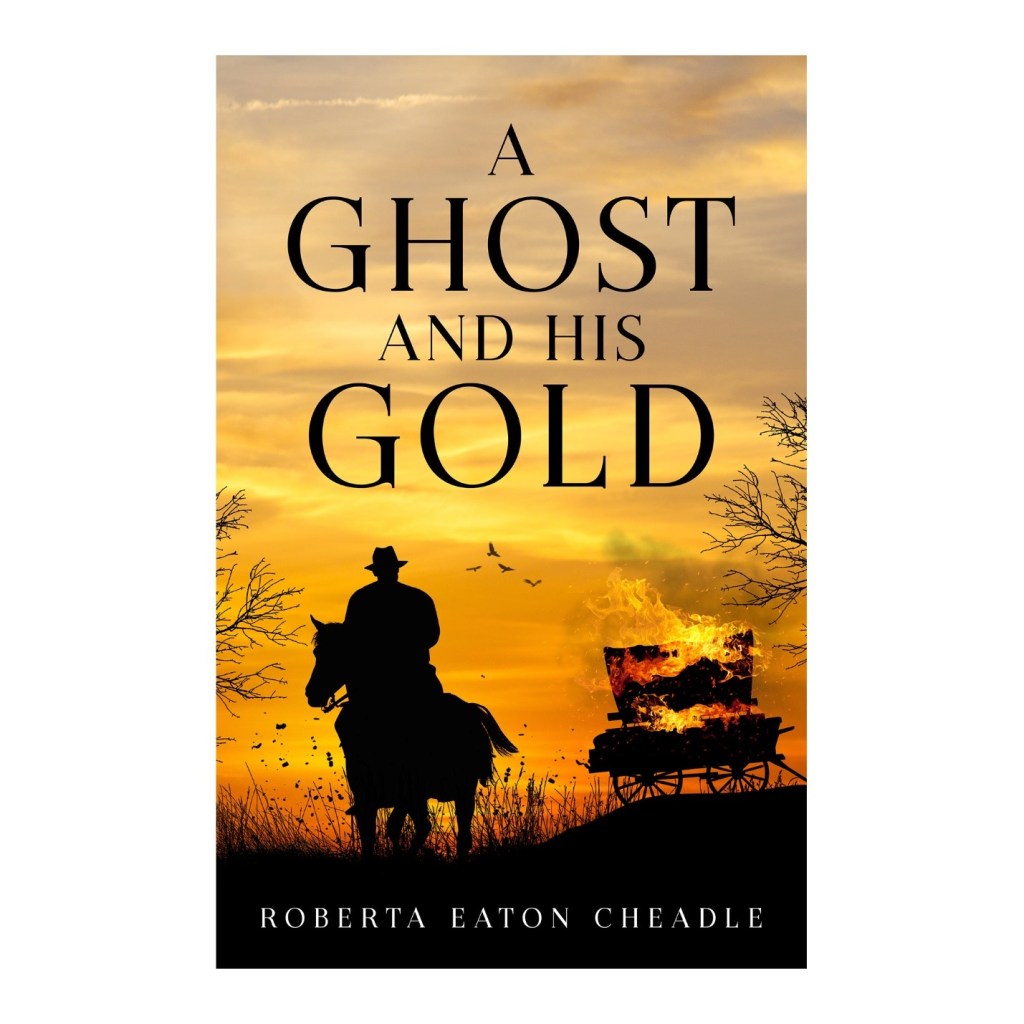
My new novel, A Ghost and His Gold also involves mainly real settings although the ghosts are fictional. The story follows the lives and ultimate deaths of three people living through the Anglo Boer War. Pieter is an Afrikaans Boer [farmer] who fights for the independence of his country against the British Empire. His story revolves around Mafeking, Kimberley and the Gatsrand in South Africa and the real battles fought by the Potchefstroom commando.

Robert is my British trooper and he is in Mafeking during the siege. I had to do a lot of research, particularly of old maps to describe the events in this town during this time in history. There were so many forts and tunnels to describe as well as the railway line and the native Stadt. Robert also spends time in Elands River where he is involved in another siege.

Battle_of_Elands_River_4-16_August_1900

The battle of Elands River during the Anglo Boer War

Twelve year old Estelle, Pieter’s oldest daughter, moves from Irene, near Pretoria, to a remote farm in Zeerust and then to the Mafeking concentration camp. Her story also required significant research and is set in real places.

I have yet to write a story that does not involve real places as even the sci-fi novel I was half way through is set in London and Scotland. I will now have to revamp this to include Covid-19 as it is such a game changer.

Do other blog-hoppers write about imaginary or real-life places? Click on the link below to find out:

Rules:

  1. Link your blog to this hop.
  2. Notify your following that you are participating in this blog hop.
  3. Promise to visit/leave a comment on all participants’ blogs.
  4. Tweet/or share each person’s blog post. Use #OpenBook when tweeting.
  5. Put a banner on your blog that you are participating.
You are invited to the Inlinkz link party!


#WittyNibWritingClub – Research

IMG_1684

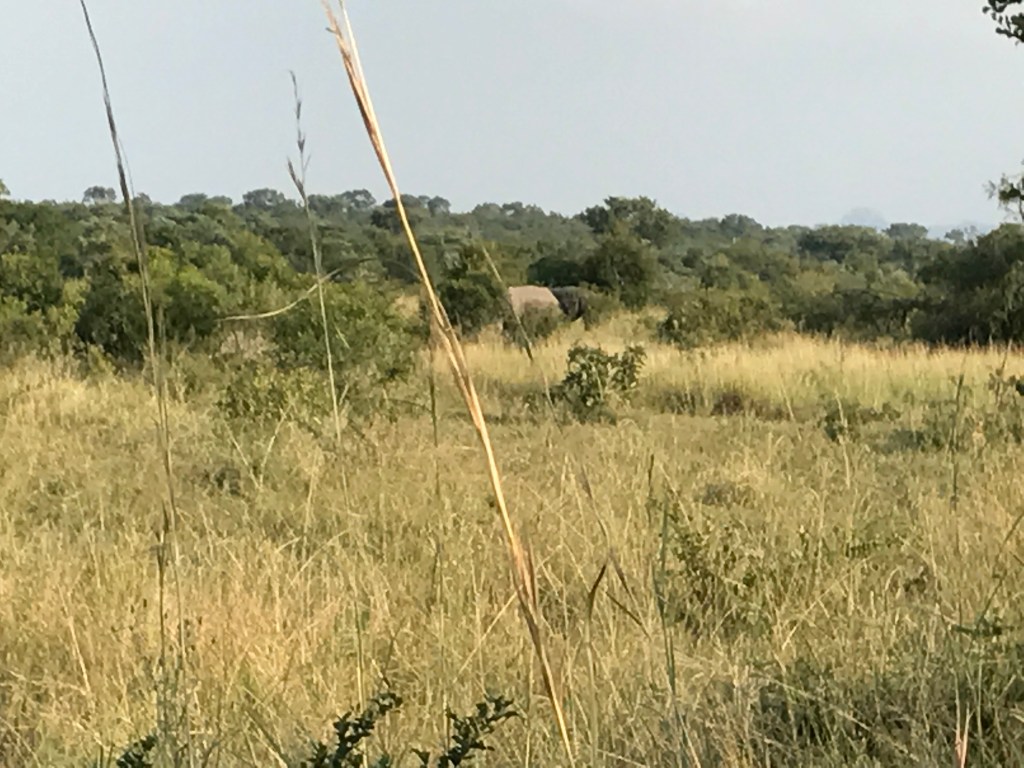
Photograph taken at the Kruger National Park in Mpumalanga, South Africa. The setting is similar to that of Mafeking in 1900.

This is a prompt hosted by H.R.R. Gorman of Author Blog of H.R.R. Gorman.

I seem to tend towards writing historical fiction, I think it is a result of my fascination with real ghost stories. Where there are ghosts there are usually unnatural and interesting deaths which are good fodder for my supernatural and horror stories. I suppose that makes me sound a bit dark, but I am not, I just find ghost stories very satisfying and if they are based on real facts, that makes them even more alluring to me.

The thing about writing real stories is that you need to get the facts as correct as possible which is not always easy even if you do masses of research on a topic. Sometimes, there isn’t that much information available about a certain person and their death, some historical periods are not that well documented due to limited sources of historical information, some historical figures are the subject of a lot of speculation and, dare I say it, fake news and different sites provide different and conflicting facts.

A Ghost and His Gold is largely based around the Second Anglo Boer War or Second South African War and I discovered that there is a lot of information available from UK sources about the English perspective on the war and less from South African sources about the local and mainly Afrikaans perspective on the war. I found it very difficult to find reliable information about the native African perspective on this war, although I did find some sources which I brought in as best I could. I wasn’t able to expand the native African participation in this war as much as I would have liked, but it does feature.

I looked at a lot of different sources to accumulate all the information I wanted and needed to write this book which is told from four different viewpoints, as follows:

  1. Michelle, a modern woman living in Irene near Pretoria in South Africa;
  2. Pieter, a Burgher (citizen of the South African Republic in 1900 and obligated to fight for his country as and when needed);
  3. Robert, a British soldier who was station in Rhodesia and returns from compassionate leave to re-join his garrison in Mafeking where he lives through the siege; and
  4.  Estelle, the daughter of Pieter and his deceased English-speaking wife who is only twelve when the story starts.

Each of these characters interacts with the native African people and shares their experiences and perspectives.

Anyhow, here are a few of the documents I used for my research and which will feature in my bibliography for this book:

  • Australians in the war by Effie Karageorgos;
  • A visual and textual re-storying of the diary of Susanna Catharine Smit (1799 – 1863) by Marlene de Beer;
  • The Three British Occupations of Potchefstroom During the Anglo-Boer WAr 1899 – 1902 by Prof Gert van den Bergh;
  • A woman’s world at a time of war: An analysis of selected women’s diaries during the Anglo-Boer War 1899 – 1902 by Helen M. Ross;
  • The British Scorched Earth and Concentration Camp Policies in the Potchefstroom Region, 1899 – 1902 by Prof GN van den Bergh;
  • The South African War: Implications and Convictions of Postwar Politics and Policy by Jaffar Shiek;
  • Map – Military Survey of Pretoria and the country north and east;
  • A tool for modernisAtion? the Boer concentrAtion cAmps of the south AfricAn WAr, 1900–1902 by Elizabeth van Heyningen;
  • Battle of Stormberg – Wikipedia;
  • Battle of Elands River – Wikipedia;
  • Blockhouses of the Boer War by Maurig Jones;
  • The Treatment of ‘Everyday Life’ in Memory and Narrative of the Concentration Camps of the South African War, 1899 – 1902 by Helen Dampier;
  • Manliness and the English soldier in the Anglo-Boer War 1899-1902 : the more things change, the more they stay the same by Sheila J. Bannerman;
  • History of Mental Health Services South Africa PART 11. DURING THE BRITISH OCCUPATION by M. MINDE;
  • The Project Gutenberg ebook,  Mafeking: A diary of a siege by F.D. Baillie;
  • The Project Gutenberg eBook, The Relief of Mafeking, by Filson Young;
  • The Project Gutenberg eBook, South African Memories Social, Warlike & Sporting From Diaries Written At The Time by Lady Sarah Wilson; and
  • Project Gutenberg’s A Handbook of the Boer War, by Gale and Polden, Limited.

A Ghost and His Gold is a work of fiction and none of the characters really exist so my research was to ensure I incorporated the historical facts correctly within my fictionalised story. A lot of research also went in to ensuring the setting was correct and realistic.

What are your thoughts on research for a book? Do you double check facts and consult numerous sources?

If you would like to join in with the prompt, you can link up here: https://hrrgorman.wordpress.com/2020/04/16/5-types-of-research-for-your-novel/

#Bookreview – Frozen Stiff Drink by James J. Cudney (Braxton Campus Mysteries #6)

Book reviews

What Amazon says

A winter blizzard barrels toward Wharton County with a vengeance.

Madam Zenya predicted the raging storm would change Kellan’s life, but the famed seer never could’ve prepared him for all the collateral damage. After Nana D disappears, one of her patients turns up dead and a second body is discovered beneath the snowbanks, Kellan must face his worst fears.

Between finding Nana D and solving the scandalous murder of another prominent Braxton citizen, Kellan and April’s worlds explode with more turmoil than they can handle. Unfortunately, neither one of them knows what to do about the psychic’s latest premonition.

Can Kellan find Nana D – and who is the killer terrorizing the town?

My review

Frozen Stiff Drink is another incredibly fast-paced and fascinating murder mystery in this great series by author, James J. Cudney. This one is even more complex as it involves three murders and a couple of close attempts so you have to pay attention and stay on your toes while reading. This book also includes a ramp up in Kellan’s relationship with law enforcer, April, despite some trials presented in the unexpected appearance of her husband, Fox Terrell, who turns out to have some unexpected relationships with the people of Wharton County, and his continued interference in her murder cases.

Kellan’s brother, Hampton, plays a bigger role in this tale and becomes involved in a lot of intrigue. He is accused of embezzlement by his father-in-law, Orin, Read, the founder of the firm where he works, and when Orin is discovered dead, Hampton is the natural suspect in the case.

Nana D, now mayor of Wharton County, but still high spirited and indefatigable in her dealings with family, friends and her constituents. Nana D goes missing during a bad snow storm and Kellan is worried about her. During his search for her he finds her car with another body inside it, but no sign of Nana D.

The story line is exciting with lots of twists and turns and the ending was clever and unexpected.

All the wonderful family elements that make this series so special are present with Kellan’s daughter, Emma, going to Disney Land with his parents and his surrogate son, Ulan. Francesca, Kellan’s on-so-dead mobster related wife who he is trying to divorce, also pops up in a threatening manner as she wants to get her hands on Emma.

James J. Cudney has a very natural style of writing and includes lots of great description in a simple and unencumbering way which does not detract from the pace of the story. I look forward to see what this author produces next.

Purchase Frozen Stiff Drink