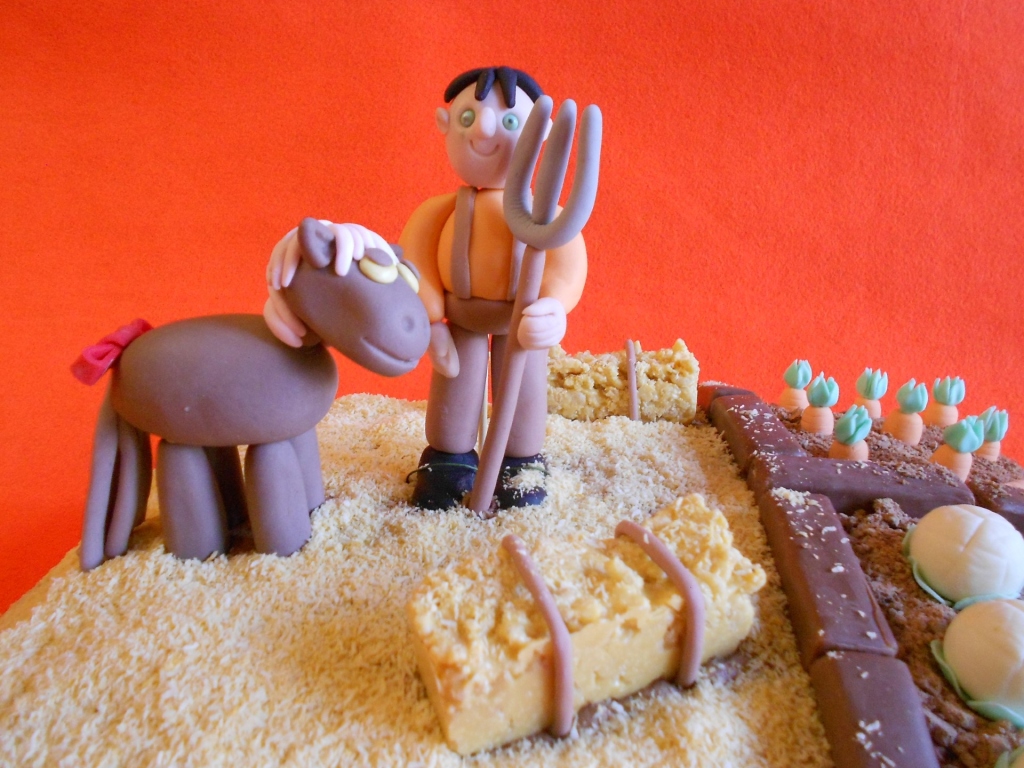
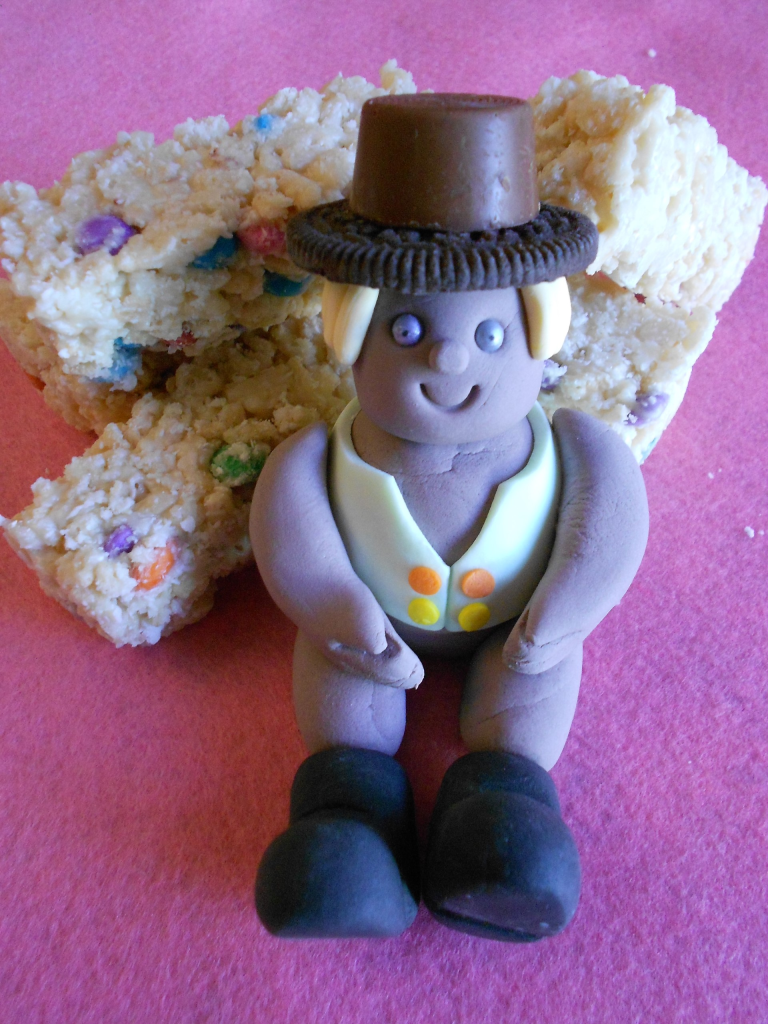
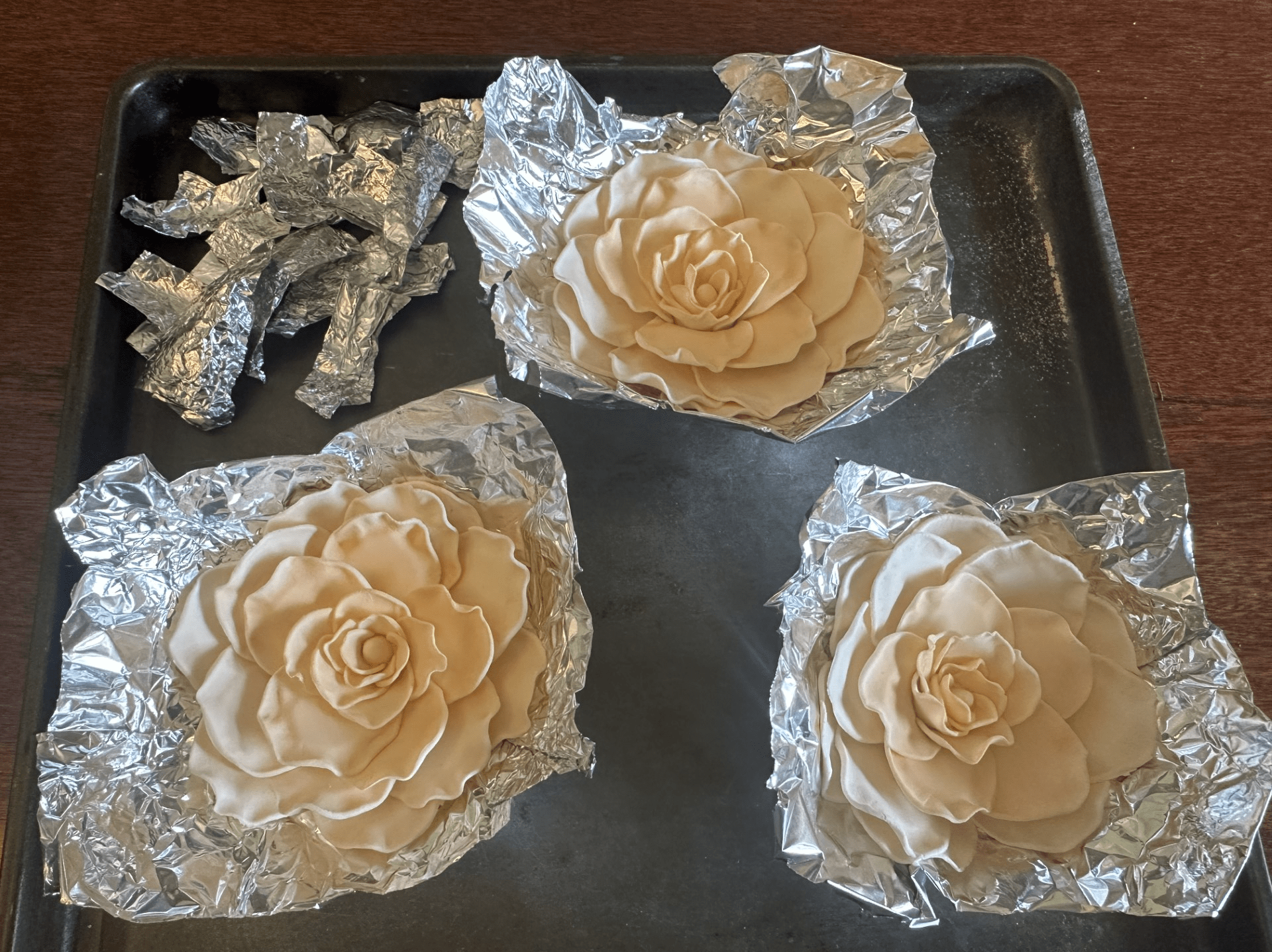
The hay bales are Rice Krispies logs made with white chocolate, Rice Krispies, desiccated coconut and yellow food colouringSir Chocolate is leaning against Rice Krispies and Smartie blocks
Finally, the licorice trolls chocolate log fire goes ‘snap! crackle! and pop!
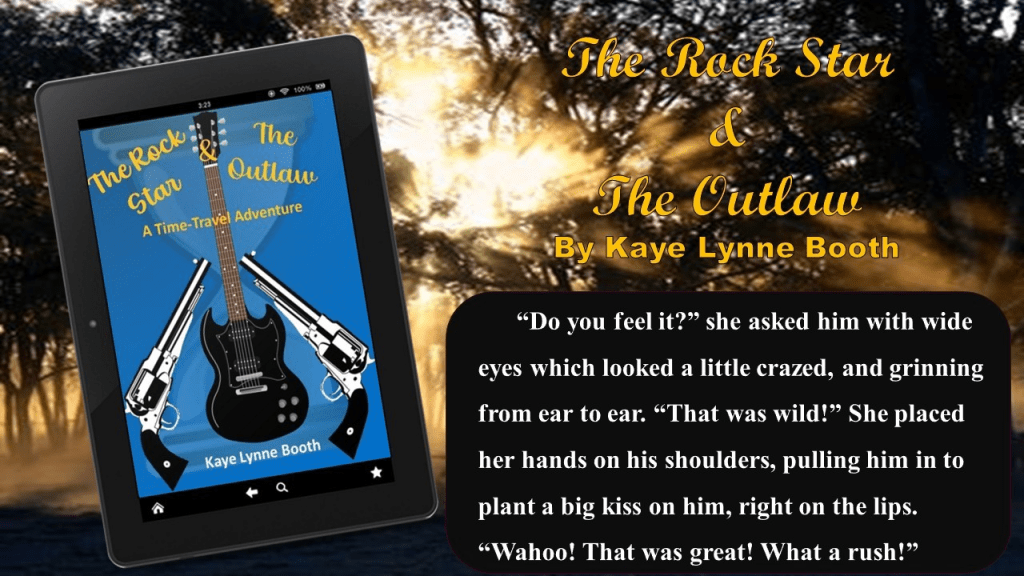
Today, I am delighted to welcome author and poet, Kaye Lynne Booth, to Roberta Writes for the Day 4 stop on her The Rock Star & The Outlaw book blog tour.
Tour Schedule
The Rock Star & The Outlaw, by Kaye Lynne Booth – September 18 – 22
Monday – Sept. 18 – Opening Day – “Amaryllis & The Pretty Reckless” – Writing to be Read
Tuesday – Sept. 19 –“Writing with music and LeRoy McAllister & Review” – Carla Loves to Read
Wednesday – Sept. 20 – “The characters of Nick and Monique” – Writing to be Read
Thursday – Sept.21 – “Prostitution in the American West and the character of Maggie” – Roberta Writes/Robbie’s Inspiration
Friday – Sept. 22 – Closing Post – “Writing the Villian & Juan Montoya” – Writing to be Read
Prostitution in the American West & the character of Maggie
The character of Maggie Louise O’Flaherty was interesting to write. She was inspired by a visit to the Old Homestead Museum in Cripple Creek, Colorado, where I learned some surprising things about the ladies of the night in Colorado mining towns in the late 1800s.
History Lesson
The Homestead House was Cripple Creek’s most illustrious house of prostitution. Built in 1896, the house was operated by Madam Pearl DeVere, who created a high-class parlor house for the rich and powerful. A visit to this house required an application process and was by appointment only. Anyone who did not hold millionaire status need not apply. Appointments were pricey, to say the least. Refer to Note 3
At the time, Cripple Creek boasted 56 bordellos, none of a stature of Homestead House, of course, but there were offerings for gentlemen seeking female companionship of all occupations. There were also girls not affiliated with any house, who worked the street along Meyers Avenue, which housed Cripple Creek’s red-light district. Refer to Note 2
Although high priced houses like Homestead House were not typical of mining towns across the American west, the number of bordellos is not surprising. Money flowed in mining towns, and although prostitution was tolerated, and the law found clever ways to look the other way. In the town directory, the house would be listed as a boarding house and the women who lived and worked there, as boarders. Although prostitution was illegal, much needed funds were provided in taxes and fines leveled on the women, so the local law overlooked their profession, and concentrated on lesser infractions which could be fined, such as doing their shopping on the wrong day of the week, when the respectable ladies were out. (They may as well of worn large scarlet A’s on their chests.) For the parlor houses to be taxed as businesses, they were listed as boarding houses, and the ladies were listed as boarders.
Most mining towns thrived with number of saloons, gambling houses and bordellos, and prostitution was one of the few occupations for single women in the west. (Other occupations single women might undertake included seamstress, laundress and selling baked goods.) It is reported that in the California Gulch area, near Leadville, Colorado there were 36 women to 2000 men. In general, men outnumbered women by at least 3 to 1 in the mining towns of the west. Yet another reason for the law to look the other way – coming down on the industry would likely cause an uprising from the local population.
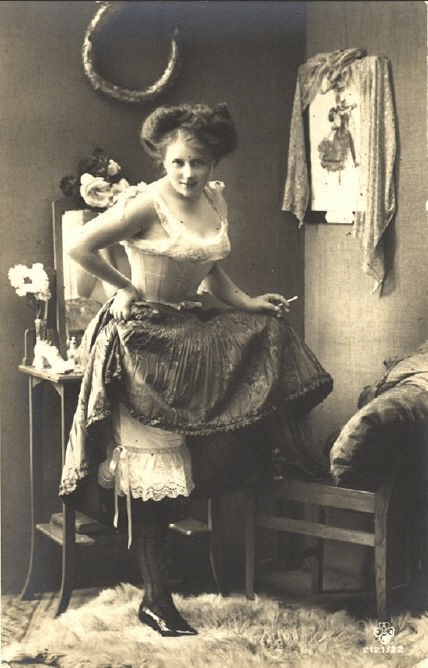
Prostitution was not an easy life. Soiled doves were required to have a clean bill of health before they were allowed to practice their trade and they underwent frequent checks by the local doctor. They stuffed themselves into tightly bound corsets, often laced tight enough to break ribs, and often cut off their air, causing them to feint. This is why the feinting couch was a standard furnishing in parlor houses. Scarlet ladies fell pray to venereal diseases, pregnancies resulting in abortions under dangerous conditions, drug use and overdoses, and they underwent poor treatment from their customers, often resulting in beatings or even death. Many bordellos hired in house muscle to enforce house rules and make sure the women weren’t harmed. Even in the high-end houses, depression and alcohol and drug usage were not uncommon. Believed to be accidental, the Madame of Old Homestead, Pearl DeVere, succumbed to an overdose of laudanum after a lover’s spat. Refer to Note 3
Although some women found themselves there due to life circumstances and a lack of alternatives, others were there by choice. Working in a brothel or saloon was a means of providing a living for women who would otherwise have little other choices. “Many saloon or ‘dance-hall girls’ made more money dancing with the men than they could as a prostitute.” Refer to Note 4. For some, it was a means to a better life. Many of the smarter, business minded women succeeded in working their way up to operating their own houses, or investing in a store or restaurant, and escaping the business altogether. Notes 3 and 4. Still others found husbands and quit the life.
”Prostitutes of the American West were far from fallen women—many were savvy entrepreneurs. Often, sex workers saw the West as a place of opportunity, one where they could work their way out of the profession entirely due to high demand and high revenues.” Note 1
The Character of Maggie
I am enthralled by the prostitutes of the west and the lives that they chose. Call them soiled doves, ladies of the night, fallen women, or whatever you will, they were strong women who chose to establish their independence with determination. Especially the saloon keepers and madams, who were early entrepreneurs, and often served as a mother figure for the women who worked for them. Although they get a bad rap and are frowned upon in today’s society, they were a vital part of frontier society. Refer to Note 4. So, when Amaryllis and LeRoy find themselves in 1887 and in need of funds, there had to be Maggie for them to turn to.
Maggie isn’t a bonafide madam. She operates a saloon and dance hall called Maggie’s Place. It isn’t a high-class brothel like the Old Homestead. In fact, hers is a struggling business which she’s trying to build up, and she has competition from the Silver Leaf Saloon across the way, where the owner has lots of money to sink into it, where Maggie does not. But she manages to provide a roof and a bed to the women who work for her hustling drinks and dancing, and employs a piano player to provide the music. She dresses the part, and the girls look up to her and respect her.
Although she keeps to the shadows and we don’t see a lot of her, her role is key to the story. She looked after LeRoy when he was a boy, and is there to offer advice and help when needed, thus reinforcing the motherly aspect of her character. Maggie is the woman who is there when our protagonists need her, providing needed employment, assistance in plans for a jailbreak, medical attention for gunshot wounds, understanding and moral support.
About the Author
For Kaye Lynne Booth, writing is a passion. Kaye Lynne is an author with published short fiction and poetry, both online and in print, including her short story collection, Last Call and Other Short Fiction; and her paranormal mystery novella, Hidden Secrets; and book 1 of her Women in the West adventure series, Delilah. Kaye holds a dual M.F.A. degree in Creative Writing with emphasis in genre fiction and screenwriting, and an M.A. in publishing. Kaye Lynne is the founder of WordCrafter Quality Writing & Author Services and WordCrafter Press. She also maintains an authors’ blog and website, Writing to be Read, where she publishes content of interest in the literary world.
Join Kaye Lynne Booth & WordCrafter Press‘ Readers Group and sample her works with a free copy of my short story collection Last Call and Other Short Fiction.
Thank you to writer and blogger, Marsha Ingrao, for this wonderful author interview. I really appreciate Marsha’s showcasing of This Is How We Grow, stories and poems for perspective taking, compiled and edited by Yvette Prior. Marsha is a fellow contributed to this amazing anthology and is also the host of Story Chat Y3, a unique story writing blogging challenge. Marsha is showcasing, and hosting a discussion about, stories contributed by her current followers and also other interested writers and bloggers. You can find out more about it here: https://alwayswrite.blog/2023/09/14/story-chat-y3-story-writing-tips/
Welcome to Always Write. My goal in this Author Interview Series is to interview the talented authors who participated in Yvette’s anthology This is How We Grow, as well as the authors in the upcoming Story Chat, Online Literary Conversations.
Draft copy
I met Robbie several years ago blogging, and now rarely a day goes by in which we don’t chat through our blogs.She has been so supportive of all my challenges commenting on almost all of them in spite of how busy she is. Everyone I know in the blogging world adores her, and if you don’t know her well yet, I hope you will by the end of this series. This is the first of several posts. In some of the posts she will offer writing advice, and others tell about her writing and blogging journeys.
I finished reading Yvette’s anthology, This Is How We Grow. Robbie, you have done so much. We all have to pant to keep up with you. In all of your activities on your blog, you don’t mention much about the difficult health issues you talked about in this enlightening book on perspectives that had me in tears as I read it. However, our readers will have to read Yvette’s book to get that glimpse of your life as we are going to veer away from that in these interviews.
That’s true, Marsha. I never shared much personal information on my blog because I didn’t think it would interest people, and it wasn’t in line with the purpose of my blog. My blog was a bit of an escape from home anxieties.
I started my first blog, Robbie’s Inspiration, in October 2016. It was after the launch of Michael and my first Sir Chocolate book, Sir Chocolate, and the Strawberry Cream Berries story and cookbook. The blog was intended to be a platform where I could share my cake and fondant art and poetry, and promote our Sir Chocolate books series. We had a contract with TLS Publications for 8 books at the time. I didn’t know anything about blogging initially, so I never really expected to develop friendships the way I have.
Robbie’s Fondant Self-portrait during Covid
I was lucky enough to find Sally Cronin’s blog Smorgasbord early on, and I modelled my blogging off her approach and started sharing book reviews and recipes and interviewing a few blogging friends to help them promote their books.
I started my blog, Roberta Writes in October 2018 while I was writing my first YA novel, Through the Nethergate. I deemed it appropriate to split my children’s and adults writing. My split is a little blurry, though, as I tend to share poetry and photographs on both blogs. Although there are some cross-over followers, many of my followers are unique to one or the other blog.
The Ncome Museum offers the Zulu perspective of the Battle of Blood River. The museum is shaped like the traditional buffalo horn attack strategy developed by King Shaka.
The Battle of Blood River is so called because the water of the river turned red with the blood of dead men.
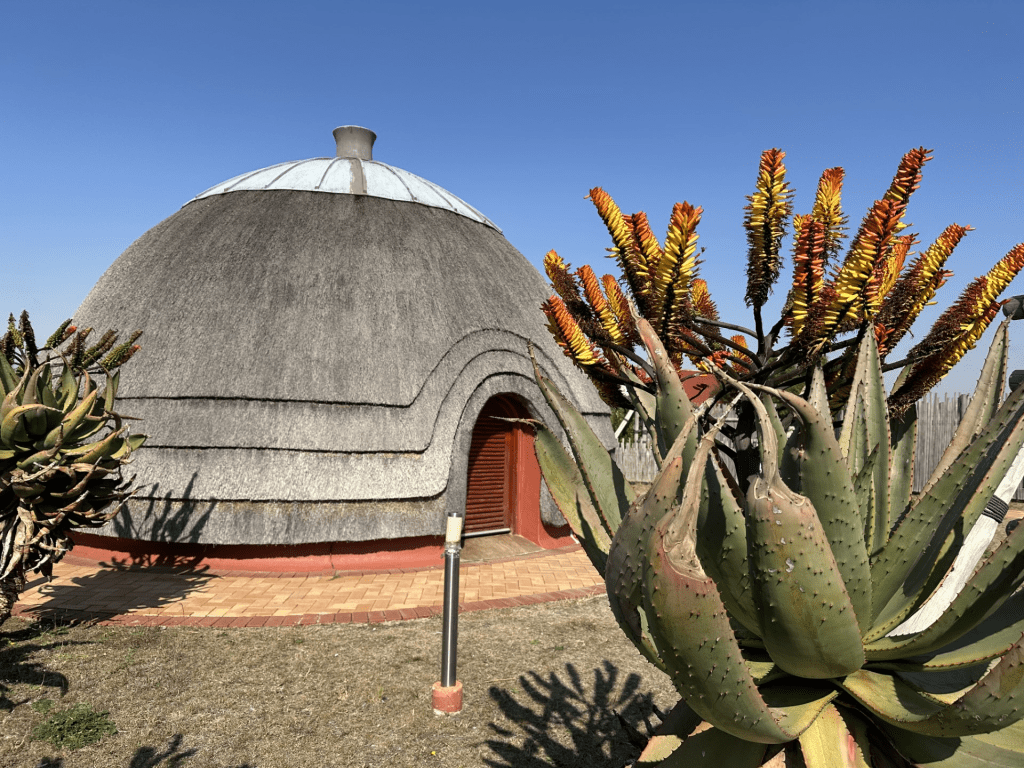
You can spend the night at the Ncome Museum in a traditional beehive shaped hut. They are modernised and have bathroom facilities.
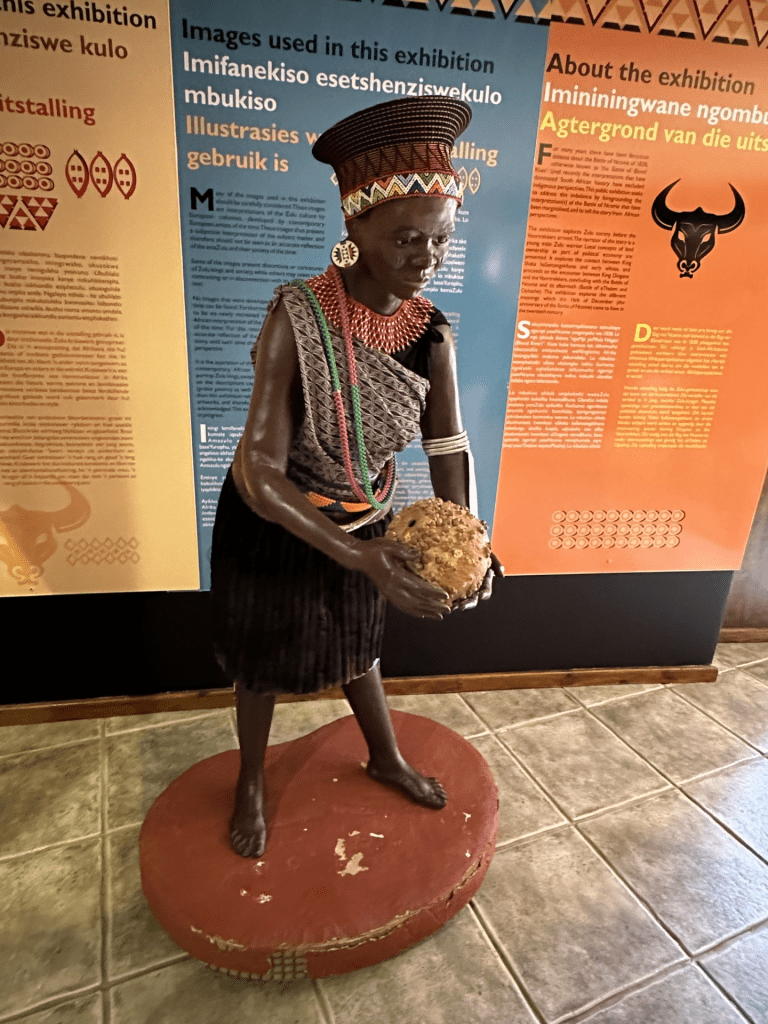
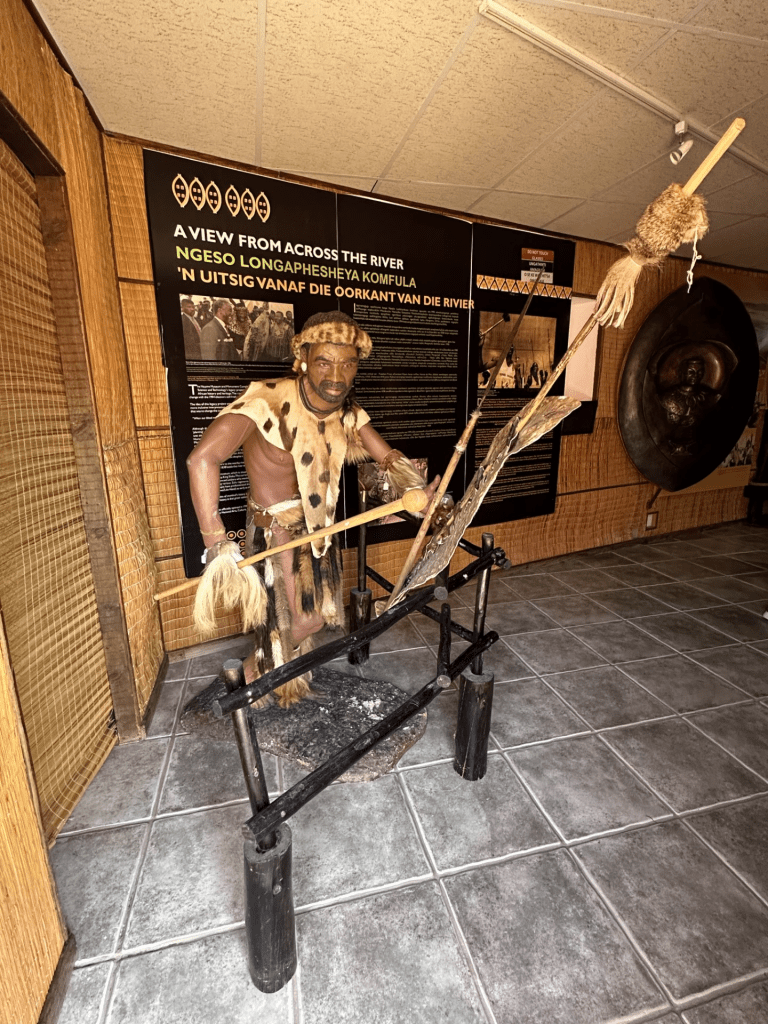
Zulu hut hotel room with a slatted doorThis picture of the entrance is from the Museum website here: http://www.dac.gov.za/content/ncome-museumPicture of a woman in traditional Zulu attireZulu man in traditional battle gear
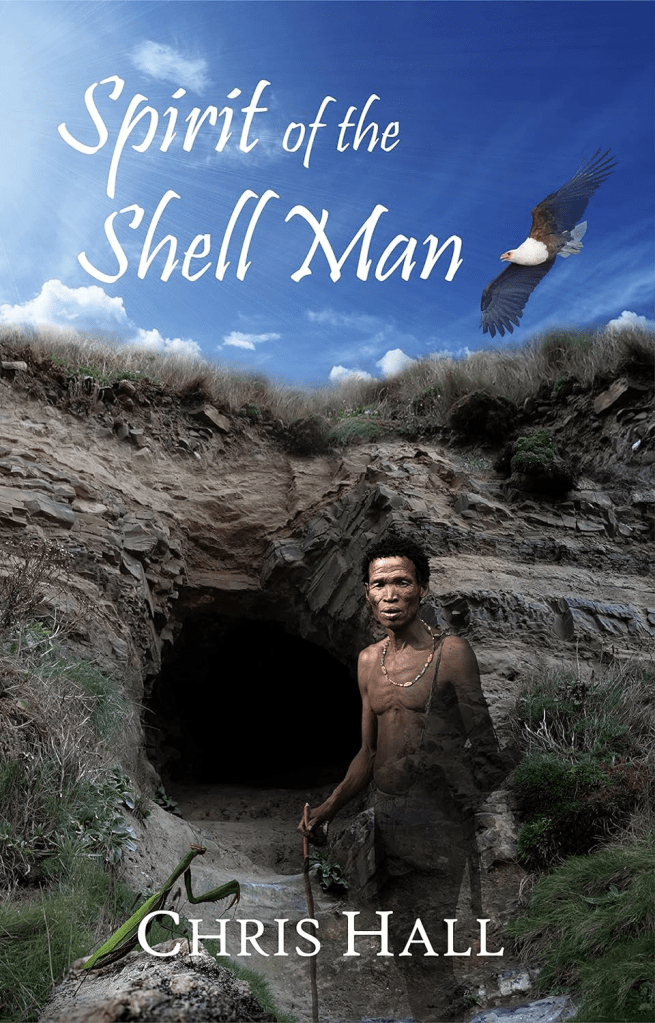
A series of strange events accompany the delivery of an unusual wooden box to the bookish Professor who lives on the hill, while down by the sleepy harbour a dusty convoy of huge earth-moving machines roll into town. Soon afterwards, an expensive-looking yacht arrives, skippered by an enigmatic sea captain, accompanied by her weird and troublesome little crew who cause chaos in Albertina’s chicken-run and wreak havoc in the posh new hair salon.
The mysterious mute captain, her nose permanently buried in an old notebook, is clearly seeking something. Meanwhile the Professor’s interest is piqued by an unusually attentive congregation of praying mantises in his back yard. Then, as construction work begins on the unspoiled hillside beyond the town’s looming headland, the disturbance of long-buried bones unleashes a grim and ghostly presence from the ancient past with the potential to destroy the tranquil little town.
Join the cast of colourful characters from Song of the Sea Goddess, as they embark on a new adventure where legend and reality intertwine, and once again they must join forces to combat a deadly threat to their otherwise peaceful lives.
Spirit of the Shell Man is a beautiful book, full of drama, colour, and vitality. I was delighted by the author’s depiction of the exciting variety of cultures, foods, and people that constitute the small and multicultural population of her fictional town in the Western Cape of South Africa. I could almost smell the Auntie’s sweet rooibos tea, a traditional South African drink, and Andreas’ delicious Greek styled meals.
My review
Each of the characters is so relatable to me, a fellow South African, and I adored Albertina who works hard and is filled with determination and resilience, but who also enjoys life to the fullest with her penchant for pretty, bright clothes and shoes, wigs, and hats. The author has captured the essence of Abdu who owns a store which sells a variety of antique, interesting, and useful items, and the two Auntie’s who always know exactly what is going on and who are intent on fostering the glimmer of romantic interest they have detect between Abdu and Albertina. Jannie with his long dreadlocks and easy smile, is the embodiment of a brave and loyal friend, while the Professor is aptly described as being very intellectual with a good dollop of endearing forgetfulness. There is also Toti, the Professor’s adorable monkey whom he treats like his ‘little girl.’
Life in the town has been quiet for the past year but suddenly it is disrupted by the arrival of a large yacht captained by a mysterious and unapproachable woman and her three unusual goblin-like creatures. At the same time, construction work begins on the beautiful and unspoiled headland. It doesn’t take long before chaos and confusion reigns as the creatures run amok, attacking Albertina’s cherished chickens and stealing Jannie’s food. The construction is also running into problems with the unexpected discovery of human bones.
The Professor has received a mysterious box which contains something heavy. He doesn’t know how to open it and hopes that Abdu with his knowledge of ancient articles can assist him. The advent of the box has coincided with the appearance of dozens of praying mantises.
Before long, the unusual group of characters are embroiled in a strange adventure which is becoming more dangerous by the minute.
This is a delightful and action packed story set in a beautiful coastal town and filled with varied and engaging characters.
A phrase by Arundhati Roy (winner of the Booker Prize for fiction in 1997) caught my attention – Fiction in the time of fake news.
I coined a few of my own inspired by it.
Letters in the time of instant messaging
Books in the time of apps
Lies in the post-truth era
Human proficiency in ChatGPT era
Freedom in the times of listening devices
Feel free to coin some of your own in the same spirit, or use one or more from the above, including the inspiration from Arundhati Roy, and base your piece on it.
This poem was going to be for this week’s W3 prompt but then I realised I hadn’t followed the instructions properly. My 1st and 3rd and 2nd and 4th lines don’t rhyme. I like what I’ve created so I decided not to change it and just publish it outside of the challenge. The prompt word is Beach Balls and I’ve used a syllabic count of 5/8/6/10/6 for each stanza.
Dolphin Display
Beautiful creatures
Elegantly pair with water
Agilely performing
Complicated aerobics to music
How high they jump and twist
***
Breathlessly we watch
Amazed at their dexterity
Lithesome bodies gliding
Luxuriating in the rapt attention
Sensational showing
These are a few ocean scenes from our recent trip to St Lucia. We visited in July which is our coldest month of the year. This is the beach at Cape Vidal.
I was interested in the fact that there is a lot of black mixed in with the white sea sand. The black is titanium and not oil as I had originally thought.
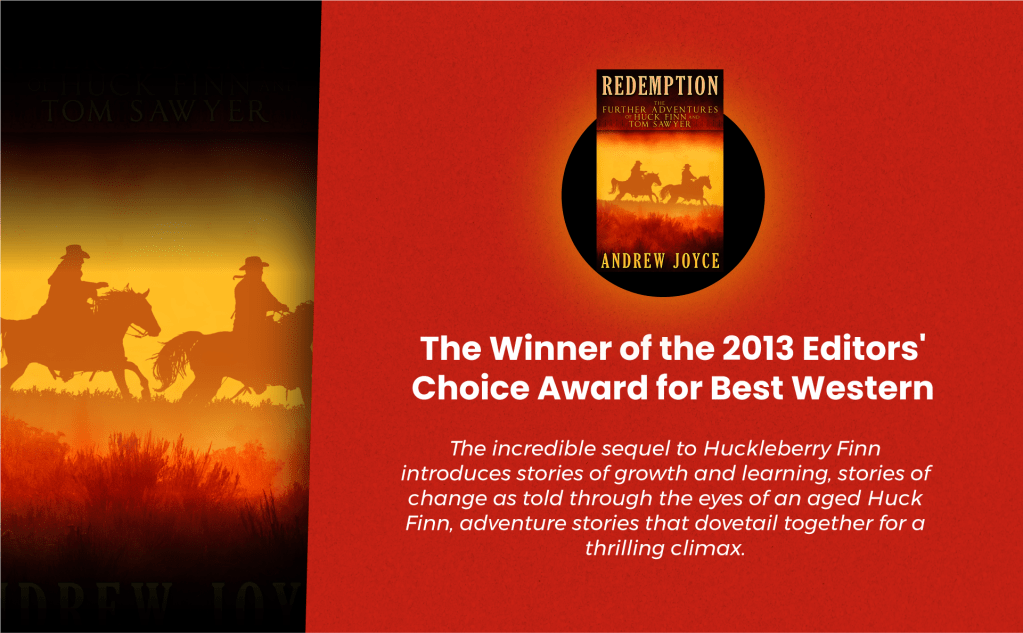
Today, I am delighted to introduce you to talented author, Andrew Joyce. Andrew is relaunching his award winning novel, Redemption, which sounds like an excellent read for people who enjoyed the original The Adventures of Huckleberry Finn and The Adventures of Tom Sawyer by Mark Twain.
Picture caption: Redemption by Andrew Joyce banner
Blurb
Three men come together in the town of Redemption, Colorado, each for his own purpose.
Huck Finn is a famous lawman not afraid to use his gun to protect the weak. He has come to right a terrible wrong.
After his wife’s death, Tom Sawyer does not want to live anymore; he has come to die.
The third man, the Laramie Kid, a killer Huck and Tom befriended years earlier has come to kill a man.
For these three men Death is a constant companion. For these three men it is their last chance for redemption.
Click on the book cover below for the Amazon US purchase link. The book is available as an ebook, paperback and an audio book.
Picture caption: Book cover featuring two men riding horses against a yellow sunset
Editorial Reviews of Redemption
“Mr. Joyce has taken a slice of American History and expanded upon it in a most interesting fashion. By calling up the ghosts of Louie L’Amour & the early works of Elmore Leonard, Huck & Tom grippingly move through the Civil war era and beyond, carrying the enraptured reader along with them. I’m now waiting for this author’s sequel.” — Grady Harp, San Francisco Book Review
“Andrew Joyce is a genius in bringing two beloved characters back to life. Redemption: The Further Adventures of Huck Finn and Tom Sawyer is destined to be a five-star best-seller. I was thrilled to have the opportunity of reuniting with two well-loved characters from my youth. I loved Tom and Huck then and I love them even more today as written about by the brilliant Andrew Joyce. All I can say is thank you, thank you, thank you for a few hours of wonderful reading.” — Trudi LoPreto for Readers’ Favorite
“We gladly give REDEMPTION five stars and wish Andrew Joyce a bounty of sales as he’s written a book that does Twain and the characters he created, Finn and Sawyer, proud.” — L. Avery Brown, Magnolia Blossom Review
“Andrew Joyce has done an amazing job capturing the essence and authenticity of this era complete with old fashioned slang and heroics throughout the story that kept the reader engaged and very entertained. What I loved about this book were the admirable morals and values of the main characters, they each had a real down to earth, genuine, true ‘good’ heroic nature about them. Witnessing their characters mature, grow, and develop throughout the story was inspiring.” — Book Gossips
“Could not put this book down from beginning to end!” —Ron K., Amazon Reviewer
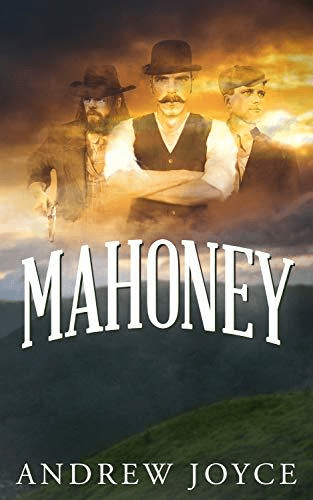
My review of Mahoney by Andrew Joyce
I have not yet read Redemption, but it is on my audio book TBR. My mother and I both thoroughly enjoyed Mahoney by Andrew Joyce and this is my review of that book:
I listened to the audio book of Mahoney, narrated by Michael R.L. Kern. The narrator did a great job with this book and had the right voice and inflections of tone for this particular story.
Mahoney is a fascinating story of the lives of Devin Mahoney, a poverty stricken farming tenant in Ireland who travels to America during the famine, and his son and grandson.
This book is well researched and shares intricate details relating to a variety of contraversial topics including: the lives of the tenant farmers in Ireland during the family and the shocking treatment they received at the hands of their English overlords, the journey by sea of Irish immigrants to America on board the “death ships”, life for the Irish immigrants on their arrival in the “promised land”, the circumstances of the civil war in America, life in the wild west of America for a young man from the East and his journey to becoming a marshal and an incredible fast gun, the life of the wealthy in New York before the Great Depression, the plight of the poor during the Great Depression and the circumstances of African Americans living in the south during the late 1930s and 1940s.
The list above gives a taste of the insights and depth and breath of this wonderful book which I enjoyed tremendously. Although I had some knowledge of most of these periods in history, the level of detail shared in this book, and the way the author wove the history seamlessly into the story, resulted in a great learning experience for me, together with a fantastic and engaging story.
Mahoney is divided into three parts with each part devoted to the development of one generation of the Mahoney family. There are elements of high adventure and romance in each character’s specific tale.
My favourite character was Devin because he was so spirited and determined. He overcame incredible difficulties to travel to America and start a new life there. The revelations about life on board the ships used to transport Irish immigrants to America were an eye opener, as was Devin’s positive attitude and determination to do whatever it took to succeed. He worked hard labouring jobs in order to establish his reputation as a solid and reliable worker and I found that very admirable. I also loved his love interest, Mary, who aside from being beautiful, was also resourceful and hard working. Their romance was sweet and made me feel good.
Dillon also has an amazing life but there were some things about his character that were a bit unfortunate in the long run. This didn’t make him less interesting and enjoyable as a main character but it did set the scene for his son, the third generation.
It is often said the the first generation builds everything and the third generation destroys it and, initially, this would seem to be the case in this book. David Mahoney, however, evolves into a most unusual and dedicated man and his story is also unusual and revealing about certain aspects of life in America.
This book is well written and highly entertaining. I would recommend it to anyone who enjoys history and books about human drama, with a touch of romance thrown in for good measure.
Click on the book cover for the Amazon US purchase link:
Picture caption: Book cover of Mahoney which features three men of varying ages against a sunset
About Andrew Joyce
Picture caption: Author picture of Andrew Joyce
Andrew Joyce left home at seventeen to hitchhike throughout the US, Canada, and Mexico. He wouldn’t return from his journey until years later when he decided to become a writer. Mr. Joyce has written seven books and 143 short stories. One of which won the Writing Spirit Award for best short story of 2011. His first novel, Redemption: The Further Adventures of Huck Finn and Tom Sawyer, was awarded the Editors’ Choice Award for Best Western of 2013. A subsequent novel, Yellow Hair, received the Book of the Year award from Just Reviews and Best Historical Fiction of 2016 from Colleen’s Book Reviews.
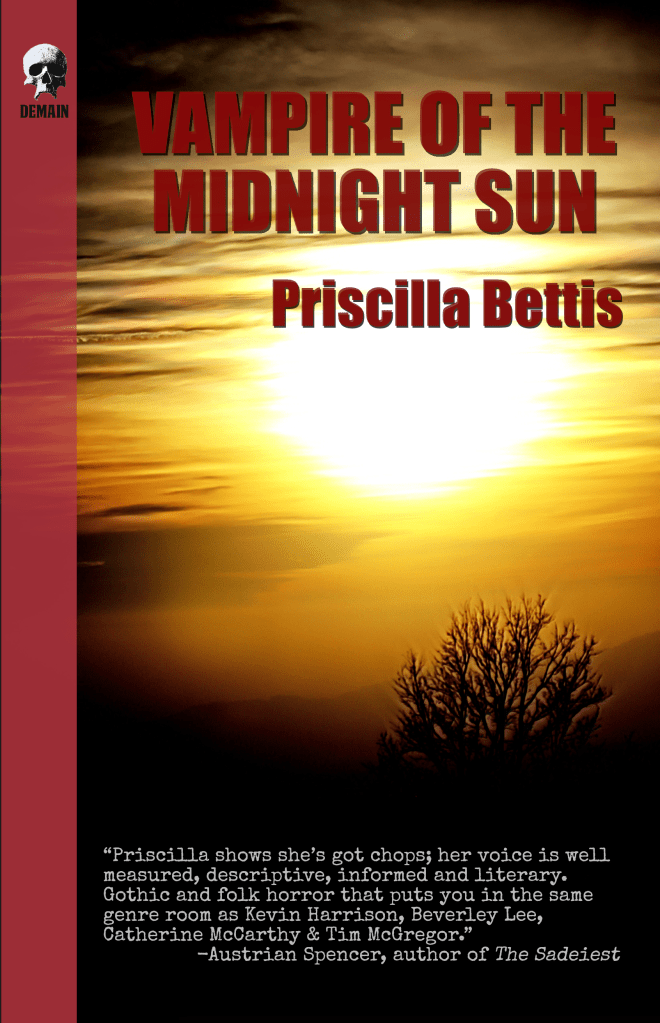
Click on the cover for the Amazon US purchase link:
Picture caption: Cover of Vampire of the Midnight Sun featuring the sun rising over a desolate landscape
What Amazon says
Priscilla Bettis draws on real life experiences in the Alaska wilderness (grizzlies) and the Texas plains (wildfires) to pen these two short stories.
A vampire in Alaska. In ‘Vampire of the Midnight Sun,’ Frasier and his best friend, Billy, are stranded in the Alaskan wilderness after a rafting accident: grizzlies, arctic water, frozen nights, soggy tundra, no food, no matches, no civilization. And no one is coming to rescue them.
Plus Billy is convinced he’s a vampire. It’s a five-day hike to civilization. Billy claims he can only go three days without human blood.
Will the men survive the harsh Alaskan elements? If so, can Frasier survive Billy’s vampiric delusions, or will Frasier have to take his best friend’s life in order to save his own?
A showdown between an Old West cowboy and a fire witch. In ‘The Fire Witch and the Cowboy,’ Henderson is the yellow-bellied coward of Dusty Bend, Texas. His wife is ashamed of him. Kids tease him. And he’s terrified of wildfires.
But when a wildfire threatens Dusty Bend, it is Henderson who brokers a deal between the townfolk and the wealthy but formidable Widow Vandermeer, to use her resources in order to fight the fire.
“There will be sacrifices,” she says. If the widow learns Henderson’s decades-old secret, he might be the sacrifice.
Will Henderson grab his wife and run, leaving town while he can? Or will he stay and risk falling into Widow Vandermeer’s clutches?
Meanwhile, the wildfire grows closer…
(cover by Adrian Baldwin)
My review
This book comprises of two stories, both with unusual and deliciously creepy plots.
The first story is about two men, born and raised in Alaska, who like to hike in the wilderness. A series of unfortunate events result in their being stranded in a location that differs from their logged trail. With nearly all of their possessions lost, the friends must hike on until they reach the closest village. The larger and stronger of the pair, Billy or Vlad as he calls himself, claims that he is a vampire and can’t go for an extended period without human blood, a discussion that his companion, Frasier, who is suffering from an infection, finds highly improbable and annoying. The friends must find a way to work together if they want to survive the ordeal.
I really enjoyed the realistic descriptions of two men lost in the Alaskan wilderness and the difficulties they experience in hiking across the adverse terrain without their equipment. Frasier is the narrator and the combination of his deteriorating health and mental well being make him an unreliable narrator. As a result, the I was left uncertain as to whether the facts as reported by Frasier were entirely true.
The second story is about a pioneer with an unfortunate family connection and a terrible secret and a vengeful woman who has sold her soul to the devil. This story had an eerie and frightening tone so I knew terrible and ungodly events were going to occur early on in the story. The tone and foreshadowing did not disappoint and I thought this was an excellent piece of paranormal fiction.
People who enjoy clever paranormal stories with dark and foreboding tones will enjoy this book.
About Priscilla Bettis
Picture caption: Author picture of Priscilla Bettis. She has short hair, brown eyes and shows the smallest hint of a smile.
Priscilla Bettis read her first horror story, The Exorcist, when she was a little kid. She snuck the book from her parents’ den. The Exorcist scared Priscilla silly, and she was hooked on the power of the horror genre from that moment on.
Priscilla is an excellent swimmer, which is good because vampires are terrible swimmers.
Priscilla shares a home in the Northern Plains of Texas with her two-legged and four-legged family members.
During our recent trip to KwaZulu-Natal, we visited the Blood River Heritage Site.
This is what Wikipedia says about The Battle of Blood River:
The Battle of Blood River (16 December 1838) was fought on the bank of the Ncome River, in what is today KwaZulu-Natal, South Africa between 464 Voortrekkers (“Pioneers”), led by Andries Pretorius, and an estimated 10,000 to 15,000 Zulu. Estimations of casualties amounted to over 3,000 of King Dingane’s soldiers dead, including two Zulu princes competing with Prince Mpande for the Zulu throne. Three Voortrekker commando members were lightly wounded, including Pretorius.
Blood River is of particular interest to me because my husband is a direct descendant of Andre Pretorius.
I mention this landmark battle in my book, A Ghost and His Gold. This is the relevant extract:
Pieter watched the young messenger, whose name was Adrian Opperman, part from his mother, who was one of the women brave enough to have accompanied her husband and son to the laager.
“Goodbye my son. Let your ways be in the fear of the Lord. If I do not see you again on earth, I pray to find you again in heaven.”
His heart constricted at this touching parting and he wondered if they would see each other again. He thought of the wording of the vow taken by his pioneer ancestors, the Voortrekkers, before the Battle of Blood River on the 16th of December 1838 when four hundred and seventy Voortrekkers, led by Andries Pretorius, fought against ten thousand Zulu warriors on the bank of the Ncome River.
We stand here before the Holy God of heaven and earth, to make a vow to Him that, if He will protect us and give our enemy into our hand we shall keep this day and date every year as a day of thanksgiving like a Sabbath, and that we shall build a house to His honour wherever it should please Him, and that we will also tell our children that they should share in that with us in memory for future generations. For the honour of His name will be glorified by giving Him the fame and honour for the victory.
Entrance to the museumFront of one of the replica ox wagons commemorating the battleReplica of the church that was built to fulfil the Vow detailed above.
W3 Prompt #7: Wea’ve Written Weekly
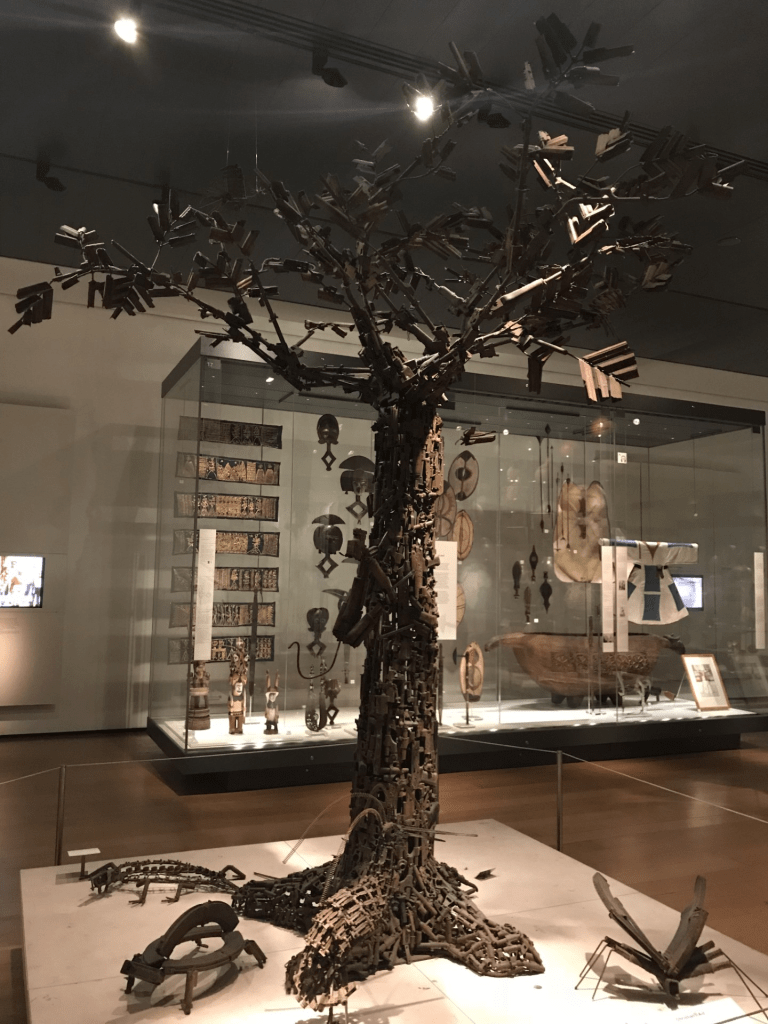
The Gun Tree by Robbie Cheadle
If you look closely at this tree, you’ll see it is constructed of guns
Guns
Bullets
Shiny new
Ready for use
Against dissenters
Regardless of their cause
Women and children punished
For the actions of their menfolk
Innocent blood amply watering
The ground that once sheltered and protected
Staining the earth black, splashing the growing crops
A fresh graveyard of dead animals and owners
Fragile houses riddled with holes – scene of destruction
Savagery wins
Rules unopposed
People succumb
To new regime
Hope disappears
Tree of life falls
This week’s prompt is as follows:
The change of seasons can be tough on us. It can shake our core and disturb our balance. The trees are a perfect example of how to adapt to changes. The branches and leaves flow with the wind and trees get bare or full of leaves, however, a tree’s strength is in the roots.
Let the words above inspire you and write a poem in “Tree of Life” poetic form about changes, impermanence, and strength.


















 roberta-writes.com