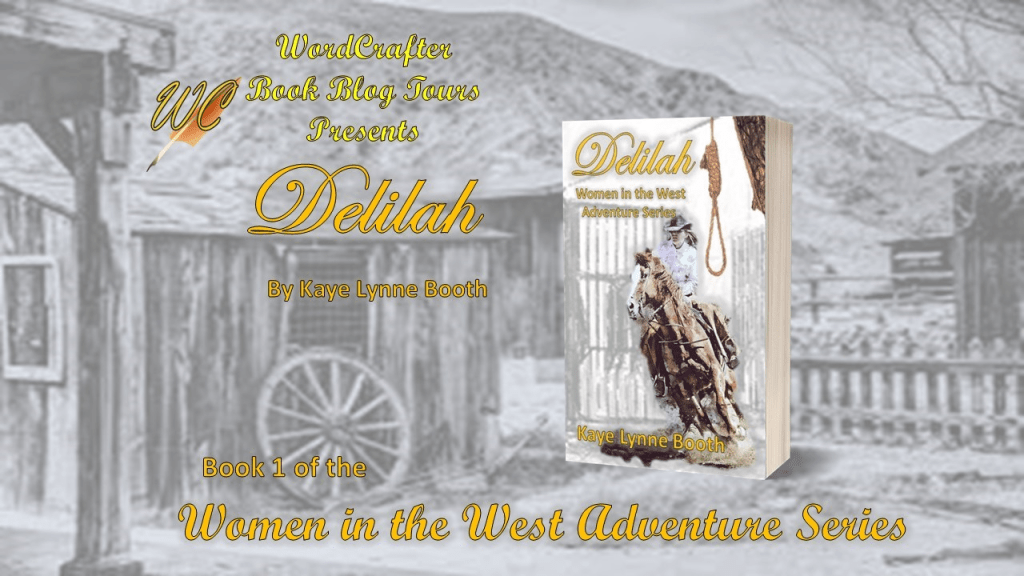
Roberta Writes – WordCrafter Book Blog Tour: Delilah by Kaye Lynne Booth

Writing Marta – Strong female characters right out of history

One of the cool things about Delilah and the Women in the West adventure series is the fact that there is a true-life historical female character in a supporting role, along with the strong female protagonist in each book. In the first book, Delilah, the supporting character is Elizabeth “Baby” Doe McCourt Tabor. In Book 2, Sarah, the supporting character will be Big Nose Kate, and I’ve begun the pre-writing process of outlining for that one. In Marta, book 3 in the series, the supporting historical character is Clara Brown. An emancipated slave, Clara was one of the first women to go to the Colorado gold camps, providing domestic services for many of the miners, including the first laundry service in the Colorado territory.

I’m not that far with the third book. Marta is still a loose collection of ideas, with an outline draft, which can be manipulated as I change my plot points until I’m ready to begin the actual writing of the story. If you read Delilah, you will learn that Marta was captured by Indians while traveling west with her family. Book 3 is the story of Marta’s life in Central City, Colorado in the years following her release from the Utes. The supporting historical  female character for this  is not as renown as the supporting characters for the first two books, but she was  an important figure in the gold camp turned township of Central City, and I am proud to offer her a supporting role in my story. Marta takes place at a time when Clara Brown was elderly and in failing health, and she will fill the role of the wise women or mentor, sharing her wisdom with Marta, who is a nurse in charge of Clara’s care.

“Aunt” Clara Brown – A true pioneer in her own right
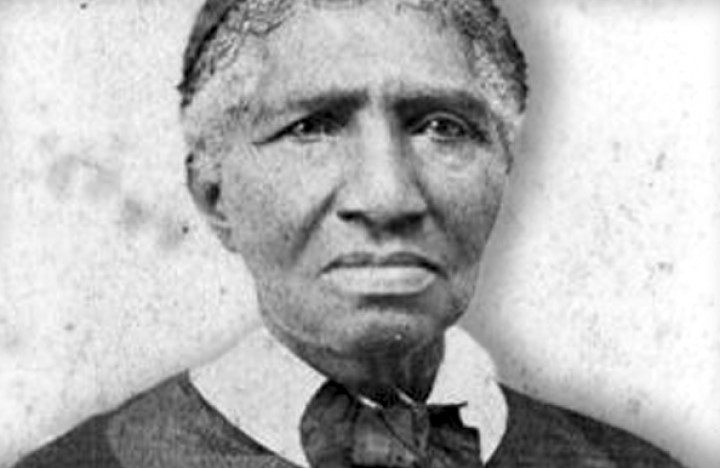
Clara Brown – Colorado Women’s Hall of Fame

Although there weren’t many women on the American frontier, there were women who did ‘go west’ to seek their independence, their fortunes, or both. There were also those who came west in the familial units, as wives and daughters, later losing husbands and fathers to the many hazards in the rough pioneer lives of those who ventured west into the frontier, and finding their own way out of necessity. But, if there were few women to be counted, there were even fewer black women. In this respect, Clara Brown was a pioneer and a trailblazer for the women who followed. Clara was a rarity indeed, as she was not only a female, but a female of African American descent – a freed slave, acting as her own agent in a frontier that was often harsh and cruel.

In slavery, as an indentured servant, Clara acquired domestic skills needed to run a household. Freed after many years, Clara used those skills to establish her value in the community and make her own way as an independent business woman and entrepreneur.

Born a slave in Virginia in 1800, Clara and her mother were sold and sent to Kentucky when she was nine. Later, she married a slave on the same plantation, and they had four children together. But, as was the fate of many indentured slaves, she and her family were all sold at auction by their owner and she would never see any of them again, with the exception of her youngest daughter. Her third owner freed her in 1859, at the age of 56. Under Kentucky laws, freed slaves were required to leave the state or revert to indentured servitude once more, and so she cooked and provided midwife services on a wagon train, to pay for her passage west, making her way to Colorado.

In Central City, a  gold camp consisting of mines, a few shops and saloons, and the shacks of miners and their families, she established the first laundry service in Colorado territory and provided domestic services such as cooking and cleaning, earning enough to make a living. go back to Kentucky as a representative of the Republican governor of Colorado to help freed slaves. She learned that her husband and oldest daughter had died in slavery, and her son had been sold too many times to trace, but she continued to search for her youngest daughter, Eliza Jane. She located her in Council Bluffs, Iowa in a heartwarming reunion. Clara returned home to Denver with her granddaughter in 1882.

In 1869, she went back to Kentucky in her search for her family. She came back empty handed on that score, but she brought back sixteen freed men and women, helping them to relocate in Colorado. At that time, she had accumulated savings and properties around Denver and Boulder, Colorado totaling almost  $10,000.00, (which would be valued at around $100,000.00 today).

With her wealth, she helped other blacks to relocate to Colorado, providing shelter and helping them to obtain gainful employment. In addition, her home became a community hub, as she opened it to freed slaves and provided religious services for the community, helping to establish the first Protestant Church in Colorado, and earning herself the “Aunt” Clara moniker. Most female philanthropists at this time were women wielding the wealth of their husbands, but there were some who did it on their own. A rare bird indeed, Clara Brown was a black, independent female philanthropist and profitable businesswoman.

Clara proved her value in the mining community of Central City, once labeled the richest square mile on earth, and to the state of Colorado, by venturing forth into places not for the faint of heart, much beyond the realm of common expectations for a black woman of the times. She became Clara wasn’t a superhero, but she was an amazing woman, who used her brains and her inner strength to help others. She was voted into the Society of Colorado Pioneers in 1884 for her contributions during the Colorado gold rush. She died on October 23,1885. Clara Brown was inducted into the Colorado Women’s Hall of Fame in 2022.

References

Karen A. Johnson (Winter, 2006) The African American Experience in Western States Journal of African American History Vol. 91 No. 1 pp. 4-22 Retrieved from https://www.jstor.org/stable/20064044

Clara Brown Colorado Women’s Hall of Fame Retrieved from https://www.cogreatwomen.org/project/clara-brown/

Clara Brown. Colorado Encyclopedia. Retrieved from https://coloradoencyclopedia.org/article/clara-brown

“Aunt” Clara Brown. History Colorado. Retrieved from https://www.historycolorado.org/sites/default/files/media/documents/2017/aunt_clara_brown.pdf

Clara Brown: Pioneer and Philanthropist in Early Colorado. History of American Women. Retrieved from https://www.womenhistoryblog.com/2015/03/clara-brown.html

Delilah giveaway

I’m giving away two digital copies, 

and one signed print copy

of

Delilah

Leave a comment to enter. 

Multiple entries are allowed, 

so leave a comment at each stop for more chances.

About Delilah

Delilah is a woman haunted by her past.

Her homecoming from prison quickly turns into a quest for vengeance when she is brutally raped and left for dead, and her fourteen-year-old ward is abducted. Sheer will and determination take this tough and gritty heroine up against wild beasts of the forest, Indians and outlaws to Leadville, Colorado.

Can the colorful inhabitants of the Colorado mining town work their way into Delilah’s heart, offering a chance for a future she thought she’d lost along with her innocence?

If you like strong and capable female protagonists, you’ll love Delilah.

Purchase Delilah: Purchase link: https://books2read.com/DelilahWIW

About the author

Kaye Lynne Booth lives, works, and plays in the mountains of Colorado. With a dual emphasis M.F.A. in Creative Writing and an M.A. in Publishing, writing is more than a passion. It’s a way of life. She’s a multi-genre author, who finds inspiration from the nature around her, and her love of the old west, and other odd and quirky things which might surprise you.

Her latest release is the re-release of Delilah, as Book 1 in the Women in the West adventure series. She has short stories featured in the following anthologies: The Collapsar Directive (“If You’re Happy and You Know It”); Relationship Add Vice (“The Devil Made Her Do It”); Nightmareland (“The Haunting in Carol’s Woods”); Whispers of the Past (“The Woman in the Water”); Spirits of the West (“Don’t Eat the Pickled Eggs”); and Where Spirits Linger (“The People Upstairs”). Her paranormal mystery novella, Hidden Secrets, and her short story collection, Last Call and Other Short Fiction, are both available in both digital and print editions at most of your favorite book distributors.

In addition, she keeps up her authors’ blog, Writing to be Read, where she posts reflections on her own writing, author interviews and book reviews, along with writing tips and inspirational posts from fellow writers. Kaye Lynne has also created her own very small publishing house in WordCrafter Press, and WordCrafter Quality Writing & Author Services, where she offers quality author services, such as publishing, editing, and book blog tours. She has served as a judge for the Western Writers of America and sitting on the editorial team for Western State Colorado University and WordFire Press for the Gilded Glass anthology and editing Weird Tales: The Best of the Early Years 1926-27, under Kevin J. Anderson & Jonathan Maberry.

In her spare time, she is bird watching, or gardening, or just soaking up some of that Colorado sunshine.

Dark Origins – The Chimes, A Goblin Story: a novella by Charles Dickens

My Dark Origins article for March is a discussion about The Chimes, A Goblin Story by Charles Dickens. Thanks for hosting Kaye Lynne Booth.

robertawrites235681907's avatarWriting to be Read

I have been participating in a Dickens Readathon which is being hosted by by Marsha Ingrao from Always Write blog (this is her latest post for the challenge:https://alwayswrite.blog/2023/02/13/dickenschallenge-novella-4-the-battle-of-life/); Trent McDonald from Trent’s world (https://trentsworld.blog/2023/02/07/the-third-annual-dickens-challenge-a-triple-threat/) and Yvette Prior (https://priorhouse.wordpress.com/2023/02/09/five-novella-descriptions-2023-dickenschallenge-read-one-novella-by-june-9th-post-2/).

I have recently read The Chimes, a Dickens novella which was first published in 1844, one year after the well known A Christmas Carol. It’s social critisism perfectly suited my criteria for Dark Origins posts and I decided to share my thoughts and research on this novella for my March Dark Origins post.

The story involves the disillusionment of Toby “Trotty” Veck, a poor working-class man who works as a casual messenger or ‘ticket-porter’. Dickens goes to great lengths at the beginning of the story to detail Trotty’s poverty as per the following description:

Making, with his leaky shoes, a crooked line of slushy footprints…

View original post 1,502 more words

Roberta Writes – Sunday Stills: I’d rather be … and Tanka Tuesday #fun #poetry #animals

Terri’s Sunday Still’s prompt is I’d rather be … You can join in here: https://secondwindleisure.com/2023/03/19/sunday-stills-id-rather-be/

What an easy prompt.

… at the game reserve

I just love these ‘who are you?’ pictures. These animals have so much personality.

… doing artwork

Tanka Tuesday

Colleen’s challenge this week is to write a syllabic poem using synonyms for green and spring. I chose moss and vault and before you say anything about the context, there are no rules about that – hehe!

Spring sleepers

Earth’s subtle tilting

Coaxes forth abundant life

Interim defeat

Vibrant colours triumphing

Over dreary winter greys

***

Renewal extends

To the moss laden stonework

Of the silent vault

Halts abruptly at the door

Behind which the dead still sleep

By Robbie Cheadle

You can join in Tanka Tuesday here: https://wordcraftpoetry.com/2023/03/14/tankatuesday-weekly-syllabic-poetry-challenge-no-311-3-14-23/

Roberta Writes – Thursday Doors, autumn flowers and a poem

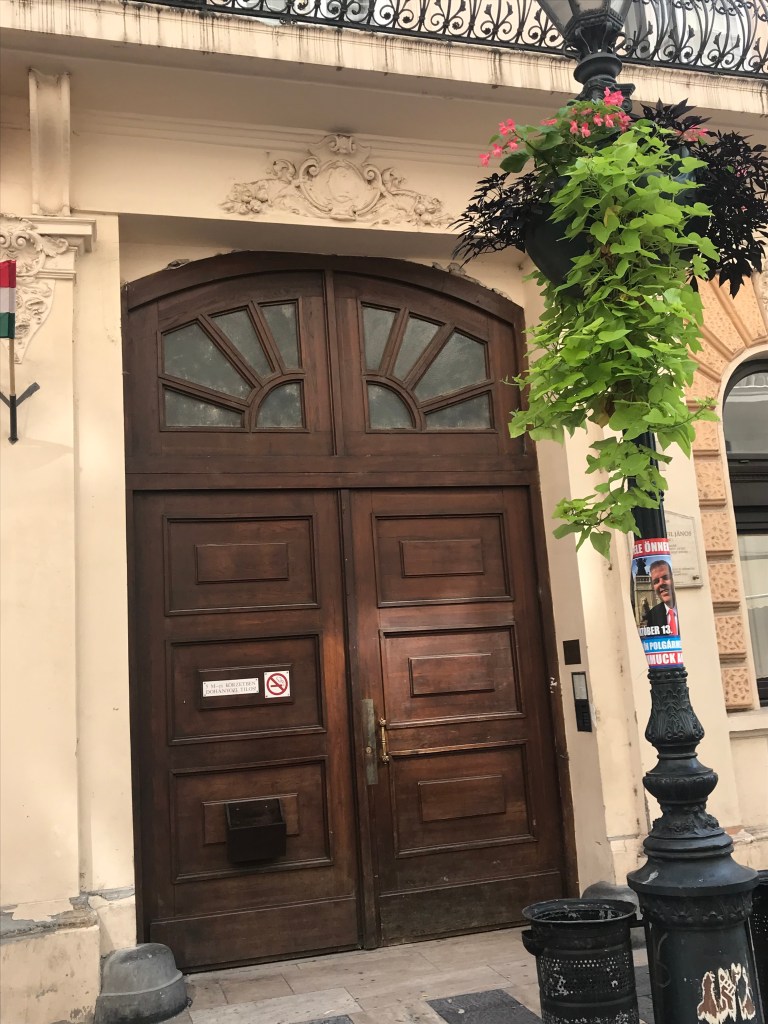
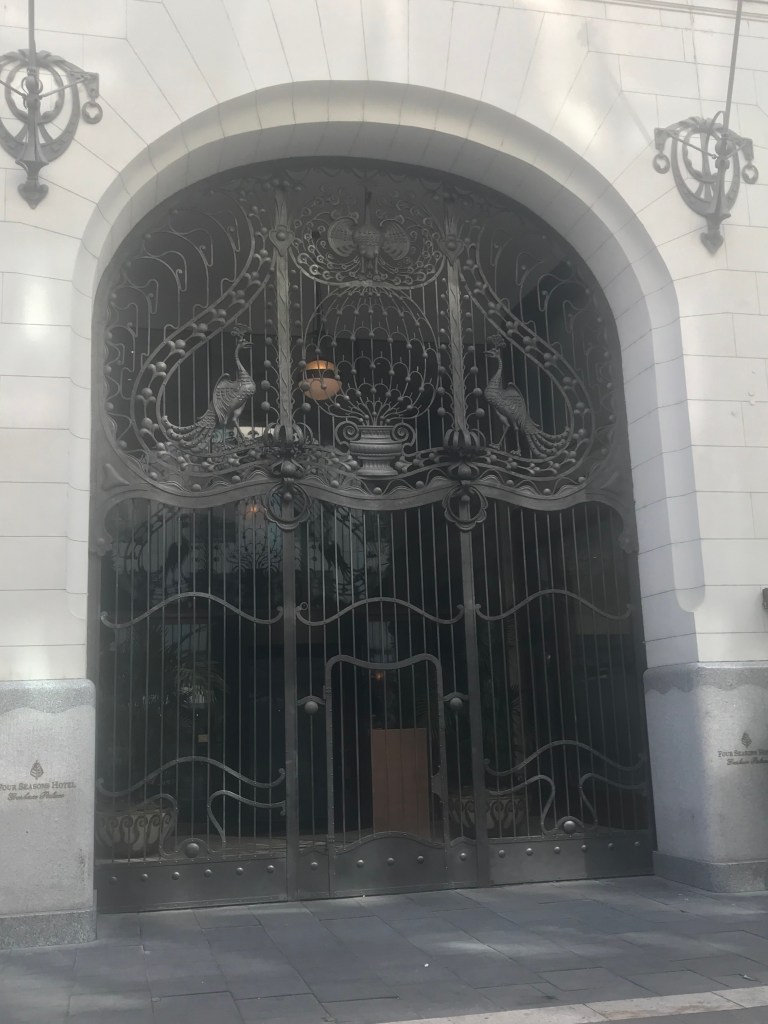
When I was in Budapest in 2019, I took a few random pictures of doors. I particularly like the ornate gate featuring the birds. You can join in Thursday Doors here: https://nofacilities.com/2023/03/16/newton-waltham-leftovers/

Autumn flowers

The cosmos is out in our local park. This means that autumn is official here. I love the cosmos and went to the park to take pictures yesterday late afternoon.

A Poem – The Vanishing Knight

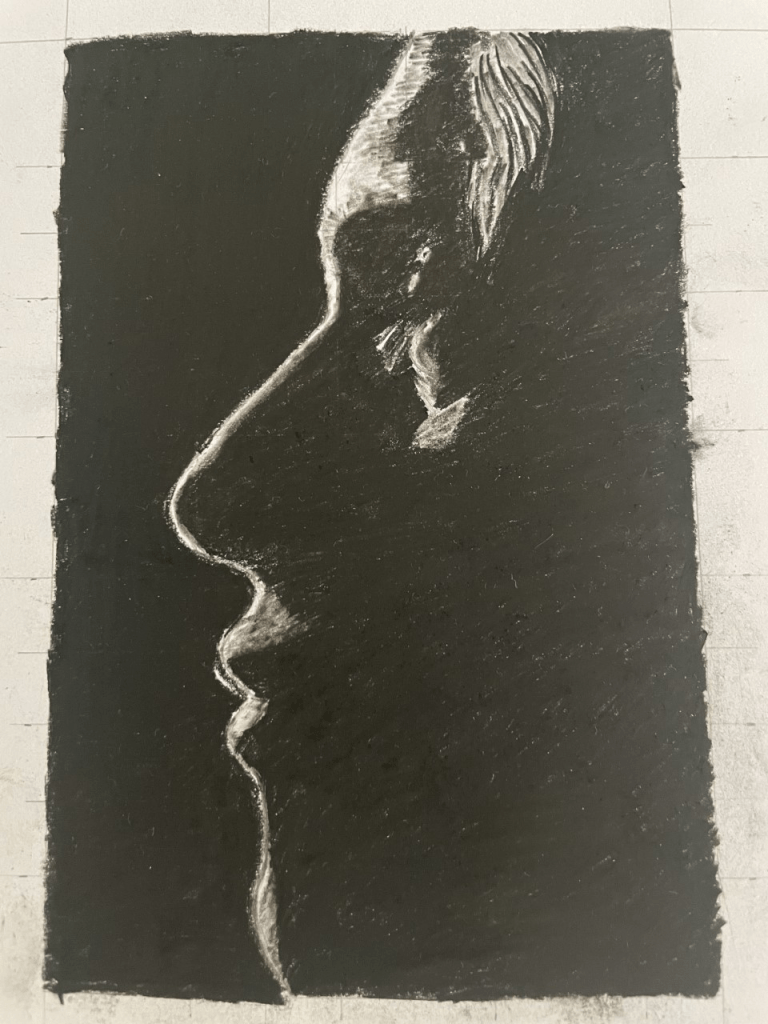
This poem could be about my life but it is more likely to be entirely fictional – smile! I wrote the poem to go with a drawing of an older man’s profile I did in charcoal.

My dream

of a man

a knight

on a white charger

has diminished

whittled away

day by day

Domesticity

when endured daily

and all alone

with a full-time job

and a sick child

for years and years

does that

Chronic illness

never part

of the fairy tale

Joint bread winners

but not

joint caregivers,

joint cleaners,

joint washers, or

joint ironers

Snow White

looked lovely

in an apron

me …

not so much

Then

unexpected illness

over 45 peril

induced by

lifestyle choices

overwork

Leads to …

time in hospital

blood tests

x-rays

doctors visits

Poor health

dissolves the strength

of the carer

and the cared for

creates dependency

until

all that’s left

is another child

What happened

to the dreamy knight

on the white charger?

by Robbie Cheadle

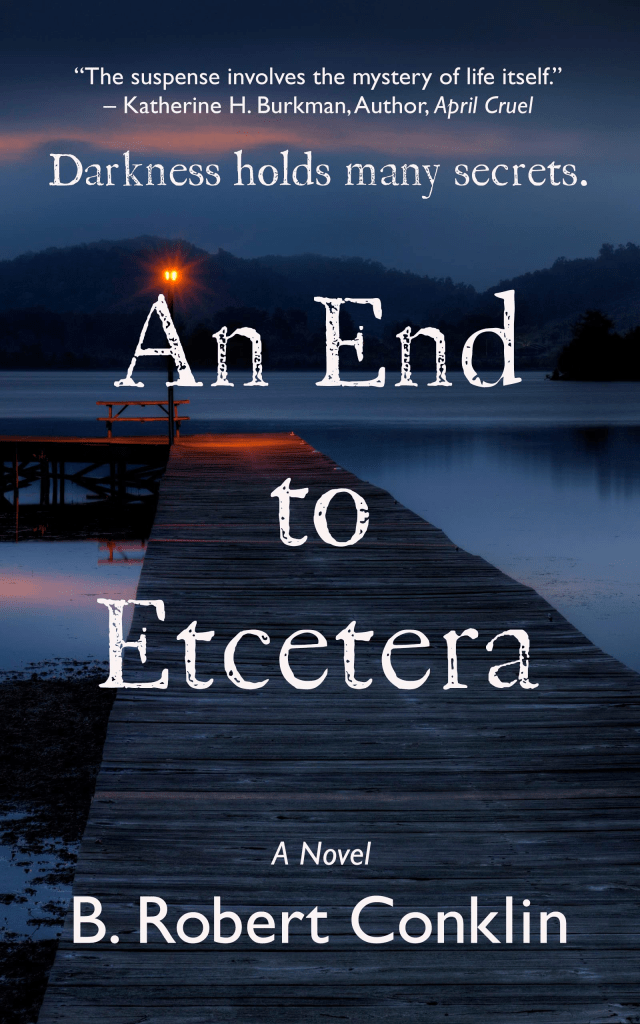
Roberta Writes – Book review: An end to Etcetera by B. Robert Conklin

What Amazon says

A boy. A shadow. A murder.

Or not?

Pathological liar? Sociopathic killer? Or just a troubled kid seeking attention? These are the questions that haunt therapist Selena Harris as she undertakes the most challenging case of her career.

Sitting on a couch two feet across from her is an ordinary-looking teenager who confessed in a text, inadvertently broadcast to his entire school, to murdering an autistic child left in his care. With no evidence to support Leal Porter’s testimony, authorities have referred him to Selena for counseling.

Challenging her professional distance is the emotional bond she develops with this lonely, isolated boy, whom classmates describe as “that scrawny kid who talks to himself at his locker.” Although Selena believes the alleged victim is the product of her client’s fevered imagination, she harbors one major doubt:

What if she’s wrong?

Selena can relate to Leal’s feeling of isolation, especially as she has returned to her small hometown on the heels of a divorce to take care of her father, who has suffered a debilitating stroke. In Leal’s case, however, he’s a school outcast due to his predisposition to tell tall tales to worm his way out of trouble.

Stepping outside the confines of her office in a quest for clues, Selena is determined to separate fact from fiction. But nothing in her experience prepares her for the harrowing revelation of the inner demon that lurks beneath the surface of Leal’s confession.

My review

I reviewed this book in my capacity as a member of Rosie’s Book Review Team. If you would like your book reviewed, you can contact Rosie Amber here: http://rosieamber.wordpress.com/.

This book is a well written and fascinating psychological thriller. Leal Porter, a teenager from a seemingly troubled background, is sent to psychologist, Selina Harris, for counselling sessions following his claim of drowning his younger autistic friend. His mother is not keen on his attendance at the counselling sessions, citing there cost and drain on her health insurance, but the school has made it a condition of his continued enrolment.

Selina has her own problems: she’s pregnant and isn’t sure whether the father is her soon to be ex-husband or an ex-lover with whom she had a one night stand, she’s in the process of getting a divorce from her husband, her ex-lover has announced his engagement to be married to another woman, and her elderly father has had a debilitating stroke. Despite, or perhaps because of, these personal issues, Selina becomes increasingly involved with Leal’s rather unbelievable account of the events leading up to the death of his young friend.

The story mainly constitutes Leal’s recounting his version of the events of his summer and involvement with a strange couple. He and his young autistic friend, Thuster, meet a beautiful young woman, Diana, who is married to a wealthy furrier. The two boys help her carry some groceries home and a friendship of sorts develops.

Leal is an unreliable narrator and neither Selena or the reader can tell what parts of his story are truth, if any, or if all of it is true. Is Thuster a real boy or is he a figment of Leal’s imagination? What has happened to Thuster’s caregiver, who also sometimes cares for Leal? Are the boys really friends with Diana and her husband, Saul, or it that all a lie? What happened to Leal’s father the night he died?

These are the questions around which the story line rotates. The book is beautifully written and it is impossible to know, as you read, what the answers to these questions are. Selina is also struggling and feels she is failing with this patient.

Selina is an interesting character with her poor self image and lack of confidence although she appears to be a competent psychologist. She is a bit confused about her relationships and does some strange things which are not unbelievable, just not well thought out. The more you learn about Selina, the easier it us to understand why her life is in such a muddle and why she is so perplexed by Leal. I thought Selina’s character was well drawn although I couldn’t understand her or relate to her reactions and actions. I ended up feeling sorry for her. Her short sightedness in all aspects of her life and projection of her internal conflicts and confusion onto her relationship with Leal contributed to the terrible situation she ended up in.

This book takes some very unexpected and interesting twists and turns, especially towards the end. A fascinating story with a great ending. 

Purchase An End to Etcetera

Amazon US

Roberta Writes – Sunday Stills and Tanka Tuesday

Terri’s photo prompt this week is green. Terri also provided a wonderful photograph for Colleen’s weekly Tanka Tuesday so I have put the two prompts together for this post.

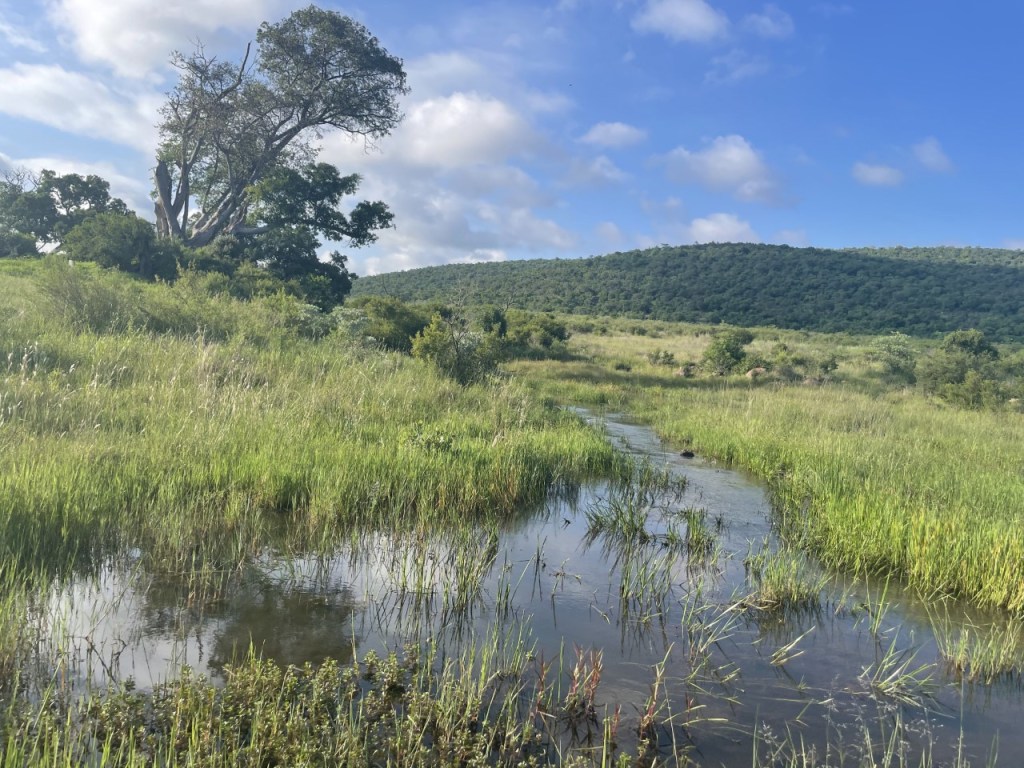
The four photographs above were all taken at Fugitives Drift Lodge in KwaZulu-Natal.

The above three pictures were all taken at Nedile Game Lodge during December 2022.

Tanka Tuesday

They float, a tanka

Secrets hidden deep

Beneath bottle green water

Draw the lonely hearts

Attract the disturbed spirits

They jump, then float in darkness

By Robbie Cheadle

You can join in Tanka Tuesday here: https://wordcraftpoetry.com/2023/03/07/tankatuesday-weekly-photoprompt-poetry-challenge-no-310-3-7-23/

You can join in Sunday Stills here: https://secondwindleisure.com/2023/03/12/sunday-stills-monthly-color-challenge-surrounded-by-green/

A New Book Entry For the U.L.S., the Underground Library Society: The Picture of Dorian Gray by Oscar Wilde

I am over at Charles French’s blog with a post for his Underground Library Society about The Picture of Dorian Gray by Oscar Wilde

frenchc1955's avatarcharles french words reading and writing

copy-of-roberta-writes-independent-pub-2-theme.


uls-logo-31

Here is another entry into the U.L.S., the Underground Library Society by Robbie Cheadle, a long-time member of this unofficial group. I am honored that Robbie Cheadle has written another entry–this one on The Picture of Dorian Gray by Oscar Wilde.

To Robbie: thank you!

The Picture of Dorian Gray by Oscar Wilde

Overview

The Picture of Dorian Gray is a gothic novel written by Oscar Wilde and first published in April 1890.

The book opens on with painter, Basil Hallward, a sensitive soul, painting a portrait of a young man of extraordinary good looks called Dorian Gray. Basil’s friend, Lord Henry Wotton is observing Basil adding the final touches to the painting and comments that it is Basil’s best work.

Lord Henry takes an interest in Dorian, a remarkably good looking but shallow young man, and sets about influencing him with his believes that beauty and the pursuit…

View original post 1,810 more words

Roberta Writes – Lion Scream: Syllabic Poetry About Southern African Wildlife available as an ebook and paperback

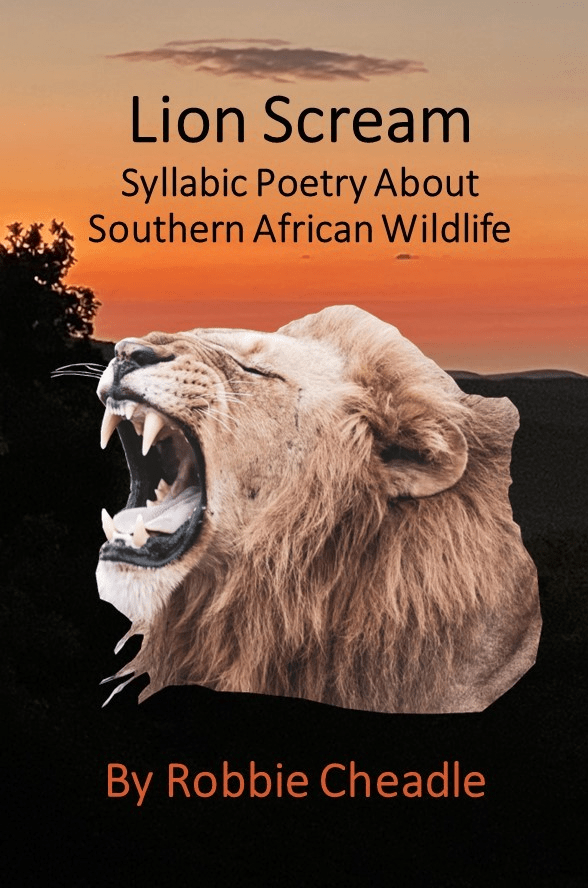
I am very excited that my new collection of poetry, Lion Scream, Syllabic Poetry About Southern African Wildlife is available for free download on Kindle Unlimited and as an ebook and paperback from Amazon here: https://www.amazon.com/Lion-Scream-Syllabic-Southern-Wildlife/dp/B0BV43HRD2

This book is close to my heart as the 62 syllabic poems are all devoted to southern African wildlife and nature conservation. My intention with this book is to share information about African animals, birds, insects, and other creatures and to highlight their plight in the face of the Sixth Mass Extinction and climate change. This book also includes my short story, The Nutcracker, which also highlights these themes.

The cover

Blurb

Do you rely on Earth for your survival?

Lion Scream is a graphic collection of poetry and prose. The book portrays the author’s experiences with South African wildlife and the growing impact of the Sixth Mass Extinction and Climate Change on the natural environment.

Lion Scream
There is no jungle
Only acres of smooth stumps
There is no jungle
No habitat, no food source
Hopeless lion screams tonight

Editorial review of Lion Scream

“In this reflective collection of syllabic poetry, poet Roberta Cheadle weaves words, emotions, and images as she recounts her soul-stirring journey around South Africa in 2022. She highlights the plight of the animals in the face of the Sixth Mass Extinction, during a visit to Ukutula Lodge & Game Reserve. Lion Roar is a poetic and photographic roadmap to the heart & soul of South Africa with highlights about the increasing impact of global warming on humanity and the greater planet. A must read!”
Colleen M. Chesebro, Author of Word Craft: Prose & Poetry, The Art of Crafting Syllabic Poetry

I am grateful to Colleen from Unicorn Cats Publishing Services for her help with editing and preparing Lion Scream for publication. You can find out more about Colleen’s services here: https://colleenmchesebro.com/my-services/

Youtube book trailer

Roberta Writes – Sunday Stills: Out of this world and a new fantasy story on Vocal

Terri’s prompt for this week’s Sunday Stills is as follows:

This week’s Sunday Stills theme is “out of this world” which can be described as something extraordinary looking, food that tastes super-delicious, or things that might look otherworldly. My examples show images depicting things that are odd, cosmic, celestial, or a bit alien. Many are from my archives and have been shared before.

You can join in here: https://secondwindleisure.com/2023/03/05/sunday-stills-out-of-this-world/

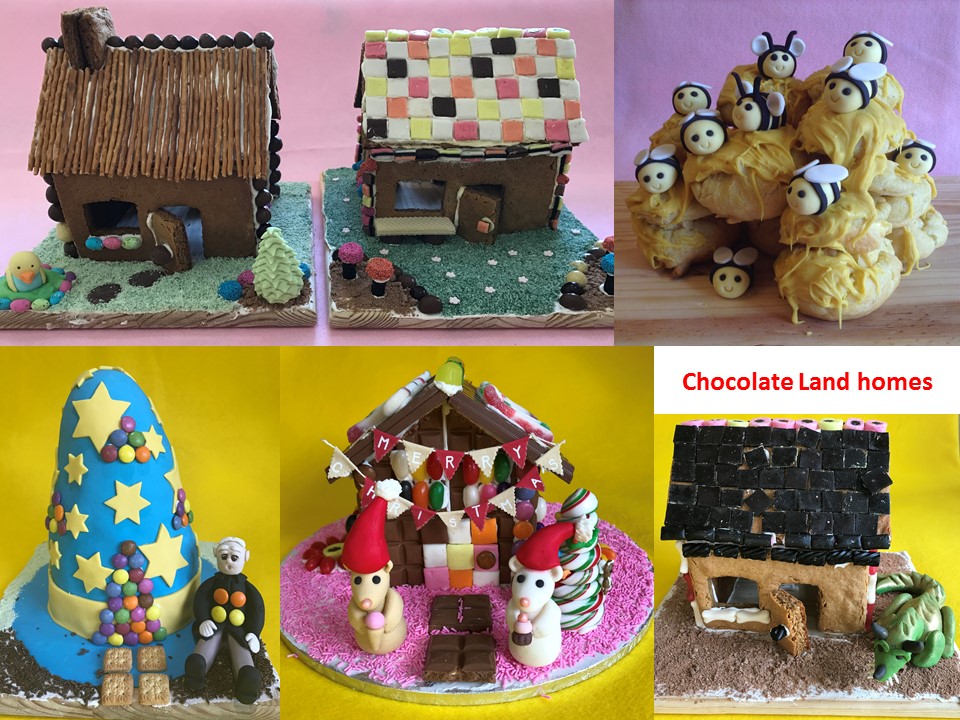
This prompt fits in beautifully with my new children’s book idea. Dinah in Chocolate Land is about Alice in Wonderland’s cat, Dinah, and her visit to Chocolate Land where meets several cats, all of whom have unusual adventures.

You can read the first chapter, Down the Rabbit Hole, on Vocal here: https://vocal.media/fiction/dinah-in-chocolate-land

I must admit I am delighted this Vocal challenge came along as I’ve been meaning to start writing this new book for some time. This challenge gave me the inspiration to get started. The story will include a selection my my cake and fondant artwork which are all ‘out of this world’.

The Chocolate Land characters are also ‘out of this world’. Below are Sir Chocolate and the Roundy Twins, Professor Smartie, Sylvia the Alien, the Man on the Moon (made of cheese), four Moon Babies, a surprised Taylor Red, and on of the Nougat Clowns.

Here are a few of the Chocolate Land Homes:

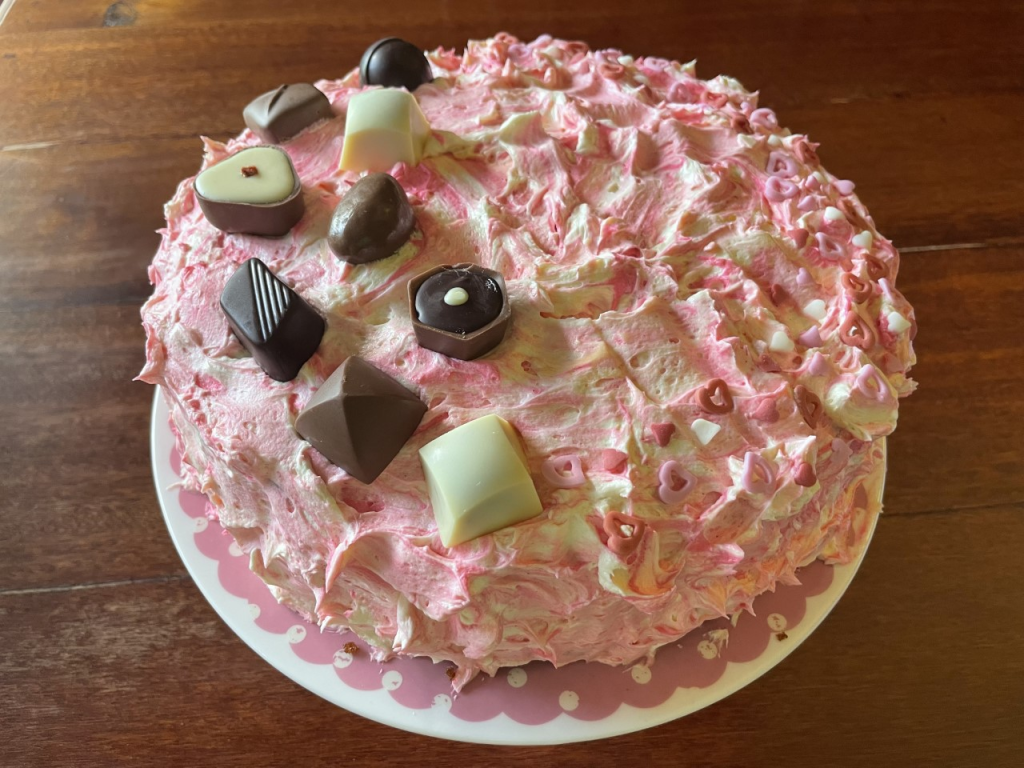
I made Greg a hummingbird cake for his twentieth birthday last weekend. I used a new marbled cream cheese icing technique which came out very well.

Have you read The Day of the Triffids by John Wyndham? If not, you can find out more about it in this post I wrote for Barbara over at Book Club Mom blog: https://roberta-writes.com/2022/01/25/whats-that-book-the-day-of-the-triffids-by-john-wyndham/

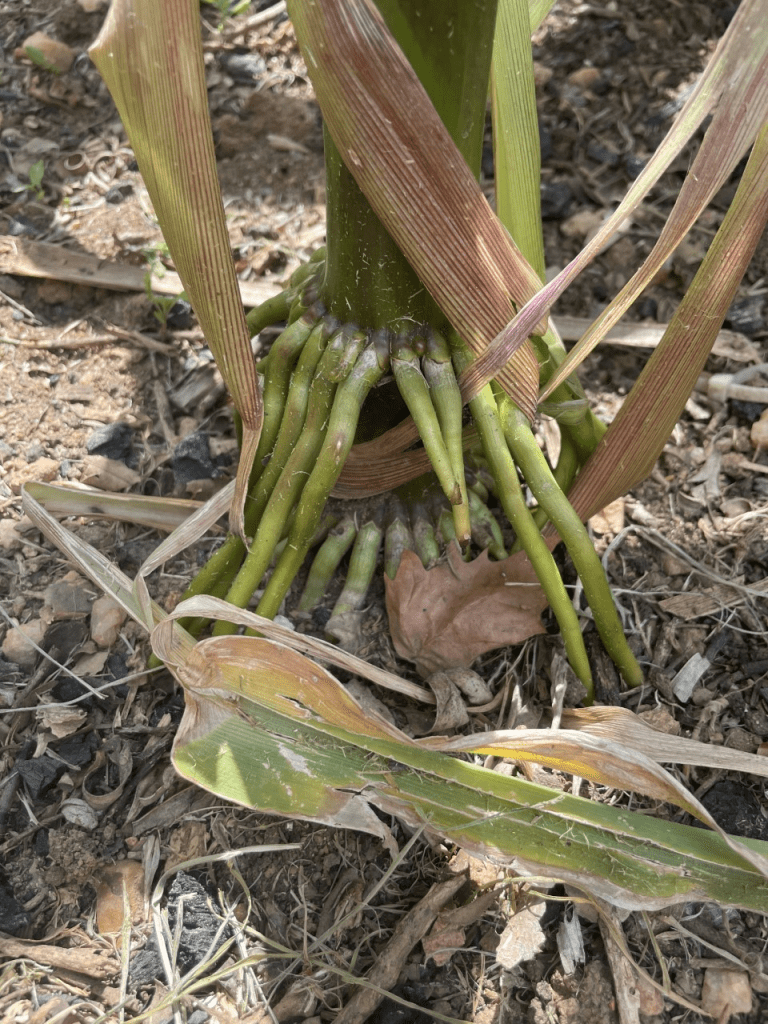
I think I have a triffid in my garden – EEEEKKKK!!!!

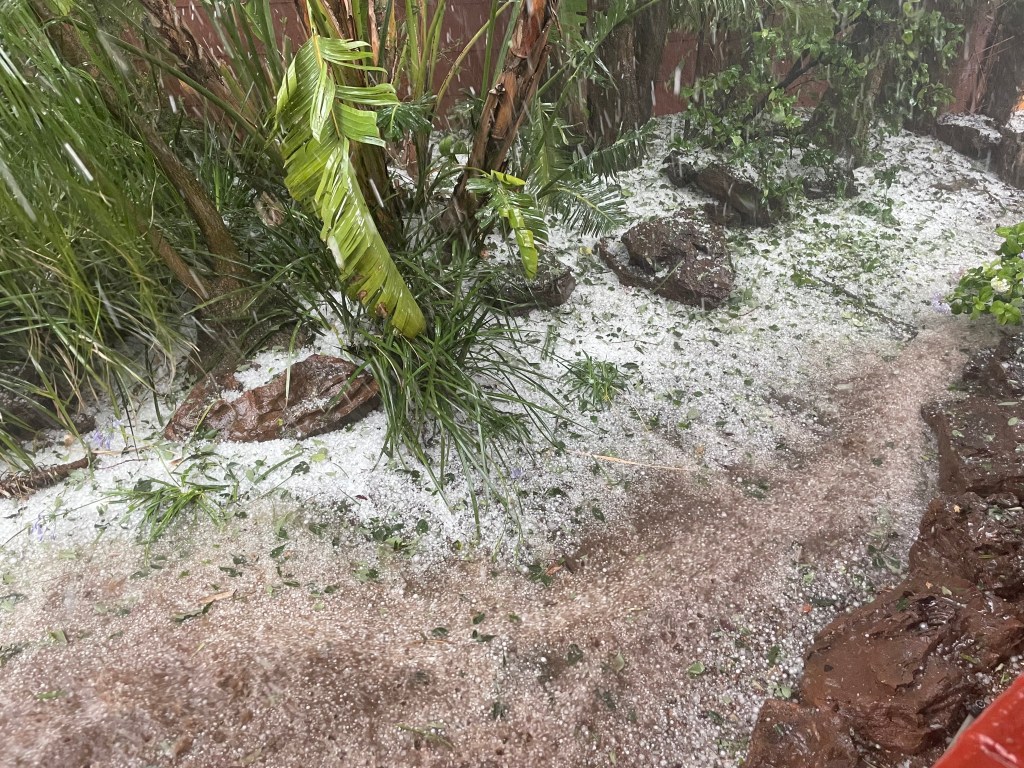
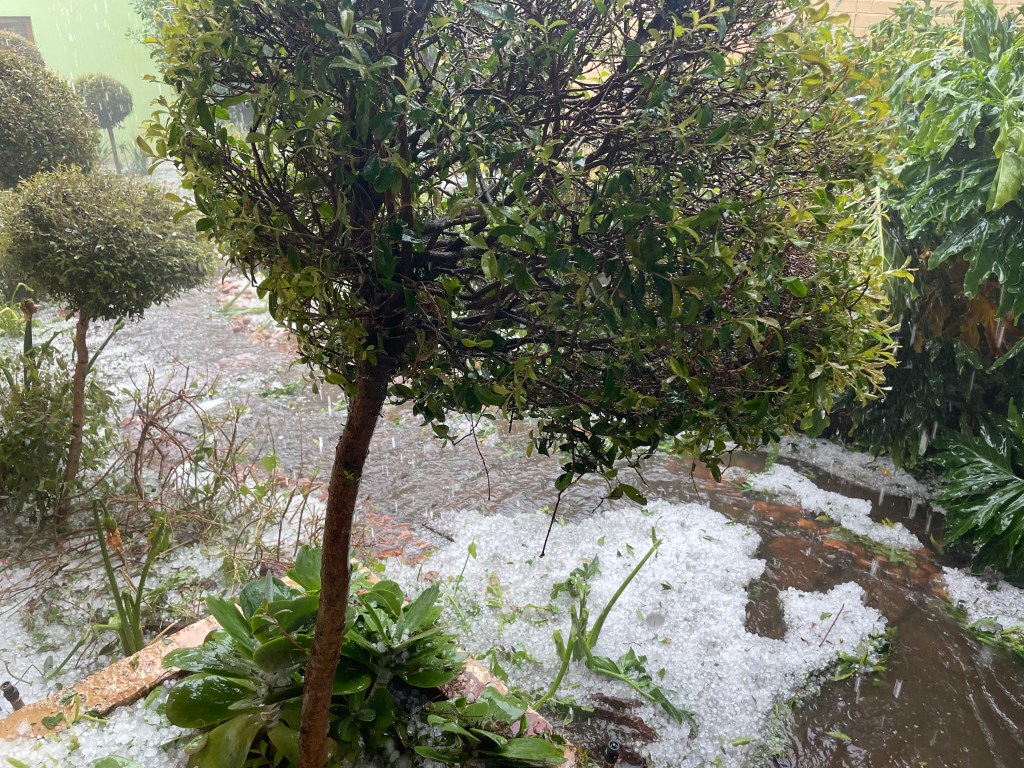
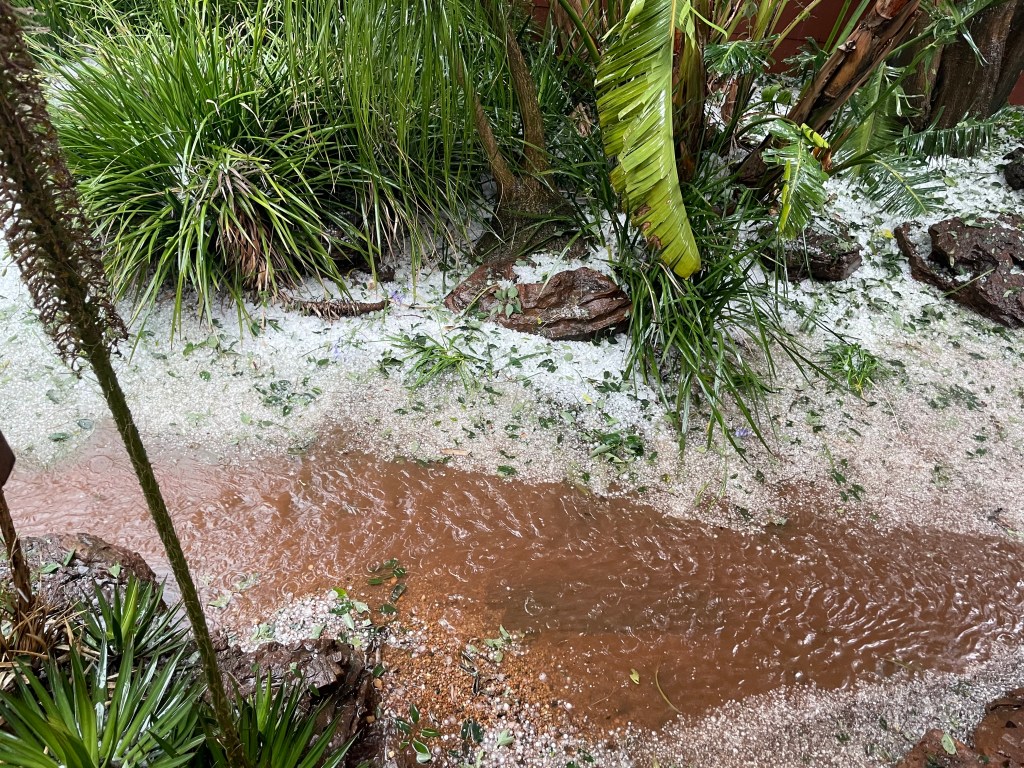
In early December last year, we had a hailstorm which was out of this world.

Roberta Writes: Dickens Novella Challenge – The Cricket on the Hearth: A Fairy Tale of Home #readingcommunity #Dickens

I am participating in the Dickens Novella Challenge which is being hosted by Marsha Ingrao from Always Write blog (this is her latest post for the challenge: https://alwayswrite.blog/2023/02/13/dickenschallenge-novella-4-the-battle-of-life/); Trent McDonald from Trent’s world (https://trentsworld.blog/2023/02/07/the-third-annual-dickens-challenge-a-triple-threat/) and Yvette Prior (https://priorhouse.wordpress.com/2023/02/09/five-novella-descriptions-2023-dickenschallenge-read-one-novella-by-june-9th-post-2/).

You can read my first post about A Christmas Carol here: https://roberta-writes.com/2023/02/21/roberta-writes-dickens-novella-challenge-a-christmas-carol-dickenschallenge-readingcommunity/

Today, I am chatting about the second novella I’ve read for this challenge called The Cricket on the Hearth: A Fairy Tale of Home.

You can read The Cricket on the Hearth here: https://www.gutenberg.org/files/678/678-h/678-h.htm

According to New York University: “The Cricket on the Hearth was the most popular of Dickens’s Christmas Books, which he wrote both to support his large family and to generate readers’ sympathy and charitable giving, often through characters who are poor, suffering, and/or physically disabled.”

This story is set within a small family comprising of John Peerybingle, a carrier, his much younger wife, Mary but called Dot, and their baby. The baby’s nanny, Tilly Slowboy, lives with them. A cricket chirps on the hearth and acts as a guardian angel to the family.

The story starts with with a setting of domesticity where the reader meets Dot who is filling the kettle in anticipating of her husband’s arrival home after a long days work. There is a lengthily and entertaining description of the kettle, which Dot struggles to fill, carry over to the hearth, and set it upon the fire.

The purpose of the scene would appear to be to demonstrate the happy character of Dot who is quickly restored to good humour despite her struggle with the cantankerous kettle. The kettle submits and starts to behave, entering into a singing challenge with the cricket as indicated by this quote:

“And here, if you like, the Cricket DID chime in! with a Chirrup, Chirrup, Chirrup of such magnitude, by way of chorus; with a voice so astoundingly disproportionate to its size, as compared with the kettle; (size! you couldn’t see it!) that if it had then and there burst itself like an overcharged gun, if it had fallen a victim on the spot, and chirruped its little body into fifty pieces, it would have seemed a natural and inevitable consequence, for which it had expressly laboured.”

John soon arrives home to this scene of domestic bliss, bringing with him a selection of parcels that he is either to deliver or which will be collected from his home. Dot soon comes across a spectacular wedding cake and learns that the local miser, Mr Tackleton, is to be married to her young and beautiful school friend, May.

Dot is clearly upset by this news and not long afterwards, John remembers and elderly man who travelled on his cart with him, and rushes out to bring him inside. The elderly gentleman asks if he can lodge with the Perrybingles for a few days. It quickly becomes evident that the elderly man’s presence had disturbed Dot greatly and her behaviour is quite unusual that evening.

The Perrybingle’s are also great friends with Caleb Plummer, a poor toymaker who works for Mr Tackleton, and Caleb’s blind daughter, Bertha. It is disclosed that Mr Plummer also had a son, Edward, who’d travelled to South America some years before and never returned. May was the sweetheart of Edward and is being compelled to marry Mr Tacklton by her overbearing and anxious mother.

The night before the wedding, Mr Tackleton tells John that his wife is cheating on him and manages to show him a secret scene in which Dot embraces the mysterious stranger.

The rest of the story is devoted to untangling these threads and restoring all parties to harmony and love.

This story is quite removed from Dickens’ usual stories filled with social criticism, current events, and other topical themes, and is, in his own words, it is “quiet and domestic […] innocent and pretty.”

The most interesting social theme in the story is Dickens’ description of Bertha, the blind daughter of Caleb Plummer. Caleb has mislead Bertha from birth, describing the hovel in which they live as being charming, and his selfish and tyrannical employer, Mr Tackleton, as being kind at heart. Poor misled Bertha has fallen in love with her father’s depiction of Mr Tackleton and is heartbroken by his engagement to May.

It is important to note that Bertha’s portrayal and love for Mr Tackleton are dependent on the assumption at the time of writing of this story that blind women did not marry. This belief arose due to the Victorian anxiety that disabilities like deafness and blindness were hereditary. Writers of the day liked to place blind women in courtship plots with the express intention that these courtships would not culminate in marriage.

According to New York University’s commentary on The Cricket on the Hearth: “Dickens’s representation of Bertha Plummer as tragically removed from the world of courtship participates in stereotypes about blindness and femininity that linger into the twentieth century. His extension of Bertha’s blindness to a cognitive dullness is an example of the sociological phenomenon of “spread,” in which one disability is assumed, without evidence, to produce impairment to other physical and mental functions.”

I did not know about this stereotyping of blind women, so this was new information to me.

A family scene with John, Dot, the baby, and Tilly Slowboy. Picture credit: https://victorianweb.org/art/illustration/barnard/xmas/12.html

Relevant extract for this picture:

“It was pleasant to see Dot, with her little figure, and her baby in her arms: a very doll of a baby: glancing with a coquettish thoughtfulness at the fire, and inclining her delicate little head just enough on one side to let it rest in an odd, half-natural, half-affected, wholly nestling and agreeable manner, on the great rugged figure of the Carrier. It was pleasant to see him, with his tender awkwardness, endeavouring to adapt his rude support to her slight need, and make his burly middle-age a leaning-staff not inappropriate to her blooming youth. It was pleasant to observe how Tilly Slowboy, waiting inthe background for the baby, took special cognizance (though in her earliest teens) of this grouping; and stood with her mouth and eyes wide open, and her head thrust forward, taking it in as if it were air. Nor was it less agreeable to observe how John the Carrier, reference being made by Dot to the aforesaid baby, checked his hand when on the point of touching the infant, as if he thought he might crack it; and bending down, surveyed it from a safe distance, with a kind of puzzled pride, such as an amiable mastiff might be supposed to show, if he found himself, one day, the father of a young canary.”

The carrier’s cart – picture credit: https://victorianweb.org/art/illustration/cricket/4.html
The kettle singing. Picture credit: https://victorianweb.org/art/illustration/cricket/5.html