An unexpected opportunity came up for me to travel to Paris to meet my husband. We will spend Easter together in this fascinating city. This will be my last post other than my committed posts for LatinosUSA and Writing to be Read until my return on 8 April. If you celebrate, wishing you a blessed Easter.
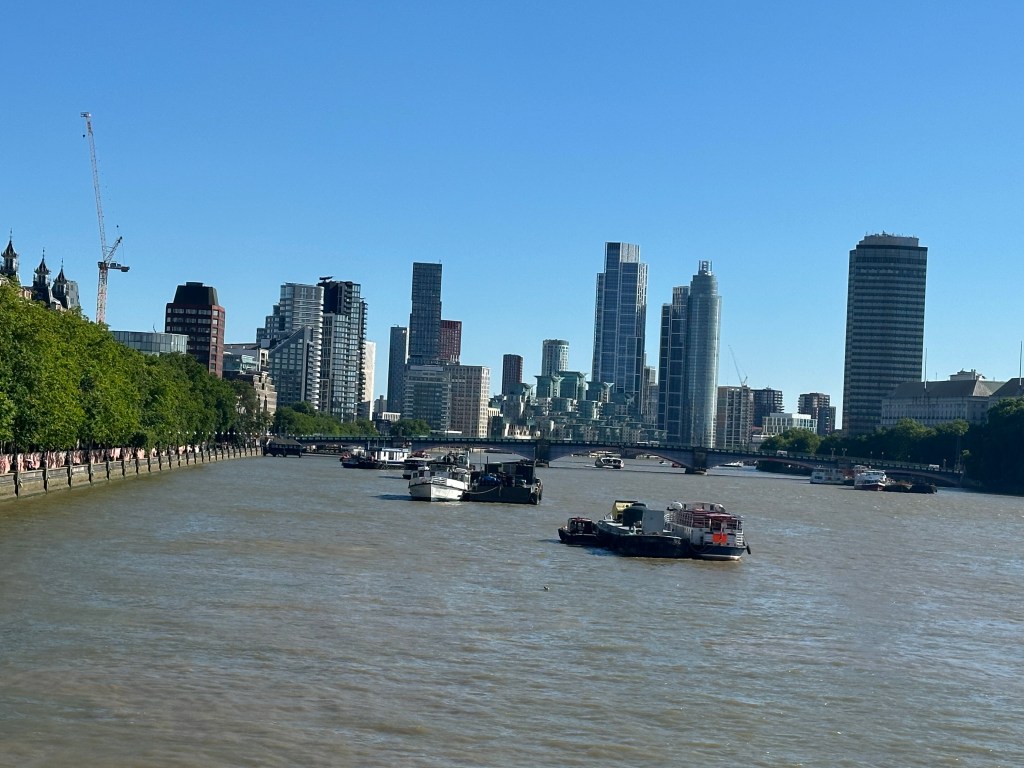
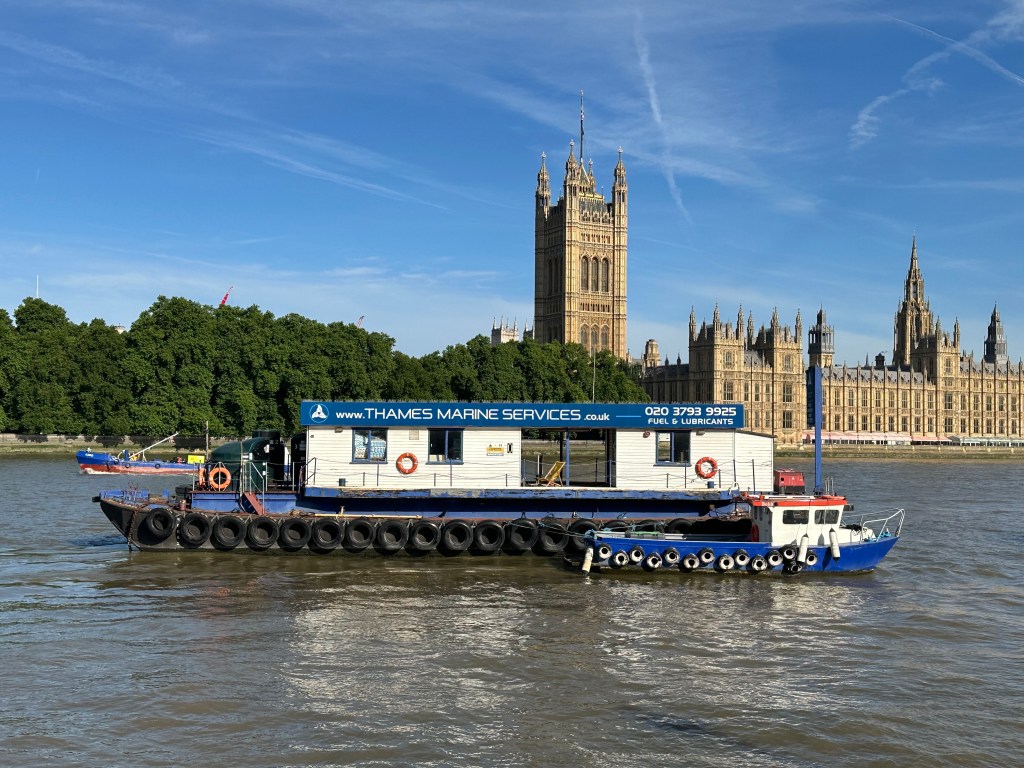
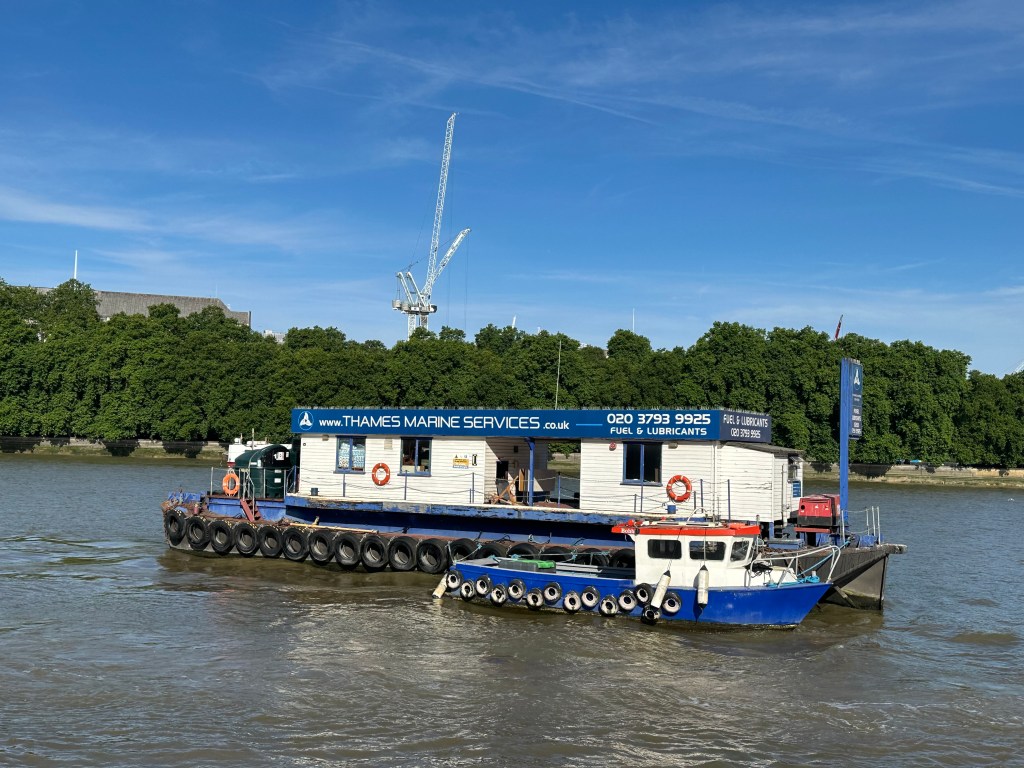
These are some pictures I took while crossing Westminster Bridge in the taxi. It was so hot, all the windows were wide open. The traffic allowed for decent pictures.
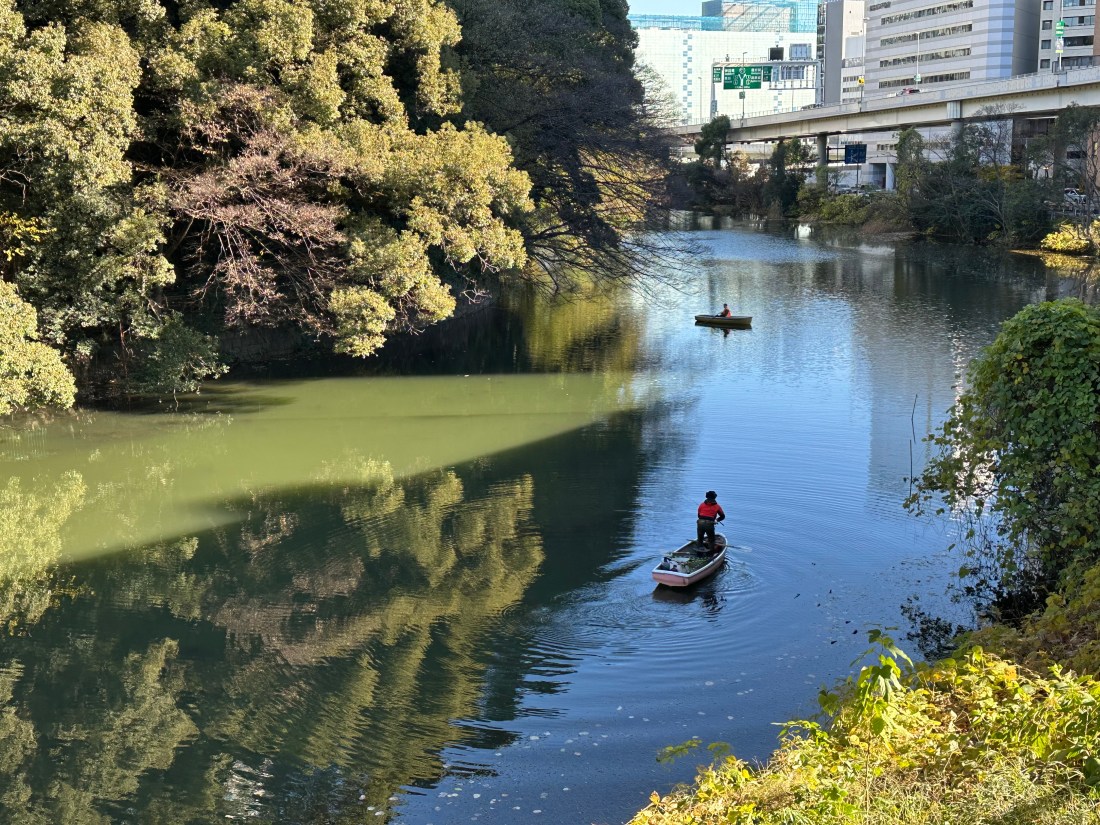
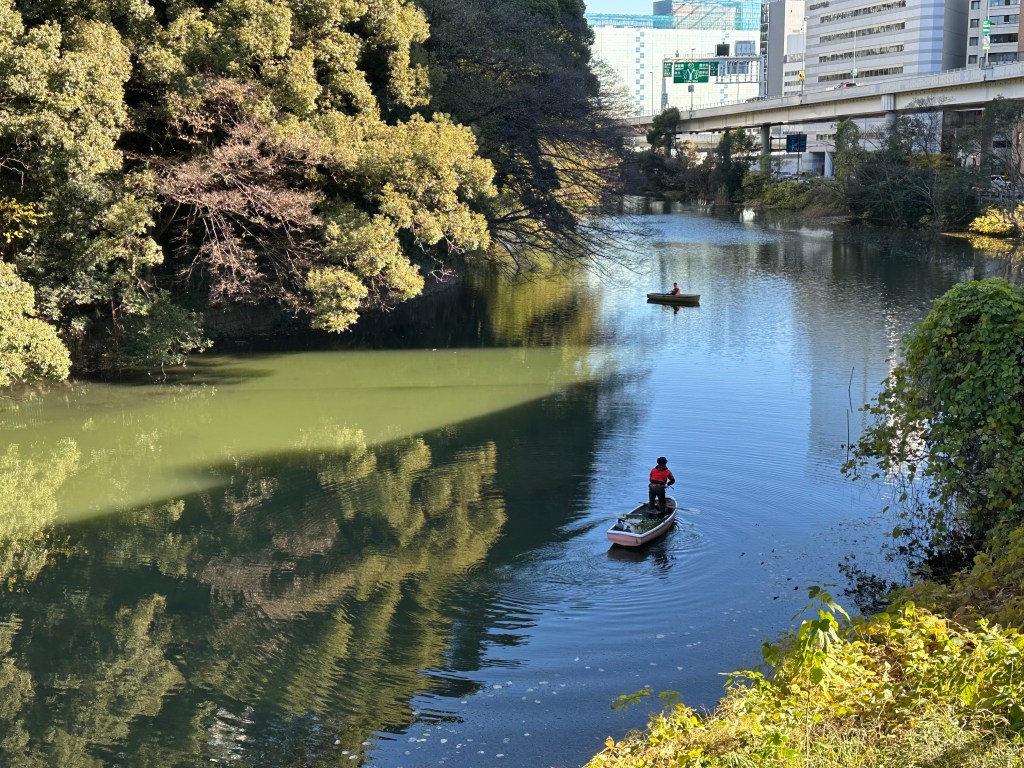
This is my favourite photograph from Japan. It was also taken from a taxi. I opened the window much to the driver’s horror – haha!
Tell us a bit about Paul Cannon. How and why did you start writing poetry?
My earliest memory of my interest in poetry is my parents encouraging me to listen to them reading poetry to me from the Children’s Book Of Verse. I remember in later primary school having to memorise poems like Coleridge’s ‘The Rime of the Ancient Mariner’ and Southey’s ‘The Inchcape Rock’ along with Patterson’s ‘The Man From Snowy River.’ Poetry captured my imagination.
Later, in high school, we were introduced to many poets and forms from around the world. We were also tasked with writing poetry which I enjoyed. One poet who I continue to read from that time is Robert Frost, I love the way he draws me into observing human behaviour and feelings, and how he observes nature.
After high school I continued to write. The incentive was, naturally, love interests. My girlfriends were always polite about my writing, not least Lyn my wife to be. From the time I married in 83 to the mid nineties I was hit and miss with writing, what brought me back in earnest was my journey into becoming an Anglican priest and the pathway of training to be a spiritual director or companion for those needing a sounding board for personal discernment. This journey opened me up to the poetry of Mary Oliver, R.S. Thomas, Denise Levertov, Blake, Milton, Edwina Gateley, Noel Davis, Rumi, Hafez, Layli and many more. These poets inspired me and I became intentional about my writing at this point.
I didn’t go online with my poems until 2017. I was writing prose on Face Book and switched to WordPress in 2013 and it was through the WordPress community that I was encouraged to take the plunge into poetry after posting some tentative pieces.
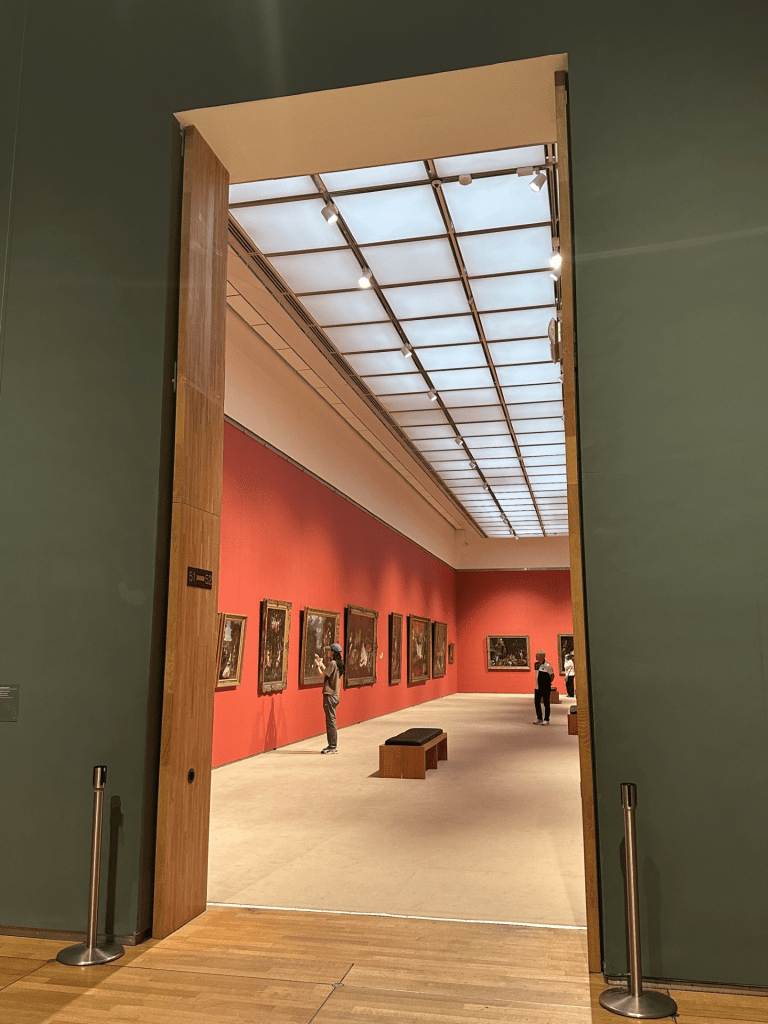
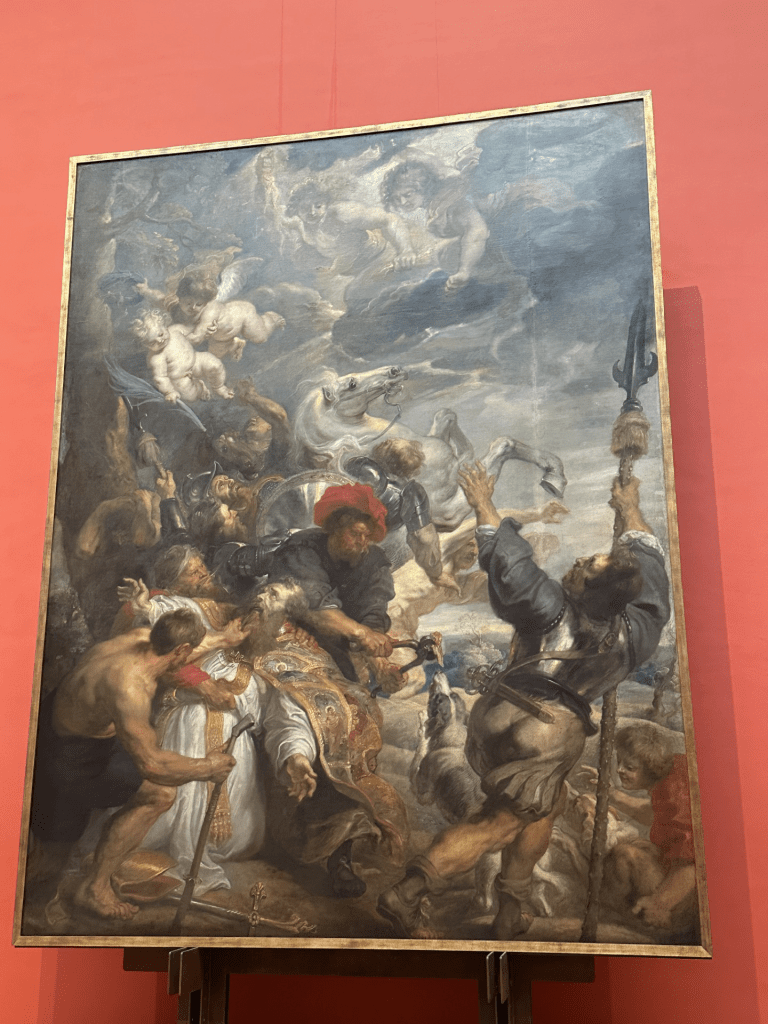
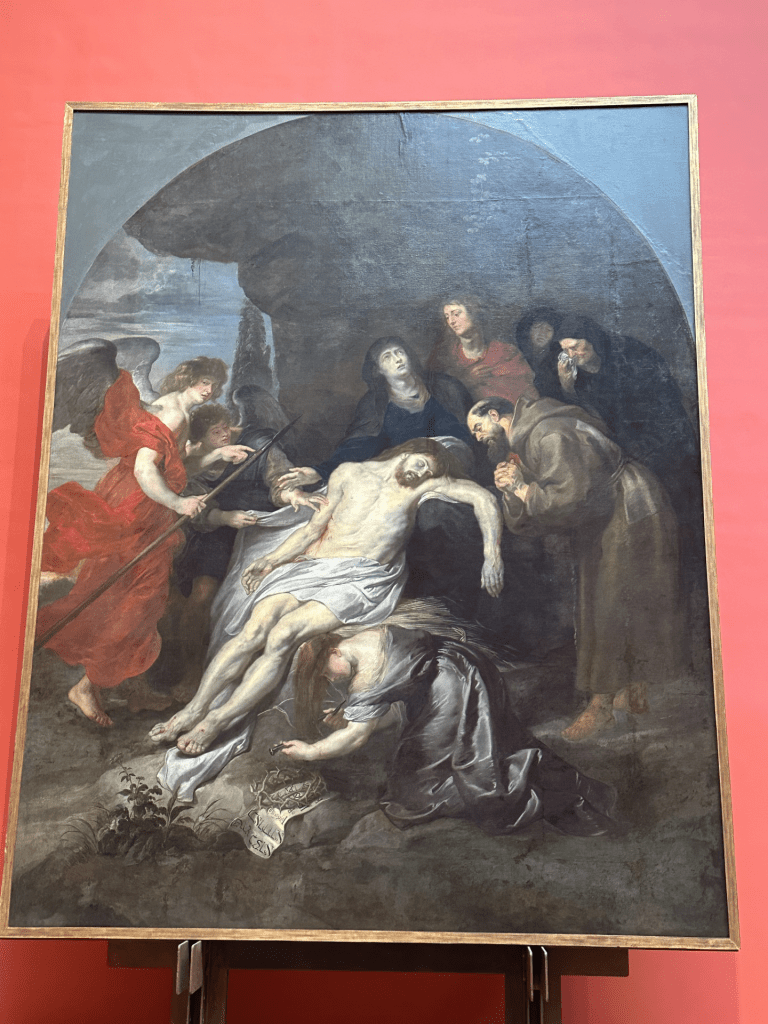
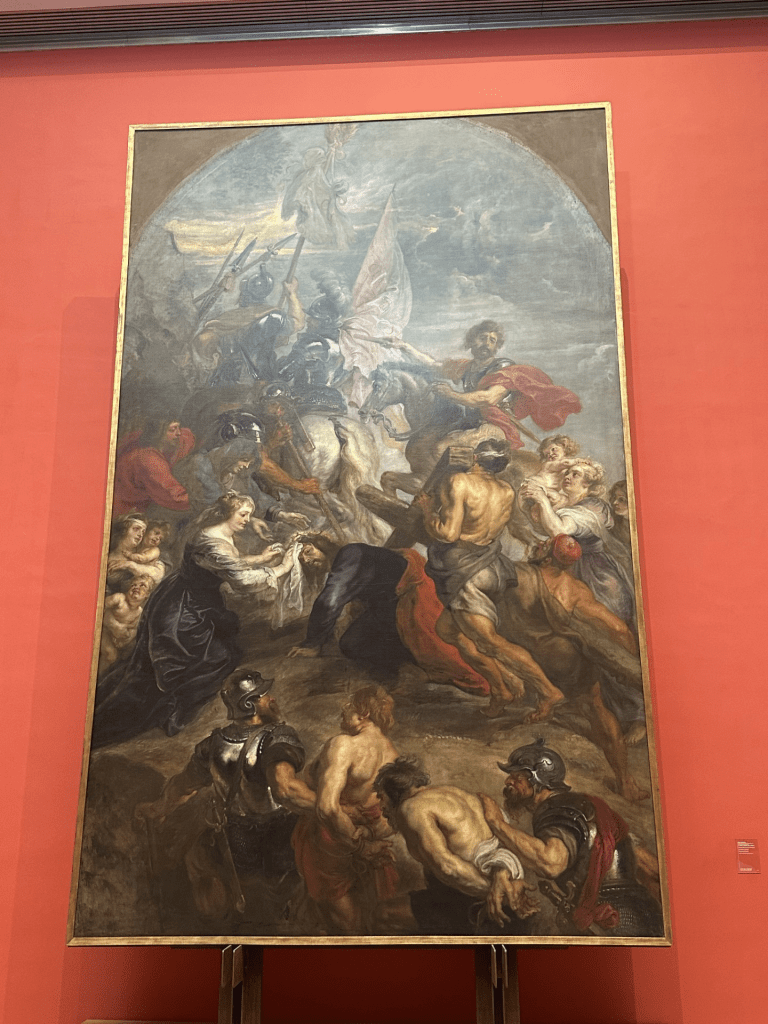
There were three reasons I agreed to fly for 16 hours to London and another 16 hours back again in July. 1. Michael came and I wanted to expand his horizons, 2. to visit Flanders in Brussels 3. to see the Peter Paul Rubens paintings at the Royal Museums of Fine Arts in Brussels. Today, I’m sharing my pictures of the third visit. Spectacular paintings that were worth the travelling.
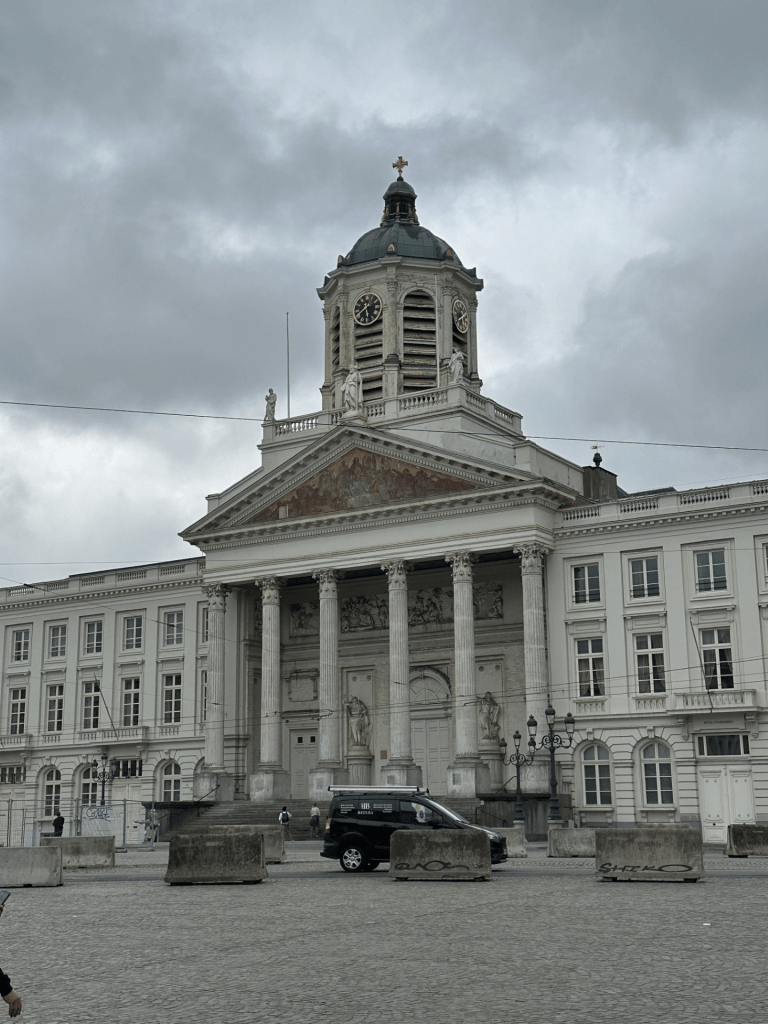
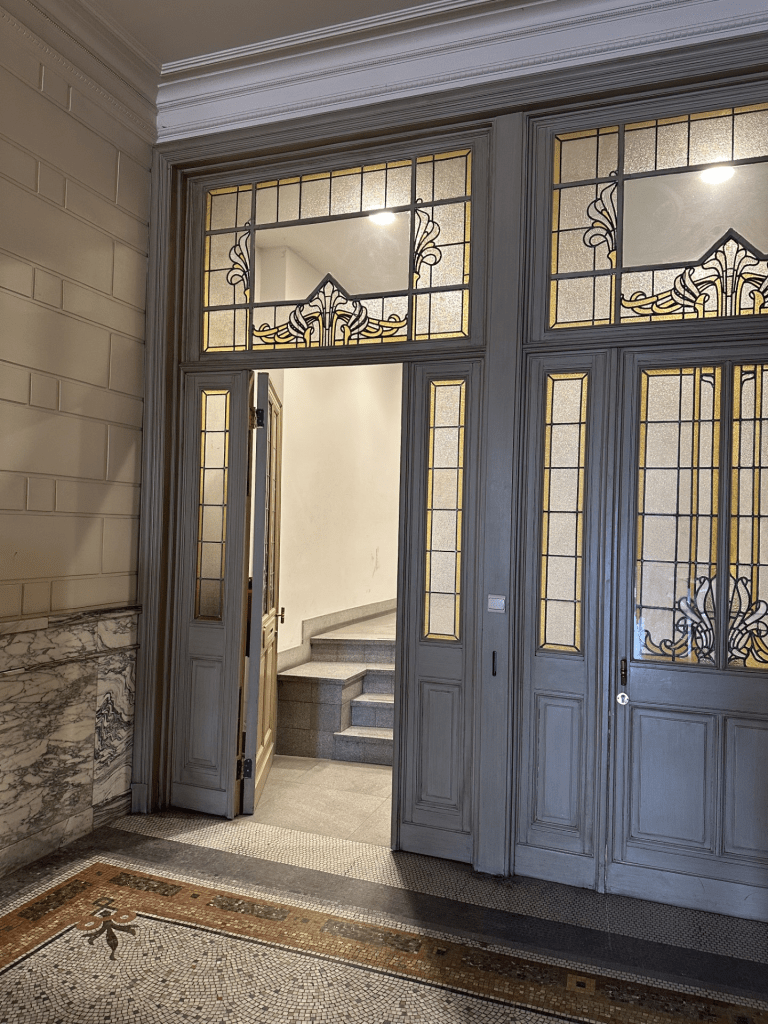
Picture caption: Front of the Royal Museum of Fine Arts with the decorate door. We didn’t go in here. Picture caption: This is the back door where we exited the museumPicture caption: This is the door into one of the galleries in the Old Masters section of the museumPicture caption: The martyrdom of St Livinus by Peter Paul Rubens. I adore those little fat cherubs.Picture caption: Pieta with St Francis by Peter Paul RubensPicture caption: The Assumption of the Virgin by Peter Paul RubensPicture caption: The coronation of the Virgin by Peter Paul RubensPicture caption: The ascent to Calvary by Peter Paul Rubens
The is my video of one of Rubens artworks called And Workshop
Today, I have reviews of two delightful books for you.
The Rat in the Python Fashion
Picture caption: Cover of The Rat in the Python Fashion by Alex Craigie featuring a cartoon styled python with people inside a bulge in its belly.
What Amazon says
If you haven’t heard of a liberty bodice, believe that half-a-crown is something to do with impoverished royalty and never had the experience of slapping a television to stop the grainy black and white picture from rolling, then this series might not be for you. Please give it a go, though – I suspect that most of it will still resonate no matter where you were brought up!
Book 3 looks at fashion and how it’s changed since the end of WWII. From utility coats and twinsets, to schoolboys in short trousers with socks and garters. From the swinging sixties with its long, long hair and short, short skirts, to psychedelia and beyond.
The Rat in the Python is about Baby Boomers who, in the stability following the Second World War, formed a statistical bulge in the population python. It is a personal snapshot of a time that is as mystifying to my children as the Jurassic Era – and just as unrecognisable.
My review
I realised when I came to write this review that this is book 3 and I have skipped out book 2. They don’t have to be read in order so it doesn’t matter, but book 2 should not be missed as this is a terrific series.
This fascinating short read covers fashion in the UK from WWII to the current date. It actually even goes a little bit further back in the beginning with some interesting comments about fashion during the Edwardian era and I am very thankful that I never had to wear a corset. Being long waisted, this would have been really awful for me. Edwardian women did, however, look very sophisticated with their gorgeous hats and long skirted, tight waisted dresses.
With regards to fashion during WWII, this book reinforced a lot of information I had heard from my mother about the lack of buttons, silk stockings and other niceties and how girls found innovative ways of dealing with this problem. To quote: “Women dealt with the latter issue by painting their legs with special product or using gravy browning and getting a friend to draw a line down the back of the leg with an eyebrow pencil to resemble the seam.”
This book takes the reader on a journey through the austerity of the post war continuing rationing fashion scene when people dressed very formally but frugally with shirts that had replaceable collars and cuffs and continues to the modern ‘throw away’ society. The current culture in the UK is actually vastly different from here in South Africa where women still dress fairly conservatively and most certainly do not buy cheap clothing that is thrown away rather than washed. Poverty is still a big issue in Africa, but perhaps this is better than the consumeristic habits of the developed world that add so much to plastic and global warming problems. I found the changing trends in this regard discussed in this book to be thought provoking.
The book includes lots of interesting photographs and pictures to demonstrate the fashion statements made and is really a wonderful undertaking to preserve the history of fashion in the UK. An interesting and worthwhile read.
Dewdrops on the Soul: Poetry you will love by Dwight Roth
Picture caption: Cover of Dewdrops on the Soul: Poetry you will love by Dwight Roth featuring a red hibiscus flower covered in dewdrops
What Amazon says
Poetry must speak to the soul if it is to be remembered. The poems in this book are written in readable verse that is easily understood by the reader, yet challenging and thought provoking. Along with the poems are beautiful original color photos taken by the author that are used to enhance the poems. In addition to photos there are also original paintings done by the author. Poems in this collection are inspired by nature, nostalgia, and reflections on the meaning of life.
The author has published a poetry blog on Word Press since 2016 which you can view at. rothpoetry.wordpress.com
This is a great book to spend time getting lost in as you peruse through the many poems included here.
My review
This is the first collection of poetry and flash fiction I’ve read by Dwight Roth and it was a complete delight.
The poet has a wonderfully positive outlook on life and this reflects in every word he writes. The poems and prose pieces in this book made me feel happy and uplifted and you just can’t beat that feeling. The book also includes some wonderful paintings by the poet, photographs from his childhood and adult life, as well as some innovative handmade creations include what he termed to be a Jackleg guitar. Not a term I have heard before but it seems to fit this wonderfully artistic musical instrument.
I really enjoyed all the poems but a few standout ones for me were as follows: A Call for Change, Dad, Pop’s Garden, Red Bellied Woodpecker, Digital Wolly Worm, Night Train, Dandelion Stars, Trigger, Love and Cherry Delight, Family Memories, Where do you Belong? and Proud Vulnerability.
I highly recommend this beautiful collection and will leave you with the poem I loved the best as I also love and appreciate the beauty of dandelions.
Dandelion Stars “Aging flower wild and free Sunny yellow color gone Silver stars cover its head reflecting sunlight Beautiful seeds waiting for the breeze Like Nature’s poetry Blowin’ in the Wind across our minds Beauty for some Weeds for others Daylight stars waiting to be appreciated”
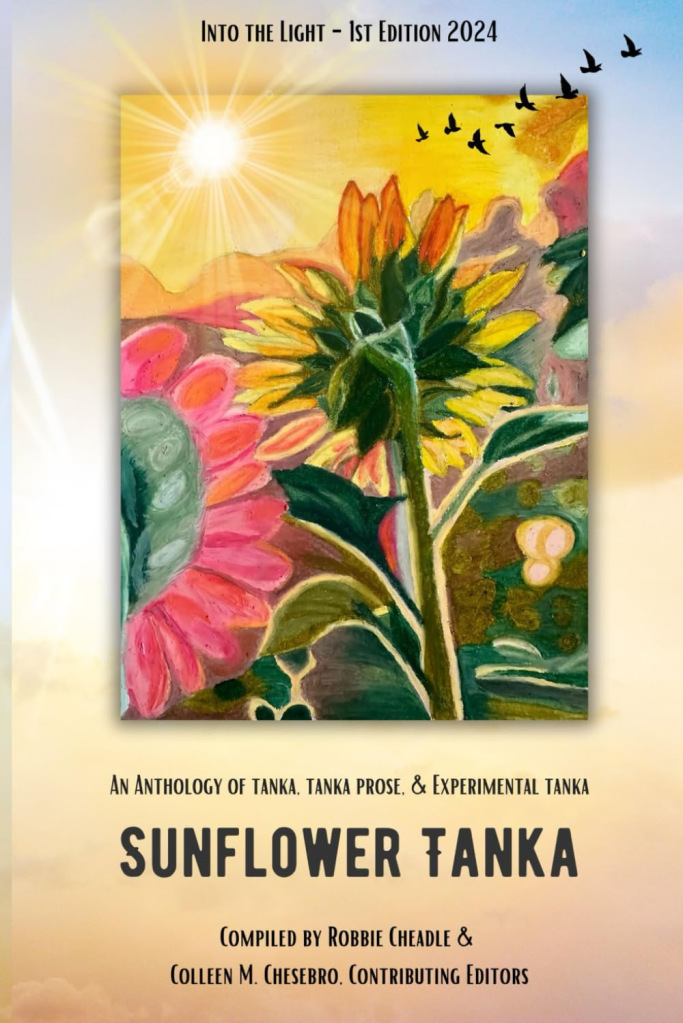
Sunflower Tanka, edited by Robbie Cheadle & Colleen M. Chesebro, is an annual anthology of contemporary tanka, tanka prose, & experimental tanka from a broad mix of new and established poetic voices from across the world.
Our theme, “Into the Light,” draws inspiration from the way a young sunflower bud constantly turns to face the sun. Poets delved into the realms of death, love, and the natural world, capturing their human experiences in the timeless form of syllabic poetry.
Contributors to the first edition of the Sunflower Tanka: Suzanne Brace, Yvette Calleiro, Kay Castenada, Luanne Castle, Robbie Cheadle, Colleen M. Chesebro, E.A. Colquitt, Melissa Davilio, Destiny, Tamiko Dooley, Lisa Fox, Cindy Georgakas, Chris Hall, Franci Hoffman, Marsha Ingrao, Jude Itakali, JulesPaige, Kenneth, MJ Mallon, Brenda Marie, Selma Martin, Michelle Ayon Navajas, Lisa Nelson, D. Wallace Peach, Freya Pickard, Dawn Pisturino, Gwen M. Plano, Jennifer Russo, Aishwarya Saby, Reena Saxena, Merril D. Smith, Nicole Smith, Ivor Steven, Ben Tonkin, Trilce Marsh Vazquez, Cheryl Wood.
Regular readers of this blog will know that I am currently undertaking a modernised rewrite of Dante’s Inferno. I now have a working title for this poem – Gaia’s Redemption. Anyhow, Mish’s Tuesday prompt was to write a poem including personification. This prompt was perfect for the first twenty lines of my re-write. In Canto II, I have agreed to undertake a journey through the nine levels of the Sixth Mass Extinction with my spirit elephant guide. I have entered the cave that takes us down into the bowels of the spirit world. If you are interested, you can read an analysis of Canto 2 of Dante’s Inferno here: https://www.litcharts.com/lit/inferno/canto-2
A living, breathing creature, this Precambrian era cave
It’s 2.8-billion-year-old skin wrinkled by wear and time
Access defended by minions; entry limited to the brave
Their glowing forms a marriage of dolomite and lime
The monster silently screamed its uncertainty and rage
Spirit elephant paid it no heed, gliding past unchallenged
I drew in a great breath, plunged forward, ducking under
Wall of spear like stalactites from which moisture dripped
Somewhere deep below, a gong sounded like thunder
Death’s hand upon me, I ventured into the stone crypt 10
***
“Guide, I am concerned your trust in me is misplaced
I don’t know how to achieve your lofty expectations
What if I disappoint you? It will be a humiliating disgrace
I don’t want to face the environmentalists’ accusations”
My Guide did not pause or speak, just shone a soft light
Which illuminated two formations beneath the Hand of God
Symbolising the visual, the first’s gazed through dark eyes
The other gripped a pen between slender white fingers
Understanding came, pictures held power and told no lies
The written word facilitates communication with thinkers 20
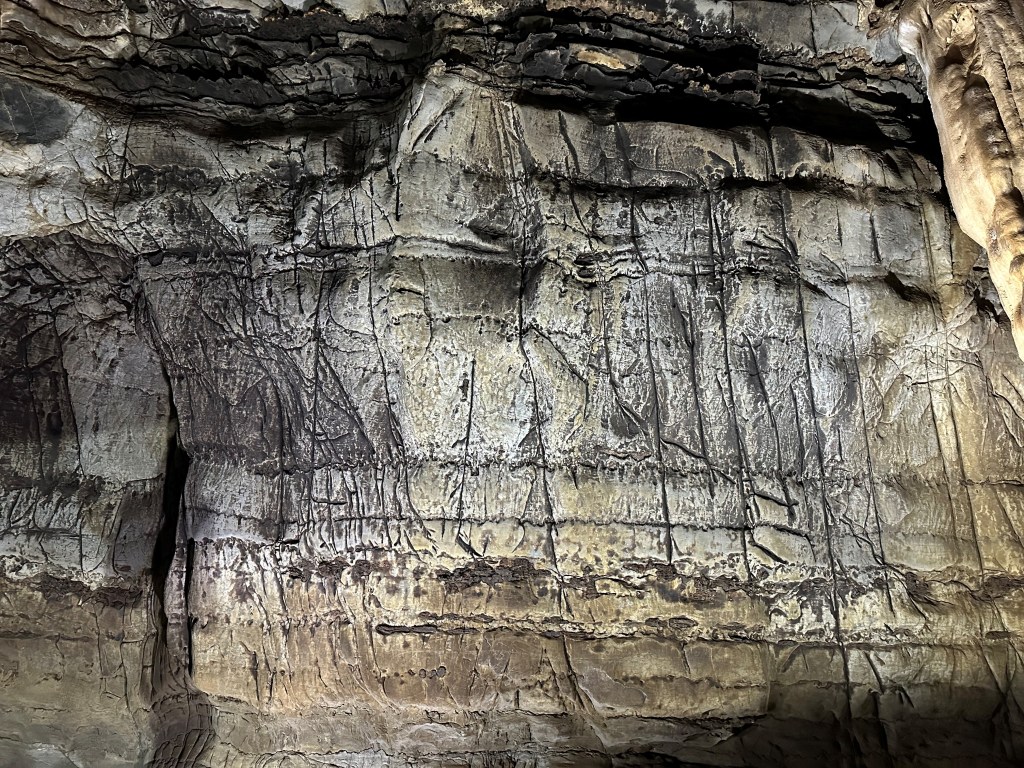
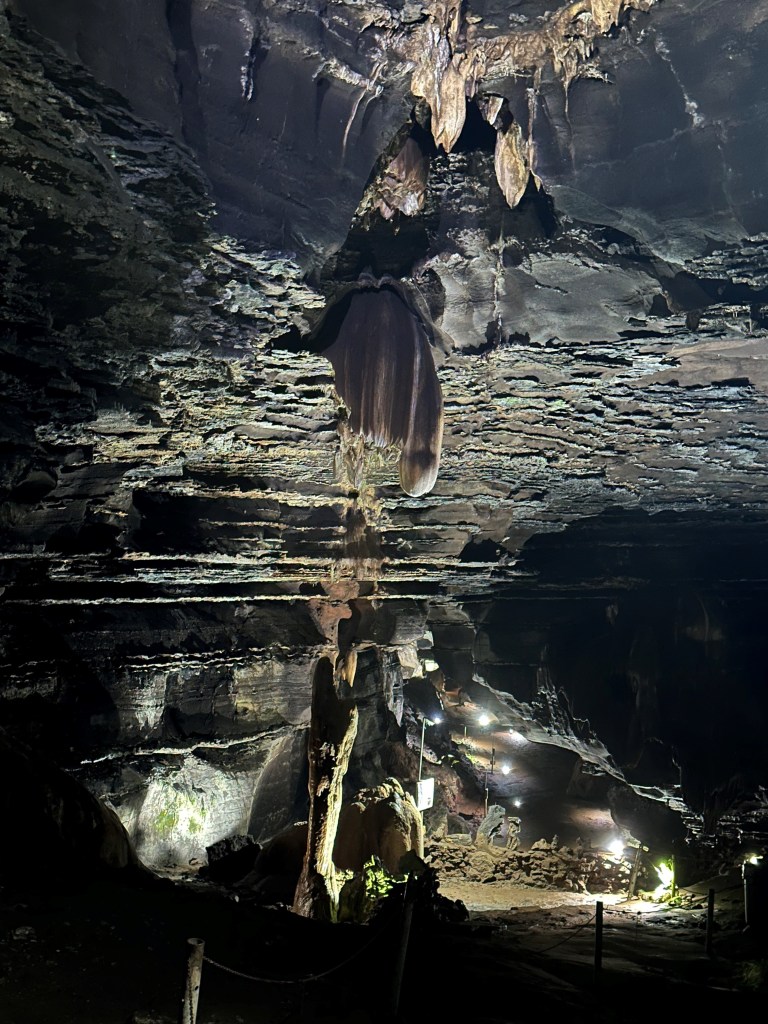
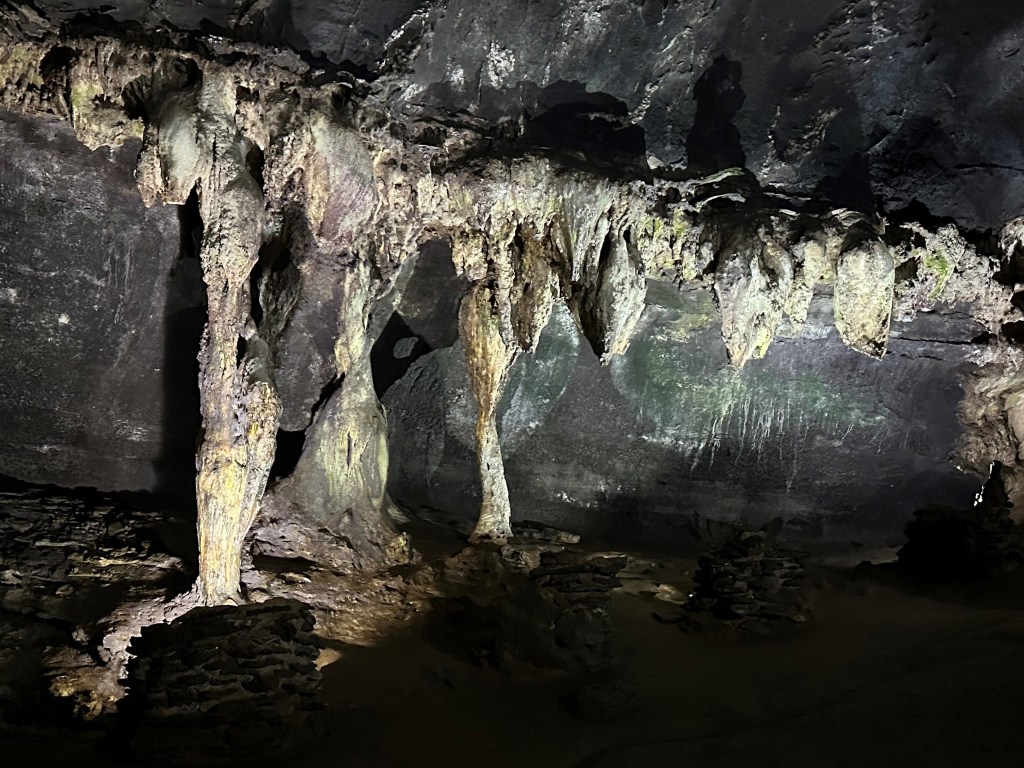
My cave is based on the Sudwala Caves in Mpumalanga, South Africa. Here are some photographs from my recent visit to these caves.
Picture caption: Wall of the Sudwala Cave. This is a very ancient cave system, the oldest in the world, and is formed in dolomitePicture caption: The Screaming MonsterPicture caption: This formation (the two small stalactites), is called Lot and his Wife – I thought the formation above looked like the Hand of God.Picture caption: This formation is called Kentucky Fried Chicken. It hangs down from the ceiling of the cave
Below is my YouTube short of Somcuba’s Gong inside the Sudwala Caves
Thank you to contributor, Chris Hall, for her lovely review of Sunflower Tanka on Facebook here:
Sunflower Tanka: An Anthology Tanka, Tanka Prose, & Experimental Tanka – edited by Robbie Cheadle & Colleen M. Chesebro
~~~~~~~~~~~~~~~~~~~~~~~~~~~~~~~~~~~~~
What a gorgeous collection with so many poets who I know, including myself. It is such a beautiful book (well done, Robbie) and I am glad that I got the paperback, as well as the Kindle.
There are almost 140 poems in this wonderful collection. The 36 poets are from all around the globe: from the USA, UK, Mexico, South Africa, Uganda, Guyana, Portugal, Japan, Philippines, India, Australia and Italy. Isn’t it interesting, and even more so the way the various styles are incorporated. The different forms are the well-known 5-line tanka form, the tanka-prose and the rensaku, but also the less known are the experimental tanka, the garland tanka, and the tanka Puente, all good though.
I have read from cover to cover and picked around as well. Now, just to say, this has been a lovely experience – it’s ‘In the Light’!






 roberta-writes.com