My August Dark Origins post discusses the English nursery rhyme, “Who Killed Cock Robin”. It never fails to amaze me how far back in time some of these possible origins go. Thanks for hosting, Kaye Lynne Booth.
Picture caption: H. L. Stephens – From The Project Gutenberg eBook, Death and Burial of Poor Cock Robin, by H. L. Stephens http://www.gutenberg.org/etext/17060
“Who Killed Cock Robin” is an English nursery rhyme which is believed to be ancient although the earliest record of the rhyme is in Tommy Thumb’s Pretty Song Book published in 1744. This version only contained the first four verses. The longer version was first printed in approximately 1770.
You can listen to a lovely rendition of “Who Killed Cock Robin” here:
I took one look at Colleen’s challenge this week and though “no way, this is much to complicated.” I went back later and it didn’t look so bad so I gave it a go.
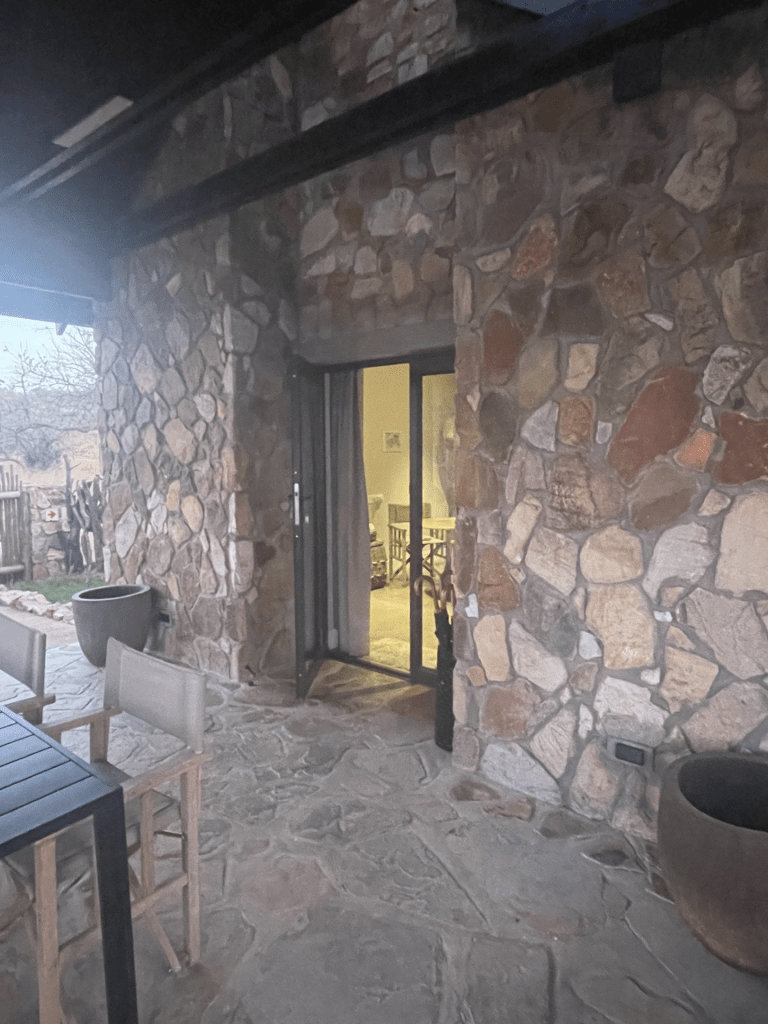
For Dan Antion’s Thursday Doors, I am sharing a few doors pictures from our 3 days at Babanango Game Reserve. You can join in Dan’s challenge here: https://nofacilities.com/2023/08/17/wvu-doors/
Front door into our cottage at Babanango Game ReserveGate into our cottage area at Babanango – the fence keeps the animals away.
Yellow daffodil fairiesYellow fondant flowers on a portable record player cakeYellow sunsetYellow flowersYellow icing – this is a Mad Hatter Cake I made for Terence’s 40th. I don’t have a wonderful photograph as this was before I started taking pictures of my cakes for my blog. The top of the hat is decorated with two fondant animated playing cards who are painting the white roses red. If you look carefully, you will see some of the roses are half red and half white.
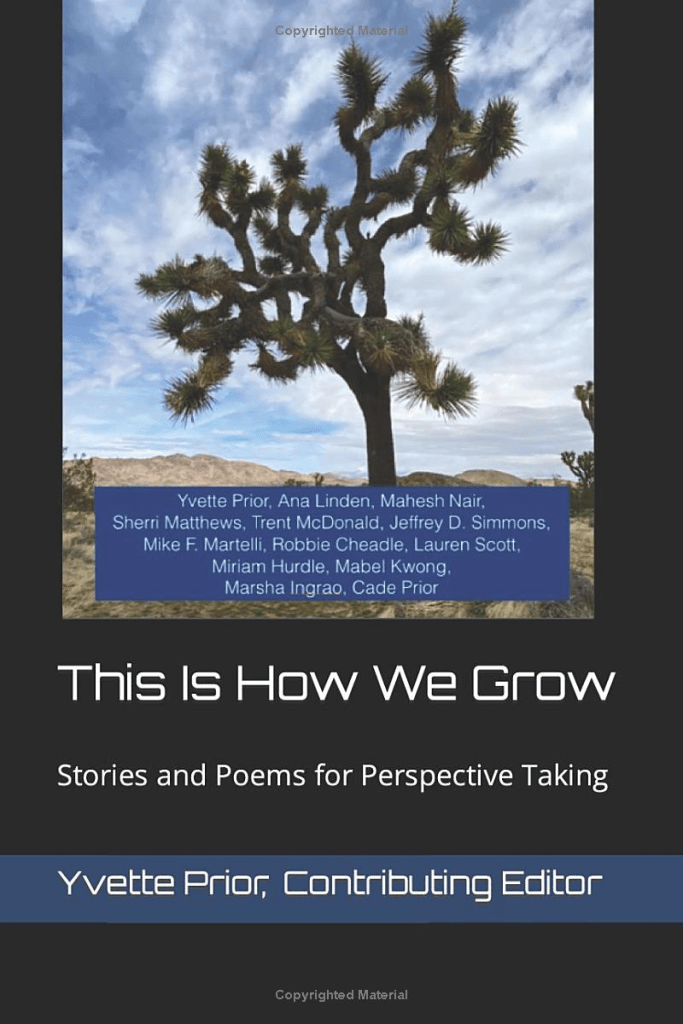
This Is How We Grow: Stories and Poems for Perspective Taking
I am part of a new anthology called This is how we grow. It includes my story, There’s No Return to Sender, which shares a short piece of my personal history dealing with my sons chronic illness.
Stories have allowed people to transmit ideas, beliefs, and behaviors throughout history. The underlying premise of this book is that humans can grow by understanding the perspective of someone else. Perspective-taking can help humans develop compassion and concern for others.. One way to attain a deeper understanding of people is by learning about different viewpoints and this book offers material for perspective taking,
Sherri let us feel some California and English culture fusion, with reminders about how close, and connected, we all are in this big ol’ world. Let’s remember this when we feel a spirit of division. Can we put aside what divides and remember that we have more in common than we might not initially see?
Miriam Hurdle shared about going from having no grandkids, to getting the joyful news, to then having the pandemic limit travel to see this growing family. Her chapter left us with uplifting familial warmth.
Yvette Prior shared about the challenges and silver linings that came with a recent move while noting that lessons learned are a gift because it can lead to humility and strength.
Ana Linden shared about perspective changes through the story about her aunt, who had the middle name of Dragonfly. Ana showed the components of perspective and empathy are intertwined and complex, just like Ana’s Aunt Dragonfly was.
Marsha Ingrao shared about her blogging experience that led to soft skill development, friendship, life fuel, and a way to offer customized outreach. She reminded us that when storms come, we do the best we can to respond, cope, stay stable, and grow.
Lauren Scott explored body image while reminding us that empathy consists of both affective and cognitive components. Lauren also reminded us that we cannot keep doing the same thing and expect different results.
Mabel Kwong gained a deeper perspective by stopping writing, which made a huge difference in her affect and outlook. Life is not always easy and the obstacles with her writing journey remind us to stay the course and find what we need.
Robbie Cheadle shared her growth over six years as she dealt with illnesses with both of her children. The vulnerable health challenges also came with joy and growth. The beauty is there if we put forth the effort to see it.
Jeffrey D. Simmons used poetry to describe the cadence of his life as he has adapted to different living arrangements. Jeff chooses to adapt and find joy whether he has to anchor or move around.
Trent McDonald used fiction to show us that we humans not only tend to have wrong assumptions, but assumptions are often negative. Maybe we can start assuming the best and clarify sooner to minimize distorted thinking.
Mahesh Nair talked about words and accents with an example of how he once perceived a behavior as snobby to later see that it was not. He also explored how the current digital world is something many of us take for granted but it had to grow, evolve, and mature over many years. Humans are similar in how we advance and grow.
Mike’s chapter offered tips and advice for thriving while in caregiver mode. The physical exhaustion and mental drain can be mitigated and he also let us into his personal life as he shared about how it took time to understand relationship dynamics and then live out what he advised about in a clinical setting.
Cade reminded us that our mental filters will change as the way we view right and wrong will change too. As we learn more about individual bias and faulty thinking, we need to pay attention to other people’s viewpoints.
There is a gap between what is and what we know or think something is. We hope the stories and poems in this book help readers learn about how others see the world and gain a deeper understanding to open the heart and enhance empathy.
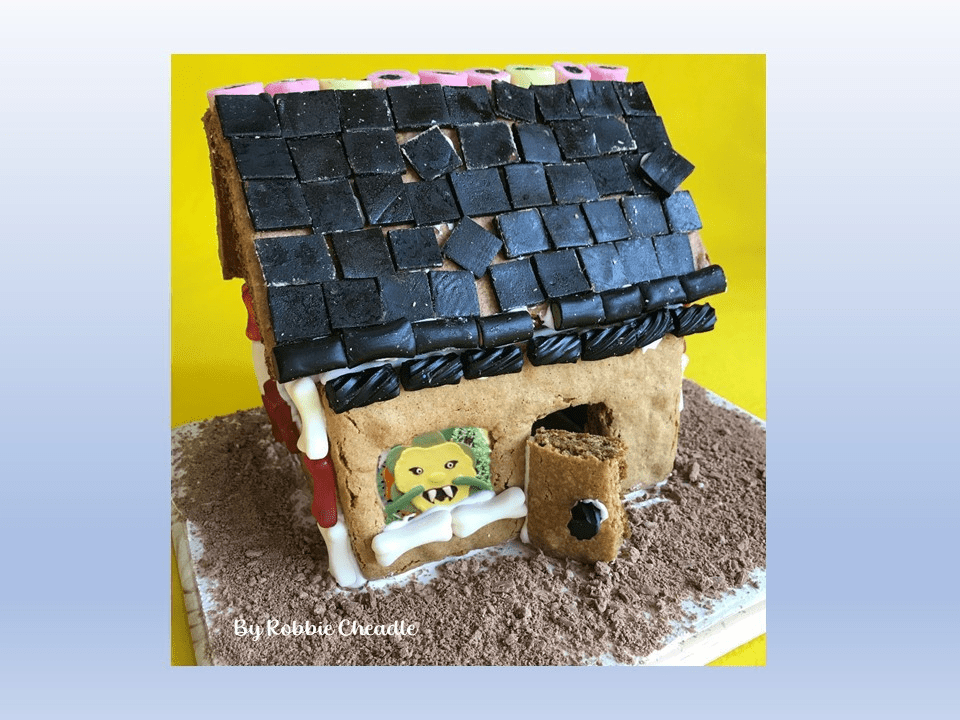
This week for Thursday Doors I am sharing the door to the Chinese Candy Dragon’s lair. I was pleased with myself for managing to insert the dragon’s head so he’s peeping through the window. The dragon features in Michael and my new Sir Chocolate high days and holidays book series. This one is all about Halloween.
Gingerbread dragon’s house/lair. The roof is covered with licorice tiles and bone sweets decorate the sides of the walls.
This is the cover:
The cover of Sir Chocolate and the Chinese Candy Dragon featuring the Chinese Candy Dragon made of cupcakes and fondant and Sir Chocolate.
This is the book trailer video Michael and I created:
Sunday Stills this week is all about the lazy, hazy days of summer. But its winter here, so …
Door into the restaurant at Babanango Valley Lodge where we spent part of winter vacation.Waterbuck having a rest in the winter sun.Although the giraffe is small, I like the picture postcard photographMy drawing of one of my favourite creatures.Homemade chicken pie and homemade cauliflower chicken.
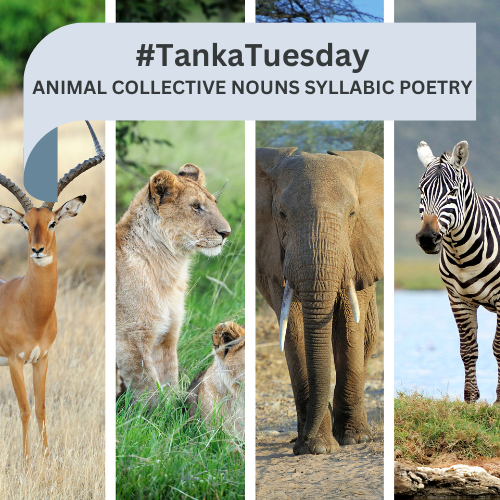
Colleen’s challenge: Select one of the animal collective nouns and write your syllabic poem using the collective noun. I used poetic license for my poem.
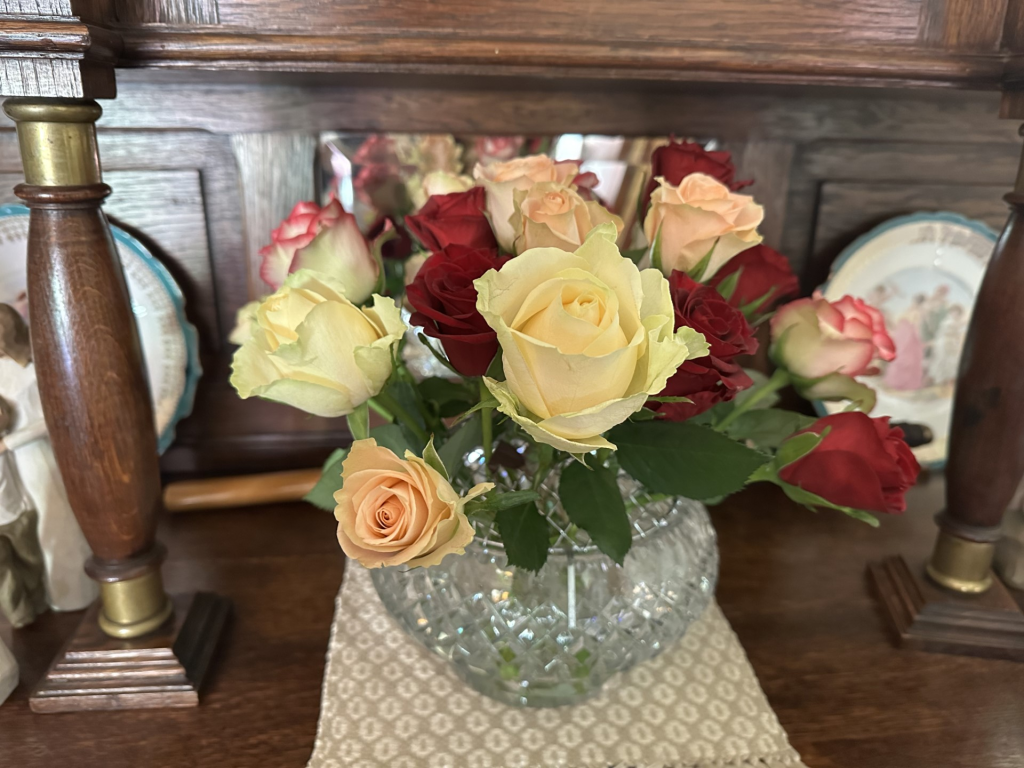
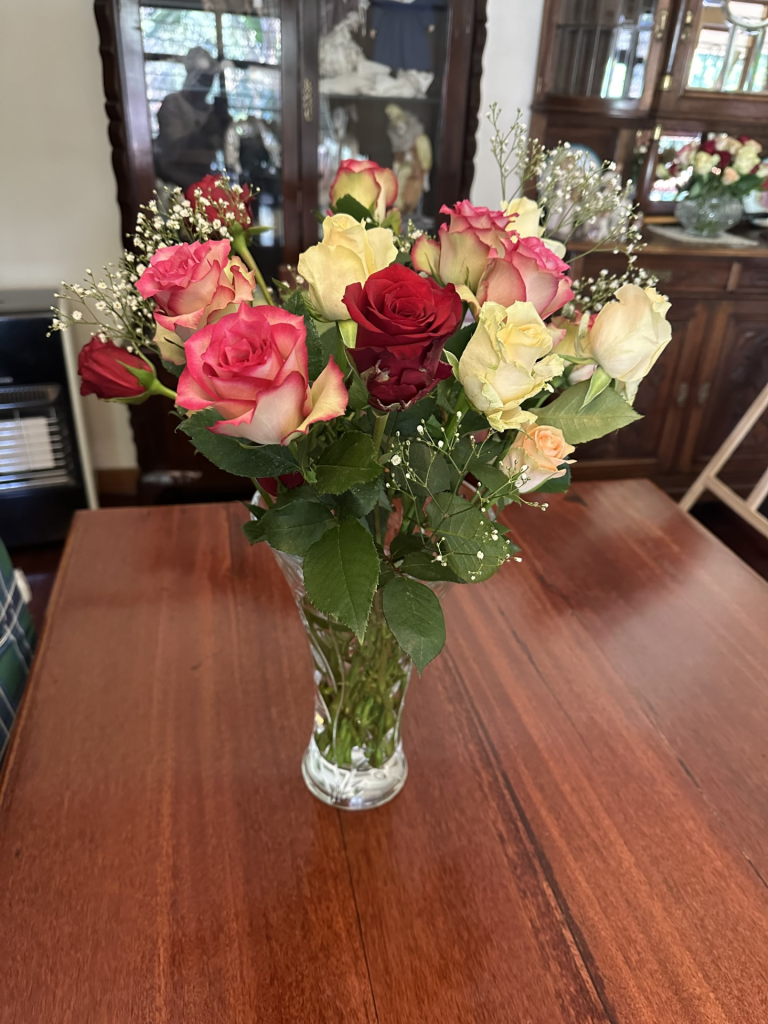
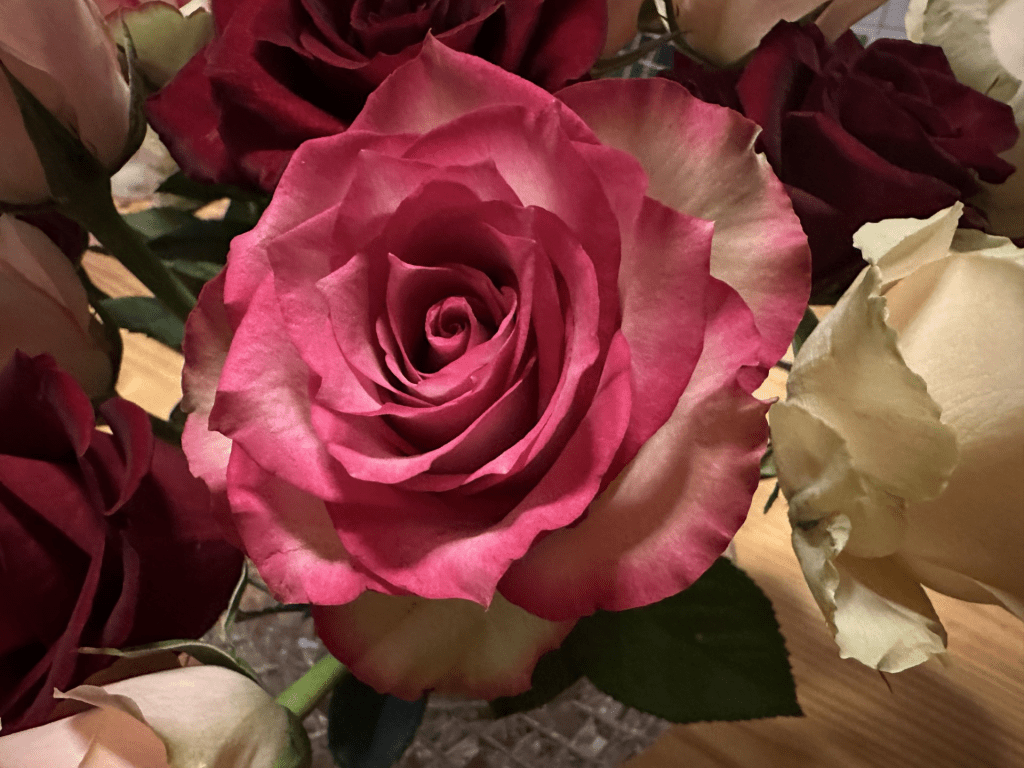
My new cake project is a basket of roses. This cake will be for my parents wedding anniversary in September. I bought four bouquets of roses so that I could examine them and also create a multicoloured display to use as a model for my flowers. I love making roses, they are my favourite fondant creations.
A variety of different coloured roses in a cut crystal vaseA variety of different coloured roses in a tall crystal vaseA close up of my favourite apricot rosesA close up of a pink and white marbled roseA close up of a deep red rose
This week’s challenge is Synonyms Only. That means you choose two synonyms for the two words below. Use must use the synonyms in your poem, NOT the two words.
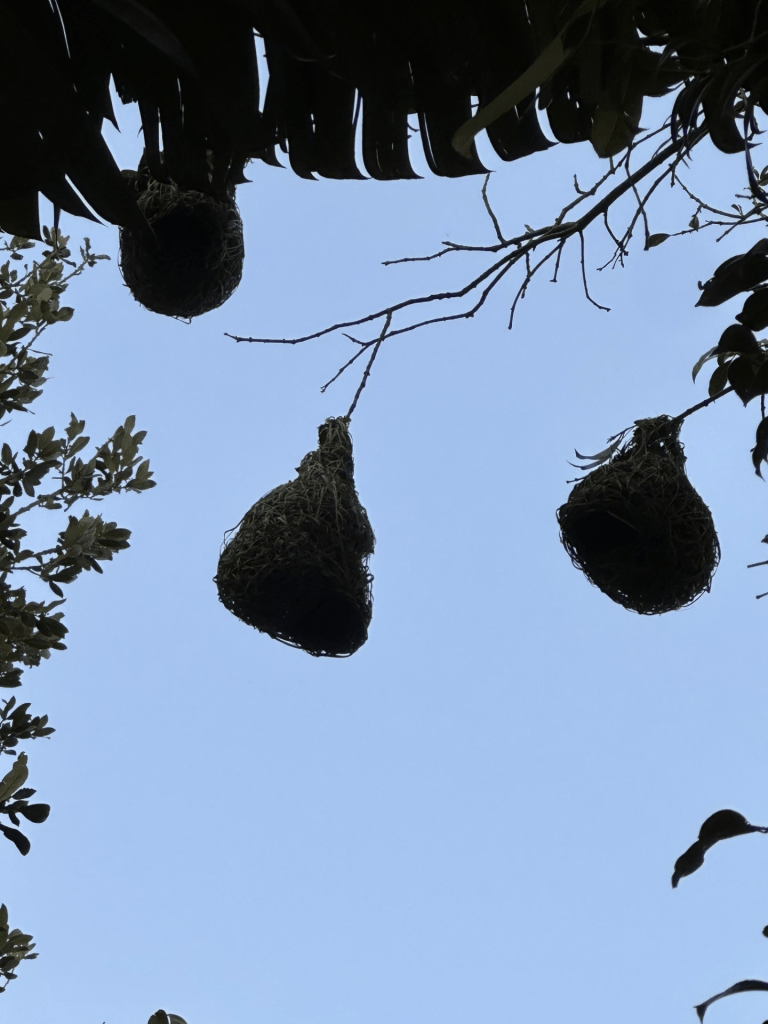
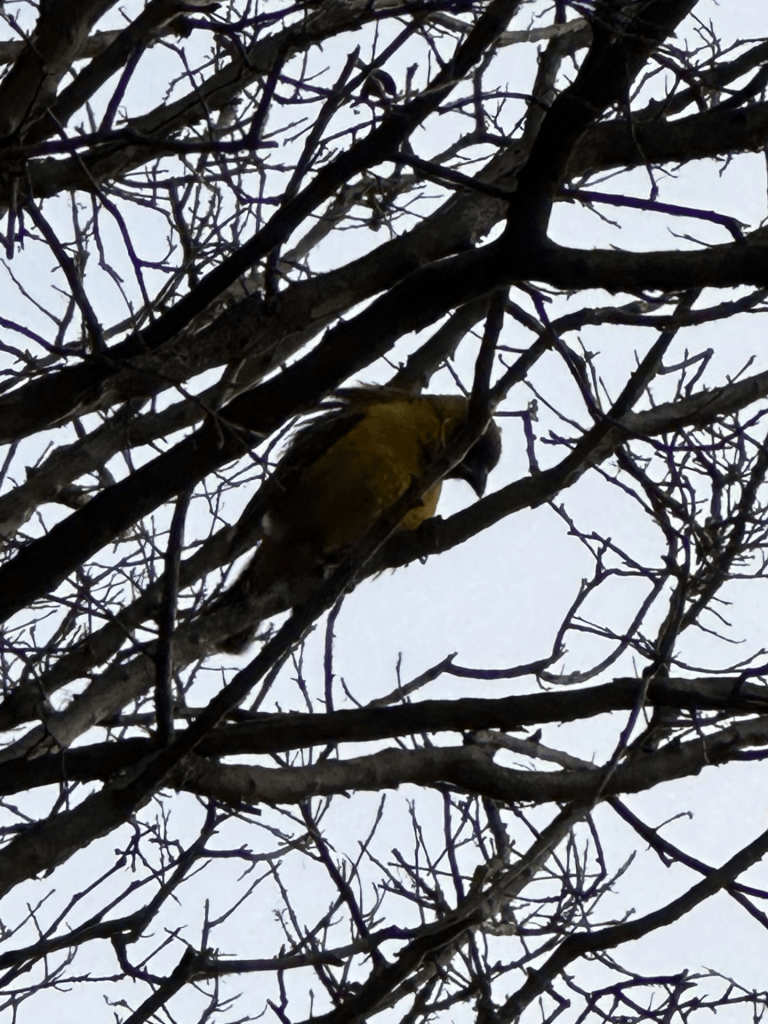
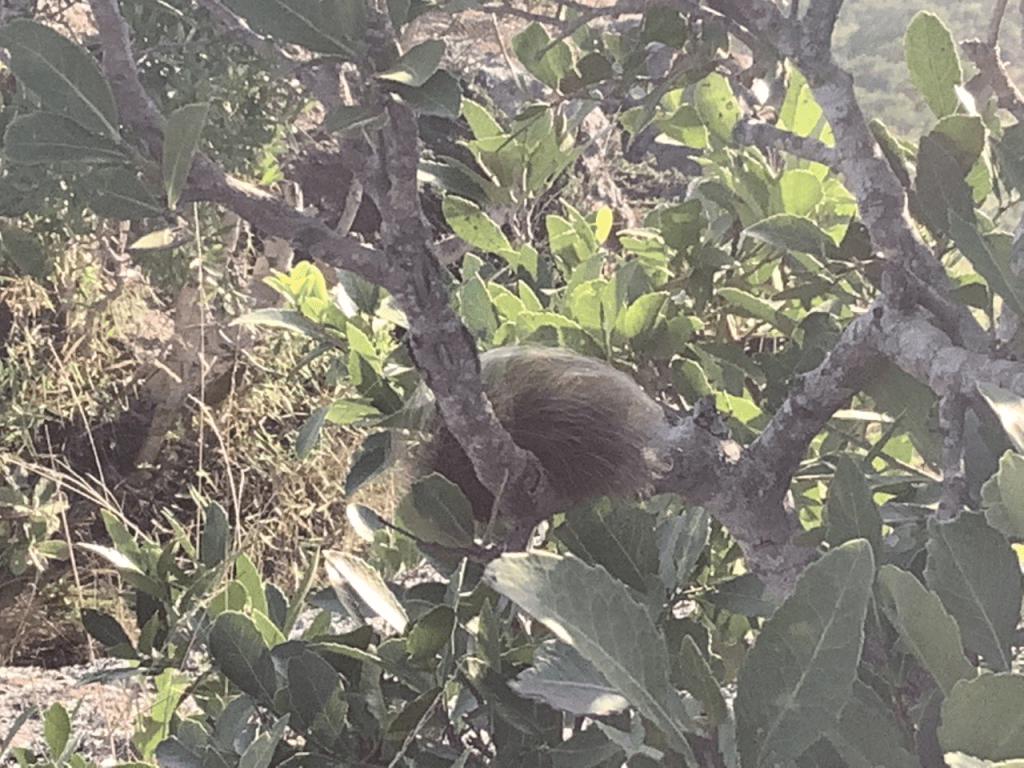
I can’t remember the name of this owl but it is quite small as owls go. It is native to KwaZulu-Natal, South AfricaI have tried hard to find out what sort of caterpillar this is, but with no success to date. It is also native to KwaZulu-NatalA baby rhino, no tiny, but smallTiny elephants – I took these photographs from a distance because they’d only been in the park for one week and were still being habitated.
Wonderland by Robbie Cheadle
No boundaries individual wants to contort
If the Caterpillar* threatens sexual expression
No reality that versions of truth can distort
Everything goes, no need for discretion
***
If the Caterpillar threatens sexual expression
Gentle erosion will change its phallic shape
Everything goes no need for discretion
No need for suppression, there’ll be an escape
***
My world a version of Alice’s wonderland
Gentle erosion will change its phallic shape
No need for suppression, there’ll be an escape
Every action condoned, no substance banned
***
My world a version of Alice’s wonderland
No reality that versions of truth can distort
Every action condoned, no substance banned
No boundaries individual wants to contort
* The Caterpillar in Alice in Wonderland asks questions that help Alice develop her own identity. In this poem, The Caterpillar is an oxymoron as the development of personal identity, unchecked by boundaries and rules and regulations, has eroded truth and reality, turning the world into a wonderland.
David from Skeptic’s Kaddish together with Melissa Lemay gave the writing of a pantoum as this week’s W3 Poetry Prompt. I wasn’t going to participate because it sounded like a lot of effort. It was a lot of effort but I had an idea and David flattered me (haha!) so I had to show him I could do it.
I wasn’t going to write a poem today, but then I read Sacrificial Lamb by Michelle Ayon Navajas and her words had a big impact on me. I saw her poem was in response to a challenge posted on Reena Saxena’s blog and I decided I had to join in and share my view on the line: One Lie does not erase thousands of truths. You can join in Reena’s challenge here: https://reinventionsreena.wordpress.com/2023/07/27/reenas-xploration-challenge-290/
Welcome to Thursday Doors! This is a weekly challenge for people who love doors and architecture to come together to admire and share their favorite door photos, drawings, or other images or stories from around the world. If you’d like to join us, simply create your own Thursday Doors post each (or any) week and then share a link to your post in the comments below, anytime between 12:01 am Thursday morning and Saturday noon (North American eastern time). If you like, you can add our badge to your post.
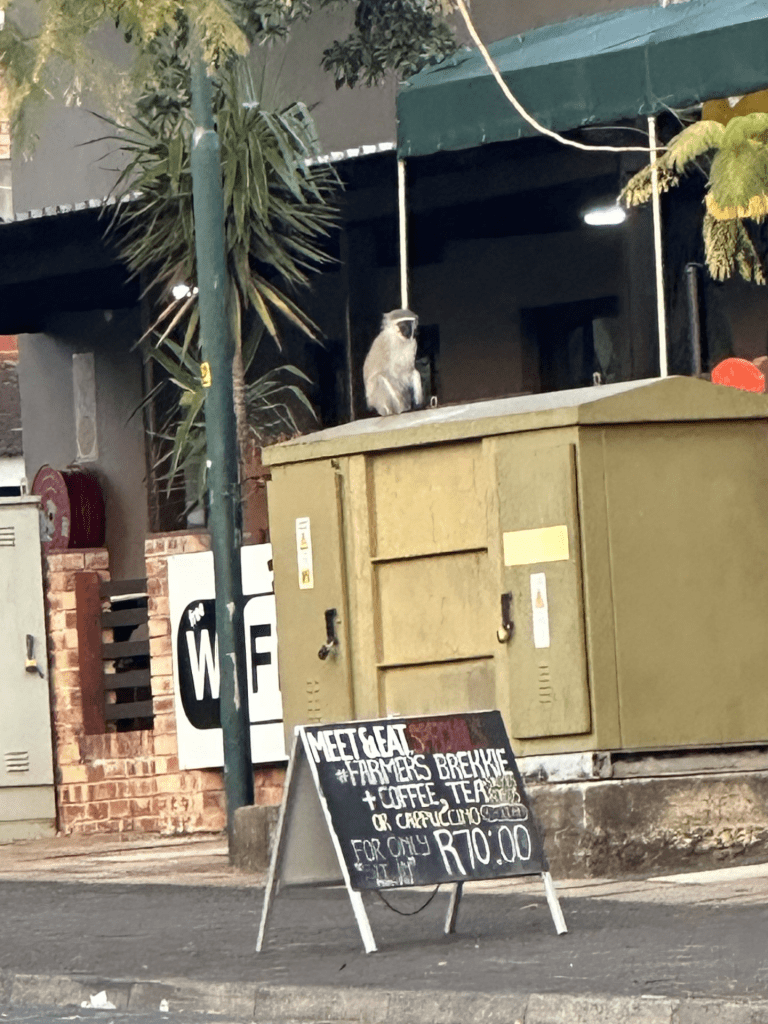
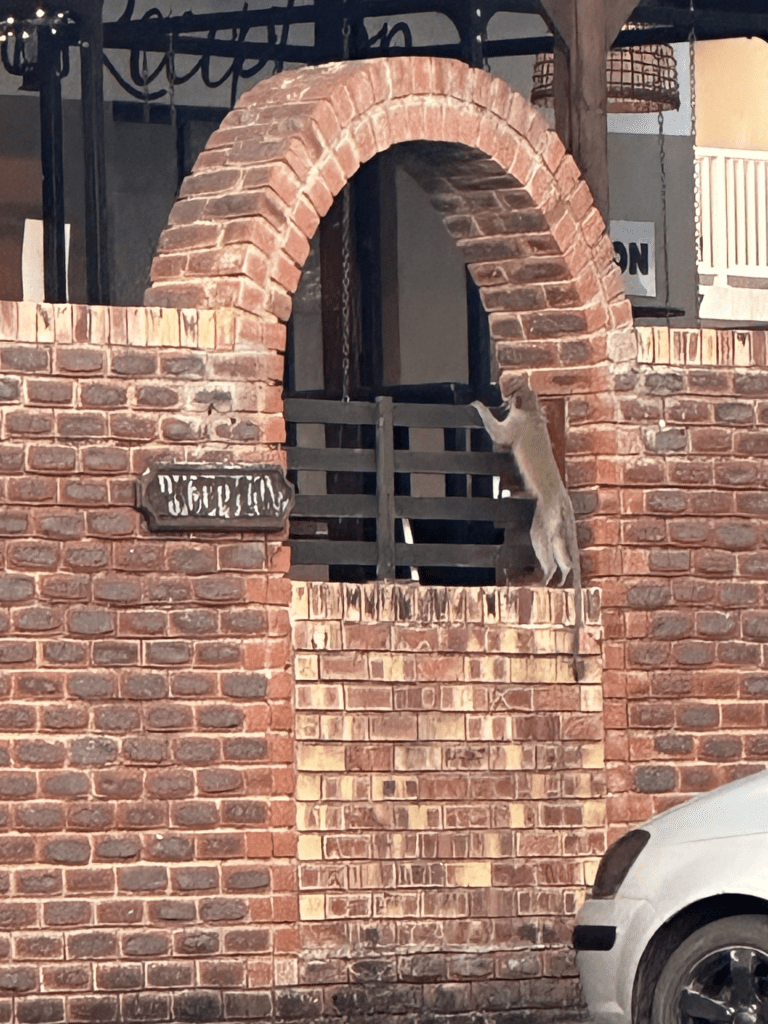
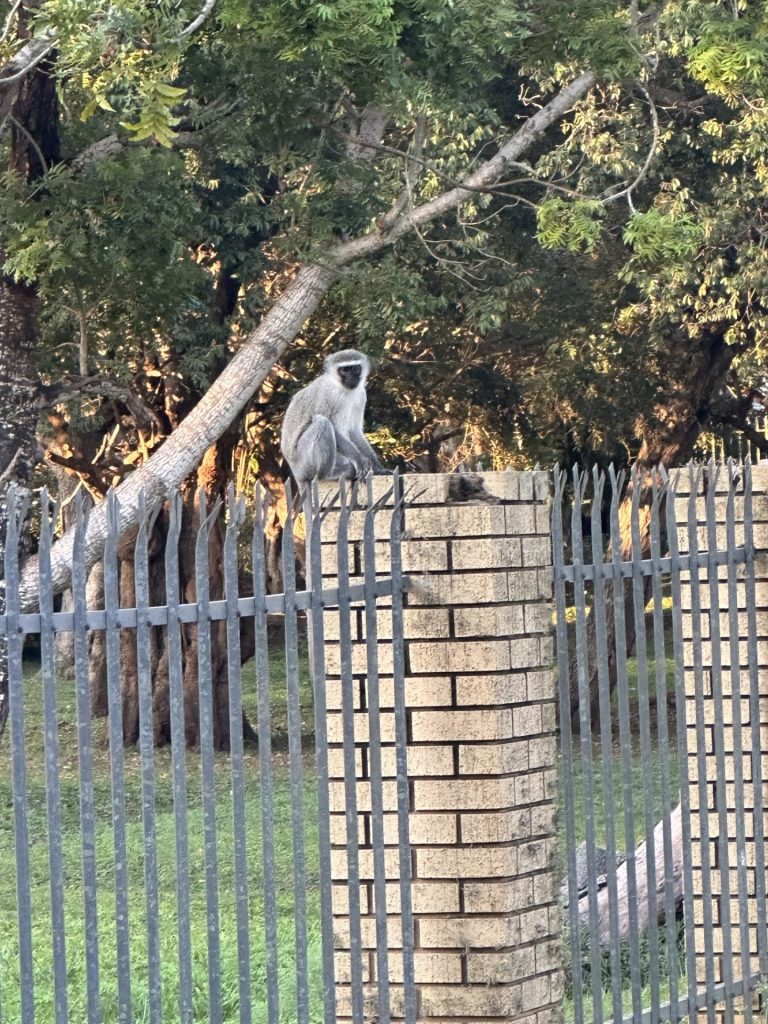
During our recent trip to St Lucia in South Africa, we saw a lot of vervet monkeys. These little creatures are so cute with their wizened faces and tiny fingers, but they are very naughty and can be a pest.
On our first morning in town, the weather was lovely, and the vervet monkeys were having a smashing time raiding the dustbins and rushing through dining areas, grabbing an item, and making a fast get away. I never even saw the one that stole a yogurt off our table. I just saw the mummy monkey sitting on the wall, sharing it with her baby (it was very sweet).
This little monkey is sitting on an electricity box which had quite interesting doors.This little gangster was having a good look to see what he could nip over and pinch from the restaurant tables.This monkey was sitting on the wall of a residential garden
Vervet monkeys in St Lucia town:
Tanka Tuesday
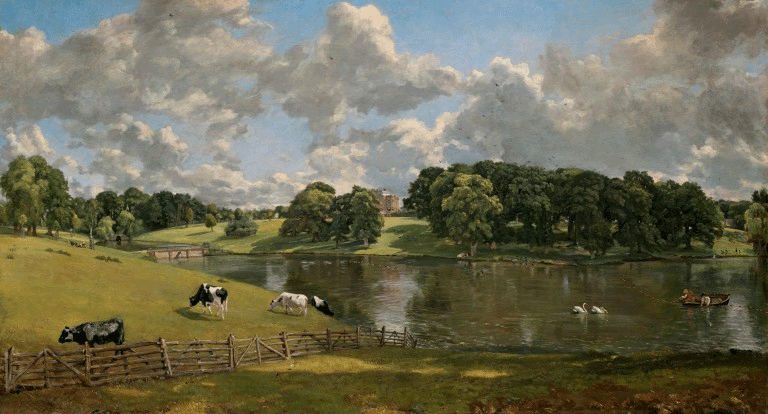
This week, Colleen’s prompt is the following photograph:
I couldn’t think of anything to write for this picture. It is very beautiful but that didn’t seem exciting enough for a poem. Eventually, I wrote this rather snarky shadorma.
Pastoral ambivalence
Not for me
Domesticity
Pastoral
Gentle scenes
Untamed African wildlife
Rooted in my soul
I’m ending off with a splendid and vivid African sunset. PS I was rather pleased with myself when I captured this shot.




















 roberta-writes.com