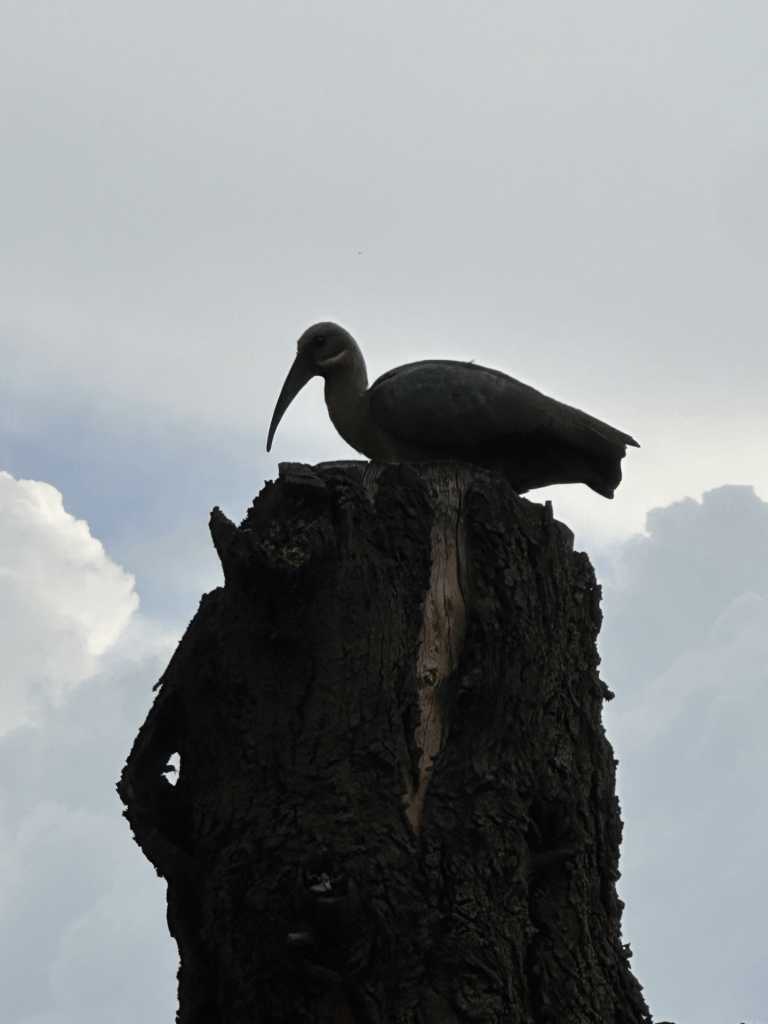
This is the airport at Madikwe Game Reserve – yes really! The doors you see are to an office and the rest rooms.Just to prove my point, this picture has the sign Madikwe Eastern Airstrip. I got nipped by black ants while taking this picture so I hope you appreciate it. A herd of wildebeeste (or gnu) are having a meeting on the runway. Sorry Pilot, you have to wait your turn.A large termite mound near the airstrip
W3 #95, Personification
II. Heather’s prompt guidelines
Humans often have opinions on most any topic. Let’s put a twist on this. Employ personification to write a poem from the point of view of an object. Maybe your teapot has an opinion on how you make tea or your door with all the comings and goings? Maybe snow has something to say?
Be creative and have fun!
Personification
Personification is a type of metaphor that gives human characteristics to inanimate objects and animals, such as emotions and behaviors.
My poems are personification but I’m not sure my objects are quite what Heather intended. Oh well!
Mischief Makers (shadorma)
Mielie elves
With long hollow bones (note 1)
Look about
Pondering
Numerous mischievous plans
Pink toed feet ready
This is the bottom of one of our mielie plants. it is the only one where the support structure for the plant has grown through pink. The pink shoots reminded me of toes and so I wrote this poem about Mielie elves making plans and getting ready to run off and implement them.
Note 1 – Elves are believed to have hollow bones, like birds, to aid their flight.
Stories have allowed people to transmit ideas, beliefs, and behaviors throughout history. The underlying premise of this book is that humans can grow by understanding the perspective of someone else. Perspective-taking can help humans develop compassion and concern for others.. One way to attain a deeper understanding of people is by learning about different viewpoints and this book offers material for perspective taking,
Sherri let us feel some California and English culture fusion, with reminders about how close, and connected, we all are in this big ol’ world. Let’s remember this when we feel a spirit of division. Can we put aside what divides and remember that we have more in common than we might not initially see?
Miriam Hurdle shared about going from having no grandkids, to getting the joyful news, to then having the pandemic limit travel to see this growing family. Her chapter left us with uplifting familial warmth.
Yvette Prior shared about the challenges and silver linings that came with a recent move while noting that lessons learned are a gift because it can lead to humility and strength.
Ana Linden shared about perspective changes through the story about her aunt, who had the middle name of Dragonfly. Ana showed the components of perspective and empathy are intertwined and complex, just like Ana’s Aunt Dragonfly was.
Marsha Ingrao shared about her blogging experience that led to soft skill development, friendship, life fuel, and a way to offer customized outreach. She reminded us that when storms come, we do the best we can to respond, cope, stay stable, and grow.
Lauren Scott explored body image while reminding us that empathy consists of both affective and cognitive components. Lauren also reminded us that we cannot keep doing the same thing and expect different results.
Mabel Kwong gained a deeper perspective by stopping writing, which made a huge difference in her affect and outlook. Life is not always easy and the obstacles with her writing journey remind us to stay the course and find what we need.
Robbie Cheadle shared her growth over six years as she dealt with illnesses with both of her children. The vulnerable health challenges also came with joy and growth. The beauty is there if we put forth the effort to see it.
Jeffrey D. Simmons used poetry to describe the cadence of his life as he has adapted to different living arrangements. Jeff chooses to adapt and find joy whether he has to anchor or move around.
Trent McDonald used fiction to show us that we humans not only tend to have wrong assumptions, but assumptions are often negative. Maybe we can start assuming the best and clarify sooner to minimize distorted thinking.
Mahesh Nair talked about words and accents with an example of how he once perceived a behavior as snobby to later see that it was not. He also explored how the current digital world is something many of us take for granted but it had to grow, evolve, and mature over many years. Humans are similar in how we advance and grow.
Mike’s chapter offered tips and advice for thriving while in caregiver mode. The physical exhaustion and mental drain can be mitigated and he also let us into his personal life as he shared about how it took time to understand relationship dynamics and then live out what he advised about in a clinical setting.
Cade reminded us that our mental filters will change as the way we view right and wrong will change too. As we learn more about individual bias and faulty thinking, we need to pay attention to other people’s viewpoints.
There is a gap between what is and what we know or think something is. We hope the stories and poems in this book help readers learn about how others see the world and gain a deeper understanding to open the heart and enahnce empathy.
My review
This is How we Grow is a fascinating collection of insightful stories, mainly non-fiction, into specific experiences by each contributor which have resulted in a change to their mindset and approach and/or attitude to life.
The two contributions that made the biggest impact on me as a reader were Dragonfly by Ana Linden and Right and Wrong by Cade Prior.
Dragonfly by Ana Linden revolves around the intermittent support offered by the author’s aunt towards her during her childhood. The aunt was a destroyed person. Someone who had ruined her life, in the eyes of her parents and other people, by making decisions that they perceived as wrong. An aunt who had been joyous and creative as a girl and teen, but who had married the wrong person and brought judgement down on her head when she suffered abuse at the hands of a vicious husband. This aunt, although dependent on alcohol and never having achieved what she could have, or should have, tried to support her niece who demonstrated similar characteristics as a child. This story resonated with me because the aunt was such a victim of her narrow minded and judgmental parents and society. Abuse of women is still alive and well and there are millions of women who still suffer terribly as a result. This story is difficult to read as the flow is awkward and you must wind your way through the slightly incoherent writing style, but the message is impactful.
Cade Prior’s essay on right and wrong interested me a great deal. I found his thought process fascinating, and it does reflect some of my own thinking. While I don’t agree with everything he wrote, it did give me pause to reconsider my own believes and viewpoints and adjust them for fresh ideas. I think that thought process was beneficial for me and I would recommend it to others.
All the stories were interesting, and all taught me something about life and how other people experience and perceive life. The book offers a lot of variety as the stories deal with a wide variety of topical issues such as the dissatisfaction of young people with their appearance and weight, the result of media messaging relating to ideal looks and bodies, new age grandparenting, cat therapy for mental health issues, adjusting our perspectives about blogging, writing, and publishing and dealing with social media.
This book is a worthwhile read that will give the reader new information and fresh insights to consider about a wide spectrum of life experiences.
This poem was inspired by Reena’s challenge which brought to mind the caterpillar in James and the Giant Peach who proudly calls himself a pest.
A pest as described by Wikipedia: A pest is any organism harmful to humans or human concerns. The term is particularly used for creatures that damage crops, livestock, and forestry or cause a nuisance to people, especially in their homes. Humans have modified the environment for their own purposes and are intolerant of other creatures occupying the same space when their activities impact adversely on human objectives. Thus, an elephant is unobjectionable in its natural habitat but a pest when it tramples crops.
Repetition: Three terms or images in the verse must be repeated 3x each.
I’m late with this post. What can I say, I had a life sized guitar to make this weekend for Michael’s birthday and it didn’t leave much time for other things. I also made Gregory a hummingbird cake for his birthday and I cooked chicken korma for 20 people and made salads and vegetables to go with it.
And now for the poem:
Rain Dance
We must dance to summon the rain
The land is parched; thirsty cattle low
We must dance to appease the gods
It’s not easy to please the gods; they’re vain
We must dance for rain so the rivers flow
The gods always admire our feathers and beads
We twirl and stamp, hitting the ground with rods
When rain comes, we’ll plant life sustaining seeds
The challenge: The challenge, or exercise if you prefer: Look at a favorite photo, painting, mural, or other image. Drink in the feelings that it brings to mind. Then write something related to the image. Short or long, fiction or memoir. It doesn’t have to be a complete story. A vignette is fine.
Zebra on a path in the bush. Can you see the huge scar along its side? It must have been attacked by a lion and survived. White rhinos on a missionAcacia branch blocking the road – thank you elephants!
No Passage (shadorma)
Wall of thorns
What lurks behind your
Natural
Barricade?
You completely block the road
Impenetrable
We’re on the Road to Nowhere A personal favourite lion picture – I’m going to paint this one for my Into the Light series
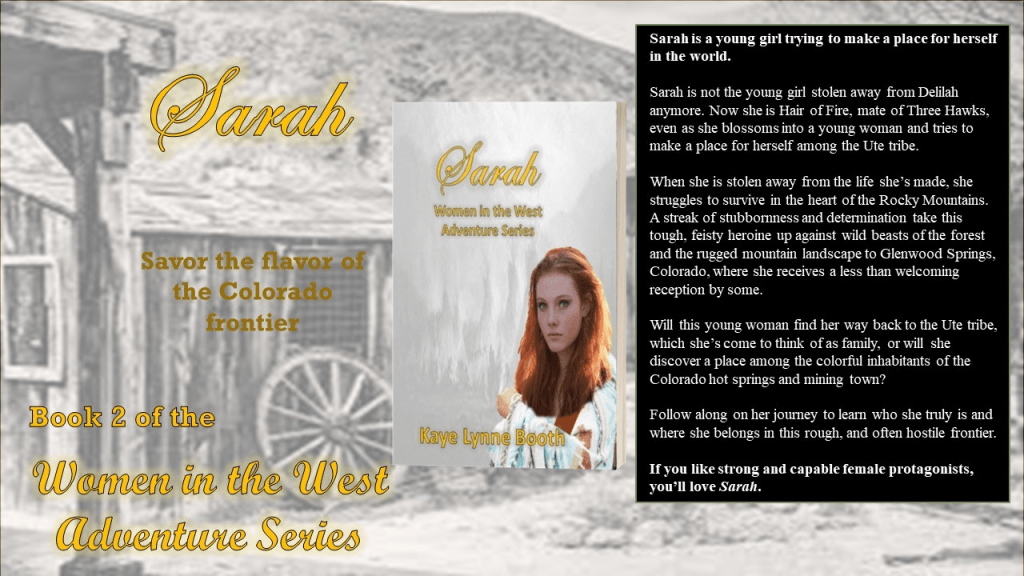
Holly Schlivnik dreams of being a writer, but fate has other plans. A family crisis throws her into an improbable situation and her life will never be the same. Determined to make her own luck when things don’t happen the way she plans, the irrepressible young woman takes a sledgehammer to the glass ceiling and shatters it to smithereens. The wise-cracking, irreverent transplanted Californian goes on a raucous, rollicking rollercoaster ride of hysterical adventures as a ladies’ apparel sales rep traveling in the deep South and finds herself along the way.
My review
I reviewed this book in my capacity as a member of Rosie’s Book Review Team. If you would like your book reviewed, you can contact Rosie Amber here: http://rosieamber.wordpress.com/.
This is a most entertaining read about a young woman’s entrance into the rag trade. Holly Schlivnik has just finished collage and is feeling directionless following a disastrous job interview when her father, a travelling rep for ladies apparel, calls on her to fill in for him at a show. Holly suddenly discovers that she has a talent for selling clothing. She decides to accept her father’s offer of a job as his assistant and soon sets out on her own, her car filled with clothing racks and samples, to drum up sales in the deep South of America.
This is a story of personal growth and I thoroughly enjoyed watching Holly blossom from an awkward and inexperienced girl into a confident and determined sales woman. She has to learn to deal with all sorts of different people, from Jodie the transwoman, to selfish and inconsiderate buyers and business owners, to Jewish business men who want to make a political statement.
Holly manages to take it all in her ‘short stride’ and learns to deal with all sorts of inconveniences and difficulties that her father, as a man, didn’t have to face. Behind the scenes, she has her supportive and non conventional grandmother to give her excellent advice and keep her facing forward. Holly’s family is Jewish and I enjoyed learning more about her family’s traditions and attitude to life.
There is a lot of humour in the book, which makes it very entertaining. Holly learns a lot during the period of her life covered by this book, and has to cope with losses of a love interest and a family member, recognise what she wants from her career and her life and understand how much she’s prepared to sacrifice to achieve it, and also face anti-Semitism and gender intolerance. Holly also has to weigh up options and make life changing decisions.
This is a book that readers who enjoy coming of age stories with a good dollop of humour and a fast pace will enjoy.
This week, I’m starting with the poem. Puente was completely new to me, but I gave it a good bash. Writing about love is also not my thing. My love is too deep and too intense for words, but I have tried.
Tone (required): Either the 1st or the 3rd stanza should have a happy tone, and the other should have a sad tone;
For the 2nd stanza (suggested): Use a quote, idiom, phrase, etc.
Theme (required): Love
Puente?
The puenteform has three stanzas with the first and third having an equal number of lines and the middle stanza having only one line which acts as a bridge (puente) between the first and third stanza.
The first and third stanzas convey a related but different element or feeling, as though they were two adjacent territories. The number of lines in the first and third stanzas is the writer’s choice as is the choice of whether to write it in free verse or rhyme.
The center line is delineated by a tilde (~) and has ‘double duty’. It functions as the ending for the last line of the first stanza AND as the beginning for the first line of the third stanza. It shares ownership with these two lines and consequently bridges the first and third stanzas.
The dining room doors in the early eveningThe pool verandah with the door leading to the dining area in the early eveningThe swimming pool at sunsetComing back to the lodge in the eveningLook who was hanging out on the side of the road outside the lodgeNot a bad picture given he was hidden in the shadows in the early evening.Sunset in the bushVervet monkeys on the path to the roomsI love the light in this picture of a vervet monkey.
These are the large doors leading onto the balcony surrounding the dining room at Thakadu River Lodge. The balcony overlooks the river.
The dining room attracted visitors in the form of vervet monkeys.
This vervet monkey terrorized an Italian couple who insisted on being moved right across the dining room to just outside the kitchen door. The monkey was naughty, it jumped up and pinched a roll off the table. The restaurant management kindly moved my family to the rejected table next to the outside doors. Clearly, they thought we could cope with a few mischievous monkey visitors.
Perhaps my standing on the pathway watching a mama and her adorable baby clued them in to our lack of anxiety:
Picture caption: Can you see the baby clinging to mama’s tummy
This monkey like us so much, it came to our tent for a chat.
The rondeauis a syllabic construct of three verses: a quintet, quatrain, and sestet. The lines are of two distinct lengths: 1) the main length and 2) the refrain. The refrain is the first few words of the first line.
Three stanzas: A quintet (five lines), a quatrain (four lines) and a sestet (six lines).
The first half of the first line in the quintet is the refrain line. This refrain is used for lines 9 and 15.
Rhyming:
The quintet has a rhyme scheme of b-b-c-c-b.
The quatrain has a rhyme scheme of b-b-c-A, where A is the refrain drawn from the first half of the first line of the poem.
The sestet is rhymed b-b-c-c-b-A, where A is again the refrain line.
The refrain line is usually 4 syllables or two verse feet.
Chasing The Light
My paints give me freedom, I mix colours with great delight
Applying a spectrum of shades, I attempt to capture the light
My heart throbs with creation, I feel completely alive
An antidote to everyday life, this is how I survive
Chasing the interplay of shadows, lying just beyond my sight
***
A splodge of gold, a dash of yellow, capturing sunrays bright
Don’t look for darkness in my work, I’m not a creature of the night
The subtle interactions of hues on canvas, these I ingest to thrive
My paints give me freedom
***
Daily doses of war and economic woe wound; my spirit must take flight
Living in ignorance is not an option, but my soul is entitled to respite
Through immersion in nature’s splendour, peace and happiness I derive
The artist’s palette and creative journey, enthusiasm for life must revive
To maintain my personal faith in humanity, against despair I always fight
My paints give me freedom
This is my most recent painting called The King:
This is a YT video I made of the painting. I added the soundtrack from YT’s offerings:
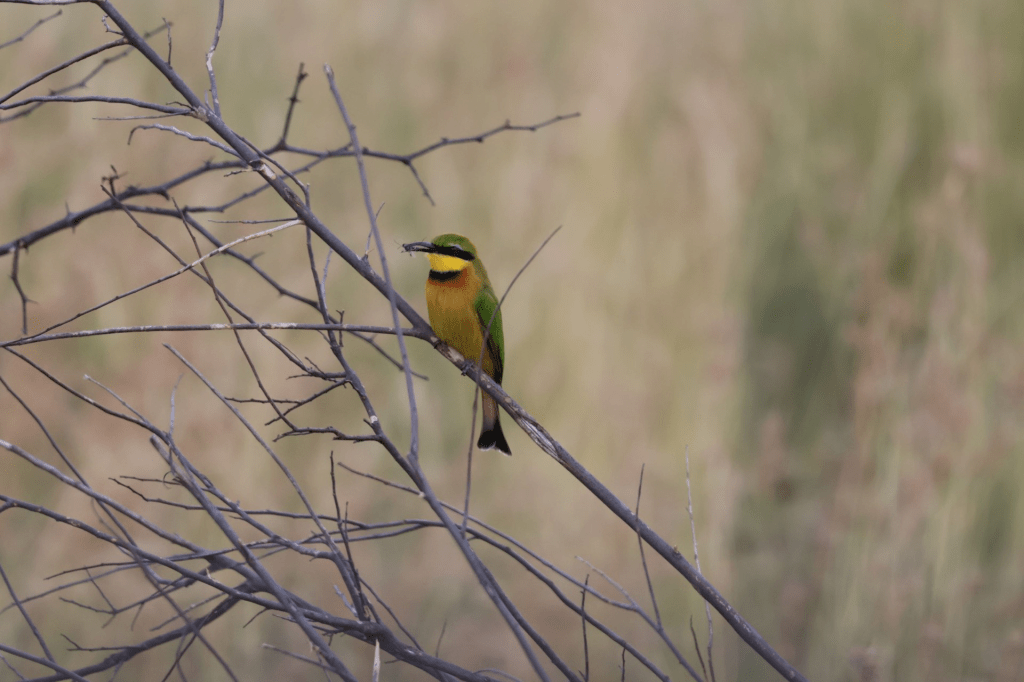
Today, Kaye and I are posting the first article in our new In Touch With Nature series. We hope you will enjoy learning a little more about the natural world.
When you leave for a trip, who knows you’re gone from your house? Family and friends, sure. Neighbors, perhaps.
So does the chauffeur who drove you to the airport. Alan Burris takes advantage of working for a car service to know when clients will be away from their houses for several nights. Some houses are easier, since they don’t have a security system — and these houses are on his list for a night visit to steal valuables.
The Resnick house has been on Alan’s list for a while, and now it will be empty for a few nights, since Mr. and Mrs. Resnick are spending a long weekend in Chicago.
But is the house really empty? Alan’s about to find out what it’s like to not be alone in the house, his car, his apartment, and his head. And with another person hanging around, to what length will Alan go to get rid of them?
My review
I thoroughly enjoyed this dark and entertaining story that centres around the concepts of consequences for actions and a guilty conscience.
Alan Burris’ life was not panning out as he had planned. His girlfriend had recently ditched him because his job as a chauffeur for wealthy people took up most of his evenings and weekends. She wanted him to find a job with better future prospects and more free time to spend with her. The problem was, Alan liked his job ferrying successful business men to and from the airport and driving couples to events and places frequented by the rich and famous. Although Alan resented his clients for their money, success, and self centredness, his position gave him access to information about their lives and movements. He knew where they lived, who they lived with, and when everyone was away. Alan ran a successful sideline breaking into his client’s homes when the opportunity presented itself and stealing jewelry and other items of value.
The story started with Alan driving a regular client and his wife to the airport. Alan knew they had no children and he saw their combined trip as the perfect opportunity to break into their house. The best laid plans have a habit of going awry, and Alan came across some strange and deeply disturbing artwork in the client’s home office. The pieces worked their way into his mind and he couldn’t forget them. The art was not the only surprise in the house, Alan got a further shock, which resulted in him taking out of character remedial actions.
Alan was not a particularly likeable character. He was jealous and had negative thoughts about his clients. He felt he was justified in robbing them because they were rich and successful and they didn’t bother much with him – he was just the driver of the Lincoln that drove them around. It was evident as the story progressed, however, that Alan was not a really bad person. He had a conscience and his actions on the night of the robbery, combined with the weird artwork, conspired to send him into a downward mental spiral. It was fascinating to effectively watch him become more and more unhinged.
The plot reminded me in some ways of my favourite of Edgar Alan Poe’s short story, The Tell-Tale Heart. A well written and entertaining story.
A time-traveler oversteps his boundaries in 1887. Things get out of hand quickly, and he is hanged, setting in motion a series of events from which there’s no turning back.
In 1887, LeRoy McAllister is a reluctant outlaw running from a posse with nowhere to go except to the future.
In 2025, Amaryllis Sanchez is a thrill-seeking rock star on the fast track, who killed her dealing boyfriend to save herself. Now, she’s running from the law and his drug stealing flunkies, and nowhere is safe.
LeRoy falls hard for the rock star, thinking he can save her by taking her back with him. But when they arrive in 1887, things turn crazy fast, and soon they’re running from both the outlaws and the posse, in peril once more.
They can’t go back to the future, so it looks like they’re stuck in the past. But either when, they must face forces that would either lock them up or see them dead.
My review
This book is a wild ride, highly entertaining and imaginative. With time travel as its central theme, readers are treated to insights into the future, and the past, as well as scenes in the present. This makes for a fascinating and complex storyline.
Nick is from the future and is a Time Regulator, working for Time Travel, Inc. His job is to ensure that any use of time travel technology is for legitimate reasons and travelers do not create ripples in the time continuum that might change the future. Nick has a fascination with the old west and has no idea that his information collecting and personal gratification visit will set in motion a series of unimagined ripples. Nick is not a particularly nice person and is full of smug self righteousness about the purpose of his job, despite the unfortunate conundrum he sets in motion.
Amaryllis is from the present. She’s caught in a most unfortunate situation which she believes she can control, but can’t. Her principles, no matter how skewed they are, are vital to her self esteem and acceptance of her lot in life. When they are breached by her lover, she reacts in rage and ends up on the run from the police. I enjoyed the character of Amaryllis. She is determined and loyal, a good friend despite her unfortunate past and present.
Amaryllis’ friend, Monique, is my favourite character in this book. She is a support character, but her complete control over her life, despite very adverse circumstances, is a much needed antithesis to Amaryllis’ headstrong and highly reactive personality. Monique is the voice of calm reason in the story. I hope I will see more of Monique in future stories by this author.
LeRoy is from the past. He crosses paths with Nick and it changes the course of his life when he becomes embroiled in a time travel ripple. I enjoyed LeRoy who was level headed, despite the strange detour his life’s path takes after his chance encounter with Nick, and a real gentleman. The comparison between the characters of LeRoy, from the past, and Amaryllis’ drug dealing partner, Claude, from the present, is fascinating and quite sad. Even their names bring to mind vastly different expectations and imagery.
You will have to read the book to find out how the lives of these characters all intersect in the novel and how the time ripple is resolved, but it is an exciting and unique storyline that will keep you engaged throughout.