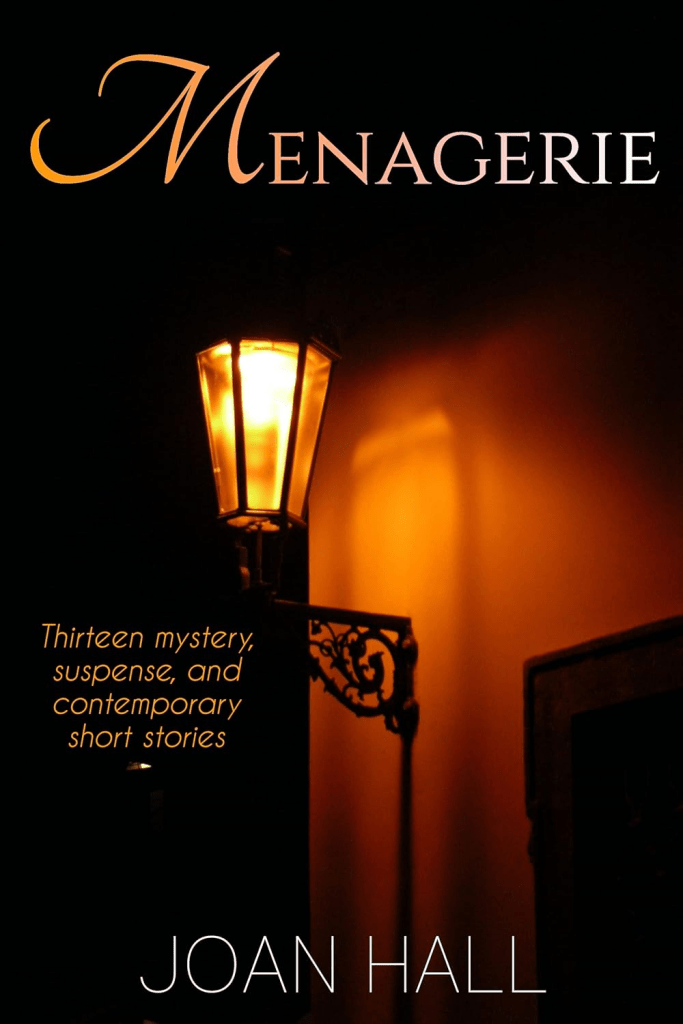
Picture caption: Book cover of Menagerie featuring a glowing streetlight against a dark background
What Amazon says
King’s. The Tower of London. Glass. What do these have in common?
Each is a famous menagerie.
While this Menagerie doesn’t focus on exotic animals, it does contain a collection of stories that explore various trials people face and how their reactions shape their worlds.
Survivors of a haunted bridge. Women who wait while their husbands fight a war. Former partners reuniting to solve a cold-case murder.
These are just three of the thirteen stories in this compendium, encompassing past and present, natural and supernatural, legend and reality. The genres and timelines are varied, but there’s a little something for everyone who enjoys reading about simpler times and small-town life.
My review
I am a fan of short stories as I like their concise use of words and fast pace. Of course, short stories still need to have a proper story line, and the reader needs to be grounded in the setting and engaged with the characters. This is not always easy to achieve in a short story format, but Joan Hall has managed to do it well in this interesting and well written collection of short stories.
This collection is varied and explores a number of topics and situations with the common thread of all being set in small towns in North America. The descriptions of life and relationships in small towns in the USA were fascinating for me as I have always lived in a big city. There was just enough detail to steep me in the setting without it bogging down the stories.
I enjoyed the large variety of characters, some of which are strong and enterprising women which I always value in a book. The characterisations demonstrate the author’s deep understanding of the type of people populating her stories and their thought patterns, way of life, and anxieties.
It is difficult to choose favourite stories from this collection as they are all engaging, but the following three stand out in my mind:
A Moment in Time: A dual timeline story set approximately 100 years apart and featuring two wars, two men fighting in the wars, and two young women waiting anxiously for the return of their men. I am partial to dual timeline stories and plots involving war, so this was right up my street.
Lone Wolf – A wonderful story of friendship between a wolf and a man and how they are able to help and care for each other.
Without a Trace – This story was filled with mystery and angst as the tale of a family that disappeared without a trace unfolds. As a person who moved continuously as a child, I related strongly to the main character, Rick, and his struggle to fit into a new school environment and manage the continuous changes to his life.
If you enjoy short stories with interesting and varied storylines and great characterisations, you will love this collection.
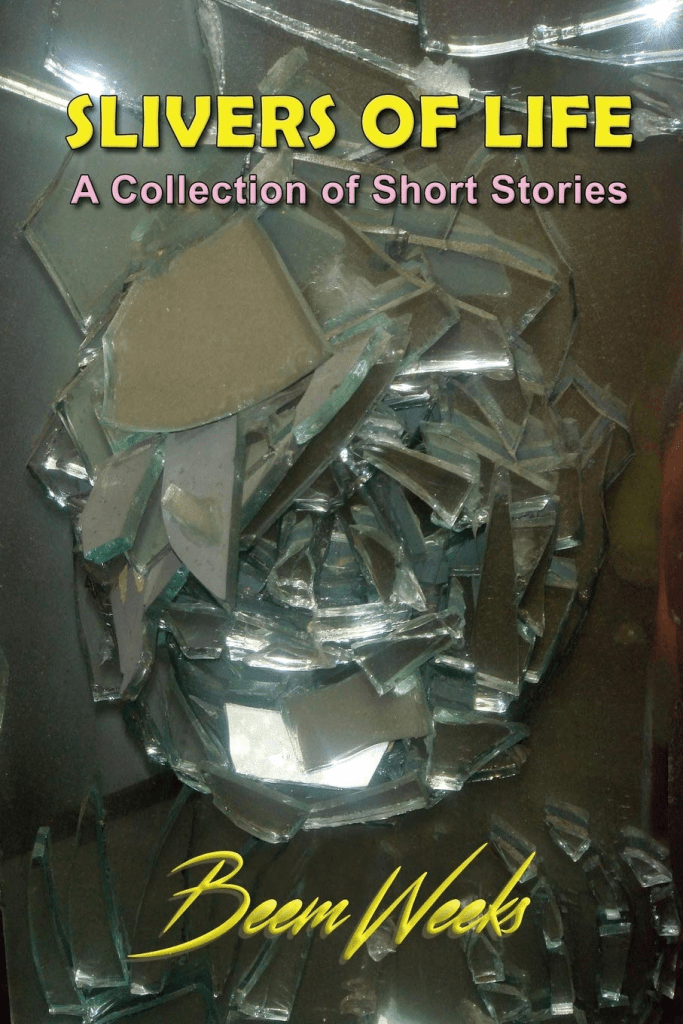
Picture caption: Book cover of Shivers of Life by Beem Weeks featuring a face shape constructed of broken glass/mirror shards
What Amazon says
These twenty short stories are a peek into individual lives caught up in spectacular moments in time. Children, teens, mothers, and the elderly each have stories to share. Readers witness tragedy and fulfillment, love and hate, loss and renewal. Historical events become backdrops in the lives of ordinary people, those souls forgotten with the passage of time. Beem Weeks tackles diverse issues running the gamut from Alzheimer’s disease to civil rights, abandonment to abuse, from young love to the death of a child. Long-hidden secrets and notions of revenge unfold at the promptings of rich and realistic characters; plot lines often lead readers into strange and dark corners. Within Slivers of Life, Weeks proves that everybody has a story to tell-and no two are ever exactly alike.
My review
Slivers of Life is an apt title for this collection of short stories that cover a wide variety of topics and colourful characters of different ages, occupations, and intentions. Despite the short length of the stories, the author has created compelling characters whose behaviours, although not always exemplary, are very relatable.
I find the best way I can review a short story collection is by sharing insights into a few of the stories that have stayed with me the longest. My most memorable stories are as follows;
A Match Met – an intriguing peep into betrayal and revenge that will have your wondering whether the end justifies the means.
Lost Boy – a truly compelling read about a grumpy old man who finds fault with the noise generated by the little boy next door. Mr Spellman does everything he can, internally and externally to stop the irritation, but sometimes what we think we want turns out to be the opposite.
Night Flight – a poignant look at life for young boys being raised by a single parent and the pressure it puts on both the parent and the child. The story delves into the ease with which rejected and/or neglected youngsters can slip into crime and drug taking. There is a supernatural element which leaves you wondering if it actually happened or not. Was the narrator reliable?
And a little child shall lead them – this story talks to the invisibility of homeless and unfortunate people and the judgement that more successful people immediately pass on them due to their circumstances. A poignant story of caring.
Remaining Ruth – a peep into depression, teenage angst and cutting. Very scary for any parent who struggles to reach and understand their teenage child.
On the whole, an intriguing and well written collection of short stories that I really enjoyed reading.
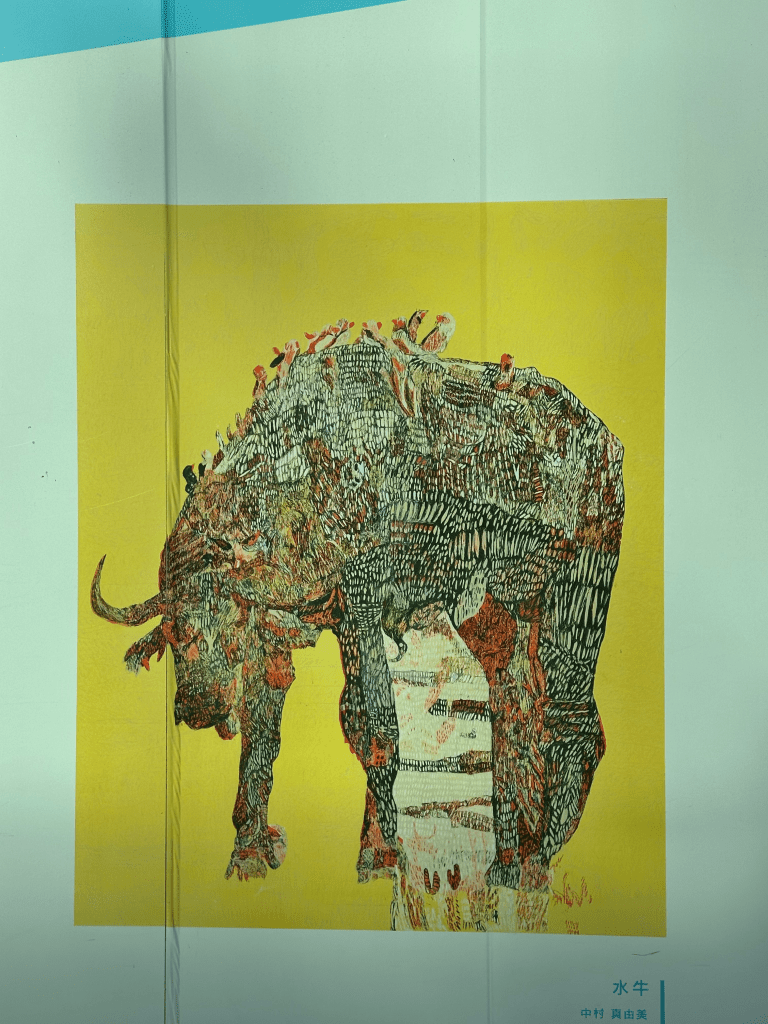
On Ginza Street, I came across some lovely street art and took pictures of it for blogging friend, Resa, who loves street art. You can find Resa’s most recent street art post here: https://graffitiluxandmurals.com/2025/01/26/muhammad-ali/
Picture caption: Street art on Ginza Street, Tokyo – a Cape buffalo
When I appear on Ginza Street
I am a male Cape buffalo
I roam the plains of southern Africa
Endlessly seeking fodder
Which I consume faster than most African herbivores
Due to my wide row of incisor teeth
And deft tongue
My coat is dark brown, and
I have a set of majestic horns
Called a ‘boss’
They come together in front
To form a protective shield
My temper is unpredictable
And I cannot be tamed
Except when I appear on Ginza Street
Here, I assimilate
Becoming one with the local culture
I evolve into a showpiece
Wearing Joseph’s coat of many colours
My heavy front and wide hooves reduce
My boss erodes, shrinking as I conform
With bowed head and downcast eyes
There is no need to fear me
When I appear on Ginza Street
***
I am a male bush elephant
I wander the savannahs of Africa
Relentlessly grazing
The world’s largest land mammal
I uproot massive trees
Stripping them of their leaves and bark
Leaving behind much devastation
I use my large, curved incisors
Known as tusks
To dig, communicate, and for defense
My thick hide is grey
But I cover it with mud
The colour of the surrounding earth
I am dangerous when provoked
Except when I appear on Ginza Street
When I’m on Ginza Street
I must blend in with my surroundings
And acquire an arty look and feel
My skin becomes dappled
Resplendent in a variety
Of colours and shapes
My tusks diminish
Choosing obscurity
Along with my honey coloured eyes
There is no need to stand back
When I make my appearance
On Ginza Street
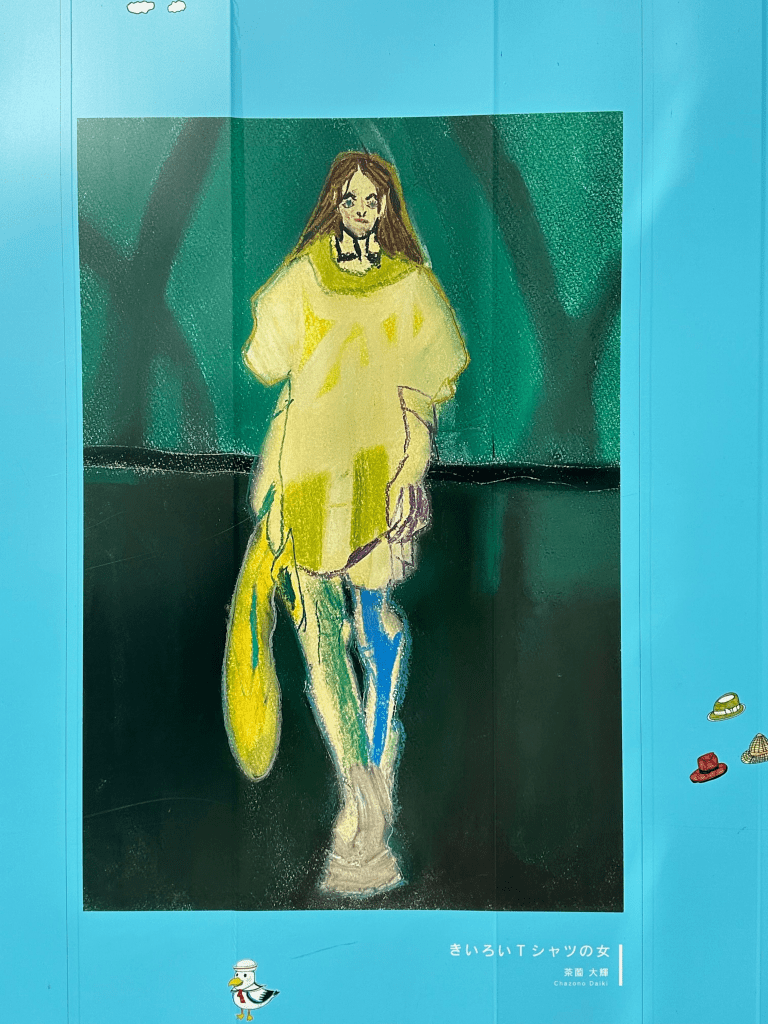
This was some other street art we saw on Ginza Street:
Picture caption: Woman dressed in yellow with a large shopping bagPicture caption: Woman smartly attired, out for a day’s shoppingPicture caption: A multi-coloured collage of different objects of interest
Frank is d’Verse’s host for today and this is his prompt: Had enough Arctic cold? Buried under unseasonable snow? Or, for those living south of the equator, are you enjoying an arid summer? Well, whatever your situation, you might have heard about a certain rodent prognostication. Frank Tassone, here, & honored to be your host for another Haibun Monday, where we blend prose and haiku together. Today, let’s celebrate an American, weather-predicting tradition with Northern European roots: Groundhog’s Day.
As I live in southern Africa and it is summer here and we don’t have Groundhog’s Day, I have Africanised the prompt and incorporated two Zulu mythological creatures that bring the rain, thunder and lightening. In South Africa we get rain during late spring and summer and nothing at all during late autumn and winter. We can go up to eight months in a normal year without rain so by the time it arrives, we are desperate for relief from the heat and dryness.
The Forsaken
The angry sun savaged the land. Pouring its heat down onto the earth that cracked and broke under the relentless assault. The cattle grew thin, sharp ribs poking through their scraggy hides, while clouds of flies buzzed around their dry eyes and mouths. The crops withered in the fields and the people lay lethargic and parched inside their thatched huts. The milk in the breasts of the young mothers dried up and the babies cried themselves into early graves.
Unkulunkulu — “The One Who Carries Heavy Blows”, also called Rainbull, kept his mighty horns pointed at the sky, forcing the clouds to withhold their rain. He watched the daily passage of the boiling sun across the sky and dreamed about the cloudless nights when the bright stars performed undisturbed against a velvety blackness.
One scorching day, he shook his massive head and his horns accidently pointed towards the land below. The opportunistic rain seized the moment and flooded down in sheets accompanied by Impundulu, Lightening Bird, who summonsed thunder and lightening through the force of its wings and sharp talons.
The parched earth, unable to absorb the deluge, regurgitated the water creating flash floods across the land. People, animals, trees, and bushes all disappeared into the swirling brown whirlpool while Unkulunkulu, faced with his gross neglect, stamped his great hooves and cried pools of tears.
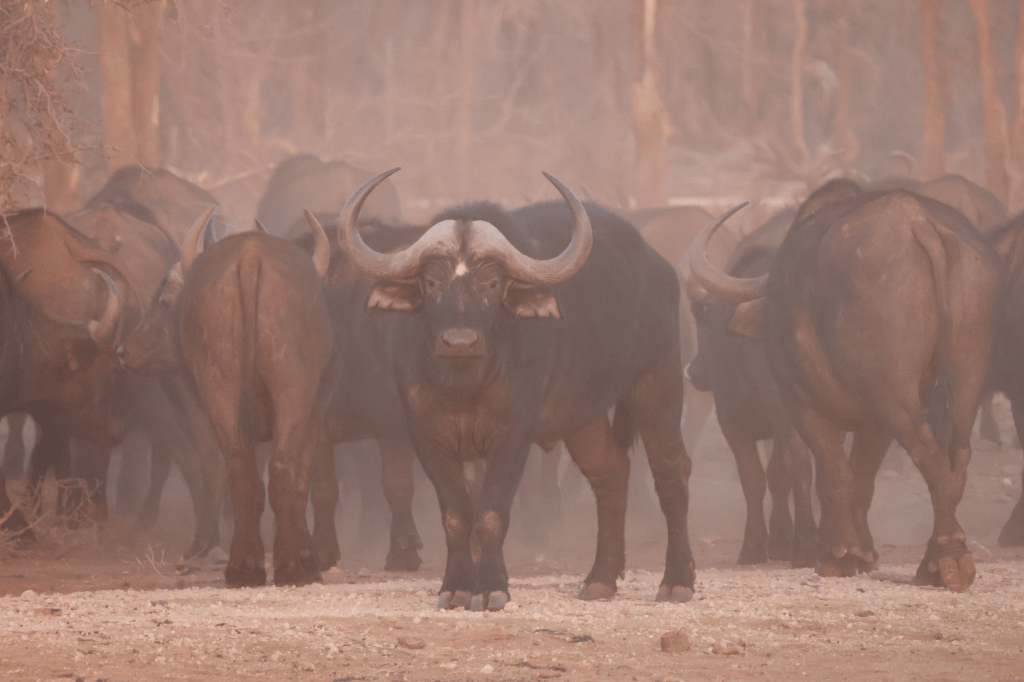
Last August, TC and I visited Jaci’s Treehouse Lodge in Madikwe Game Reserve. These pictures demonstrate how dry and dead everything looks at that time of your in this part of the world:
Picture caption: Warthog foraging among dried grasses and sticksPicture caption: Buffalo heading to the man-made waterhole. They rely on artificially created water holes during the winter.Picture caption: Buffalo on the move and stirring up the dustPicture caption: Another picture of the buffs in a cloud of dust.
Story Chat
Talented writer, Marsha Ingrao, is the brain behind the innovative Story Chat series of blog posts. Story Chat involves the submission of a story or a poem which is published on Marsha’s blog, Always Write, and open to constructive discussion by her blog supporters. It is a most informative and interesting process and well worth considering for all poets and writers. You can find out more about Story Chat and find the schedule and submission process here: https://alwayswrite.blog/2024/11/22/story-chat-2025-schedule/
Marsha was kind enough to publish my poem, Invisible People, as part of her Poetry Day for Story Chat Digest 2025.
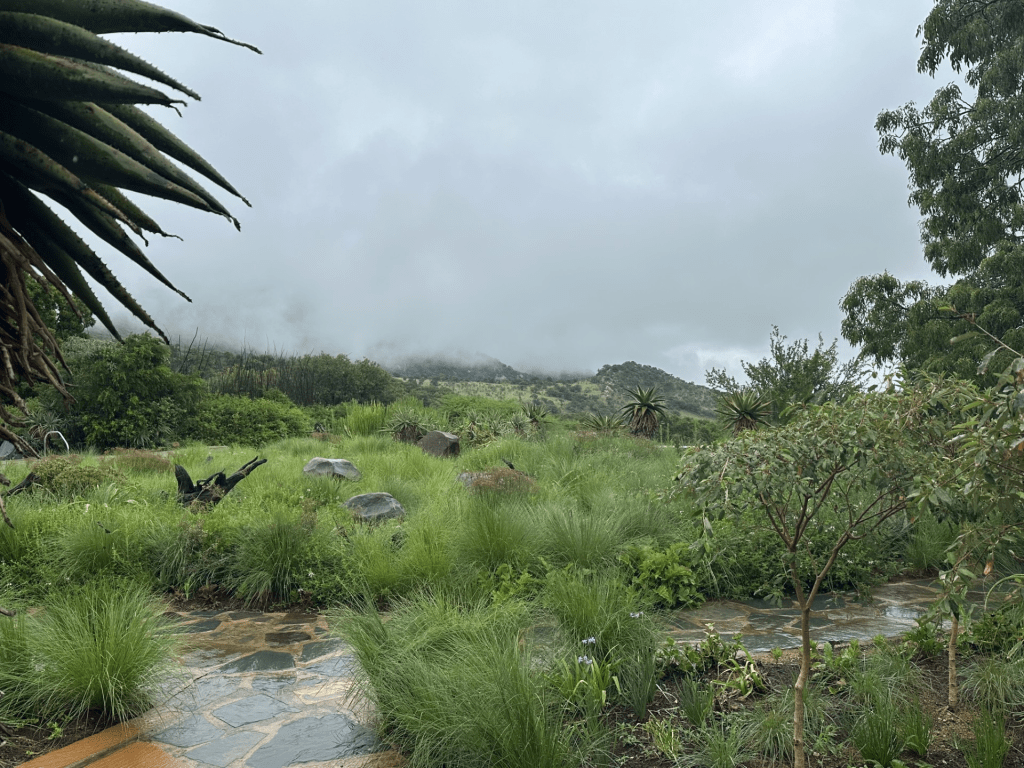
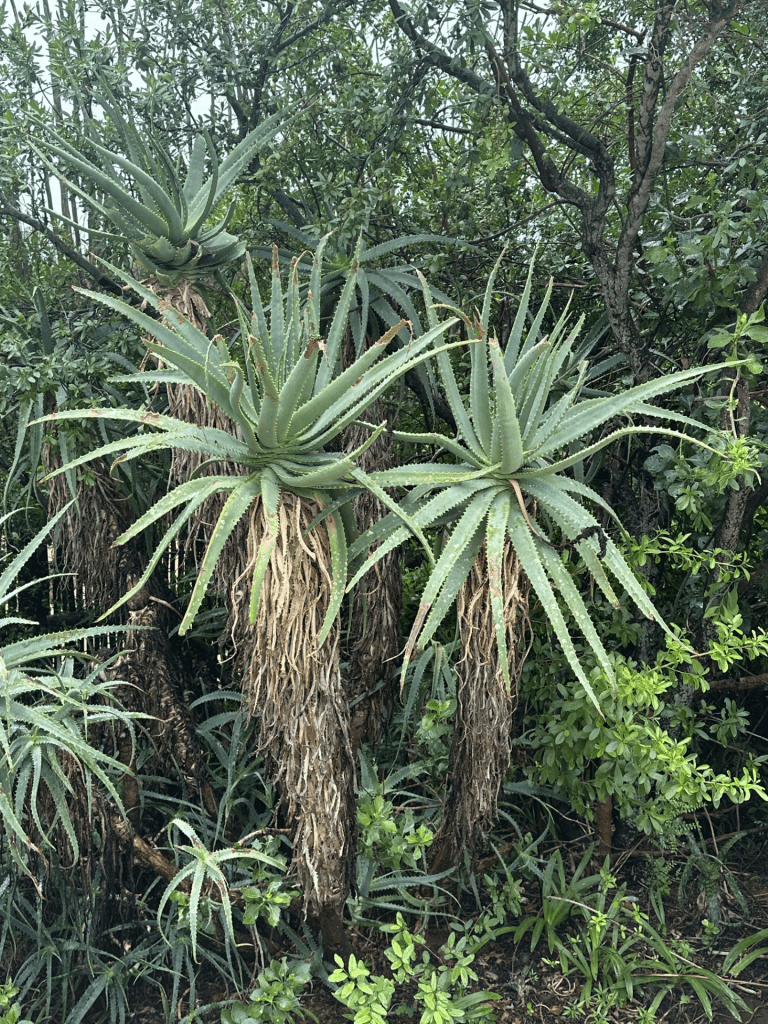
These are some of the aloes we saw during our recent trip to Babanango Game Reserve. These photographs were taken after a cloudburst followed by drizzle for a few hours.
Picture caption: It was a misty, moisty morning.Picture caption: Four Mountain AloesPicture caption: Two Somalian aloes (I think)Picture caption: This is also an aloe but I couldn’t identify what kindPicture: Spiny tree cactus (yes, I know it’s not an aloe …)Picture caption: Thicket GasteriaPicture caption: Carion flowerPicture caption: Aloe VeraPicture caption: Candelabra tree
I hope you enjoyed this tour of the garden at the lodge.
I have made an attempt based on how I understood this prompt. If you don’t like spiders STOP here.
I used a quote from Shakespeare’s Midsummer Night’s Dream which reflects spiders in a negative light. I have then flipped this idea in the second half of the poem.
In case you’ve forgotten, Puck, the mischievous servant to the fairy king in this play, is tasked with anointing Titania’s eyelids with the juice from a flower which will serve as a magic potion.
The Weaver
I scrabble backwards
Scrubbing shreds of sticky web
From my mouth and eyes
My Midsummer Night’s Dream forest walk
In tatters, just like the spider web
“Weaving spiders come not here
Hence, you long legged spiders, hence”
I invoke the charm of protection
From venomous arachnids
Out of the corner of my eye
I see a spectacular creation
A complex structure of threads
Glimmering in the golden light
Diamond-like rain drops clinging
At intervals along each lengthily seam
At the centre, sits the weaver
Slender red legs spread out
Around a distinctly marked abdomen
Like a queen on her throne
She eagerly awaits a banquet
Is her beauty real, or have I been bewitched
By magical floral juice upon my eyelids
“Tell me Puck? Is this vision real?
Or are you making mischief
With your enchanted love potion?”
Picture caption: Orb spider in its full web in the forest.Picture caption: Close up of an orb spider in its web.
The December holiday period and my Dad’s illness has put me behind with sharing my reviews. I am slowly catching up and I have a most interesting and unique vampire story to share with you today.
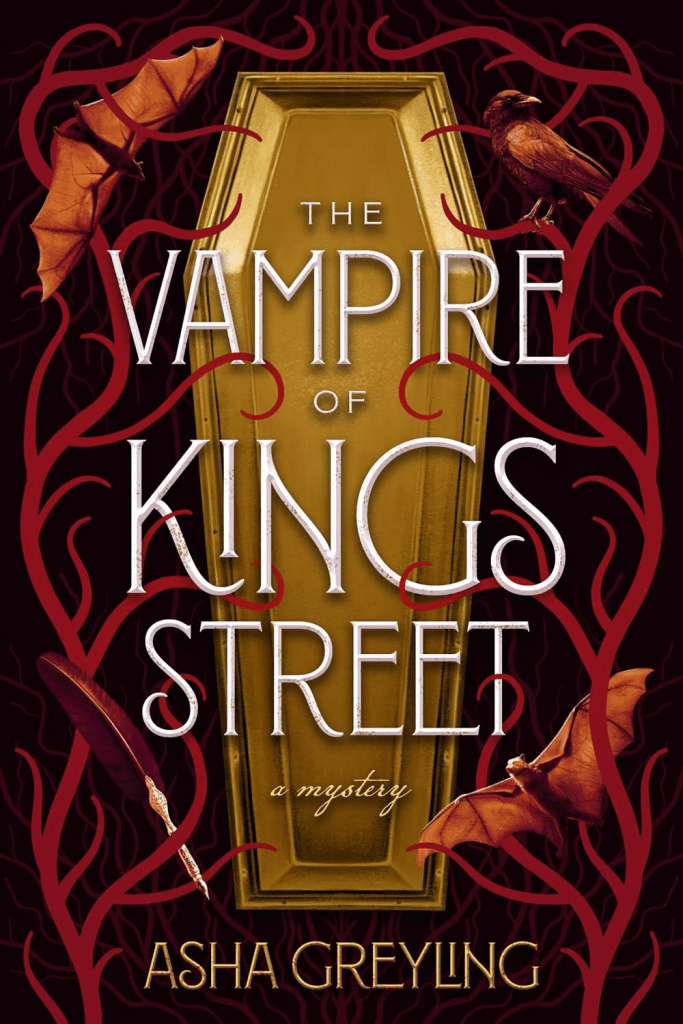
Picture caption: Cover of The Vampire of Kings Street by Asha Greyling featuring a coffin, two bats and a raven on a dark background with an entwining red patterning
What Amazon says
In this gothic debut novel, perfect for fans of Tread of Angels and Gail Carriger’s Soulless, Miss Radhika Dhingra, a newly minted lawyer in 19th century New York, never expected that her first client would be a vampire accused of murder.
Having a resident vampire is just the thing for upper-class New Yorkers–besides being a status symbol, they make excellent butlers or housekeepers. The only thing they require in return is a drop or two of blood and a casket to shut out the dawn’s early light.
Tolerated by society only if they follow a strict set of rules, vampires are seen as “less than”–and as the daughter of immigrants, Radhika knows firsthand how this feels. Accused of murder, her undead client Mr. Evelyn More, knows that the cards are stacked against him.
With the help of a journalist friend and a diminutive detective inspector, Miss Dhingra sets out to prove her client’s innocence and win his freedom. Failure will mean Mr. More’s death, the end of her dreams of becoming a successful attorney, and the loss of the vampire Miss Dhingra has begun to call her friend.
Offering an alternative paranormal history, delightful characters, and insightful social commentary, The Vampire of Kings Street will thrill readers of Deanna Rayburn and Rebecca Roanhorse.
My review
I enjoy vampire folklore and mythology and through this book had a unique and interesting take on vampires. Far from having the upper hand, vampires have descended into being wards of wealthy families who ‘host’ the vampire in exchange for services. Essentially, vampires who were previously hunted down and killed by vampire slayers, have evolved into ancient and immortal servants to the wealthy.
This story starts with Evelyn More, vampire ward to a wealthy and powerful family called Frost, calling on the dilapidated offices of Miss Radhika Dhingra. Radhika is an interesting character. The daughter of a couple who’d immigrated from South India, she had chosen to put herself through a college focused on uplifting women and gaining qualification as a lawyer. Naturally, due to her heritage, Radhika had not gained employment with the well-known and powerful firm of attorneys that all lawyers dreamed of working for and had decided to try and build her own practice. Mr More is seeking legal advice and despite her misgivings at acting for a vampire, she is excited to have her first client. Radhika connects to Mr More as vampires are heavily discriminated against by society and have limited legal rights. I thought Radhika’s internal conflict about the reputational risks of acting for a being even more disadvantaged than herself, and the enticement of the money, her first case, and also her desire to stay true to her own beliefs and moral values was fascinating. Radhika decides to go ahead and represent Mr More although he has not as yet committed any crime. Mr More is engaging her on the expectation that a crime would be committed that he would be blamed for due to circumstantial evidence.
I enjoyed the character of Radhika very much. I was pleased she stood up for her beliefs and I thought she developed nicely over the course of the story, as both a lawyer and a person. She demonstrated bravery in difficult circumstances and also determination and grit.
Mr More is an ancient being and has been with the Frost family for centuries. The family is not as it initially appears to be and there are lots of egos, desires, and discord at play. I disliked the family matriarch, as I was intended to, and resented her snooty and ungrateful behavior. Sadly, I thought Mrs Frost was entirely believable. As the book unfolds, Mr More’s background and how he became a vampire unfolds as a truly tragic story. His backstory gives a lot of insight into who he is and why he is both loved and hated by various characters in the book, both vampirical and otherwise.
The author introduces some unique and intriguing ideas around blood, both human and vampire, and I enjoyed these innovations on the traditional vampire story very much.
In summary, if you enjoy unique slants on mythical creatures and an entertaining story, this book will appeal to you.












 roberta-writes.com