When I was a girl of eight years old and my sister, Cath, was five years old, we moved into a new house in a suburb in Cape Town. The house was newly built, so it had no garden whatsoever. My father, a landscaper, took on the project of creating a garden and building a swimming pool in his spare time. To this end, he had a huge pile of sand delivered which was dumped unceremoniously in the front yard. I was thrilled with this sand pile and quickly learned that if I soaked the sand with the hosepipe, I could create castles, houses, tunnels and all sorts of other buildings from wet sand.
My parents befriended the family next door, and this led to my mother inviting them to our house one evening for a braai. A braai is a traditional outdoor meat cooking method in South Africa which makes use of an open wood or charcoal fire and seasoning. South African men all have their own ‘secret’ seasoning and take great pride in producing it at braais to stun all the guests with their culinary expertise. My dad was no exception, and he had a large glass jar of his special recipe, much treasured yellow braai meat seasoning. To me, castle constructor extraordinaire, that yellow powder was gun powder. And so, I borrowed the jar after my father had finished using the seasoning.
That evening, I led my sister and the two neighbouring children in a huge war construction project. Each child had their own castle with a walled moat, a drawbridge, towers, and a dungeon. Each castle also had gunpowder deposits. Large ones, with big staches of yellow gun powder.
My dad didn’t notice the missing jar until the following morning. The lidless and empty jar caught his eye when he was meticulously cleaning his braai. He was livid and demanded to know what I had done with the contents. I did manage to find most of the gun powder deposits in the sand pile. Sadly, however, the gun powder had mixed with the sand and was rendered quite inedible.
one man’s seasoning
is another’s gun powder
imagination
has the power to transform
simple into amazing
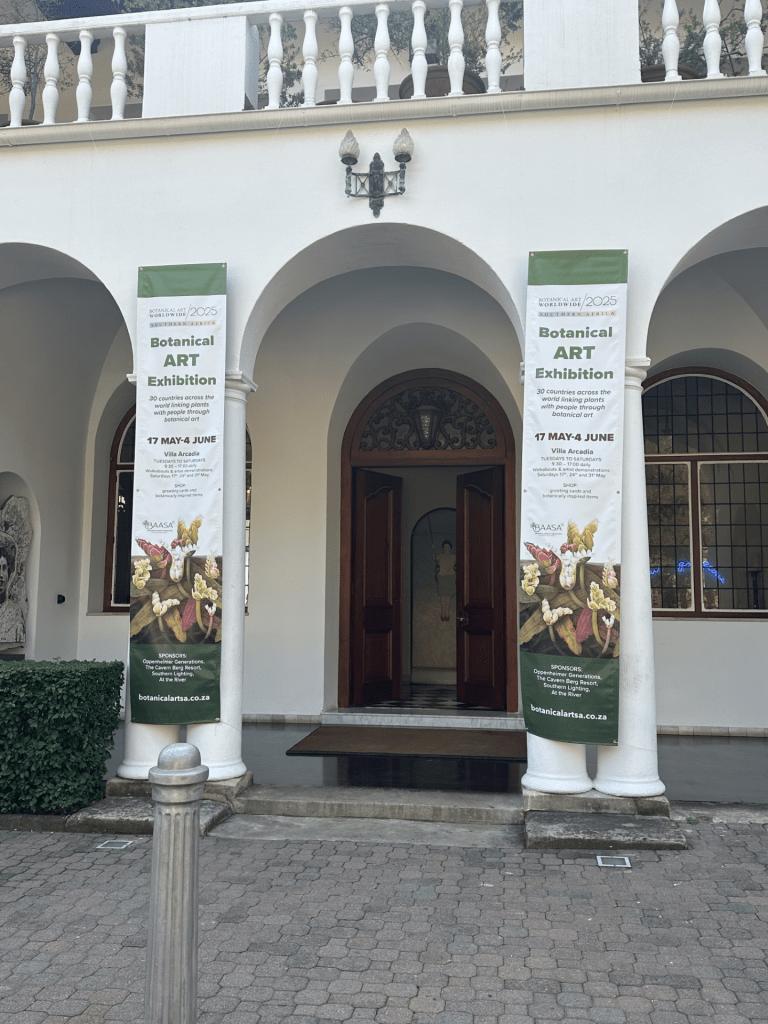
Botanical Art Exhibition
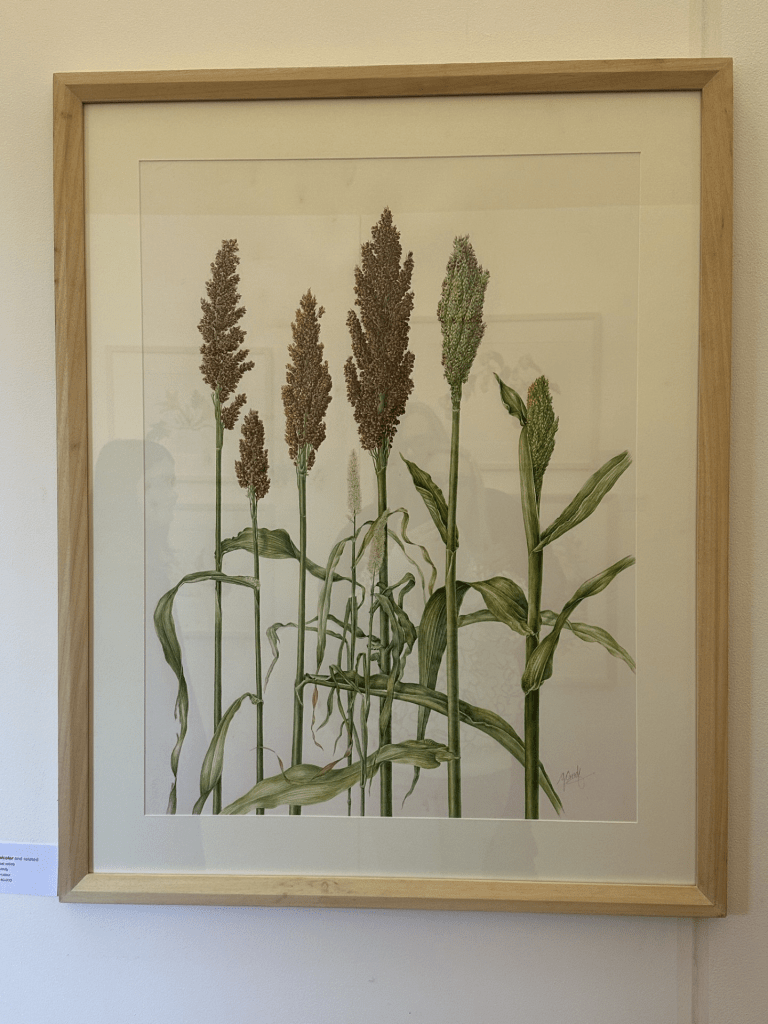
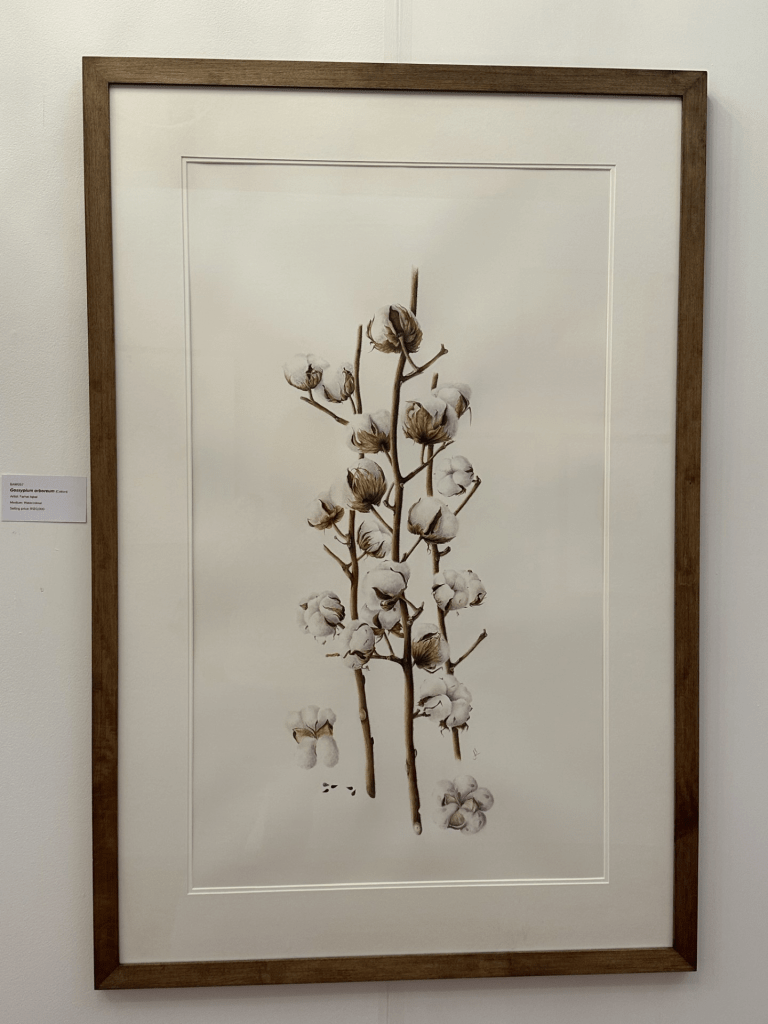
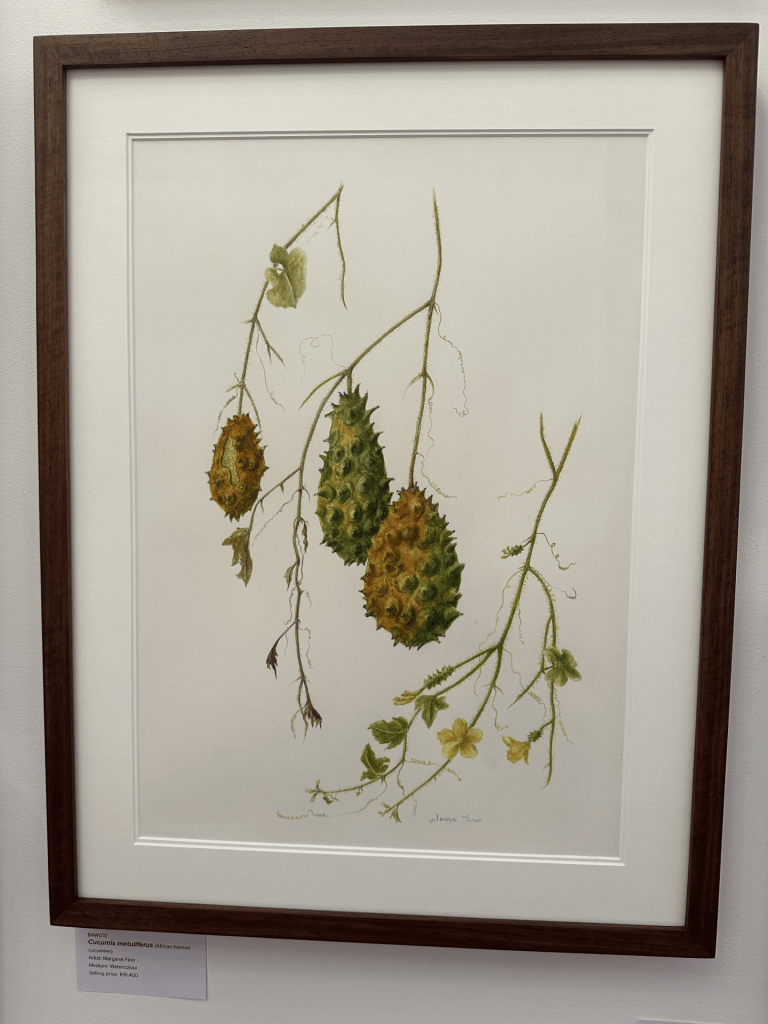
On Saturday, I took Michael and his friend to a Botanical Art Exhibition. The art works were watercolours of mainly local flora and were amazingly detailed. It was quite different from the style of watercolours I am learning at the monthly workshops I attend.
Picture caption: The entrance to the art exhibition
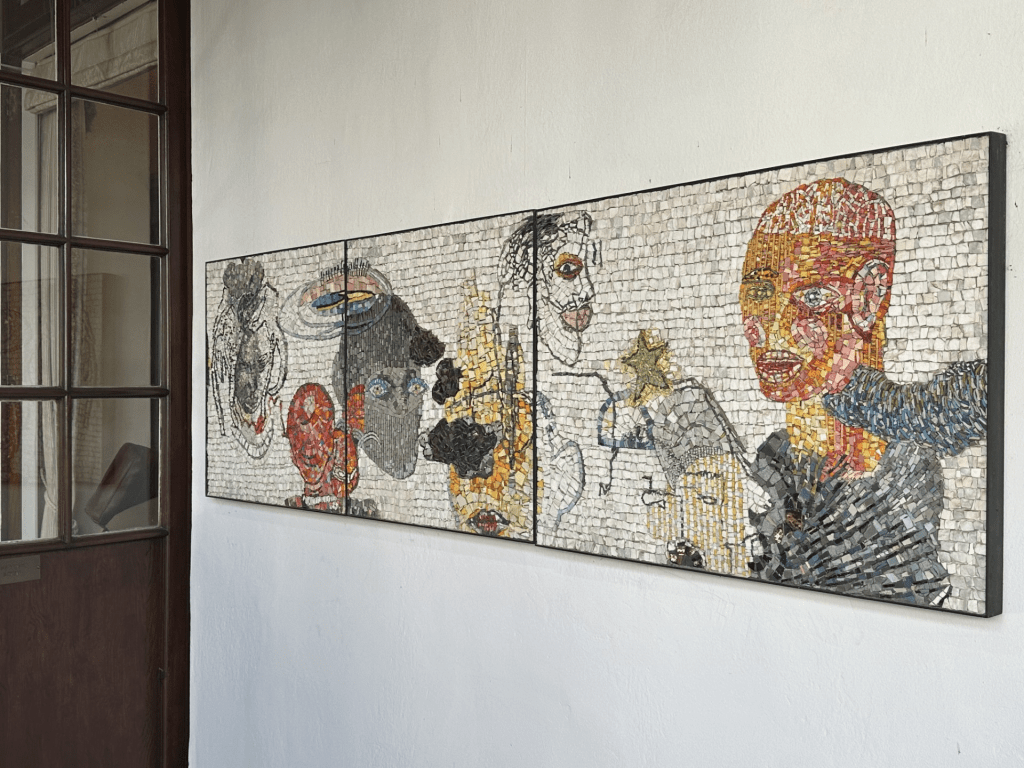
The following three photographs are of my favourite art works in the exhibition:
Picture caption: I really liked this African themed mosaic picturePicture caption: This skull on an old book interested me
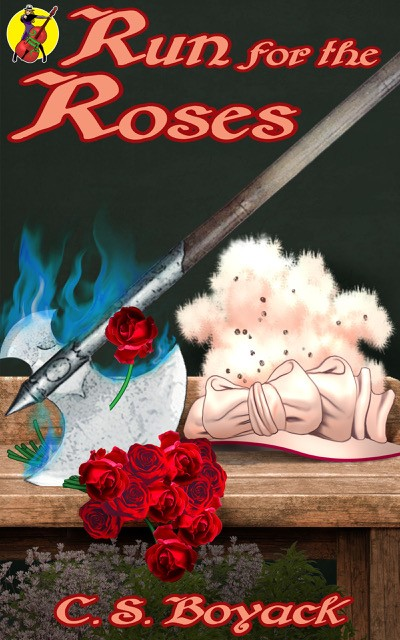
Today, I have a treat for you. A guest post by C.S. Boyack about his new The Hat book, Rune for the Roses. I love The Hat with its dark humour and fascinating and original creatures, so I’m delighted there is a new book in this series.
Picture caption: Cover of Run for the Roses featuring the blade of a sword, a lovely white hat, and bunches of roses.
Thanks for the invitation to talk to your fans, Robbie. I’m thrilled to tell everyone about Run for the Roses. This is book number eight in my ongoing Hat Series.
This series needs a bit of explaining in that I have specific goals here. I want each story to stand alone. This goal involves anyone being able to pick up a volume without prerequisite reading so they can understand it. If Roses happens to be your first book you should not feel lost.
I want them all to be short novels. I believe there is a void in books that can be read and enjoyed in a single afternoon. Now that the series has some length to it, if someone is inclined they can binge the whole thing if they have that mindset.
These are supposed to be campy, hopefully with sprinkles of humor throughout. Think more like Buffy, Ash Williams, and Bondsman than Exorcist or Elm Street. If this is your style, this could be the series for you.
The premise is that Lizzie and the hat are monster hunters. While remaining independent they have a close affiliation with the Eastern witch’s coven. This time there is a renegade witch who is torturing race horses to manipulate the parimutuel betting odds.
Enter Detlef Klein, the original headless horseman. Turns out he is a horse lover. (Who knew?) Detlef provides the call to action for Lizzie and the hat to stop all this nonsense before Detlef takes matters into his own gauntlets.
Blurb
The Headless Horseman has mellowed over the centuries, somewhat. Who knew that he is a horse lover, and needs Lizzie’s help. An unaffiliated witch is torturing race horses in an effort to skew the parimutuel betting odds.
Can Lizzie and the hat find this renegade witch before one of these beautiful animals gets hurt? Can they do it before Detlef, The Horseman, takes things into his own hands and violates the terms of his magical parole.
It seems like everyone is standing in their way this time, including a team of YouTube ghost hunters and members of the coven itself.
Saddle up for this supernatural ride through the world of Lizzie and the hat.
Goodbye Old Paint is another fabulous romp through the fantasy world of Lizzie and the Hat. Following a devastating flood that damaged many of the businesses in town, Lizzie is very hard up for money. There is just no work around. Lizzie has living expenses to pay and a student loan hanging in the background. The situation is quite desperate so when a couple of government agents appear, who know her recent history as a monster hunter and promise the forgiveness of her debt if she helps them, Lizzie has no option but to take the bait.
Enter the gremlins. I love gremlins. Somehow these horrid little creatures with their big teeth and ability to eat anything have always been my favourite fantasy creature so I was delighted to see them make an appearance. They didn’t let me down, they were just as destructive and horrible as I remembered from the movie entitled Gremlins.
Several characters from the previous six books make an appearance in this one and I was delighted to see Dash and a few witches pop up in helpful rolls. Poor Lizzie, as always, must face some uncomfortable obstacles on her adventure, but she has great friends and the Hat by her side.
The Hat is a glorious feat of imagination and I love that it can transform into a ‘fool’s cap’ and use the points to work a mobile phone. This always delights me.
A marvellous and fun fantasy adventure that will bring some brightness to your day.
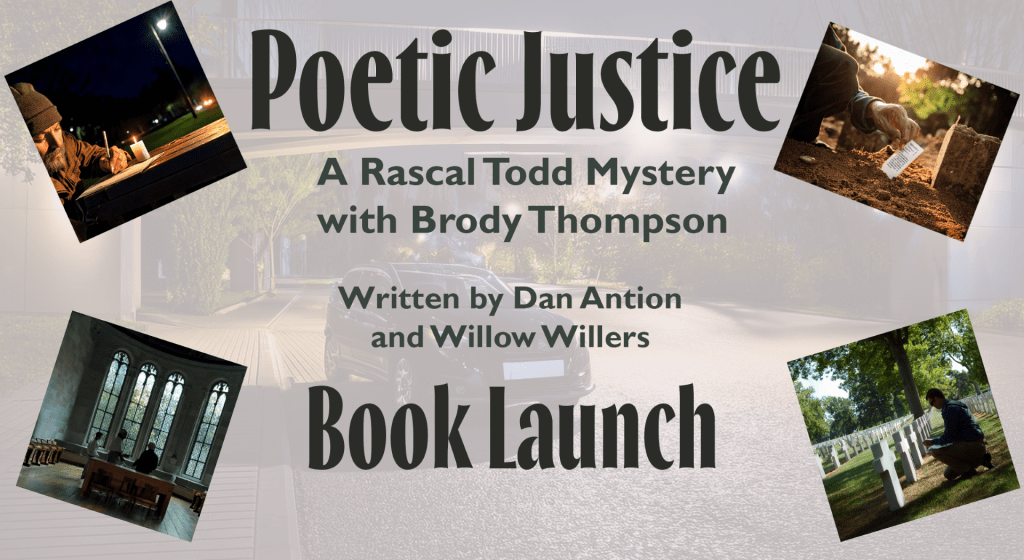
Picture caption: Book Launch banner for Poetic Justice
Hi everyone! Today, I have invited Dan Antion and Willow Willers, co-authors of Poetic Justice, A Rascall Todd Mystery with Brody Thompson, to Roberta Writes to talk about some of the fascinating characters populating this book, including the Poet, Trevor, Brody, Rascal, and Bonkers the cat, he’s very popular, or anyone else you would like.
And on to the interview…
Robbie Question: Tell me guys … Apart from Rascal, Terry, and Bonkers the cat how many of the cast of your previous books are present in this book?
Dan Answer: The regular characters from the newspaper are also in this story, particularly Bernie (the Editor) and Kevin Gowerly (the photographer).
Robbie Question: Dan, who are the new characters and are they likely to still be around if another book comes out?
Dan Answer: The two significant new characters are Trevor Barcroft, the murdered man’s son, and Brody Thompson. Brody is a retired police officer from Rochester, New York. After retiring, he began writing true crime dramas and mysteries. Trevor asks him to help solve his father’s murder. Trevor’s mother is also an interesting character.It’s possible that Brody will appear in a future novel. I like working with him.
Robbie Question: Willow, you are new to writing in this series. What do you think of the characters in Dan’s books?
Willow Answer: Robbie, having read all the books including Knuckleheads and the three other books in that series, as well as the previous two books in the Rascal Todd series. I really love the characters and where they live! Writing characters/ people is definitely Dan’s forté. He really brings them all to life and you soon find yourself regarding them as old friends. Did you know there is one character, an FBI agent, Thomas Slocum who has been in the books from the get-go?
Robbie: Question: Willow, do you have a favourite character in Poetic Justice?
Willow Answer: Apart from Bonkers, the cat, I have to say Brody is definitely up there. He’s a dogged and seasoned investigator and he certainly has a great sense of humour. Here is a little snippet that I really like:
“Brody at the hotel in Pittsburgh.
He walked what he considered to be half a mile past an equipment dealer and a trucking terminal before returning to the hotel. It was early enough that he still needed his room key to open the lobby doors. “You’re up early today, Mr. Thompson. ”Brody smiled at the regular morning clerk. “I wanted to get some exercise. “The gym is open twenty-four-seven. “I don’t want to go overboard.””
Oh! And boy does he like coffee.
Arlene too, she’s a really cool character. …she is a real eye opener.
Robbie Question: Dan, do you have any favourite characters and how do they present to you?
Dan Answer: I like Brody Thompson. I expected him to be a minor character, but I came to like working with him and decided that he should be the lead detective. I also like Bernie Bouchard. He’s been around for three books, now, and he helps me navigate some difficult subjects.
Robbie Question: What made you want your informant, for want of a better word, to be a poet? That’s a very novel idea, so why?
Dan Answer: The first poem is a funeral card that Brody discovers at Wilson Barcroft’s grave. Initially, that was going to be an ‘in-your-face’ moment. Wilson’s son, Trevor, didn’t want to go to the grave so finding a clue was important. When Willow sent me the prayer card, I knew that poetry, and the Poet, were going to be important. My plans for the book changed at that point.
Robbie Question: Willow, how did you find the Poet’s voice? Was it hard to get clues across in poetry that would sit well in a prose book?
Willow Answer: After I received Dan’s request to write a few poems for him, I read the background and what was written of the story so far. I wrote what I thought Dan needed. As I was reading it back, believe it or not, I heard a voice in my head saying, “that’s not quite what I want to say.” I listened, and thought, and re-wrote the poems. I liked them, they made sense. I think Dan liked them too. After that, either I became the Poet, or he just spoke to me.
Picture caption: Poetic tribute to the men who died during the Vietnam War
About Poetic Justic
Picture caption: Cover of Poetic Justice featuring a man in a trench coat on a dark street in the rain
Trevor Barcroft is convinced that mystery/true crime author Brody Thompson wrote the scene in which Trevor’s father Wilson Barcroft was murdered. What should be a simple answer to this five-yer-old crime is one that neither the police nor the FBI want to uncover; and one Bernie Bouchard doesn’t want his young investigative reporter, Rascal Todd, digging into. Warned to stay away from the investigation.. Brody and Trevor begin a dangerous quest, led by the musings of a mysterious poet who has been hiding in plain sight for decades. What does the Poet know that keeps him in hiding? What did Wilson Barcroft know that got him killed? Why can’t Brody walk away from a meaningless and dangerous pursuit?
About Dan Antion
Dan is retired from a 42-year-long career in systems development and other technology and began writing his first book the next day. He’s married, the father of one child, and although there are no pets around today, he and his wife have had four Irish Setters and a handful of Tuxedo cats over time. Dan is the author of the Dreamer’s Alliance Series and the Rascal Todd Mysteries. When Dan isn’t writing, you might find him in his woodshop, working around the house, or walking around with a camera. He also might be having a beer with friends and some of those encounters have inspired the fictional bar stories on his popular blog — Https://noFacilities.com.
London born Willow Willers is retired and lives in Berkshire, Southern England. Along with her husband and a steady stream of foster dogs mainly Guide Dogs for the Blind. Willow is mother to three sons all grown and flown and two fast growing grandsons.Writing, poetry and prose have always been her passion in fact she wrote her first pieces before she was eight. After two life changing accidents Willow started writing in earnest and has found it a life saver. You can find willow at willowdot21.wordpress.com
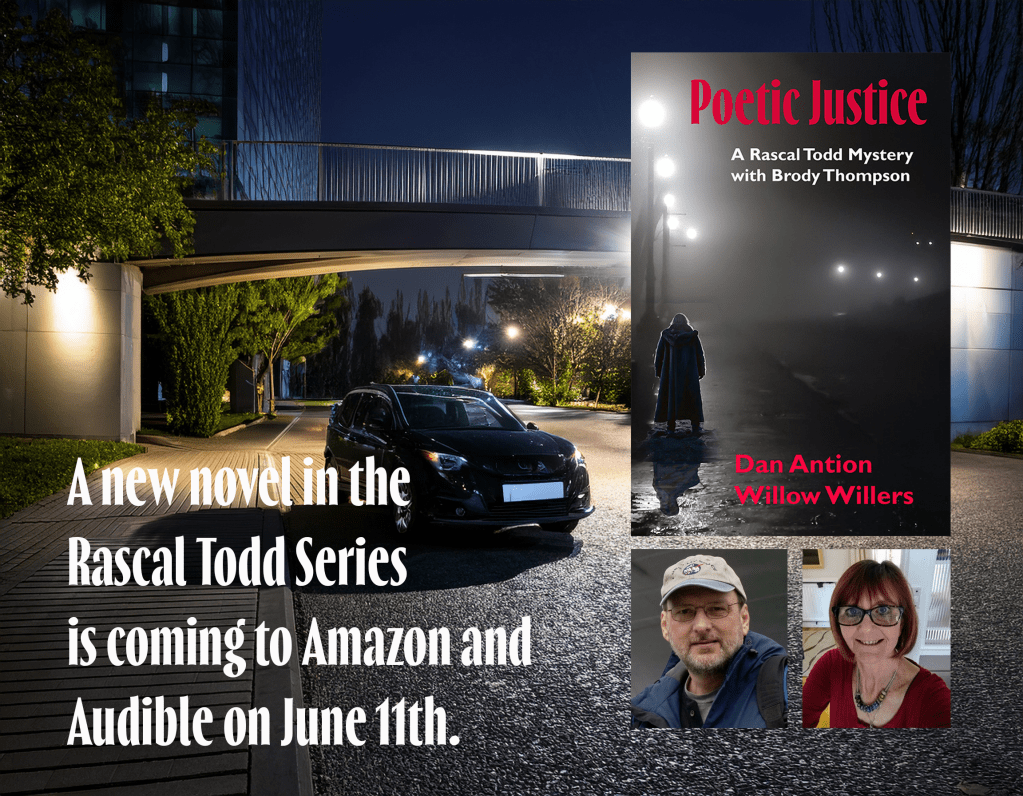
Picture caption: Promo Banner for Poetic Justic featuring a car driving on the street at night, the book cover, and author photographs for both authors.
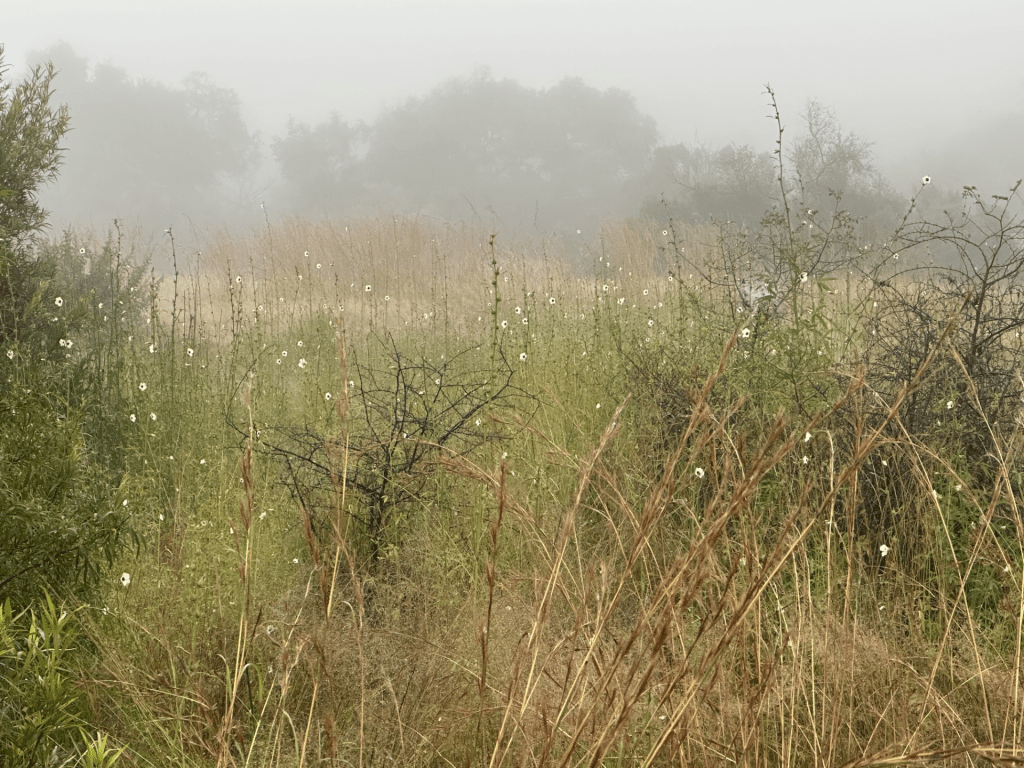
I have combined these two challenges into my 44-word poem, Mist.
Mist
tiny water droplets
suspended in clouds
above the golden veld
gently embrace
the wild hibiscus
shimmer in rows
along strands of web
the bush is quiet
animals all hiding
deep within thickets
the only sound
splashing of wheels
as the vehicle
squelches through mud
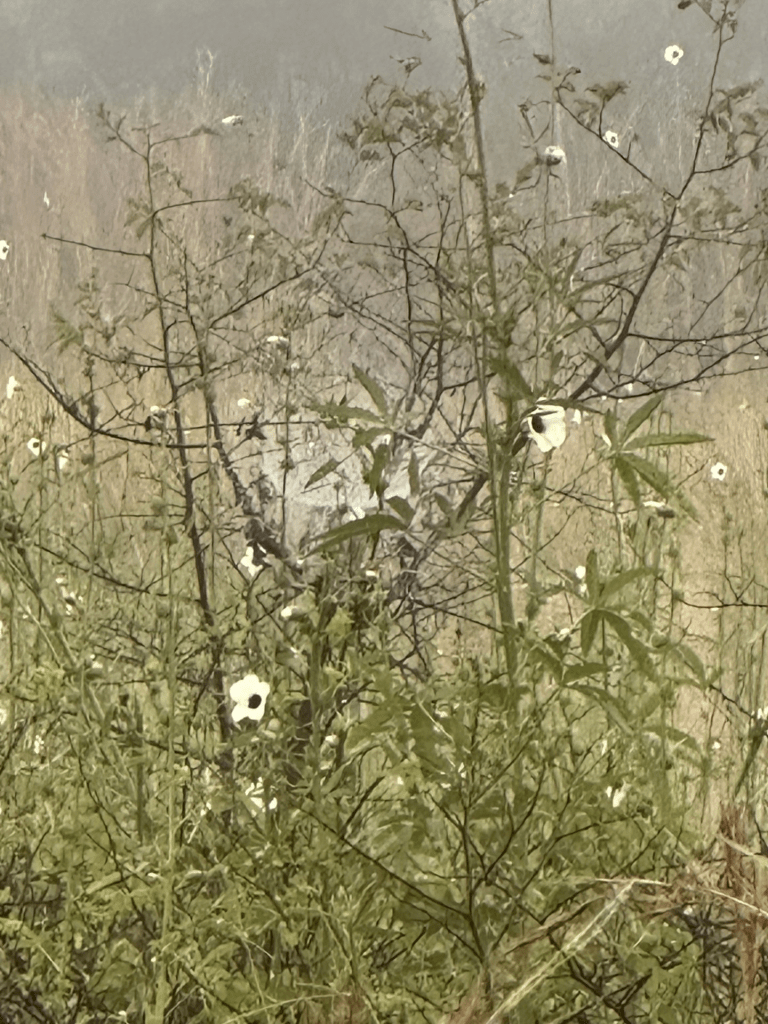
Picture caption: A picture of the wild hibiscus flowers on a rare misty dayPicture caption: A picture of the wild hibiscus and a mist drenched spider webPicture caption: I was excited to get this picture of a black rhino on that misty moisty morning, even though it was from a distance. It is very difficult to find black rhinos. They are endangered and they also hide. Black rhinos have a much bigger dip in their backs than white rhinos as well as being smaller and darker in colour. Their lip is also pointed because their diet is different to white rhinos. Black rhinos live among trees while white rhinos are plains grazers.
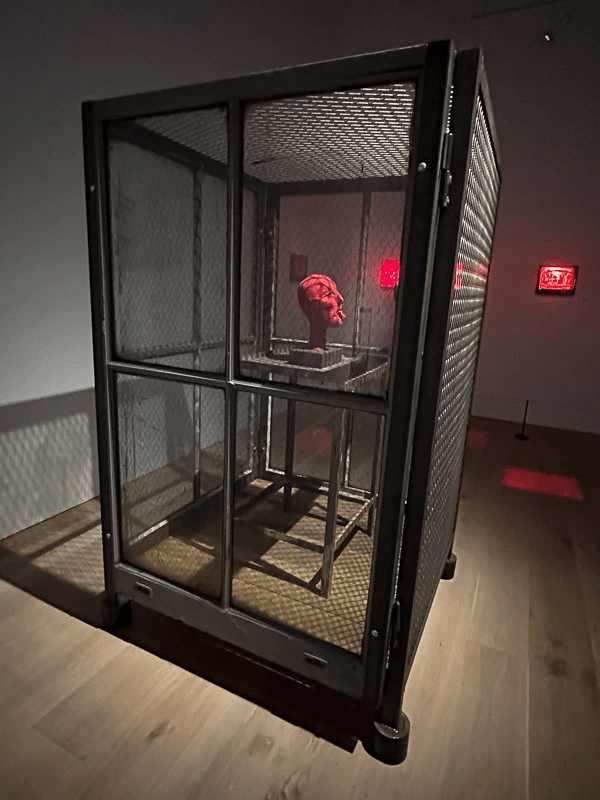
Picture caption: This is my own photographic entry for Dan’s Writing Challenge. It is an artwork by Louise Bourgeois which I saw at the Mori Art Gallery in Tokyo
Floating (shadorma)
ideas float
finding nothing to
adhere to
candy floss
thoughts, discombobulated
and quite meaningless
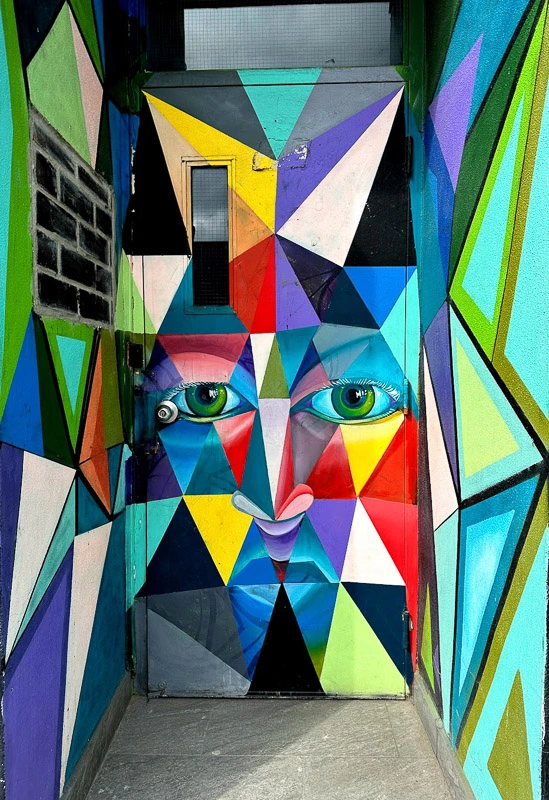
Picture caption: This door photograph is contributed by Dan, our challenge host
White door
“You want to keep the door white?”
“Absolutely, it’s so pristine and clean”
“I have to rethink this marriage –
I don’t want to spend my life with someone
who wants a white painted door”
“I don’t understand – what’s wrong with a white door?”
“It’s clinical, sterile, and it just looks wrong.”
“Okay, well, what colour door would you like?”
“Buttercup yellow with a blue postbox.”
“You’re right, we need to rethink this marriage.”
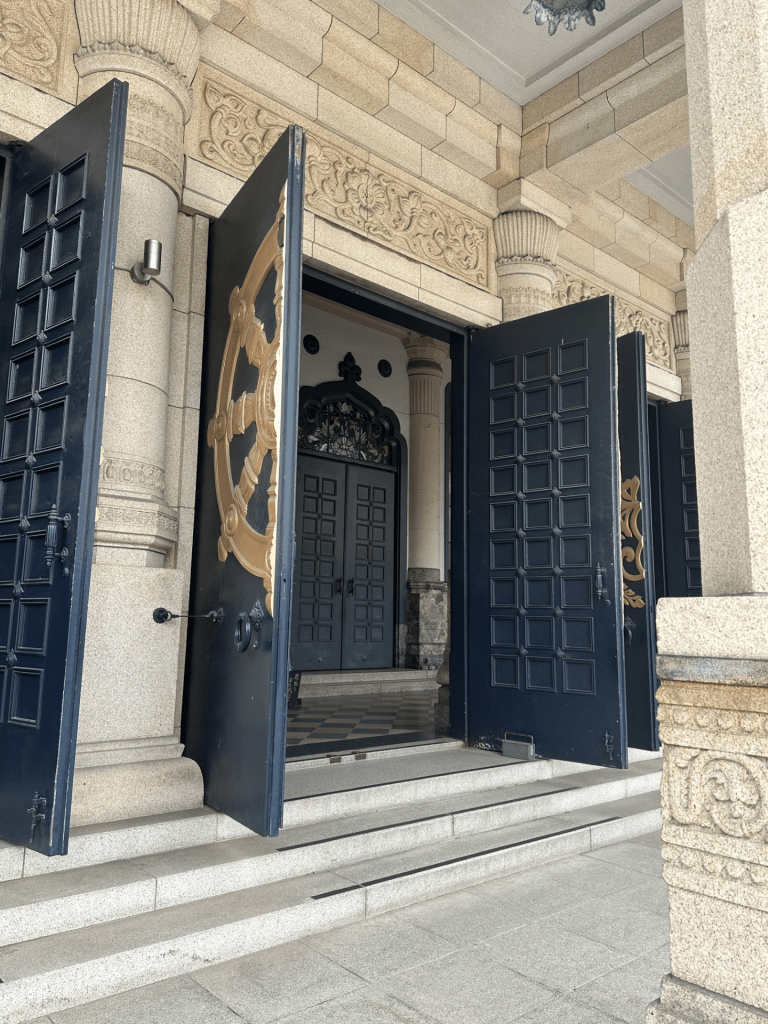
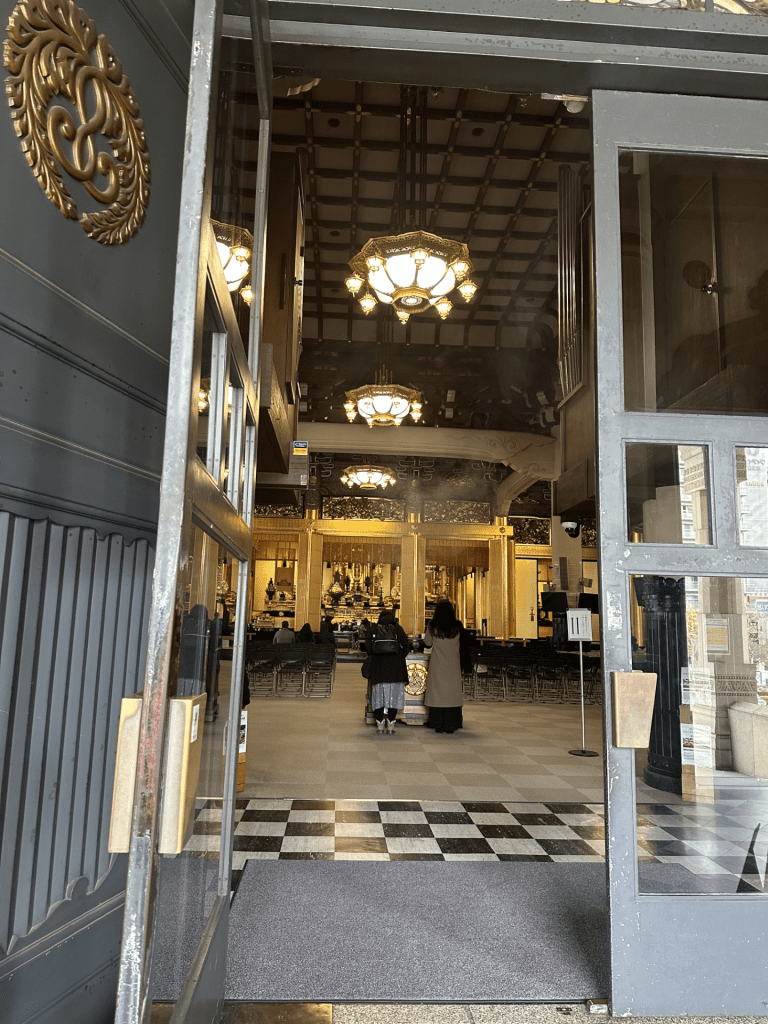
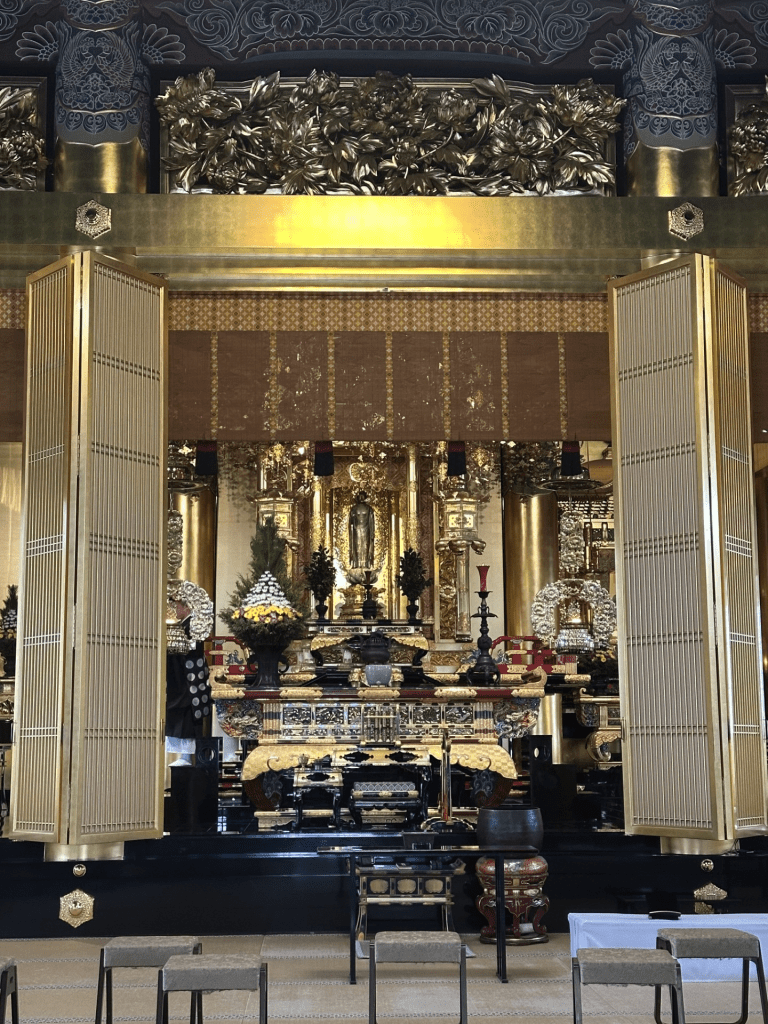
Tsukiji Hogan-ji Temple in Tokyo
Picture caption: Tsukiji Hogan-ji Temple in TokyoPicture caption: Doors to the Tsukiji Hogan-ji Temple in TokyoPicture caption: A peep through the temple entrance doorPicture caption: A man doing the cleansing ritual before entering the templePicture caption: The alter at the Tsukiji Hogan-ji Temple in Tokyo
Dora gave the poetry challenge ” Use within your poem a familiar word(s) or phrase(s) from a language other than English, transliterated if using a non-Roman alphabet, which you feel expresses a distinctively peculiar thought or emotion.”
Ubuntu is a term from the Nguni Bantu languages of Southern Africa, which encompasses a philosophy emphasizing the interconnectedness of individuals within their communities and the broader world. The word “Ubuntu” is often translated as “I am because we are” or “humanity towards others”.
Ubantu
I am because you are
communal existence is vital
to our collective survival
I am interconnected
to my surroundings
and to all humanity
By showing kindness to others
I make the world more welcoming
My environmental choices
ensure a better future for us all
and gives a voice to the voiceless
through proactivity in political and social matters
I help resolve injustices peacefully
Helping others is important to me
whether through donations or time
it all helps make my society better
Most importantly
by thinking before I act
I am a positive contributor to this planet
South Africa is a melting pot of interesting and vivid cultures.
This is my video of traditional Zulu dancing on New Year’s Eve:
My reading of a traditional Zulu story:
In this video you can hear the undulating call of the women:
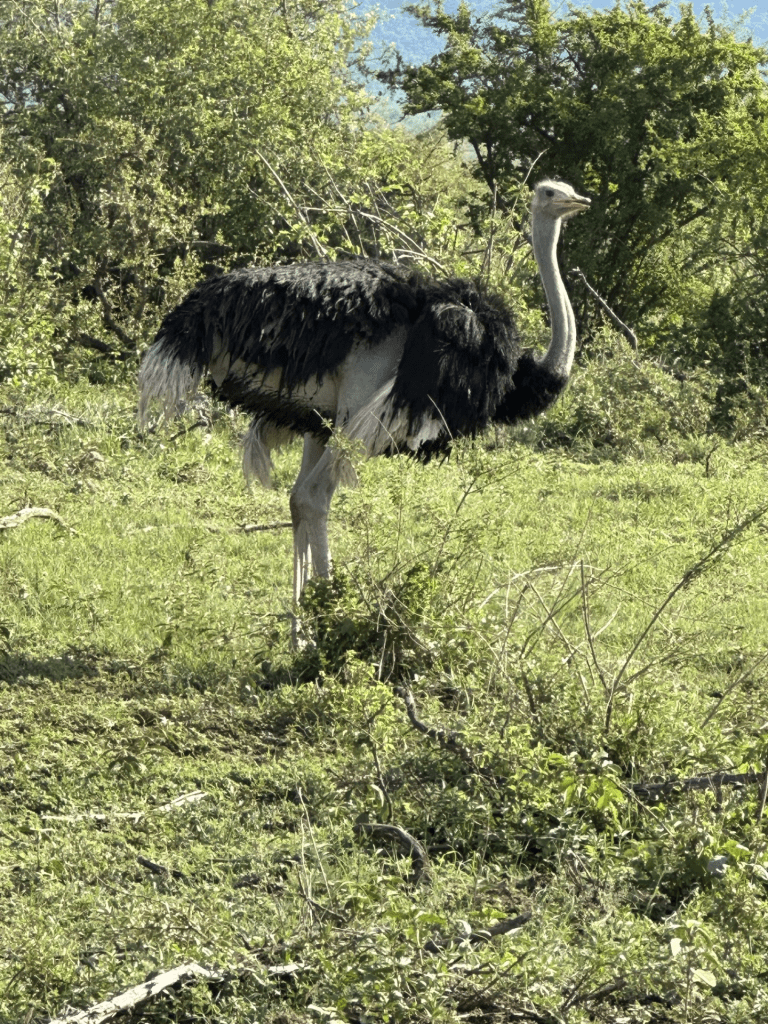
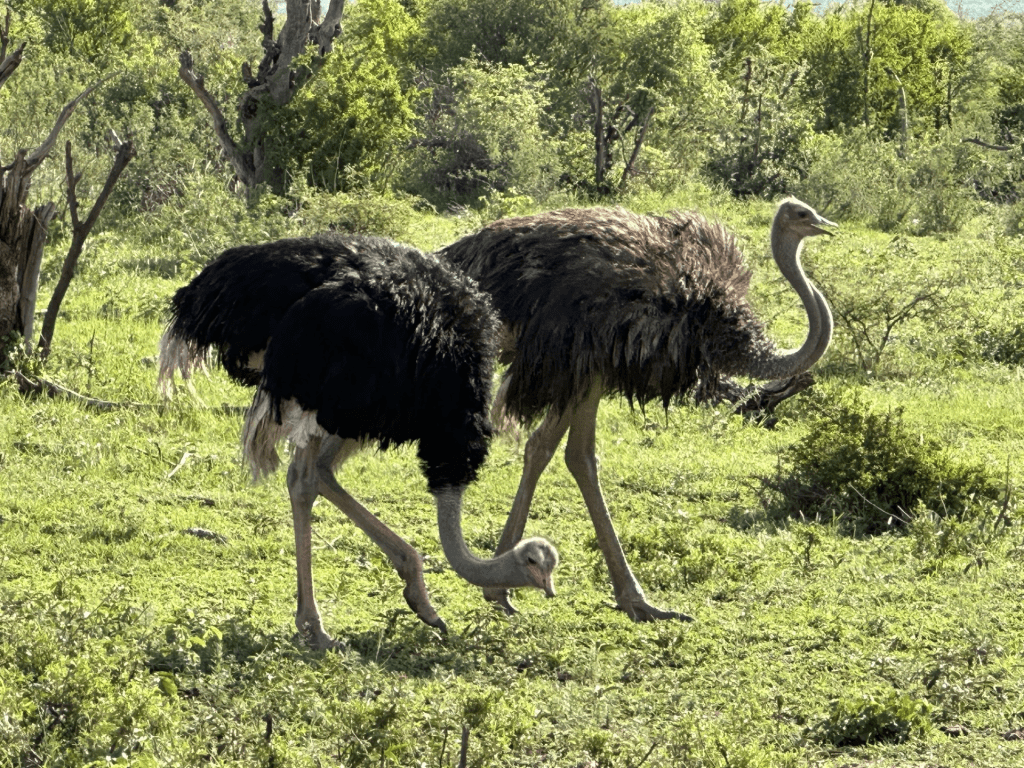
Merril asked poets to write a piece of prosery, no longer than 144 words, using a specified phrase from the poem “The Magnificent Frigatebird” by Ada Limón. I used the phrase as a heading for my piece. I wrote an initial piece and then I edited it down to achieve the 144-word requirement. I have included both pieces as the longer pieces includes a lot more details about one of my favourite birds, the ostrich. You can join in here: https://dversepoets.com/2025/05/12/prosery-ada-limon/
“I have no skills for flight or wings to skim the waves effortlessly, like the wind itself.”
This is the 144-word piece:
“Mama, why can’t we fly. We’re birds, aren’t we? All the other birds can fly.”
“Well, Little One, we are ostriches. We don’t need to fly. We have evolved to become flightless.”
“But Mama, I want to fly. I want to be the same as my friends. I don’t like being different.”
“You should be proud to be part of a species of bird that has adapted so well to its desert home. It’s more useful for us to have speed and endurance. We can sprint at over 70 kilometres an hour.
“And we do use our wings, we just don’t use them to fly.”
“I remember how you sheltered me and my siblings from the rain and the sun with your wings, Mama. Thank you for explaining. I feel much better now and I’m going to tell my friends how special I am.”
This is the longer and more detailed piece:
“Mama, why can’t we fly. We’re birds, aren’t we? All the other birds can fly, even my friend the kori bustard.”
“Well, Little One, we are ostriches. We no longer fly because we don’t need to. In the distant past we did fly but over time we have evolved to become flightless.”
“But Mama, I want to fly. I want to be the same as all my bird friends. They say I’m not a proper bird because I can’t fly and my wings are useless. It makes me sad.”
“Ostriches are proper birds, my son. You should be proud to be part of a species of bird that has adapted so well to its desert home. We don’t use our wings for flight because it was more advantageous for us to develop speed and endurance on the ground. You must remember that ostriches breed on the ground and we also take advantage of abundant ground-level food sources. Our main predators are hyenas and lions, so we need to be able to outrun them. And we can outrun them. We are the fastest runners of any bird or other two-legged creature in the world. Did you know that? We can sprint at over 70 kilometres an hour.
“And we do use our wings. We don’t use them to fly, that is true, but we use our wings for many useful purposes. Our wings reach a span of approximately 2 metres and we use them in mating displays, to protect our chicks, and to cover the skin of our upper legs and flanks to conserve heat when it’s cold. We also use our wings as rudders to help us change direction while running.”
Little One cuddles up to Mama. “I remember how you sheltered me and my siblings from the rain and the sun with your wings, Mama. You are right, your wings were very important to protect us. Thank you, Mama, for explaining. I feel much better now and I’m going to tell my friends how special I am.”
Picture caption: Mama ostrich with brown and white feathersPicture caption: Papa ostrich with black and white feathersPicture caption: Mana and Papa ostrich together
The Pilanesberg mountain is an ancient volcanic structure, circular in shape, that rises from flat surrounding plains. It is formed by three concentric ridges or rings of hills, of which the outermost has a diameter of about 24 km.
“The crater of a long extinct volcano, where Pilanesberg is set, is a fascinating alkaline complex produced by volcanic eruptions some 1300 million years ago. It is one of the largest volcanic complexes of its kind in the world. Its rare rock types and structure make it a unique geological feature.”
It was very cold the morning we stopped at the viewing point for the Pilanesberg volcanic crater lake for tea.
Picture caption: TC and I in front of the lake and volcanic mountain ring viewPicture caption: The temperatures dropped so quickly the lake was steaming
This is my Youtube video of the mountain volcanic ring:
Picture caption: Red and white stripped bridge across a canal in Amsterdam. There are houseboats to the right of the picture Seven bridges sighting point on a canal in AmsterdamA boat coming through an enclosed bridge on a canal in Amsterdam













 roberta-writes.com