Author interview: Robbie Cheadle

Thank you, Esther Chilton, for hosting me on your blog today with this author interview. I really enjoyed answering your questions, especially What’s the hardest thing you find about being a writer?

Many of you will know the very talented author, Robbie Cheadle. I’m thrilled she agreed to be my author interviewee this week. In the interview, she tells us about her latest book, how she goes about her detailed research for each of her books, how she gets her ideas and much more.

Q. Your book Through the Nethergate, for young adults,was published in the summer. Can you tell us a little bit about it?

A. Through the Nethergate is essentially a story of the on-going battle between good and evil in the world. What differentiates this book from other books with a similar theme, is that there are a lot of historical characters woven into the storyline who tell their stories as part of the overarching storyline. In addition, technology and modern politics are tools used by the devil to manipulate people, on mass, into negative and potentially evil thinking.

Margaret is a young girl, recently orphaned and sent to live with her grandfather in an ancient inn in the English town of Bungay. Margaret has a gift whereby she can see ghosts and when she is in close proximity to them, they reincarnate. The inn is haunted by a number of ghosts who are all slaves to their evil master, Hugh Bigod, the most powerful of the phantoms. The ghosts hope to use Margaret’s gift to escape their eternal servitude, but things don’t go as planned when Hugh comes up with his own plan for Margaret. Margaret and the ghosts soon realise that Hugh’s evil is nothing in comparison to Lucifer, the guardian of hell.

Through the Nethergate by [Cheadle, Roberta Eaton]

Q. You clearly enjoy writing books with a supernatural theme. What do you most enjoy about writing in this genre?

A. From a very young age I enjoyed ghost stories and I started reading books by Stephen King and Peter Straub at ten years old. They scared me to death, but I loved them. My favourite stories were the ones about ghosts and other mythical creatures. I also enjoyed books based on “real-life” supernatural events like the story of the Mary Celeste and the ships and aeroplanes that have disappeared in the Bermuda triangle. I have a few books about South African ghosts which I have read many times over the years and which are treasured possessions.

I enjoy writing in this genre because ghosts interest me. I like to find out the basic details of a ghostly presence and then make up a story about their lives and how they died weaving in the true facts. I find this type of writing comes easily to me and I have lots of ideas for stories which makes it appealing to me.

Q. You also enjoy writing horror stories. Which do you prefer and why?

A. Many of my horror stories are also paranormal or supernatural in nature. It is easy for me to imagine the rage and anguish of a ghost who did badly and wants revenge on a person or group of people.

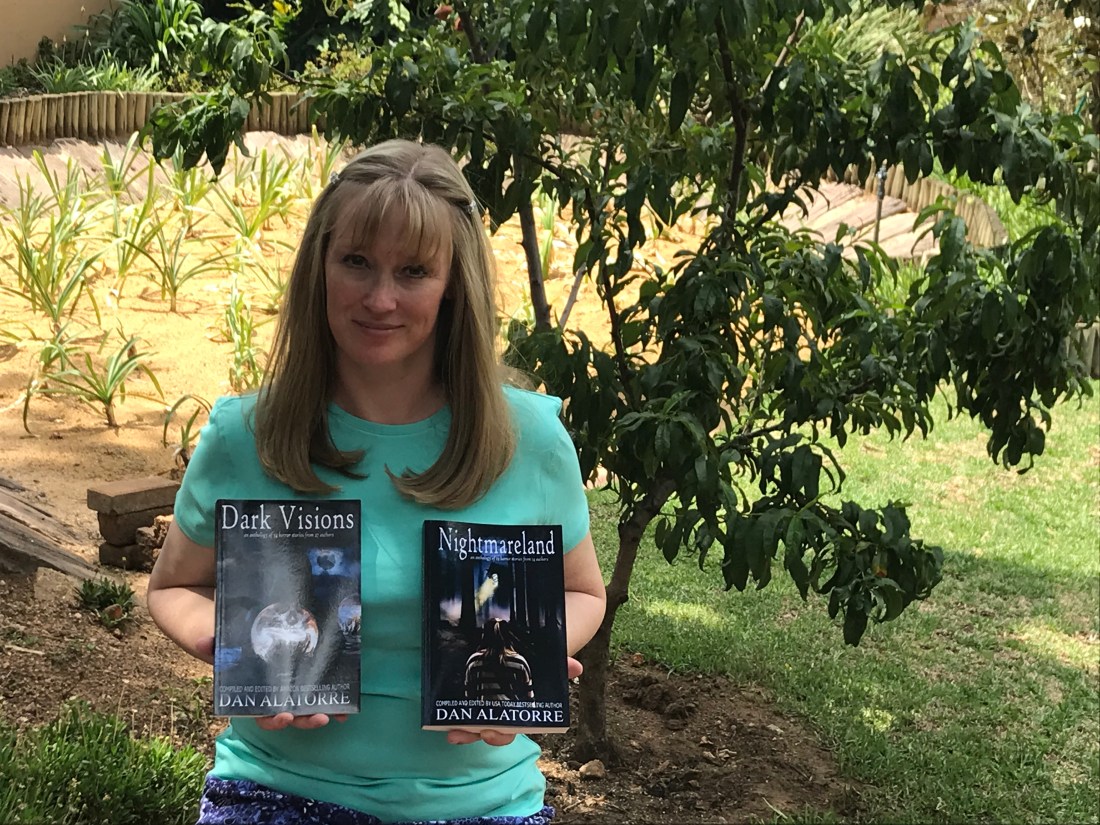
The first two horror stories I wrote for one of Dan Alatorre’s short story competitions were The Willow Tree and The Haunting of William, both of which appear in Dark Visions, a horror anthology, edited by Dan Alatorre. The Willow Tree is about a serial killer and is based on a real murder that occurred when I was a child and the bodies of the victims were found under a willow tree outside a shopping centre. I don’t recall any of the details, so this a fictionalised account, but the idea of bodies under willow trees haunted me for years afterwards. The Haunting of William was developed from a two-sentence account I read of a ghost who committed suicide after discovering she was pregnant and that her lover had left her.

The three short stories I wrote for inclusion in Nightmareland, the sequel to Dark Visions, are all paranormal horror stories. The Siren Witch is about a flesh eating witch who enchants her victims through her lovely singing and them murders them. A Death without Honour is about an escaped convict who murders a couple in the mountains near Paarl in South Africa. The Path to Atonement features a young girl who commits suicide and blames her employer and certain colleagues for her death. She sets out to destroy them all.

One of the two short stories published in Whispers of the Past paranormal anthology, edited by Kaye Lynne Booth is about a controlling grandmother who comes back to haunt her granddaughter after her death. This is my favourite of all the short stories I have written as I love the idea of this grandmother who was like Sinbad the Sailor’s “old man of the sea” during her life time. The other short story, Missed Signs, is about a boy who contracts rabies.

I don’t really have a preference, but I do seem to gravitate towards the paranormal in my historical and horror writing.

Carry on reading here: https://esthernewtonblog.wordpress.com/2020/01/17/author-interview-robbie-cheadle/
IMG_4344

#Booktour – A lovely review and the use of technology in Through the Nethergate

Thank you toThe Book’s the Thing blog for hosting me today for Day 4 of my Through the Nethergate book tour. This post includes a lovely review for Though the Nethergate as well as a post about the use of technology in the book. There is also a Giveaway you can enter from Brooke Blogs. Thank you to Great Escapes Book Tours for organising this tour.

Synopsis:

Margaret, a girl born with second sight, has the unique ability to bring ghosts trapped between Heaven and Hell back to life. When her parents die suddenly, she goes to live with her beloved grandfather, but the cellar of her grandfather’s ancient inn is haunted by an evil spirit of its own.

In the town of Bungay, a black dog wanders the streets, enslaving the ghosts of those who have died unnatural deaths. When Margaret arrives, these phantoms congregate at the inn, hoping she can free them from the clutches of Hugh Bigod, the 12th century ghost who has drawn them away from Heaven’s White Light in his canine guise.

With the help of her grandfather and the spirits she has befriended, Margaret sets out to defeat Hugh Bigod, only to discover he wants to use her for his own ends – to take over Hell itself.

cc44b-divider

Through the Nethergate is a young adult paranormal story revolving around a young girl, Margaret, who moves into her grandfather’s inn and is confronted with an abundance of spirits. The majority of these spirits only want Margaret’s help to set them free, but she will discover that some have much more sinister plans for her.

I found this young adult novel to be a quick, entertaining read. Margaret is a brave young woman and someone it’s easy to root for. Some of the spirits come straight out of the history books, which makes them that much more engaging. I think most middle-grade and younger teens with a taste for spooky stories will really enjoy this one.

I feel privileged to be able to share with you the following guest post from the author, Roberta Eaton Cheadle.

The use of technology in Through The Nethergate

One of the recent reviews for Through the Nethergate states the following:

“Another interesting aspect of the book is the way technology is identified as a vehicle for evil. Hell looks like an office building full of cubicles. Cheadle ties in current events including the war in Syria, mass shootings, xenophobia, economic disenfranchisement, and “fake news” – all the work of the devil.” – Amazon review

I made use of a lot of different types of technology in Through the Nethergate. I chose to do this when writing this book for young adults, as technology is what makes our modern world go around. It is hard for me to believe, looking back over my life, that I received my first computer when I started my articles for my training as a chartered accountant when I was 24 years old. Prior to that, I didn’t have a computer and all my work for school and university was done by hand. Nowadays, I can’t imagine you could manage a university course without access to a laptop, the internet and possibly a cell phone.

Finish reading here: https://booksthething.com/2020/01/18/through-the-nethergate-by-roberta-eaton-cheadle-guest-post-giveaway/

#Booktour – Characterization: Katharine de Montacute and a review

THROUGH-THE-NETHERGATE-BANNER-640

I am over at I Read What You Write blog with a guest post: Characterization: Katharine de Montacute, one of the ghostly characters from Through the Nethergate, and there is a lovely review of the book included. Thank you to I Read What You Write for hosting me and to Great Escapes Book Tours for organising this tour. You can find the details here: https://www.escapewithdollycas.com/great-escapes-virtual-book-tours/books-currently-on-tour/through-the-nethergate-by-roberta-eaton-cheadle/

Characterization: Katharine de Montacute
by Roberta Eaton Cheadle

Katharine is a young girl born in the 14th century to a wealthy family dominated by her grandfather, Sir Edward de Montacute. She is a beautiful girl and has a wonderful life with a secret admirer who she hopes to marry until her father decides to enter her into the Benedictine Priory in Bungay. She feels obligated to follow her father’s wishes and joins the Priory as a novice.

Katharine hates life in the convent as she is in love with her admirer, William, and devoted to her family. She struggles to adjust to losing them all and being compelled to devote her life to prayer and charity. She manages to make contact with William from within the convent and they make a plan for her to escape and for them to run away together. Naturally, this does not work out as intended or hoped, and it ends in the death of Katharine. Her resentment at the time of her unnatural and harsh death, enables Hugh Bigod, the black dog of Bungay, to pursue her to turn away from Heaven’s white light and remain in the Overworld as a ghost. Katharine joins the ranks of Hugh Bigod’s ghostly slaves.

Katharine meets Margaret fairly early in the book and, as a result of this meeting, reincarnates and regains her physical form.

She is an intelligent woman, but is a product of her time and is physically and emotionally submissive to firstly, her father and subsequently to William and then Hugh Bigod. Her intelligence is demonstrated when she takes the lead in explaining the situation to Margaret’s grandfather after she is kidnapped and also takes the initiative in going to fetch Father Merton when he is identified as the man who can help them with their difficult situation. She is also the incarnate that gives Margaret the information about how Hugh Bigod would possibly be overthrown.

Katharine is empathetic and feels terrible when she realises that the ambitions of the ghost to use Margaret’s powers to help them escape their eternal servitude has put her in danger. Her guilt is exposed during her conversation with Father Merton at his rectory:

“Katharine had finished speaking and was looking at him. Her lower lip trembled and tears formed in her luminous eyes. “I feel so guilty. Our desire to be free of the Master caused this.
Our servitude was our own choice. We then chose to ask Margaret for help to free our spirits and now she’s been taken.””

Continue reading here: https://ireadwhatyouwrite.wordpress.com/2020/01/16/guest-post-characterization-katharine-de-montacute-by-roberta-eaton-cheadle/

TTNG 15

#Booktour: Through the Nethergate – The Main Ghostly Characters + Giveaway

Thank you to Brooke Blogs for hosting me today for Day 1 of my Through the Nethergate book tour. This post is about the main ghostly characters in the book. There is also a Giveaway you can enter from Brooke Blogs. Thank you to Great Escapes Book Tours for organising this tour.

Through the Nethergate by Roberta Eaton Cheadle – The Main Ghostly Characters + Giveaway

This post contains affiliate links. If you make a purchase using that link, I will receive a small commission from the sale at no cost to you. Thank you for supporting Brooke Blogs!

THROUGH-THE-NETHERGATE-BANNER-640


Through the Nethergate by Roberta Eaton Cheadle

Margaret, a girl born with second sight, has the unique ability to bring ghosts trapped between Heaven and Hell back to life. When her parents die suddenly, she goes to live with her beloved grandfather, but the cellar of her grandfather’s ancient inn is haunted by an evil spirit of its own.

In the town of Bungay, a black dog wanders the streets, enslaving the ghosts of those who have died unnatural deaths. When Margaret arrives, these phantoms congregate at the inn, hoping she can free them from the clutches of Hugh Bigod, the 12th century ghost who has drawn them away from Heaven’s White Light in his canine guise.

With the help of her grandfather and the spirits she has befriended, Margaret sets out to defeat Hugh Bigod, only to discover he wants to use her for his own ends – to take over Hell itself.

NEVERGATE draft 1

Goodreads | Amazon | TSL Publications | Lulu


The main ghostly characters in Through the Nethergate

One of the recent reviews for Through the Nethergate states the following:
“This book is filled with historical tidbits told through the spirits point of view that I found completely fascinating. The author seamlessly integrates religious beliefs and historical data with immersive storytelling.” – Goodreads review

The above extract encapsulates exactly what the ghosts’ stories were intended to do, which is to immerse the reader in each ghost’s history and personal circumstances, thereby, making the reader care about them and take an interest in their future. The ghost’s come from different historical periods, but all share the facts that they are English, and they died bad deaths which resulted in their turning away from Heaven’s White Light and following the Black Dog. This choice results in their becoming enslaved to the spirit of the evil Hugh Bigod, who assumes the shape of the Black Dog of Bungay.

I learned about the various ghosts that are purported to haunt the English town of Bungay, while doing some research for the fictionalized biography I wrote about my mother’s life. One of the old inns in the town is believed to be haunted by twenty ghosts. Through the Nethergate was originally going to be a book of short stories providing a fictionalized account of the deaths of each of these ghosts, but as I wrote, the story evolved into a continuous story where the ghosts all help the heroine, Margaret, to overcome their evil master, and eventually, the devil’s goal for world domination.

The first ghost Margaret meets is Lizzie Bowlyngewho died in 1590. She was a twelve-year-old servant girl who worked at the Inn. She was caught stealing a quart jug of ale from a barrel in the cellar of the original inn and, as a punishment, she was chained to the cellar walls and left to starve to death. There is a plaque in the existing inn commemorating Lizzie’s death.

Continue reading here: http://www.brookeblogs.com/through-the-nethergate-by-roberta-eaton-cheadle-the-main-ghostly-characters-giveaway/

#Bookreview – The Thorn Birds

Book reviews

What Amazon says

“Beautiful….Compelling entertainment.”
New York Times

“A heart-rending epic…truly marvelous.”
Chicago Tribune
One of the most beloved novels of all time, The Thorn Birds, Colleen McCullough’s sweeping family saga of dreams, titanic struggles, dark passions, and forbidden love in the Australian Outback, returns to enthrall a new generation.

My review

The Thorn Birds is a book from my past, a sweeping story about the frailty of human lives and relationships. Set on the fictional sheep farm of Drogheda, in the Australian Outback, it features the loves of three generations of the Cleary family and covers the period from 1915 to 1969.

Meghann “Meggie” Cleary is the only daughter of Paddy, a poor sheep shearer living in New Zealand, and Fee, from an aristocratic and wealthy background. When we are introduced to Meggie, her parent’s already have five other children, all boys, and her overworked mother has little time for her. As the story starts to unfold, Fee’s devotion to her oldest son, Frank, who looks nothing like her other children, and her distant attitude towards her husband and other children, particularly, her daughter, become apparent and the reader guesses there is more to Fee’s story than meets the eye in the initial pages of the book.

Patrick Cleary’s older sister, Mary Carson, is an enormously wealthy widow who owns a sheep farm in the Australian Outback and who has no children, asks him to move with his family to Drogheda with a view to his inheriting the property on her death. Patrick is delighted to have his financial woes resolved in this manner and his family moves. When they finally arrive at the train station in the closest town, after a long and trying journey, they are met by Father Ralph de Bricassart, a man with ambition who has made the mistake of upsetting a powerful person in the Catholic Church, with the result that he has been sent away to this small town in Australia. Father Ralph is an extraordinarily good looking and dashing man and he sweeps all the ladies, including Mary Carson, off their feet. Father Ralph befriends the lonely, but difficult, Mary Carson in the hope that she will change his fortune in the future by bequeathing a part of her wealth to the church. Father Ralph is immediately taken with Meggie and befriends the lonely and neglected girl.

The relationship between Meggie and Father Ralph gradually grows into one of mutual love and desire, but Ralph is ambitious and wants to climb the hierarchy within the church. When offered the choice by Mary Carson to attain power and standing within the church or let Paddy’s family inherit what was rightfully theirs and stay in Australia with Meggie, he chooses the church. This fateful decision effectively destroys his life as it creates a legacy of mental torment. It also damages Meggie’s life as she marries a selfish man because he strongly physically resembles Father Ralph. I am not saying it destroyed her life as she had a lovely daughter, Justine, with her husband, Luke O’Neil, and also has a love child with Father Ralph, although the identify of Dane’s father is her secret for many years and he is generally believed to be Luke’s son.

This is a story of how the wrong choices and selfish desires can destroy a man’s life and the lives of those around him. It is a sad tale, but not tragic, as Meggie does have her children.

It was interesting to re-read this book at this particular time when fires are rampaging through Australia. This book describes a terrible bush fire which claims the lives of both Meggie’s father and one of her brothers. There are other losses experiences by Fee and Meggie as they both loose Meggie’s younger brother, Hal, who dies of a respiratory ailment as a small child. His loss devastates Meggie who has been his primary caregiver. Fee looses her son, Frank, for most of the book, but he does return to her towards the end. Meggie also suffers other losses, but you will need to read this book for yourself to discover what those are.

The losses suffered by both Fee and Meggie are redeemed in the end through the culmination of a love affair between her daughter and the man she loves so the book ends on a happy note.

Purchase The Thorn Birds

Other

Through the Nethergate is going a book tour starting today. Here are the tour details if you would like to learn a bit more about this book:

TOUR PARTICIPANTS

January 15 – FUONLYKNEW – SPOTLIGHT

January 15 – Brooke Blogs – GUEST POST

January 16 – MJB Reviewers – SPOTLIGHT 

January 16 – I Read What You Write – REVIEW, CHARACTER GUEST POST 

January 16 – This Is My Truth Now – REVIEW

January 17 – Literary Gold – AUTHOR INTERVIEW

January 17 – A Chick Who Reads – REVIEW

January 18 – The Book’s the Thing – REVIEW, GUEST POST

January 18 – Reading Authors – REVIEW

January 19 – fundinmental – SPOTLIGHT

January 20 – eBook addicts – REVIEW

January 20 – I’m All About Books – SPOTLIGHT

January 21 – Ruff Drafts – REVIEW

January 21 – Diary of a Book Fiend – REVIEW

January 22 – Readeropolis – AUTHOR INTERVIEW

January 23 – A Wytch’s Book Review Blog – CHARACTER INTERVIEW

January 23 – Diane Reviews Books – CHARACTER GUEST POST

January 24 – StoreyBook Reviews – GUEST POST

January 24 – Celticlady’s Reviews – SPOTLIGHT

#Flashfictionchallenge – Pushing her

Her challenges were not visible. She had no wheelchair, guide dog, prosthesis or hearing aid. It would have been easier if they were visible.

She carried herself with aplomb. Engaging well with her colleagues and clients. Sometimes she was aggressive, but it wasn’t noticeable to people who did not know her well.

It was inside her brilliant mind that the cracks lurked. Gaps in her mental processes that stopped some of the usual though connections from happening.

Her husband plastered over the cracks and built bridges to breech the gaps. He carried her; pushing her in a mental wheelchair.

This was written for the Carrot Ranch Flash Fiction Challenge:

January 9, 2019, prompt: In 99 words (no more, no less), write a story about a carried wife. Why is she being carried? Who is carrying? Pick a genre if you’d like and craft a memorable character. Go where the prompt leads!

You can join in here: https://carrotranch.com/2020/01/10/january-9-flash-fiction-challenge/

Back to the classics challenge 2020

I have signed up for the Back to the Classics Challenge 2020, hosted by Karen from Books and Chocolate blog. The categories I have chosen for the challenge, together with my book choice, are set out below:
THE CATEGORIES: 
 
1. 19th Century Classic. Any classic book originally published between 1800 and 1899.
I am going to read Far from the Madding Crowd by Thomas Hardy published in 1874. 
2. 20th Century Classic. Any classic book originally published between 1900 and 1970. All books in this category must have been published at least 50 years ago. The only exceptions are books that were published posthumously but were written at least 50 years ago.
I am going to read The Screwtape Letters a Christian apologetic novel by C.S. Lewis and dedicated to J.R.R. Tolkien. It was first published in February 1942.
 
3. Classic by a Woman Author.
I am going to read The Tenant of Wildfell Hall by Anne Bronte. This is the one book by the Bronte sisters I have not read so I am ceasing the opportunity to do so
 
6. A Genre Classic. Any classic novel that falls into a genre category — fantasy, science fiction, Western, romance, crime, horror, etc.
I am going to read Lord of the Flies, written by William Golding and published in 1954. It is an allegorical novel.
7. Classic with a Person’s Name in the Title. First name, last name or both. Examples include Ethan Frome; Emma; Madam Bovary; Anna Karenina; Daniel Deronda; David Copperfield, etc.
Greg is reading The Great Gatsby by F. Scott Fitzgerald as a set work this year, so guess which book I chose [hehe]. I am also going to read Lord Edgeware Dies by Agatha Christie because I fancy a bit of Aggie. 
 
8. Classic with a Place in the Title. Any classic with the proper name of a place (real or fictional) – a country, region, city, town, village, street, building, etc. Examples include Notre Dame de Paris; Mansfield Park; East of Eden; The Canterbury Tales; Death on the Nile; etc.
I am going to read Death on the Nile by Agatha Christie. Not because it is mentioned here, but because I am currently listening to Evil under the Sun and there are references to Death on the Nile. 
9. Classic with Nature in the Title. A classic with any element of nature in the title (not including animals). Examples include The Magic Mountain; The Grapes of Wrath; The Jungle; A High Wind in Jamaica; Gone With the Wind; Under the Volcano; etc.
I am going to read Animal Farm by George Orwell published on 17 August 1945
If you are interested in reading classics, you can join in this challenge here:

https://karensbooksandchocolate.blogspot.com/2020/01/back-to-classics-challenge-2020.html

Happy reading!

#Bookreview – Vanished by Mark Bierman

Book reviews

What Amazon says

Tragedy . . . heartache . . . how much more can Tyler Montgomery and John Webster take? This missions trip, the “healing” one, has only added fresh layers of pain. Construction of an orphanage in Haiti’s northwest . . . yes. But a doomed rescue operation, human traffickers, human anomalies, extreme personal danger . . . risk of death? They hadn’t signed up for those.
Turning their backs on the crisis, however, is unthinkable, it’s just not who they are.

My review

This is a book about child trafficking, in this particular case, in Haiti, post the destructive earthquake of 2010. This topic is not a new one, but I thought the execution of this story was rather unique in its demonstration of the impact that child trafficking has on all the people involved, from the victims to their families, relationships between the abducted children, older people who have been in slavery most of their lives and external people who aim to rescue a particular child or children, if possible.

John and Tyler are two Americans who have come to Haiti as part of the volunteer relief programme post the earthquake. John is Tyler’s deceased young wife’s father and they have both come to Haiti seeking to exercise the demons resulting from Joy’s death from pancreatic cancer. When the seven-year old daughter, Chantale, of the housekeeper where they are staying is abducted by child traffickers, they become embroiled in trying to find the child. It becomes a burning obsession for Tyler who believes it will help eradicate some of the guilt and pain he feels about his wife’s death.

I liked the characters of both John and Tyler, they felt very real and came across as really nice and caring men. The one aspect relating to both of them that really stuck out for me is how real their behaviour and decisions were in this book. They both made some decisions that were impulsive and ill advised and they paid the price by ending up in difficult situations. There were no unlikely sets of circumstances that gave them an easy out of their self induced problems and their struggles were reasonable and gave the story a ring of reality and authenticity.

The conflict in the personality of supporting character, Janjak, also had a ring of truth. Janjak lived a hard life and has been in prison. He was most fortunate to escape prison with his life when the earthquake occurred and many of the prisoners died in their underground jail. Janjak needs money and is prepared to rob the privileged Americans, John and Tyler, but he is not prepared to commit murder. He also has a good heart and is grieved by the surge of child trafficking in his country and its surrounds. His pity for the children leads him to eventually helping John and Tyler on their mission to save Chantale.

There are a couple of side stories running through the book, including the story of a fifteen year old girl who has been in slavery for many years and manages to escape with a friend and is on the run. The circumstances surrounding the wife of the psychotic ring-leader of the child traffickers, who is herself an abducted child and is a slave to her husband and a social worker, called Violine, who tries to help John and Tyler with their mission and who has all sorts of unknown relationships.

This is a fast paced book, full of action and excitement, but with a heart rending underlying theme.

Purchase Vanished by Mark Bierman

#Openbook – My favourite childhood book

IMG_0494

My favourite childhood book? This is a tough question. I have been an avid reader since the age of four years and have so many favourite books that narrowing it down to one seems quite impossible.

So instead of trying to determine which of The Enchanted Wood series; The Mallory Towers series; the St Clare series and the Wishing Chair series all by Enid Blyton or the Sue Barton series; the Pollyanna series; the Anne of Green Gables series or the Emily of New Moon series was my actual favourite [you get the idea of how hard this is], I am going to tell you about two of the books I remember having the biggest impact on me from my childhood.

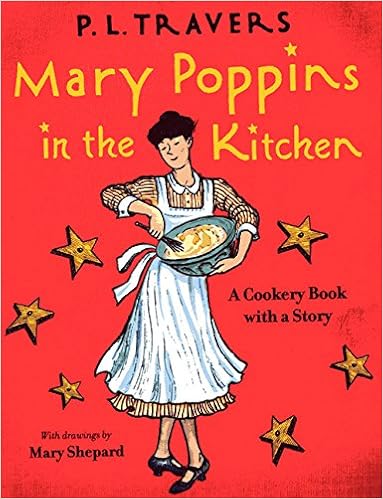
Mary Poppins in the kitchen: A cookery book with a story

Blurb

Get a unique glimpse at the famous Poppins cast as the spit-spot English nanny and the Banks children take over the kitchen for a week. With the help of familiar visitors like the Bird Woman, Admiral Boom, and Mr. and Mrs. Turvy, Mary Poppins teaches her irrepressible young charges the basics of cooking, from A to Z. And young readers can re-create the week’s menus by following the thirty different recipes. Kitchen adventures were never so much fun!

In full color for the first time, this enchanting new edition will delight both old and new fans of the inimitable Mary Poppins.

Impact on me

I remember my three younger sisters and I have amazing fun making up these recipes. We had a little oven that worked with globes and cook tiny trays of food. We spend many pleasurable hours reading this book together and mixing up the recipes for our many tea parties.

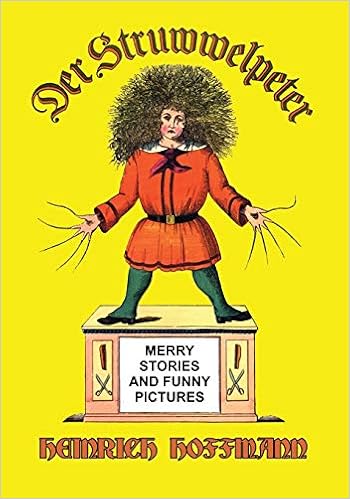
Der Struwwelpeter (English version)

The blurb

FULL COLOR, ENGLISH TRANSLATION. By Heinrich Hoffmann. First published in 1845, Der Struwwelpeter is without question one of the most popular children’s books ever written.

Each of its ten illustrated rhymes contain clear moral lessons—and shows, in an exaggerated way, the consequences of bad behavior.

Read about the boy who would not brush his hair or cut his nails—Shockhead Peter.

Read about the boy who would not stop sucking his thumbs.

Read about the boy who would not eat.

Read about the boy who would not look where he was going. . .

And many more!

A great classic which children of all ages will enjoy time and time again.

This edition contains all original 25 color images, and the special bonus image created for the books 100th edition in 1876.

Impact on me

This book is weird and creepy and it scared me to death when I was given a copy as a young girl. Strangely though, it fascinated me, and I read it over and over again. My favourite of these stories was called Harriet and the matches. I found it as a Youtube video:

If you listened to this video, you will understand what I mean by weird and creepy and why this scared a small girl of about eight years old. What were my parents thinking? Well, my dad had this book when he was a young boy so why would he think it was an odd choice of gift for his daughter who loved to read. Maybe this book is the reason I can think of such spooky and creepy stories now that I am an adult.

Would you give this book to your child? Let me know in the comments.

This post was written for #OpenBook blog hop. You can join in here:

You are invited to the Inlinkz link party!

Rules:
1. Link your blog to this hop.
2. Notify your following that you are participating in this blog hop.
3. Promise to visit/leave a comment on all participants’ blogs.
4. Tweet/or share each person’s blog post. Use #OpenBook when tweeting.
5. Put a banner on your blog that you are participating.

#Writephoto – Fume

From their advantageous position above the town, Robert watched an engine run two trucks full of dynamite that had standing in the railway station, up to a northern siding. Wise to get those clear of the town.

As he watched, the Boers engaged the engine and trucks about eight-miles from the town, firing on them with field guns. From a distance, he could see the engine moving back towards the town. The Boers continued to bombard the trucks, obviously thinking they were full of soldiers. The dull booming report of their guns floated on the still air.

Moments later, the trucks exploded with a tremendous whirr-rump sound. The enormous sound rolled across the barren countryside like thunder. The two balls of flame that had been the trucks burned with a brightness that Robert couldn’t look at. Dark, oily fumes rose in the air, fanning out into a huge mushroom cloud that hovered above the veld like a malevolent genie in a children’s storybook.

The tiny figures of the Boers scattered, all running in different directions. Out of the corner of his eye, Robert caught Richard gazing in astonished horror at this unexpected inferno. He put a comforting arm around his shoulders. “Go down to the town and tell them what has happened.” The look of relief and gratitude in Richard’s eyes causes Robert’s own eyes to mist up slightly. It is a terrible thing that these young boys have to witness such vicious scenes of death and destruction.

Later that afternoon, Robert was among the men who went out in the armoured train to inspect the damage. A large hole in the ground, surrounded by displaced earth and twisted chunks of metal, denoted the site, but, as the tracks had been pulled up, the train had to stop some distance away. A group of Boers mounted on horses, were gathered around the hole. Robert and his peers proceeded to fire on the gathering with a Maxim from the cover of the train. Two fell from their horses in a shower of red and the remainder hurriedly galloped away towards their laager to the north east of the town.

I have shared this short extracted from the as yet unedited A Ghost and His Gold for Sue Vincent’s weekly photo challenge. You can join in here: https://scvincent.com/2020/01/02/thursday-photo-prompt-fume-writephoto/