#Openbloghop – What did you want to be when you grew up vs. what you are today?

Robbie photo 2

I can remember, when I was a little girl of about eight years old, wanting to be a native American princess. In those days, I would have said an Indian princess. I was given an authentic Indian doll by an uncle who had traveled to the USA and brought this back as a gift for his doll loving niece. I remember that her clothing was all made of real leather and she had traditional beadwork decorations. I was totally fascinated by that doll and for weeks afterwards I forced encouraged my younger sister, Cath, to play Indian princesses with me. We had names; I was Princess Cherry Blossom and she was Princess Peach Blossom. We used to dress up as Indian girls and play outside in the sunshine for hours.

By the time I was twelve, my vision of the future had changed and I wanted to be a poet, just like Emily in the book Emily of New Moon by L.M. Montgomery (also the author of Anne of Green Gables]. My poet and writing stage went on for a few years as I was still writing verses and bits of prose during my second year of high school. The year I turned fourteen, I had to select six subjects at high school to study to matric, my final year of school. This was serious stuff and I chose sensibly: English, Afrikaans (compulsory second language), Maths, Physical Science, Accountancy and History. The easiest subjects that required the least effort from me were English, Maths and Accountancy, but when I finished school I had no real idea about what I wanted to study.

I went to secretarial college for a year and learned short hand and typing as well as bookkeeping and Business English. These were all fairly easy for me and I passed all my courses with distinction. The course didn’t challenge me and I had a bit of a wild year with lots of partying.

I got a job as a junior bookkeeper and it was horrible. So boring and repetitive. After two years of working during which I changed my job eight times, I decided to go to university. I did a psychometric test and it came back that I should study to be a chartered accountant so that is what I did. I studied correspondence through a local part time university and worked as a manager at a local video shop for the three years of my undergrad degree in accountancy and auditing. After passing my degree with distinction, I applied to start my articles at KPMG Inc. in Johannesburg. I was accepted and the firm paid for me to study my honours degree part time. I passed that and then went on to study and pass my board examinations. It was during my first year of articles that I met my husband, Terence, who was completing his final year of articles.

That is my story of how I ended up becoming a chartered accountant. I did two years of articles and then I moved into corporate finance. At that time if you had all your core hours and competencies you could move after two years of auditing. I loved corporate finance and soon moved into stock exchange work. I gradually became an expert in this area and wrote a series of several publications on investing into Africa and the listing, debt and other requirements in the various countries. This work introduced me to the world of writing and publishing and from there I branched into writing for children. That, of course, is a whole other story so I shall stop here with the story of my paid job and work.

What did other blog-hoppers want to be when they grew up?  Click the link below to find out, or just add a comment:

Rules:

  1. Link your blog to this hop.
  2. Notify your following that you are participating in this blog hop.
  3. Promise to visit/leave a comment on all participants’ blogs.
  4. Tweet/or share each person’s blog post. Use #OpenBook when tweeting.
  5. Put a banner on your blog that you are participating.
You are invited to the Inlinkz link party!

#Writephoto – Together

This is not my usual response to a write photo prompt. Usually, I write a story inspired by the word or picture or post an extract from my WIP that ties into the prompt. Today, however, I thought I would write a stream of consciousness piece about togetherness.

South Africa went into lock down at 12pm on Thursday, 26 March for 21 days until Thursday, 16 April. Our lock down is overwhelming as it prohibits walking your dog, jogging, purchasing cigarettes or alcohol or going out of your garden for any reason other than to purchase essential items such as medication or food or visit the doctor. We are now half way through the 21 days. Has it helped? I don’t know. Our numbers of infections are not high, just over 1 500 and we have had 9 deaths. Our minister of health is telling us not to think we are out of danger because of the relatively low new infection figures. He seems to think this may be the calm before the storm and I tend to agree.

With regards to togetherness, lock down has resulted in constant togetherness. I have my boys here at home, all day long, everyday. They need help with their home schooling work and they are continuously hungry or thirsty or bored. My husband is also at home with us which means that my dining room, where I always work when at home, is full with four of us all spread out over our 16-seater table. Everyone has at least one computer [I have two] and Terence and I have an additional large screen each. Everyone has an ipad and an iphone [I have two]. All of these devices require power so the floor is full of cables. The table is heaped with school books and my research as well as my work manuals and legal books. I find it quite cloying as everywhere I go, every time I turn around, I seem to trip over someone. First world problems I know, but I still find it difficult.

My parents are also here with us and they spend quite a bit of time in our house [they have their own cottage down the pathway] and have all their meals with us. If I want to film a video, someone will come in half way through and the interruption will have to be edited out. It feels like Park Lane Railway Station. If I make a cup of tea, everyone wants one, if I bake, someone wants to help; even cleaning the house has become an event that everyone becomes involved in. Everyone is trying to be helpful and it is wonderful, but I am finding it a bit overwhelming. To much togetherness. My husband and sons are taking turns at waking up early because they are not sleeping well. This means that even my peaceful early morning blogging and writing time is interrupted and I have to stop and listen to the overnight Corona virus statistics and everything else that relates to this virus while trying to kill my ghosts and save my main characters.

So there is a lot of togetherness at the moment. Quite difficult for an introvert like me who needs time out to recharge. It is better to be together than to be alone I am sure and I love having time with my family, it is just adding to this general feeling of weirdness I have. The knowledge that everything in the world is not right.

How are your dealing with lock down? Are you enjoying the togetherness or are you alone? Tell me in the comments.

This post was inspired by Sue Vincent’s weekly write photo challenge. You can join in here: https://scvincent.com/2020/04/02/thursday-photo-prompt-together-writephoto/

Flashfiction – Into the past prompt

Into the Past Prompt: In 99 words (no more, no less), write a story about people who tell the truth in the face of many lies. Don’t feel constricted to coronavirus or the 1918 flu pandemic, but feel free to use any of the information presented here.

Here is my piece with is about the Second Anglo Boer war which is the focus of my WIP:

A silence fell, and Robert thought again about the Boer from the trench. The man was no different from many of Robert’s counterparts in Mafeking. He was probably more educated than many of the British troops. Robert thought about the pro-war propaganda he had seen in England during his recent trip home and the demonization of the Boers who had gone from being “Brother Boer” to “Dirty Boer” due to the imminent war.

The anti-Boer campaign was part of a campaign by government to dehumanise the Boers in the eyes of the British public. Most of it was lies.

You can join in here: https://carrotranch.com/2020/03/31/into-the-past-the-not-so-spanish-spanish-flu/

#Bookreview – The Great Gatsby by F. Scott Fitzgerald

I have signed up for the Back to the Classics Challenge 2020, hosted by Karen from Books and Chocolate blog.

If you are interested in reading classics, you can join in this challenge here:

https://karensbooksandchocolate.blogspot.com/2020/01/back-to-classics-challenge-2020.html.

BacktotheClassics2020Blue

The Great Gatsby is my fourth book for this challenge.

What Amazon says

This carefully crafted ebook: “The Great Gatsby – The Original 1925 Edition” is formatted for your eReader with a functional and detailed table of contents. The Great Gatsby is a novel written by American author F. Scott Fitzgerald and first published in 1925. It follows a cast of characters living in the fictional town of West Egg on prosperous Long Island in the summer of 1922. The story primarily concerns the young and mysterious millionaire Jay Gatsby and his quixotic passion for the beautiful Daisy Buchanan. Considered to be Fitzgerald’s magnum opus, The Great Gatsby explores themes of decadence, idealism, resistance to change, social upheaval, and excess, creating a portrait of the Jazz Age or the Roaring Twenties that has been described as a cautionary tale regarding the American Dream. Francis Scott Key Fitzgerald (1896 – 1940) was an American author of novels and short stories, whose works are the paradigmatic writings of the Jazz Age, a term he coined. He is widely regarded as one of the greatest American writers of the 20th century

My review

The Great Gatsby is a novel that questions the reality of the American dream. I am not American, but my understanding of the American dream is that anybody, regardless of their background or social standing can achieve financial success and upward social mobility through hard work in a society that has few barriers to entry. The author, F. Scott Fitzgerald, questions the reality of this believe and the fact that the wealthy classes are snooty and unaccepting of difference is one of the themes of this book. One of the other major themes is that the rich don’t take any responsibility for their actions and don’t feel any remorse or concern when their actions result in negative consequences for others.
The story is narrated by Nick Carroway, a Yale University graduate from the Midwest, a World War I veteran, and, at the start of the plot, a newly arrived resident of West Egg. Nick moves into the bungalow next door to a mysterious and young millionaire called Jay Gatsby. Gatsby lives in a huge estate on Long Island and throws large and decadent parties for multitudes of young and wealthy people looking for a good time.
Nick doesn’t know anyone in the area and so he visits the family of his second cousin once removed, Daisy Buchanan, and her millionaire husband, Tom. During his initial visit he meets a close friend of Daisy’s, Jordan Baker, who is an amateur golfer and who becomes his girlfriend. All three of them live a life of idle decadence which revolves around extra marital affairs, drinking, parties and pursuing all sorts of entertainment.
Early in the book, it becomes known that Tom is having an affair with the lively and exciting wife of the man who owns the local service station.
Despite his wealth and good looks, Jay Gatsby operates on the peripheral of society and has not become one of the boys. The numerous attendees of his house parties are just there for the free food and drink and have not interest in, or respect for, Gatsby, who is the subject of their gossip and speculation. It becomes apparent as the story unfolds that Gatsby is regarded with suspicion because of his unknow background which is believed to be unsavoury and his wealth attained through shady business connections. Bootlegging is alluded to later in the story.
Nick becomes friendly with Gatsby, at Gatsby’s initiation, and it gradually becomes known that Gatsby is obsessed with Daisy, with whom he had a short relationship prior to his leaving for Europe during WWI. Gatsby wishes to use Nick’s relationship with Jordan to arrange a meeting with Daisy.
Gatsby is an interesting character who, while initially coming across as aloof and distant, and then as being vulgar and having unorthodox and dishonest business practices, has a decent side and takes care of his aging father. He is a focused man who achieved financial success through sheer determination, hard work and an ability to turn a blind eye to questionable practices on his path to the wealth he believes is necessary to win Daisy’s affections.
This book is slow moving in the beginning but has a punchy and surprising end.

Purchase The Great Gatsby

#OpenBookBlogHop – Killing off a main character

This week’s blog hop topic is How do you feel about killing off one of your major characters?

I have only written one novel and ninety two percent of one (based on my current word count estimation) so I don’t have vast experience of killing off a main character in a novel. My adult writing is mainly in the paranormal, supernatural fantasy and horror genres so death is likely and expected in my books and stories. You can’t have a ghost unless there is a death, can you?

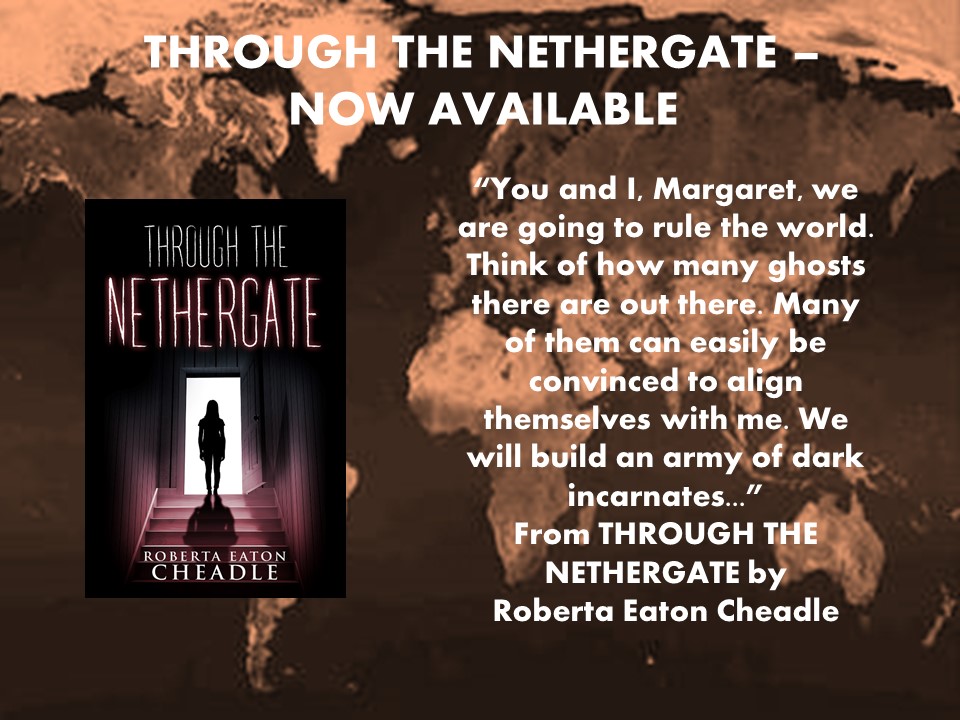
In Through the Nethergate, the main character, sixteen year old Margaret, does not die, but many of the supporting characters are already dead as they are reincarnated ghosts. This book provides details about a number of their deaths, which are unpleasant or they wouldn’t be ghosts. People who die naturally in their beds one night don’t usually take to haunting an inn, mansion or castle.

I didn’t mind writing about their deaths at all; I have always enjoyed paranormal, supernatural and horror so I am used to reading about deaths so it isn’t that difficult for me to write it. I don’t believe my death scenes are overly gory as I am not a fan of deaths by ax murderers and the like, I am more into deaths by starvation or drowning.

TTNG 15My WIP, A ghost and his gold, also includes ghosts and their deaths, but my main character in this book is also probably going to survive, although I’m not finished writing yet so I can’t say for sure. I think readers prefer a book to end on a positive note so I doubt Michelle will die.

I have written a number of short stories and these have all included deaths. Dark Visions, a horror anthology edited by Dan Alatorre, includes my stories, The Haunting of William and The Willow Tree. Both of these stories have murders in them and The Haunting of William also has a suicide.

My three stories in Death Among Us all include deaths of various types and are all based on real historical events and people. Amelia Dyer is a well know British baby murderer from the 19th century and my story, Justice is never served, is a fictionalised account of her arrest, trial and death by hanging. The murder of the monk is a fictionalised account of the last attempt by the Abbot of Glastonbury to stave off the destruction of Glastonbury Monastery in the 16th century. My final story, an eye for an eye is about the murder of a female master chimney sweep who abuses her indentured climbing boys (child chimney sweeps). I really enjoyed writing these stories and doing the necessary historical research. The deaths in the stories were necessary and did not bother me.

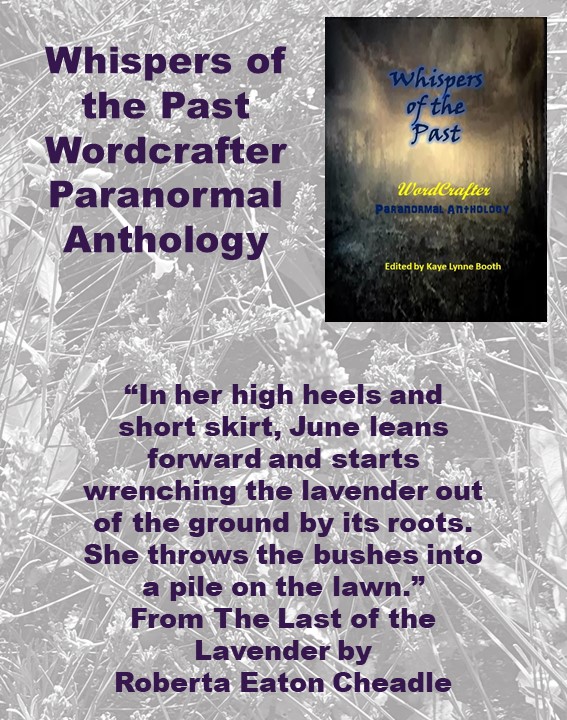
My two fictional stories in my latest anthology, Whispers of the Past, include murder and death from unusual medical conditions. I enjoyed research bee allergies and rabies in humans for these two stories, The Last of the Lavender and Missed Signs.

How do you feel about killing off your main characters? Find out what other authors think about this here:

You are invited to the Inlinkz link party!

Click here to enter

Rules:
1. Link your blog to this hop.
2. Notify your following that you are participating in this blog hop.
3. Promise to visit/leave a comment on all participants’ blogs.
4. Tweet/or share each person’s blog post. Use #OpenBook when tweeting.
5. Put a banner on your blog that you are participating.


Welcome-to-day-7-of-the-whispers-of-the-past-blog-tour-robertaeaton17-4willspub

Award winning fantasy and children’s story author, Wendy J Scott, is hosting day 7 of the Whispers of the Past blog tour which features a post by Kaye Lynne Booth. Thank you, Wendy, for hosting us.

Picture

GIVEAWAY: (5) eBook copies of WHISPERS OF THE PAST. For a chance to win, simply leave a comment on the  authors’ tour page as well as any other tour stop.
Picture

Inspiration by Kaye Lynne Booth ​

Picture

 Inspiration can come from places where you least expect it, but writers often have places where they go or rituals that they do with the expectation that inspiration will come. Some writers must have a quiet place to allow their creative juices to flow, while others have certain music that they listen to when they want to be inspired. For me, going out into the wilderness and pondering the wonders of nature allows me to clear my mind and seems to invite creative thoughts and ideas.
“The Woman in the Water” came to me on just such an occasion. I was spending some time at a nearby lake that I visit often. Normally, I approach the lake from the creek below and hike up to it, over and around the massive boulders that border each side of the dam that contains it. On this particular day, the water was very high, spilling down over the top of the dam and down into the creek in gushes and torrents, making the foot path below impassable, so a came in from above and found a nice boulder about three quarters of the way to sit and meditate on.
I wasn’t searching for inspiration, but while I sat there watching the waters spill over the top of the dam, a story began to form in my mind. I knew the wall supporting the dam lay behind the water flooding over was there, yet it was all but invisible behind the gushing water, as if it didn’t exist at all. It was easy to imagine that there could be a whole other world hidden by the curtain the water provided. I soon found myself pulling out my spiral notebook that I used to carry everywhere, and jotting down the thoughts in my head, so the story wouldn’t be lost.
When I returned to my computer, typed the whole thing out and “The Woman in the Water” was born. It may have taken an afternoon to develop, but it only took about an hour to get it down on the page. The story revolves around a woman who passes through the curtain of water and disappears as a man perched on a boulder above, as I had been that day, watches. Unable to stop thinking about what he’d seen, he returns at a later date, when the water is lower, to search for evidence that what he saw was real. I won’t tell you what his conclusion is. I’ll let you decide for yourselves.

Ten books that influenced me

IMG_3674

I have not felt very inspired to write prompts at the moment. I don’t want to write about negative things and I can’t think of anything particularly positive for this weeks topics so I decided to rather use an idea for a post that I got from author and English professor, Charles French.

If you don’t know Charles, you should go over and visit his site. He shares great ideas and tips about writing and lots of incentivisation to keep writing no matter what. He also has some excellent novels and non-fiction works.

So, on to my list of ten adult books that have influenced me, in no particular order. If you click on the link, you’ll find my review.

  1. The Stand by Stephen King;
  2. Dracula by Bram Stoker;
  3. Anthem by Ayn Rand;
  4. The Red Badge of Courage by Stephen Crane;
  5. 1984 by George Orwell;
  6. Jane Eyre by Charlotte Bronte;
  7. The Shining by Stephen King;
  8. The Screwtape Letters by C.S. Lewis
  9. The Thorn Birds by Colleen McCullough; and
  10. The Great Gatsby by F. Scott Fitzgerald.

You can read Charles’ post here: https://charlesfrenchonwordsreadingandwriting.wordpress.com/2020/03/26/10-books-that-influenced-me/

What books have influenced you?


Welcome to Day 3 of the “WHISPERS OF THE PAST” Blog Tour! @RobertaEaton17 @4WillsPub #RRBC

I am over at The Indie Joint today with a post about how my life threatening allergy to bee stings inspired my short story, The Last of the Lavender, included in Whispers of the Past.

whispers-of-the-past-tour-1

Let’s all welcome Robbie Cheadle to the Indie Joint!  It’s her first time here (but, I hope it won’t be her last) so let’s make her feel right at home.

Robbie, as the Warden here, you have all our attention.  It’s not like they can go anywhere so take as much time as you need!  Hahaha

I am terrified of bees. As a child, I never used to worry overly about bees and bee stings, but over the course of my life, each time I have been stung by a bee my bodies reaction has been stronger.

I don’t suffer from anaphylaxis which is when the venom from a bee sting sends the person into shock. My blood pressure doesn’t drop, and I don’t have difficulty breathing. I am one of the rare people in the world who gets a bacterial infection, which quickly leads to blood poisoning, from a bee string.

The first time this happened, I was quite ignorant about what was happening. I got stung on my middle toe by a bee while walking around in the grass outside. It was painful and I took an antihistamine and covered the site of the sting with an antibacterial cream and a plaster. By the following morning, my entire foot was swollen and red. I had a busy workday ahead, so I went to work anyway, wearing a slipper on the affected foot. By mid-day, my leg had swollen up to just below my knee and I felt unwell and feverish. I went home and lay down for the afternoon. When my husband came home, I asked him to take me to the emergency room as I didn’t feel well enough to drive. The doctor diagnosed blood poisoning and I was given a ten-day course of strong antibiotics, cortisone and antihistamines. The doctor thought the infection might have been introduced into my body with the stinger and had nothing to do with the bee itself.

The next time I got stung by a bee, just over a year ago, I initially seemed to be okay. I had recently had a throat infection and had been on antibiotics for a week. I didn’t notice any significant swelling until the following day. My entire foot swelled up as well as my ankle. A red line ran from the site of the sting up my foot and past my ankle. Once again, I had to go to the emergency room and have a 10-day course of antibiotics. I also had cortisone and antihistamines. This time it took three weeks before I could walk properly on my foot.

Continue reading here: https://theindiejoint.wordpress.com/2020/03/25/welcome-to-day-3-of-the-whispers-of-the-past-blog-tour-robertaeaton17-4willspub-rrbc/

The Last of the Lavender 2

#RRBC #Bookreview – Letting Go into Perfect Love: Discovering the Extraordinary After Abuse by Gwendolyn M. Plano

Book reviews

What Amazon says

Inspiring and unforgettable, Letting Go into Perfect Love is a riveting account of a journey through the terror of domestic violence to a faith that transforms all. As a college administrator, Gwendolyn M. Plano lived her professional life in a highly visible and accountable space–but as a wife and mother, behind closed doors, she and her family experienced unpredictable threat. The statistics are staggering–every 9 seconds in the United States, a woman is assaulted or beaten–but to Gwen, this was her secret; it was her shame. When her husband eventually turned his brutality on her son, she knew she could no longer remain silent.

Alternately heart-wrenching and joyful, this is a story of triumph over adversity–one woman’s uplifting account of learning how to forgive the unforgiveable, recover her sense of self, bring healing into her family, and honor the journey home. Accompanied by glimpses of celestial beings, Gwen charts a path through sorrow to joy–and ultimately, writes of the one perfect love we all seek.

The story that unfolds is not a blow-by-blow account of savagery hidden within a twenty-five-year marriage; rather, it is a walk through innocent dreams betrayed–to courage found. “Tragedy spares no one;” Gwen points out, “it just courts each of us differently. One way or another, it finds a path into our hearts, and there we do battle with the intruder.” As a survivor who came out of her unhealthy relationship determined to start over, Gwen artfully depicts the challenges of balancing the obligations of motherhood and career with her family’s healing process, while offering hope to anyone facing monumental challenges.

Integral to Gwen’s journey is her faith. Because of her Catholic upbringing, she struggles with the scandal of divorce, but finally makes her peace. When her daughter reveals her molestation by clergyhowever, her fragile sense of serenity dissolves. We walk with Gwen as she tries to make sense of this horror. The agony experienced by the entire family is devastatingly palpable. Against all odds, Gwen emerges confident of her faith and begins to see the threads of meaning in even the darkest moments.

This is a book for all. But, for those who have been in a destructive relationship, Gwen’s story will be heartbreakingly familiar. For those who have been spared such diminishment, it will provide insight into the often misunderstood phenomenon of domestic violence. Since one in every four women will experience such threat in her lifetime, understanding that murky world may provide the reader with the skills needed to help his or her sister or friend or neighbor. Whether victim or friend, though, readers will be inspired by the author’s courage and ultimate resolution of her predicament. And, you may see your own challenges a little differently.

My review

Initially, I found this book quite difficult to read. I am a very determined person who has always been focused on equality for women, so when I first started reading this book it seemed incredible that an educated and attractive woman like the author could become trapped in an abusive relationship, especially for twenty-five years. How could anyone accept such bad treatment? I asked myself. Why didn’t she leave Ron and turn to her family for help? Despite my emotional agitation during the first part of this story, I continued reading because it is completely compelling and beautifully written. As I progressed through the book, I found myself undergoing a metamorphosis as I gained insight into the heart and soul of Gwen, as an abused woman, and how the abuse completely broke her spirit and destroyed her confidence. She didn’t really have a choice about her life. Her ability to make decisions was stolen from her by her circumstances. Not even her protective instinct for her children could overcome the destruction wreaked by her husband.

Gwen was fortunate enough to have people in her life who cared enough about her to work hard on guiding her along the journey of healing and self redemption. She also clearly has a strong character and was able to finally take the necessary steps to free herself and her family from the destructive situation they were all in. Her own abuse was not the only cross Gwen has had to bear in her life and your heart bleeds for her when you discover how some unscrupulous and frankly evil people nearly ruined both her daughter and her own lives.

For me, there were two really pivotal moments in this book. The first was when the author describes herself as living in a box of fears and her unhealthy marriage as being a safe place within this box. By safe place, what she meant is that her marriage, although it was dysfunctional, was at least predictable and there is a strong element of security in predictability. This particular description had a strong impact on me as I realised that most people, myself included, have our own box of fears. It may not be fear of being alone, or being able to support your family alone, it can be many other things, but we all have fears and we all have our crutches that we cling to in an attempt to avoid dealing with our issues.

The other defining revelation for me was when the author explained that our fear and personal anguish is carried in our physical bodies and expresses itself ultimately in pain. If we do not learn to control and cope with our fears, we will never be free of pain and will eventually do ourselves great bodily harm.

This book is a description of the author’s life journey through an initial failed marriage and then into another long-term abusive relationship. It describes the downward spiral in the victim’s mental health and psychological well being. The tone of the story turns when the author starts to recognise the dysfunctional nature of her relationship, not just know, but really understand its destructiveness, and starts taking small steps towards turning her life around.

This is a story of determination and courage, which I came to realise are attained in many different ways and in varied circumstances. I believe that every person in any kind of relationship with their parents, children and partner, can benefit from reading this incredible story.

Purchase Letting Go into Perfect Love: Discovering the Extraordinary After Abuse

Welcome to Day 2 of the “WHISPERS OF THE PAST” Blog Tour! @RobertaEaton17 @StevieTurner6 @4WillsPub

John Fioravanti of Fiora books by John Fioravanti has shared a lovely post by author, Stevie Turner, for the Whispers of the Past blog tour. Thanks you, John.

Whispers Of The Past Blog Tour Banner

Today, it is my pleasure to welcome a group of talented authors who have collaborated in the publication of an anthology of short stories about the paranormal. I’m still learning about this genre, so I’m looking forward to today’s post by my friend, Stevie Turner, who is one of the collaborating authors. Take it away, Stevie!

Author pictures who collaborated on the Whispers of the Past Anthology

About Partners in Time, a short story by Stevie Turner

I am pleased to be part of the Whispers of the Past blog tour, which runs for 10 days from 23rd March. Whispers of the Past is an anthology of paranormal stories from several authors compiled by Kaye Lynne Booth, which also includes Jeff Bowles’ winning entry in the 2019 WordCrafter Paranormal Short Fiction Contest, A Peaceful Life I’ve Never Known.

Book Cover for Whispers of the Past Anthology

My story Partners in Time is included in the anthology. I had already written and published the full novel but had got so used to my characters that I didn’t want to let them go. I decided to write an abridged version of the book, but with a different ending.

Partners in Time is a story for fans of time travel. John Finbow, a successful writer, and his wife Kay move into Southcombe Rectory, a large Victorian house that has been empty since the 1960s. It had previously been owned by the Cuthbertson family who had lived there for generations. Their marriage is under strain, as John, 39 would like children before he gets too old, but Kay, 34, does not.

Continue reading here: https://fiorabooksbyjohnfioravanti.home.blog/2020/03/24/welcome-to-day-2-of-the-whispers-of-the-past-blog-tour-robertaeaton17-stevieturner6-4willspub/