Roberta Writes – Day 4 WordCrafter Curses Book Blog Tour #fiction #reading community

Picture caption: WordCrafter Curses Book Blog Tour banner

It’s Day 4 of the WordCrafter Curses Book Blog Tour and Robbie Cheadle is hosting today, here on Roberta Writes to help launch Curses: Chronicles of Darkness. Thank you so much for having us here, Robbie.

Today, you’ll get to meet contributing authors C.R. Johansson and Robert White and learn more about their stories in the Curses anthology. Plus, Robert shares a guest post about the inspiration for his story here, and on the second stop of the day, over at Undawnted, DL Mullan will share her interview with Robert. Don’t forget to leave questions and comments for both stops here to enter in today’s drawing for chance to win a digital copy Curses: Chronicles of Darkness.

Giveaway

We’re giving away 5 digital copies of Curses: Chronicles of Darkness.

All you have to do to enter is

follow the tour and leave a comment.

About Curses: Chronicles of Darkness
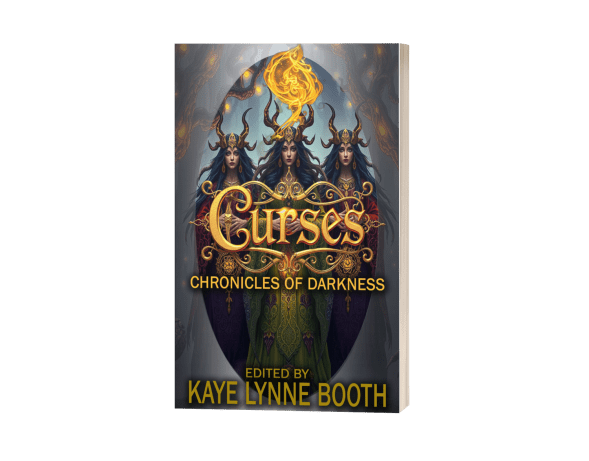
Picture caption: book cover of Curses featuring three female demons

There are all types of curses.

Cursed places, cursed items, cursed people, cursed families.

Curses that last throughout time. Curses which can’t be broken. Curses which are brought upon ourselves. Curses that will kill you and those that will only make you wish you were dead.

Eleven tantalizing tales of curses and the cursed. Includes stories by Kaye Lynne Booth, Molly Ertel, C.R. Johansson, Robert White, Joseph Carrabis, Paul Kane, Danaeka Scrimshaw, Abe Margel, and Denise Aparo.

Pre-Order and Purchase Link: https://books2read.com/CursesChroniclesofDarkness

 Inspiration for “The Longspeth Curse”

When I was eighteen and working as a stockboy in a family grocery store, a man came in asking for directions to the site of “the Ashtabula Bridge Disaster.” I had no idea what he was talking about and put it out of my mind—but never completely out.

Decades later, when I became curious enough to find that locale right under my nose, so to speak, I discovered the history of what had been in its time the greatest train wreck in the United States and remains so in the nineteenth century. All the big papers and magazines of the day covered it in their lush, purple prose and indeed that coverage was warranted. Over ninety people died, many horribly, I was to learn, when the Pacific Express with its passenger cars, plunged into the gulf a thousand feet past the train station that it roared by in a blinding blizzard on a Friday of December 29, 1876. When iron truss bridge collapsed into the gulf below right after the lead locomotive, The Socrates, crossed it. All the cars behind it went into the gulf below from a height of seventy feet, including the three luxurious sleeping cars with their individual names: The Yokohama, The Palatine, The City of Buffalo

Many who survived the fall drowned in the river. Other who survived the bridge collapse and avoided drowning, were severely wounded and froze to death on the riverbank, owing to the ongoing blizzard on that frigid day. The most tragic details of the deaths, however, came from the fact that the kerosene lamps in the passenger cars set fire to the coal cars behind the diesels. Those poor souls trapped in the wreckage, including parents and their children, died a cruel death and could not save themselves from the fire—a fire that burned in the twisted metal and wood long after the blizzard stopped. A ghastly way to die.

The genesis of my story—namely, the “dark man” and the curse he inflicted on the males of the Longspeth line—came from the fact that the early reports of the fire described how many of my town’s citizens answered the call of distress and went down the snowbanks to assist the survivors.

Others, however, a very few, did not. They came down the riverbank to steal from the dying and wounded: money, gold watches, jewelry. These were the worst kind of thieves, the scum of the earth. Some were named and jailed, according to archived copies of the Ashtabula Telegraph, long defunct. The incompetent fire chief of the time was another who failed to do anything to rescue people (rumor of the day had it that he was an alcoholic).

One of the many accounts published in the days and weeks afterward is from a Miss Marian Shepherd from Ripon, Wisconsin, who was one of the fortunate ones to escape death. She said: “From the burning heap came shrieks and the most piteous cries for help.  I could hear far above me the clangor of bells, alarming the citizens.  We climbed up the deep side of the gorge, floundering in snow two feet deep.”

One of our local cemeteries which I’ve passed hundreds of times has a mass grave marker dedicated  to the deceased who could not be identified.

One of my characters in the story leaves a bar as the train rushes past, soon to fall to its doom. He hears the desperate, short blasts of the train whistle of the lead diesel, which had just made it across the bridge. He is Adam Longspeth, the original victim of the curse of the “Dark Man,” whose description I borrowed from one of the better known victims of the disaster: P.P. Bliss, a well-known psalmist and author of the hymns “Hold the Fort,” “Almost Persuaded,” and “Hallelujah, What a Savior!” I made him turn up at each subsequent male Longspeth from Adam on to the present narrating Longspeth, but all their fates are predetermined.

The narrator of my story only recently discovers what darkness he has inherited on his twenty-first birthday when his father presents him with a leather-bound journal kept by the Longspeth men who record their encounters with the Dark Man.

If there’s no actual curse from the real tragedy, perhaps there ought to be. The bridge’s designer, Amasa Stone, committed suicide. He insisted the bridge be built entirely of iron rather than wood and iron. The jury report found that was one of several faults that contributed to the failure of the bridge to support a live load (i.e., moving trains). Mark Twain, never one to miss an opportunity to display his wit, commented famously that “[a]pparently nothing pleases the Almighty like the picturesque,” referring to Stone’s ignominious backside hanging over the edge of the tub after he inflicted his fatal wound.

Charles Collins, chief engineer for the railroad company, was later found dead in his bedroom of a gunshot wound to the head. It was deemed a suicide—except that two official autopsies in 1878 concluded he was murdered. 

The train depot today is gone, the town having failed to save it, and the railroad company tore it down. Its historical significance was also included in my story because in the summer of 1892 many farm boys met there at dawn one day, all drawn by the Pinkerton Detective Company’s advertisements around the county of munificent $5 a day wages to break up strike at the Carnegie steel mills in Pittsburgh. They met with horror down there—irate steel workers who vastly outnumbered them, beat and spat upon them, and dragged them into an empty warehouse as their hostages. After their release and return back to Ashtabula on another train, one depressed young man threw himself off the train to his death.

Sometimes, as is often said, truth is stranger than fiction, but I tried to be factually faithful to the details of the bridge disaster. It seemed wrong, not to.
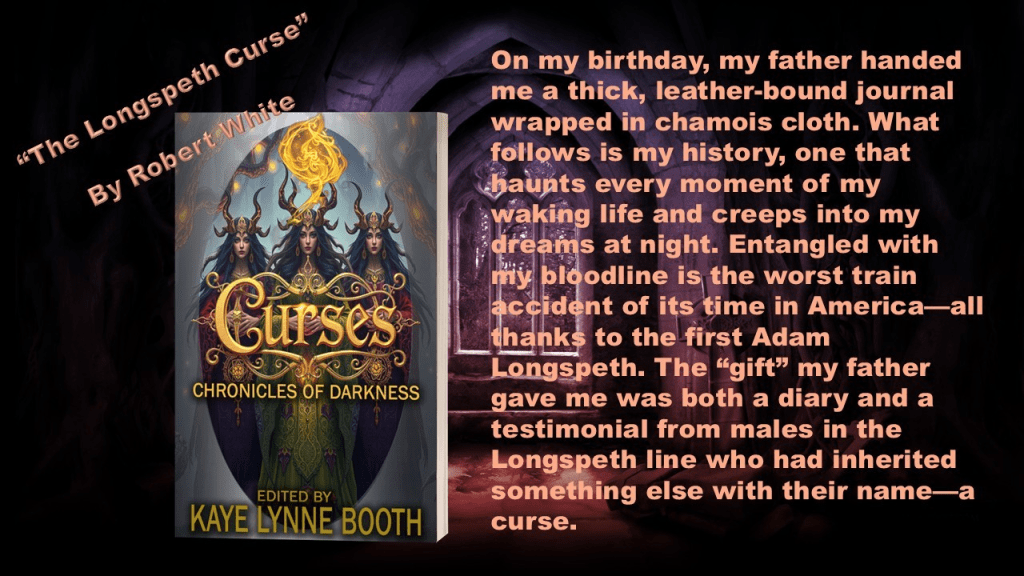
Picture caption: extract from The Longspeth Curse by Robert White
Picture caption: extract from Road Kill by C.R. Johansson
Picture caption: author picture for C.R. Johansson
Picture caption: author picture for Robert White

Roberta Writes – Art series: Introducing the art, photography & poetry of Michael Sammut #art #photography #poetry

Today, I am showcasing the incredible photography, artwork, and poetry of Michael Sammut. You can follow Michael Sammut on his blog here: https://lifeexperiencesandadventures.wordpress.com/

Tell us a bit about your photography – are you a professional photographer or is photography a hobby? Have you done any courses on photography or are you self-taught?

From a very young age I was interested in photography. The fact that you can capture a moment in a photo and immortalize it, truly fascinated me. My first hands on experience was with a very basic camera my dad owned. It would be a very long time before I could finally afford to purchase my first camera. From then onward, I never stopped trying to improve my skills, learning by trial and error and research from various sources.

It is a hobby, but a fundamental part of my life. 

Picture caption: Three- spot Grass Yellow. Photographed in Sri Lanka by Michael Sammut

In a dark forest
A yellow butterfly lands
On a violet bloom.

Haiku 533.

What draws you to photographing birds and other creatures in our natural world?

I am particularly interested in photographing nature, in particular birds and butterflies. Not only because I find them fascinating but also to immortalize their beauty and share it with other people, with the final intent or hope, to promote the conservation of our natural world which is constantly under threat from human irresponsible activities.

Picture caption: Hummingbird Hawk- Moth. Photographed in Gozo, Malta by Michael Sammut

Flying to and fro
Sipping from purple flowers
The fast wings humming.

Haiku 672.

Tell us a bit about your camera and what works for you with photography?

In over 35 years I have worked with various cameras from the same brand. I lived through the evolution from film photography to digital photography which brought in many changes and somehow made photography more accessible. Now I have started to work with mirrorless cameras which are a huge leap into better results in photography especially when you need high speeds in low light conditions, a common occurrence when photographing fast moving subjects like birds. I prefer a telephoto lens as it gives you the freedom to choose how to frame the subject. Nowadays there are some great options in the market that don’t necessarily break your bank account. I use a 100-500mm lens which Replaced my previous 100-400mm lens. For other subjects I use a 24-105mm lens.

Picture caption: Sparkling Violetear (male). Photographed at Wild Sumaco Lodge, Ecuador by Michael Sammut

Glittering jewel
A moment frozen in time
Darting hummingbird.

Tell us a bit about your art journey – when did you start drawing and painting? Which came first, the photography or the art, or did you always do both?

As much as I was interested in photography I was also interested in art, in particular drawing and painting. This came before photography but to my regret, I have put this aside for a long time due to limited time. 

Picture caption: Spring Bloom. Acrylic on canvas by Michael Sammut
Depicting the beauty of fields covered with flowers in spring.

Robbie: I am very drawn to this incredible artwork. The colours are amazing.

What medium did you prefer to work with for your artworks?

My dives into the art world are somewhat sporadically. As a medium, I prefer to work with acrylic, aquarelles, ink and pencil colours. I find that Acrylic gives you a great variety of options but pencil colours give you more control. 

Picture caption: Black- shouldered Kite. Ink and aquarelles by Michael Sammut

Who is your favourite artist and why?

My favorite artists are Vincent Van Gogh, Vasily Kandinsky, Paul Klee and Picasso. Whenever, I look at their paintings my mind is intrigued and pleased at the same time.
Picture caption: Aftermath: Acrylic on canvas by Michael Sammut
Painted during the Yugoslav wars, when genocide and atrocities occurred on a daily basis and the world just kept their eyes closed. 

You can find more of Michael Sammut’s artworks on his blog here: https://lifeexperiencesandadventures.wordpress.com/my-art-page/

About Michael Sammut

Picture caption: Blog photograph of Michael Sammut

My name is Michael Sammut, born in Malta, where I still live. Travel is an important part of my life, firstly because I love exploring and discovering our planet but secondly the get away from the insular mentality of small island countries. I love nature, travel, adventure, nature conservation, art, poetry, music and photography. 

I graduated as an Industrial Designer and also hold a certificate in Ornithology.

I have dedicated my life to exploring and studying nature and in return love to share the beauty of nature that surrounds us, hoping to inspire more people to love and protect nature and the environment. 

In recent times I have been inspired by a fellow blogger and poet to dive into the world of Haikus which has opened a new way to express my interests.

Roberta Writes – Esther Chilton’s writing challenge, 50th wedding anniversary and Sunday Stills #poetry #photography #Brussels

You can join in Esther’s writing challenge with a post featuring a card of some sort here: https://estherchilton.co.uk/2025/09/24/writing-prompts-84/

Homemade Christmas

When I was thirteen going on fourteen, I got the grand idea of making Mom a Christmas card with contributions from each of her children. Naturally, I was the mastermind of this undertaking, and I used my pocket money to purchase cardboard, glue, glitter, crayons, and chocolates. The two large pieces of cardboard were halved, and I allotted each of us two pages to decorate. Hayley and Laura were still very little girls aged five and four, respectively. I helped them decorate their pages with prints of their hands and feet. This had to be done without Mom knowing so I covered the floor of the upstairs playroom with black plastic garbage bags and managed the painting of their small hands and feet with coloured poster paint. They then either stepped, or pressed down, on their page to make patterns. This was a lot of work for me as I also had to wash their messy hands and feet with soapy warm water to remove the excess paint and discretely get rid of the paint splashed protective bags.

I drew and coloured a Christmas tree, decorating it with cotton wool for snow, gold and silver glitter glued on in stripes, and Christmas shaped chocolates bought from a local shop. I had to walk to and from the shops, a four kilometre round trip, to acquire these goodies but when I had an idea I was always very determined to get it done regardless of the obstacles. Cath produced her own colourful Christmas scene using red and green glitter and crayons.

Our gift was well received and Mom kept it for years until it all fell apart. When my sons and my sister, Hayley’s, sons were little, we did a similar exercise with the four boys. We made two pillowcases decorated with their little hands and feet dipped in fabric paint. I used newspaper to cover the floor and remember sitting each boy in a baby bath full of warm soapy water to get them clean. Boys are ever so much messier than girls. They even had paint in their hair. My mom still has these pillowcases.

tiny hands and feet

memorialised in paint

red, yellow and blue

50th wedding anniversary

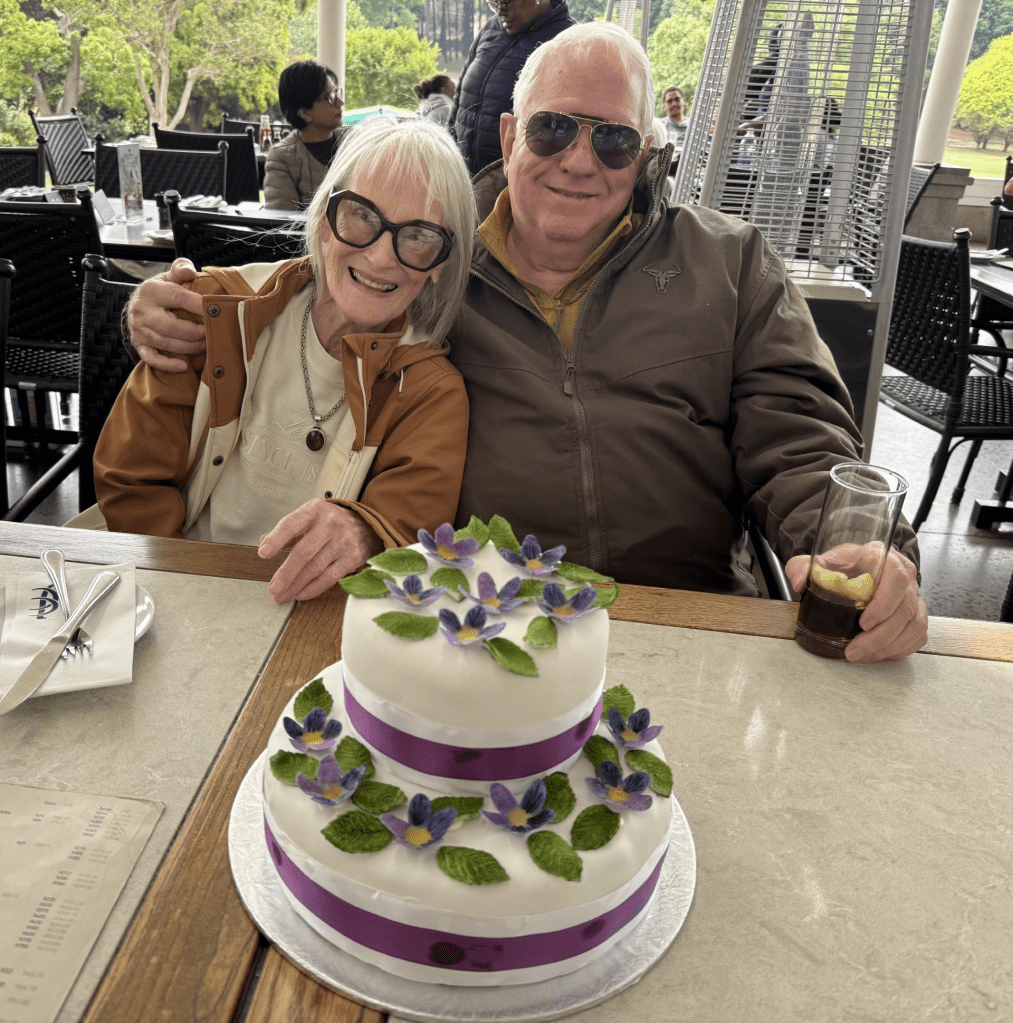
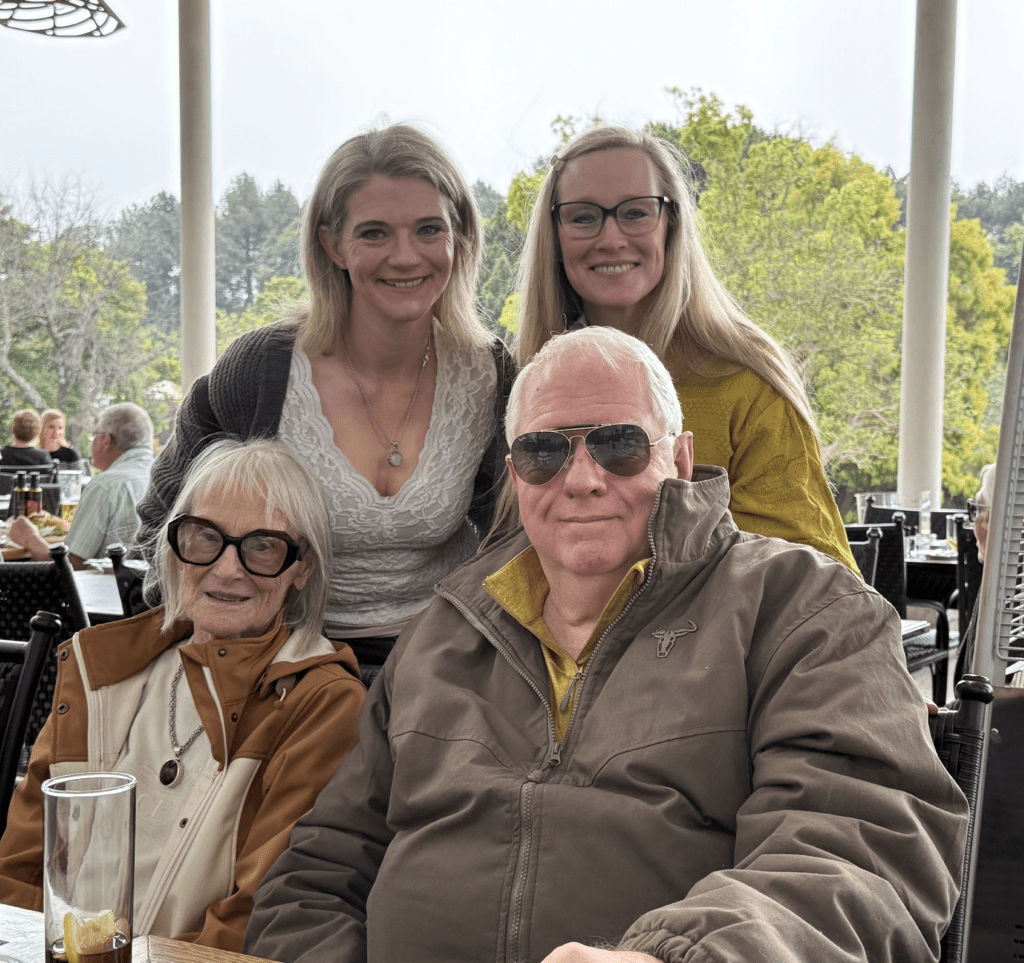
Last week I wrote that my parents were celebrating their 50th wedding anniversary yesterday. Sadly, my sister, Hayley, was ill and couldn’t come but my youngest sister, Laura, and her family were there as well as my mother-in-law and sister-in-law. These are a few pictures of the day:

Picture caption: Mom and Dad and the cake
Picture caption: Mom and Dad at the front and at the back Laura and me

Sunday Stills – Windows

Terri’s Sunday Stills challenge is to share photographs of windows. You can join in here: https://secondwindleisure.com/2025/09/28/sunday-stills-every-window-tells-a-story/

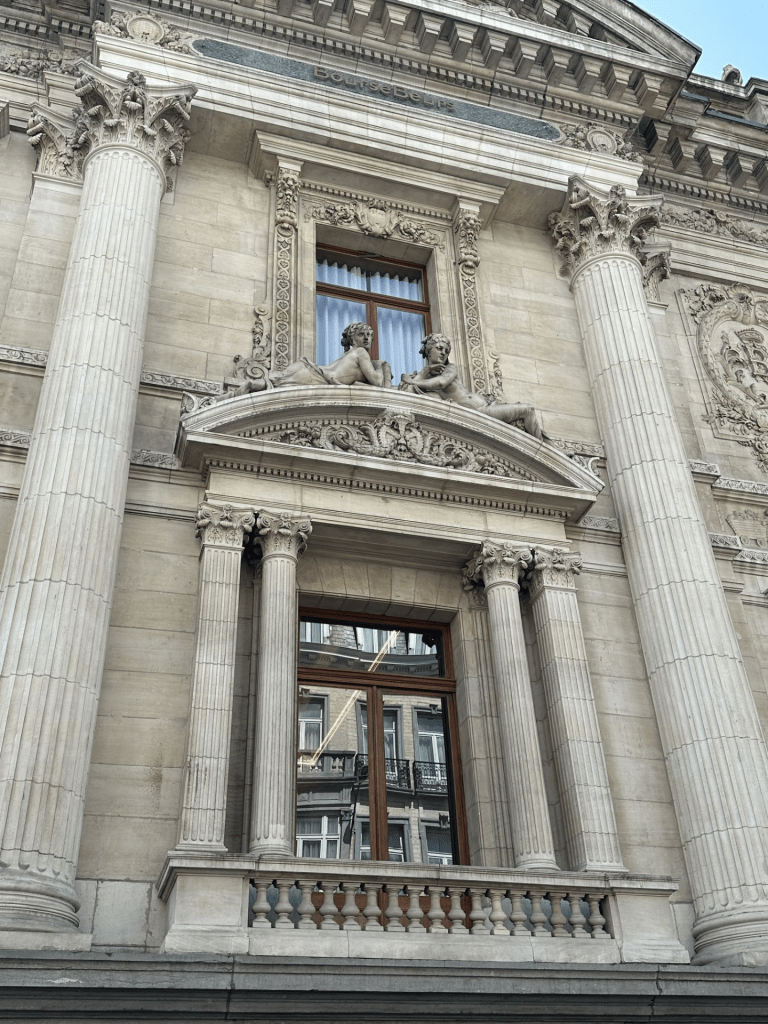
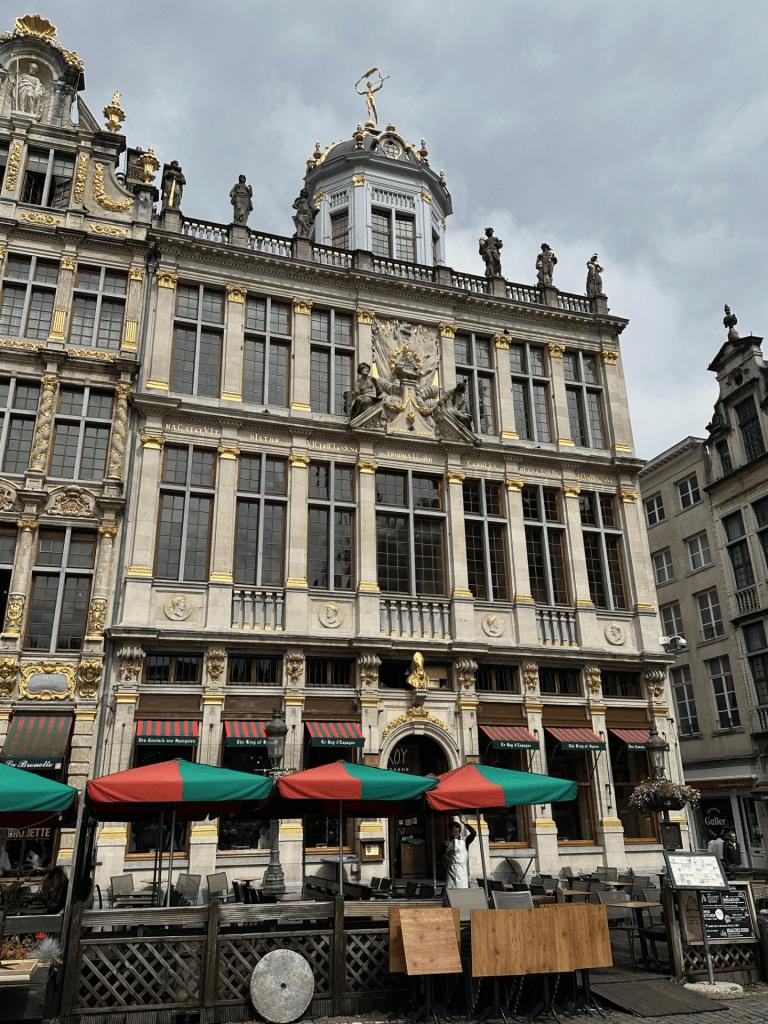
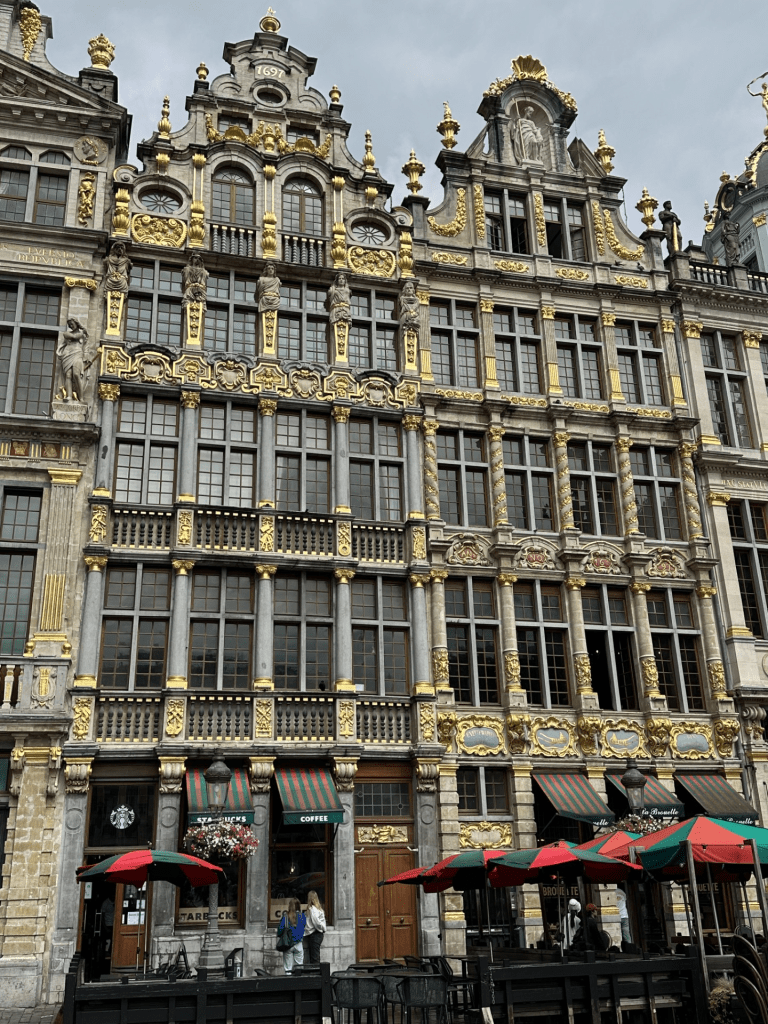
These are photographs of windows I took during our recent trip to Brussels.

I like the reflection of the windows across the stree in this window
Picture caption: window cleaners at work on this glass windows
Picture captions: the building above and below are both features of the Grand Place in Brussels. They have many windows and much beautiful decor in gold.

If you are interested, here are my YT shorts of Grand Place in Brussels.

Roberta Writes – d’Verse, petals and happiness & Thursday Doors #photography #poetry

Lillian’s quadrille prompt requires the use of the word petal, you can join in here: https://dversepoets.com/2025/09/22/peonies-lily-of-the-valley-pick-your-posey/. Punam’s Poetics Tuesday prompt is happiness which you can join in here: https://dversepoets.com/2025/09/23/poetics-tuesday-happiness-is/

I combined the two prompts into my poem African Violets. It is Mom and Dad’s 50th wedding anniversary tomorrow. We are having a celebration at the Country Club on Sunday. Mom is very excited and we have already selected her dress and she is going to the hairdresser tomorrow (my gift to her). I have also made her an African violet themed wedding cake for the event.

African Violets (freestyle)

deep affection for mother

expressed in each petal

carefully cut, moulded, and painted

in shades of her favourite purple

African violets for an immigrant

who found love in this wild land

miles from her childhood home

planning fiftieth wedding anniversary

source of companionable happiness

Picture caption: Mom’s wedding cake decorated with fondant African violets

Thursday Doors, Brighton

You can join in Thursday Doors here: https://nofacilities.com/2025/09/25/nationality-rooms-intro-and-syria-lebanon-room/

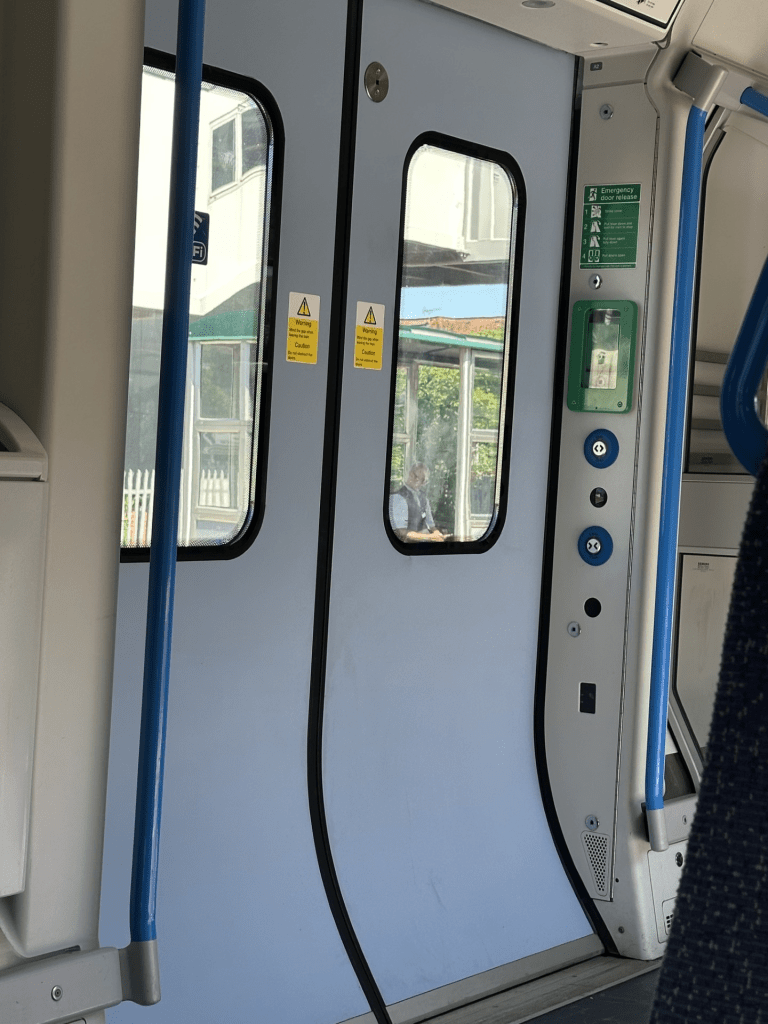
Seeing as this is Mom’s week, I am sharing part 1 of my photographs from Brighton in the UK. Michael and I took a day trip to this city to see the Seven Sisters and the lighthouse. Mom worked in a hotel in Brighton before she married my father. These pictures are of London Bridge train station and the first stop on the Brighton tour: Paynings.

Picture caption: Entrance doors to London Bridge Train Station. I liked this artwork so included it in the picture.
Picture caption: entrance gates for the underground.
Picture caption: Doors of the train to Brighton
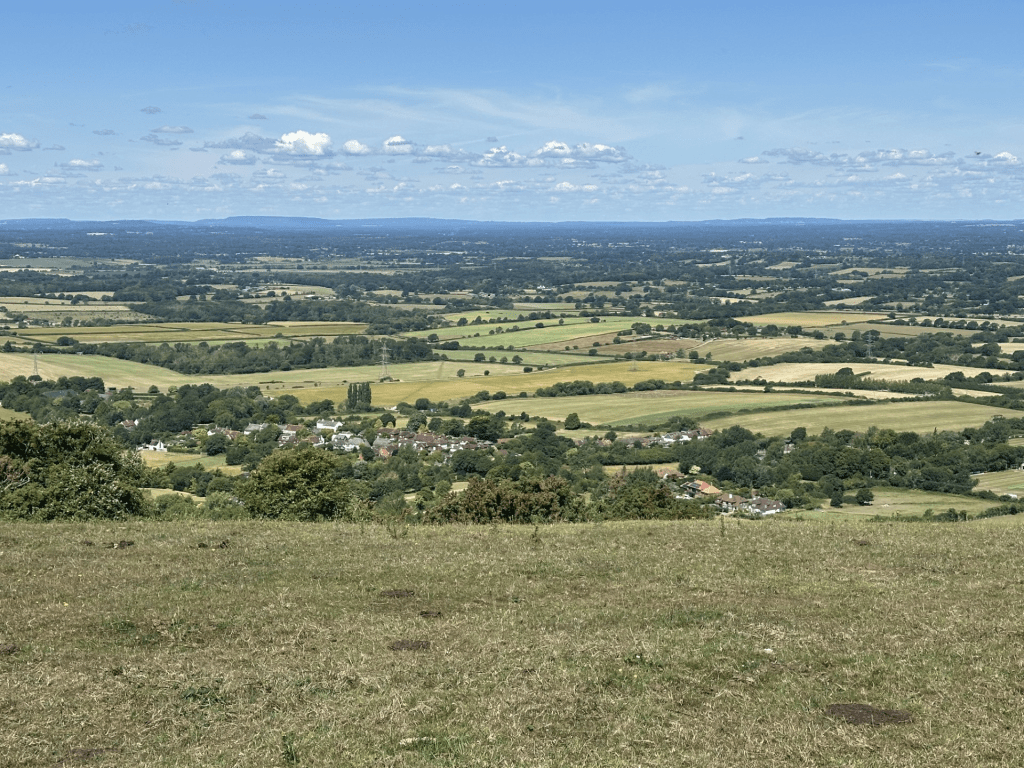
Picture caption: Countryside at Poynings
Picture caption: Close up of a farmhouse at Poynings
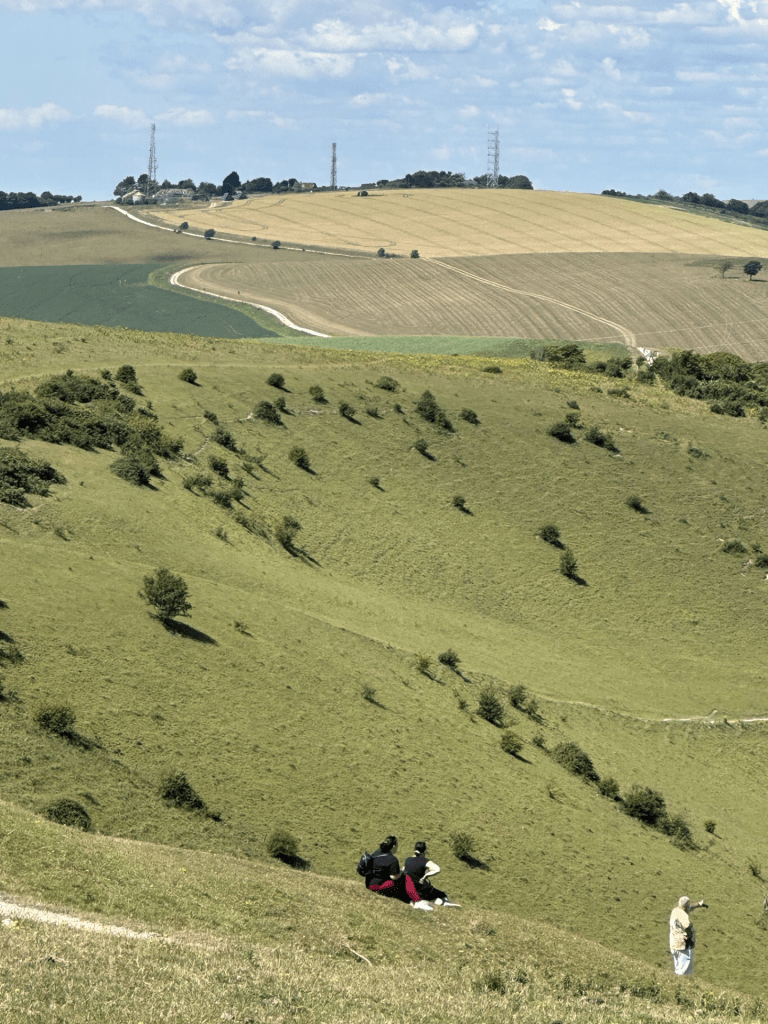
Picture caption: walking paths at Poynings
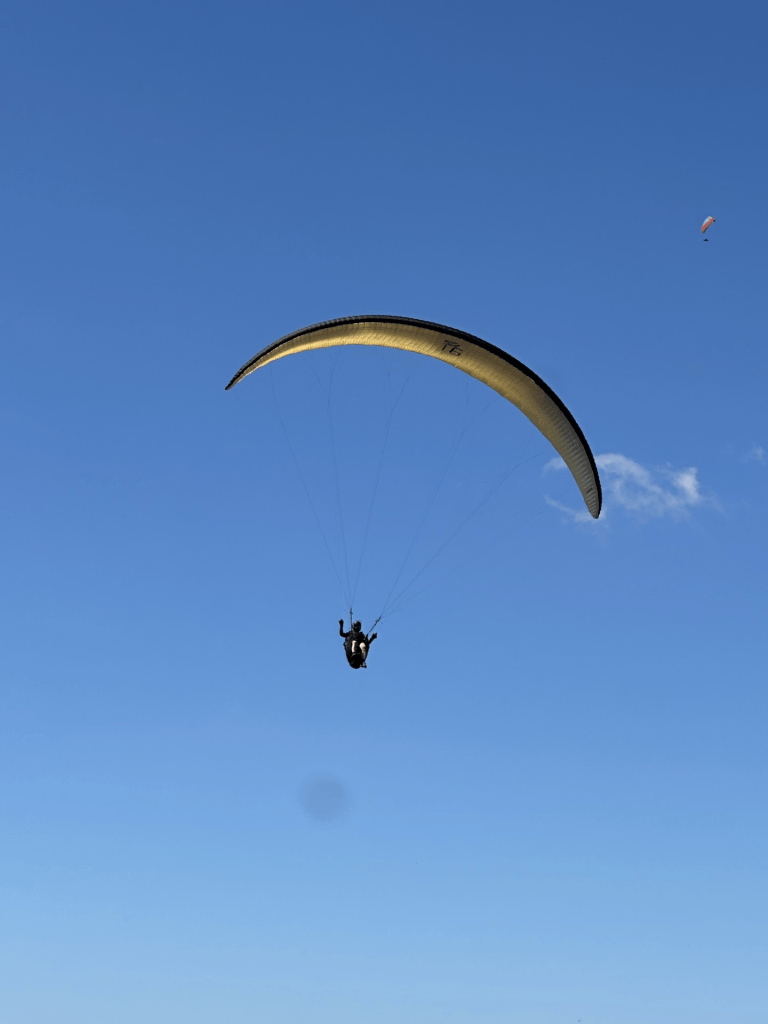
Picture caption: we saw some hang gliders at Poynings
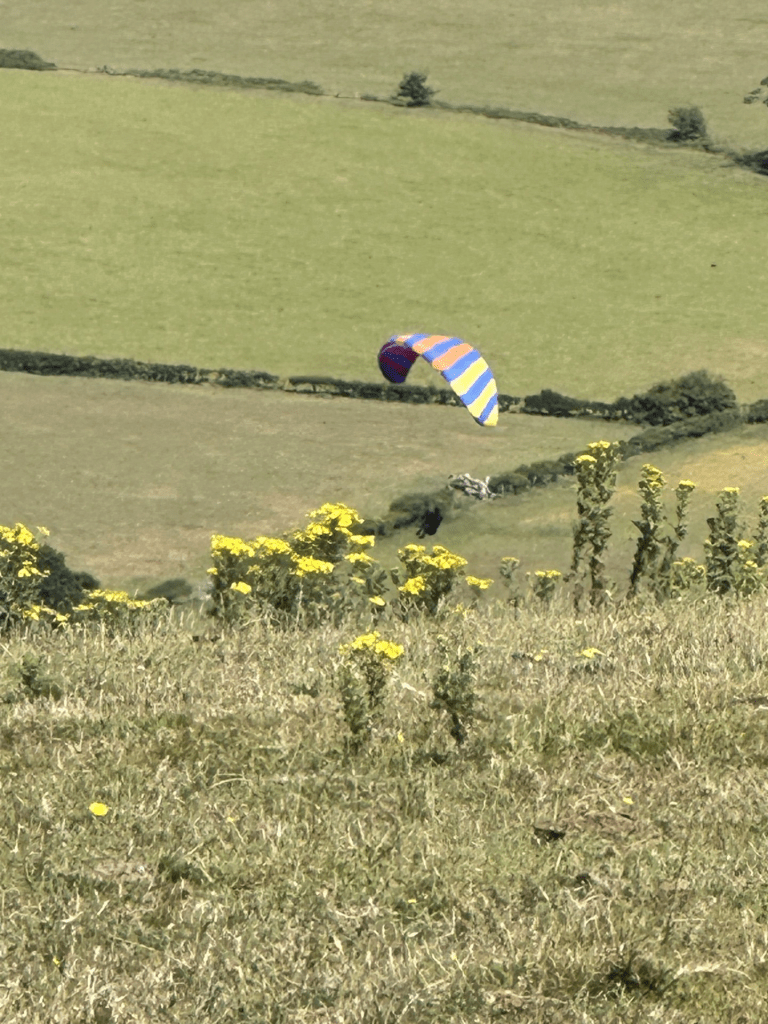
Picture caption: hang gliders landing among the wild flowers
Picture caption: hang glider coming in for a landing

Roberta Writes – d’Verse two in one #poetry

It has been a very busy week. Work was moderate after the chaos of the previous three weeks, but I have four poems/articles on various Masticadores sites and my monthly Treasuring Poetry post. I am very blessed to have my work showcased by Masticadores and thank Barbara, Juan, Michelle and Nolcha for their wonderful support.

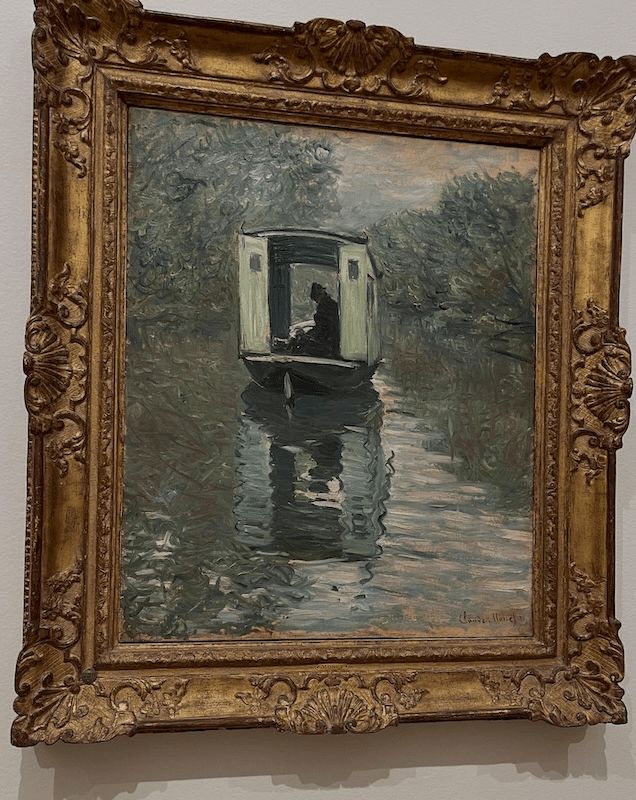
The upshot is I am late with my d’Verse poem which, I believe/hope, fits both Laura’s MTB: The colour motif and Merril’s Poetics: Reflections prompts.

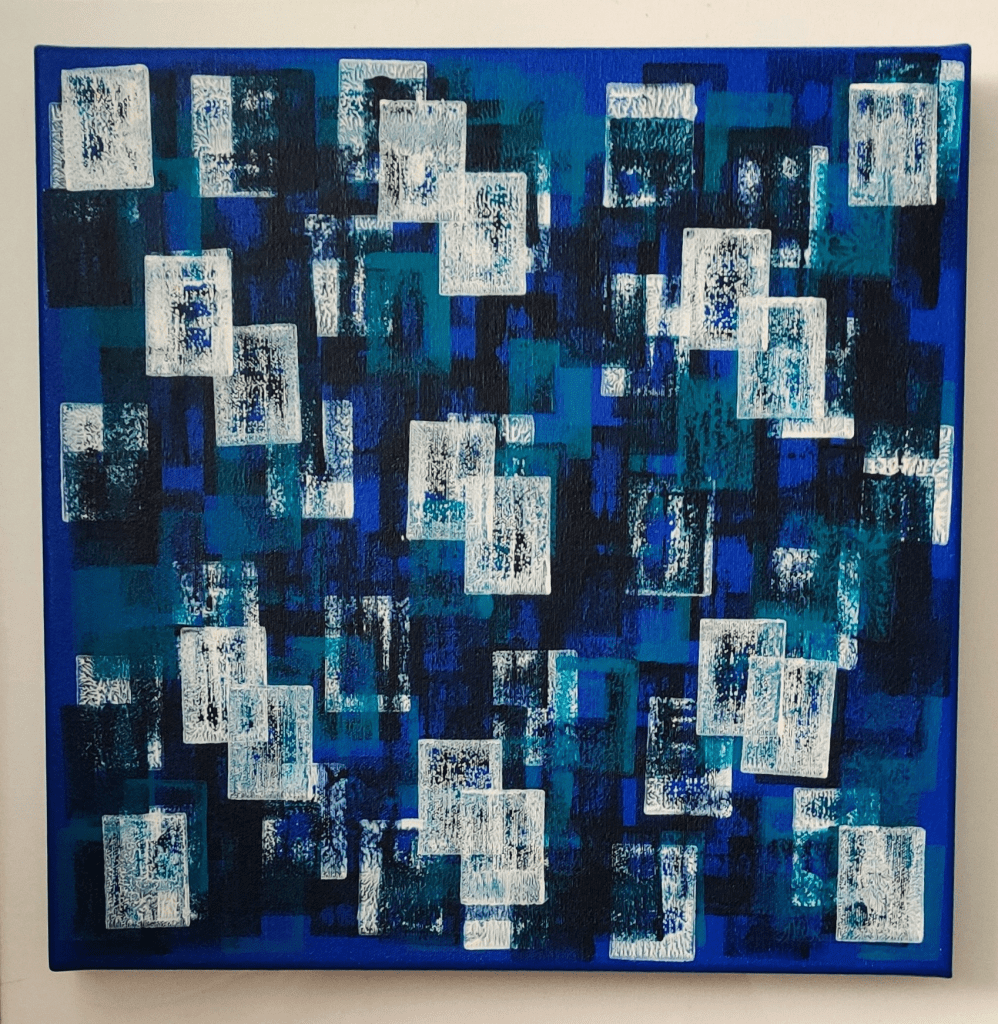
There is a painting to go with this poem but it is not yet finished so you will have to imagine it.

Life on the Water (Tanka story)

medley of cool shades

cerulean and turquoise

lightened or darkened

depending on water’s mood

and artist’s vision

***

painstaking brush strokes

capturing shadows and light

frothy, foaming crests

enhanced with metallic white

dancing across blue

***

water shifts and sighs

subtle movements captured in

careful ripple lines

swiftly flowing currents caught

in muted aquamarine

***

sand laden wavelets

curl sluggishly around rocks

smothered by sweet caress

of ocean’s heaving bosom

with its rhythmic rise and fall

***

houseboat moves onwards

temple to unconstrained thoughts

colours meld as one

in swirls, rises, and deep troughs

impermanent no longer

***

dreams, soft and wispy

condensation trails through sky

subtle as sunlight

transferred to stark, white canvas

soft splashes ricocheting

Picture caption: Merril’s picture prompt, The Studio Boat by Claude Monet

Roberta Writes – Esther Chilton’s writing challenge, CFFC: public art #poetry #photography

Esther Chilton’s prompt for this week’s writing challenge is charge. You can join in here: https://estherchilton.co.uk/2025/09/10/writing-prompts-82/

Taking Charge

When I was a young girl, I often took charge at play time, and I was the ringleader of a variety of games at school. My games were always created with the best of intentions but boisterous games involving the entire class had a way of taking on a life of their own.

I clearly recall one game that involved splitting the class into two groups. One group had to hold hands tightly while members of the second group took turns running at the line and trying to force their way through the tightly clasped hands. Naturally, this was great fun, and everyone participated with enormous goodwill. The noise levels climbed along with injuries which didn’t make themselves felt until later when Sister Ruth, teacher of my class and an advocator of ladylike behaviour for girls and gentlemanliness for boys, entered the fray.

The end of break bell had run some minutes before and had gone unnoticed by the excited participants of the game. I’ve never forgotten Sister Ruth’s shout of horror when she rounded the corner of the building and found her class of six-year old’s in a state of near hysterical bedlam. Shoes, socks, and straw boaters lay in untidy piles, sashes were loose, and every child was red and disheveled. At the sound of Sister Ruth’s voice, a deathly silence fell over the gathering. Children quickly moved to put on their shoes and socks. A few, their bruises and bumps suddenly making themselves felt, burst into tears.

I got a dressing down of note and spent the rest of the day on my own in the naughty corner. My report included the phrase: ‘Robbie has the face of an angel, but she has black wings and a rusty halo.’ Naturally, that went down a treat at home.

naughty girl

lacking discipline,

self-control,

and smooth hair

Pollyanna look alike

preferred type of child

CFFC – hobbies

Dan’s challenge this week is continuation of last week’s hobbies. You can join in here: https://nofacilities.com/2025/09/15/photos-of-your-hobby-part-ii-cffc/

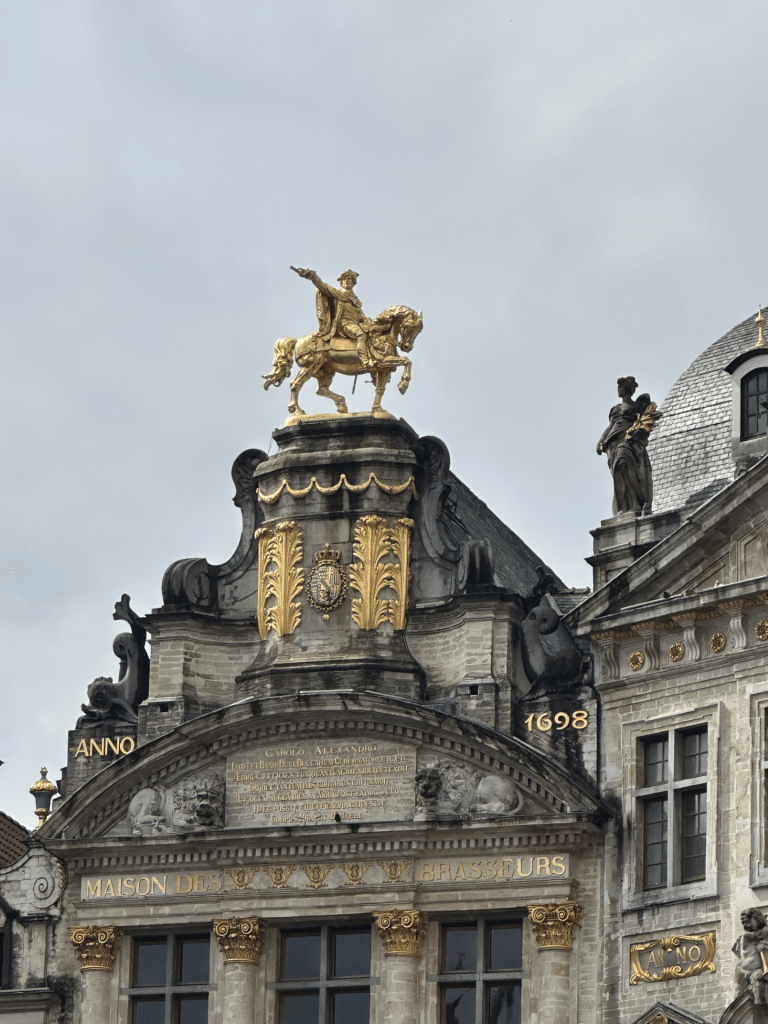
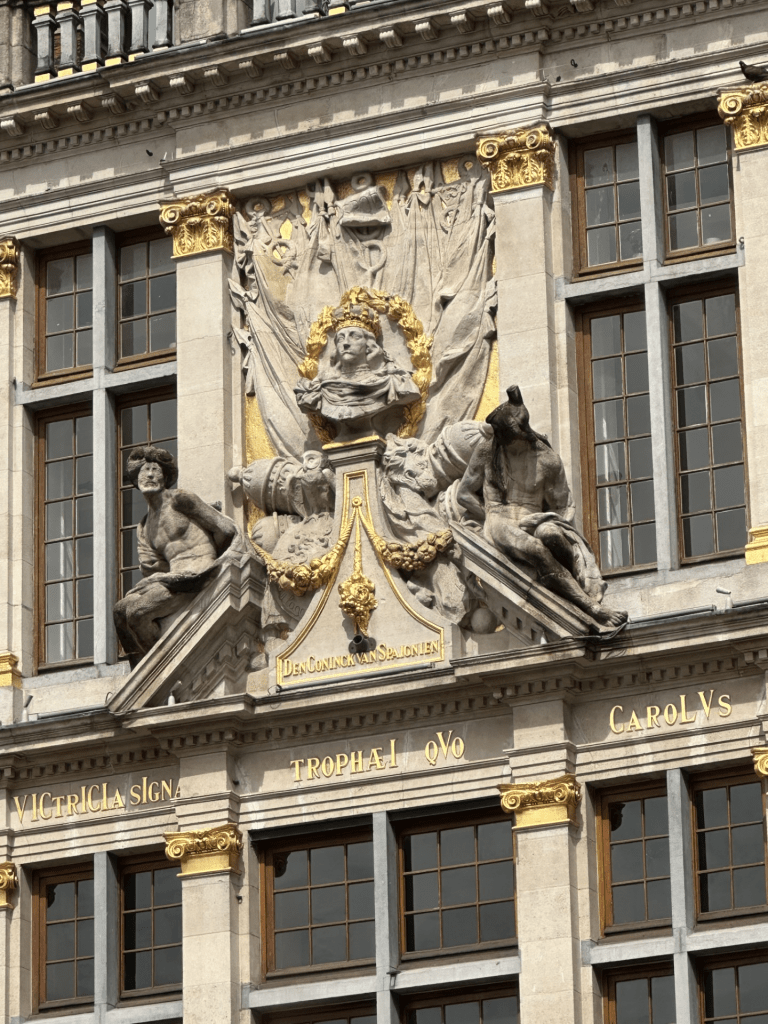
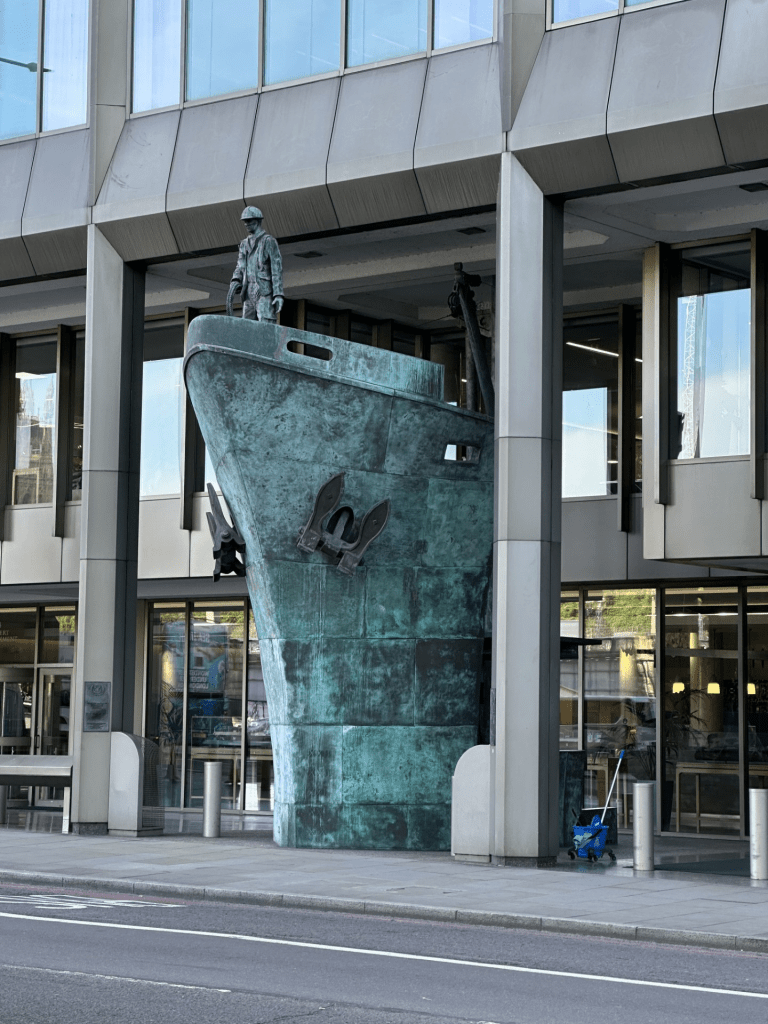
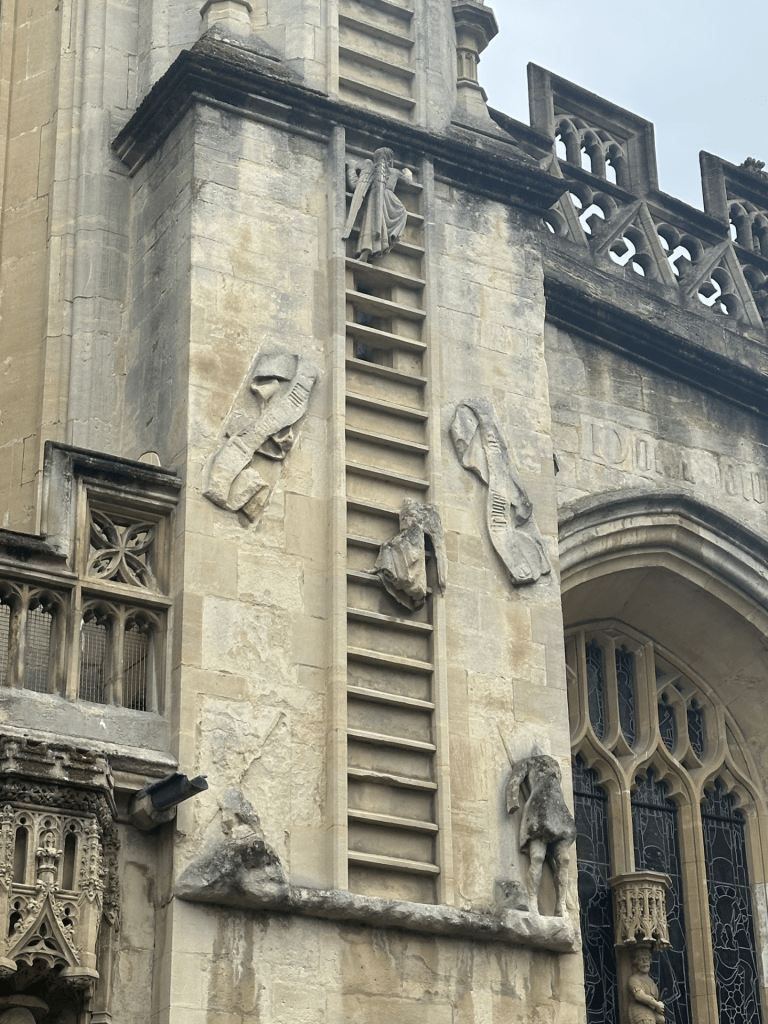
One of my hobbies is taking photographs of street art and other public art.

Picture caption: A gold statue of a man on a horse in Grand Place, Brussels
Picture caption: Statue on a building in Grand Place, Brussels
Picture caption: International Memorial to Seafarers in London
Picture caption: Stairway of Angels on the outer wall of Bath Cathedral
Picture caption: Street art in Brussels. It was hard to get a good picture.
Picture caption: a larger view of this street art. The angle was difficult.

Roberta Writes – 5 pieces by Robbie Cheadle on Chewers by Masticadores #poetry #death

Nolcha Fox has kindly shared 5 pieces of my poetry in response to her call for poems about death.

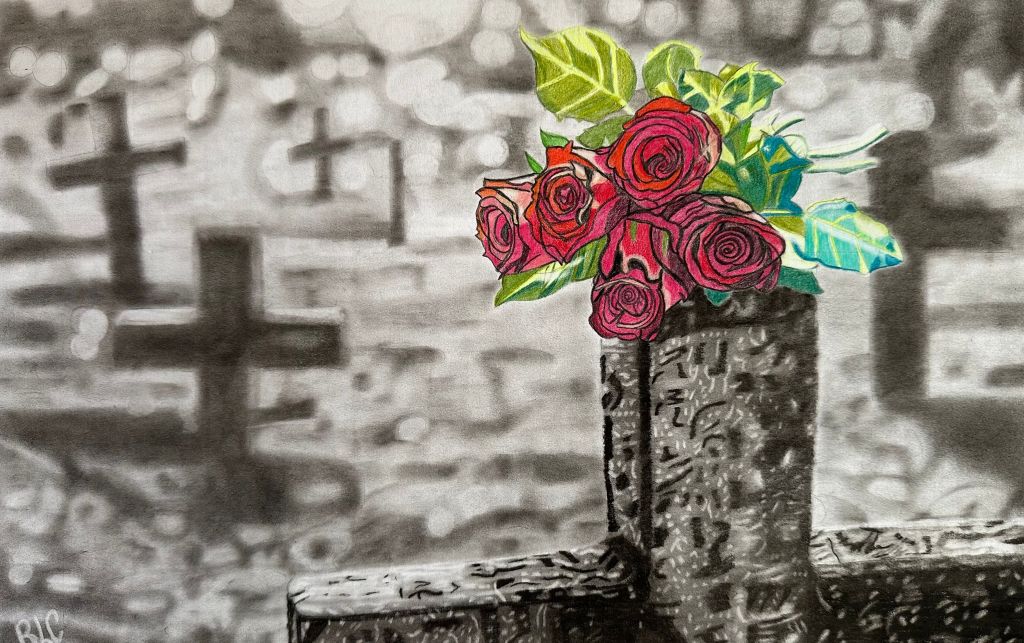
This poem is my personal favourite and was written in the style of In Flanders Fields by John McCrae. You can read his poem here: https://www.poetryfoundation.org/poems/47380/in-flanders-fields

In Flanders Cemeteries (freestyle)

In Flanders cemeteries lie thousands of skeletal remains
The tragic atmosphere heightened by the wind’s soft refrain
The final resting place of a generation of young men
You’d think mankind would’ve learned between now and then
Not long ago, yet forgotten as the Devil’s temptations corrupt

~

Within the petals of each gorgeous summer bloom
I see the watching eyes of the brave who met their doom
Those who made the ultimate sacrifice to keep us free
Their countless graves shaded by the gently blowing trees
Were their deaths in vain as red continues to stain the earth?

~

Why can’t we learn that war begets naught but pain and death
Little is gained by countless lips drawing their last breaths
The ghostly faces of our collective future, many in their late teens
Bear the careworn features of those whose lives ended in screams
Every leader should stand silent before these memorials and reflect

You can read the other four poems here: https://chewersmasticadores.wordpress.com/2025/09/15/5-pieces-by-robbie-cheadle/

My charcoal and pencil drawing of a war cemetary

Roberta Writes about the grey loerie, d’Verse muchness and Thursday Doors: Royal Museums of Fine Arts, Brussels #d’verse #thursdaydoors #peterpaulrubens

If you are interested in seeing my latest artwork, you can see my post on my website here: https://www.robbiecheadle.co.za/a-hartebeest-with-texture-robbiecheadleart/

This poem is for Don’t Hold Your Breath’s Bird of the Week challenge. You can join in here: https://anotherglobaleater.wordpress.com/2025/09/09/green-backed-tit-birds-of-the-week-invitation-lxxxiii/

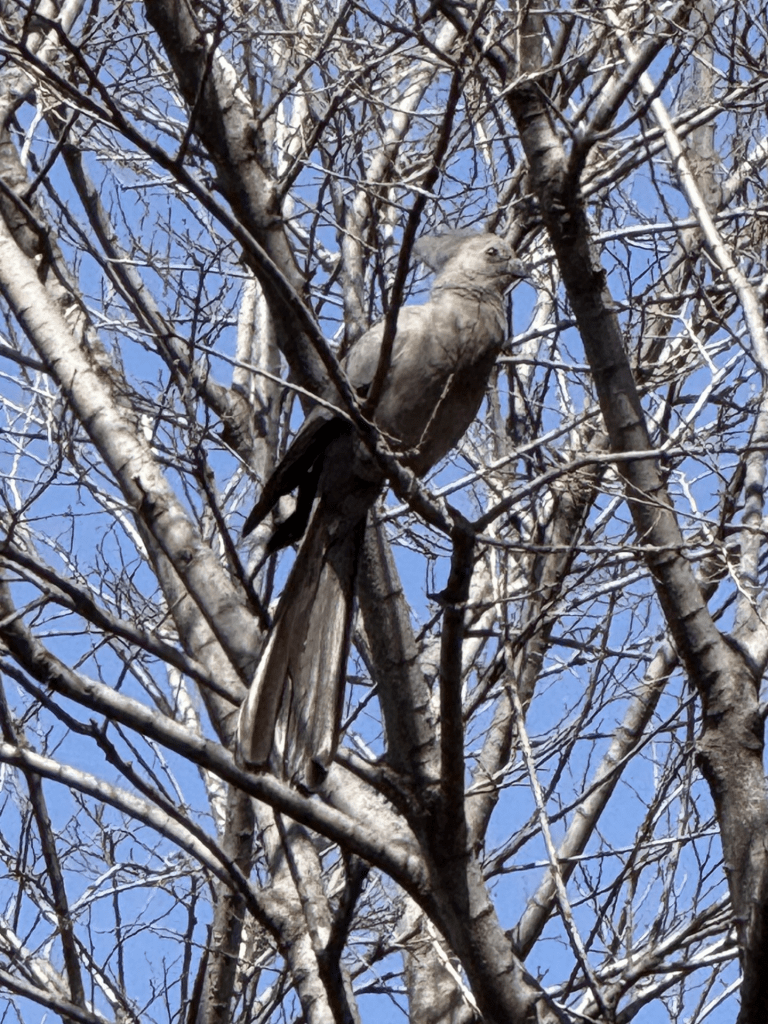
Grey Loerie or the Grey go-away-bird (freestyle)

Picture caption: grey loerie in the tree in my garden

Go-away-bird is back

watching carefully

how well I tend his fruit trees

screeching lovingly

from the top of his tree

“kweh! kweh!”

in a load and nasal tone

the last syllable uttered in

a condescending drawl

Soon, his friends will join him

they’ll all joyfully participate in

a tree-top foraging party

all congratulating me

on my successful peach crop

while they enjoy

the fruits of my labour

When they’ve guzzled enough

and their bellies are stuffed

they will have a dust bathe

on the ground nearby

teasing the cat

as she tries to stake her claim

under the blackberry patch

D’verse Quadrille #231

De Jackson here, aka WhimsyGizmo challenges poets to write a poem about muchness. You can join in and/or find out more here: https://dversepoets.com/2025/09/08/quadrille-231-making-much-of-poems/

The Muchness of Spring (Quadrille)

Spring

the season of muchness

colourful flowers are many

and their pollen

much too much

It combines with much dust

to cause much havoc

with much hayfever

It’s muchness is visible

as it sparkles in the sunshine

entering the nose

and causing much sneezing

The trilogy of pictures below are of my bank’s roses. They are very pretty but they do causes muchly sneezes.

Thursday Doors

Dan Antion hosts a weekly Thursday Doors Challenge. You can join in here: https://nofacilities.com/2025/09/11/still-mooving-at-osv/

There were three reasons I agreed to fly for 16 hours to London and another 16 hours back again in July. 1. Michael came and I wanted to expand his horizons, 2. to visit Flanders in Brussels 3. to see the Peter Paul Rubens paintings at the Royal Museums of Fine Arts in Brussels. Today, I’m sharing my pictures of the third visit. Spectacular paintings that were worth the travelling.

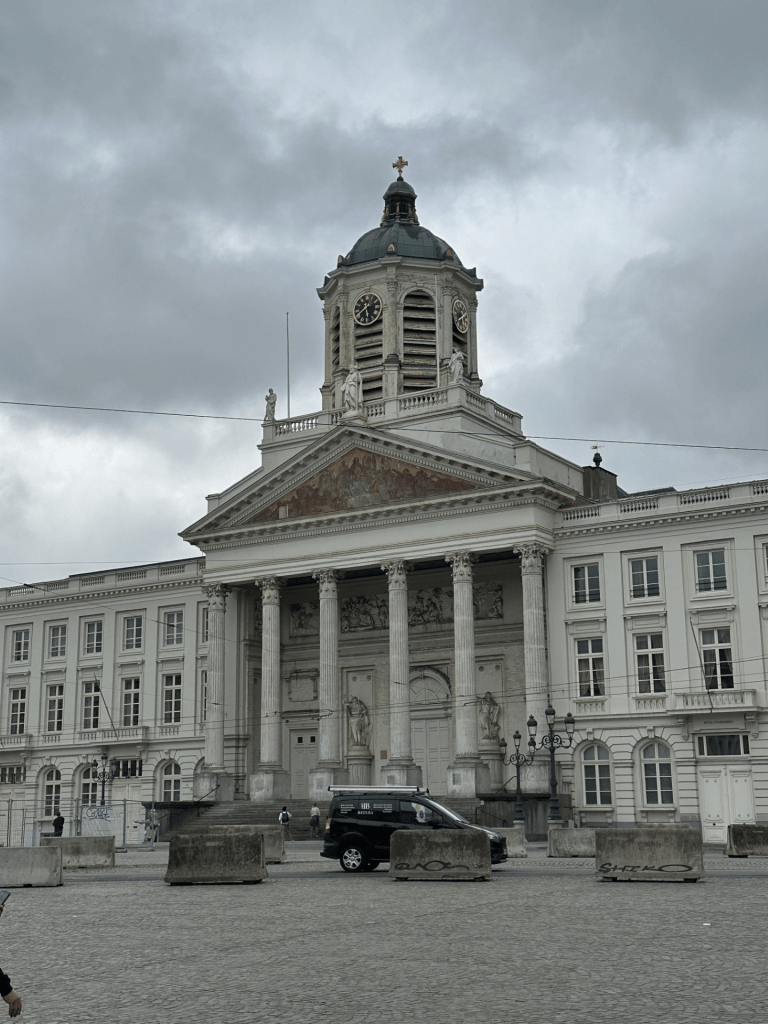
Picture caption: Front of the Royal Museum of Fine Arts with the decorate door. We didn’t go in here.
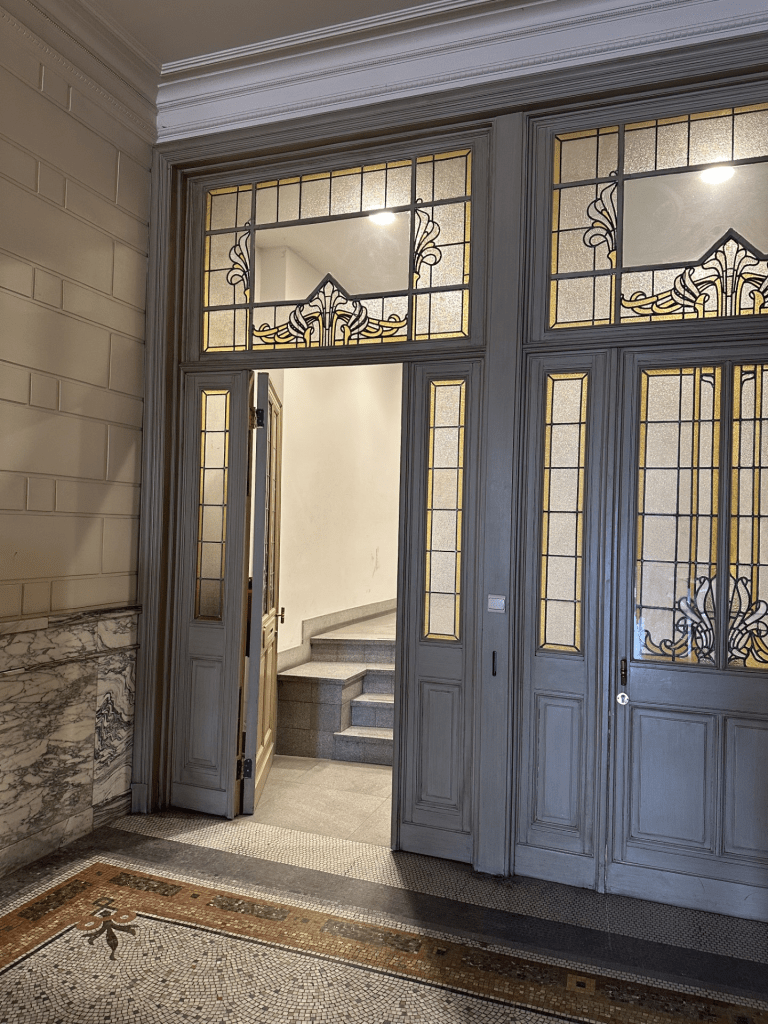
Picture caption: This is the back door where we exited the museum
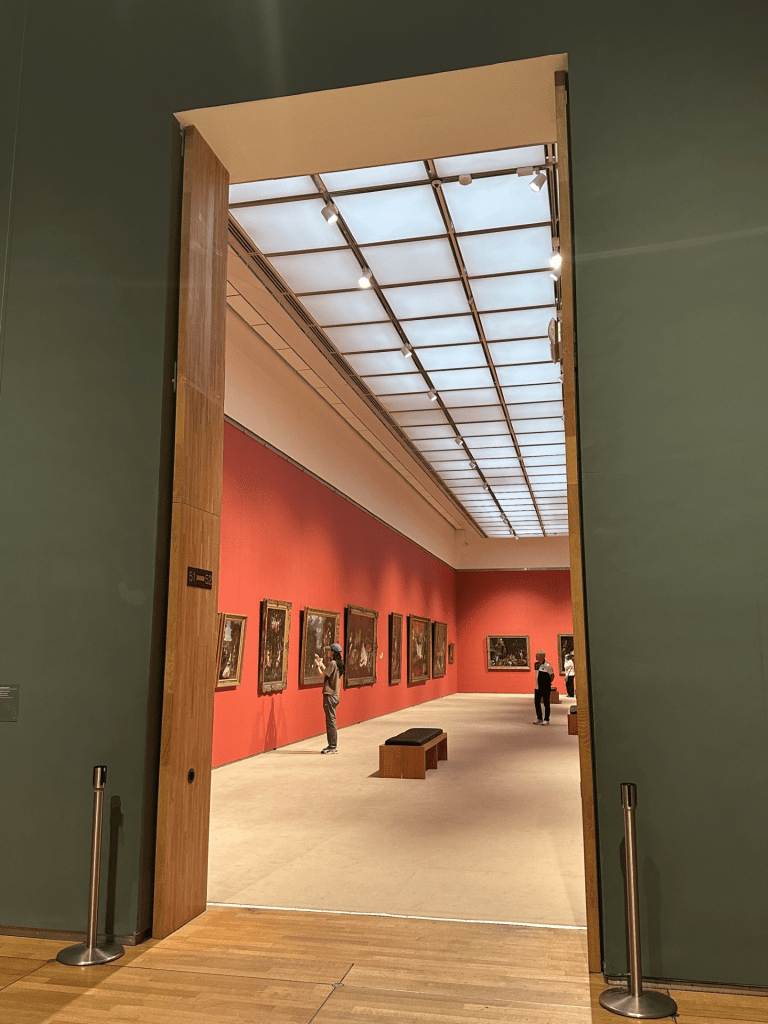
Picture caption: This is the door into one of the galleries in the Old Masters section of the museum
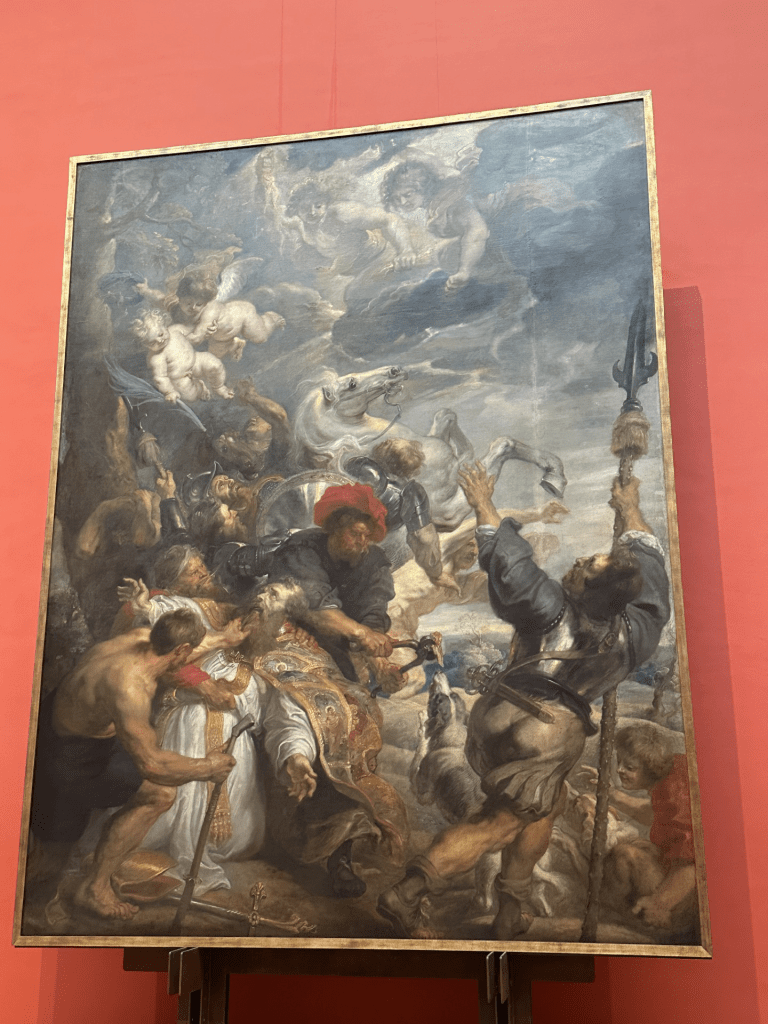
Picture caption: The martyrdom of St Livinus by Peter Paul Rubens. I adore those little fat cherubs.
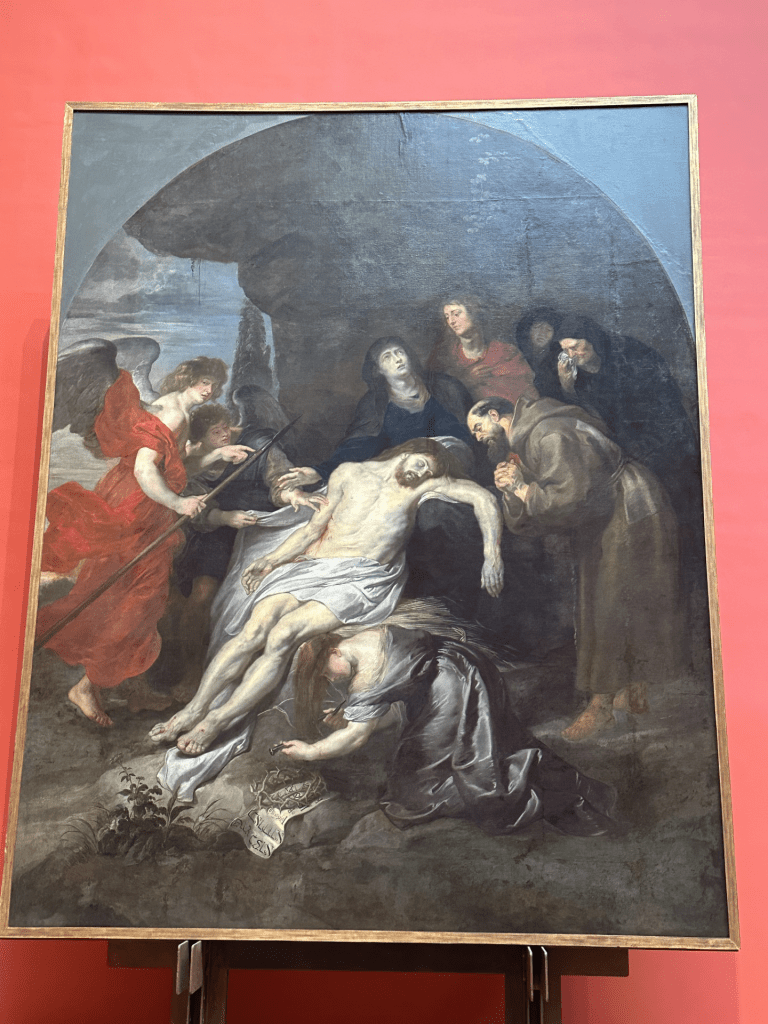
Picture caption: Pieta with St Francis by Peter Paul Rubens
Picture caption: The Assumption of the Virgin by Peter Paul Rubens
Picture caption: The coronation of the Virgin by Peter Paul Rubens
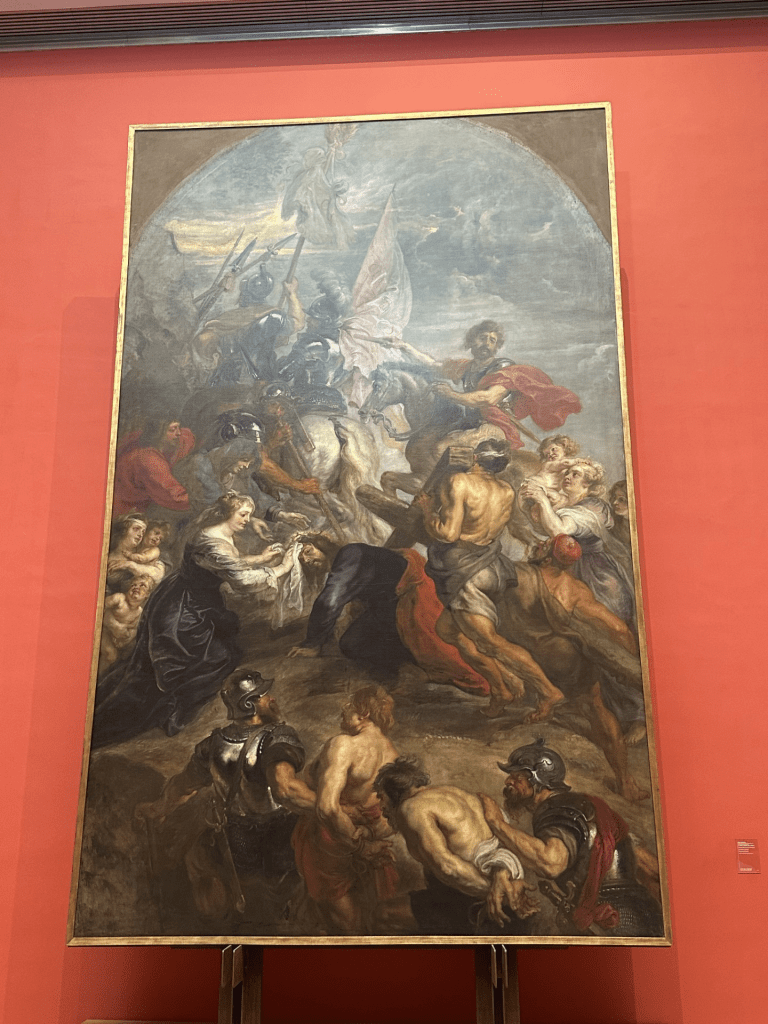
Picture caption: The ascent to Calvary by Peter Paul Rubens

The is my video of one of Rubens artworks called And Workshop

Roberta Writes – Esther Chilton’s Writing Challenge and CFFC #prose #photography

Esther Chilton’s writing challenge this week is to write about elements. You can join in here: https://estherchilton.co.uk/2025/09/03/writing-prompts-81/

Fire!

There are four natural elements: air, wind, fire, and water. Individually they are fascinating. They can also be destructive and, when out of control, can wreak horror on humanity. Sometimes they combine forces, and the havoc and chaos scale up accordingly.

When I was a young girl, we lived on a small holding in an area called Honeydew. Our house was the original farmhouse for the area. It was old fashioned with a tall water tank and dark, creepy bathrooms. The property was surrounded on three sides by vacant land filled with long, golden veld filled with all sorts of fascinating insects and birds.

We moved to this property because my father wanted to farm. He’d always wanted to do some farming, and when this property became available at a good price, he seized the opportunity. His plan was to plough the out-of-control veld grass on our property in the early spring and plant courgettes (this is another story).

It was the beginning of winter when we moved into our new home. Winter in Johannesburg is dry. It doesn’t rain at all – not a drop, from approximately mid-April until mid-October, sometimes later. During this period, the veld grass dries out and becomes a very pretty fire hazard.

“Fire! Fire!” One hot, dusty late winter day, the shouts travelled from the workers complex up to the house. Mom and I were inside with the younger children when we heard the clamor. Outside we rushed and were confronted by a strong, smoke-laden wind. In the distance, a line of fire swept forward, aided by the wind. It was moving fast, much faster than I imagined fire could travel. I could hear the crackling as the fire consumed the dry grass.

In front of the house, was a lawn of short grass and then a fire break comprised of a few furrows Dad had ploughed before the wild grass started. To one side of the house stood a line of fir trees. These were as dry as tinder at this time of year. As we watched, the fire moved closer and closer. It was making big jumps and setting new patches of veld on fire as it came. The smoke became thicker and crept into the back of our throats as we stood aghast. It tickled and we all started to cough. Ash and bits of black settled on our clothing and hair.

Dad came running towards us, followed by the two male workmen.

“We’re going to have to wet the grass and beat the fire out with sacks,” Dad exclaimed. “Catherine, take the children into the house and stay there. Keep the windows shut to keep the smoke out. Robbie, you need to wet the sacks and pass them to the rest of us.”

During this short period, the fire had come much closer. The front running fires were nearly at the firebreak and two of the trees were starting to smolder.

I remember standing a few metres away from the firebreak next to a tin bath full of water, wetting sacks and handing them to the four adults. They ran up and down the firebreak, beating at the flames as they licked the short grass and tried to get a hold on the fir trees. The air was hot and acrid with smoke, and I was scared. My lungs hurt and my eyes stung.

The fire was winning, and the beaters were falling backwards. I could see Mom’s face, grey with ash and streaked with water as her eyes streamed smoke induced tears. Dad’s beard and hair were grey as if he’d suddenly aged.

Suddenly, the wind changed direction. The fire started moving in the opposite direction, trying to find new food to sustain its flames among the blackened clumps of smoldering veld grass and small bushes.

The changed wind saved our home that day and the fire, deprived of new material, died out, leaving a barren, smoking mess of burned earth. For days and days, ash and black bits crept under the doors and through windows foolishly opened.

rolling and bounding

young flames compete at long jump

which can leap furthest

CFFC

Dan’s CFFC challenge this week is hobbies. You can join in here: https://nofacilities.com/2025/09/08/photos-of-your-hobby-cffc/

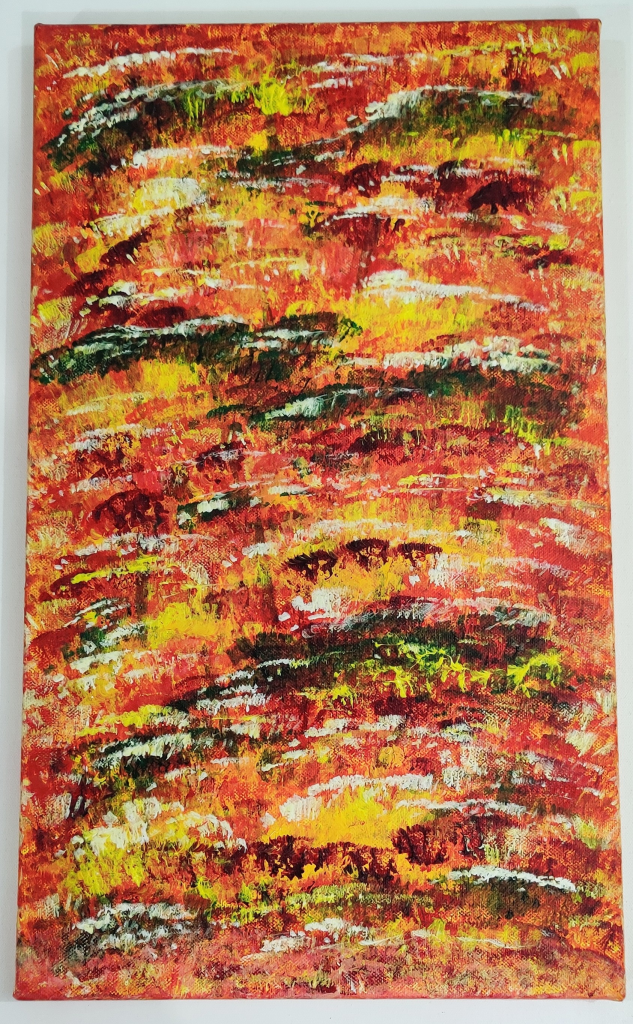
I have many hobbies, and they change over time. The following pictures are hobby photographs that feed into the theme of fire.

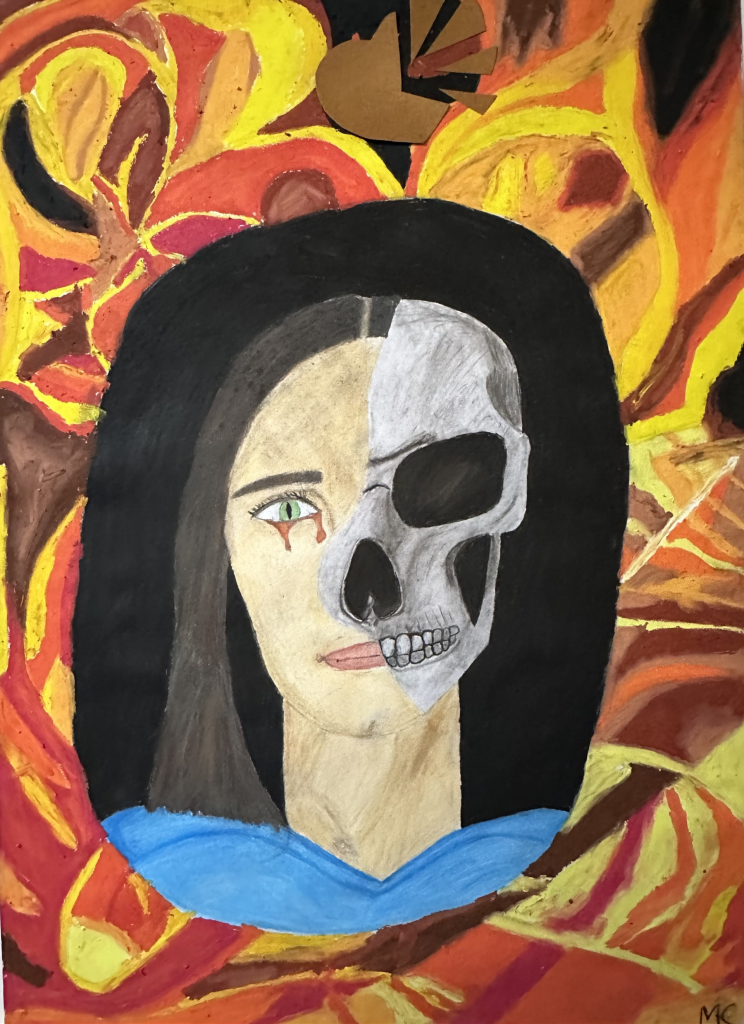
Picture caption: The Lot of Women (Chaos artwork) by Michael Cheadle in pastels, charcoal and oil pastels. Developing Michael’s art is one of my hobbies – smile!
Picture caption: This is my chaos artwork: Burning Butterflies. It became the cover of my poetry book with the same name.
Picture caption: life sized guitar cake I made for Michael’s 18th birthday and a hummingbird cake for Greg’s 21st birthday. Both with lit candles.
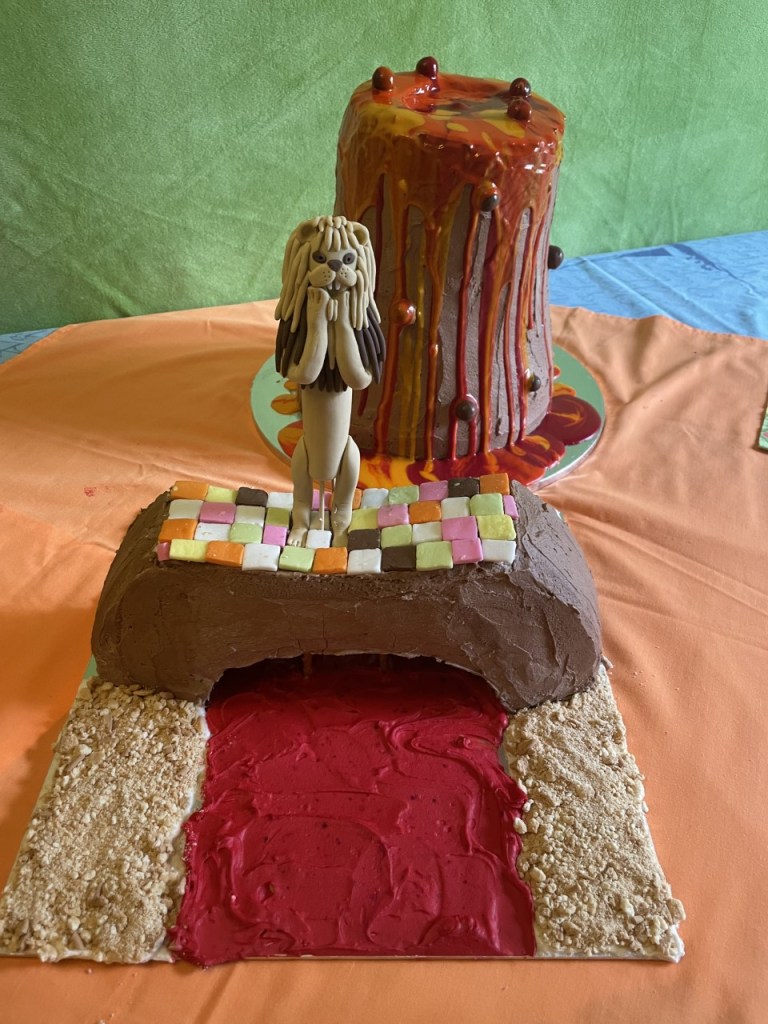
Picture caption: My Lion Scream cake with an exploding volcano behind and a river of fire below. This idea was based on Edvard Munch’s The Scream painting.
Picture caption: a poem from my book Lion Scream