Thank you to Nolcha Fox of Chewers by Masticadores for sharing episode 4 of Chapter 1 of my story, The Soldier and the Radium Girl.
Thanks to my great blogging friend, Teagan Riordain Geneviene for creating this delightful banner for me:
Picture caption: clock face with luminous numbers and piles of letters
Jake Tanner
Letter from Private Jake Tanner to his fiancée, Kate Henderson 25 July 1917
My dearest Kate
I hope you had a lovely birthday on the 23rd. I thought of you all day, and wished I was with you. I am sure your ma made one of her amazing chocolate cakes to celebrate the occasion, and I am envious. The food here isn’t bad and there’s plenty of it, but it’s not a patch on home cooking.
Your news about Charlotte’s new job at the Radium Luminous Material Corporation in Orange is exciting. Dial painting sounds like decent, well-paid work, and it helps the war effort too.
Sarge was one of the first men here at Camp Keyes to get a watch. He showed it to us last night, and we were amazed at how brightly the numbers and hands glowed in the dark. We’re all hoping to get one.
By way of background to this haibun, erosion in the Inxu Valley, Eastern Cape of South Africa, is a significant environmental problem, primarily in the form of widespread and severe gully erosion. There are many physical factors that have resulted in this situation. This haibun is, however, about a local myth that attributes this extensive erosion to the cure of Nonqaba.
The Curse of Nonqaba (haibun)
2,000 Years ago, the Bantu-speaking Mpondomise people arrived in the Inxu Valley of the Eastern Cape. Here, they encountered a strange and elusive people comprising of scattered families. These people are now known as the San (previously Bushmen), and they were traditionally hunter-gatherers. The Mpondomise had good relations with the San until the early 1940s and there was a lot of integration between the two groups. There were, however, San people who loved nature, lived in rock shelters, and could live entirely off the land. These independent San were regarded as the masters of mysterious powers by the Mpondomise who were dependent upon their crops and domestic animals for their survival.
The Mpondomise recognised the San as the first owners of the land and provided them gifts of grain and livestock. The San were also regarded as ‘rainmakers’. During times of extreme drought, the Mpondomise elders would send a deputation to the San respectfully requesting them to make rain for the people. This relationship between the San and the Mpondomise based on rain-making and reciprocity continued for centuries until the 1940s.
By 1943, missionaries had brought Christianity to this area and conflict arose between the Christianised Mpondomise who preferred to pray for rain in a church and traditionalists who still made use of the San rainmakers. When the chief of the Mpondomise died, his second-eldest son, Lushetu, was appointed acting chief while his older brother was being educated by the missionaries in London. Lushetu felt threatened by the rainmakers’ powers and was jealous of their popularity. During a large beer festival held in the Inxu Valley, Lutshetu approached the rainmaker, Nonqaba, aggressively demanded rain from him and then proceeded to beat him up.
Subsequent to this public disgrace, Nonqaba called all the San in the area together and recommended they leave the Mpondomise as a group. Before they left, however, the San cursed the land of the Mpondomise.
Following the disappearance of the San, it ceased to rain in the Inxu Valley region for three years. Gradually, all the lush vegetation disappeared and the Mpondomise’s cattle died of starvation. This terrible period of extreme drought was followed by tremendous downpours of rain which washed away the topsoil for hundreds of kilometres, depositing it in the ocean. Sheet and donga erosion set in and the once fertile valley was transformed into a desert. Many Mpondomise people were forced to leave their traditional homeland and travel to the cities in search of work. The curse of Nonqaba is stilled blamed for the devastation of this area.
Thank you to Sally Cronin for her wonderful Smorgasbord New Book Spotlight on my latest art, poetry, and baking medley, Something Fancy, A Winter Wonderland Celebration Book One.
Thank you to Nolcha Fox for sharing the third episode in Chapter 1 of the work in progress, The Soldier and the Radium Girl.
“The Soldier and the Radium Girl Part 1: The Bloom of Youth, Chapter 1: Enlist in haste, repent at leisure (cont. 2)” by Roberta Eaton Cheadle
Jake Tanner
5 July 1917
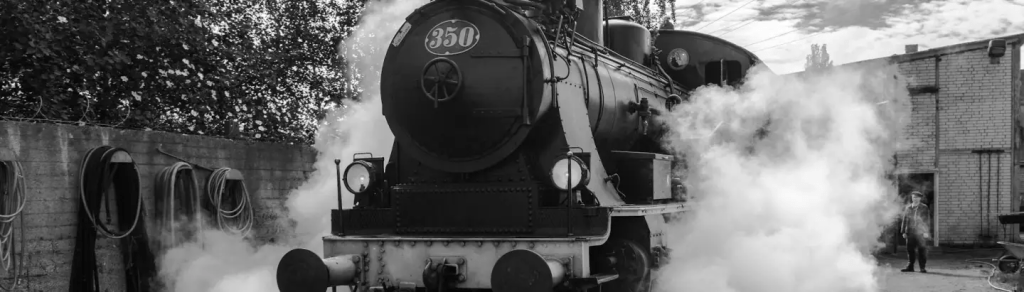
Jake spent most of the day watching train after train pulling into the station at Camp Keyes and disgorging its weary cargo of men. Staggering through the smoke and dust, the recruits formed themselves into straggling rows.
His company’s train had been the first to arrive, shuddering to a stop just as the first strokes of pink, orange, and gold stained the early morning sky with the bright tones of a child’s painting. A pall of sleepiness still lay over the station as they’d disembarked quietly and lined up ready to march.
The air had a cool freshness as the men covered the mile to the camp, but by the time they’d arrived and been allocated to their tents, the sun’s invasive rays had dried the dew on the grass and leeched the coolness from the shadows.
The men were fed, watered, and shown around the camp, and then they were deemed ready to start working.
Thank you to Kaye Lynne Booth for hosting this month’s In Touch with Nature post which features warthogs (also now known as pumbaas – thank you, Disney).
When my family moved to Cape Town from George, we lived in rented homes for the first year. The first rented house was in a suburb called Kirstenhof and that was a bad experience as the carpets were full of fleas when we first moved in. Laura, a small baby at the time, and I were bitten repeatedly. I can still remember those horrible itchy bites that swelled to three times their size. I was the only one of the four of us girls whose bites swelled up. Cape Town is notorious for fleas. The bites stopped when my parents were forced to have the house fumigated.
The second cottage was in Fishhoek and was a great place to live. I have written other memories about our three months in that seaside village. Our third move was into a house my parents bought in a cul-de-sac called Seven Sleepers. The cul-de-sac ended just before a main road and had empty land on either side of the row of seven houses. Across the main road was a big shopping mall which had the attraction to me and Cath of a pot of honey to bees. All around our area, new houses were being build and Cath and I, together with a few friends of mixed ages, used to explore these half build houses over weekends when the workmen were away.
One day when we were mooching around a nearly completed house, we discovered several silver discs lying on the floor. They were the exact size of a twenty-cent piece. They had been punched out of the newly wired electricity board in the kitchen. My friend, Neil, had the inspired idea of trying out the ‘coins’ on the claw machine in the nearby mall. We all loved the machine. You dropped in a twenty-cent piece and could manipulate the claw and try to pick up a small stuffed toy. We were delighted when the machine took the fake money and we all had a few turns on the machine. We never managed to hook a toy, but it was still great fun.
The next weekend, we went back to the houses and foraged for more discs. We didn’t find a single one. The workmen had clearly taken the time to pick them up. It was most disappointing and our time on the claw machine reverted back to when one of us had a bit of pocket money to spend. In retrospect, it was a naughty thing to do and it’s just as well we didn’t win any toys, or I would have had that guilt to add to my memories.
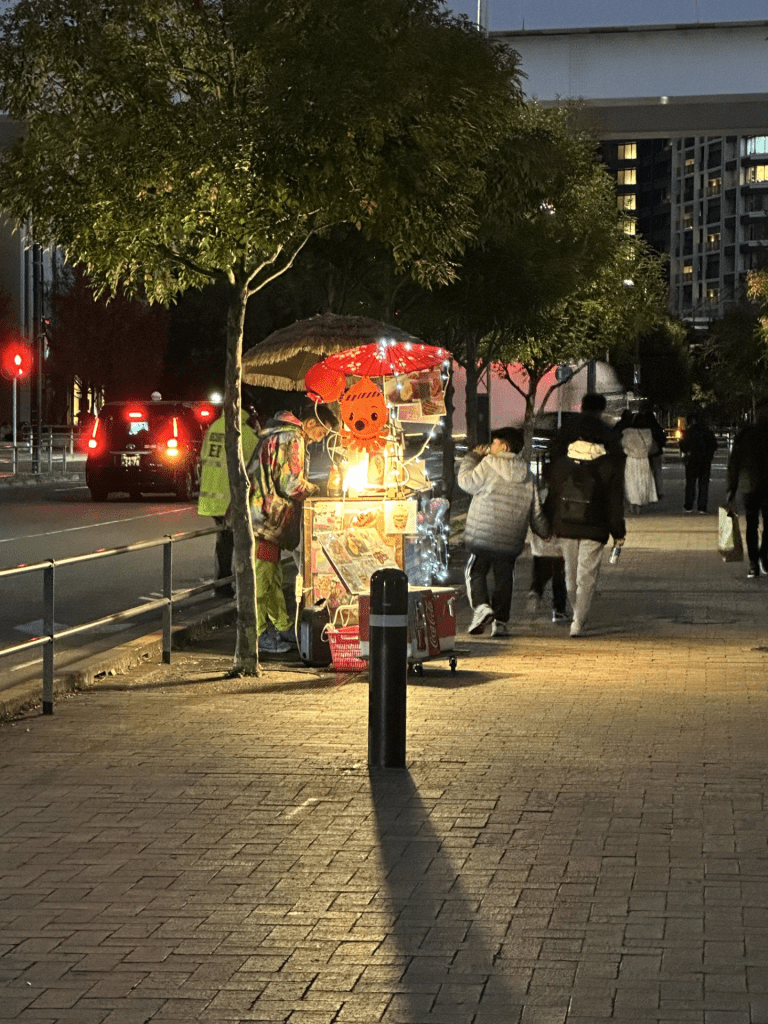
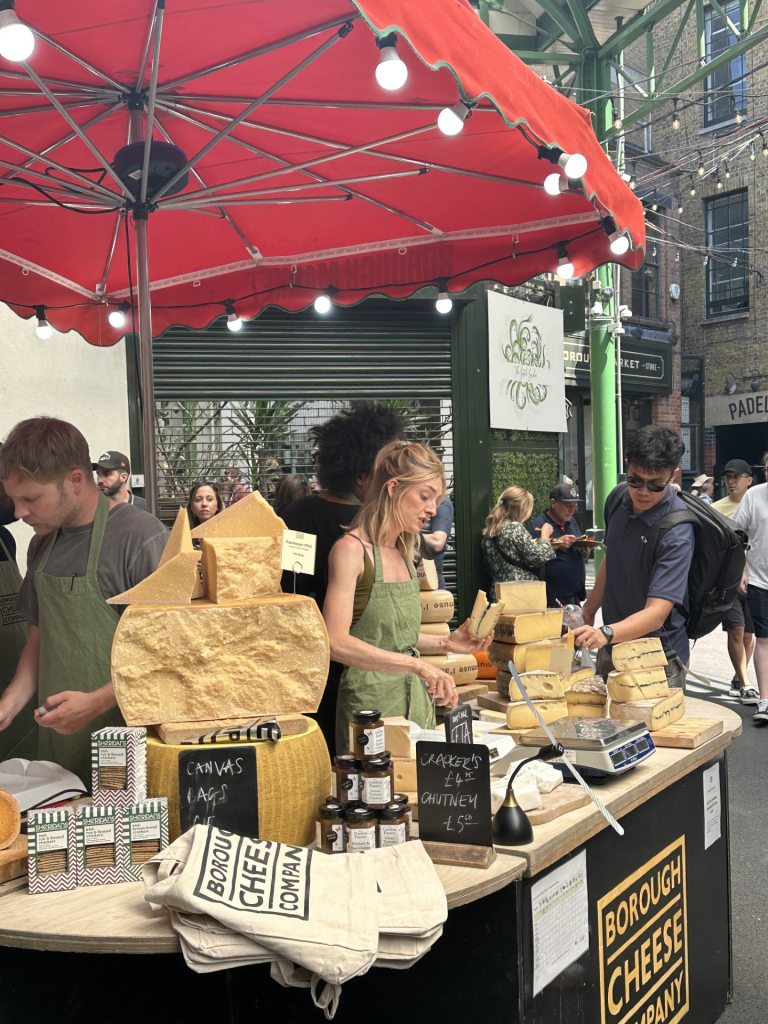
Picture caption: Vendors of fish soup at the Tokyo Fish MarketPicture caption: Fish vendor at the Tokyo Fish MarketPicture caption: interesting fish dishes at the Tokyo Fish MarketPicture caption: Street food vendor in TokyoPicture caption: Vendor of homemade cider and other alcoholic beverages in BrightonPicture caption: Fruit vendors at Borough Market in LondonPicture caption: Selling cheese at Borough Market in LondonPicture caption: Paul’s cafe in Brussels
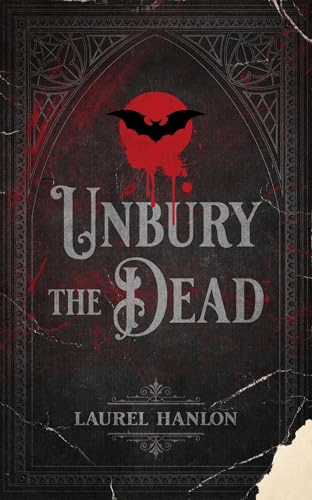
Picture caption: Cover for Unbury the Dead by Laurel Hanlon
I reviewed this book in my capacity as a member of Rosie’s Book Review Team. If you would like your book reviewed, you can contact Rosie Amber here: http://rosieamber.wordpress.com/.
Picture caption: Emblem for Rosie’s Book Review Team
I always enjoy a good vampire novel, especially during Halloween month. Unbury the Dead, debut novel by Laurel Hanlon introduces the novel concept of vampire mafia. The main character, Phil, has fallen foul of his mafia boss father-in-law, resulting in his being interned in a concrete crypt beneath the ocean. The novel starts with Phil finally finding some success in wriggling himself free of his watery grave and making an escape. Phil knows he has been interned for a lengthily period but doesn’t know how long.
The great escape kicks off a fast paced and entertaining story about a vampire misplaced in time and astounded by the wonders of the 21st century. Hunting humans is certainly more difficult with modern technology like cameras on streets and in stores, credit cards, and cell phones. Phil must adjust to these enormous changes while on the run from his father-in-law’s mafia henchmen who become aware of his presence in New York due to his publicized indiscretions.
This book introduces fresh and interesting ideas to the well know vampire mythology and sets the characters in an intensely modern 21st century setting. I enjoyed the ‘culture shock’ and acclimatization aspects very much. There is also an intriguing romance thread that allows for the introduction of some of Phil’s backstory and a deep dive into the cause of his incarceration and current problems.
All in, this is an entertaining retelling of the well-known vampire story and worth the time if you enjoy vampire tales and mythology.
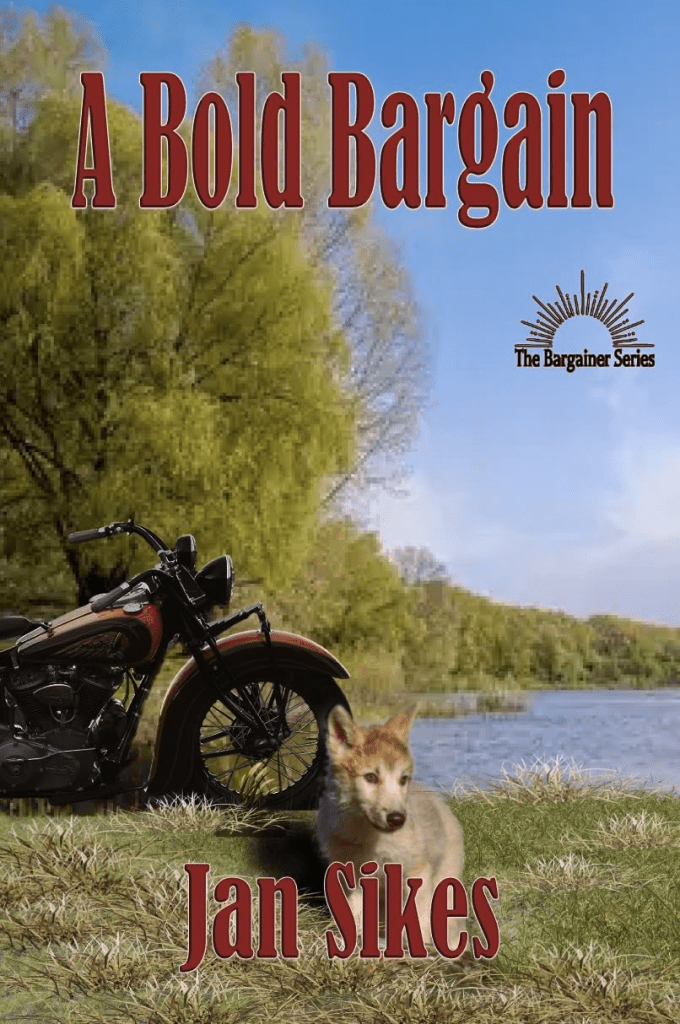
Picture caption: book cover of A Bold Bargain featuring an old fashioned motor cycle and a wolf-like dog
This is the third book in the Bargainer Series and my personal favourite. I am really enjoying these uplifting stories filled with kindness. These books restore my faith in the goodness of humanity, and I appreciate that in our current world of endless bad news.
Jack made his entrance in book 2 as the younger brother of the main character, Rose. His strength of character and innate goodness were evident in that book and this one builds on the reader’s previous interactions with this interesting young man. It is not necessary to read the earlier novels to appreciate this book, but it does help with a greater understanding of Jack’s past and the childhood setbacks he has overcome to get where he is at the beginning of this book.
I was delighted to discover Jack working as a substitute conservationist and knocking heads with vicious poachers of wild animals. Jack’s deep love of animals really resonates with me, and I was also thrilled at his adoption of first a young puppy (possibly part wolf), and then other creatures in need. Jack’s willingness to help other in need leads to his meeting and assisting and elderly woman who is slowly going blind and suffering other effects of an illness and also, a young lady who is on her own mission to help her aging grandfather.
These threads of catching poachers, helping Mrs Fletcher, meeting Finley, and developing bonds with various animals, all weave together into a beautiful and uplifting story. This is a wonderful book to read in the lead up to the Christmas season or at any other time when your spirits need lifting.
Thank you to Nolcha Fox, editor of Chewers by Masticadores, for publishing episode 2 of chapter 1 of my work in progress novel, The Soldier and the Radium Girl.
I am sharing the first chapter of this novel to test the water as to whether it interests people. I would appreciate your comments as I decide whether to finish it or not.
Walking home through the emerald fields with Kate by his side, regret at all he’d be leaving behind dampened Jake’s enthusiasm. By the time he’d delivered Kate safely home and reached his own front door, the fiery eruption of excitement had slackened, and anxiety, like fine ash, coated his heart.
Jake’s ma was in the kitchen with his younger sister, Martha. The rich scents of roasting meat and apple and cinnamon enfolded him in their warm embrace. Mrs. Coombes, the cook, was not there. It was her bi-weekly day off, and Jake was pleased and relieved. Pleased that his ma was cooking, she was a great cook and her meals were always fit for a king, and relieved that he didn’t have to face Mrs. Coombes reaction to his news, as well as his ma’s and sister’s.
“Jake, you’re just in time to carry in the wood,” Martha cried, beaming. “I’ve filled the wood box, but it’s too heavy for me to carry.”
“I’ve enlisted, Ma.” Jake spat out his news like a bit of undigested food.
#BadMoonRising Through the Nethergate by Roberta Eaton Cheadle #horror #historicalfiction #bookgiveaway
Thank you to author, Teri Polen, for sharing this post about my book, Through the Nethergate, as part of her Halloween Bad Moon Rising series.
You name a genre, and this author’s written it – adult novels, young adult, poetry, children’s books. She’s also working on the first novel in her cake art and baking trilogy. Find out which book scared her so much it kept her awake at night – but not enough to quit reading it. Welcome Roberta Eaton Cheadle!
Would you rather spend a night in The Overlook Hotel with Jack Torrance or be in the high school gym during prom with Carrie?
Stephen King was my favourite author when I was a pre-teen. I read all the books he wrote during the ‘70s and ‘80s (hidden behind the couch as they belonged to my mother). The Shining is still one of my top three King books so I would choose to spend a night at the Overlook Hotel rather than at a school prom. I particularly enjoyed the scenes in the bar when Jack Torrance meets the various ‘ghosts’ which inhabit the hotel. This novel explores family relationships and how love and nurturing can turn to hate, and resentment given the right circumstances. I always find psychology fascinating.
Three short quotes that summarise the essence of The Shining:
“Sometimes human places, create inhuman monsters.”
“Monsters are real. Ghosts are too. They live inside of us, and sometimes, they win.”
“The world’s a hard place, Danny. It don’t care. It don’t hate you and me, but it don’t love us either.”















 roberta-writes.com