When I was ten years old, my family relocated from Cape Town back to the small town of George in the Western Cape. I attended a convent with a limited number of children. Despite our small numbers, the nuns cajoled all of us into participate in sporting activities, including swimming and athletics. Our headmistress also entered teams into local sporting competitions.
I was two years younger than the majority of my classmates, so I had to participate in athletics with a class two grades below my own. At the running trials, Sister Agatha discovered that I was the fastest runner in my school, and she put me on the team. I didn’t want to run with a class other than my own, but there was no denying Sister Agatha.
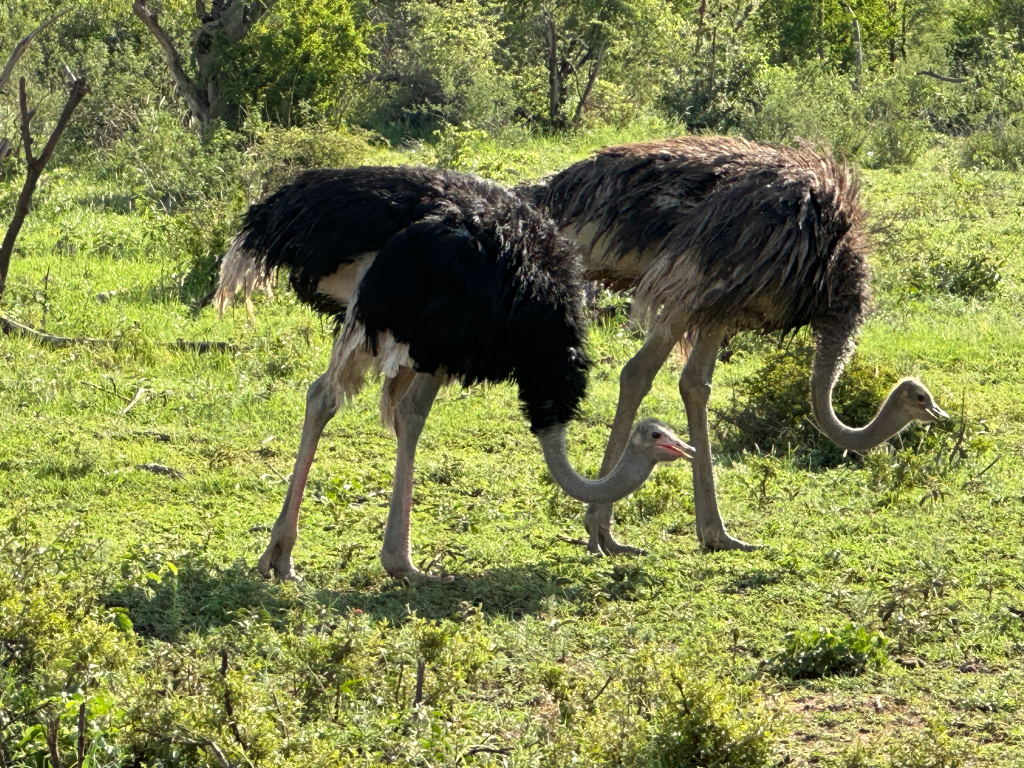
It was at my first athletics meeting that I discovered I had a most peculiar style of running. I competed in several races and won them all but afterwards the other kids teased me. “Ostrich Girl,” they called, hooting with laughter. One boy demonstrated my odd running style, stretching his neck forward as far as possible and racing across the field.
I was so embarrassed I never competed in athletics again.
Ostrich girl
Head thrust far forwards
Legs pumping
Dust flying
Unkind moniker destroyed
Sporting confidence
Picture caption: OstrichesPicture caption: A male (front) and female ostrich
Lillian is hosting Open Link Night and dVerse LIVE today, Saturday!
SATURDAY Join us on Saturday, August 17th from 10 to 11 AM, New York time. Click on the link below to join us LIVE, with audio and video! Share a poem aloud, or sit in just to listen. Either way, it’s fun to see folks from around the globe who all enjoy the power of words and the enjoyment of poetry. The more the merrier!
This is a parody of Enola Gay which you can listen to here:
My song parody is based on an incident earlier this year when an elephant attacked a vehicle full of tourists. Just to be clear, the guide in this case was attempting to protect the boma (building with a roof and open sides) at the look out point which was full of people. Elephants are not sweet and gentle. Elephants are powerful wild animals that must be treated with respect and caution.
Okay, now that I’ve scared you to death about elephants, we can have a virtual elephant tour.
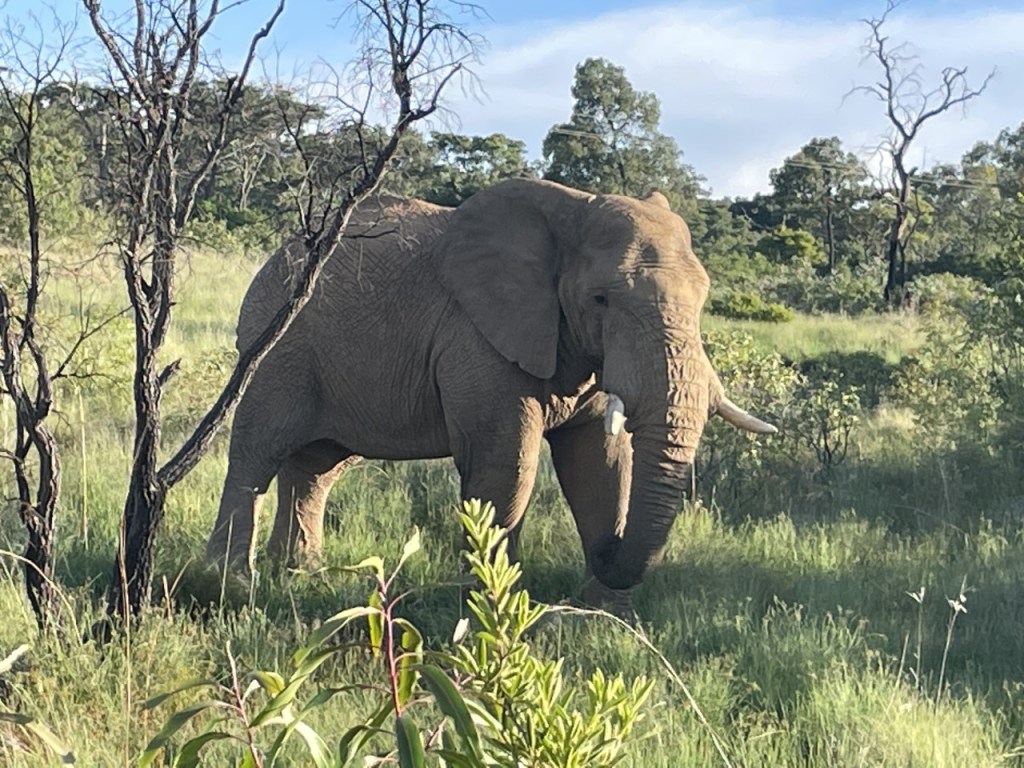
Picture caption: Elephant feeding – this was during the winter which is why its so dry (Madikwe is a semi desert area)Picture caption: This is in the Waterberg. An elephant peeping behind a bush. He was a very big guyPicture caption: Younger elephant. This picture is also taken at Madikwe but in January (our summer when it rains)
This is one of my favourite YT shorts featuring elephants:
I also like this video. It’s a bit wobbly because it was my first time filming with my new camera, but I love the colours of autumn:
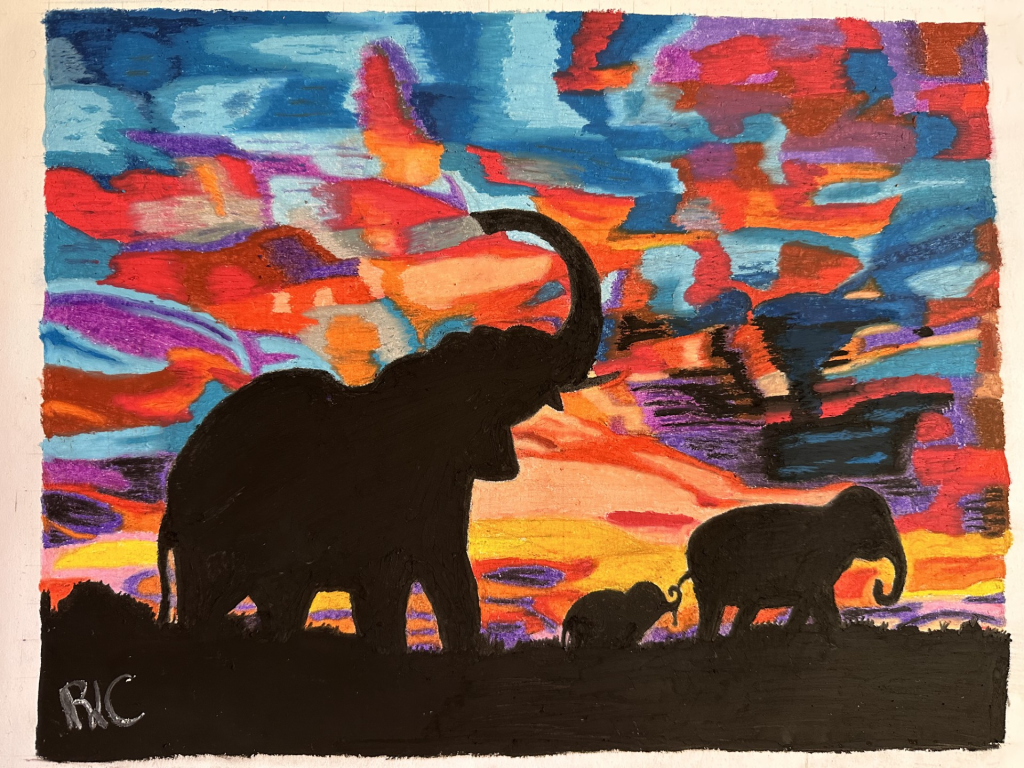
Picture caption: My painting (watercolour and acrylic) of the elephant in the puddle (first video)Picture caption: My charcoal drawing of a baby elephant nestling into momPicture caption: This is called Tempestuous and features an elephant family against a pre-storm sky in oil pastelsPicture caption: this is called Twilight and features a lone elephant against an evening sky
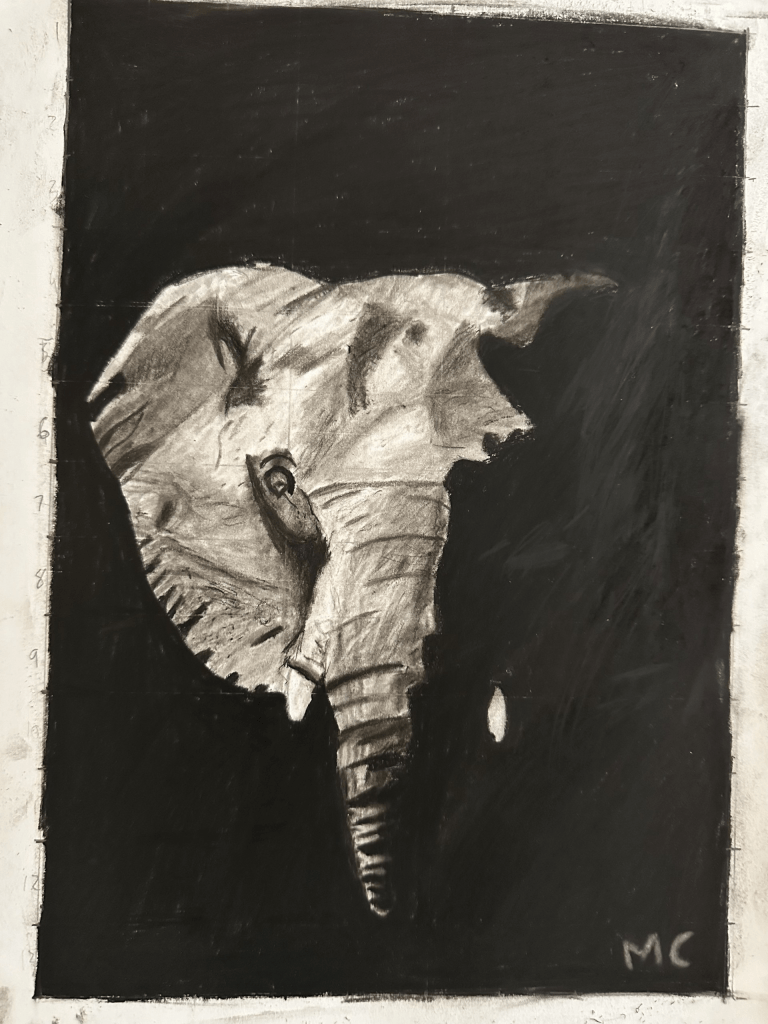
Michael’s art
Picture caption: Michael’s charcoal elephant. I think I influence his art – haha!
I have two book reviews for your today and they are very different. As I was preparing this post, I thought that they are almost opposite each other with regards to their content and focal points. That being said, variety is the spice of life, and both are great reads.
Silver Fire (The Kaerling Book 1) by Freya Pickard
What Amazon says
What starts as an innocent quest to follow the unicorn’s trail, turns into a sinister nightmare.
“I was so happy to find a book that truly captivated my imagination from beginning to end.” K Johnstone
Banished from their village, Otta, and her twin brother Erl, (who has lost his memory), must stay ahead of those who seek to kill them.
Learning how to follow the unicorn’s trail and deal with her brother’s dark side, Otta must keep them both safe as she attempts to follow the commands of a shrineless god.
This epic fantasy tale begins the saga of The Kaerling.
The Kaerling is a series of linked novellas that can be read individually as well as in chronological order.
Warning: contains scenes of a sexual nature and some violence which some readers may find upsetting.
My review
I quickly became engrossed in this first Kaerling book and intend to read more books in this series. That being said, I must warn potential readers up front that this book does touch on the disturbing topics of rape and incest.
Otta and Erl are the oldest twins in their family. From a young age, they know their family is different from the families who occupy the nearby village and they quickly understand that certain viewpoints held by their parents, and talents they possess, would be frowned upon by their neighbours. As they grow up, they keep these secrets until one fateful day when circumstances put them in a position where they chose to live their truth.
Unfortunately, during this process, Erl is badly injured and loses his memory and understanding of right and wrong. At the same time Otta interacts with a god and is told she must follow the unicorn trail to unravel her destiny. When Otta discovers the injured Erl, she takes him back to the family homestead but it soon becomes clear that their transgressions have earned them the wrath of the village elders and they have been banned from the village and its vicinity on pain of death should they be found within a ten mile border.
Otta is forced into taking Erl with her to traverse the unicorn trail. As they set off they come across groups of people, both good and bad. Otta discovers further unsuspected powers and Erl recovers physically but is no closer to remembering the details of his life although he does learn some hard cultural lessons.
Otta is a strong willed and determined woman and it is unusual to find a female character taking the lead in a twin sibling setting. In many ways she is lacking in understanding with regards to her brother and a bit of insight would have helped avoid difficult situations. The twins are, however, young, so Otta’s behaviour is realistic and plausible.
My Checkered Life: A Marriage Memoir by Marian Beaman
What Amazon says
Take an intimate look into one couple’s fifty-plus-year marriage in author Marian Beaman’s My Checkered Life: A Marriage Memoir. Using a quilt motif, the author stitches together stories that make up the fabric of their daily lives including the clash of cultures, crisis in a travel trailer, surviving a robbery, and enduring financial hardship.
Discover how the author and her husband learn the art of the argument with explosions both literal and metaphorical. Observe how they find common ground through their shared faith and commitment.
This volume contains excerpts from autograph books and diaries of the early 1900s, treasured family recipes, original artwork, and restored photographs―the legacy of multiple generations as two American families merge, one from the East, the other from the West. The author connects the dots of her life backwards, with detailed reverse engineering of events to discover meaning in her life as a wife.
Readers of Marian’s first memoir, Mennonite Daughter: The Story of a Plain Girl can especially relate to her insider narrative, a closeup of one couple’s companionable union.
My review
My Checkered Life is an entertaining follow on from the author’s initial memoire about her life growing up within the Mennonite community. Marian’s background is important to this second memoire which describes the tribulations and joys of weaving together the lives of two people from vastly different backgrounds. Marian and Cliff did this well and also overcame misunderstandings, financial trials, small children, and a nomadic life on the road. The difficulties of caring for a young family from the confines of a camper were detailed with emotion and candor and I lived the hardship of this time alongside Marian.
I enjoyed learning more about Cliff and his transition from a teacher to a creative albeit still in the teaching world. He certainly comes across as a good man with a great deal of determination and also an excellent sense of humour.
This memoire is almost a coming of age story for a young couple. I couldn’t help thinking how much harder this couple worked at making a success of their relationship and marriage than a lot of young newly weds now. Divorce has become the seemingly easy answer but there are no quick fixes in life. There is a lot to be said for having the right attitude to marriage and the ability to compromise.
No matter your stage of life, you can learn a lot about living a successful life through reading this book.
In closing, I must mention that I think the title and cover are perfect for this book. A checkered or patchwork quilt is synonymous in my mind with hard work, strong values, and a stable and good quality family life. This is what Marian and Cliff have achieved and it is to be highly commended.
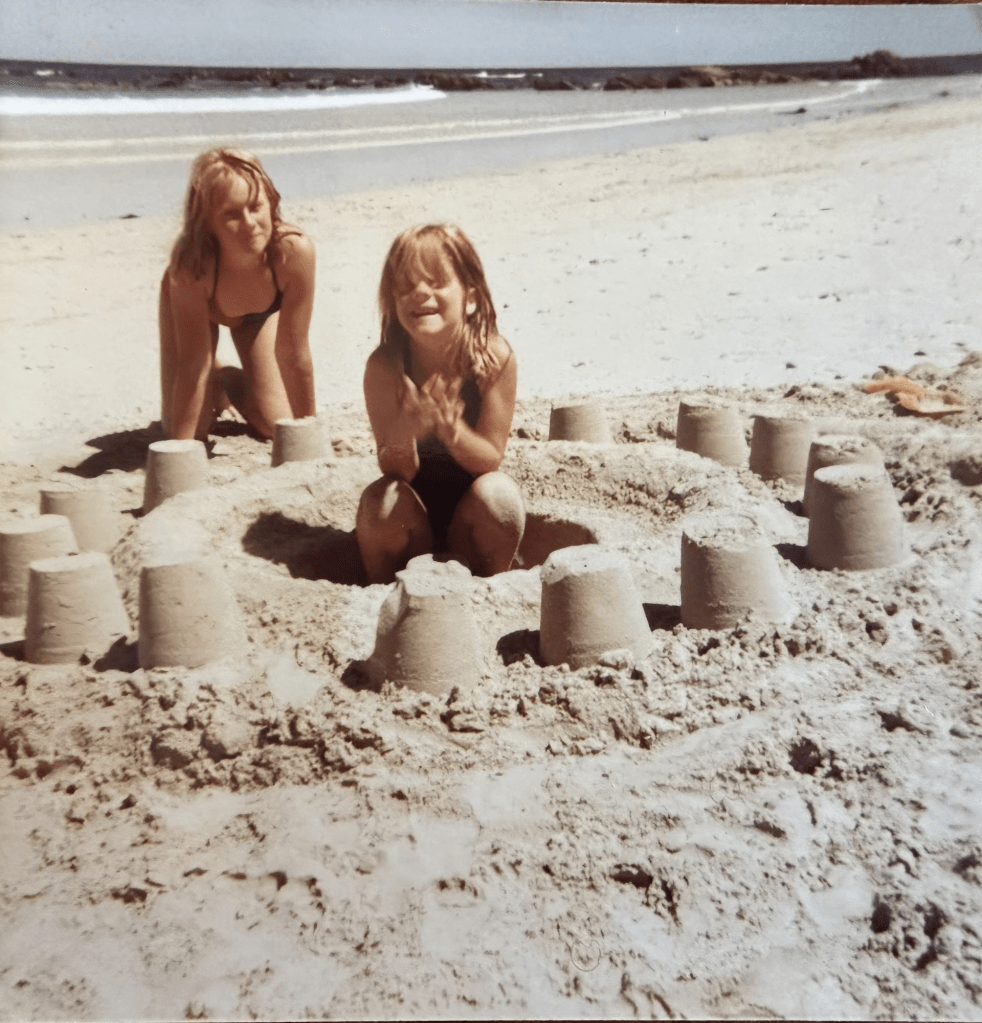
The hands of the clock and the sun in the sky moved slowly during those long, warm days of summer holidays. Other than limited household chores, Cath and I had little to do other than visit the nearby beach, splashing about in the waves and getting sunburned. All summer long our noses and shoulders blistered and peeled. There was no respect for the might of the sun in those days and sun screens were still a twinkle in the inventors eyes. I remember the stinging pain.
Our skin itched from the salt and our feet and toes roughened and sometimes bled from the abrasive sand. As we jumped over, and dived through, the frothy seahorses, the sand collected in the gussets of our swimming costumes. We would leave the water with our costumes hanging down to our mid thighs from the weight of the sandy collection.
We had no thoughts of the future or of the past. We lived in the moment. Sea shells were gathered in plastic buckets and carted home. I would scrambled up onto the roof of the garden shed, dragging Cath behind me. We would sit together with our buckets of shells and home made glue, creating shell people. Hours were passed in this pleasant task with the gentle wind ruffling our hair and the floury smell of the glue in the air. Our childish eyes saw these artworks as masterpieces. They remained on the roof until the rain dissolved the glue. Then, we started again.
It is also a response to Melissa‘s d’Verse prompt as follows:
Today’s Poetics prompt, if you choose to accept it, is to write a poem including one example of zeugma. You may come up with more if the muse strikes, but only one is required. My seugma is included in the first line of my prose piece.
Laura is the host of the Friday d’Verse prompt, Write an Actameter for August (no theme required) as follows:
“And for today’s MTB prompt we are going to write an Octameter – designed by Shelley A. Cephas in 2007
Poetry Style:
16 lines
2 stanzas of 8 lines each
5 syllables per line
rhyme scheme a/b/c/d/e/d/f/d; g/h/c/g/i/g/d/d. (N.B. watch out for those repeat rhymes and where they fall; 2 in the first stanza and 3 in the second stanza)”
Monday’s d’Verse challenge is hosted by De Jackson here, aka WhimsyGizmo
Let your muse out of the jar, and scribble us a poem of precisely 44 words, not counting the title, and using some form of the word jar. Then head out into the blogosphere to visit some of the finest poets on the ’net. And don’t forget: the Quadrille door is ajar all week, and multiple poems are welcome!
My sincere thanks to talented author, Joan Hall, for hosting a guest post about castles with secret tunnels and chambers as part of my And the Grave Awaits blog tour.
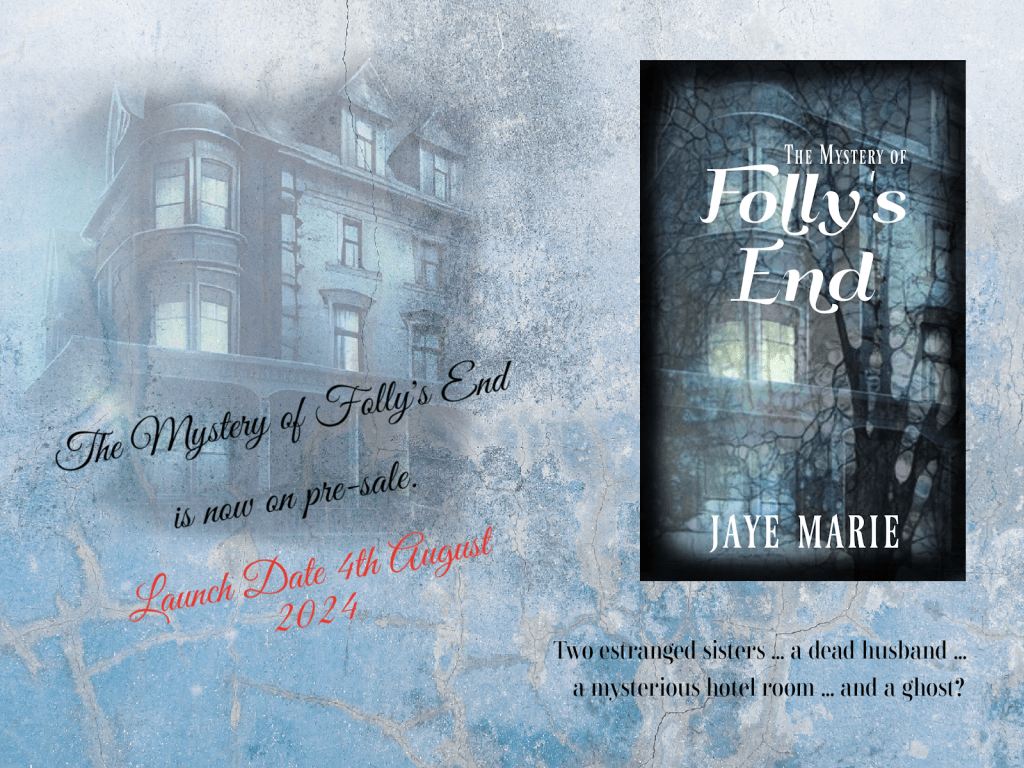
Picture caption: Promotional book banner for The Mystery of Folly’s End featuring the book cover against a back ground of a mysterious house
Today, I am delighted to welcome talented author, Jaye Marie, to Roberta Writes to celebrate the launch of her new book, The Mystery of Folly’s End.
About The Mystery of Folly’s End
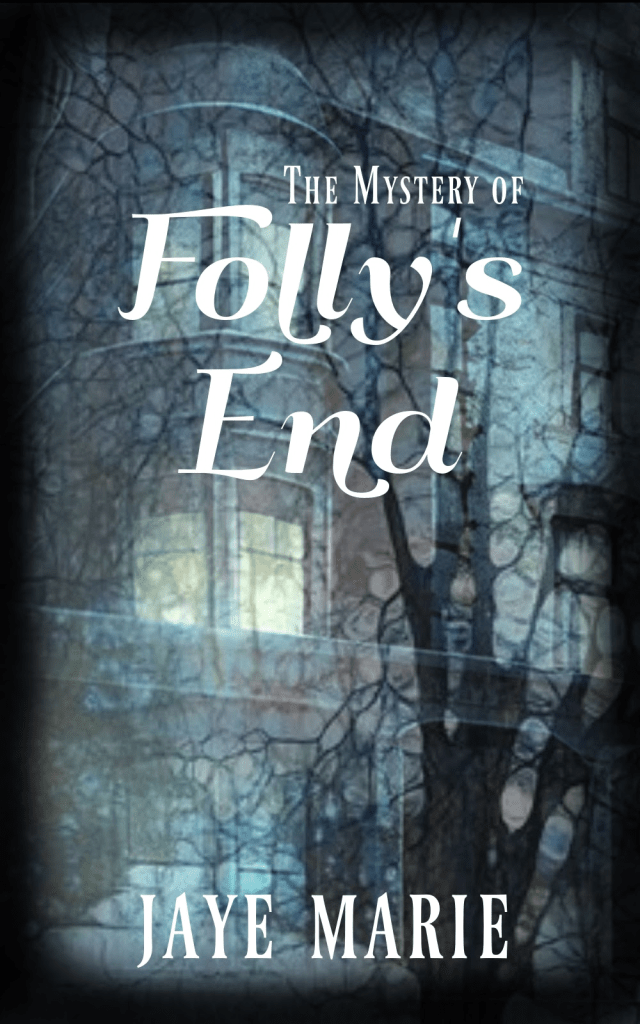
Picture caption: Book cover of The Mystery of Folly’s End featuring a glowing window in a house surrounded by dark trees
Two estranged sisters, a dead husband, a mysterious hotel and a ghost?
Charlie didn’t want to know her cheating sister Then she phones, desperate for help. The man she stole from her has died in mysterious circumstances Leaving her with two children and no money. Unable to ignore the plight of the children, Charlie drops everything, her life and her job, and rushes to help her family.
Will the fragile truce between them last? Can she find it in her heart to finally forgive her sister, or will what happened in the past destroy any chance of a reunion?
Can these sisters work together to solve their problems, or would that be too much to ask?
Meet Charlie Fletcher
Introducing Charlie Fletcher…
My writer has devised a clever idea to introduce myself to the book-reading public.
I am supposed to wow you with my fantastic personality if I remember where I left it.
I am part of a very successful Interior Design company based in London. We are well known for our innovative concepts.
A single, fun-loving woman, the eldest of two warring sisters. We couldn’t get on these days if our lives depended on it.
This wasn’t always the way with us. As children, we were the best of friends, but when she stole the love of my life and married him, she ruined any chance of a happy ever after for either of us. Luckily, my sister had moved away before I could get my hands on her. I have hated her ever since.
So, when I received a frantic call for help years later, I had mixed feelings. Turns out, the love of both our lives was missing, presumed dead, leaving my poor sister with no money and two kids to look after.
Should I ignore the call or tell her to take a running jump?
It’s not as easy as it sounds. As I said before, I am a businesswoman; I can’t take off on a mercy mission at the drop of my sister’s hat. But for some reason, one I can’t seem to put my finger on, I packed a bag and travelled to Bognor on Sea, turning up at her door the next day.
Can I patch up the past, forgive my sister, sort out her problems and get back to London before I am missed?
Why don’t you come along with me on the 4th of August and find out?
Extract from The Mystery of Folly’s End
“When I walked through the front door, the red light on the answer phone was blinking, so I pressed the replay button on my way to the kitchen, expecting a message from Peter. Instead, my sister’s voice followed me as I filled the coffee pot. I wondered what had prompted the call, as it had been so long since she’d had anything to say. When her voice grew louder, I stopped what I was doing and listened.
‘… I have to bury Tom, but I don’t know how without any money, there’s nothing in the bank… please pick up, Charlie, I need you.’ She didn’t wait long before hanging up.
Her words didn’t register fast enough for my exhausted brain. I finished making the coffee before it hit me. Tom was dead?
I rang my sister’s number.
‘Who is this?’ Her voice sounded normal now, not stressed or upset, which probably meant there was an empty wine bottle around somewhere.
‘It’s me, Angie. I was at work and didn’t get your message until now.’
‘So kind of you to call, sister dearest.’
Better make that two bottles of wine. ‘Maybe I should ring back when you’re sober…’
‘Suit yourself, only you’ll have a long wait. I may never be sober again…’
I wanted to put the phone down, but something made me ask, ‘How are the kids, Angie?’
For a moment, I thought she’d passed out. I could hear the television somewhere in the background.
The next voice I heard sounded small, helpless, and lost.
‘Sorry, Charlie. I’m hovering between anger and hysteria and enjoying neither. At least the tears have stopped. I know it’s a big ask, but can you please come and help me?’
I closed my eyes and took a deep breath. We hadn’t been close since she married Tom all those years ago, breaking my heart, for he was mine long before she got her claws into him. She had driven a mile-wide wedge through our family before moving away with him, but she was still my little sister. Something terrible had happened, and two helpless children were involved. I knew my fate was sealed, at least for a while. Rather than ask questions, I said I would be there in the morning.
Tom was a successful property developer, so I wondered why they had no money. I made arrangements with Maggie while toasting a cheese sandwich, secretly glad to be passing on that awkward customer. Before turning in that night, I threw an assortment of clothing into a bag, ready to leave first thing in the morning. I fell asleep, wondering what I had let myself in for…”
Picture caption: Book promotional banner featuring the book cover of The Mystery of Folly’s End in a dark and misty woodlands
Jaye Marie came to writing rather late but has always loved books.
She enjoys reading many different genres, so was surprised to discover a passion for writing detective thrillers. Four of them to date, with more to follow.
She also enjoys running a website/blog, https://jenanita01.com and loves meeting all the wonderful people who drop in to say hello!
When I was a little girl of six years old, I loved to dress up. I was never Robbie. I was Peach-Blossom, the Native American Princess, or Willow, the Irish tree spirit, but most often, I was Aurora, the beautiful princess from Sleeping Beauty.
I had the record of Sleeping Beauty with a frightening picture of Maleficent, the evil fairy and self proclaimed ‘Mistress of All Evil’, on the front cover in the form of a fire breathing dragon. The back cover featured animated pictures of golden haired Aurora and the three good fairies. How this story captured my imagination. I hadn’t seen the film, but I listened to that record over and over again. I danced and sang and became Aurora.
At school, I taught my friends about Sleeping Beauty and Aurora. I made up a play of the story, based on the record. Each of my friends had a starring role but I was Aurora. My teacher came across us practicing this play in the school playground one day and decided we should perform it for the whole class.
My patient father, quite used to his dreamy daughter, brought our old record player and the record to school and set it up for the performance of the play. My mom sewed me a dress from fine lemon fabric with an underskirt. My friends and I performed the play and I was Aurora in my beautiful, floaty dress. It was a magnificent performance that I’ve never forgotten.
Little girl
Bewitched by music
Enthralled by
Good fairies
Always dancing and singing
Happy enchantment
Years later I saw the film and it thrilled me. It is still one of my favourite Disney movies.
This is my favourite scene from the movie:
Battlestar Galactica was not a film, it was a TV series. Not an exact fit for Esther prompt, but close enough in my opinion.
Battlestar Galactica Brides
When I was a little girl of six years old, I had a best friend named Susan. Susan was the daughter of one of the teachers at my school. The pair of us loved Battlestar Galactica, a TV series about human refugees whose home planet had been destroyed by evil Cylons and who were trying to find the legendary but unknown planet Earth.
Susan and I played Battlestar Galactica for months. I created ‘walkie talkies’ for both of us out of small Liquifruit boxes. The straw was the antennae. We pulled it up when we were talking and pushed it down again when we were finished. I wrote numbers on cut-to-size pieces of paper which I pasted onto the front of the boxes. These were the push buttons for dialing people. In my story, Captain Apollo was my boyfriend and Lieutenant Starbuck was Susan’s sweetheart.
One day, we decided we should stage a double wedding. We planned for this momentous occasion for weeks. Somewhere, we got hold of some tulle to fashion into veils and we both had white dresses. We picked fresh flowers from the garden for our hair and bouquets.
I’ve never forgotten that ‘wedding’ or the liquifruit ‘walkie talkies’ I made, although I can’t remember much about the show.
First wedding
In white with flowers
Girl children
Adherring
To traditional ideas
How life has changed
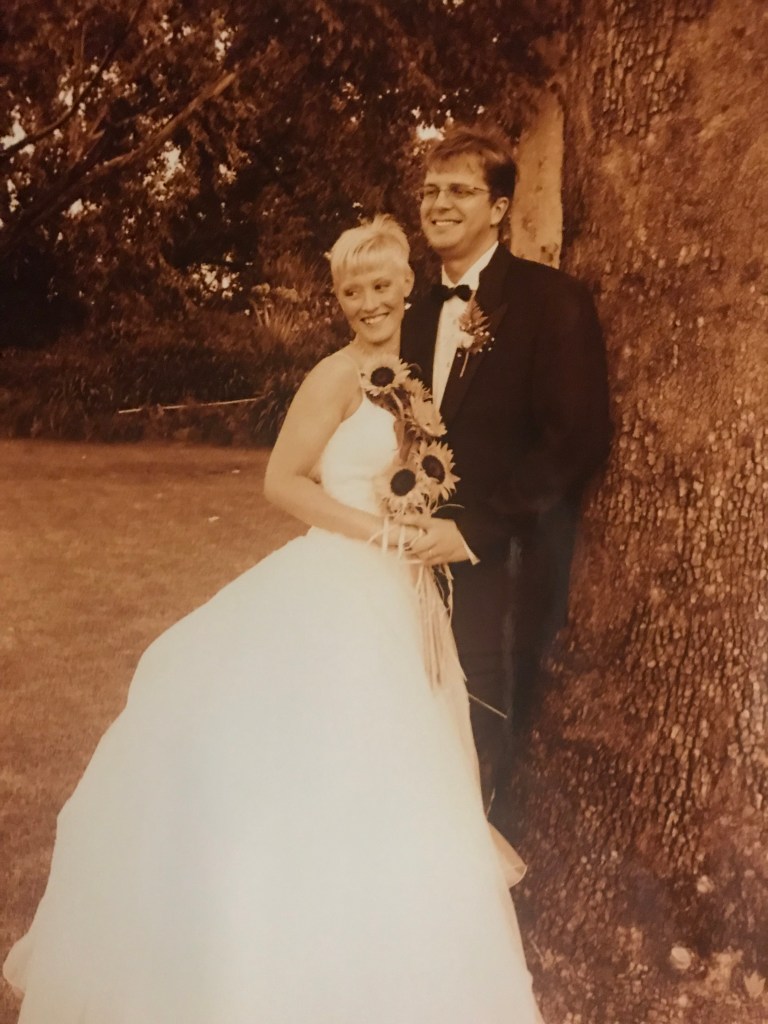
I don’t have pictures of these events, but this is a picture of TC on our wedding day:
Today, I am delighted to welcome talented author and blogging friend, Dan Antion, to Roberta Writes with a post about his latest book, Bridge to Nowhere.
Picture caption: Promotional banner for Bridge to Nowhere featuring the book cover and the purchase links
About this series
The Rascal Todd Mysteries are novels and short stories featuring a stubborn young investigative reporter for the Pittsburgh Courier-Reformer. We first met Rachael “Rascal” Todd in the final book of the Dreamer’s Alliance Series when her research into a closed case caused her to become a target herself. With help from her boss, her father, her boyfriend, and on occasion, her cat, Bonkers, Rascal finds answers that the authorities can’t.
About Bridge to Nowhere
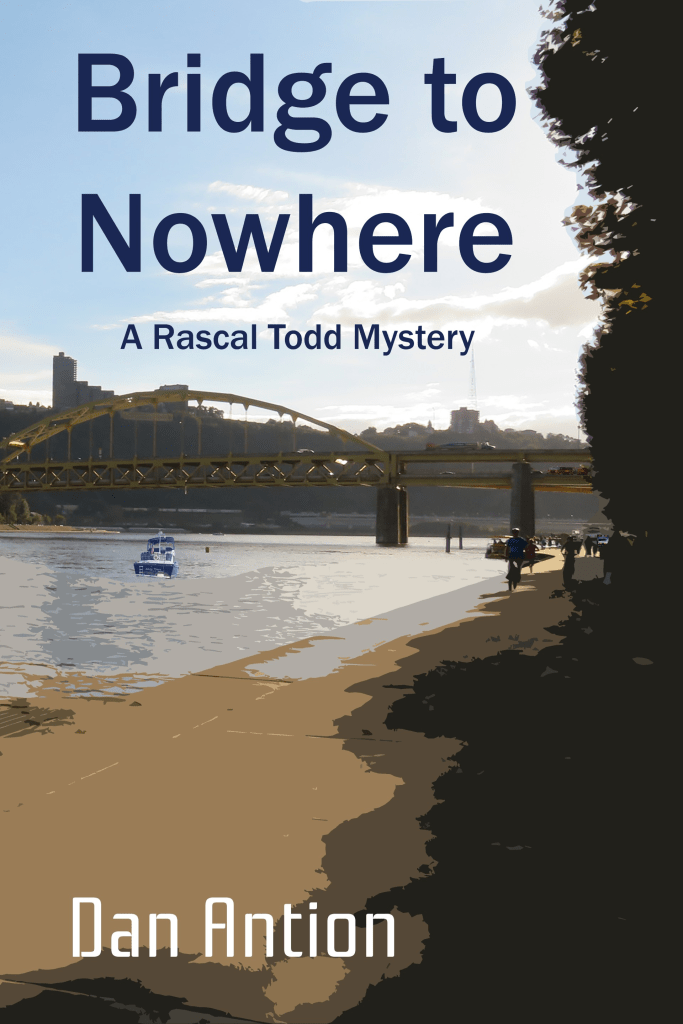
Picture caption: book cover of Bridge to Nowhere featuring a bridge with a small boat in a harbour
Pittsburgh reporter Rachael Todd has a hard deadline — and it’s personal. Her friend is a murder suspect. He knew the victim. He had a strong motive and a weak alibi. Rachael’s certain he is being framed, and she’ll have to live up to her nickname “Rascal” to clear him. Rascal sees a connection to an earlier crime. The clock is ticking as she digs through multiple layers of legal and bureaucratic misdeeds, crimes, and evidence that the police ignored.
Is a crime solved when the criminals are identified, or only after they are brought to justice? This is a mystery born from that question. The story includes many twists and turns, even after the crime is solved. It features characters, including the bad guys, that grow in ways that might surprise you, and well-researched circumstances that will take you from delight to frustration while moving you close to the edge of your seat—sound interesting? If it does, this book is for you.
Gary Willes is a friend of Rachael’s that she met when, on a police ride-along, she was present while he was trying to commit suicide. Gary had been recently laid off, but decided to abandon his career as an accountant and become a teacher. Rachael is interviewing him for an article on how he has turned his life around.
“Gary explained why you’re here, Rachael. I’ll leave the two of you to cover that.”
Gary followed Tanya to the door. He gently closed the door behind her and returned to the front of the room.
“I’d invite you to the library, sorry, ‘media center’ or the teacher’s lounge, but I have some things to share that I’m not eager to explain to anyone else.”
Rachael was a little confused. “About your suicide attempt, or about Jeffrey Kline?”
Gary gave an ah-ha kind of laugh. “About Jeff, but not what you think. Also, not what I hope you will share in your story—at least not yet.”
Now Rachael was totally confused. “Did you know Jeff? Are people asking you about his murder?”
Gary looked around the room, as if someone might have sneaked in through the closed doors. “Rachael, I’m a suspect!”
Rachael’s eyes opened wide. “What? Why would anyone think you would kill him? That’s absurd.”
Gary explained. “Someone sent the police an anonymous tip. They suggested I killed Jeff to force Riverbend to hire me back.”
About Dan Antion
Picture caption: Dan Antion’s author picture. Dan is wearing a baseball cap and a blue jacket. He has glasses and a small beard.
Dan Antion was born and raised in a small suburb outside of Pittsburgh, Pennsylvania. Dan is well known from his popular blog, No Facilities, where he brings humor to a snarky set of characters and shares photos of nature and architecture. After forty-two years in a technology role in business he began a second career as an author.
When he’s not writing, you can find him hiding in his wood shop, or exploring with his camera.