Thank you to amazing fiction writer, C.S. Boyack, for sharing a post for my Sesi says goodbye to Granny book blog tour. The post is all about an elephant’s trunk and shares some amazing facts about how elephants use their trunks.
Craig writes entertaining posts about writing, his muse, and the development of his remarkably imaginative fantasy books. If you haven’t tried one you really are missing out.
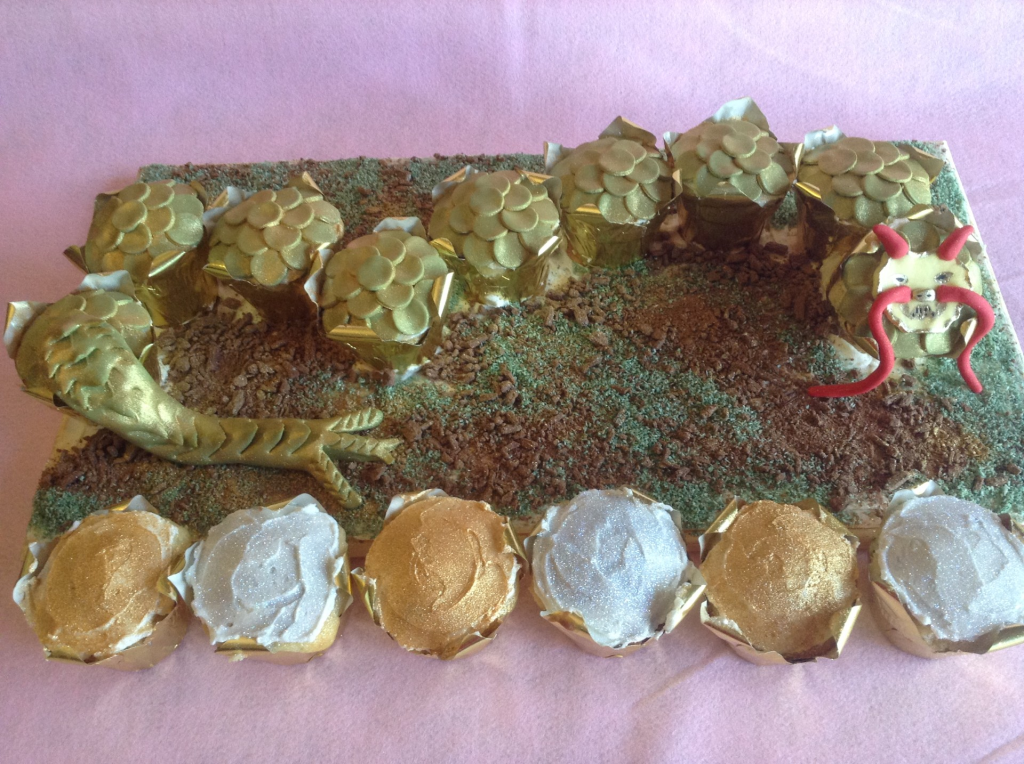
Picture caption: This was my first attempt at a Chinese Dragon cake. I made this for one of Michael’s birthdays. The scales are gold and I added edible gold glitter.Picture caption: Close up of the Golden Chinese Dragon cakePicture caption: My second attempt with a multicoloured Chinese Dragon. I made this for the children at the SA Festival of Children’s Literature in 2023. Picture caption: Chinese Dragon peeking out of the window of his house in Sir Chocolate and the Chinese Candy Dragon story and activity book
If you are interested, this is the presentation I gave at the SA Festival of Children’s Literature in 2023. It showcased a lot of my cake and fondant artwork.
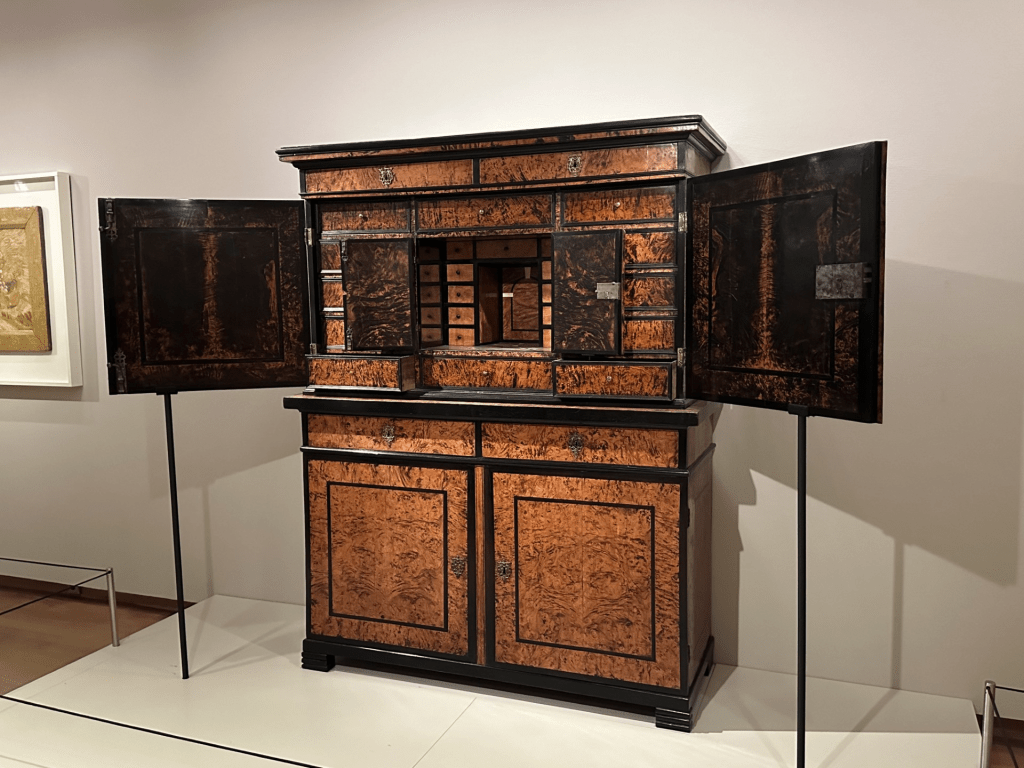
In addition, I am sharing the cabinet I saw at the Van Gogh Museum. It is the one in which Vincent’s brother, Theo, stored the letters he received from Vincent over his life. It is a beautiful piece of art in itself and it has a lot of drawers.
This is a picture I took of one of the letters from Vincent to Theo:
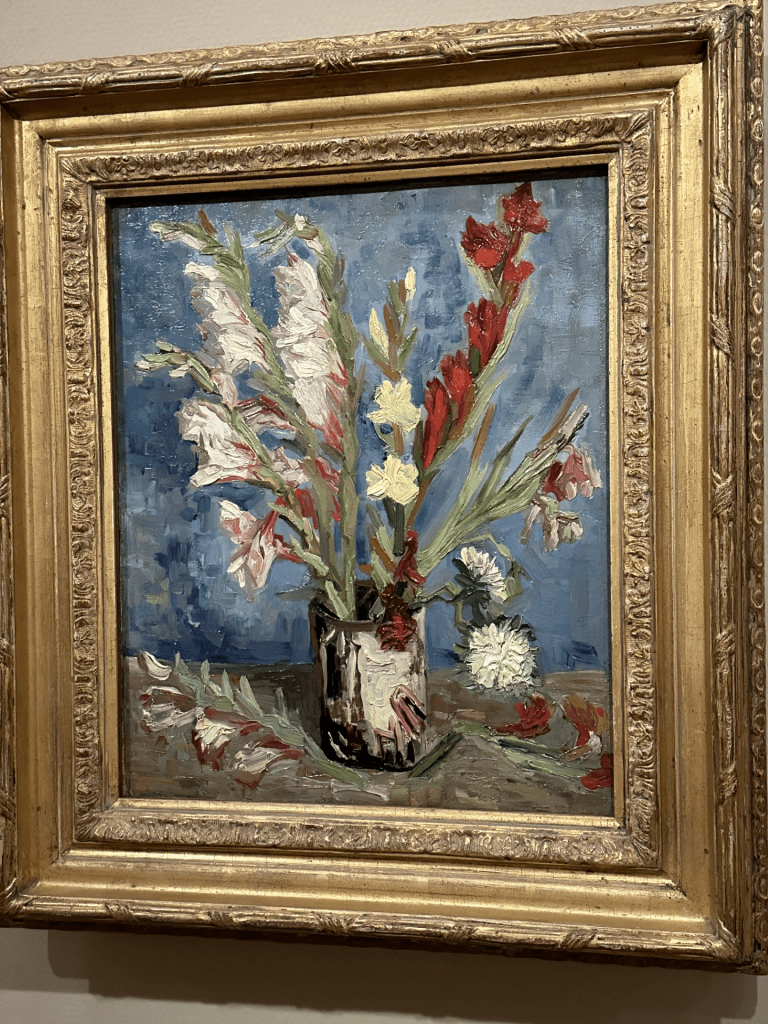
A few previously unshared photographs of Vincent van Gogh’s paintings.
Thank you to Colleen Chesebro for sharing this post about elephants, pregnancy and calves in celebration of the publication of Michael and my new children’s books, Sesi says goodbye to Granny. Colleen also assisted me with editing this book for which I am very grateful.
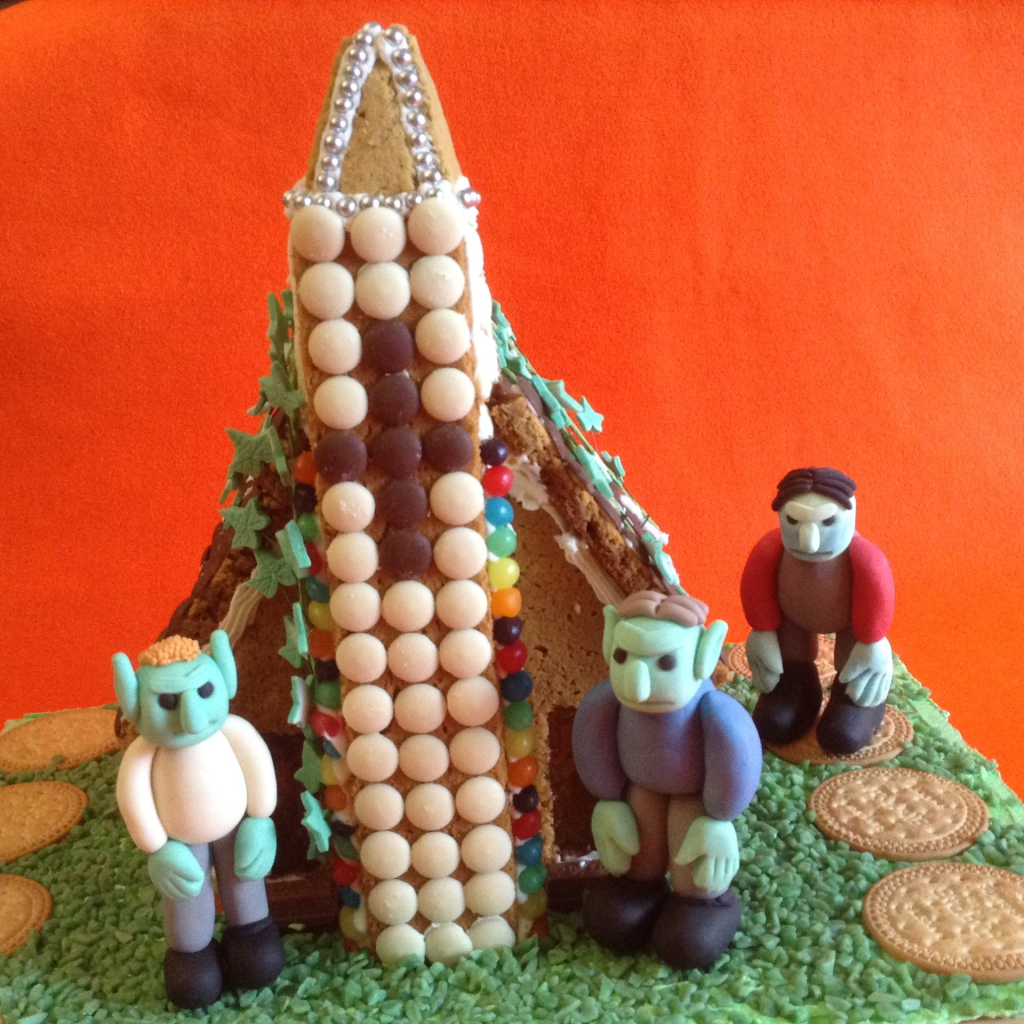
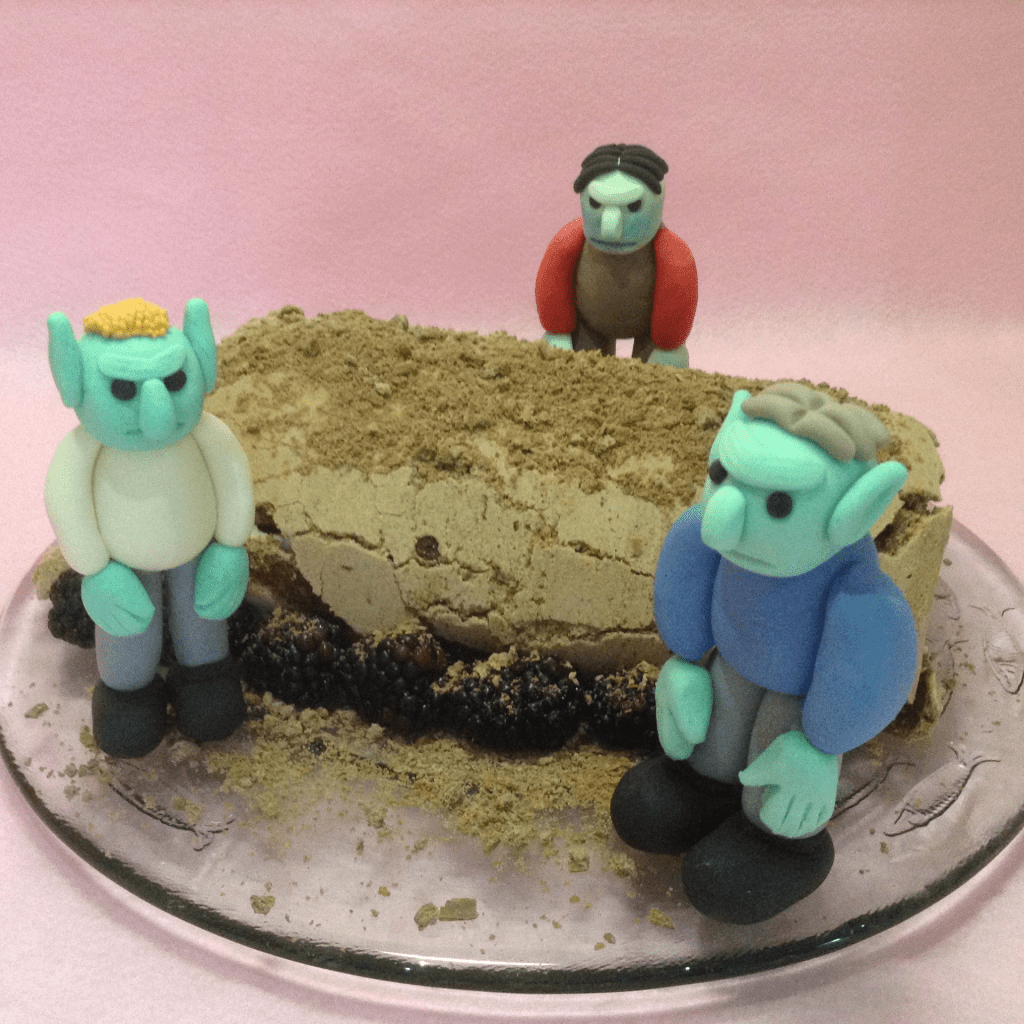
This post is doing triple duty for Esther Chilton’s writing challenge, d’Verse Quadrille #212, and fondant trolls for my wonderful photographer and nature conservationist friend, Wayne.
De Jackson’s, aka WhimsyGizmo, prompt for d’Verse is as follows:
What the what? Yep, that’s right, this week I want you to include some form of the word what in your 44-word poem. The poem after the prose is for this prompt.
Wayne’s trolls are at the end of the post and compliment the poem I posted on Saturday about Norwegian trolls here:
The Red Devil Costume
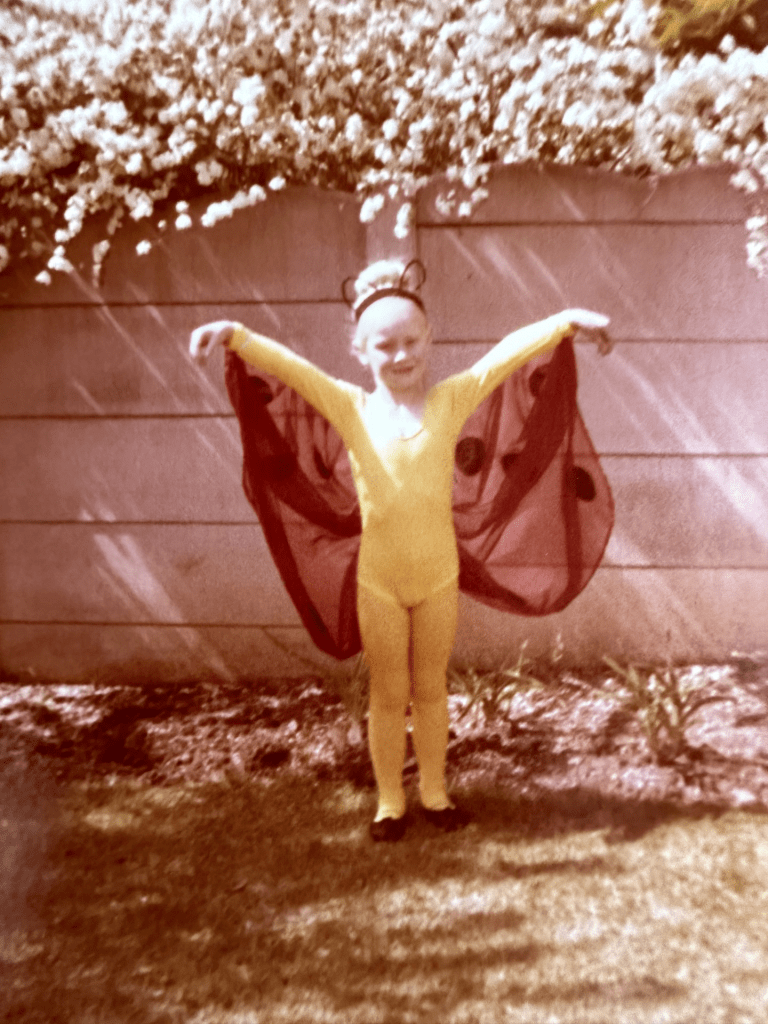
Picture caption: Robbie the dancing lady bird
When I was a little girl, I loved to dance. I attended ballet classes with fourteen other little girls who loved to dance. I was flexible and learned to do backbends and the splits quickly. After several months of learning the foundations of ballet, our teacher sent home a letter.
“The ballet school is holding a concert,” Mom said after reading the letter. “You will be a lady bird, and I need to make you a costume.”
I was delighted. Dressing up was one of my favourite things.
On the day of the concert, I was dressed in a yellow leotard, yellow tights, black ballet shoes, and a black Alice band with black sequinned antenna. I also had wings made from soft black netting with red dots on it.
The concert was held in a hall. Being one of the youngest children, my lady bird dance was early in the proceedings. The dance students had to stay until the end, and I spent my time alternating between running about being a flying lady bird and watching the other dancers.
It was during one of my swoops down the long passageway with several doors into the concert hall and dressing rooms, that I saw her. I stopped and starred. Mesmerised. The older girl on the stage was a red devil and was doing the most amazing and graceful dance. She was attired in a red leotard and red tights with a short, stiff red tutu that stuck out perfectly. She held a red pitchfork and had a red Alice band with red horns. Even her ballet shoes were red. A ballet fashion statement, I was enchanted. I watched the whole of the dance and afterwards, went to sit alone in a corner to contemplate the splendour of that costume.
I asked Mom for a red devil costume for Christmas. She wasn’t particularly interested so I knew Mom was a lost cause for fulfilling this dream. I then asked Granny Joan to make me a red devil costume. On Christmas Day, I eagerly awaited the arrival of Granny Joan and Granddad Jack. Eventually, they arrived, their old beige Ford Cortina pulling up to the front door. Granny Joan climbed out clutching a bag full of parcels. I was the last child to receive my gift. As soon as I had the package in my hands, I rushed away to a quiet place behind the couch to unwrap it.
Inside the cheerful Christmas paper was my red devil outfit. A pair of red tights, a red leotard, a red skirt made from soft netting, and handmade devil horns and a pitchfork made from stiff cardboard, red sequins, and red felt. The only thing I didn’t have was red ballet shoes but that didn’t matter. Ballet shoes were expensive, and I didn’t need shoes because Granny had cleverly bought footless tights.
The red devil costume was my favourite outfit for months and months. When I wore it, I was also a ballet fashion statement.
A magical red devil costume
To stimulate my imagination
Setting free my creativity
Allowing me to follow dreams
The red sequins catching the light
Creating mottled red patches
On the wooden floorboards
Turning our lounge into a concert hall
What more could I want?
Fondant trolls
I have always loved trolls. Trolls are included in three of my children’s books, Sir Chocolate and the strawberry cream berries story and cookbook, Sir Chocolate and the Condensed Milk River story and cookbook, and Haunted Halloween Holiday.
Picture caption: Stinkpot the father trollPicture caption: Michael’s Stinkpot the Troll with a huge club and stubble. Picture caption: Stinkpot and his sons helping fix a churchPicture caption: Stinkpot and his sons with a log they removed from the Condense Milk River
I had to attend a memorial service for a family member yesterday so I couldn’t join this live meeting which is held once a month. It is a lovely gathering so I recommend it to fellow poets. I will try to join the December meeting (although I may be in Japan on the relevant date).
Bjorn‘s prompt for d’Verse Open Link Night was this:
Troll and child by John Bauer (1882-1918)
John Bauer is one of the most loved artists and illustrators we have in Sweden. His style is truly unique, and his way of painting magic woods stands as a model how real forests should look like. The children stories he illustrated are often less known than the images, but I believe he often described the trolls more as societal outcasts than evil creature which is why my choice of picture was one of a troll mother and her child. John Bauer met an early death together with his wife and son on a boat accident on lake Vättern.
Picture caption: Three female troll figurines wearing knitted beanies
During a recent trip to Oslo, Norway, I came across some cute troll figurines in a souvenir shop. I purchased a few and they led me to look up a bit about Norwegian Trolls. I included the knowledge I gleaned into the following poem. Although the troll figurines are more cute than scary, I’ve included a few pictures of them.
Old Norse Warrior Bolg (Note 1) Overrunning farmlands Pillaging homes, produce, and crops Beware! *** Forest Troll tradition Formidable Skogsra (Note 2) Occupying burial mounds Avoid! *** Twin males Dangerous pair Mean, mythical creatures Turned to rock through light exposure Justice! *** Wrothmir (Note 3) Human eater Hideous appearance Dwelling in isolated caves Run fast! *** Troll’s toss Favourite game Of aggressive females Ringing church bells will banish them Fearsome! *** Old Norse Troll tradition Mean, mythical creatures Dwelling in isolated caves Fearsome!
Note 1 – Bolg means pain or horror in the Common Tongue of Norway. A male troll. Note 2 – Skogsra means forest one in Old Norse. A female troll Note 3 – Wrothmir means defender or protector. Its origin is unknown. A gender-neutral troll.
Trolls are entrenched in Scandinavian folklore. Numerous tales are recorded about trolls in which they are described as being old, very strong, slow, and dim-witted. Sometimes, the stories describe them as being man-eaters which are turned to stone by exposure to sunlight.
This extract from The Hobbit illustrates JR Tolkien’s thoughts about trolls:
“Mutton yesterday, mutton today, and blimey, if it don’t look like mutton again tomorrer,” said one of the trolls.
“Never a blinking bit of manflesh have we had for long enough,” said a second. “What the ‘ell William was a-thinkin’ of to bring us into these parts at all, beats me – and the drink running’ short, what’s more,” he said jogging the elbow of William, who was taking a pull at his jug.
William choked. “Shut yer mouth!” he said as soon as he could. “Yer can’t expect folk to stop here for ever just to be et by you and Bert. You’ve et a village and a half between yer, since we came down from the mountains. How much more d’yer want? And time’s been up our way, when yer’d have said ‘thank yer Bill’ for a nice bit o’ fat valley mutton like what this is.” He took a big bite off a sheep’s leg he was roasting, and wiped his lips on his sleeve.
Picture captions: My male troll figurines purchased in Norway
Merril‘s prompt for d’Verse is Choose Joy, as follows:
Today, I’m asking you to write about something(s) that brings you joy. It can be a tiny thing, like a favorite mug, or a big thing like seeing so many people voting, or huge, like life itself. If you need a specific idea, look around the room you’re in now or look out the window. Find something there that brings you joy. There are no limits. And there can be more than one thing.
This is Poetics, so there is also no designated form.
I wrote a rensaku (tanka series using the common line or phrase – Together we stand). For Tanka Tuesday, I used cosy for comfort and pledge for promise
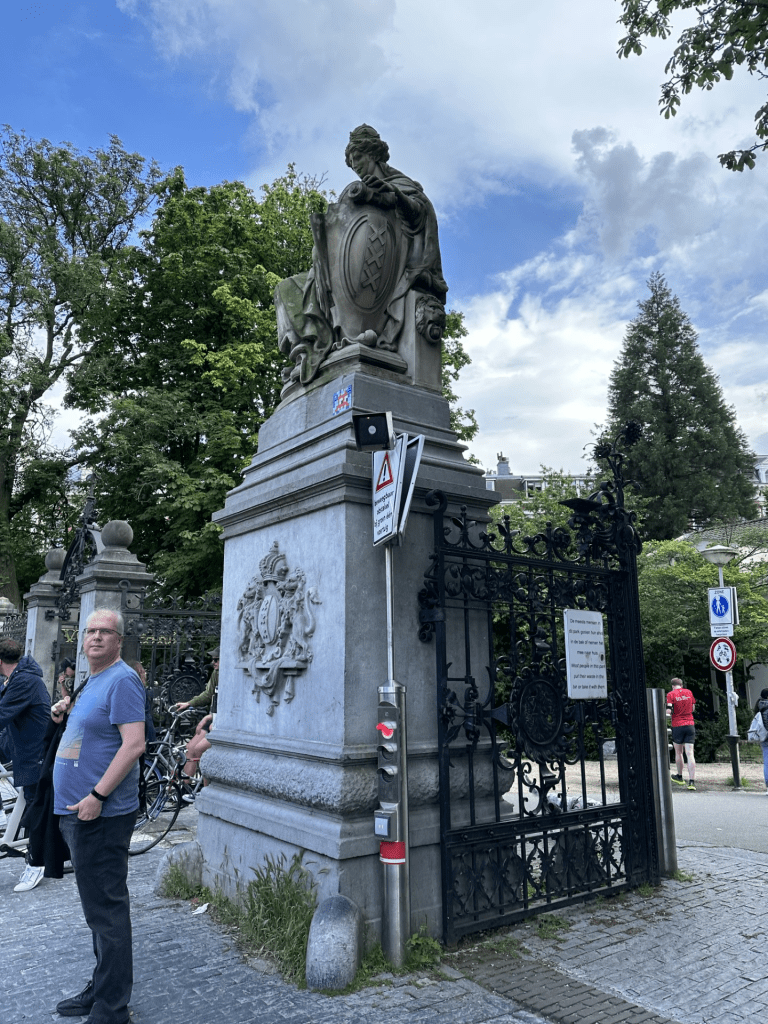
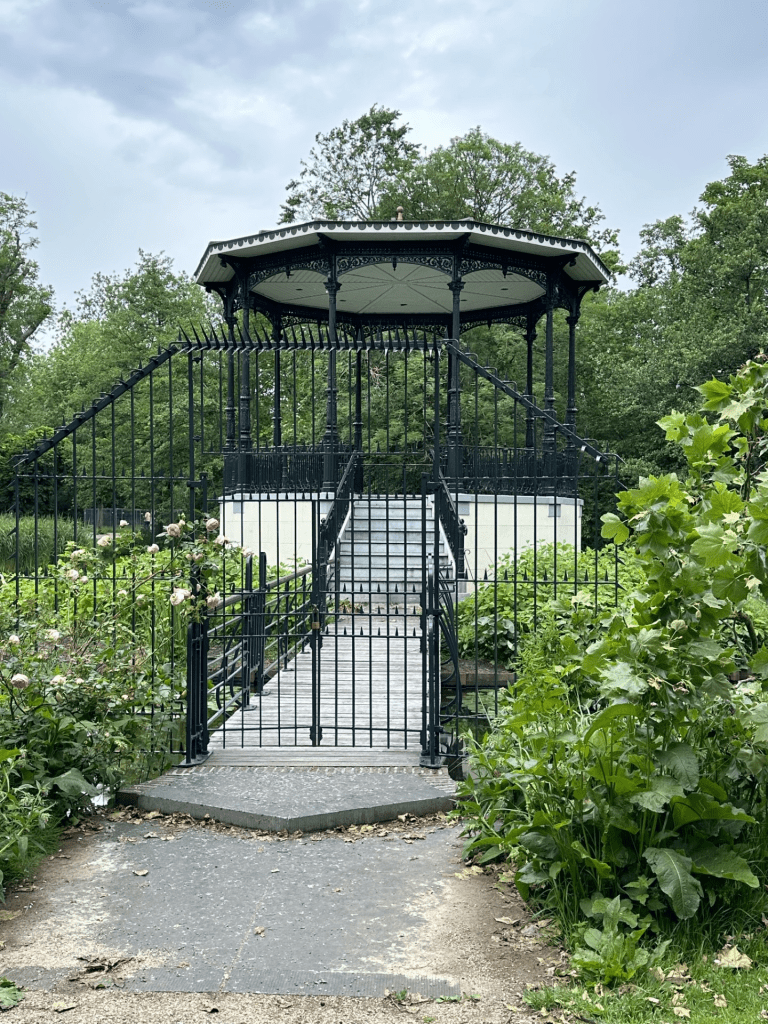
During my visit to Amsterdam in May, TC and I visited Vondel Park. It was a cool, overcast day which was perfect for walking.
Picture caption: here is TC standing outside the gates to the parkPicture caption: gates to an ornate covered look out over the waterPicture caption: On reflection, this may be a bandstand (looks a bit small though). Anyhow, I thought it was pretty and I liked the reflection in the water.Picture caption: One of the water feature displays in the parkPicture caption: TC and I in front of the water display.Picture caption: This looked like the leg of an elephant to me. I can find elephants anywhere, even in Amsterdam.Picture caption: Rain dancing on the water
Dave Astor writes fascinating and thought-provoking posts about all things literary. If you don’t know his blog, you can find it here: https://daveastoronliterature.com/
I am responding with my own analysis of the book, Flatland, which I read recently and which I will read again. It is the first book that came to mind when I considered this topic of merged genres.
Flatland is a satirical novella by Edwin Abbott Abbott and was first published in 1884. This in itself is incredible given the thought process and analysis of one dimensional, two dimensional, three dimensional and even four-dimensional concepts and ideas in this book. Flatland is also classified as a science fiction book.
The protagonist and narrator of this story is A Square who lives in the fictional two-dimensional world of Flatland. All the inhabitants of Flatland are geometric figures (called Flatlanders). The women are line segments, and the men are polygons with various numbers of sides.
To fully appreciate Flatland, the reader must understand that the author lived in Britain during the Victorian era. This was a period of rapid change in British society due to industrialisation. It was also a time of intense social and cultural tensions and changes. Victorian society was strictly divided into the upper, middle, and working classes. These social distinctions were exacerbated by the progress and development taking place at the time (The story of the sinking of the Titanic is very informative about British and American social classes at the time). At the same time, the field of non-Euclidean geometry in mathematics was gaining a lot of interest from prominent mathematicians.
Overview of Flatland
Flatland is a two-dimensional world inhabited by Flatlanders who live in a highly structured society organised into strict classes based on the number of sides of the men. Irregularity is not tolerated as, to quote A Square: “irregularity is not only immoral but criminal.”
The women don’t count at all as they are merely straight lines and are not considered worthy of education. They are only considered at all for their reproductive purposes and role as homemakers but are described as being capable of destruction of their families if angered.
The societal attitude towards women in Victorian England is illustrated by this quote from John Ruskin, Sesame and Lilies, 1865:
The man’s power is active, progressive, defensive. He is eminently the doer, the creator, the discoverer, the defender. His intellect is for speculation, and invention; his energy for adventure war, and for conquest.. but the woman’s power is for rule, not for battle – and her intellect is not for invention or creation, but for sweet ordering, arrangement, and decision… she must be enduringly, incorruptibly good; instinctively, infallibly wise, wise not for self development, but for self-renunciation: wise, not that she may set herself above her husband, but that she may never fail from his side.’
This stereotypical attitude comes through strongly in Flatland with regards to women.
A Square writes his story from prison and details the social organisation of Flatland and the revelations he received about a three-dimensional land called Spaceland from the Sphere who visits A Square on the eve of the new millennium. The purpose of the Sphere’s visit is to find an apostle in Flatland who he can teach about the Third Dimension.
A Square does not understand the Sphere’s teachings which are uncomfortable and unbelievable to a two-dimensional shape who lives under the strict doctrine of social order dictated by the Circles, Flatland priests who make up the highest class. Even though A Square is a member of the caste of gentlemen and professionals, the concept of a three-dimensional world is outside his experience and contradictory to the laws and views of the Circles which makes his speculations with the Sphere heretical and punishable by imprisonment or even death. The Sphere responds to A Square’s rejection of his teachings by taking him to Spaceland to experience 3D for himself.
In advance of the visit from the Sphere, A Square has a dream where he visits a one-dimensional world, Lineland. Lineland is inhabited by men who consist of lines and women who are lustrous points. During the course of this dream, A Square has a conversation with the monarch of Lineland and attempts to convince him of the existence of his two-dimensional land of Flatland. He meets with the same resistance from the monarch that he exhibits to the Sphere when introduced to the idea of Spaceland. A Square has this dream-state experience under his belt when he visits Spaceland.
A Square is convinced about the existence of other dimensions, and he tries to convince the Sphere of the theoretical possibility of the existence of a fourth dimension and higher spatial dimensions. The Sphere is horrified by A Square’s ideas and returns him to Flatland in disgrace.
A Square has another dream during which the Sphere takes him to a zero-dimensional space called Pointland. The single occupant of Pointland, a Point, is its monarch and universe in one, and he perceives any communication as a thought originating from himself as he can’t conceive of any other forms of life.
This experience with the Point further opens A Square’s mind to the ignorance of the monarchs of both Pointland and Lineland and even the ruling Circles in Flatland. He is so inspired and excited by his newfound knowledge; he can’t help sharing his ideas despite such talk being against the law. A Square is ultimately imprisoned and decides to write the book, Flatland, as his memoir, in the hope that future generations might appreciate its content.
In addition to its mathematical concepts and ideas, the first half of Flatland is a social satire which examines the inflexibility of Victorian society through the fictional Flatland. In Flatland, society is rigidly divided into classes and freedoms are few for the working classes. Even the middle classes must live by the rules dished out by the upper classes. Anyone who goes against the rules and promotes any change is either killed or promoted to a higher class, depending on the situation. Promotion is a way of collaborating with any valuable intellect coming from the working class. Any deviant thinking or attempts at changed are considered dangerous and harmful.
This was a fascinating and insightful book and one I will definitely revisit.
Quotes from Flatland
“Behold yon miserable creature. That Point is a Being like ourselves, but confined to the non-dimensional Gulf. He is himself his own World, his own Universe; of any other than himself he can form no conception; he knows not Length, nor Breadth, nor Height, for he has had no experience of them; he has no cognizance even of the number Two; nor has he a thought of Plurality, for he is himself his One and All, being really Nothing. Yet mark his perfect self-contentment, and hence learn this lesson, that to be self-contented is to be vile and ignorant, and that to aspire is better than to be blindly and impotently happy.”
“Either this is madness or it is Hell.” “It is neither,” calmly replied the voice of the Sphere, “it is Knowledge; it is Three Dimensions: open your eye once again and try to look steadily.”
“All this very plausible reasoning does not convince me, as it has not convinced the wisest of our Statesmen, that our ancestors erred in laying it down as an axiom of policy that the toleration of Irregularity is incompatible with the safety of the State.”













 roberta-writes.com